
Reviewed · SUMO SHOWS
【SUMO FESTIVAL】Tokyo Ginza: Sumo Show & Photo Experience
This is sumo, but not as you expect. What makes the TokyoSumoFestival special is the mix of morning training viewing, quick lessons on what makes a wrestler win, and then real hands-on crowd action right there in the ring. I really liked the close-up seating (no far-off “just watch” seats), and the MC’s clear English keeps things moving. The main drawback to consider: the format is part show, part teaching, and if you’re chasing nonstop bouts, the host time can feel long.
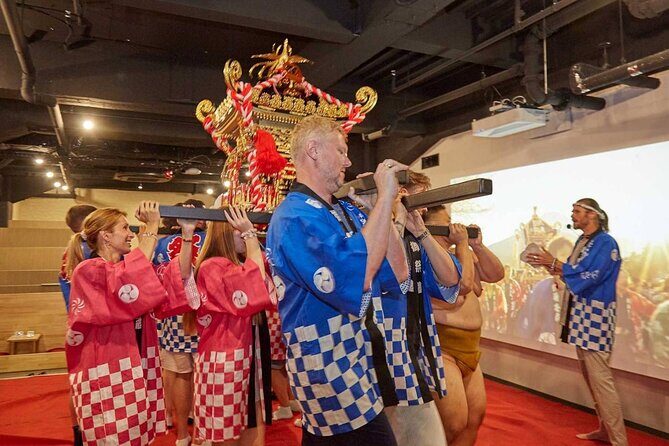
You also get that rare chance to step into sumo life beyond the sport. I like that they build in physical basics like shiko (stomping), salt throwing, and controlled body collisions, plus the feel of a traditional mikoshi ritual after the show.
One more thing to know up front: participation is limited, and the chance to challenge a retired wrestler can come down to lottery. For most people, that’s still worth the risk, because you’ll get plenty to do even if you don’t get chosen.
In This Review
- Quick hits before you go
- Morning Training in Ginza: Why this show feels worth 2 hours
- Inside the ring: techniques, demonstrations, and real crowd participation
- Shiko, salt throwing, and collision drills you can actually feel
- The retired wrestler challenge: lottery odds, big payoff
- Mikoshi moment after the show: where sport turns into festival
- Food in the background: welcome drink, sumo-themed options, and extras
- Price and value: what $63.41 buys in real time
- Finding the venue in Ginza: the practical reality
- Who should book TokyoSumoFestival, and who should skip it
- Should you book it? My take
- FAQ
- FAQ
- How long is the Tokyo Ginza sumo show and photo experience?
- Is there an English option?
- Where does it take place in Ginza?
- Do I have to participate in the ring with a retired wrestler?
- What hands-on activities are included?
- What is the mikoshi experience?
- Is food included?
- How do I get my ticket?
Quick hits before you go
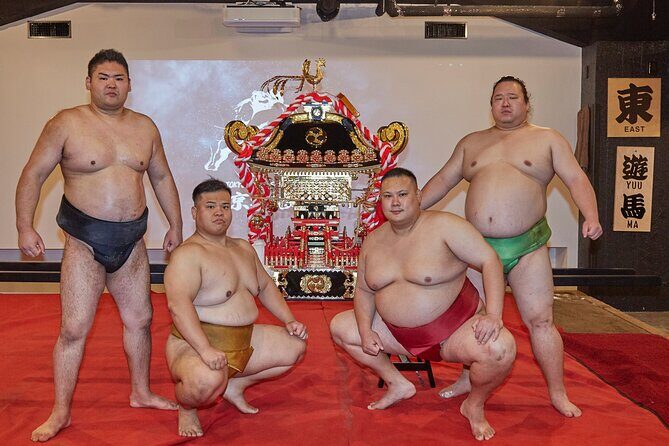
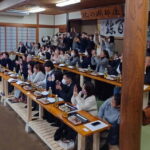
- Close-up ring viewing: every seat is positioned for an up-close look at the dohyo (sumo ring)
- English and Japanese MC commentary that’s easy to follow
- Hands-on sumo basics like shiko stomping, salt throwing, and practicing collisions
- Retired wrestler challenge is lottery-based if the session is crowded
- Mikoshi experience adds a festival flavor that goes beyond sport
- Ginza location (with a caveat): it’s in a basement space, and the venue can be tricky to spot fast
More chances to sit ringside
- Tokyo: Sumo Show and Dining Experience★ 4.8 · 2,742 reviews
- the SUMO show★ 5.0 · 1,960 reviews
- Tokyo Shinjuku Sumo Show & Experience with Photo★ 5.0 · 1,750 reviews
Morning Training in Ginza: Why this show feels worth 2 hours
Let’s set expectations in a helpful way. This isn’t a full day at a formal tournament with a schedule of matches and ranked bouts. Instead, it’s built as a two-hour, concentrated “sumo primer + performance + participation” experience in the middle of Ginza.
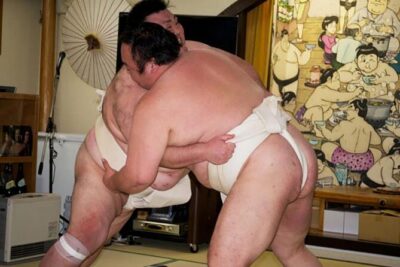
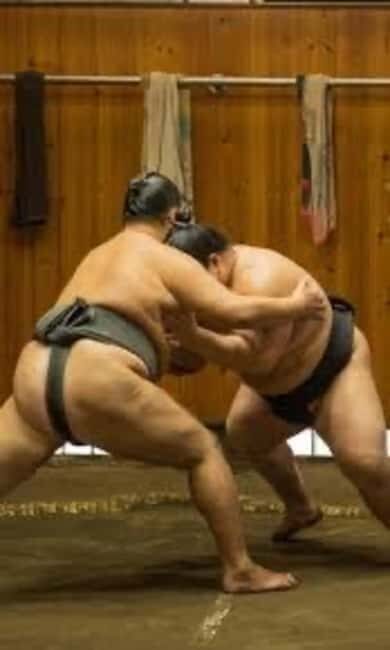
The heart of it starts with you watching morning-style training. You’ll see techniques broken down in a way that makes sense quickly—like why wrestlers get the position they want, how balance and footwork matter, and what to look for when bodies collide. If you only know sumo from TV highlights, this is a good on-ramp.
Then the show shifts into live demonstrations and crowd interaction. This is where you feel the difference between a typical “watch quietly” event and something that treats you like part of the action. If you like participating—even a little—this format tends to click.
Also, Ginza helps. You’re not far from the tourist pulse, but the event still gives you a focused, hands-on slice of tradition instead of another quick photo stop. That combination is what makes it feel like more than a gimmick.
Inside the ring: techniques, demonstrations, and real crowd participation
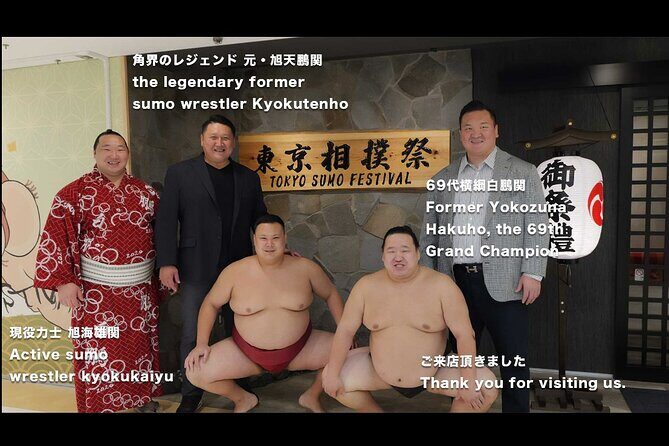
The experience takes place at Tokyo Sumo Festival in Ginza, in a basement venue at Ginza INZ 1 B1, address 1-3-1 Ginza, Chuo City, Tokyo. On arrival, you’ll be oriented to what’s happening and how to watch for the key moves.
The show flow generally goes like this:
- Morning training viewing to set the stage
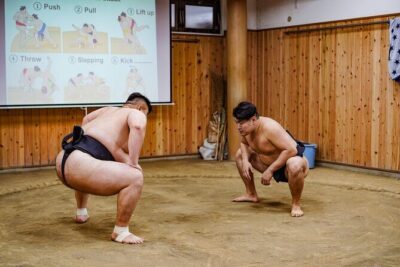
- Learning winning techniques in simple, practical terms (the kind of explanations you can picture even if you’re not a sumo nerd)
- Live demonstrations by the wrestlers to show the movement patterns you just heard about
- Crowd participation moments where you move, not just watch
What I like about this structure is that it helps you “read” the sumo after the first few minutes. You stop thinking of it as just two giant guys colliding, and start noticing why they’re charging, circling, and testing balance in the first place. It’s the difference between watching clips and understanding what you’re seeing.
One note: the event is intentionally part education and part entertainment. If you prefer pure competition time, you might feel the show has more host talk than you hoped for. Still, the people who tend to enjoy this most are the ones who are okay treating it like a performance with instruction.
Shiko, salt throwing, and collision drills you can actually feel
The best reason to book is the hands-on portion. You’re not stuck at the edge of the room hoping someone asks you to cheer. The ticket includes practice in a few classic sumo actions:
- Shiko (sumo stomping): You’ll try the stomps that are famous for their power and rhythm. Even if you do it for a short time, it gives you a new respect for timing and stance.
- Salt throwing: This is one of the most recognizable rituals in sumo. Trying it helps you understand it as part of focus and respect, not just a theatrical habit.
- Body collision practice: You’ll get to practice controlled contact—enough to understand the physical idea without turning it into chaos.
This matters because sumo is mostly about momentum, timing, and leverage. When you try even basic movements, you learn faster than watching a dozen explanations. You’ll also pick up the body language that makes sumo feel so intense on TV.
There’s also a “tour” element: you’re watching techniques, then immediately connecting them to movement. That makes the whole event feel tight and purposeful, not random.
If you’re traveling with kids or a group that wants energy, these participation pieces are usually the moment people start smiling for real. The show tends to be family-friendly in that sense, without losing the sumo seriousness.
The retired wrestler challenge: lottery odds, big payoff
Here’s the one part many people plan for, and it’s worth understanding before you arrive.
You have a chance to challenge a retired sumo wrestler—but participation is limited. If the crowd is large, it may be decided by lottery. So you should treat it as a bonus, not a guarantee.
If you do get chosen, it’s the closest you’ll come to stepping into the sumo-world fantasy. You’ll feel the ring atmosphere, the eye-to-eye intensity, and how much stance and balance matter.
If you don’t get chosen, you’re not left hanging. The rest of the program is still built around hands-on practice and participation. And since all seats are close-up, you still watch the action with clarity.
Tip: if you’re aiming for that ring challenge, go in with a flexible mindset. The lottery approach is frustrating only if you treat the challenge as something you must do. I’d treat it as a maybe—and enjoy everything else even if the maybe doesn’t happen.
Worth weighing up alongside this Tokyo pick:

Mikoshi moment after the show: where sport turns into festival
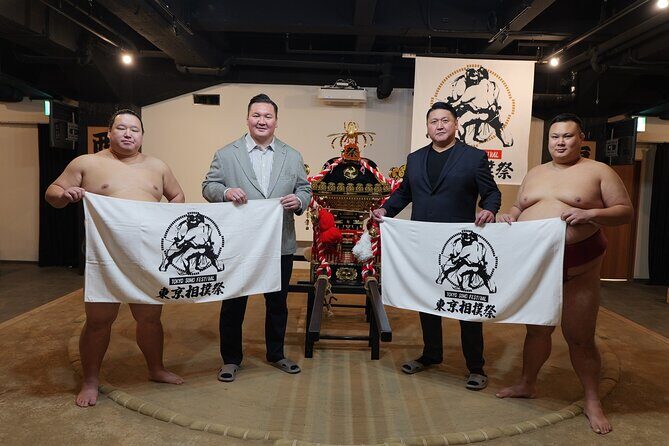
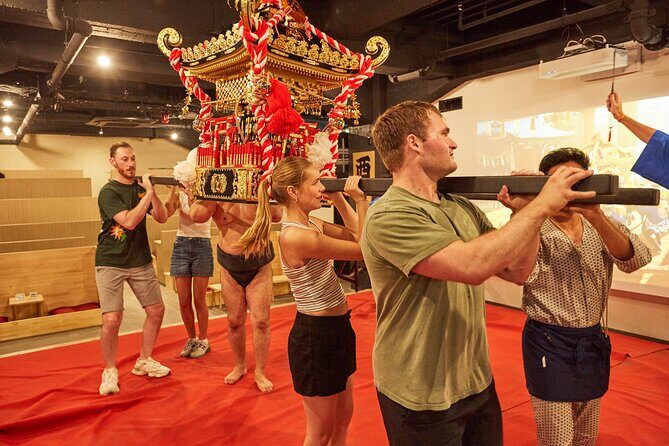
After the sumo show, you get to experience a mikoshi, a traditional portable shrine used in Japanese festivals. This is a smart add-on because it connects sumo to the broader rhythm of Japanese festival life.
A sumo event in a modern setting can sometimes feel like pure spectacle. The mikoshi helps correct that. It nudges you to think of sumo as part of a living culture with ties to shrine rituals and public celebrations.
The best part is that it isn’t only talk. You actually get to participate in the ritual experience as part of the program. That’s usually what makes this kind of add-on memorable rather than just another staged photo.
Food in the background: welcome drink, sumo-themed options, and extras
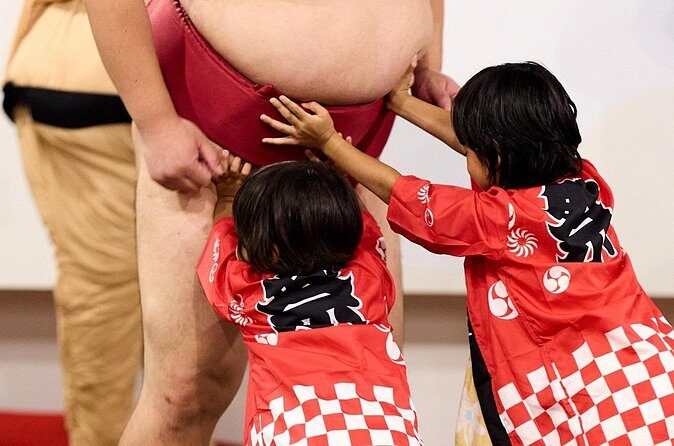
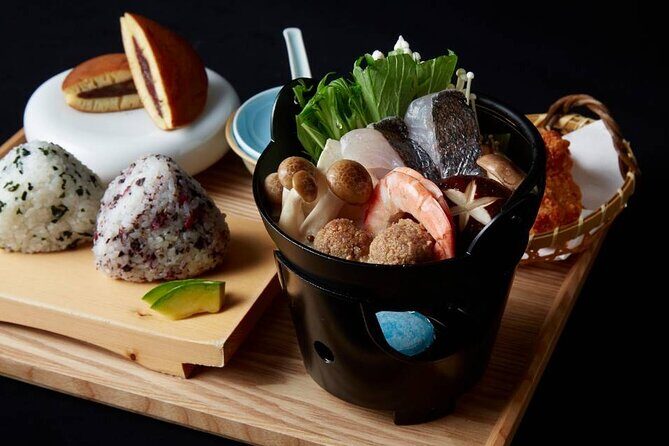
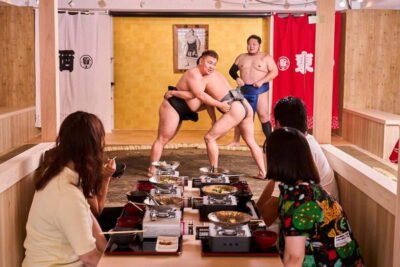
Food is part of the atmosphere here. The setting is described as a relaxed place where you can enjoy authentic sumo cuisine. You also get a welcome drink included.
What’s not included is meals on top of that. If you want to eat more, you’ll likely have to pay extra for full meals.
A small practical point: if you’re hungry before you arrive, plan a quick bite nearby. Then use the welcome drink and any snacks or appetizers you see as part of the fun. This keeps you from feeling impatient during show sections that run as smoothly timed segments.
Price and value: what $63.41 buys in real time
At $63.41 per person, the value comes from three things, not one:
- You’re paying for a structured show (training viewing + demonstrations).
- You get hands-on practice (shiko, salt throwing, collision drills).
- You have the chance—through lottery—to challenge a retired wrestler, which is the big “I did that” moment.
If you only wanted to watch sumo from a distance, you’d probably find cheaper or more “sport pure” options around Tokyo depending on timing. But this is about the experience package: close-up ring access, explanation in English/Japanese, and participation.
Two hours is short enough that it works even on a busy day. And because it’s in Ginza, you can often pair it with the rest of your Ginza day without losing half your afternoon.
Is it pricey? Sure, for a basic show ticket. But when you factor in participation and the mikoshi add-on, it stops looking like a pure tourist act and starts looking like a focused cultural experience.
Finding the venue in Ginza: the practical reality
Ginza is easy on a map. It’s less easy in real life when a basement entrance is involved.
The venue is at Ginza INZ 1 B1 (1-3-1 Ginza). The easy way to avoid stress is to search TokyoSumoFestival on Google Maps. The address alone can be confusing, and some people report difficulty matching what shows on a map to what’s actually there.
My advice:
- Give yourself a little extra time before the start.
- Use the Google Maps search name, not just the street address.
- If you’re meeting family or friends, set a clear meeting spot outside the building and then move together in.
This is one of those experiences where arriving a few minutes early is peace of mind. And peace of mind is worth something.
Who should book TokyoSumoFestival, and who should skip it
This experience fits best if you:
- Want sumo culture when no formal tournament is happening
- Like interactive shows where you do more than just sit
- Want English-friendly explanations and a clear understanding of what you’re seeing
- Are traveling as a family or group and want a shared activity
It’s less ideal if you:
- Only care about watching full competition bouts for long stretches
- Hate long host talk and prefer minimal instruction
- Are sensitive to chance-based participation (like the wrestler challenge lottery)
One small note from the people-focused side of the event: staff performance can make or break the mood. If you happen to get help from staff members such as Yuma or Kaito, that energy has been described as a highlight. Even if you don’t know who you’ll get, the MC role and the clarity of the show matter a lot here.
If you want a fun “Tokyo day win” that turns sumo into something you can do, this is a strong choice.
Should you book it? My take
I’d book TokyoSumoFestival if you want an efficient, hands-on sumo experience in a central part of Tokyo. The combination of close-up viewing, English/Japanese MC commentary, and participation in shiko and salt throwing is the core value. The mikoshi ritual adds texture that you don’t get from most sports-only events.
If you’re mainly chasing nonstop sumo fights, you might feel a bit restless. But if you treat it like a short sumo culture lesson plus a participation show, it’s likely to land well.
Also, if you’re the type who likes flexibility, you can usually change plans—so don’t overthink it. If you’re considering it, the deciding factor should be simple: do you want to participate, or do you only want to watch?
FAQ
FAQ
How long is the Tokyo Ginza sumo show and photo experience?
It runs about 2 hours.
Is there an English option?
Yes. Commentary is provided in English and Japanese by the MC.
Where does it take place in Ginza?
At Ginza INZ 1 B1, 1-3-1 Ginza, Chuo City, Tokyo. You can search TokyoSumoFestival on Google Maps.
Do I have to participate in the ring with a retired wrestler?
Not everyone is guaranteed. The chance to challenge a retired sumo wrestler is limited and may be decided by lottery if it’s crowded.
What hands-on activities are included?
The included activities include trying shiko (stomping), salt throwing, and practicing sumo body collision.
What is the mikoshi experience?
After the sumo show, you’ll get to experience a mikoshi, a traditional portable shrine used in Japanese festivals.
Is food included?
A welcome drink is included, and sumo cuisine is available in the relaxed venue. Meals are not included and are available for an additional charge.
How do I get my ticket?
You’ll use a mobile ticket.
A Night at a Tokyo Show


More Tour Reviews in Tokyo





More Mornings with the Wrestlers
Fresh reviews from around Tokyo






Sumo Shows, compared.
 ★ 4.8Sumo Show Experience with Chicken Hot Pot and a PhotoFrom $1036,678 reviews
 ★ 4.8Sumo Show and Dining ExperienceFrom $792,742 reviews
 ★ 5.0the SUMO showFrom $891,960 reviews
 ★ 5.0Tokyo Shinjuku Sumo Show & Experience with PhotoFrom $791,750 reviews
 ★ 4.8Sumo Show and Experience in ShinjukuFrom $691,001 reviews
 ★ 5.0Authentic Sumo Experience in Tokyo: Enter the SanctuaryFrom $171603 reviews
 ★ 4.8Tokyo Sumo Experience: Chanko & Mochi with a Former ProFrom $103567 reviews
 ★ 5.0Ultimate Sumo Tournament: Tokyo, Osaka, Nagoya, FukuokaFrom $184468 reviews
Browse the lists this tour appears in