
Reviewed · TOKYO
Kintsugi Experience with Arita Ware in Tokyo (English Guide)
Gold seams and second chances.
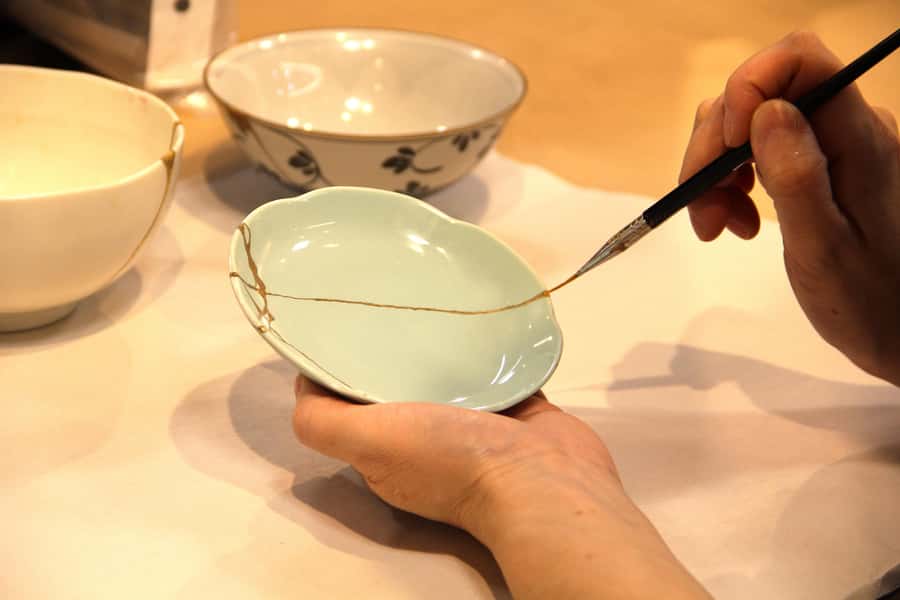
This is a hands-on Kintsugi session in central Tokyo, run with an English-speaking instructor and timed to fit nicely into a sightseeing day. I like that you’re working with Arita ware, a Japanese porcelain tradition with roots going back about 400 years, and that the class stays small enough to feel calm. You also leave with a real souvenir: the plate you repair during your session.
One thing to think about before you book: you’ll need to follow specific aftercare rules once your piece is made. It needs about a week drying time indoors, and it’s for decoration only—no eating or drinking.
In This Review
- Key points before you go
- Where the gold repair lesson starts: Nihonbashi Mutoh Main Store
- Arita ware and the 400-year reason this workshop feels special
- What Kintsugi teaches (and what you actually do in 90 minutes)
- Your session plan at a glance: from instructions to a take-home plate
- 1) Welcome, tools, and the craft context
- 2) Choose your object (or bring your own)
- 3) The hands-on repair
- 4) Finish, clean up, and your drying plan
- Your take-home piece and the aftercare rules that matter
- Price, group size, and whether it’s good value for Tokyo
- Who should book (and who might want a different plan)
- Should you book the Kintsugi Experience with Arita Ware in Tokyo?
- FAQ
- What happens during the 90-minute Kintsugi experience?
- Do I need to bring my own item for Kintsugi?
- Is the workshop offered in English?
- How long does it take after the workshop for the piece to be ready?
- How should I clean the repaired plate?
- Can I use the repaired plate for eating or drinking?
- Is the workshop wheelchair accessible?
- What if I’m late or miss the scheduled time?
Key points before you go
- Arita ware focus: You’re repairing porcelain with a well-known 400-year tradition behind it
- 90 minutes, one take-home piece: You repair and finish a plate within the class time, then dry it afterward
- English support: Instructions are delivered with an English-speaking instructor, plus translation during explanations
- Small group vibe (up to 10): The workshop typically feels more hands-on and less crowded
- Bring-your-own option: You can repair a small ceramic or porcelain item if it matches the limits
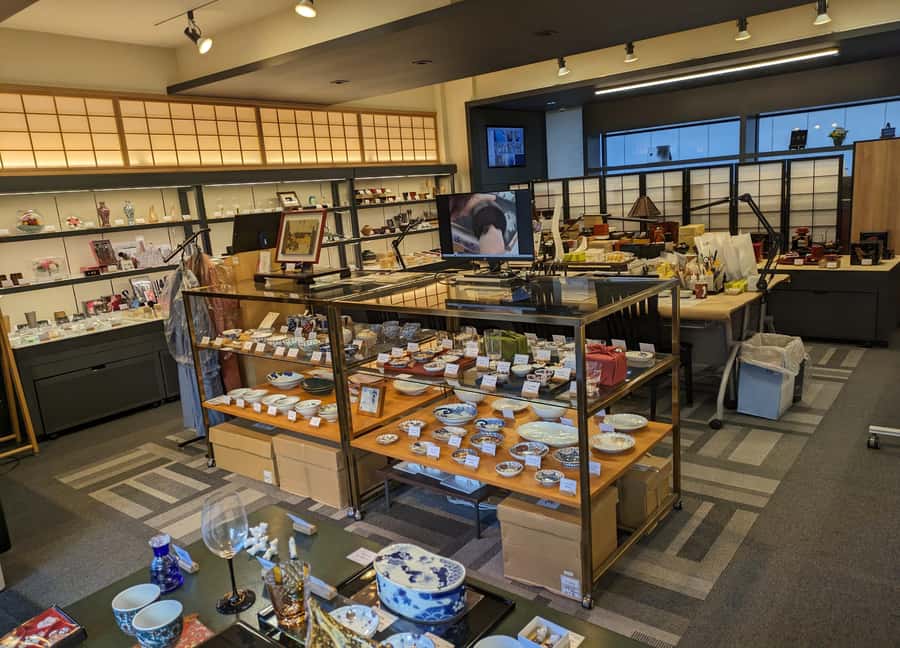
- Calm, craft-shop setting: The experience happens in a shop with about a 100-year background in lacquerware and glassware
Before you commit, see how this one stacks up against a few Tokyo favourites:
- Mt Fuji and Hakone 1-Day Bus Tour Return by Bullet Train★ 5.0 · 26,383 reviews
- 1-Day Tokyo Bus Tour★ 5.0 · 14,250 reviews
- Tokyo: teamLab Planets TOKYO Digital Art Museum Entry Ticket★ 4.6 · 9,779 reviews
Where the gold repair lesson starts: Nihonbashi Mutoh Main Store
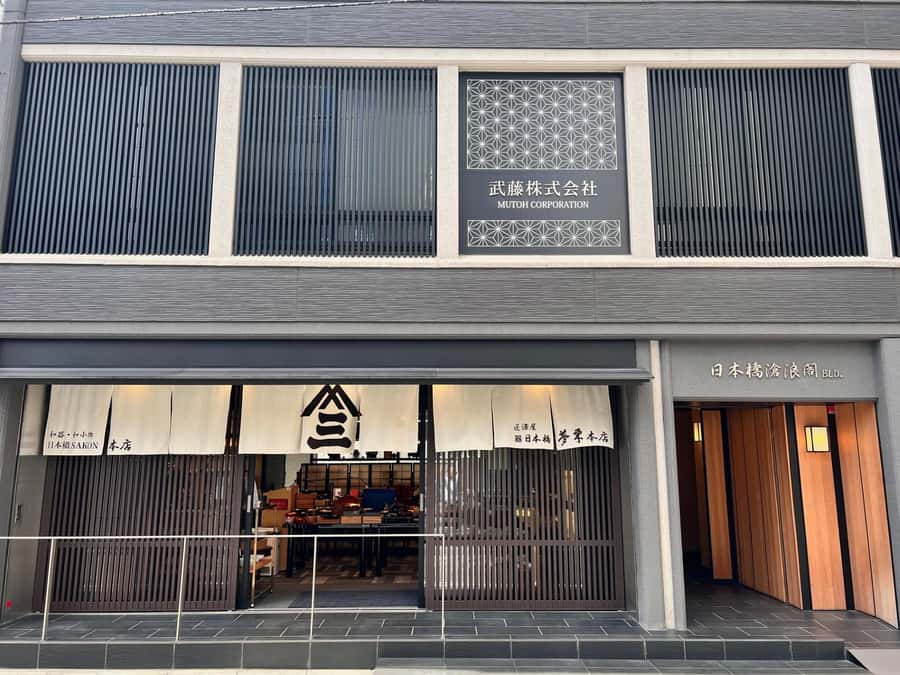
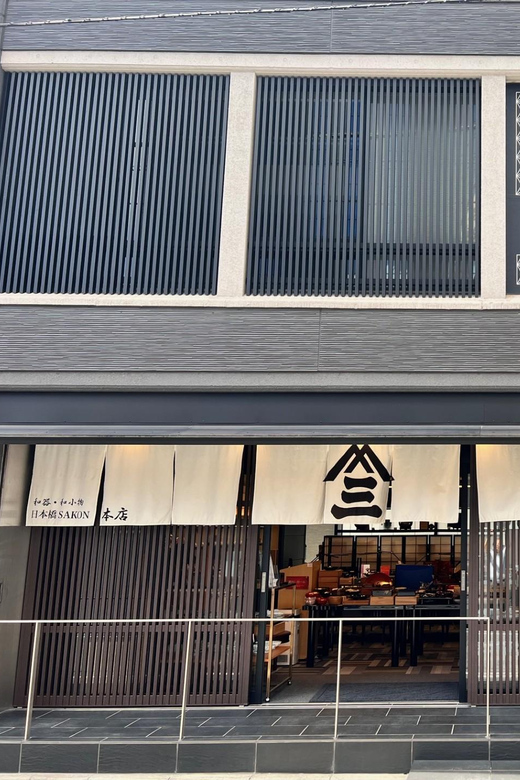
Your session begins at Nihonbashi Mutoh Main Store, in the Nihonbashi area. The address is 1-8-3 Honcho, Nihonbashi, Chuo City, Tokyo (103-0023). This is a practical choice for most Tokyo plans because Nihonbashi is well connected and easy to reach from other neighborhoods.
You’ll pick one of three class windows: 10:30–12:00, 13:30–15:00, or 15:30–17:00. Those times matter because Kintsugi isn’t just a quick demo—you’re actively making something. A set start time also helps you plan the rest of your day, since the class ends at the scheduled time even if you’re running late.
Inside, the vibe is what I’d call “serious craft shop,” not theme-park. You’re surrounded by high-quality ceramics, porcelain, lacquerware, and glassware, which makes the whole idea of repair feel less like a novelty and more like a living tradition.
Arita ware and the 400-year reason this workshop feels special
A lot of Kintsugi experiences use generic ceramics. This one uses Arita ware, which is significant. Arita ware is widely known as the first porcelain produced in Japan, and this workshop specifically connects you with that lineage.
That matters for two reasons:
First, you get to practice on a piece with a recognizable craft identity. You’re not just “filling cracks”—you’re learning the visual logic of Kintsugi: the repaired lines become part of the object’s story.
Second, it makes your souvenir feel more grounded. Instead of leaving with a random repaired bowl, you’re taking home a plate linked to an old production tradition, from the brand side via Shobido Honten’s Arita ware pieces at the shop.
What Kintsugi teaches (and what you actually do in 90 minutes)
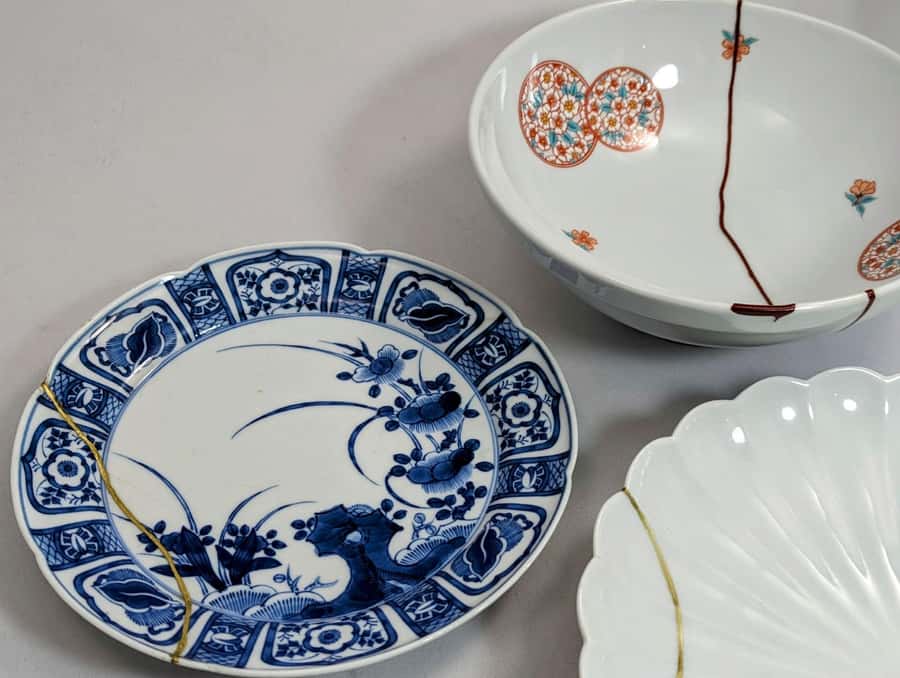
Kintsugi is the Japanese art of repairing broken pottery with gold (or gold-colored) seams. The key idea is simple and surprisingly modern: damage doesn’t get hidden. It gets highlighted.
The philosophy connects to wabi-sabi—accepting imperfection, valuing what time does to objects, and treating scars as part of life rather than something to erase. In class, you’re not being asked to be poetic for the sake of it. You’re practicing the craft choices that create that look.
So what do you do in the workshop? You’ll follow the instructor’s steps using the provided materials to repair your assigned object. You’ll work through the core stages of the process, with guidance in English, and you’ll finish with a plate you can take home.
Also note the pace: the class is designed to complete one object. That’s why the session feels right at 90 minutes. You get enough time to do the work carefully, without burning your whole day.
Your session plan at a glance: from instructions to a take-home plate
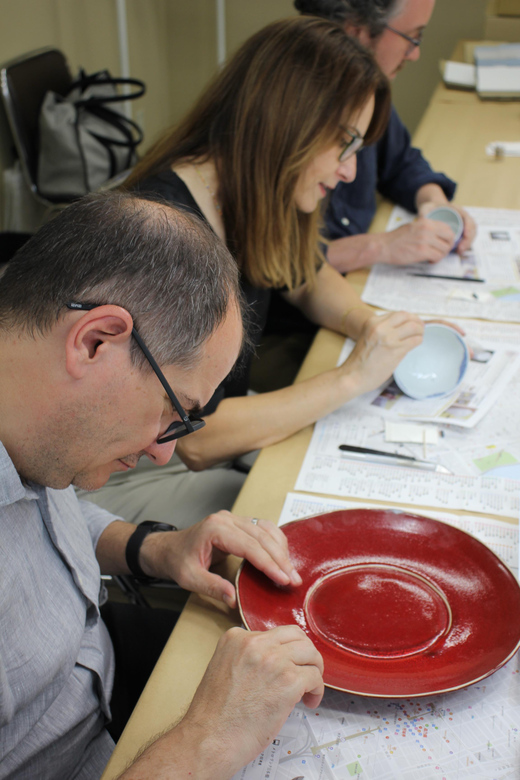
Here’s how the experience typically unfolds once you arrive at the shop.





1) Welcome, tools, and the craft context
You’ll start with an orientation to what Kintsugi is, why it’s done, and what materials you’ll use. This is also where the instructor sets expectations for what you’ll be able to finish during class time.
The explanations are handled with an English-speaking instructor. You may hear the explanation in Japanese first, then have it translated into English as you go, which is helpful if you want to learn the process without getting lost.
2) Choose your object (or bring your own)
You’ll work with a plate used in the experience, and that piece is available for you to bring home. If you’d like to bring your own item, you can—but only if it meets the limits:
- Up to about φ15 cm diameter and 15 cm height
- Only 1 to 2 broken parts
- Must be ceramic or porcelain
That rule keeps the class realistic. Kintsugi can get complicated when there are lots of missing fragments, so the workshop focuses on pieces that can be repaired within the session.
3) The hands-on repair
This is the practical heart of the class: you’ll repair the object following the instructor’s guidance, using the provided materials. Your focus is accuracy and patience—aligning breaks correctly and applying the repair method in a way that will look intentional rather than accidental.
Because you’re doing this in a small group (up to 10), you can usually ask questions without feeling like you’re interrupting a conveyor belt.
4) Finish, clean up, and your drying plan
Once your repair is done, you’ll finish up and receive clear instructions for the post-work steps. And this part really matters. The Kintsugi repair needs proper drying so the seams cure correctly.
Plan for the reality of handmade craft: you’re not leaving with a piece that should be used immediately like a store-bought item. You’re leaving with a repaired object that needs time to set.
Your take-home piece and the aftercare rules that matter
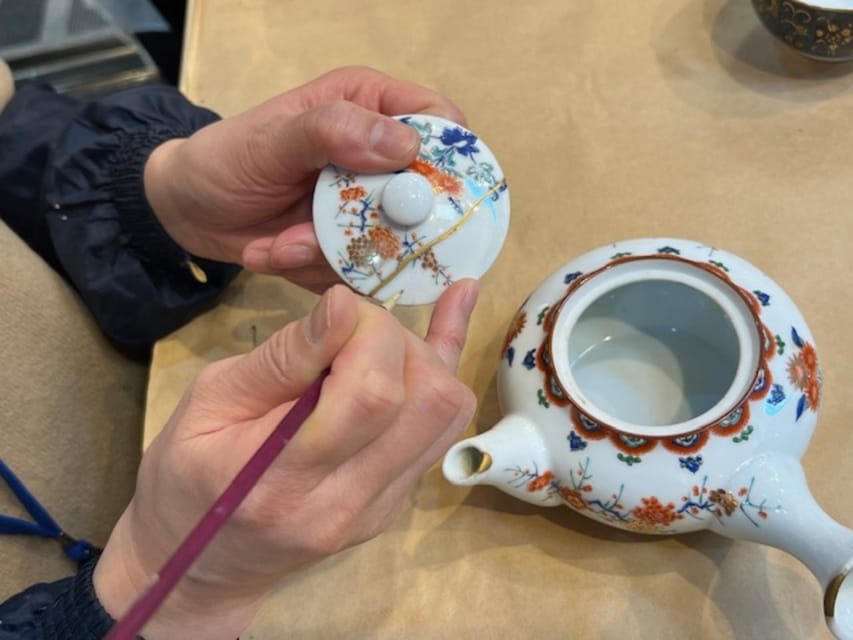
This is the part where the “souvenir” becomes a responsibility—in a good way. Your repaired plate needs about one week drying indoors.
After that, follow the handling rules:
- Hand wash only using dishwashing detergent
- No microwave, and no dishwasher
- Use it for decoration only, not for eating or drinking
I like that the rules are spelled out clearly. It keeps expectations honest and protects your work. If you want to use it every day like a regular plate, this is the wrong souvenir. If you want a beautiful reminder of craft and philosophy, it’s perfect.
You should also wear clothes you don’t mind getting a bit messy. Kintsugi can be a hands-on craft, and the workshop provides materials—but you still want to be comfortable doing careful work.
One more practical note: the workshop may be conducted alongside regular customers. That doesn’t usually break the experience, but it does mean you should expect a real shop environment rather than a totally private studio.
Price, group size, and whether it’s good value for Tokyo
At $139 per person for about 90 minutes, this isn’t a bargain-class activity. But in Tokyo, it’s also not priced like an abstract “culture talk.”
Here’s where the value comes from:
- You’re paying for a guided, hands-on craft session with materials included
- You leave with the finished plate (not a tiny sample)
- It’s small-group (limited to 10 participants), so you’re not rushing through your own repair
- It uses Arita ware, connecting your work to a porcelain tradition that dates back roughly 400 years
For comparison, many craft experiences give you a quick make-and-go item with limited instruction. This one is longer, more skill-focused, and ends with a piece you can actually display at home.
If you’re the kind of traveler who loves practical souvenirs—things you can understand and maintain—this price starts to make sense fast.
Who should book (and who might want a different plan)
This workshop is a great match if you:
- Want a meaningful souvenir with a story you can explain
- Like quiet, careful activities more than loud, fast tourist stops
- Enjoy traditional Japanese craft and want something you can’t easily replicate at home
- Prefer guided instruction in English in a small setting
It’s not a fit if:
- You need something kid-friendly (it’s not suitable for children under 13)
- You’re hoping to use the item for meals right away (it’s decoration-only)
- You don’t want to deal with the drying timeline and gentle cleaning afterward
Also, keep an eye on timing. If you arrive late, the experience still ends at the originally scheduled time. So show up with a little buffer.
Should you book the Kintsugi Experience with Arita Ware in Tokyo?
If you want a Tokyo activity that feels real, not performative, this is an excellent choice. The class hits the sweet spot: short enough to fit your day, long enough to actually do the work, and structured so you leave with a finished plate you can display for years.
Book it if you’re excited by the idea that repairs can be beautiful. Skip it if you want a piece you can treat like normal tableware immediately. If your expectations match what Kintsugi asks of you—patience, drying time, and decoration use—you’ll likely find this one of the most memorable craft experiences in your trip.
FAQ
What happens during the 90-minute Kintsugi experience?
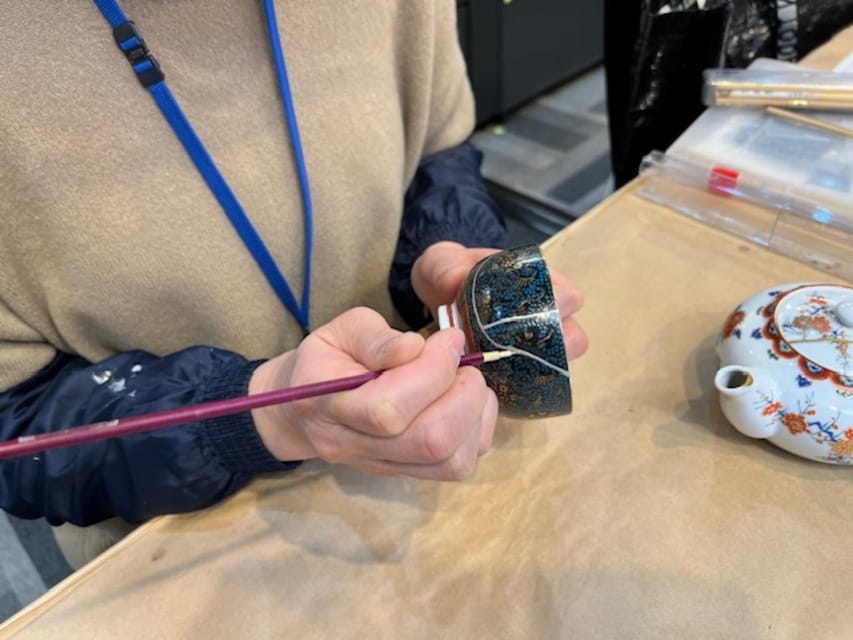
You’ll take part in a guided Kintsugi workshop using Arita ware. The experience includes an English-speaking instructor, all necessary materials, and you’ll create a plate repair that you can take home.
Do I need to bring my own item for Kintsugi?
You don’t have to. A plate used in the experience is included and available to bring home. If you want to bring your own item, it must be ceramic or porcelain, about up to φ15 cm in diameter and 15 cm in height, and have 1 to 2 broken parts.
Is the workshop offered in English?
Yes. The instructor is English-speaking, and you’ll get explanations during the workshop with English support.
How long does it take after the workshop for the piece to be ready?
After the work, you should bring it home and dry it indoors for about one week.
How should I clean the repaired plate?
You should hand wash only using dishwashing detergent. Avoid a microwave and avoid using a dishwasher.
Can I use the repaired plate for eating or drinking?
No. You should use it for decoration only, not for eating or drinking.
Is the workshop wheelchair accessible?
Yes, it is listed as wheelchair accessible.
What if I’m late or miss the scheduled time?
If you arrive late, the experience still ends at the originally scheduled time. The activity also states that there are no refunds if you do not participate on the scheduled day.
More Tour Reviews in Tokyo



Fresh reviews from around Tokyo






Tokyo, compared.
 ★ 5.0Mt Fuji and Hakone 1-Day Bus Tour Return by Bullet TrainFrom $16326,383 reviews
 ★ 5.01-Day Tokyo Bus TourFrom $12914,250 reviews
 ★ 4.6teamLab Planets TOKYO Digital Art Museum Entry TicketFrom $259,779 reviews
 ★ 4.0Mt Fuji & Hakone Cruise, Drum Show Bullet Train 1 Day from TokyoFrom $1497,413 reviews
 ★ 5.0Shinjuku Food Tour (13 Dishes at 4 Local Eateries)From $866,603 reviews
 ★ 4.4Tokyo Mt Fuji 5th St & Hakone Cruise Bus Tour w/Bullet TrainFrom $1545,024 reviews
 ★ 5.0Flagship 2-Hours Official Street Go-Kart Tour – Tokyo Bay ShopFrom $644,974 reviews
 ★ 4.5From Tokyo: Mount Fuji Full-Day Sightseeing TripFrom $684,970 reviews