
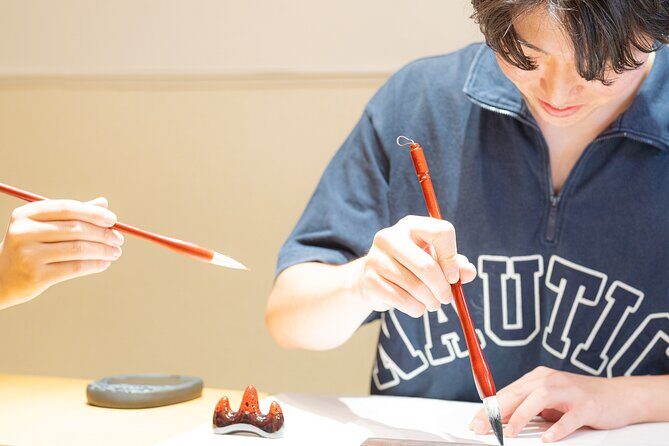
Reviewed · SHIBUYA TOURS
Tokyo: Calligraphy Experience at Japanese Room in Shibuya
One hour, one character, pure focus. This Tokyo calligraphy experience in Shibuya pairs traditional inkstone preparation with guided Japanese calligraphy practice in a relaxed setting. You finish by writing a single character on decorative paper, and that piece becomes your take-home keepsake.
I like two things a lot. First, you learn the basics in order: ink prep, tools, etiquette, then stroke practice. Second, your instructor (Sowa, also shown as Soba) is friendly and explains the how and the why, including kanji context and cultural references.
One possible drawback is also simple: the session is short and centers on writing one chosen character, not advanced calligraphy mastery. Also, since you’re handling ink, it helps to be mindful about where your hands and sleeves go.
In This Review
- Key things to know before you go
- A calm hour of Tokyo calligraphy in Shibuya
- Inkstone prep: where the workshop becomes real
- Etiquette and stroke practice that actually helps
- Picking your character: from a list or using your name
- Price and value: $32.84 for materials and a real process
- Who this Shibuya calligraphy workshop is for
- How to plan it with your Shibuya day
- Should you book this Japanese Room calligraphy experience?
- FAQ
- How long is the calligraphy workshop?
- What will I write, and can it be connected to my name?
- What happens at the beginning of the workshop?
- Where does the workshop start in Shibuya?
- Is this workshop suitable for beginners?
- What is the cancellation policy for a full refund?
Key things to know before you go
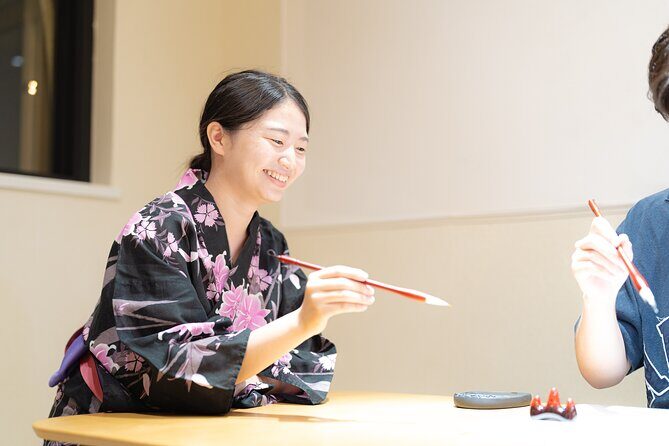
- Inkstone ink prep is part of the class: you grind and mix ink before you write.
- Small group size (max 8): you can expect closer attention as you practice strokes.
- You personalize the character: pick from a prepared list or base it on your own name.
- Practice first, final piece last: you do stroke practice before you commit to the decorative paper.
- Your work is a keepsake: you take home what you write on the provided paper.
More to do within sight of the Crossing
- Official Street Go-Kart in Shibuya★ 5.0 · 3,435 reviews
- Tokyo: Street Kart Experience in Shibuya★ 4.9 · 1,484 reviews
- Shibuya Meltdown Nightlife Tour: All-You-Can-Drink Bar Hopping★ 5.0 · 1,058 reviews
A calm hour of Tokyo calligraphy in Shibuya
This workshop is designed for a slow, quiet kind of learning, even though Tokyo outside is anything but quiet. The class runs about 1 hour, and it starts and ends at the same meeting point, so you can fit it into a normal day without stress.
The location is in Shibuya, at 2-chōme-14-13 Shibuya, Tokyo 150-0002. It’s described as near public transportation, which matters in a city where getting “close” can still mean a long walk. The group is kept to a maximum of 8 travelers, and that small size is part of why the session feels manageable instead of rushed.
If you’re the type who likes structured activities with clear instructions, this works well. You’re not just watching calligraphy; you’re doing the prep and the strokes yourself.
Inkstone prep: where the workshop becomes real
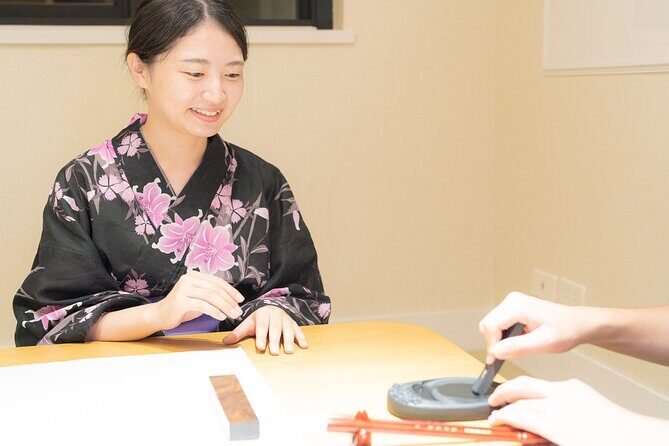
Calligraphy is one of those arts people romanticize. This class brings you back to the basics, starting with the messier, hands-on part: preparing the ink using an inkstone.
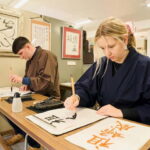
You’ll get an introduction to the tools and then learn the correct way to grind and mix the ink. That may sound technical, but the point is practical. When you understand what the ink is doing, your strokes make more sense, and the whole process feels less like copying and more like creating.
It also sets the tone. Before you ever write your final character, you’ve already slowed down and focused. You’re doing a physical ritual that forces you to pay attention to pressure, pace, and control.
Etiquette and stroke practice that actually helps
After the ink is ready, you’ll move into the fundamentals: tools, basic techniques, and proper etiquette. The goal is to help you produce a character you’re proud of, without requiring prior calligraphy experience.
One reason this workshop gets such a strong reaction is how the instruction is paced. You practice strokes first, and only then do the final work on decorative paper. That step-by-step approach can make a huge difference if your first attempt is a little shaky, because you get a chance to adjust before it counts.
In the lessons, Sowa (also spelled Soba) brings cultural context alongside technique. You’re not only learning how to write; you’re also learning why the characters are shaped the way they are. Several write-ups highlight that explanations connect to kanji structure and real-life meaning, so it feels like more than art class for tourists.
Picking your character: from a list or using your name
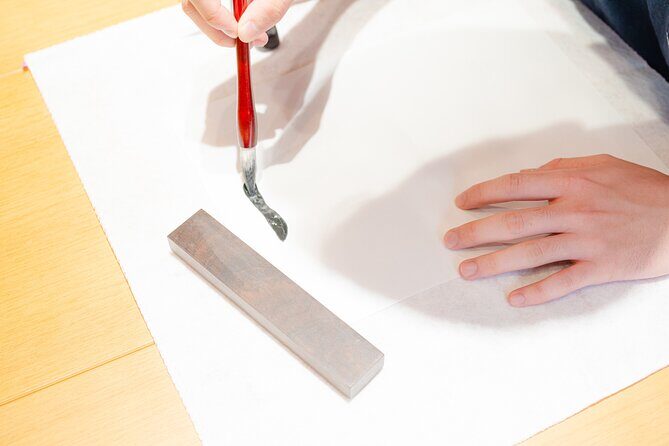
The last stage is the part you’ll probably remember most: choosing what you will write and then producing your final calligraphy piece.
You can select a character in two ways:
- choose from a prepared list, or
- write a character based on your own name.
That personalization is a smart touch for a first-timer workshop. Even if you don’t know much about kanji, choosing something tied to you makes the result feel more meaningful than a random symbol. It also turns the session into a small cultural souvenir that’s not just decorative.
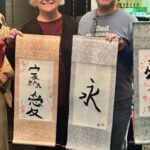
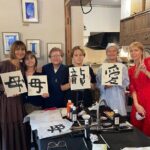
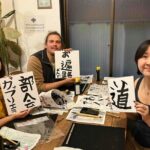
Then comes the actual writing on decorative paper. Since you’ve already practiced strokes, the final writing feels more doable. And when it’s finished, you can take it home as a keepsake, so the workshop doesn’t end when you leave the room.
More ink on paper
Price and value: $32.84 for materials and a real process
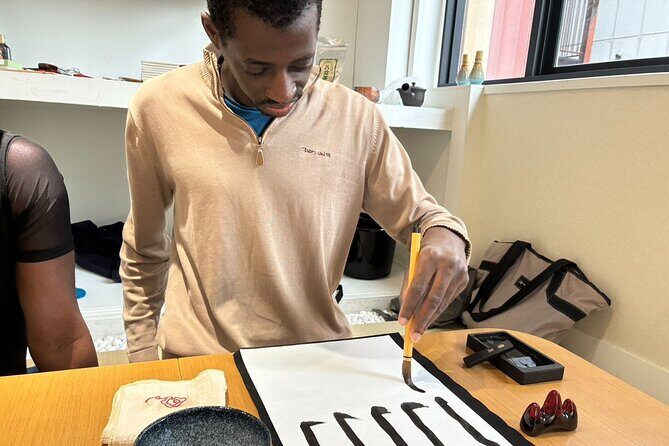
At $32.84 per person, this isn’t priced like a quick photo stop. You’re paying for instruction, hands-on materials, and the full sequence—from inkstone prep to your finished character on decorative paper.
What makes the value feel solid is that the class includes multiple “stages” that many cheaper experiences skip. Instead of jumping straight to the final writing, you go through:
- tool and etiquette intro
- ink grinding and mixing on an inkstone
- technique and stroke practice
- final character writing and take-home keepsake
So you’re not just buying an item. You’re buying time spent learning a process you can understand and repeat at a basic level elsewhere.
What it doesn’t do is turn you into an advanced calligrapher in an hour. If your goal is deep mastery, you’ll need longer lessons later. But for a first workshop that gives you a meaningful result, it’s a fair trade.
Who this Shibuya calligraphy workshop is for
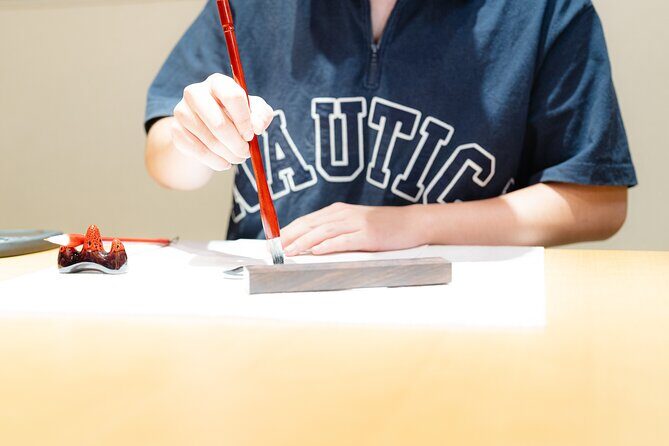
This is a great fit if you want something calmer than the typical Tokyo schedule. It’s especially good for:
- first-time visitors who want a hands-on cultural activity
- travelers who like step-by-step instruction
- anyone who wants a take-home keepsake that looks and feels personal
- small groups who want a shared activity without noise or pressure
It’s also worth considering if you’re even slightly interested in kanji structure or how meaning gets shaped into strokes. The instructor’s explanations are described as clear, with context that connects the character to how it’s understood.
If you only want passive sightseeing, this won’t be your thing. You’ll be writing, so plan to focus your attention for the full hour.
How to plan it with your Shibuya day
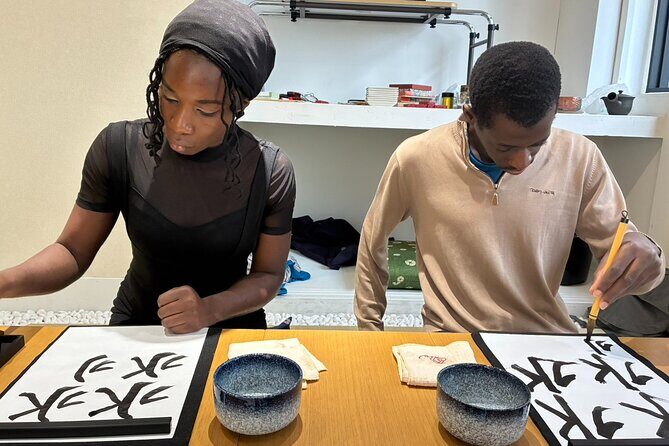
Since this workshop ends back at the meeting point, it’s easy to build into a Shibuya itinerary. The best strategy is to schedule it when you still have energy for focused activities.
I’d pair it with an early or mid-afternoon slot rather than right at the end of a day when you’re already fried. Ink prep and careful stroke work require a calm mind. Even though the session is described as relaxed and zen-like, it still asks for attention.
After your calligraphy, Shibuya makes a good neighborhood to wander because it keeps the day feeling complete: you can grab a snack nearby and then do casual browsing. Just don’t plan anything that requires overly clean clothing right after—ink work can be a little untidy by nature.
Should you book this Japanese Room calligraphy experience?
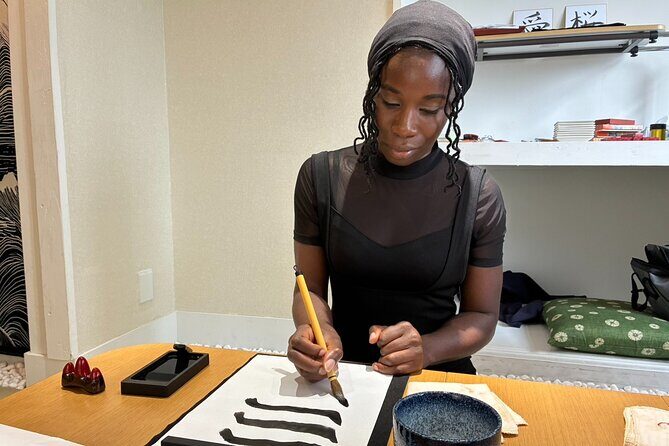
Book it if you want a hands-on Tokyo cultural activity with clear guidance, a small class size, and a real take-home keepsake. The hour format works well for first-timers, and the inkstone-to-final-piece structure gives you a satisfying arc instead of a quick craft.
Skip it if your priority is advanced calligraphy technique or if you dislike activities that involve careful hand movements and ink preparation. This is intentionally beginner-friendly and gentle, so it’s not trying to be an intensive training program.
If you’re in Shibuya and you want one memorable, quiet, practical experience that feels authentically Japanese, this one is an easy yes.
FAQ
How long is the calligraphy workshop?
The experience lasts about 1 hour (approx.).
What will I write, and can it be connected to my name?
You’ll choose a character to write. You can select one from a prepared list or choose one based on your own name.
What happens at the beginning of the workshop?
You start by preparing the ink using an inkstone, including learning how to grind and mix the ink.
Where does the workshop start in Shibuya?
The meeting point is 2-chōme-14-13 Shibuya, Tokyo 150-0002, Japan.
Is this workshop suitable for beginners?
Yes. The experience is described as something most travelers can participate in, with guidance on basic techniques and proper etiquette.
What is the cancellation policy for a full refund?
You can cancel for a full refund if you cancel at least 24 hours before the experience starts.
More Tour Reviews in Tokyo






Brush and Ink: More Calligraphy Hours

Still in Shibuya? Keep Going




Fresh reviews from around Tokyo






Shibuya Tours, compared.
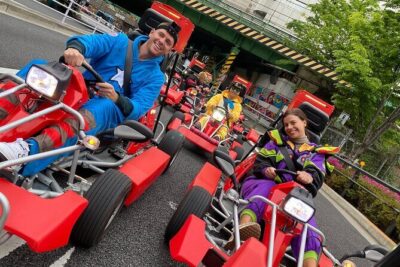 ★ 5.0Official Street Go-Kart in ShibuyaFrom $763,435 reviews
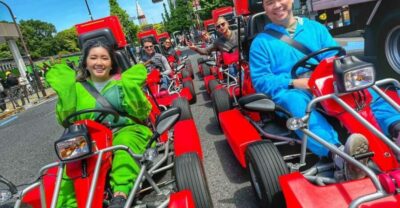 ★ 4.9Street Kart Experience in ShibuyaFrom $741,484 reviews
 ★ 5.0Shibuya Meltdown Nightlife Tour: All-You-Can-Drink Bar HoppingFrom $1061,058 reviews
 ★ 5.0Shibuya Official Street Go-Kart in Shibuya AnnexFrom $69972 reviews
 ★ 5.0Shibuya Food Tour (13 dishes and 4 Eateries)From $77770 reviews
 ★ 5.0Best of Shibuya Food TourFrom $217612 reviews
 ★ 4.8Shibuya Highlights Walking TourFrom $19601 reviews
 ★ 4.7Premium Go-Kart Tour with Tower & Shibuya CrossingFrom $116528 reviews
Browse the lists this tour appears in