

Reviewed · TOKYO
Imperial Palace Tour: Discover Samurai History with a Local Guide
Samurai stories start at a Starbucks. This Imperial Palace East Gardens walking tour turns a big, famous site into something you can actually understand on foot, with a guide connecting the dots between the Tokugawa shogunate era and Japan’s imperial world.
I especially love how the route mixes quiet garden paths with clear, tangible remnants like Tatsumi Yagura. You get guided context that makes the stones, gates, and moats feel like more than scenery.
One drawback to keep in mind: the meeting point is a specific landmark, so if you’re the type to arrive at the last minute, you may feel rushed trying to spot your group.
In This Review
- Key things I’d focus on
- Imperial Palace East Gardens are made for a guided walk
- Meet at Starbucks: get your bearings before you start
- Stop 1: Sakurada (Tatsumi) Yagura watchtower and what it tells you
- Stop 2: Nijūbashi Bridge, the double-arch approach to the inner grounds
- Stop 3: Imperial Palace East Gardens on former Edo Castle ruins
- Stop 4: Imperial Palace grounds and the emperor-centered layer
- Price, group size, and whether $12.90 makes sense
- What to bring for a smooth 2-hour palace walk
- Should you book the Imperial Palace Tour with YURAGI?
- FAQ
- How long is the Imperial Palace tour?
- What does the tour cost?
- What size is the group?
- Where does the tour meet?
- Is a mobile ticket used?
- Do I need paid admission tickets for the stops?
- Is the tour good for walking fitness levels?
- Is the tour near public transportation?
- Is there free cancellation?
Key things I’d focus on

- Small group size (max 8): easier questions, less waiting around at each viewpoint.
- Free-to-enter listed stops: you’re not paying extra to see what’s on the route.
- Tatsumi Yagura + Nijūbashi Bridge: two standout Edo-period signals in one compact walk.
- East Gardens on former Edo Castle ground: you’ll connect the modern palace layout to older defensive spaces.
- 2-hour length: a good fit when you want palace sights without losing the day.
Before you commit, see how this one stacks up against a few Tokyo favourites:
- Mt Fuji and Hakone 1-Day Bus Tour Return by Bullet Train★ 5.0 · 26,383 reviews
- 1-Day Tokyo Bus Tour★ 5.0 · 14,250 reviews
- Tokyo: teamLab Planets TOKYO Digital Art Museum Entry Ticket★ 4.6 · 9,779 reviews
Imperial Palace East Gardens are made for a guided walk
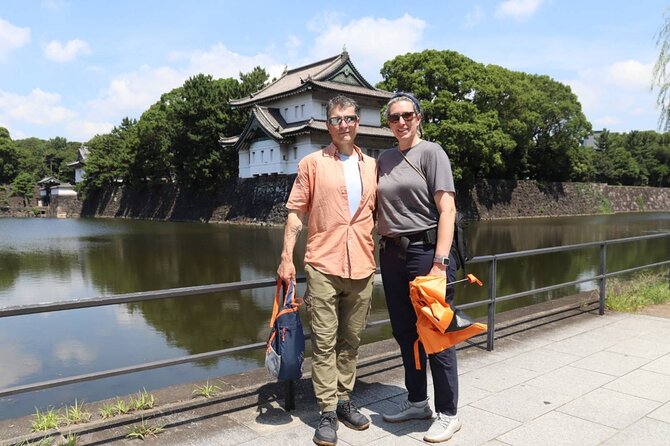
Tokyo’s Imperial Palace can feel like a wall of history from far away. Up close, it turns into gates, stonework, moats, and carefully maintained paths. That’s exactly why this format works: a 2-hour walking tour gives you time to move at a human pace while your guide explains what you’re actually looking at.
The tour’s core idea is simple. You’re not just visiting spots. You’re learning how power was staged here—first around the Edo Castle world, then later under the imperial system. As you walk, the stories help the layout click: watchtower views, approach bridges, and the way garden routes sit inside a much larger historical footprint.
Also, the “small group” piece matters. When you’re only up to eight people, you can hear the guide clearly and you’re more likely to get follow-up questions without feeling like you’re interrupting a conveyor belt.
Meet at Starbucks: get your bearings before you start
Your meeting point is Starbucks Coffee – Kokyo Gaien Wadakura Fountain Park in Chiyoda City (3-1 Kōkyogaien). That’s convenient because it’s a recognizable anchor, and the tour runs near public transportation.
Here’s the practical trick I’d use: arrive a bit early and take a quick mental snapshot—what side of the fountain park is the group likely to gather on, and what time of day is your light at. If you’ve ever shown up early to Tokyo tours, you know the weird reality: you can still miss your group simply because you’re staring in the wrong direction.
And if you’ve got flexibility, choose a slower start. One review note mentioned that the beginning can be slightly awkward if you can’t find the guide right away. That’s not a reason to avoid the tour—it’s a reason to arrive early and check the meeting details before you walk in circles.
Stop 1: Sakurada (Tatsumi) Yagura watchtower and what it tells you
The first stop is Sakurada Tatsumi Yagura, also called Sakurada Nijū Yagura. This is a two-story watchtower from the Edo period inside the Imperial Palace grounds, and it’s noted as one of the few surviving structures.
Why this matters is that it’s not just a pretty photo spot. A watchtower is a functional piece of control. It hints at how information and security worked in the era when Edo Castle was a real center of power. When your guide points out the tower’s role, the structure becomes a clue—how people monitored, how authority signaled itself, and how architecture supported governance.
The tour allocates about 30 minutes here, which is a decent chunk of time for a landmark that looks simple at first glance. You’ll have enough time to orient yourself, take photos, and absorb the story without rushing.
Tip for your visit: watch your footing. Stone and pathways in palace grounds can be uneven in places, and you’ll be doing repeated walking steps for the full two hours.
Stop 2: Nijūbashi Bridge, the double-arch approach to the inner grounds
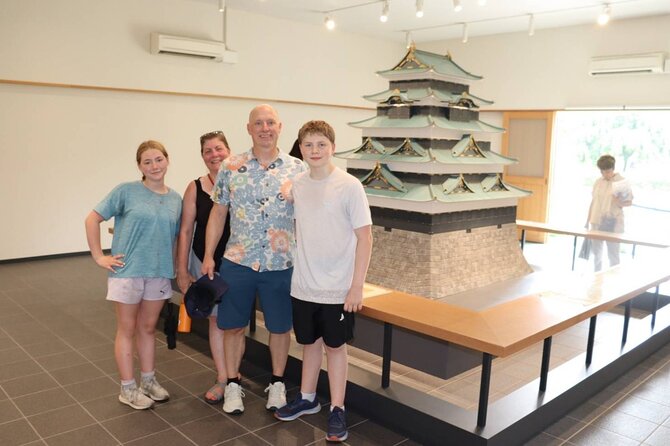
Next comes the Two-tiered Bridge (Ni-ju Bashi), known for its iconic double-arched look. The bridge spans the moat and serves as the main approach to the inner grounds.
If you only saw the bridge as an image, you’d miss the reason it’s famous. The moats-and-approach idea is doing work here. It’s architecture that guides movement and signals status. Your guide’s commentary is what makes the geometry feel meaningful—why a bridge like this becomes a visual shorthand for authority.
This stop is shorter—about 15 minutes—and that’s actually good. Nijūbashi is a view you catch quickly, then move on to the next layer of the story.
If you care about photos, arrive with that in mind. Don’t spend the whole fifteen minutes fiddling with your camera settings. Take a couple solid shots, then let the guide’s explanation do its job.





Stop 3: Imperial Palace East Gardens on former Edo Castle ruins
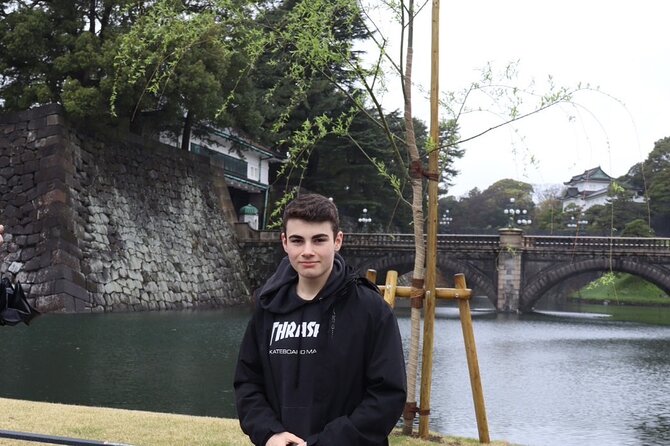
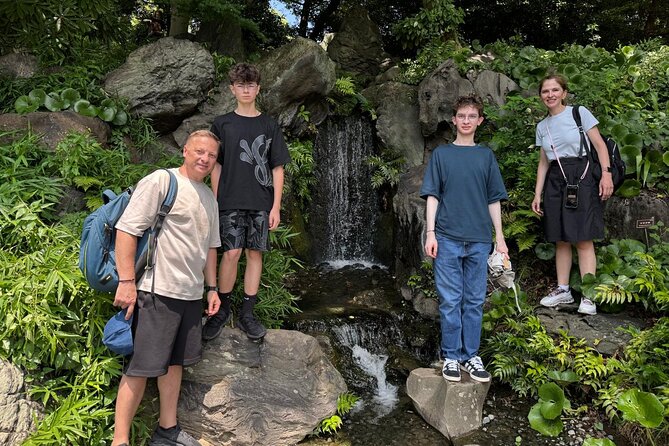
The biggest “walk and absorb” section is the Imperial Palace East Gardens. This area is open to the public and sits on the former grounds of Edo Castle. Expect stone walls, gates, traditional Japanese landscaping, and seasonal flowering (timing depends on the time of year).
The value here is that the East Gardens don’t feel like a random park tour. The guide ties the greenery and paths to the deeper structure of Edo Castle. You’re seeing how a defensive site and a ceremonial space can share the same footprint—just interpreted differently across time.
This stop runs about 30 minutes, which is right for noticing details without getting stuck in one spot. Look for the way the paths curve, how the stonework frames boundaries, and how gates mark transitions. Those boundaries are what help you understand the old layout and why the palace grounds feel intentional rather than open-ended.
Possible drawback: because it’s a walking garden environment, your experience will depend on your comfort with uneven surfaces and repeated short steps. It’s listed for moderate physical fitness, so if you have mobility issues, plan ahead and pace yourself.
Stop 4: Imperial Palace grounds and the emperor-centered layer
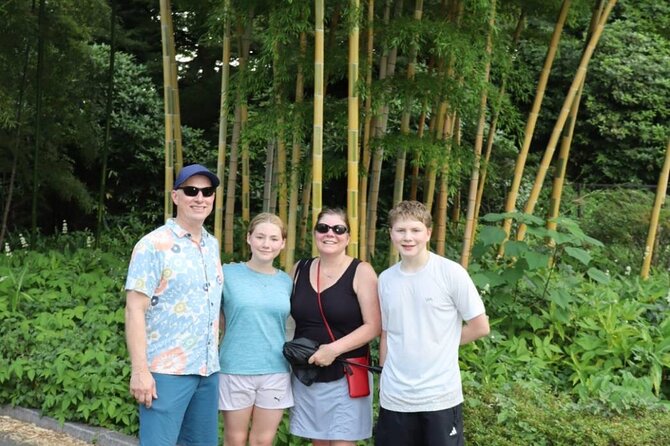
The final stop is the Imperial Palace area itself, described as the residence of the Emperor of Japan and a major Tokyo landmark. Since the palace sits on the former Edo Castle site, you’ll see the overlap: moats, stone walls, and the palace grounds layout built on top of older power geography.
This is the moment where the tour theme clicks most clearly. The Tokugawa shogunate era isn’t just a storybook setting. It’s connected to how the site evolved, and how governance shifted from one form of authority to another.
You’ll have about 30 minutes here, which is long enough to understand what you’re looking at—especially if you’ve been paying attention at earlier stops. If you’ve already caught the Edo-era clues in the watchtower and approach bridge, the palace grounds start to make more sense.
Keep your expectations realistic: you’re not touring inside the palace buildings in this walking format. The focus stays on the grounds and what you can see and interpret around them.
Price, group size, and whether $12.90 makes sense
At $12.90 per person, this is priced like a budget-friendly way to get real guidance in one of Tokyo’s most visually guarded-feeling areas. The big “value” isn’t only the cost. It’s what you get for it: a local guide, a short walking circuit, and a group capped at 8 travelers, which usually means the guide can actually respond to the group.
You also get a mobile ticket, plus the itinerary lists the main stops as admission ticket free. That helps your total day budget. Even if you plan to spend money elsewhere in Tokyo, this tour won’t quietly add surprise fees.
Group discounts are mentioned too, so if you’re traveling with a friend or two, check whether your booking creates a better per-person rate. The small-group limit already suggests the provider is trying to keep the experience intimate rather than turning it into a packed walking show.
Who it suits best:
- First-timers who want Edo Castle and samurai-era context without spending a whole day.
- People who like walking with a narrative rather than wandering alone.
- Travelers who want a manageable duration and a clear end back where you started.
What to bring for a smooth 2-hour palace walk
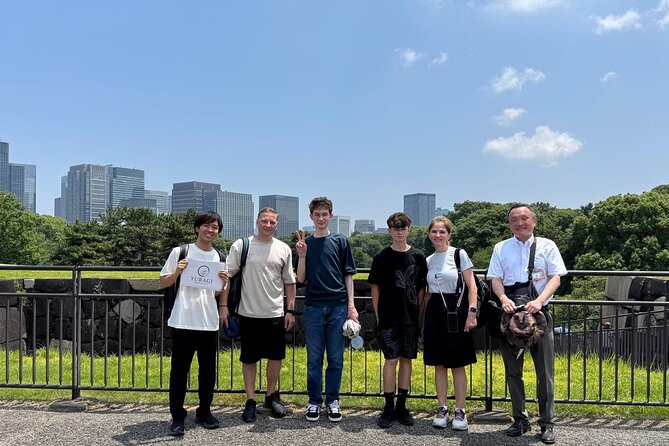
This tour is about 2 hours (approx.), and it’s a walking experience across palace grounds. I’d treat it like a “comfortable shoes” day, not a museum line day.
Pack basics:
- Comfortable walking shoes for stone and garden paths.
- A light layer for changing Tokyo weather.
- Water, especially if you’re visiting on a warm day.
- Your phone for the mobile ticket.
If you rely on step-free access, keep expectations cautious. The tour lists moderate physical fitness rather than full accessibility details. That doesn’t mean it’s impossible for everyone, but it does mean you should plan your pace and consider your walking comfort.
Good news for companionship and needs: service animals are allowed, and the meeting point is set near public transportation.
Should you book the Imperial Palace Tour with YURAGI?
I think you should book this tour if you want palace sights with context, and you prefer a small-group walking format that stays practical. The standout features for me are the combination of Tatsumi Yagura and Nijūbashi Bridge with the East Gardens walking time that links it all to Edo Castle ground—without turning the day into a long trek.
You might skip it if you’re hoping for a deeper, building-by-building palace interior visit. This is about what you can see and read in the grounds, gates, stones, and approach lines. If that’s your goal, you’ll likely feel satisfied.
Final nudge: arrive a little early at the Starbucks meeting point so you don’t start the tour chasing your guide.
FAQ
How long is the Imperial Palace tour?
It runs for about 2 hours (approx.).
What does the tour cost?
It costs $12.90 per person.
What size is the group?
The tour has a maximum of 8 travelers.
Where does the tour meet?
The meeting point is Starbucks Coffee at Kokyo Gaien Wadakura Fountain Park, 3-1 Kōkyogaien, Chiyoda City, Tokyo 100-0002, Japan.
Is a mobile ticket used?
Yes, the tour includes a mobile ticket.
Do I need paid admission tickets for the stops?
The listed stops are marked as admission ticket free.
Is the tour good for walking fitness levels?
It’s recommended for travelers with a moderate physical fitness level.
Is the tour near public transportation?
Yes, it’s near public transportation.
Is there free cancellation?
Yes. You can cancel up to 24 hours in advance for a full refund. If you cancel less than 24 hours before the experience starts, it’s not refunded.
More Tour Reviews in Tokyo



Fresh reviews from around Tokyo






Tokyo, compared.
 ★ 5.0Mt Fuji and Hakone 1-Day Bus Tour Return by Bullet TrainFrom $16326,383 reviews
 ★ 5.01-Day Tokyo Bus TourFrom $12914,250 reviews
 ★ 4.6teamLab Planets TOKYO Digital Art Museum Entry TicketFrom $259,779 reviews
 ★ 4.0Mt Fuji & Hakone Cruise, Drum Show Bullet Train 1 Day from TokyoFrom $1497,413 reviews
 ★ 5.0Shinjuku Food Tour (13 Dishes at 4 Local Eateries)From $866,603 reviews
 ★ 4.4Tokyo Mt Fuji 5th St & Hakone Cruise Bus Tour w/Bullet TrainFrom $1545,024 reviews
 ★ 5.0Flagship 2-Hours Official Street Go-Kart Tour – Tokyo Bay ShopFrom $644,974 reviews
 ★ 4.5From Tokyo: Mount Fuji Full-Day Sightseeing TripFrom $684,970 reviews