
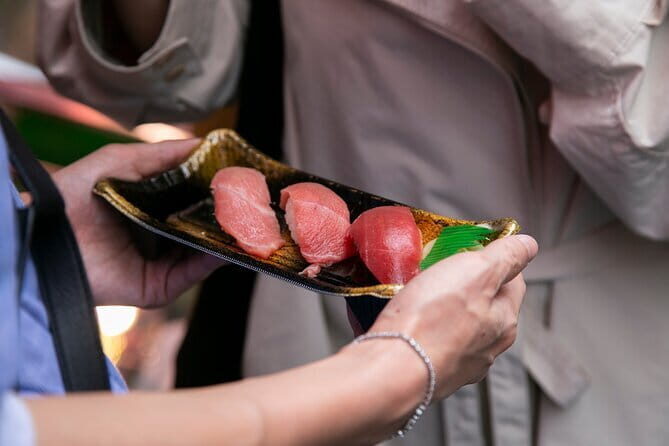
Reviewed · TSUKIJI FISH MARKET TOURS
Tokyo Tsukiji Market Small Group Tasting Tour
Your morning in Tokyo starts with food and ritual. This Tsukiji tasting tour strings together a Buddhist purification moment, a guided walk through the Outer Market, and a final stop at Namiyoke Inari—a shrine tied to the people who keep Tsukiji running.
I like the way this tour gets you eating without feeling lost: you get 4–5 tastings and a guide who keeps things moving. I also like the max 10 group size, which makes it easier to ask questions and keep your pace realistic.
One heads-up: the tour cannot accommodate vegan or vegetarian dietary restrictions, so plan around that if your diet is strictly plant-based.
In This Review
- Key highlights at a glance
- Tsukiji in the morning: why the 8:30 start matters
- Tsukiji Hongwan-ji Jiko-in: the purification ritual stop you will remember
- Outer Tsukiji Market tastings: how the 4–5 samples work
- Namiyoke Inari Shrine: a merchant-focused finale
- Guides make the tour: Daniel, Aki, and Elena’s lead styles
- Price and value: what $89 buys you (and what it does not)
- Logistics that actually affect your day
- Practical advice: how to get the most from the market part
- Who should book this Tsukiji tasting tour
- Should you book this Tsukiji tasting tour?
- FAQ
- How long is the Tokyo Tsukiji Market small group tasting tour?
- What is included in the price?
- How many people are in the group?
- What stops are included in the itinerary?
- Is the tour suitable for vegan or vegetarian diets?
- Where does the tour start and end?
- Is this tour near public transportation and are service animals allowed?
- What is the cancellation policy?
Key highlights at a glance
- Tsukiji Hongwan-ji purification ritual before you head to the market for tastings
- 4–5 traditional food tastings (you are not left to guess what to order)
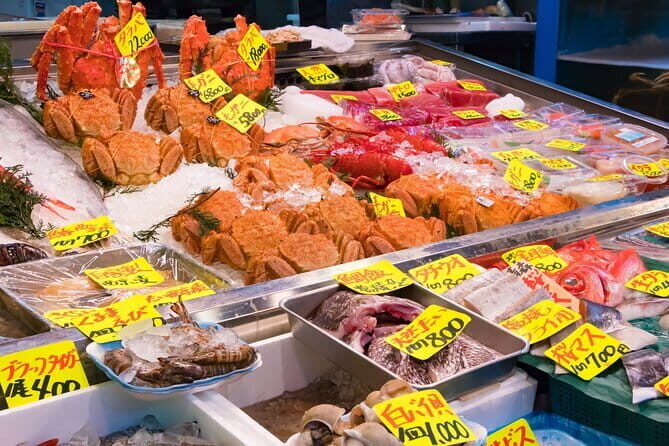
- Outer Tsukiji Market vendor stops with seafood and savory meat samples
- Namiyoke Inari Shrine as a merchant-focused finale
- Small group limit of 10 for better pacing and questions
Still hungry? More Tsukiji breakfasts and market walks
- Tokyo Tsukiji Fish Market Food and Culture Walking Tour★ 5.0 · 3,184 reviews
- Tokyo: Tsukiji Fish Market Food and Walking tour★ 5.0 · 1,724 reviews
- Tokyo: Tsukiji Fish Market Guided Walking Tour★ 4.9 · 1,397 reviews
Tsukiji in the morning: why the 8:30 start matters
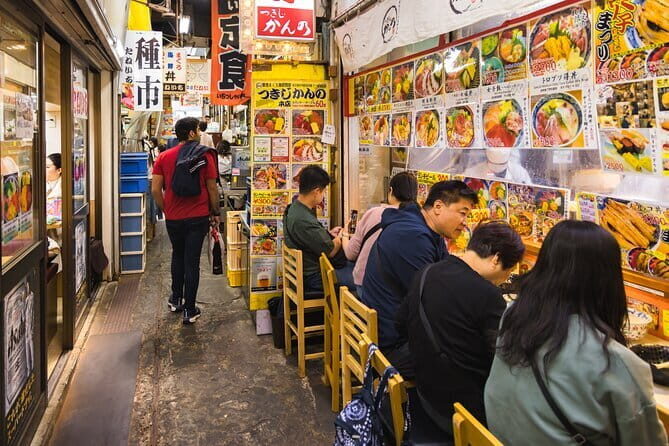
Tsukiji can feel chaotic if you arrive cold. This tour starts at 8:30 am and uses a tight 2 hours 30 minutes window to get you the main sights without spending your whole day trapped in the crowd flow.
The value here is not just the locations. It is the structure: you start with context, then you eat, then you end with a shrine stop that explains why merchants cared so much about protection and good business. If you like Tokyo that has a plan (and fewer guesswork moments), this format is a good fit.
Also, the tour is capped at 10 people, so it stays the right size for a “show me where to look” experience. If you prefer to wander on your own, you can still do that afterward, because the schedule leaves time for a second pass through the market area.
Tsukiji Hongwan-ji Jiko-in: the purification ritual stop you will remember
Most food tours rush straight to the eating. This one begins at Tsukiji Hongwan-ji Jiko-in Temple, a landmark with centuries behind it, where you can observe a purification ritual and take in the temple’s architecture.
Even if you know nothing about Buddhist practice, this stop helps you understand why Tsukiji is not only a food zone. It is also a sacred space where people start the day with ritual and respect before stepping into the market world.
The time is about 30 minutes, and the best way to get value out of it is to slow down for the first half hour. Look closely at what happens during the ritual, and notice how calm it is compared with what comes next.
Tip: wear comfortable shoes. You will move from temple calm to market crowds soon after, and you will feel the difference.
Outer Tsukiji Market tastings: how the 4–5 samples work
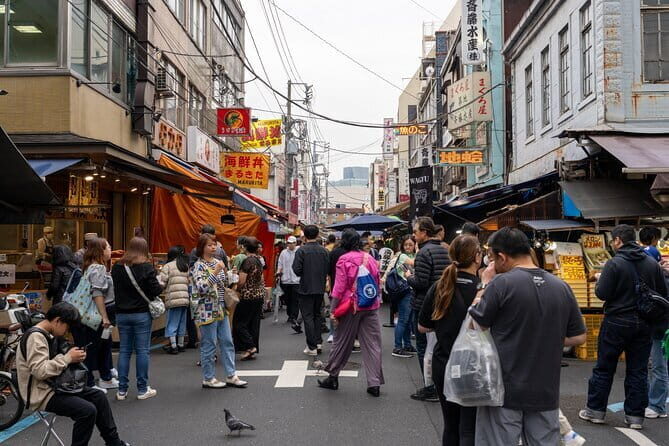
After the temple stop, you head into the Outer Tsukiji Market, where the energy swings hard from quiet to sensory overload. This is where the tour becomes practical: you do not just walk past stalls, you stop at selected vendors and get 4–5 traditional tastings.
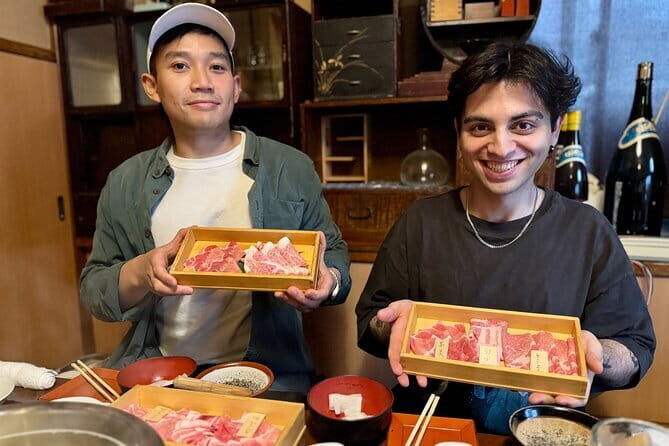
The tastings typically focus on fresh seafood and savory meat options. That means this is a strong choice if you are open-minded and hungry for classic Japanese market food, but it is also exactly why strict vegetarian or vegan diets are a mismatch for this experience.
One reason this tour earns such strong ratings is that the guide’s job is not just narration. Guides are there to explain what you are tasting and answer questions on the spot, and you will often get water and bathroom breaks built into the pacing.
You will still be around other people eating and shopping, but the tour keeps you from spending your energy figuring out what is worth ordering. Instead, you focus on sampling and learning the cues that help you shop later on your own.
Namiyoke Inari Shrine: a merchant-focused finale
The tour ends at Namiyoke Inari Shrine, connected to the idea of protecting Tsukiji’s merchants. This is not just a random photo stop. It gives you a story to hold in your head while you think about all the vendors and families who work in this market.
The stop is about 30 minutes, which is a good amount of time for looking around, reading the general mood, and reflecting on how commerce and faith often overlap in Japan. If you have ever wondered why some places feel “more than places,” this kind of ending helps you understand that.
If you only came for seafood, you might be tempted to rush. Don’t. Take a minute to notice how the shrine world changes the tone of the day. It is a neat way to wrap up the experience with something human, not just edible.
Other plates worth crossing Tokyo for



Guides make the tour: Daniel, Aki, and Elena’s lead styles
A big reason this experience stands out is the guide leadership. In past groups, you may be led by Daniel, Aki, or Elena, and they tend to run the tour with care for pacing and questions.
With Daniel in particular, the pattern is clear: kind, history context, and lots of Q and A. In many cases, the guide also helps with comfort needs like water and bathroom timing, and can tailor the tastings to what you want.
Aki has been noted for taking the group to extra spots not listed in the standard flow. That matters because markets can shift day to day, and a guide who can adapt helps you feel like you are not stuck with a script that ignores reality.
Elena’s style, as described in feedback, includes clear explanations and active group management, including waiting for anyone who falls behind. That is exactly what you want in a market setting, where narrow walkways and sudden crowd swells can slow you down.
Price and value: what $89 buys you (and what it does not)
At $89 per person for about 2.5 hours, you are paying for three things: a guide, selected vendor stops, and 4–5 tastings. You are not paying just for walking around.
Admission tickets at the temple and shrine stops are listed as free, and the itinerary is built to keep you focused on the parts that benefit most from a guide. That is important because in a market like Tsukiji, the difference between a so-so experience and a great one is often knowing where to go and what to try.
What is not included: additional foods and drinks. If you think you will keep snacking after the tastings end, budget extra cash for personal cravings. Also note that personal travel insurance is not included.
If you compare this to doing Tsukiji totally on your own, the main tradeoff is freedom. The main reward is clarity. You spend less time guessing and more time sampling and learning.
Logistics that actually affect your day

Start point is Tsukiji Station, with the tour beginning at 3 Chome-9 Tsukiji, Chuo City, Tokyo 104-0045. The tour ends back at the same meeting point, so you can plan the rest of your day without wondering how you will get away.
It is near public transportation, which matters because Tokyo is big, and you will want a clean route to and from this area. You also get a mobile ticket, which keeps things simple if you rely on your phone for everything.
The group size stays small, and that affects the vibe. You will have an easier time keeping up, asking questions, and moving from tastings to tastings without feeling like a number.
Service animals are allowed, which is helpful if you need that accommodation.
Practical advice: how to get the most from the market part
Wear comfortable shoes. Market floors can be uneven, and you will stand while tasting. Also, dress for the morning weather since the start time is early.
Bring a little extra cash or a card for snacks beyond the included samples. The tour gives you 4–5 tastings, but it cannot cover every craving you might develop once you start smelling everything.
Come hungry but not frantic. The guide is taking you through several tasting stops, so you want space in your stomach for multiple small bites, not one huge meal that kills the fun early.
Diet note, again, is key: the tour cannot accommodate vegan or vegetarian requests. If you have a different restriction, like gluten-free or pescatarian, the tour says they will do their best, but they cannot guarantee all requests will be met. If your diet is strict, message ahead and be prepared to adjust expectations.
Who should book this Tsukiji tasting tour
This is a great fit if:
- you want a guided introduction to Tsukiji rather than wandering blindly
- you like learning the meaning behind what you are seeing, not only eating
- you want a small group experience with time for questions
- you are comfortable with seafood and savory meat tastings
This is less ideal if:
- you are vegan or vegetarian (the tour cannot accommodate it)
- you want a totally free-form market walk with no tastings structure
- you dislike any meat or seafood at all, since tastings are centered on those categories
If you are visiting Tokyo for the first time, this is also a smart “get your bearings fast” style tour. It sets the stage so your later independent browsing makes more sense.
Should you book this Tsukiji tasting tour?
If you want a morning that mixes food with meaning, I think this booking makes sense. The small group, the 4–5 tasting plan, and the temple-to-market-to-shrine flow are the core reasons the experience gets strong results.
Book early if you can. It is commonly reserved about 31 days in advance, and a tour limited to 10 people can fill up.
Just be honest about diet first. If you can eat seafood and savory meat, you are set up for a satisfying, guided Tsukiji morning. If you cannot, skip this one and look for a tour that explicitly matches your needs.
FAQ
How long is the Tokyo Tsukiji Market small group tasting tour?
The tour runs about 2 hours 30 minutes.
What is included in the price?
The price includes a hand-picked expert tour guide and 4–5 traditional food tastings.
How many people are in the group?
The tour has a maximum group size of 10 travelers.
What stops are included in the itinerary?
The tour includes Tsukiji Hongwan-ji Jiko-in Temple (with a purification ritual observation), the Outer Tsukiji Market for tastings, and Namiyoke Inari Shrine.
Is the tour suitable for vegan or vegetarian diets?
No. The tour cannot accommodate vegan or vegetarian dietary restrictions, though the provider says it will do its best for other needs (such as gluten-free and pescatarian) but cannot guarantee all requests.
Where does the tour start and end?
It starts at Tsukiji Station (3 Chome-9 Tsukiji, Chuo City, Tokyo 104-0045) and ends back at the same meeting point.
Is this tour near public transportation and are service animals allowed?
Yes. It is near public transportation, and service animals are allowed.
What is the cancellation policy?
Free cancellation is available up to 24 hours before the experience starts for a full refund. If you cancel less than 24 hours in advance, the amount paid is not refunded.
More Tours in Tokyo




More Tour Reviews in Tokyo




Back to the Market: More Tsukiji Tours



Fresh reviews from around Tokyo






Tsukiji Fish Market Tours, compared.
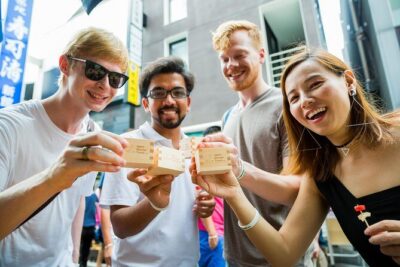 ★ 5.0Tokyo Tsukiji Fish Market Food and Culture Walking TourFrom $993,184 reviews
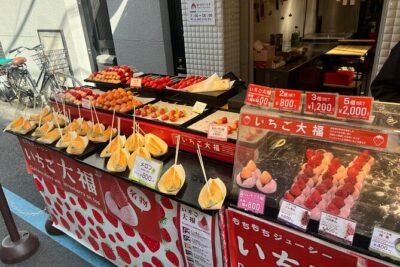 ★ 5.0Tsukiji Fish Market Food and Walking tourFrom $301,724 reviews
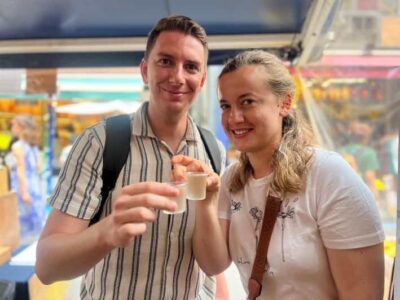 ★ 4.9Tsukiji Fish Market Guided Walking TourFrom $221,397 reviews
 ★ 5.0Tokyo Sushi Making Class in Tsukiji with Professional ChefFrom $491,177 reviews
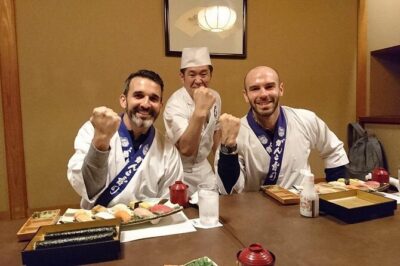 ★ 5.0Tsukiji Fish Market Guided Tour and Sushi Making with Pro ChefFrom $104775 reviews
★ 4.7Tsukiji Fish Market Food and Culture Walking TourFrom $96757 reviews
★ 5.0Tsukiji Fish Market Guided Tour and Sushi Making with Pro ChefFrom $104775 reviews
★ 4.7Tsukiji Fish Market Food and Culture Walking TourFrom $96757 reviews
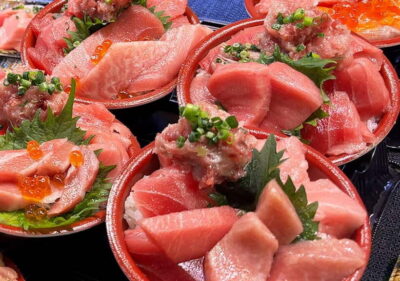 ★ 5.0Tsukiji Fish Market: Street Food & Culture Walking TourFrom $33669 reviews
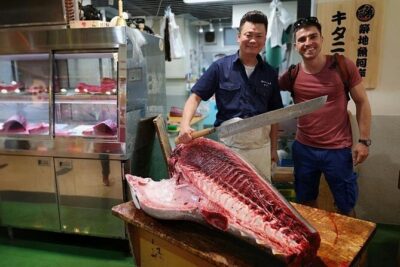 ★ 5.0Tsukiji Fish Market Small-Group Food Walking TourFrom $87621 reviews
Browse the lists this tour appears in