
Reviewed · TSUKIJI FISH MARKET TOURS
Tokyo Tsukiji Food & Culture 6hr Private Tour with Licensed Guide
Tokyo’s food map gets handed to you. This private 6-hour walk is built around Tsukiji/Toyosu and Asakusa, so you get the market feel without getting lost in it. I like the licensed guide who reads the morning flow for you, and I like that the plan is flexible (you choose 3–4 stops) instead of marching you through everything. One possible drawback: it’s mostly walking, so comfy shoes matter, especially if the weather is rough.
This tour also works well because you’re not sharing the day with strangers. You’ll have a guided pace, a simple meet-up on foot in the city area, and a plan that keeps food, shopping, and temple sights in the same route. On rainy days, I’ve seen feedback praise a weather-friendly boat option, which is a nice reminder to ask your guide how they’ll adapt.
In This Review
- Key highlights at a glance
- Why Tsukiji and Asakusa make perfect food-culture bookends
- Price and value: what $154.84 per person really covers
- The private format: how the pace and route work
- Toyosu Market: the modern wholesale start that sets the tone
- Tsukiji Fish Market: where your guide makes sense of the seafood maze
- A small practical tip
- Ameyoko Shopping Street: quick hits for snacks and deal hunting
- Senso-ji and Kaminarimon: the temple leg that gives you a reset
- Nakamise Shopping Street: snacks now, souvenirs later
- Kappabashi Dogugai: kitchen tools shopping that feels oddly fun
- Tsukishima Monjya Street: the quirky snack stop that people remember
- Yanaka Ginza: the old-town Tokyo contrast
- What I’d do to make this tour run smoothly
- Who should book this private Tsukiji food-and-culture tour
- Should you book this Tsukiji Food & Culture private tour?
- FAQ
- How long is the Tokyo Tsukiji Food & Culture private tour?
- What stops can I choose during the tour?
- Is pickup included?
- Are entrance tickets included for the markets?
- Is lunch included?
- Is this a walking tour?
- Is it only for my group?
- Can I cancel for free?
Key highlights at a glance
- Licensed local English guide who helps you understand what you’re seeing and what to try
- Choose 3–4 stops from the Tsukiji, Asakusa, and shopping-street mix for a tailored day
- Toyosu Market + Tsukiji Fish Market in one outing: modern wholesale first, classic seafood lanes next
- Asakusa shopping streets like Nakamise and Kappabashi for snacks and practical souvenirs
- Rain plan flexibility based on guidance you’ll get on the day (including a boat detour in feedback)
- Private format so your group can move together at your pace
Still hungry? More Tsukiji breakfasts and market walks
- Tokyo Tsukiji Fish Market Food and Culture Walking Tour★ 5.0 · 3,184 reviews
- Tokyo: Tsukiji Fish Market Food and Walking tour★ 5.0 · 1,724 reviews
- Tokyo: Tsukiji Fish Market Guided Walking Tour★ 4.9 · 1,397 reviews
Why Tsukiji and Asakusa make perfect food-culture bookends
Tsukiji and Asakusa are two sides of Tokyo’s everyday food culture. Tsukiji/Toyosu gives you the wholesale engine and seafood theater—fast, loud, and full of details you’d miss if you just wandered. Asakusa then shifts the mood to old-school neighborhood shopping, street snacks, and a temple approach that feels like Tokyo’s main stage for souvenirs and ceremonies.
This is the kind of tour that makes your time feel efficient. A typical first-timer day can turn into a zig-zag of trains, wrong turns, and late starts. Here, you stay in one geographic pocket and let your guide do the routing and timing decisions.
I also like the private angle for this specific area. Market streets can be chaotic, and temple-souvenir alleys fill up quickly. Having one guide to track you and your group helps you spend energy on eating and looking—not negotiating crowds.
Price and value: what $154.84 per person really covers
At $154.84 per person for about 6 hours, the value comes from three things: the licensed guide, the private pacing, and the fact that you’re not paying for wasted time.
This price is for the experience itself, and it does not include things you’d normally need to budget for on a day out: transportation, entrance fees, lunch, and other personal spending. Some market access costs are also not included (Toyosu is noted as ticketed), while Tsukiji Fish Market is listed as free for that stop. Translation for you: you should plan on paying for any food you want to buy or taste and any paid entry that your selected stops require.
What you’re buying is clarity. In Tsukiji/Toyosu, knowing where to look (and when) is half the game. The guide role matters because it saves you from the common mistake of treating a market like a museum. It’s not. It’s a working system, and the day gets easier when someone explains the rhythms—what to expect, what’s worth your attention, and how to move without constantly doubling back.
The private format: how the pace and route work
This is a private tour/activity, meaning only your group participates. That matters in two practical ways: you don’t have to wait for others, and your guide can adjust on the fly.
You can also build the day by choosing 3–4 sites from the options. In practice, that flexibility helps you design a tour that matches your interests. If you want temple sights and shopping, you can lean Asakusa-heavy. If you want the food-and-market focus, you can keep Toyosu and Tsukiji as the anchors and add one or two shopping streets that support the snacks and souvenir browsing.
Pick-up is offered, but the tour is a walking format with a meet-up on foot in a designated area of Tokyo. It’s near public transportation, so you’re not stuck trying to coordinate a car. You’ll still want to treat the day like a real walk: get your footwear right, and plan for a few stairs and crowd friction in older shopping corridors.
One more practical note: you can’t combine multiple tour groups. If you’re hoping to “stack” groups for a bigger discount, you’ll want to check that before you book.
Toyosu Market: the modern wholesale start that sets the tone
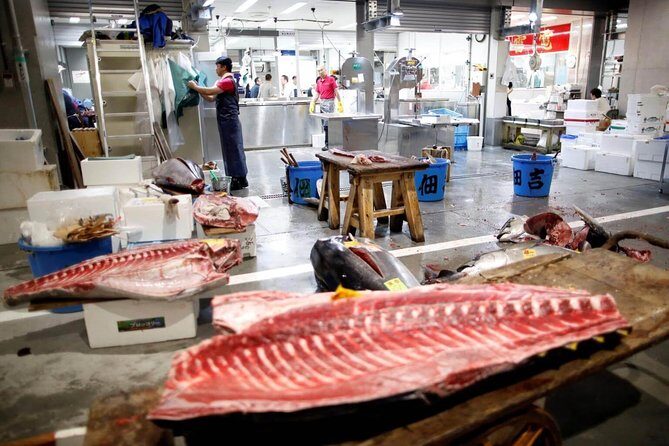
If your day includes Toyosu, you’ll start at Toyosu Market, which opened on October 11, 2018 on the man-made island of Toyosu. It took over the wholesale function from the older Tsukiji setup, so the experience feels newer and more system-driven.
Why it works as a first stop: it gives you context before you hit the historic market vibe. You learn how a modern wholesale market is laid out and how people operate inside it. That makes the next stop in Tsukiji feel less like random chaos and more like a story you understand.
Plan for one trade-off: Toyosu is listed as ticketed (admission ticket not included). That means you should expect to pay that entry cost separately if you choose Toyosu. Still, it’s often worth it when you want both sides of Tokyo seafood culture—modern logistics and classic market lanes.
Other plates worth crossing Tokyo for


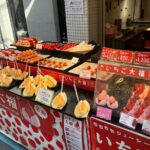
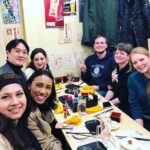
Tsukiji Fish Market: where your guide makes sense of the seafood maze
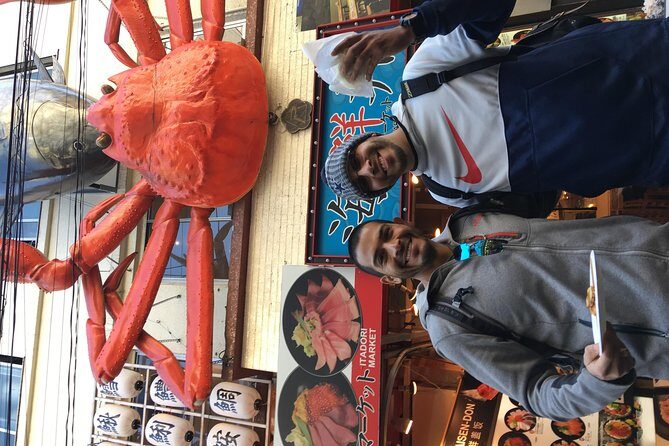
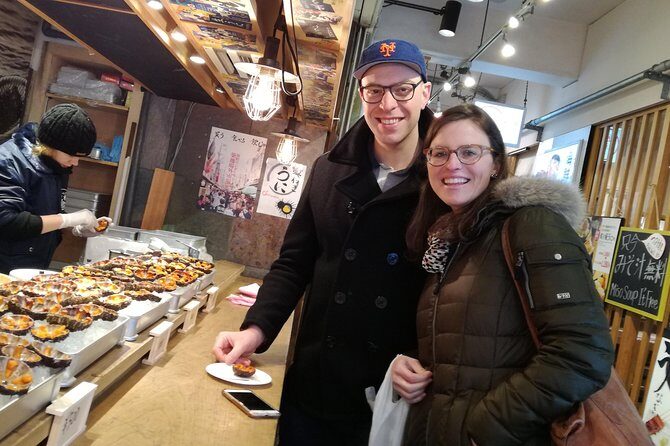
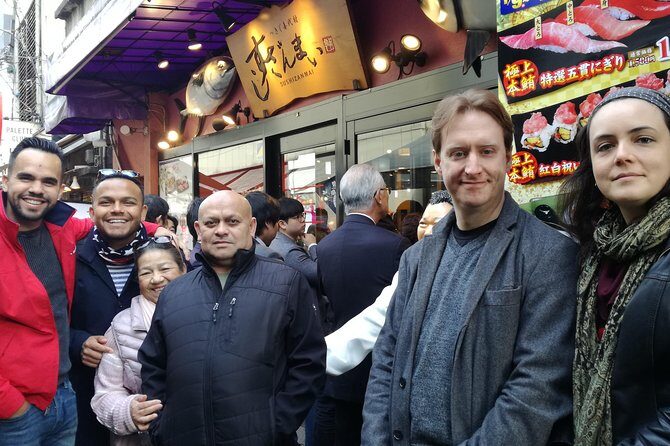
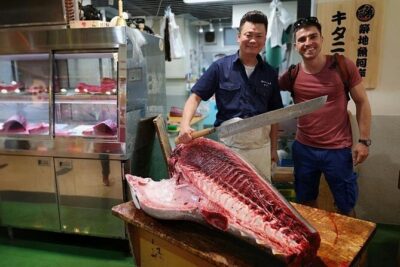
The Tsukiji Fish Market portion starts with a meet-up at Tsukiji Honganji Temple, just outside the market’s main gate, in the morning. This is one of those details that saves you time. The market lanes can feel like a labyrinth, and morning is when the energy is highest.
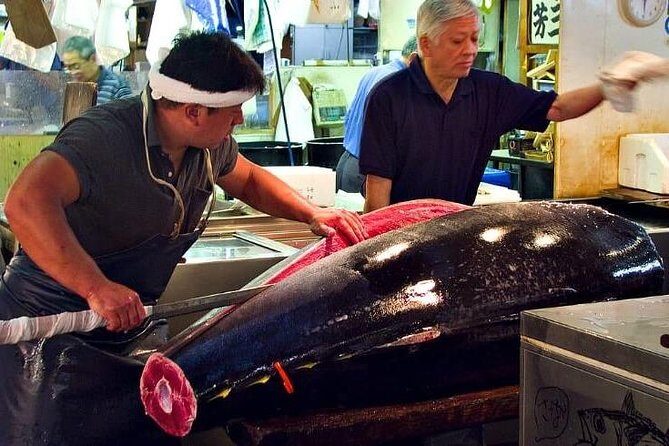
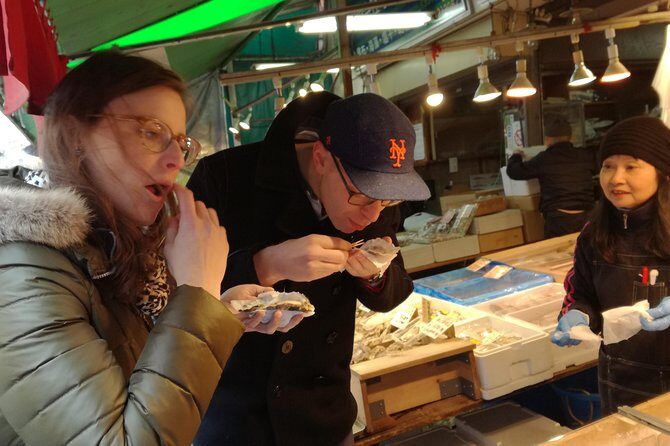
The big value here isn’t just seeing seafood. It’s learning how to read the market: what catches attention, how vendors and stalls operate, and what to look for when you’re deciding what to eat or where to spend your food budget. Your guide handles the navigation, but they also translate the meaning of what you see so you’re not just following smells and queues.
This stop is listed as free for admission, which helps keep your spending under control. That doesn’t mean food is cheap inside—markets run on impulse eating—but it does mean you’re not paying extra just to enter and walk.
A small practical tip
If you’re new to chopsticks, this stop is actually a good place to ask for quick coaching. Feedback from guide Taka included a moment where a first-time chopsticks user improved during the tour, and the plan ended with a souvenir purchase of chopsticks at a nearby Asakusa street. So if you want to practice, don’t wait until after you’ve ordered.
Ameyoko Shopping Street: quick hits for snacks and deal hunting
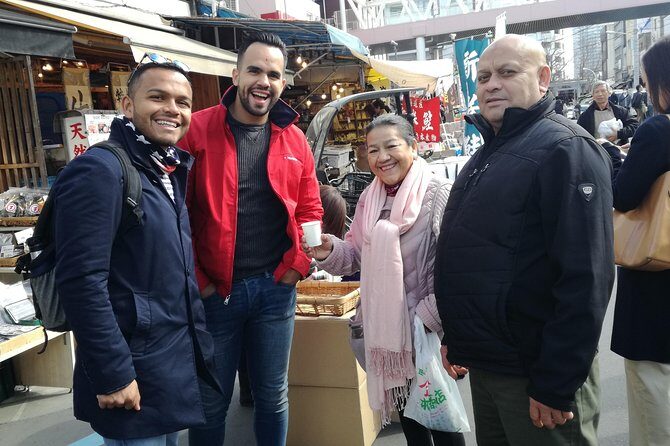
Ameyoko is a favorite kind of Tokyo street: not overly precious, built for browsing, and known for shopping sprees and deals. This stop is short—about 30 minutes—so treat it like a warm-up round for your bigger Asakusa shopping time.
What makes Ameyoko useful on this tour is the texture. After markets, it’s easier to shift your brain to street-level shopping: quick snacks, small gifts, and the fun of comparing prices and styles.
A possible drawback: because it’s a shopping street, it can be crowded at peak times. If you get uncomfortable in tight lanes, tell your guide early and they can steer you toward the quickest paths between food and interesting stalls.
Senso-ji and Kaminarimon: the temple leg that gives you a reset
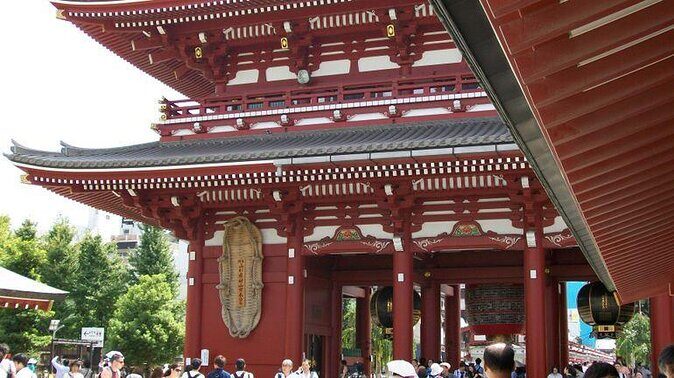
Then you move into Asakusa’s most famous landmark: Senso-ji Temple. You’ll see its long timeline—about 1,300 years of history—and the iconic entrance gate, Kaminarimon, known for its huge red lantern.
Why I think this stop matters in a food-focused day: it gives you a psychological reset. After seafood and shopping streets, it’s nice to step into a slower rhythm where people are walking for ceremony and sightseeing, not buying. The temple approach also helps you understand what you’re buying later. Those souvenirs aren’t just random purchases; they connect to the atmosphere that draws people here.
Your time at Senso-ji is listed as about 30 minutes. That’s enough for a solid look and a few photos, without turning it into a long sit-down.
Nakamise Shopping Street: snacks now, souvenirs later
Right after Kaminarimon, you’ll likely hit Nakamise Shopping Street, which runs about 250 meters along the main approach to Senso-ji. It’s lined with shops selling traditional souvenirs and snacks, so it’s a classic spot to “try a little, buy a little.”
This is also where a lot of people realize Tokyo shopping isn’t only about big department-store purchases. You can grab small edible gifts, easy travel-friendly items, and practical souvenirs that actually get used at home.
Also, this is a strong place to buy chopsticks if that’s on your list. Feedback connected to guide Taka noted a chopsticks purchase from Nakamise. If you’re learning or practicing, you can turn that into a mini mission: buy them, then use them soon after so the practice sticks.
Time is short (about 30 minutes), so decide early what you want: one snack stop and one small souvenir category. If you try to browse everything, you’ll still have a great time, but your guide might not be able to cover your preferred pacing.
Kappabashi Dogugai: kitchen tools shopping that feels oddly fun
Next up is Kappabashi Street (Kappabashi Dogugai), a kitchen-tools street between Ueno and Asakusa. The stores are known for selling items used by restaurant operators, which means you’ll see a lot of practical, professional-style cookware and accessories.
Why it’s worth including on a food-and-culture tour: it turns the food theme into something tangible you can take home. Food tour memories are fun, but a kitchen tool you use on weeknights can make the trip feel closer.
This stop is listed at about 30 minutes. That’s enough time to spot a few standout items, but not so long that you’ll lose the day to decision fatigue. If you buy something fragile, keep it in a way you can carry easily while still walking.
Tsukishima Monjya Street: the quirky snack stop that people remember
If your itinerary includes Tsukishima Monjya Street, you’re in for monjayaki. The description is blunt in the best way: it’s liquid-y, hot, and not the prettiest-looking dish. But the guide framing here is key—monjayaki is about texture and flavor more than looks.
This is listed as a 30-minute stop, and admission tickets are noted as not included. Since lunch isn’t included on the tour, Tsukishima can function as the kind of food moment you planned for. You’ll still need to pay for what you eat, but it gives your day a specific flavor signature.
A practical consideration: if you’re sensitive to heavy or hot textures, monjayaki might not be your favorite style. Tell your guide what you like and don’t like. The benefit of the private format is that your guide can shape the day so you’re not stuck eating something you’d rather skip.
Yanaka Ginza: the old-town Tokyo contrast
Not every Tsukiji/Asakusa day needs the same ending. Yanaka Ginza Shopping Street is there for a different mood: a quieter “Shitamachi” neighborhood atmosphere with a preserved older-town feel.
This stop is listed for about 30 minutes and is another free-admission option. It’s a good choice if you want variety after the big-name market and temple area. The vibe tends to feel more lived-in, which makes it a nice closer for photos and low-pressure browsing.
If you only choose one extra street stop besides Asakusa shopping, Yanaka Ginza can be the best pick for contrast.
What I’d do to make this tour run smoothly
Here’s how to make the day feel easy instead of rushed:
First, build your choices around your real priorities. If your top goal is seafood and market atmosphere, prioritize Tsukiji and Toyosu, then add one shopping street that supports snacks or souvenirs. If your top goal is classic Tokyo sightseeing, keep Senso-ji and Nakamise at the center, then add one kitchen-tools stop at Kappabashi.
Second, think about timing and crowd pressure. Morning market time is when the action is highest, and Asakusa can get busy around the main approach. A guide-managed route helps, but you still should expect more foot traffic during popular hours.
Third, wear shoes you can walk in for hours. Even with breaks, this is a walking format. Your legs will do the work; your brain will enjoy the sights.
Finally, use your guide as a translator. Ask what to try, how to order, and what to look for at each stop. The best tours aren’t just about access. They’re about making sense of what you’re seeing while you’re in it.
Who should book this private Tsukiji food-and-culture tour
This tour fits best if you want:
- A guided day through market + temple Tokyo, without map chaos
- Flexibility to choose the stops that match your interests (food, shopping, temple sights)
- A private pace so your group can move together
- An English-speaking licensed guide who can explain the scene, not just point at it
It’s also a smart fit for people who love buying food-related souvenirs—especially kitchen tools and practical items—because Kappabashi plus Nakamise creates a natural shopping arc.
If you prefer very slow sightseeing, you might find the 6-hour pacing more active than you want. But if you like efficiency with a human guide in charge, it’s a strong match.
Should you book this Tsukiji Food & Culture private tour?
I’d book it if you want a first-time-friendly route that blends seafood market culture with Asakusa’s classic street life, and you’d rather spend your energy on eating and browsing than figuring out logistics. The guide-driven navigation plus the freedom to pick 3–4 stops gives you a lot of control for a reasonable private-tour price.
I’d hesitate if you dislike walking, you don’t plan to buy or sample food, or you’re expecting all entrance fees and lunch to be included. Since some admissions are ticketed (Toyosu is listed that way) and lunch isn’t included, you’ll want to budget for those add-ons.
If you do book, bring your curiosity, ask your guide for quick help with what to eat and how to order, and consider shopping with a plan. A trip to Nakamise can turn into chopsticks practice and a real souvenir story if you let the day unfold.
FAQ
How long is the Tokyo Tsukiji Food & Culture private tour?
It runs for about 6 hours.
What stops can I choose during the tour?
You can customize your day by selecting 3–4 sites from the listed options, which include Toyosu Market, Tsukiji Fish Market, Ameyoko Shopping Street, Senso-ji Temple, Nakamise Shopping Street, Kappabashi Street, Tsukishima Monjya Street, and Yanaka Ginza Shopping Street.
Is pickup included?
Pickup is offered, and the tour meets on foot within a designated area of Tokyo. It’s also near public transportation.
Are entrance tickets included for the markets?
Toyosu Market lists admission ticket not included. Tsukiji Fish Market lists admission free for that stop. Tsukishima Monjya Street also lists admission ticket not included. Other stops are listed as free.
Is lunch included?
No. Lunch is not included, and you’ll pay for your own meals and other personal expenses.
Is this a walking tour?
Yes. It’s a walking tour, with pickup on foot and guided time at multiple nearby areas.
Is it only for my group?
Yes. It’s a private tour/activity, so only your group participates.
Can I cancel for free?
Yes, free cancellation is available, and you can cancel up to 24 hours in advance for a full refund.
More Tours in Tokyo



More Tour Reviews in Tokyo




Back to the Market: More Tsukiji Tours

Fresh reviews from around Tokyo






Tsukiji Fish Market Tours, compared.
 ★ 5.0Tokyo Tsukiji Fish Market Food and Culture Walking TourFrom $993,184 reviews
 ★ 5.0Tsukiji Fish Market Food and Walking tourFrom $301,724 reviews
 ★ 4.9Tsukiji Fish Market Guided Walking TourFrom $221,397 reviews
 ★ 5.0Tokyo Sushi Making Class in Tsukiji with Professional ChefFrom $491,177 reviews
 ★ 5.0Tsukiji Fish Market Guided Tour and Sushi Making with Pro ChefFrom $104775 reviews
★ 4.7Tsukiji Fish Market Food and Culture Walking TourFrom $96757 reviews
★ 5.0Tsukiji Fish Market Guided Tour and Sushi Making with Pro ChefFrom $104775 reviews
★ 4.7Tsukiji Fish Market Food and Culture Walking TourFrom $96757 reviews
 ★ 5.0Tsukiji Fish Market: Street Food & Culture Walking TourFrom $33669 reviews
 ★ 5.0Tsukiji Fish Market Small-Group Food Walking TourFrom $87621 reviews
Browse the lists this tour appears in