
Reviewed · SUMO SHOWS
Tokyo Sumo Practice Watching & Visit Town from Samurai era
Sumo, but with Tokyo quiet. This tour is a smart combo of real training at a sumo stable and city sightseeing that most first-timers skip. Your guide, Ken, helps the day click into place with clear context on sumo and how daily life worked in older Tokyo. You also get the chance to see formal garden calm at Kiyosumi Teien and a life-size Edo-era neighborhood at Fukagawa.
I love the close, ringside viewing of practice—this is where you notice the rhythm, discipline, and intensity that you never get from TV. I also like the chance to do a photoshoot with the wrestlers, which makes the culture feel personal instead of distant.
One consideration: access to the stable requires special permission, so this isn’t a casual walk-in. You’ll follow a set flow with a morning start, and you’ll want to be ready for a compact 3.5-hour day on foot.
In This Review
- Key things to know before you go
- Morning Sumo at Kiyosumi-shirakawa Station (and why the timing matters)
- Shikoroyama-beya Sumo Stable: Ringside practice and real discipline
- Photoshoot with sumo wrestlers: How to get the most from it
- Kiyosumi Teien: When Tokyo turns quiet under trees
- Fukagawa Edo Museum: Late-Edo Tokyo you can walk through
- How Ken turns practice into understanding
- Pace and logistics for a 3.5-hour Tokyo day
- Price check: Is $123.79 good value?
- Who should book this tour?
- Should you book this sumo practice and Edo-town tour?
- FAQ
- FAQ
- Where does the tour meet?
- What time does the tour start?
- How long is the experience?
- Is the ticket mobile?
- How many people are in the group?
- What sumo stable do we visit?
- Do I need to pay admission fees at each stop?
- Does the tour include a photoshoot with sumo wrestlers?
- What other stops are part of the route besides the stable?
- Is private transportation included?
Key things to know before you go
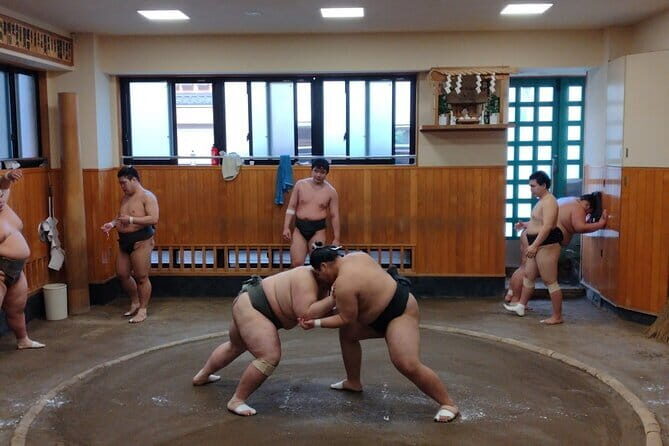
- Ringside sumo practice at Shikoroyama-beya, with a guide translating what you’re seeing
- Photoshoot opportunity with sumo wrestlers as part of the experience
- Kiyosumi Teien gives you that quiet “walking forest garden” contrast after the intensity
- Fukagawa Edo Museum recreates late-Edo Tokyo street life with sound and lighting
- Small group size (max 15) helps keep the day orderly and question-friendly
More chances to sit ringside
- Tokyo: Sumo Show and Dining Experience★ 4.8 · 2,742 reviews
- the SUMO show★ 5.0 · 1,960 reviews
- Tokyo Shinjuku Sumo Show & Experience with Photo★ 5.0 · 1,750 reviews
Morning Sumo at Kiyosumi-shirakawa Station (and why the timing matters)
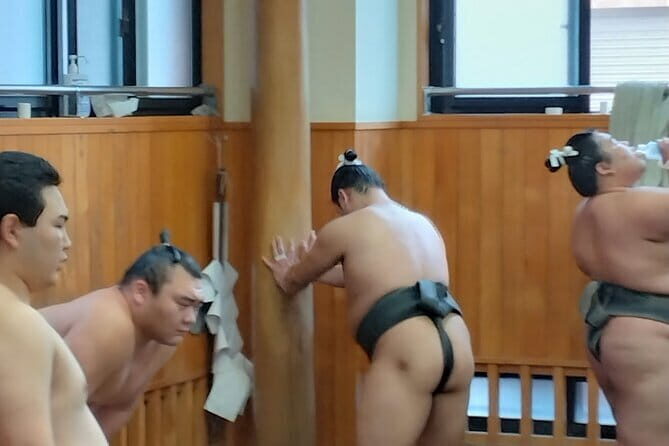
The day starts at Kiyosumi-shirakawa Station, meeting at street level at the B1 exit area. This matters more than you might think. A morning start helps you see the stable practice while the athletes are focused on warmups and routines, not after a crowd gathers later in the day.
Ken’s job here is part logistics, part translation. He doesn’t just point things out. He helps you connect what sumo looks like in motion with what it means in tradition and training. That’s the difference between watching something impressive and understanding why it’s impressive.
The tour runs about 3 hours 30 minutes, and it moves. You’re not just “dropping in” for quick photo stops. You’re walking a route that links three very different slices of Tokyo: modern city streets, sumo training culture, then Edo-era atmosphere.
Shikoroyama-beya Sumo Stable: Ringside practice and real discipline
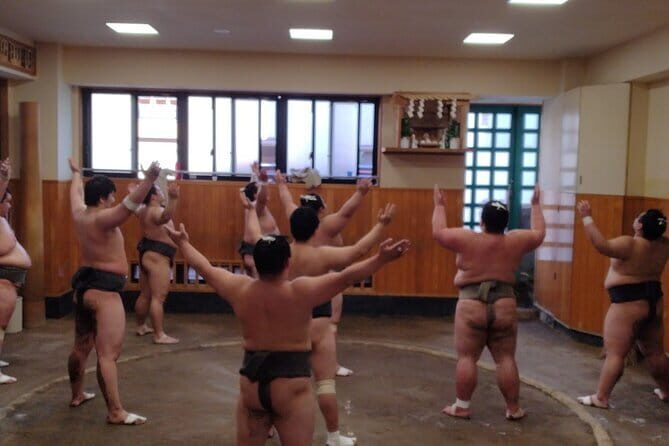
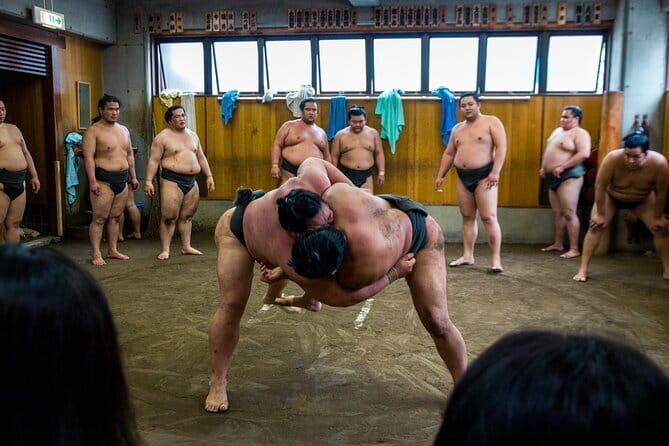
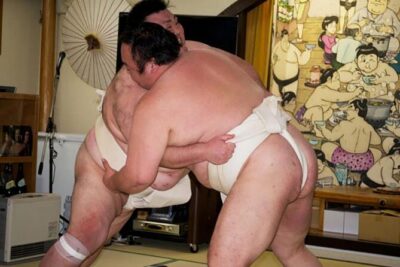
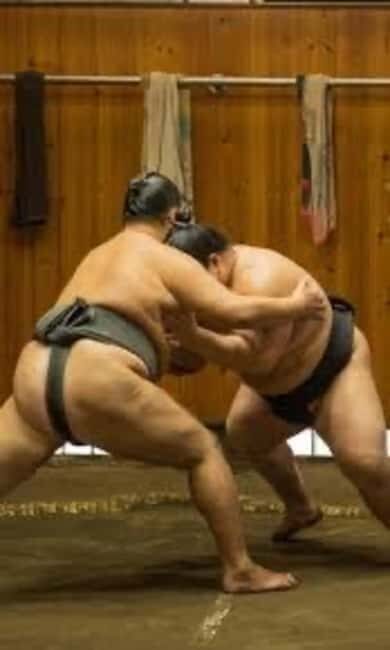
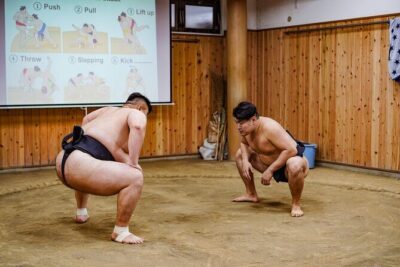
This is the star of the day. You head to Shikoroyama-beya, where you can watch actual sumo wrestlers practicing from the ringside. That ringside view is the whole point. Up close, you notice details that make sumo feel less like a sport highlight and more like a daily craft.
The tour also includes the practical reality that stable access isn’t automatic. Special permission is needed to enter, which is why this experience can feel unusually close and special. You’re not just touring a museum display—you’re in the working environment where training happens.
What you’ll likely notice, even without prior sumo knowledge:
- how warmups build intensity step by step
- how routines repeat and tighten, not just flashy moments
- how focused the athletes are, even in practice
Ken’s English is described as fluent, and his pacing works well for people who don’t know sumo rules. He explains tradition in a way that makes the practice easier to follow, including historical context and how sumo fits into Japanese culture.
One review theme was that the intensity stays with you. That tracks: when you’re close enough to watch movement, breathing, and the seriousness of training, it’s hard not to remember the experience later.
Photoshoot with sumo wrestlers: How to get the most from it
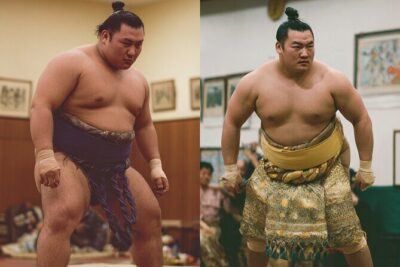
A big draw here is the chance for a photoshoot with sumo wrestlers. Even if you’re not a big “posed picture” person, I think this is one of those moments that can change your trip.
Why? Because it turns sumo from something you might admire from far away into something you participated in, even briefly. The wrestlers are still doing what they do—this isn’t a random gimmick. It’s part of the structured permission-based visit.
Practical tip: treat it like a respectful pause. Listen to Ken for timing, and don’t rush the moment. If your group asks questions, keep them concise so everyone gets their time.
Also, if you were hoping for a longer, step-by-step explanation of sumo terminology, you might wish you had a short handout or a bit more structure. One person noted they wanted more detail and suggested a summary would help. Ken may be able to answer questions in real time, but if you’re the kind of traveler who loves a written cheat sheet, you might bring notes for yourself (or read up on basic sumo terms before you go).
Kiyosumi Teien: When Tokyo turns quiet under trees
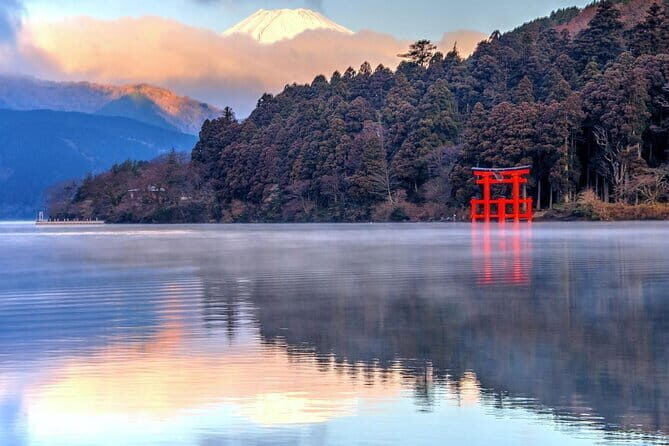
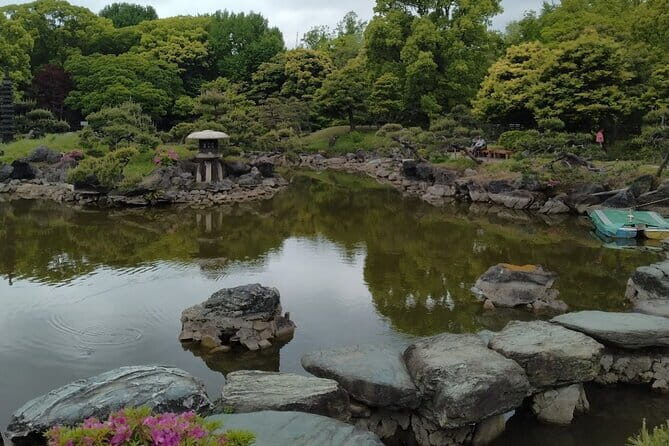
After the stable, you shift into a totally different mood at Kiyosumi Teien. This is a garden experience built around stillness and careful viewing. It’s the kind of place where your brain slows down, and that’s exactly what you need after watching the intensity of sumo practice.
The garden is described as a “walking forest garden,” and it feels that way: you move through scenes rather than standing in one spot. The atmosphere is part of the value. It helps you appreciate Tokyo as something more than shopping streets and landmark photos.
One guest specifically called out seeing koi and cherry blossoms, which suggests the garden can be especially rewarding during seasonal highlights. Even if your timing isn’t peak blooms, you’ll still get that signature Japanese garden experience: calm water, designed pathways, and the sense that nature is arranged with purpose.
Give yourself a little time to pause. Don’t try to “see everything” quickly. In a garden like this, the best moments often happen when you stop for a breath and look again from a slightly different angle.
More blades, bows and dojo hours

Fukagawa Edo Museum: Late-Edo Tokyo you can walk through
Then comes the Edo-world time jump at Fukagawa Edo Museum. This place is built as a life-size reproduction of a Tokyo townscape at the end of the Edo period. It isn’t just a model behind glass. You’ll see a working-feeling setup where the environment changes through sound and lighting, and everyday tools are placed inside each house.
That mix is what makes the visit useful. It’s not only visual—it’s also sensory. You start to understand how a neighborhood functioned, not just what it looked like.
Why I think this pairs so well with the sumo part:
- Sumo isn’t floating in time. It comes from a culture shaped by Japanese social traditions.
- The museum helps you ground that culture in the daily life of an older Tokyo.
If you like context, this stop is a strong payoff. It’s also a nice contrast if you want your trip to include more than “one big experience.” Here, you get a second layer: the past made tangible, in a way that’s easy to grasp during your limited time in Tokyo.
How Ken turns practice into understanding

The guide is a major part of the experience, and it shows in the feedback. Ken comes across as punctual, organized, and patient with questions. He also speaks fluent English, which matters because sumo can feel confusing at first.
Here’s what you’ll likely take away:
- Sumo isn’t only competition; it’s tradition, routine, and identity
- Training includes rituals you may not recognize unless someone explains them
- Tokyo has older cultural layers you can actually still see in places beyond the main tourist route
That is the real value of a guided format. Without context, stable practice can be “cool to watch.” With context, it becomes meaningful—like you’re learning the language of what you’re seeing.
And yes, there’s some room for improvement. One person said they wanted more detail and suggested a handout summarizing sumo. If you’re a detail-hunter, you may want to follow up later with your own reading. But on the day itself, Ken’s explanations are clearly designed to make first-time visitors comfortable and informed.
Pace and logistics for a 3.5-hour Tokyo day
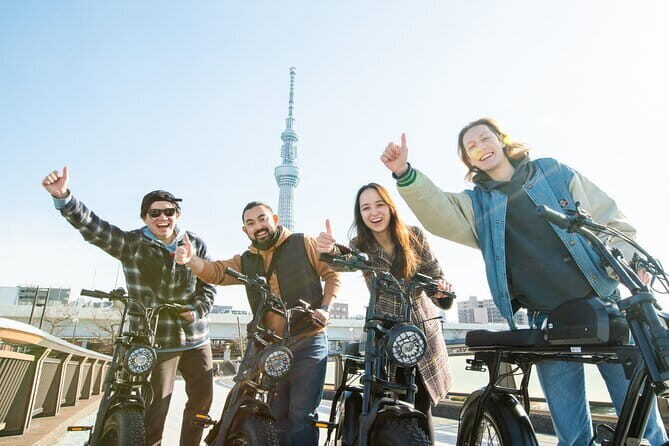
This tour is about 3 hours 30 minutes and includes multiple stops. You’re not getting a long meandering half-day. You’re getting a tight itinerary that tries to maximize variety: sumo practice, then garden calm, then Edo street-life immersion.
Group size is capped at 15 travelers. That’s good. It makes it easier to ask questions, and it keeps the stable visit from turning into a chaos parade. Since you’re going to a place with special permission, a controlled group is exactly what makes the visit possible.
Also, admission fees are included, so you’re not stuck doing math or paying entry at each stop. Private transportation isn’t included, but the meeting point is near public transit, so you can plan around train stations without needing a taxi.
If you’re sensitive to walking distance, this is a manageable plan, but it’s still a morning on your feet. Wear comfortable shoes and plan to stay present. This tour works best when you’re not constantly checking your phone for “what’s next.”
Price check: Is $123.79 good value?
At $123.79 per person, this isn’t a budget activity. But it also isn’t priced like a generic city walk.
You’re paying for several things that add up:
- guided access from start to finish
- admission fees for every location on the route
- close stable viewing with special permission
- a guide who can explain sumo culture clearly in English
If your goal is to see sumo practice in person, stable access is often the hard part. That permission-based access is exactly the value driver here. It’s what turns the day from “learning about sumo” into “watching sumo training.”
So I’d call the pricing fair for what you’re getting—especially if it’s your first time in Tokyo and you want a curated cultural route that isn’t dependent on luck.
If you already know a lot about sumo and you only want a quick taste, you might feel you could do it cheaper independently. But for first-timers who want meaning and structure, the price tends to make sense.
Who should book this tour?
This is a good fit for you if:
- you want real sumo practice and not just a tournament viewing
- you like guided cultural context that helps you understand what you’re seeing
- you want a balanced day: intensity first, then quiet garden time, then Edo-era atmosphere
- you prefer small groups and an orderly morning plan
It’s also a solid choice if Tokyo planning feels overwhelming. This kind of route does the hard part for you: it strings together three places with different moods, and it gives you a reason to care about each one.
Should you book this sumo practice and Edo-town tour?
Yes, I think you should book it if your trip has room for one morning that feels thoughtfully assembled rather than random. The stable access and ringside practice are the big reason, and Ken’s explanation style is clearly what makes the day click for first-time visitors.
The only strong “no” is if you want total freedom and no structure. This tour follows a set route and a compact schedule, and the stable visit depends on permission. If that kind of set plan sounds like a buzzkill, look for a different option.
FAQ
FAQ
Where does the tour meet?
The tour meets at Kiyosumi-shirakawa Station at street level of the B1 exit.
What time does the tour start?
The start time is 8:30 am.
How long is the experience?
The tour lasts about 3 hours 30 minutes.
Is the ticket mobile?
Yes, the tour includes a mobile ticket.
How many people are in the group?
The tour has a maximum of 15 travelers.
What sumo stable do we visit?
You visit Shikoroyama-beya Sumo Stable.
Do I need to pay admission fees at each stop?
No. Admission fees for all locations are included in the tour price.
Does the tour include a photoshoot with sumo wrestlers?
Yes, the tour includes a chance for a photoshoot with the sumo wrestlers.
What other stops are part of the route besides the stable?
You also visit Kiyosumi Teien and the Fukagawa Edo Museum.
Is private transportation included?
No, private transportation is not included, but the meeting point is near public transportation.
More Tour Reviews in Tokyo






The Way of the Sword, Continued
More Mornings with the Wrestlers
Fresh reviews from around Tokyo






Sumo Shows, compared.
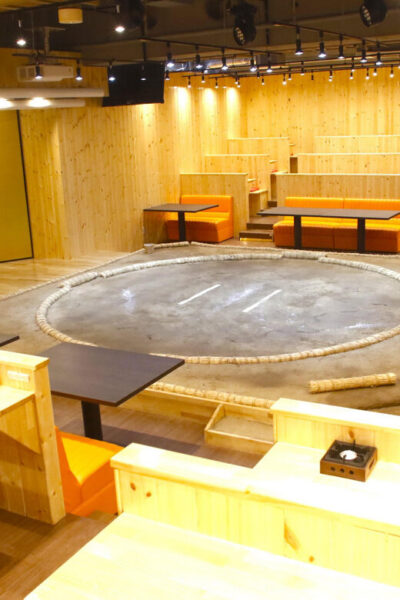 ★ 4.8Sumo Show Experience with Chicken Hot Pot and a PhotoFrom $1036,678 reviews
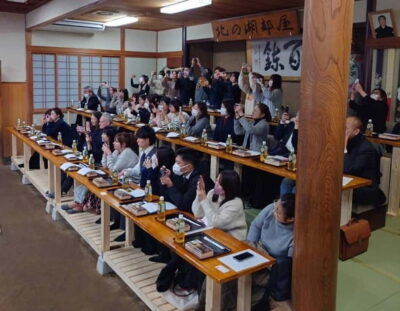 ★ 4.8Sumo Show and Dining ExperienceFrom $792,742 reviews
 ★ 5.0the SUMO showFrom $891,960 reviews
 ★ 5.0Tokyo Shinjuku Sumo Show & Experience with PhotoFrom $791,750 reviews
 ★ 4.8Sumo Show and Experience in ShinjukuFrom $691,001 reviews
 ★ 5.0Authentic Sumo Experience in Tokyo: Enter the SanctuaryFrom $171603 reviews
 ★ 4.8Tokyo Sumo Experience: Chanko & Mochi with a Former ProFrom $103567 reviews
 ★ 5.0Ultimate Sumo Tournament: Tokyo, Osaka, Nagoya, FukuokaFrom $184468 reviews
Browse the lists this tour appears in