
Reviewed · SHINJUKU BAR HOPPING
Tokyo Shinjuku: History, Culture & Hidden Alleys Walking Tour
Shinjuku can feel like a maze. This walk helps you read the neighborhood fast, with a guide-led route through hidden alleyways and neon nightlife. I especially like the small-group size and the way the guide ties street scenes to local history and culture. One thing to keep in mind: you do pass through Kabukicho, so if you’re easily uncomfortable around red-light areas, this tour may not be for you.
What makes this tour practical is the promise you’ll actually walk it instead of wasting time with a map app and wrong turns. You’ll also get “where to go next” advice so the tour doesn’t end when you finish the last alley.
You’ll start at 5:00 pm and move at a night-walking pace for about two hours, ending back where you started. With a max of 15 people, it stays personal enough to ask questions and not just listen from the back.
In This Review
- Quick Highlights You’ll Remember in Shinjuku
- Why Shinjuku at 5 pm Hits Different Than Daytime
- Meeting Point and Getting Oriented Without Fighting Maps
- Kabukicho: The Red-Light District in Plain Words
- Omoide Yokocho: Postwar Bars and the Alley Name You’ll Hear
- Hanazono Shrine: A Calmer Chapter in Shinjuku
- Shinjuku Golden Gai: Tiny Bars and Old Tokyo Night Streets
- What the Guide Commentary Adds (Especially If You’re New)
- Price and Value: What $24 Gets You for a 2-Hour Walk
- Who Should Book This Shinjuku Walking Tour
- Should You Book This Shinjuku Walking Tour?
- FAQ
- How long is the Shinjuku history, culture, and hidden alleys walking tour?
- What time does the tour start?
- Where do I meet the guide?
- How big is the group?
- Is a mobile ticket used?
- What stops are included during the walk?
- Are entrance fees included?
- Is food or drinks included?
- What is the cancellation window?
- Is the tour accessible for most people?
Quick Highlights You’ll Remember in Shinjuku
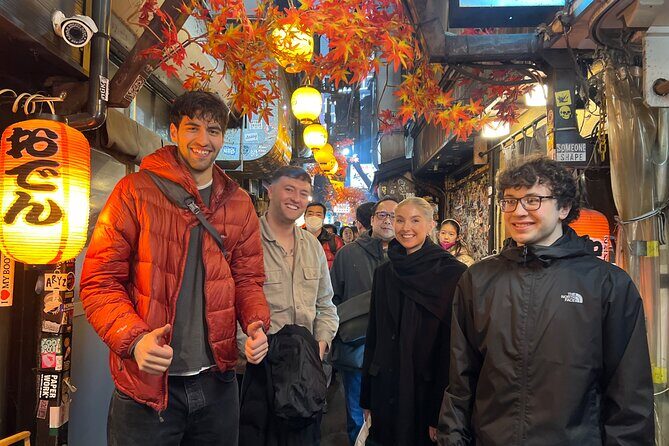
- A 5:00 pm start that matches the way Shinjuku switches on at night
- Up to 15 people so the group stays easy to manage and follow
- Kabukicho context so you understand what you’re seeing without awkward guessing
- Omoide Yokocho’s postwar alley vibe in a compact, bar-lined lane
- Golden Gai’s tiny-bar streets with an emphasis on what makes it historically known
Different nights, same neon: more Shinjuku crawls
- Tokyo: Shinjuku Food Tour (13 Dishes at 4 Local Eateries)★ 5.0 · 6,603 reviews
- Tokyo Bar Hopping Tour in Shinjuku (All-You-Can-Drink + Dinner)★ 5.0 · 3,587 reviews
- Tokyo: Shinjuku Food Tour (15 Dishes and 4 Eateries)★ 4.9 · 2,033 reviews
Why Shinjuku at 5 pm Hits Different Than Daytime
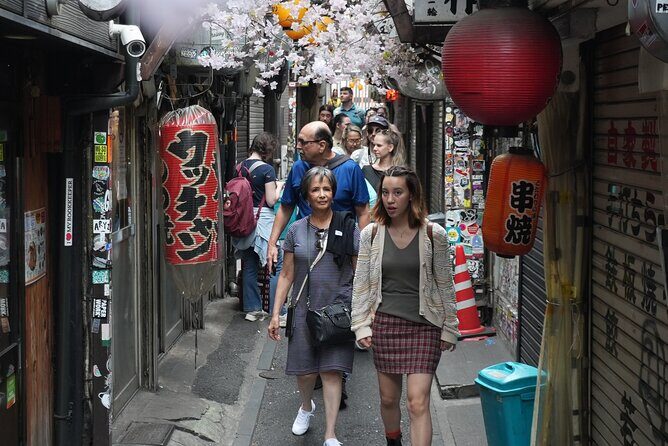
Shinjuku at night is when the area stops being just “a place with train lines” and becomes a real neighborhood. Starting at 5:00 pm means you catch that shift from office-city lighting to evening street life. It’s also smart timing for a walking tour because you’re not stuck in midday crowds or heat.
This is the kind of Tokyo experience that works best when your eyes can adjust. The route favors alleyways, side streets, and the spaces between major sights—stuff you’d miss if you only follow the biggest signs.
And because the tour keeps moving for about two hours, you won’t feel stuck in one spot waiting for the group. You’ll cover several distinct corners of Shinjuku, but it still feels like you’re getting a guided taste, not checking boxes.
Meeting Point and Getting Oriented Without Fighting Maps
The meeting point is at Happy Lemon Keio Shinjuku Shop (1-chōme-1-4 Nishishinjuku). It’s in Shinjuku City, and it’s described as near public transportation, which matters because Shinjuku is big and connections can be confusing if you’re coming from multiple lines.
You’ll get a mobile ticket, which is a relief. No paper scrambling, no last-minute “where did I put it” panic. The walk also ends back at the meeting point, so you’re not left wondering how to get home from wherever the tour stops.
The real win here is the guide navigation idea. Shinjuku is vast. Even seasoned visitors can lose time zigzagging. On this tour, you’re not spending your energy figuring out which way is “toward the fun”—the guide does that, and you spend your energy looking.
Kabukicho: The Red-Light District in Plain Words
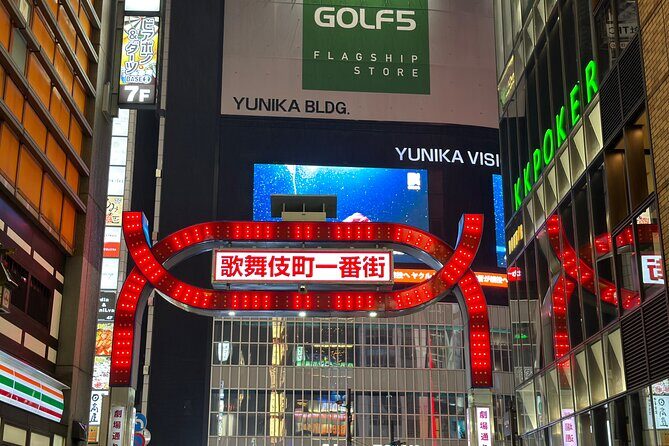
Your first stop is Kabukicho, the well-known red-light district of Japan. You’ll get an overview here for about 30 minutes, with no paid admission needed.
This stop can be the most polarizing part of any Shinjuku plan, and that’s exactly why a guide helps. Without context, it’s easy to either ignore what’s in front of you or get the wrong idea. With a commentary-led walk, you can look at the area more thoughtfully—like understanding how nightlife districts fit into a city’s daily rhythm.
What I’d focus on as you walk: signage, street layout, and how the crowd flows. This is an “on the ground” lesson in how Tokyo’s entertainment districts are built—tight, busy, and designed for walking, not for wide open viewing.
Possible drawback? If you’re hoping for a calm cultural stroll with no adult-nightlife area, Kabukicho will likely feel like the opposite of that. The tour does not promise to shelter you from that reality—it explains it, then keeps going.
Omoide Yokocho: Postwar Bars and the Alley Name You’ll Hear
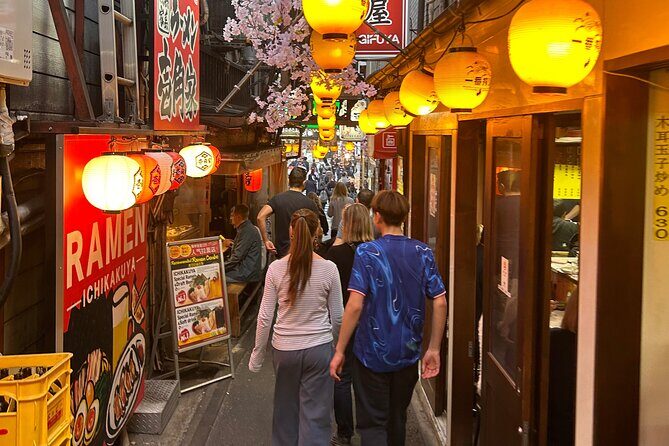
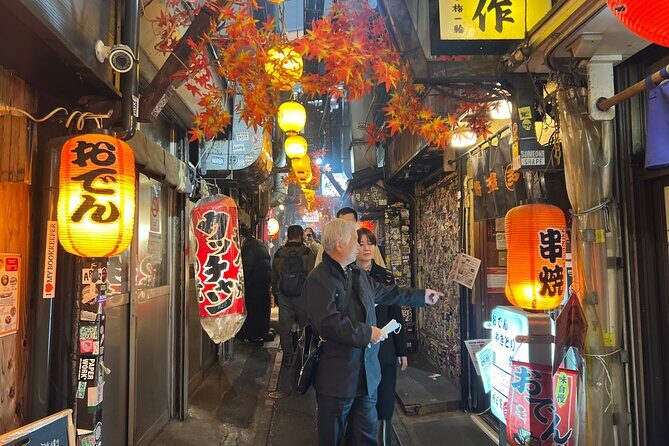
Next up is Omoide Yokocho, sometimes nicknamed the piss alley. The stop is about 30 minutes, and admission is included.
This is one of those places where the alley format does half the storytelling for you. It was built in the postwar period (in the 1950s), and the bar-lined layout gives you a sense of how the neighborhood evolved for nightlife and social drinking.
You don’t need to be a nightlife person to enjoy this stop. Think of it as a compact urban time capsule: narrow lanes, lots of doorways, and a street feel that’s very different from cleaner, wider shopping streets.
Practical note: because it’s a bar alley, expect it to feel more like an evening hangout than a sightseeing lane. You may see people lingering, snapping photos, or just taking in the atmosphere. If you’re the type who prefers quieter walking, you might want to go in with the right mindset: this is lively and close-quarters by design.
Tokyo at walking pace, a few more ways
Hanazono Shrine: A Calmer Chapter in Shinjuku
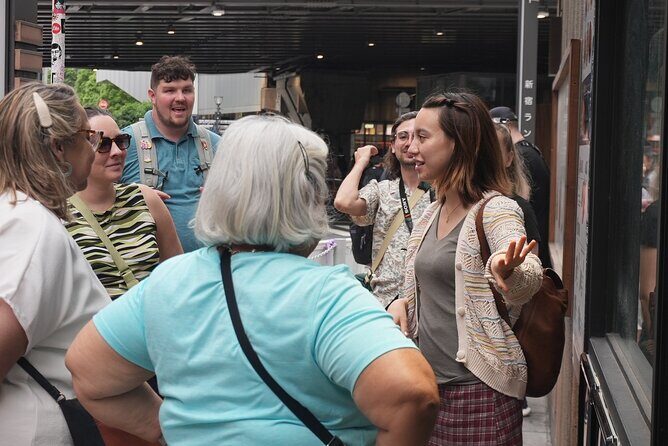
After the nightlife alleys, the tour pivots to spirituality with Hanazono Shrine. You’ll spend about 30 minutes here, and admission is included.
Hanazono Shrine is described as one of the oldest shrines in Shinjuku, which makes this stop more than a random detour. It gives you a contrast to the neon: a place where you slow down, re-center, and see how traditional spaces still anchor a fast, modern district.
This is also a useful “starter” shrine visit if you’re new to Japan. The tour frames it as an introduction, so you’re not left staring at signs you don’t fully understand. You’ll be able to appreciate what a shrine space is meant to do in daily life—especially in a neighborhood like Shinjuku where so much else is about late hours and motion.
One consideration: because you’re coming from a busy area, it can feel like the quiet arrives suddenly. That’s good. It’s exactly why this stop works inside a night tour—your senses get a reset.
Shinjuku Golden Gai: Tiny Bars and Old Tokyo Night Streets
Your final sightseeing stop is Shinjuku Golden Gai. You’ll have about 20 minutes here, with admission included.
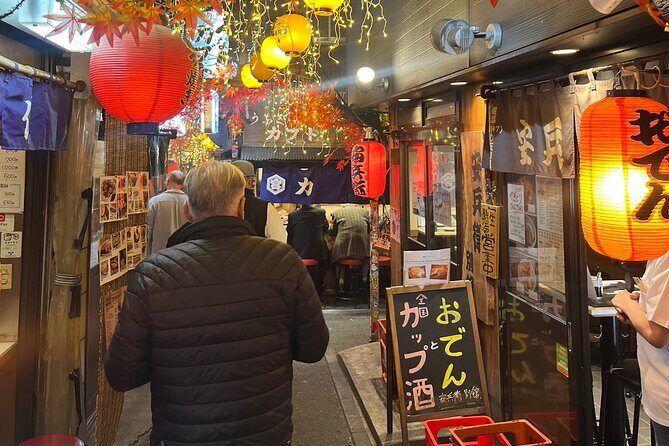
Golden Gai is a street packed with small bars, and it’s known for having some of the oldest bars in Tokyo. That combination—tiny spaces plus long-running bar culture—makes it feel like something you can’t fully reproduce elsewhere. It’s not about a single landmark building; it’s about the street’s texture and the way people use it.
Because your time is shorter here, I’d treat it like a “look and learn” stop. Pay attention to how many entrances there are, how the street channels foot traffic, and how the atmosphere differs from the nearby big-street energy.
If you’re hoping for a sit-down experience with food or a long drink, this tour doesn’t set that up. That’s not a problem—just plan accordingly. Think of Golden Gai as a guided taste of how the neighborhood’s nightlife identity is built.
What the Guide Commentary Adds (Especially If You’re New)

A big part of why this tour feels worth it is the human factor: you’re not just walking from one spot to another. You’re getting context about local history and culture, plus practical navigation so you don’t feel lost.
The feedback I’ve heard about guides like Haydn and Kane points to the same pattern: they’re social, they explain clearly, and they help you connect what you see to the bigger picture. That matters in Tokyo, because so many things can look “interesting” without being meaningful—until someone gives you the thread.
Ask questions while you’re walking. This is the easiest time to do it, because you’re surrounded by the evidence. If you want to know what to do next in Japan, this is also when the guide’s advice can land best. You’ll finish with a better sense of how neighborhoods work, not just where they are.
Price and Value: What $24 Gets You for a 2-Hour Walk
At $24 per person, this tour prices itself as an affordable night plan. The value isn’t only the walking. You’re paying for three things:
- A guide who helps you find places a solo traveler might skip
- Time saved from figuring out Shinjuku’s maze of streets
- Included admissions for key stops like Omoide Yokocho, Hanazono Shrine, and Shinjuku Golden Gai (while Kabukicho is covered as an overview)
It’s also a good deal for a short visit. If you’re only in Tokyo briefly, you don’t want to spend half your evening on logistics. A guided route keeps the momentum.
One drawback on the budgeting side: food and drinks are not included. If you want to snack or do a bar stop during Omoide Yokocho or around Golden Gai, you’ll need to plan that separately. The tour works best as a guided “tour + ideas,” not as an all-in-one night out.
Who Should Book This Shinjuku Walking Tour
This is a strong fit if you want:
- A first-timer-friendly Shinjuku orientation that’s more than a train-station sprint
- A small-group experience where you can actually ask questions
- A route that goes beyond the main tourist beats into alleyways and nightlife streets
It’s also ideal if you’re arriving from other parts of Japan and want to feel the contrast. Shinjuku is not like quieter cultural towns. This tour helps you understand that difference without treating it like a spectacle.
Who might skip? If you strongly dislike red-light districts, you should consider how you’ll feel passing through Kabukicho. Also, if you’re only in Tokyo for food-only plans, you may want to pair this with a separate dinner reservation rather than expecting meals to be part of the tour.
Should You Book This Shinjuku Walking Tour?
I think this is a smart booking for most visitors because it solves two common problems: Shinjuku confusion and missing the “in-between” parts of the city. For $24 and about two hours, you get a guided route with included admissions and real cultural context tied to what you’re seeing.
If you want a night walk that teaches you how Tokyo neighborhoods work—especially through alley spaces—book it. If you need a calm, family-only vibe with no nightlife areas, you might choose a different Shinjuku experience.
My advice: if you’re the kind of traveler who likes to wander with purpose, this one is worth your time.
FAQ
How long is the Shinjuku history, culture, and hidden alleys walking tour?
It runs for about 2 hours.
What time does the tour start?
The tour starts at 5:00 pm.
Where do I meet the guide?
You meet at Happy Lemon Keio Shinjuku Shop, 1-chōme-1-4 Nishishinjuku, Shinjuku City, Tokyo 160-0023, Japan.
How big is the group?
The tour has a maximum of 15 travelers.
Is a mobile ticket used?
Yes, the tour uses a mobile ticket.
What stops are included during the walk?
You’ll visit Kabukicho, Omoide Yokocho, Hanazono Shrine, and Shinjuku Golden Gai.
Are entrance fees included?
Admission is included for Omoide Yokocho, Hanazono Shrine, and Shinjuku Golden Gai. Kabukicho is covered as an overview.
Is food or drinks included?
No. Food and drinks are not included.
What is the cancellation window?
You can cancel for a full refund up to 24 hours before the experience starts, based on local time.
Is the tour accessible for most people?
Most travelers can participate.
More Tours in Tokyo




More Tour Reviews in Tokyo




Shinjuku After Hours: The Other Crawls

Fresh reviews from around Tokyo






Shinjuku Bar Hopping, compared.
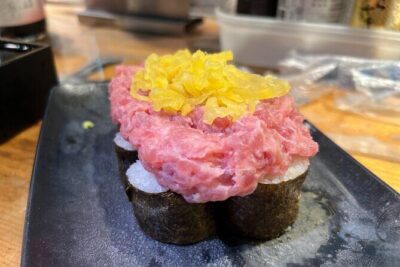 ★ 5.0Shinjuku Food Tour (13 Dishes at 4 Local Eateries)From $866,603 reviews
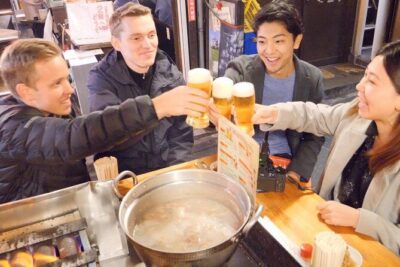 ★ 5.0Tokyo Bar Hopping Tour in Shinjuku (All-You-Can-Drink + Dinner)From $1063,587 reviews
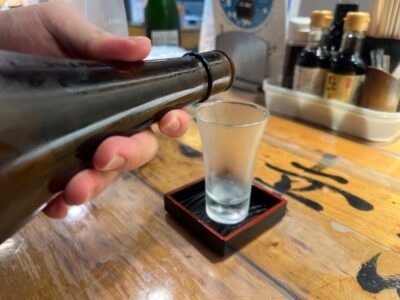 ★ 4.9Shinjuku Food Tour (15 Dishes and 4 Eateries)From $852,033 reviews
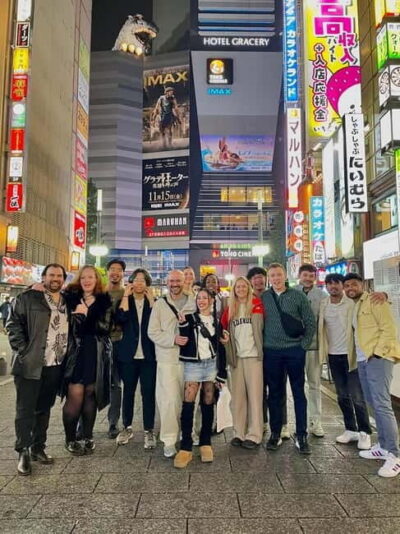 ★ 4.9Shinjuku Local Bar and Izakaya Guided Walking TourFrom $341,794 reviews
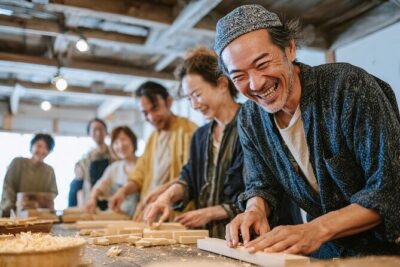 ★ 5.0Tokyo Shinjuku Chopsticks Making ClassFrom $201,763 reviews
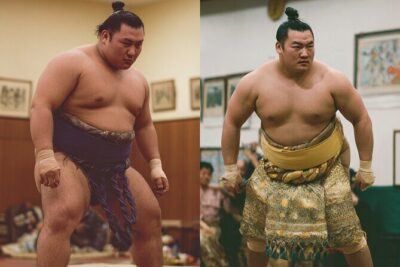 ★ 5.0Tokyo Shinjuku Sumo Show & Experience with PhotoFrom $791,750 reviews
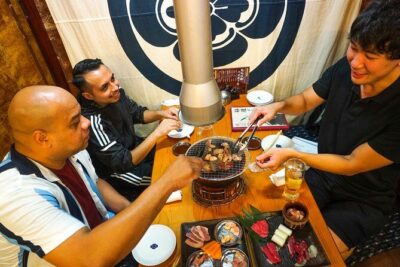 ★ 5.0Tokyo Night Foodie Tour in Shinjuku – Seasonal Sushi, Wagyu BeefFrom $1111,161 reviews
 ★ 4.8Sumo Show and Experience in ShinjukuFrom $691,001 reviews
Browse the lists this tour appears in