
Reviewed · WALKING TOURS
Tokyo Private Walking Tour With Fresh Eyes, Local Hearts
Tokyo feels bigger with a plan.
This private walking tour is built for decision fatigue—you won’t be stuck choosing between 20 must-sees. All guides are born and raised in Tokyo, and the itinerary is adjustable to your interests, so the day feels personal rather than pre-written. I also like that you get one-on-one attention, not a group shuffle, and the guide can steer you toward what you actually want to see. In the reviews, the guide Toko is singled out for contacting you in advance to learn interests and then shaping the route from there.
Two things I especially appreciate: hotel pickup is offered, and the stops are designed to make Tokyo make sense fast—Imperial Palace areas, Tsukiji markets, Shibuya Crossing, Meiji Jingu, Asakusa, plus more. The schedule can be anything from 1 to 8 hours, so you can scale it up or down. One consideration: several of the headline sites have limits, like the Imperial Palace being outside-only public areas and Kabukiza being a gallery visit rather than entry into the main theater.
If you want a smooth intro to Tokyo with less stress and more local pacing, this is a strong fit. Just read the “inside access” notes carefully before you bank on seeing every interior space.
In This Review
- Key things to know before you book
- Getting started with Exploring Tokyo and a route that fits your day
- Price and what your money actually covers
- How the 1 to 8 hour pacing works with 15-minute stops
- Imperial Palace public areas: what you see and what you don’t
- Tsukiji Outer and Inner Markets: breakfast fuel and a quick reality check
- Shibuya Crossing and Takeshita Street: the Tokyo vibe switch
- Meiji Jingu, Nezu Shrine, and Kanda Shrine: faith stops with different moods
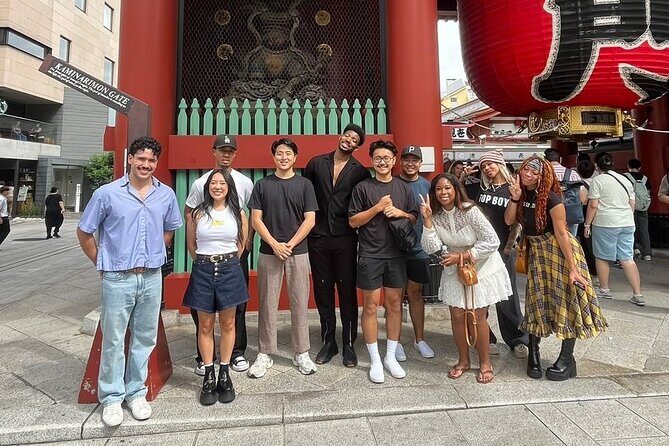
- Senso-ji Temple and Asakusa: the classic area, done with context
- Kabukiza Theater: the gallery view instead of the full interior
- Shinjuku: garden reset and Golden Gai’s tiny-bar maze
- Akihabara: pop culture shopping with a guide’s filter
- Tokyo Tower and Zojo-ji: skyline views plus Tokugawa ties
- Ueno Park: museums, art, zoo, and seasonal crowd energy
- Gardens that cool your brain: Shinjuku Gyoen, Hamarikyu, Koishikawa, Rikugien, Kiyosumi
- Yoyogi Park: breathing room between city scenes
- Gotokuji: the maneki-neko origin stop that feels more meaningful
- A simple way to choose if you’re starting from scratch
- Should you book this private Tokyo walking tour
- FAQ
- Is this tour private?
- How long is the tour?
- Do I need to pay for tickets at each stop?
- Are there any limits on accessing the Imperial Palace or Kabukiza?
- Is hotel pickup included?
- Can I cancel for a full refund?
Key things to know before you book
- Private, exclusive group: only your group joins, so the guide can adjust pace and route without compromise.
- Customization is the main feature: you can make requests and shape the day around your tastes.
- Short, focused stop times: many stops are around 15 minutes, which works well for orientation and variety.
- Major sites come with access limits: Imperial Palace inside access isn’t included, and Kabukiza’s main interior isn’t included either.
- Admissions vary by stop: several are free, but some gardens list admission as not included.
- Walking + public transport planning: the tour includes walking and public transport, but the transport fees aren’t listed as included.
Tokyo at walking pace, a few more ways
- Tokyo Tsukiji Fish Market Food and Culture Walking Tour★ 5.0 · 3,184 reviews
- Tokyo: Shinjuku Local Bar and Izakaya Guided Walking Tour★ 4.9 · 1,794 reviews
- Tokyo: Tsukiji Fish Market Food and Walking tour★ 5.0 · 1,724 reviews
Getting started with Exploring Tokyo and a route that fits your day
The experience kicks off with an introduction from a team called Exploring Tokyo. The big promise here is simple: Tokyo, with fresh eyes and local hearts. Your guide is from Tokyo, and the goal is to help you understand what you’re seeing, not just march from one postcard to another.
After you book, you’re contacted to learn what matters to you. In the reviews, Toko is highlighted for reaching out beforehand, then building an itinerary for first-time visitors based on interests. That matters because Tokyo rewards curiosity. If you like food, you want the markets. If you want design and pop culture, you want Shibuya and Akihabara. If you’re into quiet greenery, you want the gardens and parks.
The “hello” stop also sets expectations: this is private and flexible. You can ask for changes, and you’ll keep the undivided attention of your guide as you move through neighborhoods. That’s a real quality-of-life upgrade if you’re trying to avoid decision fatigue during a short stay.
Price and what your money actually covers
At $26.36 per person, this sits in the affordable-to-mid range for a private, guided Tokyo day. The value comes from two cost-saving ideas baked into the format: your guide handles the route and sequencing, and the tour is designed around many stops with free admission.
Included items list:
- walking and public transportation (as part of the plan)
- tour customization
- hotel pickup (offered)
- private tour/activity (only your group)
Not included items:
- public transportation transportation fees
- meals and personal expenses
- private transportation
Translation for you: the guide experience is included, but you’ll still pay your own transit fares if you’re using trains or buses during the day. Also, meals are on you. If you’re thinking breakfast at Tsukiji, plan to buy what looks good.
Finally, the tour duration is 1 to 8 hours (approx.). That flexibility affects value. If you have only a few hours, you’re paying for focused orientation. If you stretch it longer, you’re buying more time for pacing, questions, and switching course as your mood changes.
How the 1 to 8 hour pacing works with 15-minute stops
A lot of stops are listed around 15 minutes, with a few longer ones like Asakusa at 30 minutes. That doesn’t mean the day is rushed; it means the tour is structured for “see it, understand it, move on.” In a city like Tokyo, that approach helps you avoid spending half your day stuck in a line or standing around wondering what to do next.
The tour’s flexibility matters most if you care about a theme. For example:
- Want a history-and-faith route? You’ll spend more time where shrines and temples sit.
- Want youth culture and shopping? You’ll prioritize Shibuya, Harajuku area streets, and Akihabara.
- Prefer calmer breaks? You’ll pick gardens and parks and reduce the time in dense commercial blocks.
Just keep one thing in mind: because the stops are relatively short, this isn’t a slow “linger for hours” style tour. It’s built to help you get your bearings fast and then decide what to return to on your own.
Imperial Palace public areas: what you see and what you don’t
Stop 1 is the Imperial Palace, and here the important detail is access. The tour does not include entry to the inside of the Imperial Palace. Instead, you’ll visit certain public areas, and entry is free.
What makes this stop useful is context. The current Imperial Palace is on the former site of Edo Castle, which you’ll understand through the surrounding park setting and the moat area that frames the space. Even without interior access, it’s a great orientation point for how Tokyo’s power centers evolved.
If your dream is to go fully inside, plan differently. This tour is about smart viewing and explanation, not guaranteed interior access.
More private options with your own guide

Tsukiji Outer and Inner Markets: breakfast fuel and a quick reality check
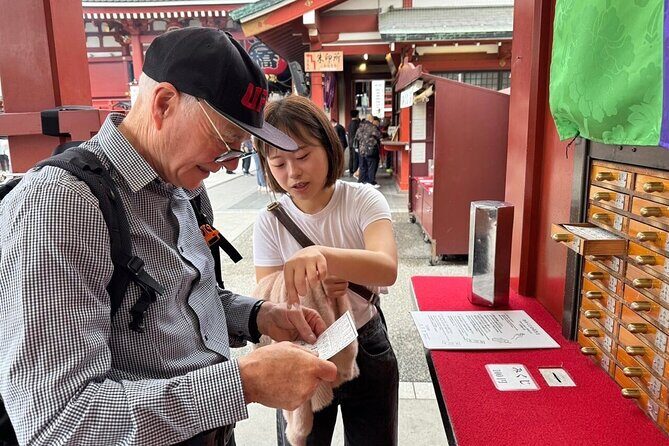
Next you head to Tsukiji Jogai Market (Outer Market). It’s described as one of Tokyo’s most historic markets, with more than 400 shops and stalls along the streets. This is a logical breakfast stop, and it’s listed as free admission with about 15 minutes on the schedule.
Then comes Tsukiji Fish Market (Inner Market). The tour frames the inner market as something many people miss—even some in Japan may not be familiar with it. The outer market is where you’ll find plenty of street-food options, while the inner market is presented more as a quieter, lesser-known look behind the scenes.
Practical tip: if you want to eat, Outer Market is where the “snack now” energy fits. Inner Market is better for observing what’s different about the experience and how the whole ecosystem of the market area works.
Shibuya Crossing and Takeshita Street: the Tokyo vibe switch
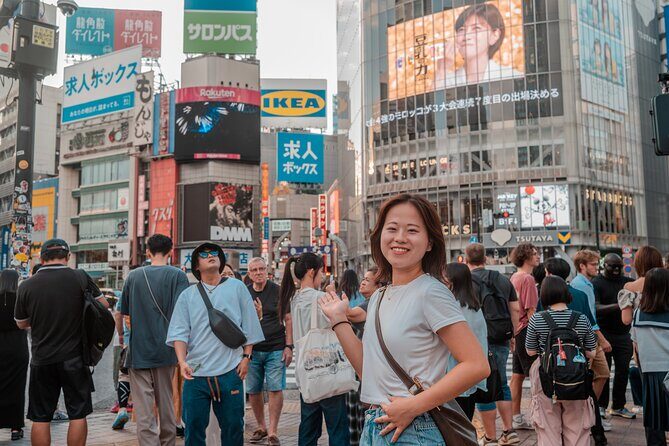
Shibuya Crossing is the next major hit. It’s a short stop, but the guide will help you place it within Tokyo’s modern identity: youth culture, fashion, and entertainment, and Shibuya as a standout international area.
Then, depending on your route, you may also hit Takeshita Street in Harajuku (listed at 15 minutes). This is described as a center of kawaii culture, with shops selling fashion, accessories, sweets, and character goods.
Why this pairing works: Shibuya helps you understand the “big stage” side of Tokyo. Takeshita helps you understand the “street-level style” side. If you’re shopping, you’ll also want to track your energy—these blocks can be intense, but your guide’s job is to keep it organized and not exhausting.
Meiji Jingu, Nezu Shrine, and Kanda Shrine: faith stops with different moods
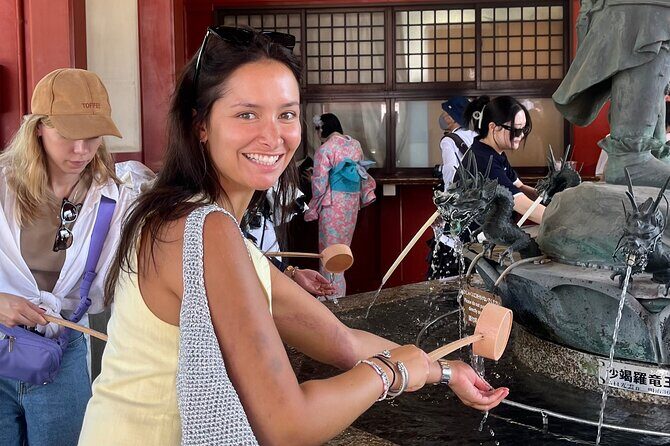
Tokyo’s shrines aren’t all the same, and this tour leans into that by offering multiple options.
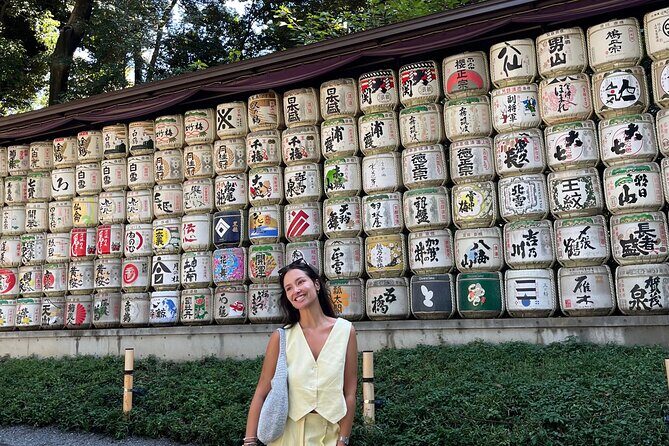
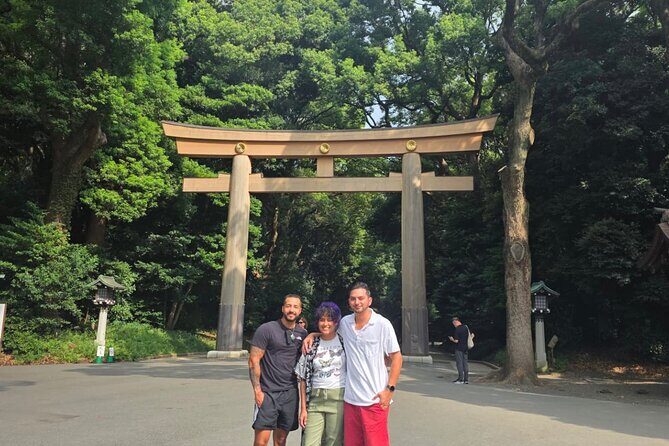
- Meiji Jingu Shrine: Built in 1920, established in honor of Emperor Meiji and Empress Shoken. The site is significant culturally even if it isn’t as old as some shrines.
- Nezu Shrine: Known for beautiful azalea flowers (seasonal blooms are part of what makes it special). The grounds are described as serene with traditional architecture and greenery.
- Kanda Myojin (Kanda Shrine): A shrine with over 1,300 years of history, described as one of Tokyo’s guardian shrines, with protection for central areas like Kanda and Nihonbashi.
If you’re choosing between them, think about mood. Meiji Jingu feels like a major cultural landmark. Nezu is more about peaceful atmosphere and seasonal flowers. Kanda brings you a long-running sense of place in central Tokyo.
All are listed as free admission stops, with about 15 minutes each in the itinerary.
Senso-ji Temple and Asakusa: the classic area, done with context
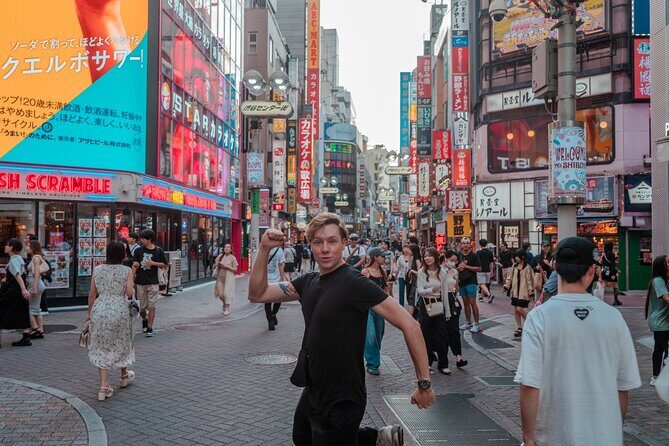
Senso-ji Temple is next, and it’s framed as the oldest temple in Tokyo and one of its most beloved landmarks. The tour also includes the legend of two fisherman brothers discovering something that ties into the temple’s story (the key idea is that history begins with a legend, not just dates).
The stop time is about 30 minutes, which gives you enough room to actually see how the area feels.
Then you move to Asakusa, where Senso-ji sits at the heart of the neighborhood. The tour describes Asakusa as a place where history and tradition are preserved, surrounded by lively streets with local character and charm.
This is one of the best “slow down” moments in the day. Even if you only have a few hours, Asakusa is where I’d prioritize your attention, because it’s easier to understand after you’ve walked through the transition from modern Tokyo to older Tokyo.
Kabukiza Theater: the gallery view instead of the full interior
Kabukiza Theater is an iconic name, but the tour makes the access rules clear: it does not include entry into the inside of the main Kabuki-za theater. Instead, you’ll visit the gallery on a different floor within the same building. Admission is listed as free.
Why it still works: you get a connection to Kabuki culture without needing to plan around theater entry or a performance schedule. If your goal is to see the main interior spaces, this tour won’t fulfill that. If your goal is to understand and reference Kabuki visually, the gallery visit can be a practical compromise.
Shinjuku: garden reset and Golden Gai’s tiny-bar maze
In Shinjuku, you’ve got two very different stops that balance each other.
First is Shinjuku Gyoen National Garden. It’s described as a green oasis in the heart of Tokyo, originally an imperial garden and now open to the public. Admission is listed as not included.
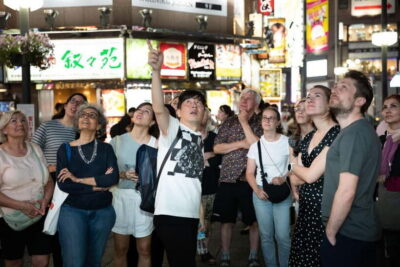
Then comes Shinjuku Golden Gai, which is nightlife with a strong sense of place. The tour notes that Golden Gai contains over 300 tiny bars packed into narrow alleyways, with streets described as extremely narrow and buildings traditionally styled. It’s listed as free admission with about 15 minutes.
This combo is ideal if you want a day that alternates between calm and buzz. But it also helps to have the right mindset. Golden Gai is close quarters, so keep your expectations flexible. Your guide can steer you to what’s appropriate for your pace and comfort.
Akihabara: pop culture shopping with a guide’s filter
Akihabara is presented as Tokyo’s hub for cutting-edge pop culture: electronics shops plus anime, manga, and gaming stores. It’s listed as free admission and about 15 minutes.
Here’s the value of a guide: instead of wandering in every direction, you’ll get a sense of what each pocket is good for. If you want souvenirs, tech, or collectibles, that helps you make quicker choices and avoid spending your only shopping hour walking the wrong streets.
Tokyo Tower and Zojo-ji: skyline views plus Tokugawa ties
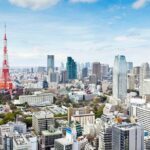
The itinerary includes Tokyo Tower, described as an observation tower with panoramic views of the city, illuminated beautifully at night, and historically significant. The data doesn’t spell out whether you’ll enter the observation areas, so treat this as a viewing-and-orientation moment unless your guide confirms otherwise.
Then you’ll visit Zojo-ji Temple, described as a historic Edo-period temple and the family temple of the Tokugawa clan, where several Tokugawa shoguns are enshrined. It’s listed as free admission and about 15 minutes.
If you’re trying to understand Tokyo in one day, Tokyo Tower gives you the modern skyline frame, while Zojo-ji adds the old power connection. Together, they help you see the city as layers rather than one era.
Ueno Park: museums, art, zoo, and seasonal crowd energy
Uenokoen (Ueno Park) is listed as a cultural and natural hub with museums, art galleries, and a zoo. It’s described as famous for cherry blossoms in spring, which brings large crowds.
Admission is listed as free in the itinerary. The stop is about 15 minutes, so you’re not doing a full museum day here—you’re getting the sense of why Ueno is a default choice for culture and nature in the same area.
If cherry blossom season matters to you, plan extra time around peak dates. This tour can point you in the right direction, but seasonal crowds can change the pace of any short walk.
Gardens that cool your brain: Shinjuku Gyoen, Hamarikyu, Koishikawa, Rikugien, Kiyosumi
Tokyo’s gardens are perfect for breaking up a packed day, and this itinerary gives you multiple choices. Several are listed as admission not included, which is important if you’re building your budget.
- Hamarikyu Gardens: an Edo-period garden by Tokyo Bay. It includes ponds, tidal gardens, and seasonal flowers, and it was originally a villa for the shogun.
- Koishikawa Korakuen Garden: an early Edo period Japanese garden with ponds, small bridges, and hills, described as a harmonious mix of history and nature.
- Rikugien Garden: a feudal-era garden known for beauty in cherry blossom season and autumn foliage season, with a large pond-centered stroll route.
- Kiyosumi Teien (Kiyosumi Garden): an Edo-period stroll garden centered on a pond, designed to feel calm despite being in the city.
Because these garden stops aren’t all free, I’d treat them as the “choose your weather and mood” parts of the day. If you want the quiet version of Tokyo and you’re okay paying for entry where listed, gardens are the payoff.
Yoyogi Park: breathing room between city scenes
Yoyogi Park is listed as a large urban park popular for jogging, picnics, and events. It’s described as having seasonal trees and open lawns that give you a peaceful escape from city motion.
Admission is listed as free with about 15 minutes. This is the right kind of stop when you want to reset between dense neighborhoods. Also, parks are good times to regroup and decide what you want more of in the remainder of the day.
Gotokuji: the maneki-neko origin stop that feels more meaningful
Gotokuji Temple appears later in the itinerary. It’s known as the birthplace of the maneki-neko (beckoning cat). The grounds are described as having beautiful gardens and traditional buildings, with a peaceful atmosphere.
This is a great “offbeat but iconic” stop. You see a symbol you’ve likely already seen in shops and restaurants, then you connect it to an actual place and story.
A simple way to choose if you’re starting from scratch
This tour’s best trick is giving you structure without locking you into one rigid route. Because the itinerary is customizable, you can steer it toward the parts of Tokyo that match your travel style.
If you’re a first-time visitor, I’d use this as your orientation backbone: Imperial Palace area, Tsukiji, Shibuya, Meiji Jingu, Asakusa. Then you’ll know what you want to revisit on your own.
If you’re returning or you already know the classic highlights, push customization toward the parts that feel new: Akihabara, Golden Gai, the different shrines, or garden time.
Should you book this private Tokyo walking tour
Book it if you want a guided day that you can shape, with a Tokyo-born guide and a format that keeps moving while still explaining what you’re seeing. The price makes sense when you realize many stops are free, and you’re buying the logic of sequencing and the benefits of one-on-one attention.
Skip it or adjust expectations if your top priority is interior access—Imperial Palace inside access isn’t included, and Kabukiza is a gallery visit rather than the main theater interior. Also, if you want long, slow time in only one neighborhood, the 15-minute stop style may feel short.
FAQ
Is this tour private?
Yes. It’s listed as a private tour/activity, and only your group will participate.
How long is the tour?
The duration is listed as 1 to 8 hours (approx.).
Do I need to pay for tickets at each stop?
Many stops show admission ticket free in the itinerary, but some gardens list admission as not included (for example Shinjuku Gyoen, Hamarikyu Gardens, Koishikawa Korakuen, Rikugien, Kiyosumi Garden).
Are there any limits on accessing the Imperial Palace or Kabukiza?
Yes. The Imperial Palace stop includes certain public areas but does not include access to the inside. Kabukiza does not include access to the inside of the main theater, and you’ll visit a gallery instead.
Is hotel pickup included?
Hotel pickup is listed as included/offered.
Can I cancel for a full refund?
Yes. Free cancellation is allowed up to 24 hours in advance for a full refund. If you cancel less than 24 hours before the start time, the amount paid is not refunded.
Tokyo on Foot: More Walks


More Tours in Tokyo




More Tour Reviews in Tokyo




Fresh reviews from around Tokyo






Walking Tours, compared.
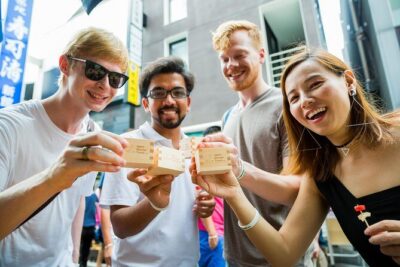 ★ 5.0Tokyo Tsukiji Fish Market Food and Culture Walking TourFrom $993,184 reviews
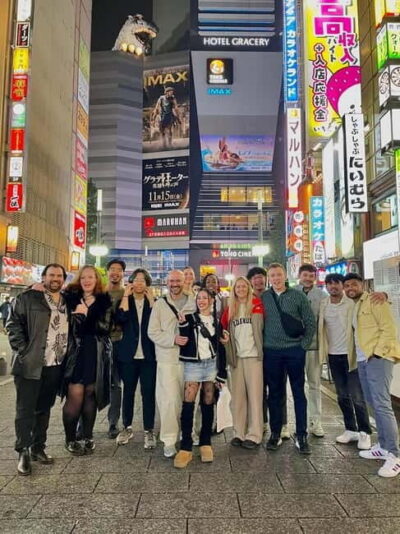 ★ 4.9Shinjuku Local Bar and Izakaya Guided Walking TourFrom $341,794 reviews
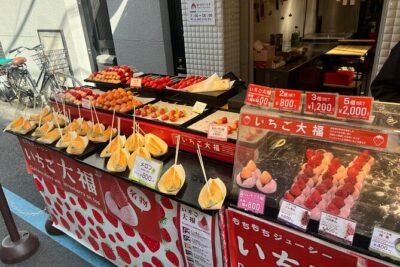 ★ 5.0Tsukiji Fish Market Food and Walking tourFrom $301,724 reviews
 ★ 4.8Asakusa Walking Tour with Sensoji Temple VisitFrom $221,583 reviews
 ★ 4.9Tsukiji Fish Market Guided Walking TourFrom $221,397 reviews
 ★ 4.7Tokyo Castle & Imperial PalaceーShogun Walking TourFrom $231,068 reviews
 ★ 4.9Imperial Palace Japanese History Walking TourFrom $32987 reviews
 ★ 4.7Dark Side of Tokyo Shinjuku Red Light Walking TourFrom $29862 reviews
Browse the lists this tour appears in