
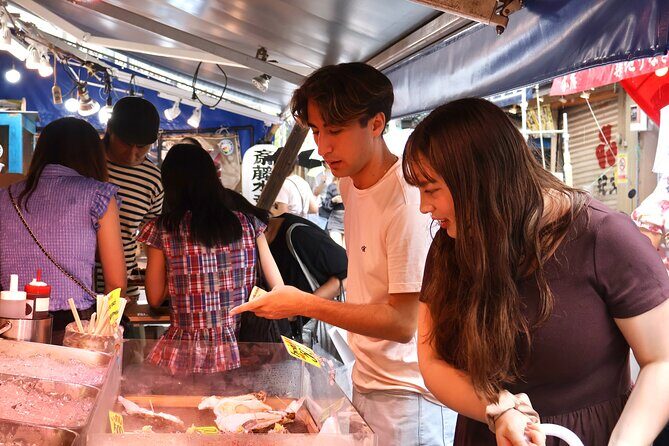
Reviewed · TSUKIJI FISH MARKET TOURS
Tokyo: Private Tsukiji Fish Market Tour with 3 Food Stops
Food and faith, side by side in Tsukiji. This private 2-hour walk mixes Tsukiji Fish Market street life with two big spiritual stops, so you see how food culture and everyday Japanese beliefs overlap in real time.
I especially love the private guide angle. You get someone who can explain what you’re looking at (and what you can skip), plus photos taken during the walk—handy when you’re busy trying to remember smells, sounds, and details.
One thing to consider: with a total duration of about 2 hours, you’ll cover a lot, but you won’t have hours to linger at every stall or shop. If you want a slow, shopping-heavy market day, plan this as an intro, not your whole itinerary.
In This Review
- Key highlights at a glance
- Tsukiji With a Private Local Guide: What You Really Get
- Meeting at Lawson Tsukiji 4 Chome: Easy Start, Clear Route
- Stop 1: Tsukiji Fish Market for Ingredients, Not Just Photos
- What to watch for
- The one drawback
- Namiyoke Inari Shrine: The Lion-Head Prayer Behind Daily Life
- What I’d do differently if I returned
- Stop 3: Second Market Walk for Three Included Street Foods
- How to get the most from the food stops
- A practical consideration
- Tsukiji Hongwanji Temple: Indian-Inspired Architecture and Buddhist Perspective
- Price and Value: Is $52.12 Worth It?
- What This Tour Teaches You (Even If You Don’t Think You Need Lessons)
- Who Should Book This (and Who Might Skip)
- Should You Book This Tsukiji Private Tour With 3 Food Stops?
- FAQ
- How long is the Tokyo private Tsukiji fish market tour with 3 food stops?
- Is this tour private?
- What foods are included?
- Where does the tour start?
- What stops are included besides the fish market?
- Are admission fees included?
- Is a mobile ticket used?
- Are photos included?
- What’s not included in the price?
- Final thought
Key highlights at a glance
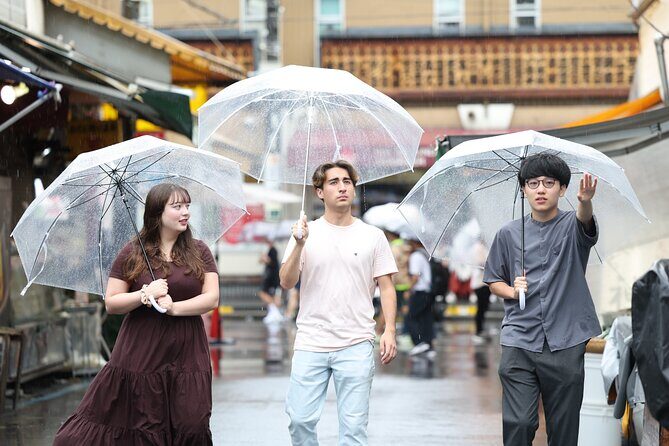
- Private guide, local choices: You’re not wandering blind through the most famous streets in Tokyo
- Three included street-food stops: Food is part of the plan, picked by your guide
- Two spiritual traditions in one route: Namiyoke Inari shrine plus Tsukiji Hongwanji temple
- Two visits to the market area: A first look, then a second round for included bites
- Photos during the tour: You’ll get images after the walk
Still hungry? More Tsukiji breakfasts and market walks
- Tokyo Tsukiji Fish Market Food and Culture Walking Tour★ 5.0 · 3,184 reviews
- Tokyo: Tsukiji Fish Market Food and Walking tour★ 5.0 · 1,724 reviews
- Tokyo: Tsukiji Fish Market Guided Walking Tour★ 4.9 · 1,397 reviews
Tsukiji With a Private Local Guide: What You Really Get
Tsukiji can overwhelm you fast. It’s famous, crowded in spots, and full of sensory overload. The smart move is to go with a guide who helps you read the place: what’s important, what’s just noise, and how the market’s food culture ties into daily life.
This is a private walking tour, about 2 hours, and it’s designed around learning without turning into a lecture. You’ll stroll through lively market streets, then step into two quieter religious spaces. That contrast is the point. You’re seeing how Japan can be practical and spiritual at the same time—often within a few minutes of each other.
If you’re the type who likes to understand what you’re eating before you eat it, this works well. Your guide also shares stories behind the cuisine and the traditions that shape how people show up for work, prayer, and food.
Meeting at Lawson Tsukiji 4 Chome: Easy Start, Clear Route
You meet at LAWSON Tsukiji 4 Chome Store (4-chōme-8-1 Tsukiji, Chuo City, Tokyo 104-0045), and the tour ends back at the same spot. That’s a small detail, but it matters. When you’re navigating Tokyo streets, “returns you to your starting point” keeps the day calmer.
Because this is a mobile ticket tour, you don’t have to coordinate paper tickets or last-minute kiosks. It’s a simple setup for something that happens quickly—no wasting time before you even get to the market lanes.
It’s also listed as near public transportation, which helps if you’re combining it with other sightseeing nearby. The tour is straightforward in format: walk, stop, taste, learn, repeat.
Stop 1: Tsukiji Fish Market for Ingredients, Not Just Photos
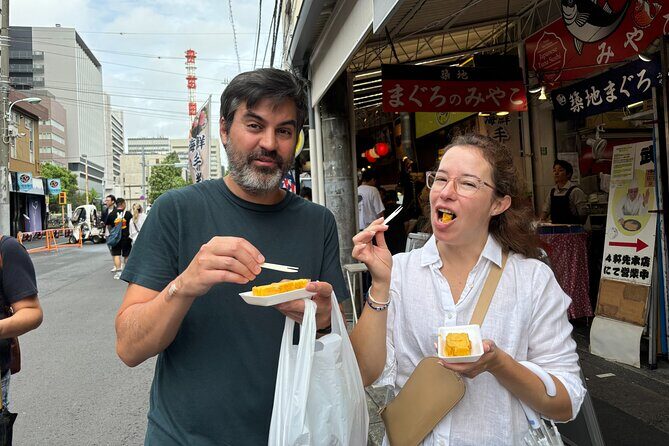
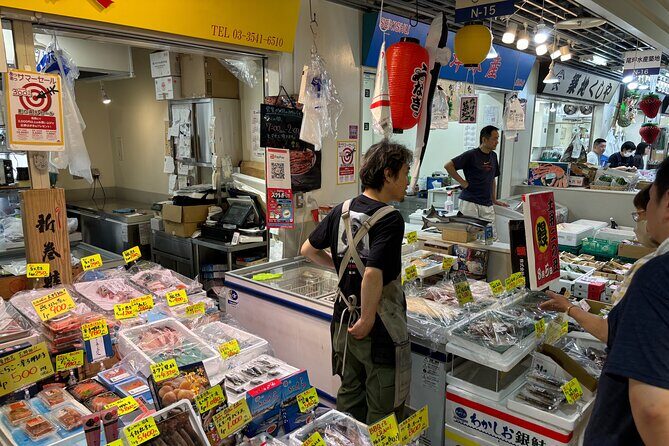
Your first stop is Tsukiji Fish Market for about 30 minutes. This isn’t framed as a “look at everything forever” kind of time slot. It’s a guided introduction to the atmosphere and the food ecosystem—fresh seafood, produce, and traditional ingredients moving through the market’s energy.
Here’s what I like about starting with the market itself before the shrine and temple stops: it sets your brain up for context. When you later see a shrine where people pray for safety and good fortune, you’re not thinking in the abstract. You connect it to the practical world of fish sellers and daily work rhythms.
The tour mentions that admission for this market segment is free, so you’re not paying extra just to stand in the right lanes and watch how the market works. The guide’s job here is to point you toward what matters visually—where ingredients and traditions show up, even if you’re not buying anything.
What to watch for
- How stalls and products reflect Japanese cooking habits
- The mix of food supply and everyday routine in the same space
- Signs, vendor behaviors, and the way people move (how a market really functions)
Other plates worth crossing Tokyo for


The one drawback
If you’re hoping for a long, shopping-focused market afternoon, the 30 minutes at the start may feel short. Think of it as orientation, not a full market day.
Namiyoke Inari Shrine: The Lion-Head Prayer Behind Daily Life
Next comes Namiyoke Inari Shrine for about 15 minutes. This is one of the most interesting stops because it explains why the market and the spiritual world overlap so naturally in Japan.
Namiyoke Inari is described as having protected Tsukiji since the Edo period, and it’s known for powerful lion heads. You’ll get a chance to see how locals pray for safety and good fortune. That matters because it turns the shrine from a postcard stop into something grounded in real daily stakes.
You’ll also learn the cultural role of shrine tradition as part of everyday life. In Japan, religion isn’t always about sitting in a quiet room. Often, it’s about showing up with a simple hope—protection, luck, and the wish that work goes well.
What I’d do differently if I returned
I’d take a moment here to slow down and watch people. The best part isn’t a single photo spot—it’s the mood. You start noticing how different this space feels compared with the market streets you just left.
Stop 3: Second Market Walk for Three Included Street Foods
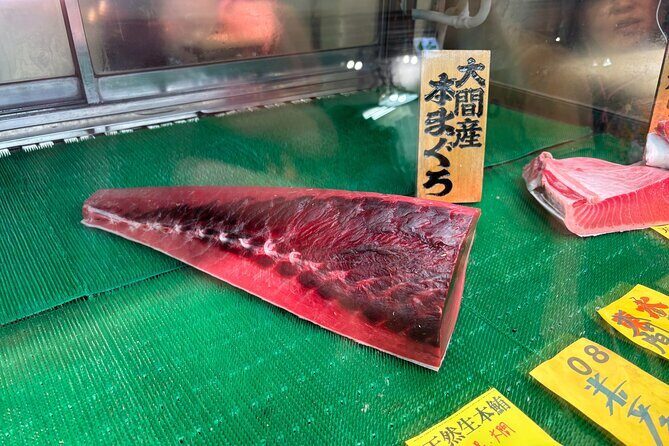
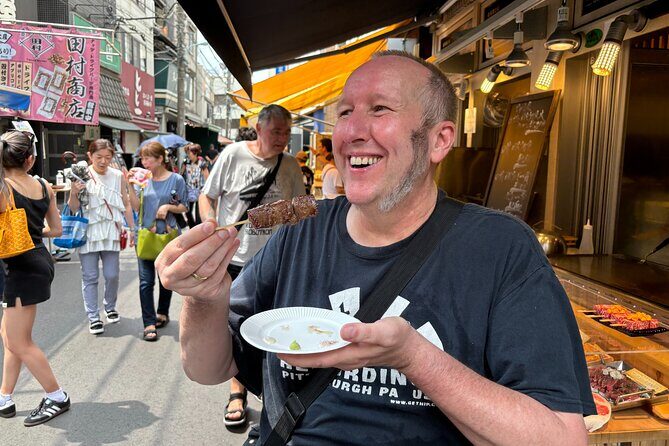
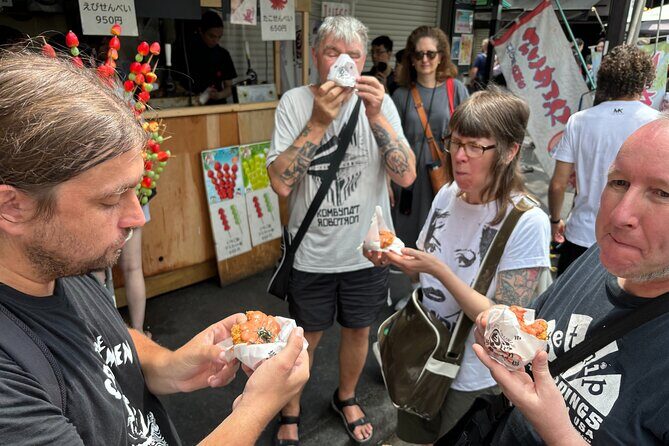
Then you’re back into the Tsukiji market area for about 45 minutes, built around three must-try foods included in the tour. This second market segment is where the tour earns its value.
Instead of you guessing what’s good (and which stall is worth your time), your guide chooses local favorites and helps you focus on bites that make sense in the market setting. The tour explicitly says the foods come from street food stalls chosen by your Japanese guide, and the time window is long enough to actually enjoy what you eat rather than just take one quick mouthful and rush onward.
Because these foods are included, it reduces the usual risk of a food tour feeling like a pay-more-along-the-way experience. You still might want additional snacks on your own, but you’ll already have the core taste experience covered.
How to get the most from the food stops
- Take a breath before each bite. Market noise can make food feel rushed
- Pay attention to the guide’s reasoning for the choices, even if you’re hungry
- Don’t treat each bite as a separate event—think of them as one market story
A practical consideration
This is about three foods, not unlimited sampling. If you’re the kind of eater who wants to try a dozen things, you’ll need to plan extra time (or accept that this tour gives you a smart starter set, not everything).
Tsukiji Hongwanji Temple: Indian-Inspired Architecture and Buddhist Perspective
The final stop is Tsukiji Hongwanji Temple for about 20 minutes. This is where the tour’s “Japan isn’t one thing” message lands clearly.
Tsukiji Hongwanji is described as a striking Buddhist temple with Indian-inspired architecture. That’s a fascinating detail because it highlights how Buddhism traveled and adapted, long before it became what you see in daily Japan today.
You’ll learn about its history and the kind of religious views commonly held in Japan. Compared with the energy of the market, the temple stop is quieter and more reflective. It’s also a helpful mental reset if you’re doing multiple activities in a day.
One nice touch: the tour lists admission for this temple segment as free, so you’re paying for guidance and time—not extra entry fees at the last moment.
Price and Value: Is $52.12 Worth It?
At $52.12 per person, this tour is not trying to be a bargain bus ride. It’s a short, guided experience with several meaningful inclusions: a private local guide, about 2 hours of structured walking, visits to Namiyoke Inari Shrine and Tsukiji Hongwanji Temple, and three must-try foods included.
Here’s how I’d judge the value:
- You’re paying to remove friction. Tsukiji is overwhelming. A good guide helps you find the right stalls and understand what you’re seeing, which saves your time and prevents wasted food stops.
- Three included foods make it feel concrete. You’re not just paying for talking and photos. You’re getting a clear “this is what you’ll taste” outcome.
- The spiritual contrast is rare in short market tours. Many Tsukiji experiences focus only on food. This one adds two major traditions, so you leave with more than memories—you leave with context.
If you want a guided intro to Tsukiji that mixes practical food culture with cultural meaning, this price can feel fair. If you already know Tsukiji well and just want to snack-shop on your own, you might not need a private guide.
What This Tour Teaches You (Even If You Don’t Think You Need Lessons)
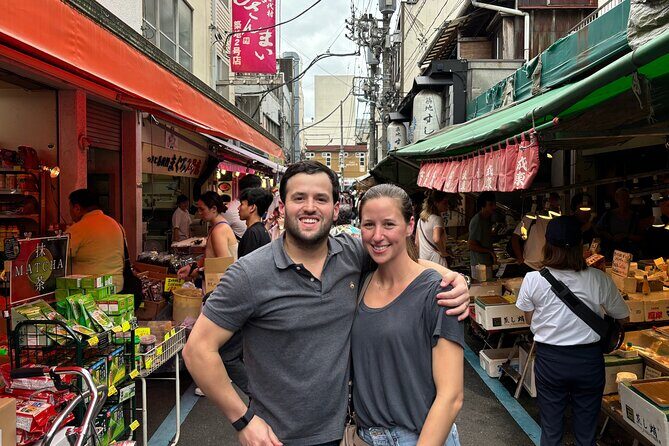
The best part of this kind of tour is subtle. You start noticing patterns.
In the market, the focus is ingredients and work routines. In the shrine, the focus shifts to safety and good fortune. In the temple, the focus becomes belief and tradition, expressed through architecture and religious perspective.
That triangle gives you a practical lesson: in Japan, food culture isn’t separate from life. It’s woven into daily habits—what people do before work, what they hope for, and how spiritual spaces shape behavior.
If your travel style likes “understanding first, then enjoyment,” you’ll likely appreciate that the guide explains the why behind what you’re seeing—market history, shrine meaning, and temple perspective.
Also, if you get a guide like Cass (mentioned positively in past feedback), you may find the explanations especially clear and story-based—market history plus shrine context, tied together in a way that feels easy to follow.
Who Should Book This (and Who Might Skip)
This tour suits you if:
- You want a guided Tsukiji start that helps you navigate the area without stress
- You like tasting three specific local foods instead of hunting on your own
- You’re interested in both Shinto and Buddhism in one short day
- You prefer a private experience where your pace and questions matter
You might choose something else if:
- You want hours of free time to roam and shop with no structure
- You’re strictly focused on food-only and don’t care about shrine/temple visits
- You’re planning many activities and need more time at each stop
Should You Book This Tsukiji Private Tour With 3 Food Stops?
I’d book it if you want a smart, time-efficient way to experience Tsukiji without getting lost in the famous-fence maze. The key reasons: you get a local guide, two Tsukiji market segments (first for understanding, second for included bites), and two spiritual stops that explain what’s going on underneath the food scene.
If you do book, wear comfortable shoes and treat it like an intro. Then, if you still want more market time, you’ll know where to go next because you’ve already learned how to read the place.
If you’re deciding at the last minute, it’s also set up for flexibility with free cancellation up to 24 hours in advance, which is reassuring when Tokyo plans can shift.
FAQ
How long is the Tokyo private Tsukiji fish market tour with 3 food stops?
It lasts about 2 hours on foot.
Is this tour private?
Yes. It’s a private tour/activity, meaning only your group participates.
What foods are included?
The tour includes 3 must-try foods loved by locals. Specific food items are not listed in the provided details.
Where does the tour start?
The meeting point is LAWSON Tsukiji 4 Chome Store, 4-chōme-8-1 Tsukiji, Chuo City, Tokyo 104-0045, Japan.
What stops are included besides the fish market?
You’ll also visit Namiyoke Inari Shrine and Tsukiji Hongwanji Temple.
Are admission fees included?
The provided details list admission as free for the Tsukiji market stop and for Tsukiji Hongwanji Temple, and admission is included for Namiyoke Inari Shrine.
Is a mobile ticket used?
Yes. The tour features a mobile ticket.
Are photos included?
Yes. Photos taken during the tour are sent at the end.
What’s not included in the price?
Additional foods and drinks are not included, and food for infants (ages 1-3 years old) is not included.
Final thought
This is a well-structured, short Tsukiji experience that doesn’t just feed you. It gives you a sense of why Tsukiji food culture and everyday spirituality fit together. If that sounds like your kind of travel, book it and treat it as a fast, guided orientation—then go explore the market again with better instincts.
More Tours in Tokyo




More Tour Reviews in Tokyo




Back to the Market: More Tsukiji Tours


Fresh reviews from around Tokyo






Tsukiji Fish Market Tours, compared.
 ★ 5.0Tokyo Tsukiji Fish Market Food and Culture Walking TourFrom $993,184 reviews
 ★ 5.0Tsukiji Fish Market Food and Walking tourFrom $301,724 reviews
 ★ 4.9Tsukiji Fish Market Guided Walking TourFrom $221,397 reviews
 ★ 5.0Tokyo Sushi Making Class in Tsukiji with Professional ChefFrom $491,177 reviews
 ★ 5.0Tsukiji Fish Market Guided Tour and Sushi Making with Pro ChefFrom $104775 reviews
★ 4.7Tsukiji Fish Market Food and Culture Walking TourFrom $96757 reviews
★ 5.0Tsukiji Fish Market Guided Tour and Sushi Making with Pro ChefFrom $104775 reviews
★ 4.7Tsukiji Fish Market Food and Culture Walking TourFrom $96757 reviews
 ★ 5.0Tsukiji Fish Market: Street Food & Culture Walking TourFrom $33669 reviews
 ★ 5.0Tsukiji Fish Market Small-Group Food Walking TourFrom $87621 reviews
Browse the lists this tour appears in