
Reviewed · IMPERIAL PALACE TOURS
Tokyo Private Tour! Edo Castle & Imperial Palace East Gardens
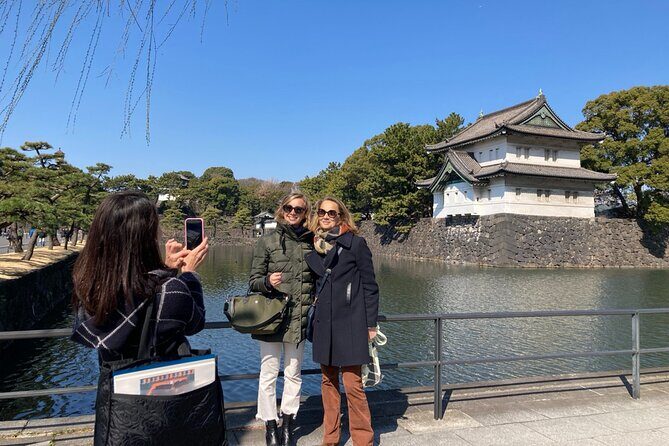
Imperial history in Tokyo feels close up here. This private tour takes you through the Imperial Palace East Gardens and the surrounding Edo-era remnants without the stress of figuring things out on your own. You’ll get a human guide to route you, answer your questions, and point out what most people miss when they wander solo.
Two things I really like: first, the guide handles the navigation so you can actually enjoy the scenery, not just hunt for entrances and signage. Second, the storytelling lands—people like Naoko, Akiyoshi, Shigeri, and Mikio have a knack for making imperial Japan make sense, not just sound interesting. One drawback to plan for: this tour does not go into the Inner Palace, so you’re visiting the East Gardens area (even though it’s still stunning).
In This Review
- Key things to know before you go
- Tokyo’s Imperial Palace East Gardens: why this walk feels special
- Getting there: Wadakura Fountain and a fast start
- The route highlight: walking the Imperial Palace grounds at an easy pace
- Edo Castle Ruins and Ninomaru Garden: the shogun-era layer
- Ote-mon Gate: where arrival energy changes
- What you can and can’t enter (important): East Gardens only
- Why a private guide matters here (more than just translation)
- Timing and pacing: a 2-hour loop that doesn’t feel rushed
- Security and entry reality: baggage inspection and leaving items safely
- Weather and comfort: gardens are best when you can slow down
- Price and value: $65.41 for a short private history walk
- Who should book this tour?
- Should you book: my quick decision guide
- FAQ
- Is admission to the Inner Palace included?
- How long is the tour?
- Where does the tour start?
- Is this a private tour?
- What’s included in the price?
- Is there any security screening?
- What about buying knives or similar items before the tour?
- What if I need to cancel?
Key things to know before you go
- Private, group-only experience means you won’t be squeezed into someone else’s pace
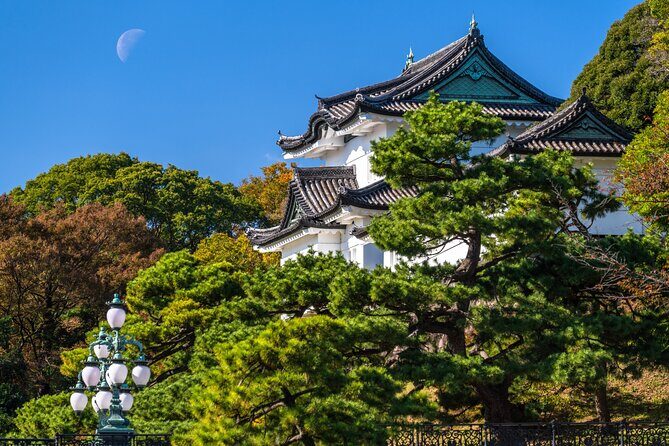
- East Gardens focus: you see major grounds areas, not the Inner Palace
- Your guide runs the route so you avoid dead ends and confusion
- Edo Castle ruins + Ninomaru Garden add layers beyond the garden walk
- Seasonal beauty: blooms in many seasons, with cherry blossom season around March–April
- Security checks happen at the Imperial Palace grounds, so travel lighter
More private options with your own guide
- Tokyo 6hr Private Tour with Government-Licensed Guide★ 5.0 · 3,902 reviews
- Private Tour to Mt. Fuji and Hakone (Fully Licenced Operator)★ 5.0 · 1,910 reviews
- Tokyo Customized Private Tour (Must See Places in 1 Day)★ 5.0 · 1,499 reviews
Tokyo’s Imperial Palace East Gardens: why this walk feels special
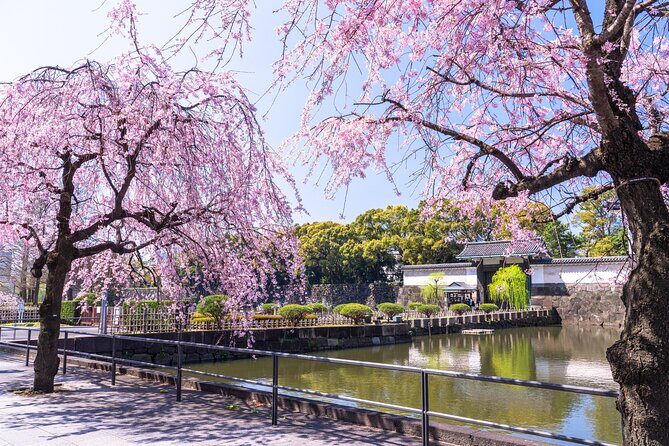
If Tokyo is a lot at once, this is the pressure release. The Imperial Palace East Gardens sit inside one of the most historic political centers in Japan, but your experience is mostly a calm walking loop with room to stop, look, and listen. The payoff is that you’re not just viewing pretty landscaping—you’re learning how power, design, and nature got braided together over centuries.
The other big plus is what you’re not doing: you’re not spending your first hour in Tokyo trying to decode how to enter, where to line up, and what’s worth your time once you’re inside. A good private guide makes the whole visit feel smooth, especially when you’re moving on foot through a complex grounds layout.
Getting there: Wadakura Fountain and a fast start
Your tour meets at Wadakura Fountain National Park, at 3-1 Kōkyogaien in Chiyoda City. It’s a central spot, and being near public transportation matters because you’re likely to combine this with other Tokyo plans afterward.
The practical reason I recommend starting here: once you’re on-site, the route makes more sense. You’re not just arriving at a landmark—you’re stepping into a curated path through the palace surroundings, where the guide can guide you past the common points where people hesitate.
The route highlight: walking the Imperial Palace grounds at an easy pace
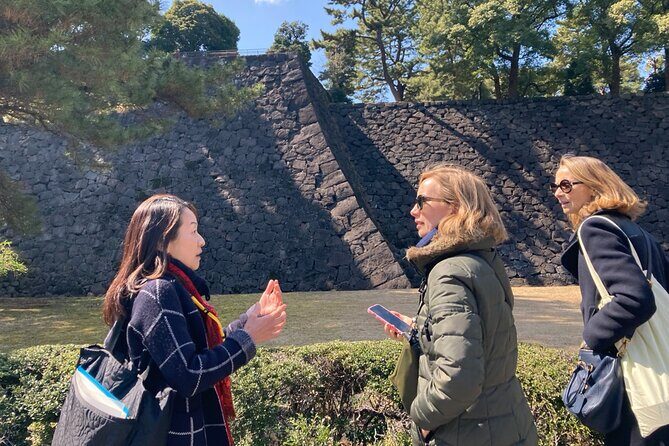
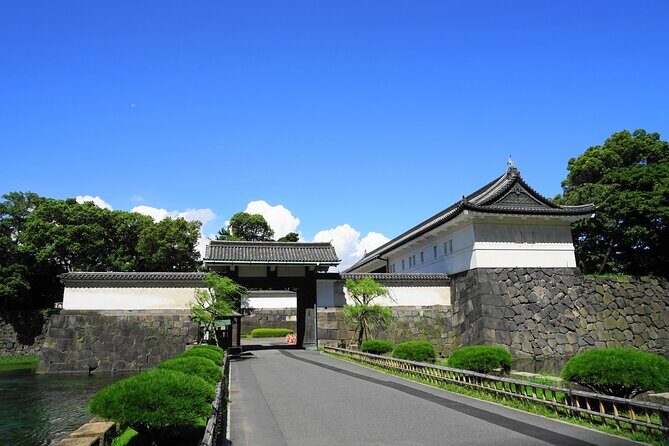
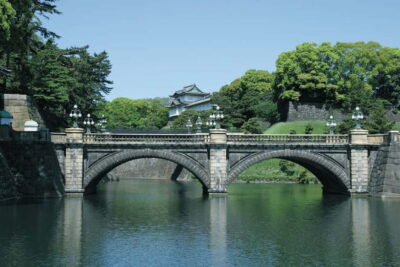
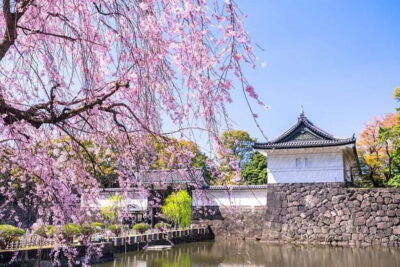
Your core stop is the Imperial Palace East Gardens area. You’ll walk around the grounds with chances to see the Japanese special garden and an old bridge, plus historical buildings and heritage details along the way. This is where the tour earns its keep: a guide can connect what you’re seeing—architecture, garden design, and layout—to the broader story of Japan’s imperial family and the spaces created to support ceremonial and political life.
A key moment is simply slowing down. Even within a 2-hour tour, you’re not treated like a stamp-collecting checklist. One recurring theme from the guides who get top marks is that they pace the walk so you can actually take photos, ask questions, and absorb the setting instead of sprinting through.
What’s good for photos: look for bridge-and-garden sightlines and spots where the greenery frames the built heritage. The gardens are designed for viewing, not just passing through, and that makes your camera time feel worth it.
Edo Castle Ruins and Ninomaru Garden: the shogun-era layer
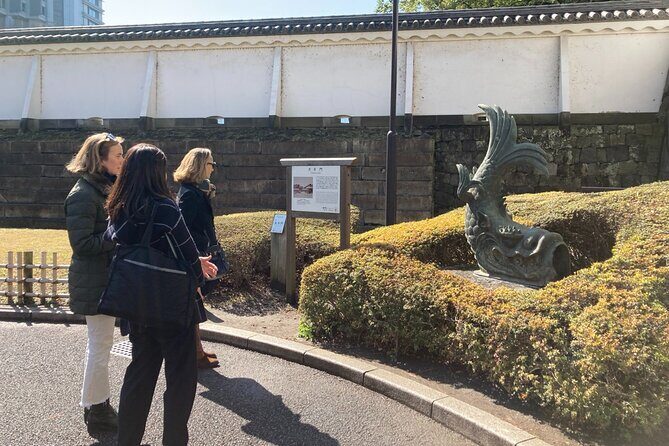
The tour doesn’t stay only in the “imperial gardens” lane. It also includes Edo Castle Ruins and the Ninomaru Garden areas, which help explain how Tokyo’s political center evolved over time. Even if you already know the names from history class, seeing the grounds helps the timeline click.
Here’s what you can expect to feel in this section: it’s more than scenic walking. You’ll be shown how different layers of the site reflect different eras. The Edo period especially tends to make historical context real—suddenly you’re not just looking at plants and stone; you’re seeing why certain spaces were placed where they were.





Ote-mon Gate: where arrival energy changes
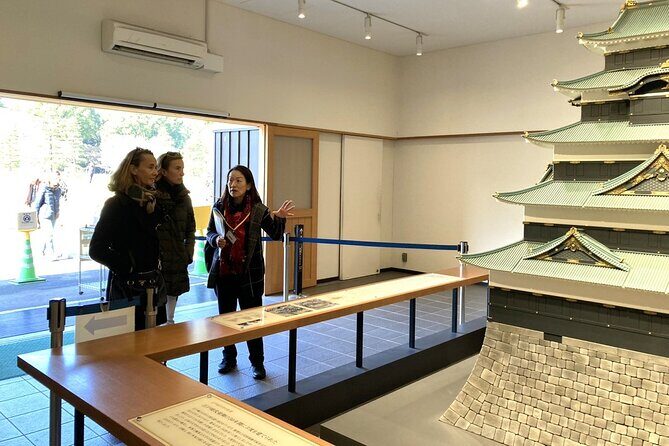
You’ll also visit the Ote-mon Gate area during the walk. Gates are a big deal in Japanese historic sites because they set a boundary between ordinary street-level life and the more controlled, ceremonial world inside. Even without going “inside” the most restricted zones, gate areas help you understand how movement, sightlines, and symbolism work together.
If you like architecture details, this is one of the spots where a guide’s commentary can turn a simple photo into something more meaningful. It’s the difference between seeing a structure and understanding what it’s trying to communicate.
What you can and can’t enter (important): East Gardens only
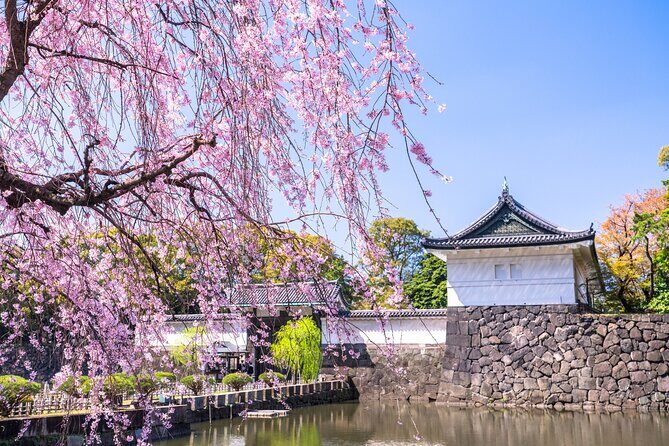
This is the one planning point you shouldn’t skip. The tour does not go inside the Imperial Palace itself, and admission to the Inner Palace is not included. So yes, the name can sound like you’ll go deeper into the palace complex, but what you’re actually doing is an East Gardens experience.
My advice: treat the East Gardens as the main event. In a short 2-hour window, that focus is still a strong use of time. The gardens and palace surroundings are where you get the walking loop, viewpoints, and context that make the history stick.
Why a private guide matters here (more than just translation)
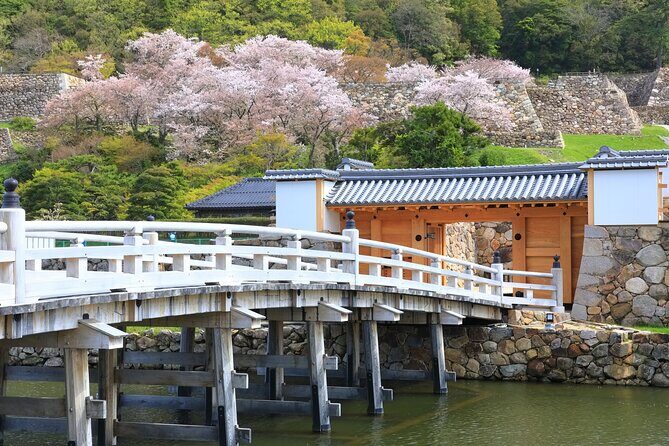
In many cities, a guide is mostly about answering questions. At the Imperial Palace grounds, the value is also about flow and interpretation.
First: navigation. The tour is designed so you don’t end up lost or stuck at the edge of an area you can’t enter. Second: interpretation. A good guide connects garden design and site layout to imperial and Edo-era meaning, so you can look at something and immediately understand why it matters.
Also, guide-to-guide variation is real. Some guides are especially strong at explaining the continuing role of the Imperial Family in daily cultural life, while others focus more on the Edo period atmosphere. Based on strong past experiences with guides like Akiyoshi, Shigeri, Mikio, Yoshiko, and Ishida, you’re likely to get both clarity and warmth. And if you’re traveling as a family or with mixed interests, having someone tailor the pacing is a big win.
Timing and pacing: a 2-hour loop that doesn’t feel rushed
The tour runs about 2 hours. That’s a smart length for this kind of sightseeing because it gives you enough time to see the main highlights without turning it into a long endurance walk.
You’ll move through the grounds with built-in stops for explanation and photo moments. In real-world terms, that means you can plan a smooth day around it—pair it with another neighborhood visit afterward, or schedule it as a calmer morning before the city gets loud again.
Security and entry reality: baggage inspection and leaving items safely
Once you enter the Imperial Palace grounds, you’ll face baggage inspection. That’s not the time to argue with yourself about whether you can bring that one item along.
The tour notes also include an important tip: if you’re planning to purchase Japanese knives or other items that could be used as weapons at places like Tsukiji or Asakusa, leave them in a coin locker or similar storage before the meeting.
Practical takeaway: pack light for this one. You’ll enjoy the walk more if you’re not trying to solve logistics at the gate.
Weather and comfort: gardens are best when you can slow down
Imperial gardens can be gorgeous in good weather, but they don’t care about your sunscreen strategy. One guide team provided practical comfort items on a very hot day, including umbrellas and neck coolers, and that’s the kind of thing you’ll appreciate if the forecast looks tough.
My best advice: dress for a steady walk and bring what you need (water, hat, sun protection). The garden paths can be shaded in places, but Tokyo heat is still Tokyo heat.
Price and value: $65.41 for a short private history walk
At $65.41 per person for about 2 hours, this isn’t the cheapest thing you can do in Tokyo. But it also isn’t priced like a long, multi-stop day. So the value question comes down to what you hate more: paying for guidance, or paying with time and frustration.
You’re paying for:
- A guide-led route (less time lost, fewer wrong turns)
- Context you likely won’t find on your own (why certain areas look the way they do)
- Private pacing so your group can ask questions and move comfortably
If you’re the type who wants to understand what you’re seeing—especially in a place tied to imperial and Edo-era significance—this price can feel very fair. If you only want quick photos and you already know you’ll read up beforehand, you might decide to do it independently. But for most people, the combo of navigation + interpretation makes this a strong “time-saving and meaning-saving” choice.
Who should book this tour?
I’d point you toward this tour if:
- you want Imperial Palace East Gardens without sorting entry logistics yourself
- your group likes history but also wants a pleasant, scenic pace
- you’re traveling with kids or anyone who benefits from clear, guided explanations
- you want a private experience and don’t want to bargain for attention in a larger group
This is also a good fit if you plan a tight Tokyo schedule. Two hours is a practical window for Chiyoda-area sightseeing, and the calm atmosphere helps it feel like a break rather than another box to check.
Should you book: my quick decision guide
Book it if you want the East Gardens experience with an expert in the room, especially for the Edo-to-imperial context and the site details like the Japanese special garden, old bridge, Ninomaru Garden, and Ote-mon Gate areas.
Skip or adjust expectations if you specifically want to enter the Inner Palace. This tour stays in the East Gardens zone, and that’s the frame you should plan around.
If your goal is to see the grounds well and understand them quickly, this is a solid way to spend your time in Tokyo—quiet, organized, and surprisingly meaningful for such a short walk.
FAQ
Is admission to the Inner Palace included?
No. The tour does not go inside the Imperial Palace, and admission to the Inner Palace is not included.
How long is the tour?
It runs about 2 hours.
Where does the tour start?
The meeting point is Wadakura Fountain National Park, at 3-1 Kōkyogaien, Chiyoda City, Tokyo 100-0002, Japan.
Is this a private tour?
Yes. It’s private, and only your group participates.
What’s included in the price?
The tour includes a guide. Admission for the areas visited is listed as free, but Inner Palace admission is not included.
Is there any security screening?
Yes. Upon entering the Imperial Palace grounds, visitors are subject to baggage inspection.
What about buying knives or similar items before the tour?
If you plan to purchase Japanese knives or other items that could be used as weapons, the guidance is to leave them in a coin locker or similar storage before the meeting.
What if I need to cancel?
You can cancel up to 24 hours in advance for a full refund, based on the local experience time.
Just Your Group: Private Options



More Tours in Tokyo

More Tour Reviews in Tokyo



Fresh reviews from around Tokyo






Imperial Palace Tours, compared.
 ★ 4.9Imperial Palace Japanese History Walking TourFrom $32987 reviews
 ★ 5.0Imperial Palace East Garden and Edo Castle Walking Tour in TokyoFrom $25510 reviews
 ★ 4.8Imperial Palace East Gardens Walking TourFrom $19353 reviews
 ★ 4.5Imperial Palace, Sensō-ji Temple, & Tokyo Tower TourFrom $40339 reviews
 ★ 5.0Tokyo Castle, Imperial Palace, Shogun & Garden Walking TourFrom $31211 reviews
 ★ 4.7Edo Castle & East Garden of the Imperial Palace TourFrom $42112 reviews
 ★ 5.0Imperial Palace, the history of Japan (ENGLISH GUIDE)From $4077 reviews
 ★ 4.8Pvt. Tour – Edo Castle & Imperial Palace East GardensFrom $6363 reviews
Browse the lists this tour appears in