
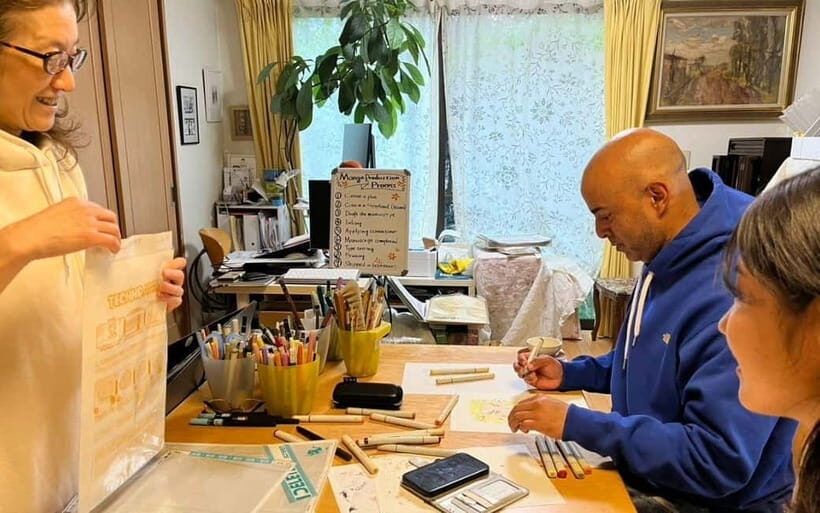
Reviewed · WORKSHOPS
Tokyo: Private Manga Drawing Class with Professional Artist
Manga lessons in Tokyo feel oddly precise. In a studio session near Shindaita Station, you work side-by-side with manga creator Yumiko sensei and learn the classic craft steps that turn sketches into print-ready pages, using G-pens and screentone techniques that people in Japan still use every day.
What I like most is how practical it is: you’re not just watching. You’re practicing real tools and real workflows, then applying them to a character you actually want to draw. The second win is the personalized feedback. You get one-on-one corrections on things like line control, proportion, and how to avoid smudges. One thing to consider: this is a hands-on ink and paper class, so expect some fine-motor effort and the need to slow down for steady line work.
In This Review
- Key Things You’ll Love About This Tokyo Manga Class
- Finding The Manga Studio By Shindaita Station
- Your Instructor, Yumiko Sensei, And How The Class Gets Tailored
- The Pro Tool Lesson: G-Pens, Maru-Pens, Brush Pens
- Choosing Your Difficulty Level And The Character-Design Path
- Line-Weight Theory, Perspective Fixes, And The Tricks That Save Your Wrist
- Screentone And Halftone: How To Make Texture Look Printed
- Final Touches, One-On-One Critique, And Your Signed Take-Home Art
- Price And Value: Is $141 Worth 150 Minutes?
- Who This Class Is For (And Who Should Skip It)
- Should You Book This Tokyo Manga Workshop?
- FAQ
- How long is the private manga drawing class?
- How large is the group?
- Do I need prior drawing experience?
- What will I take home after the class?
- Where do we meet in Tokyo?
- Is the workshop wheelchair accessible, and is the class taught in English?
Key Things You’ll Love About This Tokyo Manga Class
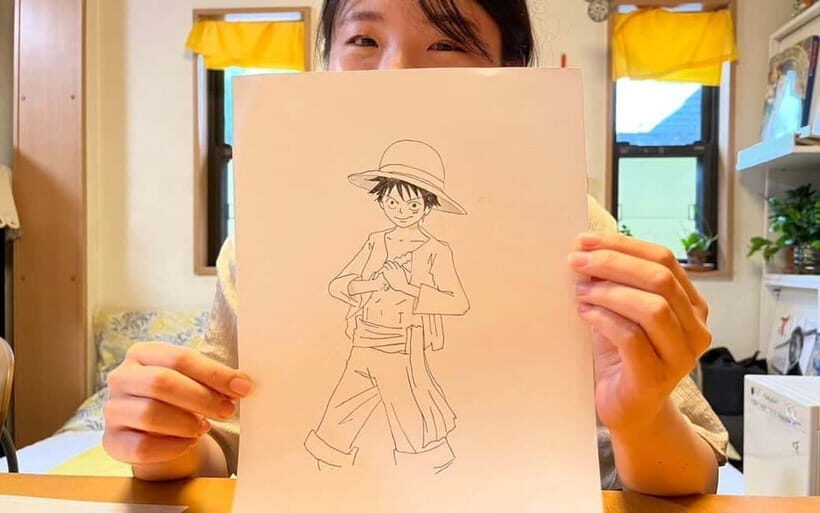
- Small group focus: up to 6 people, so Yumiko sensei can correct your posture and hand angles.
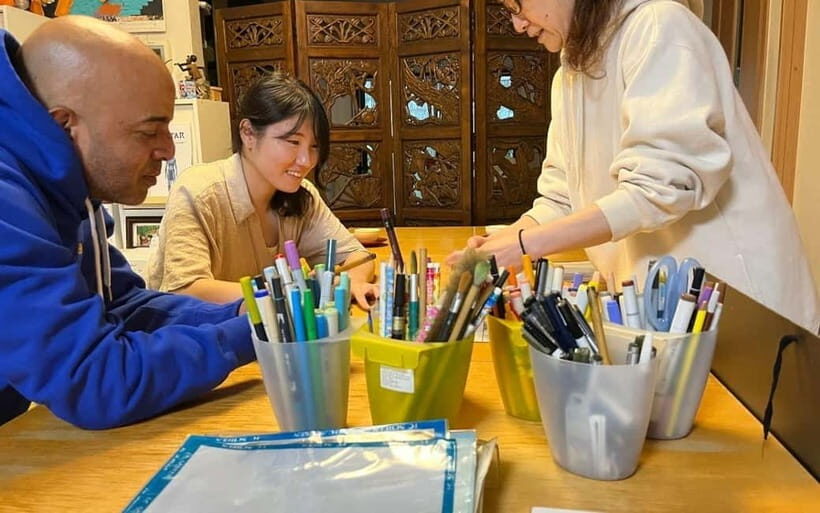
- Real pro tools: G-pens, maru-pens, and brush pens, plus screentone materials and halftone sheets.
- Classic screentone practice: cut and apply dot/line sheets for shadows, texture, and depth.
- Choose your level and style: three difficulty tiers, with options like chibi, action poses, and expression sheets.
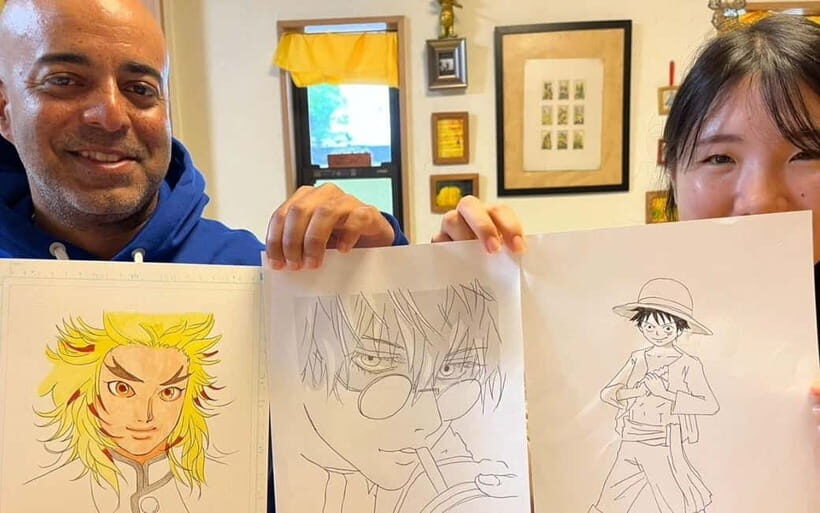
- You leave with finished keepsakes: your original artwork plus a portrait drawn by the artist, backed by a mini tool handbook.
More private options with your own guide
- Tokyo 6hr Private Tour with Government-Licensed Guide★ 5.0 · 3,902 reviews
- Private Tour to Mt. Fuji and Hakone (Fully Licenced Operator)★ 5.0 · 1,910 reviews
- Tokyo Customized Private Tour (Must See Places in 1 Day)★ 5.0 · 1,499 reviews
Finding The Manga Studio By Shindaita Station
You’ll start with an easy meet-up: stand just outside the ticket gates of Shindaita Station on the Keio Inokashira Line. The station has a single exit, so it’s pretty hard to go wrong. Walk through the wickets, step outside, and look for your guide.
This is one of those small details that makes the whole class smoother. When you’re headed somewhere tiny and studio-like, losing time at the start can turn the evening sour. Here, you get a clear, simple meeting spot, and the session is only 150 minutes, so you’ll want that time to be spent drawing—not searching.
Dress like you’re doing crafts. Comfortable clothes help, because you’ll likely spend time controlling ink lines and shading with your hands close to the page. A camera is also smart, since you can snap pictures with Yumiko sensei and your final piece.
Your Instructor, Yumiko Sensei, And How The Class Gets Tailored
The class centers on Yumiko sensei, a published manga artist with work appearing in national magazines. Before you start inking, you’ll flip through her portfolio and talk about the genres she works in, like shōnen, shōjo, and seinen. This matters because manga style isn’t one thing. Line thickness, shading choices, and even how characters emote can shift depending on genre.
Then comes a key personalization step: you name a favorite series or character you want to draw. That single choice changes the lesson in a big way. Instead of doing anonymous practice pages, you’re building something connected to your taste.
If you’re the type who learns faster when the subject is exciting, you’ll feel that here. If you’re new and don’t know what to pick, you’ll still get help choosing an approach that fits your comfort level—especially since there are three difficulty tiers with printed guideline sheets.
English is the session language, and Japanese support is available if you need it. From what you’re told at the start, you can ask questions about anything from drawing technique to how the manga industry works, including portfolio and publishing tips.
The Pro Tool Lesson: G-Pens, Maru-Pens, Brush Pens
This class doesn’t treat tools like trivia. It treats them like the foundation. You’ll try classic G-pens, maru-pens, and brush pens, then learn why each one feels different.
Here’s what you’ll take from the tool practice:
- Line weight is not just about drawing nicer lines. It changes how your character reads at a glance.
- Different pens handle different line jobs. You can’t force one tool to do everything and expect consistent results.
You also learn about paper. You’ll compare premium Kent paper versus inexpensive copy paper, and that comparison isn’t random. Paper tooth and weight affect how ink sits on the page and how crisp your lines look after drying. If you’ve ever tried drawing on a cheap notebook and wondered why your ink smudges or looks fuzzy, this explains the why.
You’ll also see how different media fit into a modern workflow. That includes dip ink, alcohol markers, screentones, and even digital tablets. Even if you’re not going digital, it’s useful to understand how artists mix methods in real life—especially when you want your manga to look consistent across pages.
The class also calls out common pain points up front: smudging, line control, hand strain, and perspective. That’s helpful because it means corrections aren’t only about your final drawing. They’re about the mechanics that cause problems in the first place.
Choosing Your Difficulty Level And The Character-Design Path
Instead of throwing everyone into one project, you pick from three difficulty tiers. Each tier comes with printed guideline sheets, so you’re not stuck guessing how to start.
Depending on your level, your path can be:
- inking practice (great if your main goal is to learn controlled lines)
- character outline (good if you already understand basic shapes)
- full character design (ideal if you want a complete, finished look)
You can also request a chibi style, an action pose, or an expression sheet. This is a smart option for beginners and it’s also fun for kids starting at age 6 and up. If you’re drawing something more cartoony, you can focus on the basics—proportions and facial features—without getting overwhelmed by realistic anatomy.
From there, the lesson builds the figure using basic shapes to lock down anatomy and proportions. You’ll work with things like heads-to-body ratio and balance lines. Then Yumiko sensei circles the room and corrects your posture and hand angles. That’s a big deal, because line problems often start at the wrist and elbow, not the eyes.
More things to make with your own hands



Line-Weight Theory, Perspective Fixes, And The Tricks That Save Your Wrist
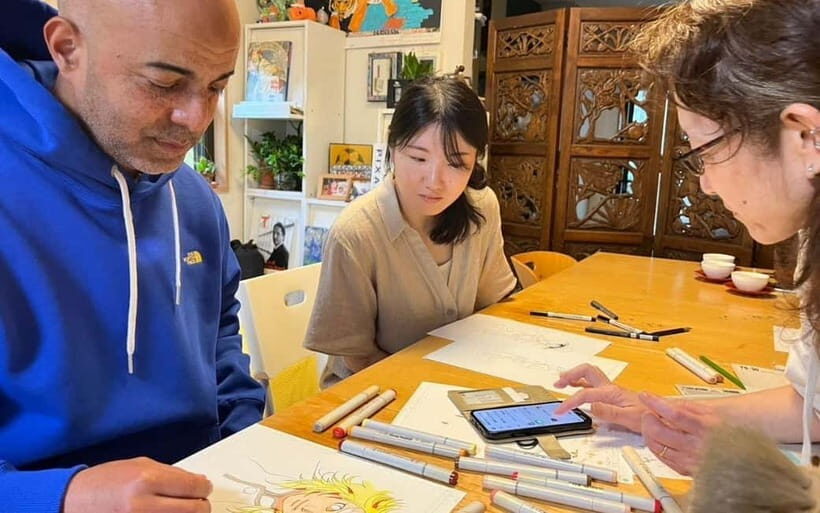
This is where the class earns its keep. You’re taught how to thicken or taper lines to create volume. You’ll learn line-weight theory in a way that you can apply right away, not just read and forget.
You’ll also practice effects that make characters look alive:
- feathering for hair shine
- speed lines for motion
- getting curve control by rotating the page instead of cranking your wrist
That last tip is the kind of ergonomic trick that keeps you drawing comfortably instead of fighting your arm. If you’ve ever drawn for 20 minutes and felt your hand get stiff, you’ll appreciate how practical this is.
Perspective and hand fatigue show up as frequent issues in manga-style drawing, so the instructor gives concrete fixes. Since this is a small group session (up to 6 people), you’re not just hoping someone notices. You’re in a position to get correction before a bad habit hardens.
Even if you start with messy lines, you’ll leave with a clearer process: shape first, then structure, then controlled lines with intentional thickness changes.
Screentone And Halftone: How To Make Texture Look Printed
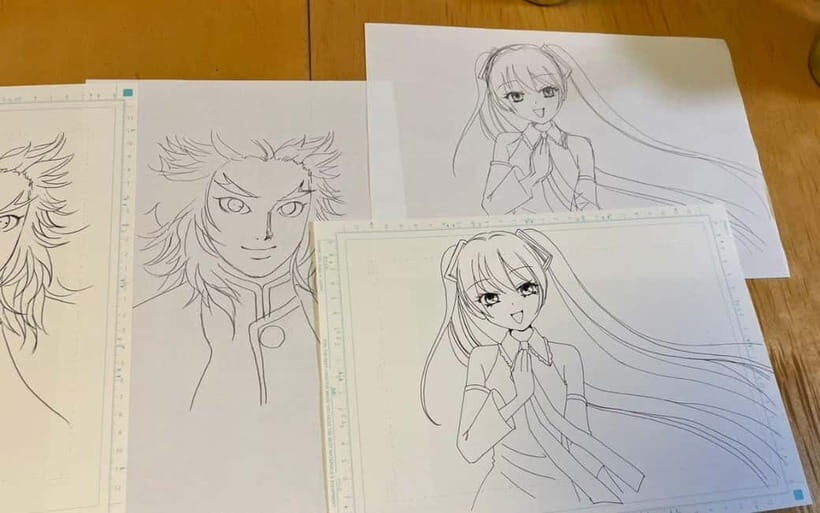
If you want your drawing to feel manga-real, screentone is the difference between cute and convincing. Here, you learn classic screentone methods using dot/line sheets and the cut-and-apply workflow.
You’ll learn the classic approach: cut your screentone, then place it carefully for depth and texture. You also get tips for clean edges using an art knife and a burnishing spoon. That combo matters because manga tone looks wrong when the edges lift or tear.
You’ll try halftone sheets too, for shadows, backgrounds, and sparkle effects. This is one of the most satisfying parts of the class because it transforms flat sketches quickly. The moment you add tone, the character stops looking unfinished and starts looking like a panel from a story.
And yes, you’ll also learn how to correct mistakes and add highlights. White-ink pens are used for highlights, and correction fluid helps with errors without turning your page into a messy restart.
Final Touches, One-On-One Critique, And Your Signed Take-Home Art
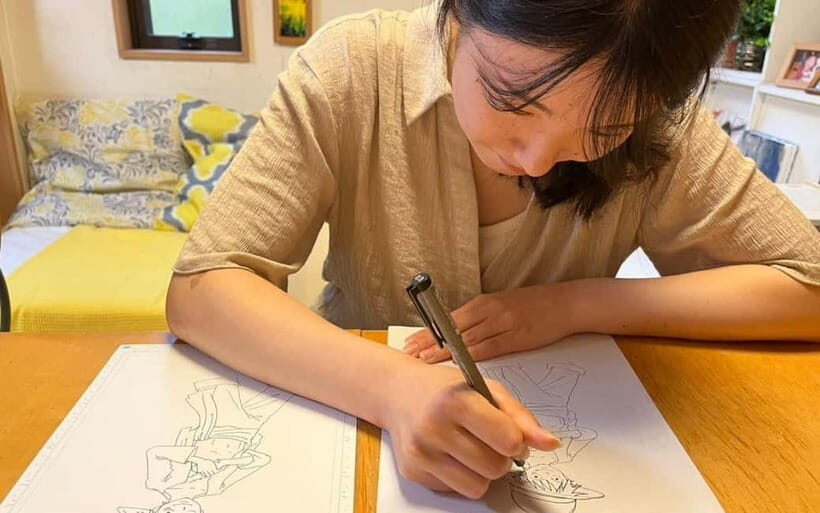
As you approach the end, you add final touches and get feedback. This isn’t vague praise. Yumiko sensei reviews your work and marks areas for improvement. You’ll also receive a finish-ready critique that you can carry into your next drawing session.
Then you take home more than just practice pages:
- your original artwork
- practice sheets from the session
- a mini handbook with the tools you used and where to buy them in Tokyo
- and a portrait drawn by the manga artist
That portrait piece is more than a souvenir. It gives you a direct visual reference for the style you practiced. If you’re serious about improving, having a model example from the same instructor helps you compare your own line quality and shading choices.
You can also take photos with the artist and your piece—handy if you want a clear before-and-after record of what you learned during the session.
Price And Value: Is $141 Worth 150 Minutes?
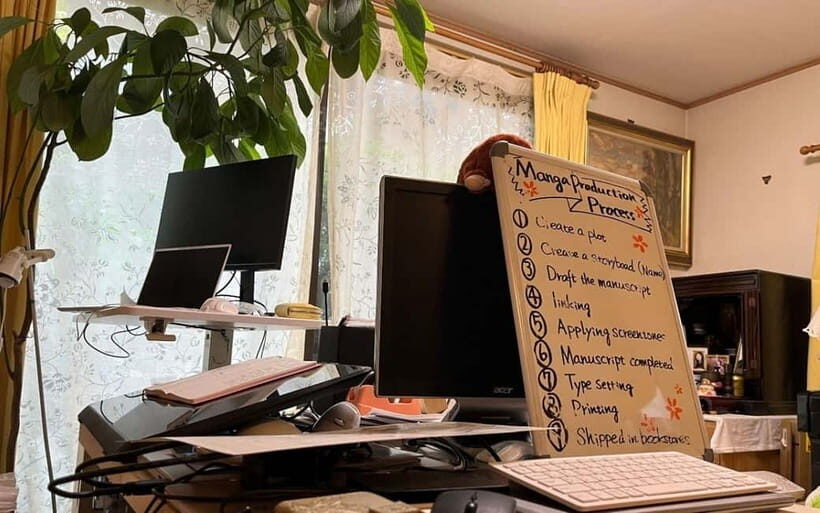
At $141 per person for 150 minutes, the big question is value. The short answer: it feels fair because you’re paying for pro instruction plus physical materials plus keepable outcomes.
Here’s what’s included that supports the price:
- the use of manga drawing tools and materials
- a published professional instructor with English instruction
- personalized feedback on your artwork
- a take-home pack including your original work and practice sheets
- plus that added portrait drawn by the artist
- and a mini handbook for where to buy tools in Tokyo
What you’re not paying extra for is the basics: pens, ink workflow materials, screentones, and guidance through each step. If you’ve tried to learn manga tools on your own, you know how quickly costs add up. Buying the right pens and tone sheets, guessing at paper, and then struggling through technique is a lot more expensive than you’d like.
Also, small group attention matters. When the instructor can correct your posture, hand angles, line taper, and screentone placement while you’re actively working, you improve faster than solo practice.
Who This Class Is For (And Who Should Skip It)
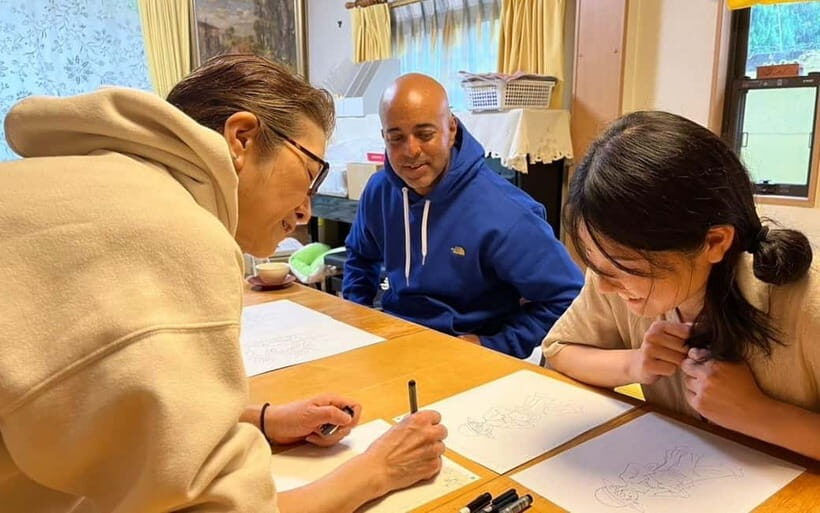
This workshop is built for beginners and for people who just want to get better with classic manga tools. You don’t need prior drawing experience. The structure starts with shapes and guided sheets, then scales up through three difficulty levels.
It’s a great fit if you:
- want hands-on instruction from a published manga artist
- care about classic techniques like screentone and line-weight theory
- want a finished keepable piece, not just practice scribbles
- travel with kids age 6 and up who can handle careful tool work and fine line drawing
It may not be the best choice if you:
- want a casual walking-and-photo experience rather than a drawing class
- are looking for a super fast tutorial with no fine line practice
- are bringing a child under age 5, since the activity isn’t suitable for that age group
Wheelchair accessible is also a plus, so accessibility has been considered.
Should You Book This Tokyo Manga Workshop?
Book it if you want a real skill session, not a vague craft demo. The best part is the combo of classic tools plus technique teaching: you’ll learn G-pens and friends, paper differences, screentone cutting and placement, line-weight control, and finish corrections, all with personalized guidance from Yumiko sensei.
Skip it if your goal is purely scenery or a low-effort activity. This is paper, ink, and careful hand control. The payoff is that you leave with work you can actually keep and reference, plus a portrait and a mini handbook so you can practice at home.
If you’re already a fan of manga, pick a character you genuinely like. That one choice helps the lesson click faster, and it makes the whole 150 minutes feel less like homework and more like progress you can show.
FAQ
How long is the private manga drawing class?
The class lasts 150 minutes.
How large is the group?
The maximum group size is 6, with a private group setup.
Do I need prior drawing experience?
No prior drawing experience is required.
What will I take home after the class?
You’ll take home your original artwork, practice sheets, and a portrait drawn by the manga artist. You also receive a mini handbook listing today’s tools and where to buy them in Tokyo.
Where do we meet in Tokyo?
Meet just outside the ticket gates of Shindaita Station (Keio Inokashira Line). The station has a single exit—walk through the wickets and step outside.
Is the workshop wheelchair accessible, and is the class taught in English?
Yes, the workshop is wheelchair accessible. The session language is English, with Japanese support available.
Make Something to Take Home

Just Your Group: Private Options




More Tour Reviews in Tokyo






Fresh reviews from around Tokyo






Workshops, compared.
 ★ 5.0Sushi Making Tokyo Roll and Authentic Japanese Sushi ClassFrom $593,971 reviews
 ★ 5.0Tokyo Shinjuku Chopsticks Making ClassFrom $201,763 reviews
 ★ 4.8Chopstick Making Workshop in GinzaFrom $251,366 reviews
 ★ 5.0Tokyo Sushi Making Class in Tsukiji with Professional ChefFrom $491,177 reviews
 ★ 5.0Ramen & Gyoza Cooking Class in Tokyo with Local Supermarket VisitFrom $122823 reviews
 ★ 5.0Matcha Making Class in Tokyo with Authentic Japanese Sweets SetFrom $21744 reviews
 ★ 5.0Samurai Sword & Archery Class from Samurai DescendantFrom $193603 reviews
 ★ 4.9Tsukiji Fish Market Sushi Making Class with Pro ChefFrom $63506 reviews
Browse the lists this tour appears in