
Reviewed · CALLIGRAPHY EXPERIENCES
Tokyo: Japanese Calligraphy Lesson with Skilled Instructor
Japanese calligraphy feels intimidating until you’re holding the pen.
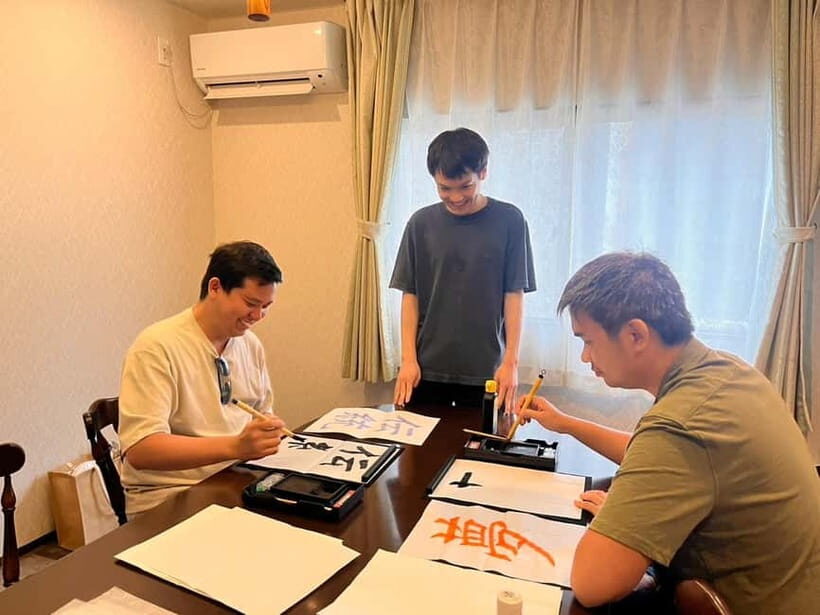
This class in Asakusa turns that pressure into something doable. You start by picking a word or phrase from sample pieces, with the instructor explaining the meaning in clear English. Then you practice your strokes on special calligraphy paper and transfer the final writing onto your souvenir. It’s hands-on, slow enough to learn, and small enough to get help when your lines wobble.
I love that it’s a small group (up to 4), because you’re not rushing behind a crowd. I also love that you get actual coaching, not just a demonstration—plus you leave with a finished item you made yourself, not a generic worksheet. One possible drawback: you’re in a rental room setup that can be tatami or a western-style room with chairs, depending on availability, so plan for the vibe of either floor seating or table seating.
In This Review
- What Makes This Lesson Worth $45
- Key moments you should know before you go
- Where You’ll Practice in Asakusa (and Why the Room Setup Matters)
- Choosing Your Word or Phrase: Meanings That Make the Souvenir Personal
- How the Practice Works: 20 Sheets of Hanshi and Stroke Coaching
- Turning Your Writing Into a Souvenir (Uchiwa, Shikishi, Kakemono)
- Meet Shusuke: Certified Skills, Calm Instruction, and Language Support
- The Time Plan: One Hour, Focused Steps, No Wasted Motion
- Price and Value: Why $45 Works Here (Supplies Included)
- Who Should Book This Calligraphy Lesson (and Who Might Skip It)
- Should You Book This Tokyo Calligraphy Lesson?
- FAQ
- What can I choose to make as my calligraphy souvenir?
- How long is the calligraphy lesson?
- Do I get practice paper?
- Does the instructor explain the meaning of the word in English?
- How big is the class?
- What languages will I use during the lesson?
What Makes This Lesson Worth $45
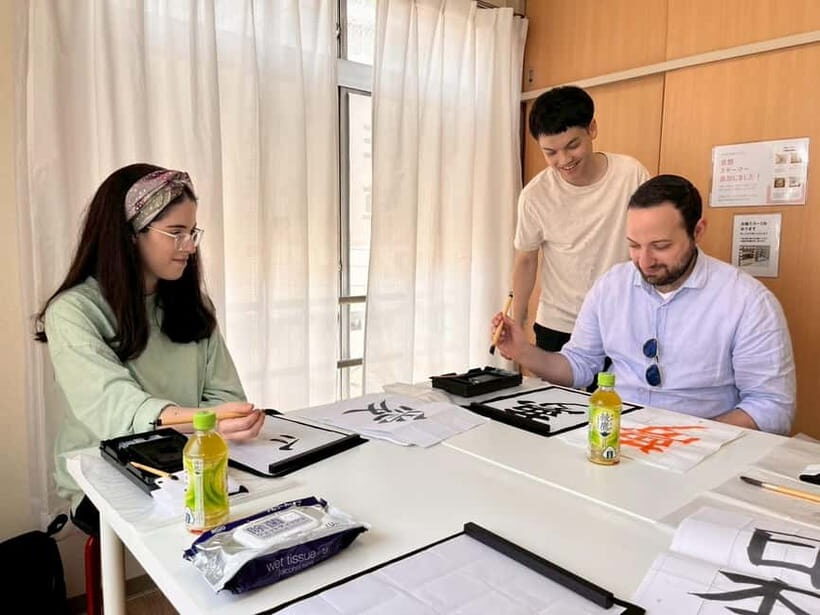
The quality comes from the instructor and the structure. Shusuke is certified in Japanese calligraphy (Rank: 3rd Dan, Japan Educational Calligraphy Federation) and has 10+ years teaching experience. You’ll get step-by-step guidance, and you’re encouraged to refine your strokes during a real practice block—about 30 minutes—using 20 sheets of hanshi.
You also get something travel folks often miss: language context. Since the instructor explains the meanings of the words you choose in English, you’re not just copying symbols. You’re building a small understanding of why that word matters in Japanese culture, which makes the souvenir feel personal rather than random.
More ink on paper
- Tokyo: Calligraphy on Kanji Fan & Scroll with Drink★ 5.0 · 210 reviews
- Let’s experience calligraphy in YANAKA, Taito-ku, TOKYO !!★ 5.0 · 127 reviews
- Tokyo: Calligraphy Workshop & Original T-Shirt Creation★ 4.9 · 105 reviews
Key moments you should know before you go
- Pick your kanji/word with meaning in English so you understand what you’re writing, not just how it looks
- You’ll practice on 20 sheets of hanshi, giving you time to correct strokes and try again
- Small group pacing means the teacher can give specific feedback when your brush angle slips
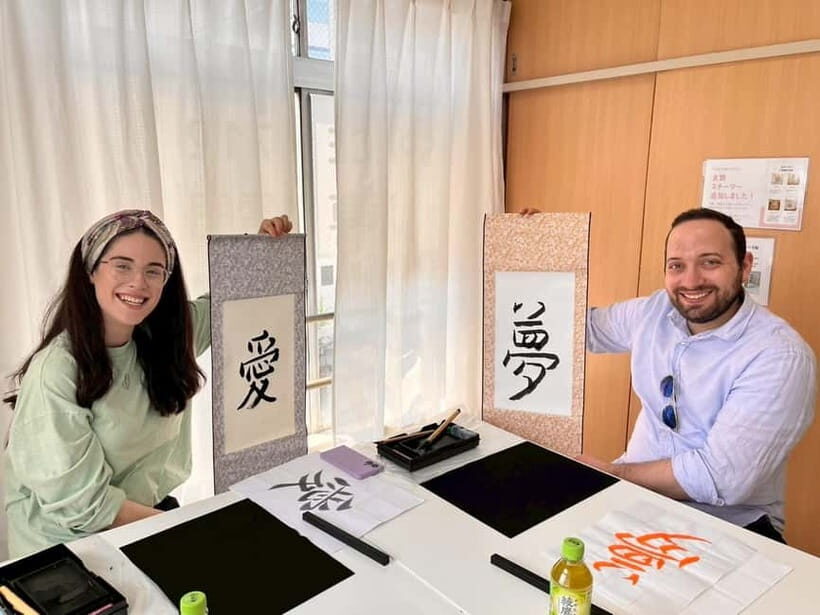
- Choose your souvenir format: uchiwa, shikishi, or kakemono, each with a different look
- A commemorative photo is included, so you’ll remember what you made immediately
- Shusuke’s teaching style is calm and photo-friendly, including lots of pictures during the session
Where You’ll Practice in Asakusa (and Why the Room Setup Matters)
The lesson happens in one of the rental rooms in Asakusa. Your exact meeting point is shared by email after reservation, and the room type depends on availability: either a Japanese-style tatami room or a western-style room with a table and chairs.
Why does that matter? Calligraphy is all about body position and control. On tatami, you usually sit close to the writing surface, which can help you feel steady with the brush. In a western-style room, you’ll get a more familiar desk-like position, which some people find easier for arm support.
The good news: the session is designed for comfort and guidance. Since the class is limited to 4 participants, you’re more likely to get quick adjustments from the instructor instead of being stuck waiting your turn.
Choosing Your Word or Phrase: Meanings That Make the Souvenir Personal
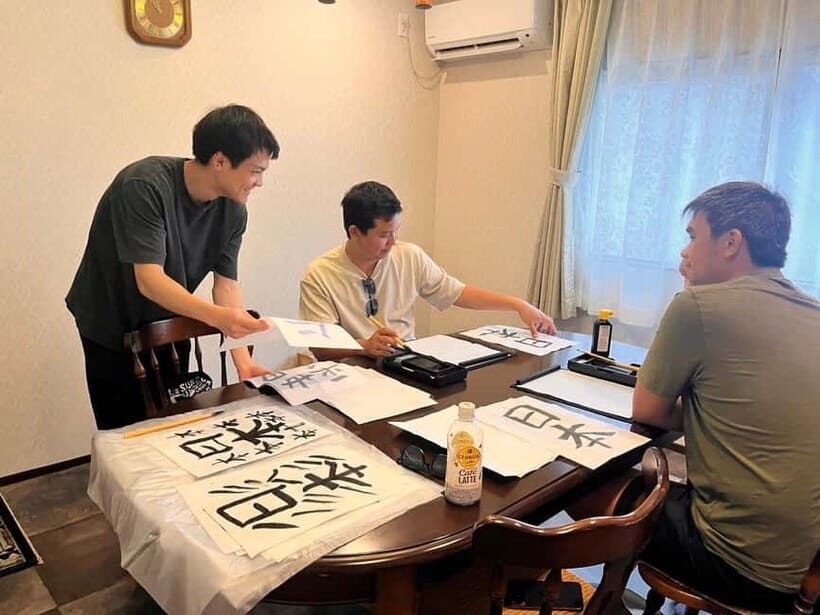
You’ll start with sample calligraphy works. Each one comes with its own meaning and cultural significance. The instructor explains the meaning in English, and that’s where this lesson becomes more than a craft class.
Here’s the practical advantage for you: when you understand what the word means, you can choose something you actually care about—rather than grabbing the most visually dramatic kanji. If you’re a first-timer, this step helps you avoid that classic tourist mistake: writing characters that look cool but mean something you don’t connect with.
Also, because you’re choosing from examples, you don’t need to know Japanese in advance. You’re selecting something that the teacher can then help you render cleanly.
How the Practice Works: 20 Sheets of Hanshi and Stroke Coaching
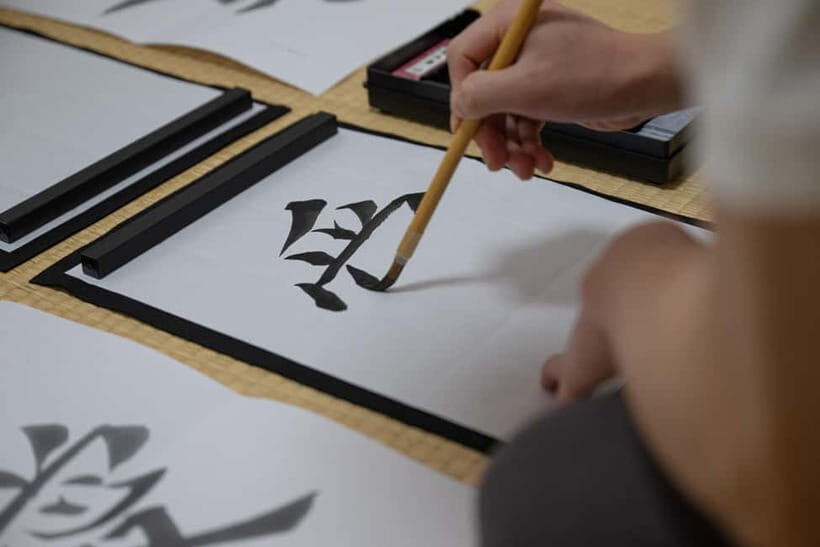
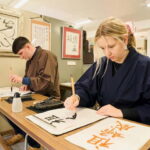
After you pick your favorite word or phrase, you move into practice. You’ll write on special hanshi calligraphy paper. Each participant receives 20 sheets, which is a big deal for learning.
Most short lessons don’t give you enough practice paper to correct your strokes. Here, the supply lets you slow down and improve. You’ll get guidance on brush control and technique, and you’ll have time—about 30 minutes—to refine what you’re doing before committing it to the final souvenir piece.
What you can expect in the room:
- The instructor demonstrates technique and then watches you write
- You get tips as you go, instead of waiting until the end
- You can repeat and adjust, because you’re not out of paper after a single try
This is also why a small group matters. With up to 4 participants, you’re more likely to get specific feedback when something goes off—like a stroke that turns awkwardly or a spacing issue that makes the characters look cramped.
More things to make with your own hands


Turning Your Writing Into a Souvenir (Uchiwa, Shikishi, Kakemono)
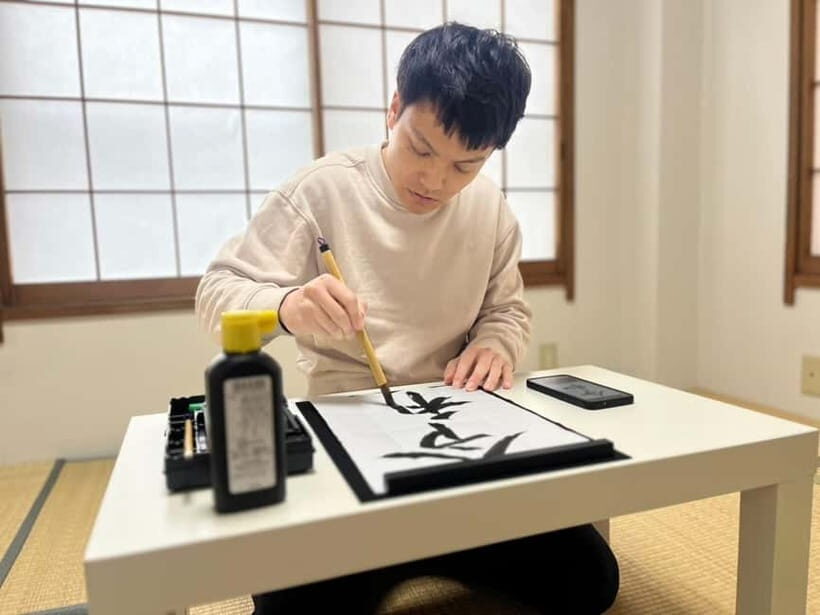
Once your chosen word feels solid, you transfer your writing onto a souvenir item of your choice:
- Uchiwa (traditional fan)
- Shikishi (decorative board)
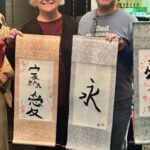
- Kakemono (hanging scroll)
This is the part that most people remember, because it’s where your practice becomes a real take-home object. It also adds weight to the experience. Writing on a small sheet is one thing; translating your strokes to a format with a different surface and layout is the real skill.
How you’ll experience the difference:
- Uchiwa is compact, so you’ll need confident balance and stroke placement.
- Shikishi has a structured decorative frame, which makes spacing feel extra important.
- Kakemono gives you that classic scroll look, and the writing needs to feel finished and deliberate.
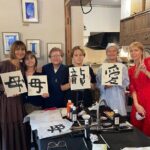
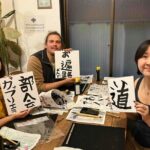
You’ll also have the chance to celebrate the result with a commemorative photo at the end. That photo matters more than you’d think: it documents the final piece while it’s still fresh in your hands and before souvenirs get moved around in your bag.
Meet Shusuke: Certified Skills, Calm Instruction, and Language Support
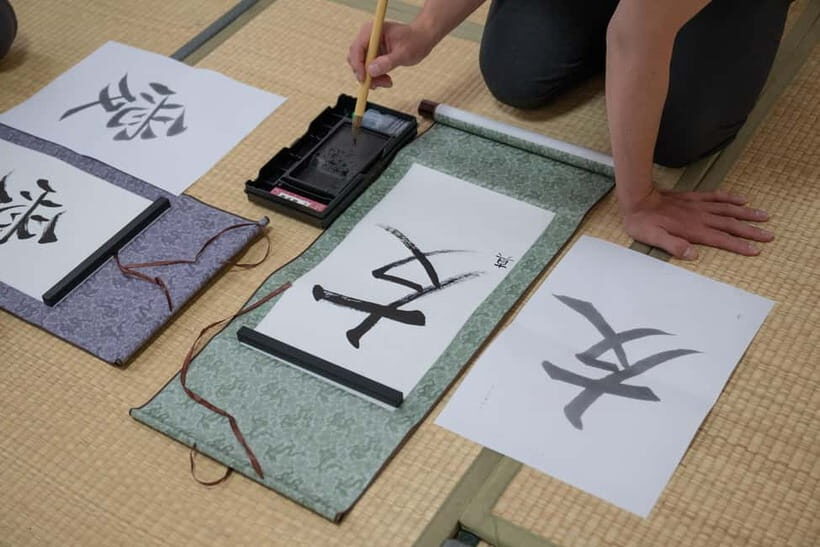
The instructor is Shusuke, and the teaching credentials are a real part of the value here. He’s certified in Japanese calligraphy as a 3rd Dan calligrapher with the Japan Educational Calligraphy Federation, and he has over 10 years of calligraphy instruction.
What you’ll feel in the session is the teaching style. Recent feedback highlights that the class is relaxed, intimate, and calming. One reviewer noted how easy the meeting point was to find and how strong the communication was. Another said Shusuke was calm and took a lot of photographs, and he offered help with questions.
Language support is also solid. The instructor uses English and Japanese. He’s also described as fluent in Japanese (native), advanced in English, and having beginner Korean. Practically, this means you can ask questions without guessing.
The Time Plan: One Hour, Focused Steps, No Wasted Motion
This experience runs for 1 hour. That short length is a feature, not a flaw, if you want something you can fit into a Tokyo itinerary.
The lesson is structured so you’re not stuck watching or waiting:
- Pick your word or phrase from sample calligraphy
- Practice on hanshi with step-by-step guidance (with about 30 minutes of practice time)
- Transfer to your chosen souvenir
- Wrap up with a commemorative photo
Because the timeline is tight, you’ll get more out of it if you come with a little curiosity and a willingness to start over on a few sheets. You’re not trying to produce a perfect masterpiece on the first stroke—you’re training your hand to think like calligraphy.
Price and Value: Why $45 Works Here (Supplies Included)
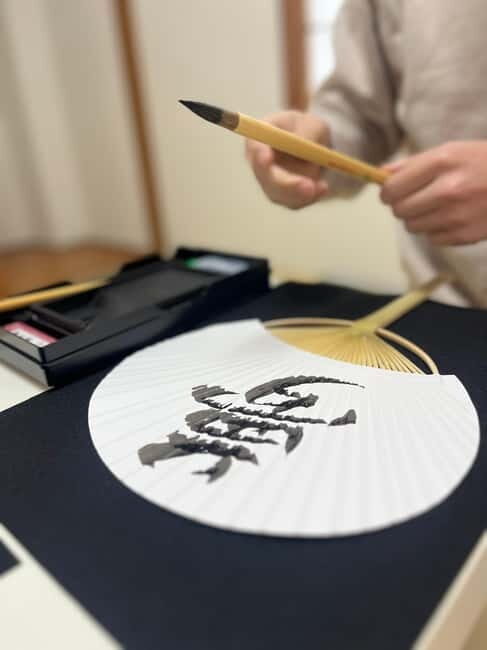
At $45 per person for 1 hour, the best part is what you get for that price. You’re not just paying for instruction. You also receive:
- Access to word samples with meanings explained in English
- Step-by-step guidance from the instructor
- 20 sheets of hanshi
- A choice of souvenir (uchiwa, shikishi, or kakemono)
- A commemorative photo
When you price learning experiences, ask what’s included. Here, the “materials cost” isn’t hidden. You’re paying for guided practice plus a finished souvenir you can keep.
Also, the instructor is certified and experienced, and the group size stays small (up to 4). For a class that ends with a real object, that’s good value.
If your schedule is uncertain, you also have flexibility: there’s free cancellation up to 24 hours in advance and a reserve now & pay later option.
Who Should Book This Calligraphy Lesson (and Who Might Skip It)
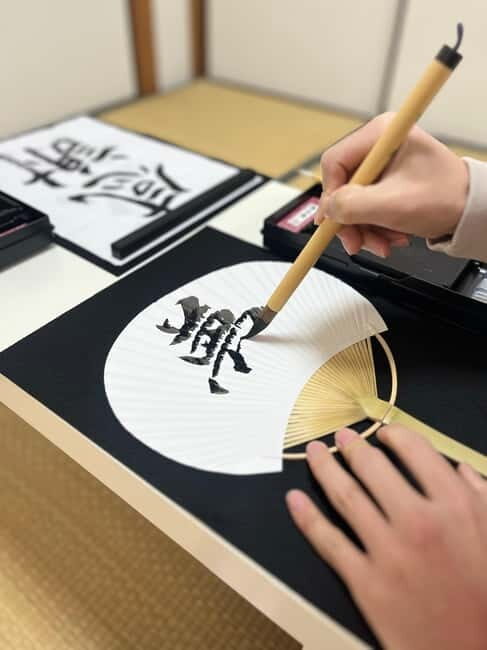
This lesson is ideal if:
- You want an authentic cultural activity in Tokyo that’s not just a photo stop
- You’re curious about Japanese words and want meanings explained in English
- You’d enjoy learning a skill with guided practice, even if your handwriting is not naturally artistic
- You want a take-home souvenir made by you, using a format like kakemono or uchiwa
Consider skipping if:
- You want a longer workshop with deeper skill building over multiple sessions
- You’re expecting a scripted “tour” through calligraphy history and famous works (this is more about hands-on writing and your personal word)
Should You Book This Tokyo Calligraphy Lesson?
I think you should book it if you want a short, meaningful activity in Asakusa that turns into a keepsake. The combination of English meaning explanations, real practice time with 20 sheets, and a choice of souvenir formats makes this feel like a skill-building lesson, not a quick demo.
Book it now if:
- You’re traveling with limited time but want something memorable
- You like small-group, calm experiences
- You want to leave with a souvenir that’s more personal than a store-bought postcard
FAQ
FAQ
What can I choose to make as my calligraphy souvenir?
You can choose one of three options: an uchiwa (traditional fan), a shikishi (decorative board), or a kakemono (hanging scroll).
How long is the calligraphy lesson?
The lesson lasts 1 hour.
Do I get practice paper?
Yes. Each participant receives 20 sheets of hanshi (calligraphy paper) for practice.
Does the instructor explain the meaning of the word in English?
Yes. The instructor provides explanations in English to help you understand the meaning of the words or phrases you choose.
How big is the class?
It is a small group limited to 4 participants.
What languages will I use during the lesson?
The instructor uses English and Japanese.
Make Something to Take Home

More Tour Reviews in Tokyo






Brush and Ink: More Calligraphy Hours

Fresh reviews from around Tokyo






Calligraphy Experiences, compared.
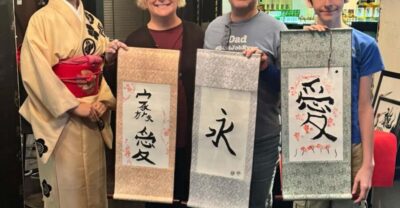 ★ 5.0Calligraphy on Kanji Fan & Scroll with DrinkFrom $53210 reviews
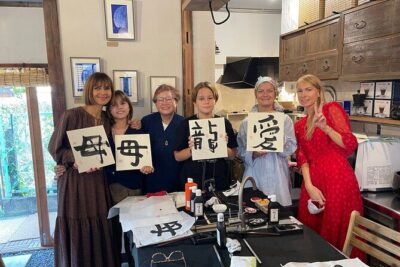 ★ 5.0Let’s experience calligraphy in YANAKA, Taito-ku, TOKYO !!From $75127 reviews
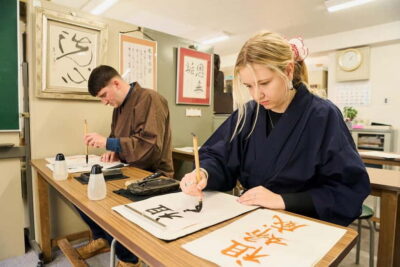 ★ 4.9Calligraphy Workshop & Original T-Shirt CreationFrom $30105 reviews
★ 5.0Calligraphy Workshop & Original T-Shirt CreationFrom $3380 reviews
★ 4.9Calligraphy Workshop & Original T-Shirt CreationFrom $30105 reviews
★ 5.0Calligraphy Workshop & Original T-Shirt CreationFrom $3380 reviews
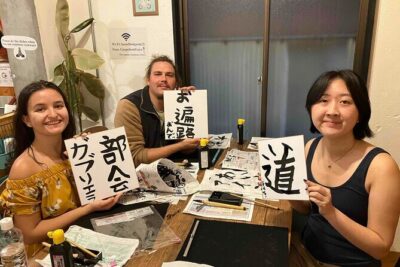 ★ 5.0Calligraphy Culture SHODO Experience in TokyoFrom $3366 reviews
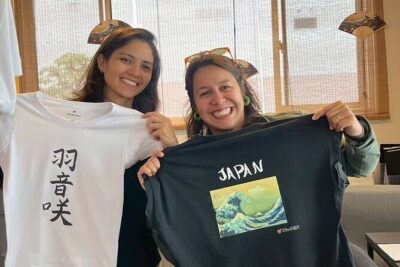 ★ 5.0Tokyo Asakusa:Calligraphy & Make T-shirt ActivityFrom $5862 reviews
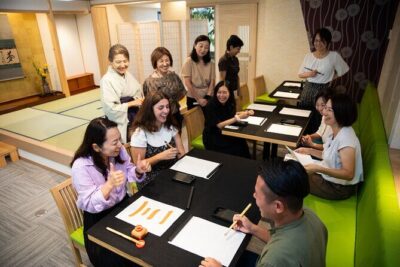 ★ 5.0Asakusa Calligraphy Workshop Craft Your Own Art in TokyoFrom $4054 reviews
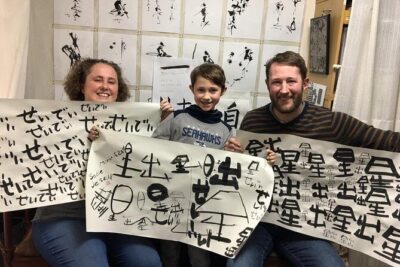 ★ 5.0Tokyo Japanese Calligraphy Experience with a Master ArtistFrom $9235 reviews
Browse the lists this tour appears in