
Reviewed · WALKING TOURS
Tokyo Imperial Palace:Guided Walking Tour of East Gardens
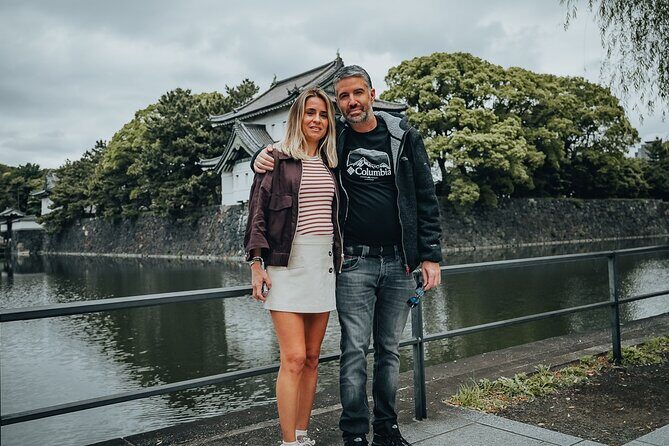
Watchtowers and palace walls.
This Tokyo Imperial Palace guided walking tour is interesting because it helps you read the grounds, not just pass through them. You’ll cover the East Gardens, which trace back to parts of the old Edo Castle, then connect the dots with stories about power in Japan over time. I especially like the maximum 8-person group size, which keeps it relaxed enough to ask questions.
I also like the human touch: the English-speaking guide (one guide named Taro is called out in feedback) makes the history feel practical, with context that sticks even when you’re in the middle of a real city. One drawback to consider is that parts of the palace area can be closed depending on the day, so your best experience comes from going in with flexible expectations and leaning on the guide to show you the worthwhile viewing spots.
Plan for the outdoors. It’s about 2 hours of walking on garden paths, and feedback notes it can get very hot—so bring water and take shade when you can.
In This Review
- Key highlights you’ll care about
- Why the East Gardens tour feels more useful than a quick sightseeing lap
- Getting oriented fast: where you meet and how you’ll move
- Stop 1: Sakurada Tatsumi Yagura Watchtower and why that structure matters
- Stop 2: The Imperial Palace and the emperor’s residence context
- Stop 3: East Gardens and the Edo Castle ruin remnants you can actually spot
- The 2-hour pacing: what it’s like in real time
- Price check: what $0.39 gets you (and why it can be worth it)
- Who this tour suits best (and who may want something else)
- Should you book Tokyo Imperial Palace East Gardens with a guide?
- FAQ
- How long is the tour?
- Where does the tour start?
- How many people are in the group?
- What stops are included?
- Do I need to pay for admission to the stops?
- Will I have a guide who speaks English?
- Can I cancel and get a full refund?
Key highlights you’ll care about
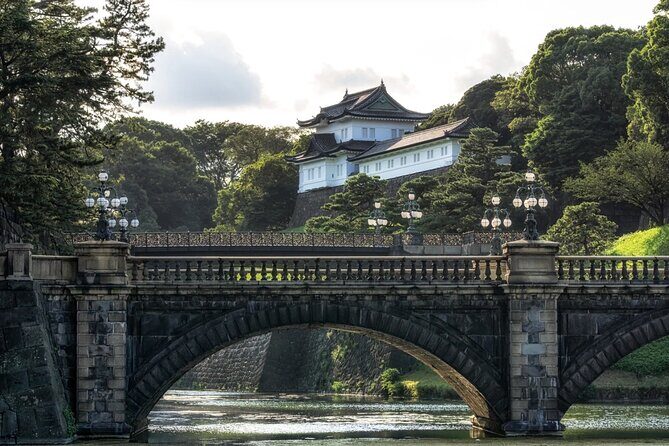
- Tatsumi Yagura (Sakurada Nijū Yagura) watchtower stop with a clear Edo-period explanation
- Imperial Palace orientation so you understand what you’re looking at, even though access can vary
- East Gardens and Edo Castle ruin remnants including stone walls, gates, and pathways you can connect to the past
- Small-group format (up to 8) that keeps the pace comfortable and questions welcome
- English guide who adapts when areas are closed (seen in feedback about getting great alternative spots)
Tokyo at walking pace, a few more ways
- Tokyo Tsukiji Fish Market Food and Culture Walking Tour★ 5.0 · 3,184 reviews
- Tokyo: Shinjuku Local Bar and Izakaya Guided Walking Tour★ 4.9 · 1,794 reviews
- Tokyo: Tsukiji Fish Market Food and Walking tour★ 5.0 · 1,724 reviews
Why the East Gardens tour feels more useful than a quick sightseeing lap
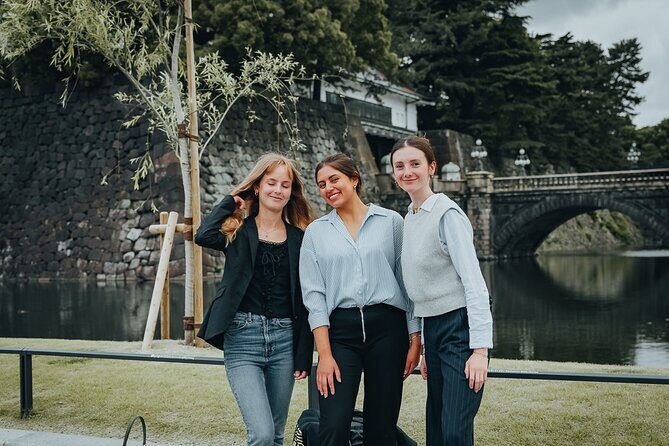
The Imperial Palace is one of those places where you can easily end up doing a sightseeing photo run. This tour works differently. You get to walk the East Gardens while the guide places landmarks into context: where authority was concentrated, what the Edo Castle layout used to represent, and how the grounds evolved into what you see today.
The East Gardens are open to the public, but they’re still the inner palace area, with stone ruins and gates that feel meaningful only once someone explains what they signify. That’s where the tour earns its keep. Instead of treating the grounds like scenery, you start treating them like a map of historical priorities—defense, ceremony, movement, and control.
And because it’s a small group, you’re not squeezed into the kind of speed-walk that makes history blur. You can slow down at the right moments. That matters on a site like this, where details are part of the story.
Getting oriented fast: where you meet and how you’ll move
You start at a very practical meeting point: Starbucks Coffee – Kokyo Gaien Wadakura Fountain Park, address 3-1 Kōkyogaien, Chiyoda City, Tokyo 100-0002, Japan. The big win here is that you’re meeting near a known, easy-to-find landmark with public-transport access.
The tour ends back at the meeting point. That simplifies your timing, because you don’t have to rearrange the rest of your Tokyo day to account for a new endpoint. You can plan a nearby lunch or connect to the next neighborhood without mental math.
The tour uses a mobile ticket, so you won’t be worrying about printing. Confirmation is typically sent within 48 hours of booking (subject to availability), so you get enough time to lock in your schedule.
Stop 1: Sakurada Tatsumi Yagura Watchtower and why that structure matters
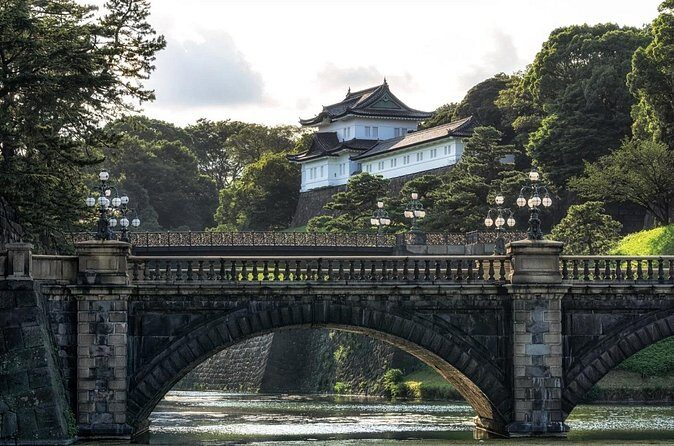
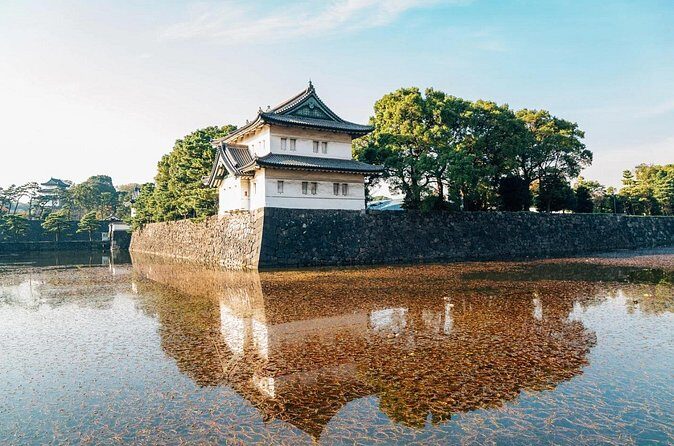
Your first stop is Sakurada Tatsumi Yagura, also known as the Sakurada Nijū Yagura. This is a historic watchtower inside the Imperial Palace grounds, and it’s tied to the Edo period.
The key detail is that it’s one of the few remaining structures of its type. That scarcity makes the stop feel extra important. When you’re looking at something that’s rare, you naturally pay more attention to what it’s doing there—how it fits into the idea of surveillance and control during the Edo era, and how those concerns shaped the castle grounds.
This is also where the guide’s skill really shows. A watchtower could be just another “old building” if you’re left alone with it. With an English-speaking guide, you get the interpretive layer: what you’re seeing, why it survived (at least in part), and how it relates to the broader palace-castle system.
Duration at this first stop is about 30 minutes, which is a comfortable chunk for photos plus explanation. If you’re heat-sensitive, this is a good place to start hydrating early, since the rest of the walk continues through outdoor garden paths.
Stop 2: The Imperial Palace and the emperor’s residence context
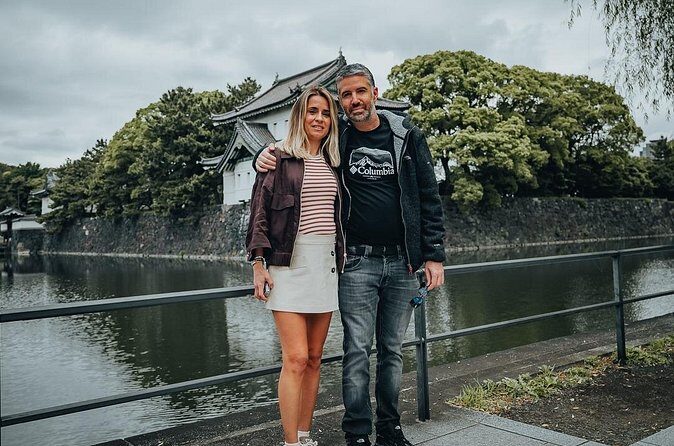
Next up is the Imperial Palace, described as the primary residence of the Emperor of Japan. It’s also one of Tokyo’s most recognizable landmarks, surrounded by gardens and moats and defined by historic stone walls.
This stop works best if you let the guide do the translation between what’s visible and what matters. From the outside, the palace can feel like “big walls and gates” until you understand the role the residence has played in Japan’s political world.
One thing I found especially reassuring is that access doesn’t always line up with expectations. Feedback from the tour includes a situation where the palace was closed, but the guide still managed to provide really good places to look and still explain the context. That tells me the tour approach isn’t dependent on perfect access every day. You’re not just paying for a guaranteed walkthrough of restricted areas. You’re paying for interpretation and smart routing around what’s possible.
About 30 minutes here keeps it informative without stretching too long. And because it’s early in the tour, it sets the tone for the East Gardens section that follows—like getting the key before reading the chapter.
More days made easy by a guide




Stop 3: East Gardens and the Edo Castle ruin remnants you can actually spot

The heart of the experience is the East Gardens of the Imperial Palace, part of the inner palace area and open to the public. These gardens sit on the former site of Edo Castle, which is why the area matters beyond simple beauty.
What makes this section valuable is that it’s not presented like a generic park stroll. You get attention drawn to stone ruins, stone walls, and gates, plus landscaped paths that guide your eye through the space. Those elements can feel random if you don’t know what to look for. With a guide, you start recognizing them as pieces of a former castle layout—surrounding structures, boundary lines, and remnants of how people moved and how authority was organized.
This is also the stop where the tour earns points for being “walkable history.” You’re not stuck looking at a single viewpoint. Instead you’re moving through multiple vantage points over about 30 minutes, which helps the site feel understandable.
If you like Japan’s layered storytelling—samurai-era power, political shifts, and the transformation from castle grounds to modern Imperial Palace—this is where it clicks. The Edo Castle connection turns the gardens into a living lesson: how spaces are designed, fortified, and repurposed over centuries.
The 2-hour pacing: what it’s like in real time
A 2-hour guided walk is a sweet spot. Long enough to cover three meaningful stops with explanation. Short enough that you won’t feel trapped when the weather turns.
The reality check from feedback is simple: it can be incredibly hot, and the guide named Taro made it interesting and educational anyway. That’s a useful clue for you. A good guide doesn’t just recite facts; they adjust the experience so you can keep going without your brain cooking.
Here’s how I’d plan for the pacing:
- Bring water and take small sips during transitions between stops.
- Use shade when it’s offered by the garden layout or by any structure nearby.
- Wear sun-smart clothing if you’re visiting mid-day.
Because it’s outdoors for much of the time, don’t treat it like a museum lecture. You’re on your feet, so your comfort choices directly affect how much you enjoy the storytelling.
Price check: what $0.39 gets you (and why it can be worth it)
At $0.39 per person, this is priced in a way that makes you think there’s a catch. But with the details provided—a professional English-speaking guide, a small group capped at 8 travelers, and multiple stops with free admission tickets—the value story is actually pretty clear.
You’re not paying for access fees at the stops; admission is free for each listed stop. You’re paying for the human part: someone guiding you through what you’d otherwise gloss over, plus structure so you don’t waste time trying to interpret ruins and walls on your own.
Will you feel like you’re getting a luxury tour? Probably not. This isn’t described as a private car ride or a long, multisite day. It’s a focused walk. That’s exactly why it can be such a good deal: the format matches the sites.
For many visitors, the biggest frustration in Tokyo is feeling like you spent time in a place you didn’t fully understand. This tour directly targets that problem. For the price, it’s a low-risk way to get high clarity.
Who this tour suits best (and who may want something else)
This works especially well if you:
- Like walking tours with context, not just photos
- Want to understand the Imperial Palace and Edo Castle connection without getting lost
- Prefer smaller groups and guided pacing
- Care about historical interpretation led in English
It may be less ideal if you’re looking for a long, ticket-heavy palace visit with lots of interior access. The tour is built around outdoors grounds and key landmarks like Tatsumi Yagura, plus the East Gardens. If your top priority is maximum indoor access, you might find you still need to supplement your day with additional self-guided exploring.
Should you book Tokyo Imperial Palace East Gardens with a guide?
Yes, I’d book it if you want the most sense per minute. The combination of small-group size, a guide who can keep things engaging even in tough weather, and stops that connect to the Edo Castle story is a strong formula.
Book it especially if you’re the type who looks at stones, gates, and old structures and thinks, What am I actually looking at? This tour is built for that question.
Skip it only if you know you dislike outdoor walking in the heat or you specifically came for a very restricted-access, all-day palace experience. Otherwise, for a short 2-hour guided walk with free admission stops and a professional English guide, it’s a practical choice with real payoff.
FAQ
How long is the tour?
It’s about 2 hours (approx.).
Where does the tour start?
The meeting point is Starbucks Coffee – Kokyo Gaien Wadakura Fountain Park, 3-1 Kōkyogaien, Chiyoda City, Tokyo 100-0002, Japan.
How many people are in the group?
The tour has a maximum of 8 travelers.
What stops are included?
You’ll visit Sakurada Tatsumi Yagura (Sakurada Nijū Yagura), the Imperial Palace area, and the East Gardens of the Imperial Palace (Edo Castle ruin area).
Do I need to pay for admission to the stops?
Admission is listed as free for the tour stops.
Will I have a guide who speaks English?
Yes. The tour is led by a professional English-speaking guide.
Can I cancel and get a full refund?
Yes. You can cancel for a full refund if you cancel at least 24 hours before the experience start time.
Tokyo on Foot: More Walks


More Tours in Tokyo




More Tour Reviews in Tokyo




Fresh reviews from around Tokyo






Walking Tours, compared.
 ★ 5.0Tokyo Tsukiji Fish Market Food and Culture Walking TourFrom $993,184 reviews
 ★ 4.9Shinjuku Local Bar and Izakaya Guided Walking TourFrom $341,794 reviews
 ★ 5.0Tsukiji Fish Market Food and Walking tourFrom $301,724 reviews
 ★ 4.8Asakusa Walking Tour with Sensoji Temple VisitFrom $221,583 reviews
 ★ 4.9Tsukiji Fish Market Guided Walking TourFrom $221,397 reviews
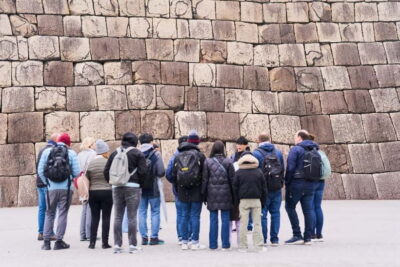 ★ 4.7Tokyo Castle & Imperial PalaceーShogun Walking TourFrom $231,068 reviews
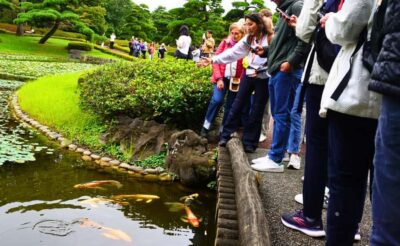 ★ 4.9Imperial Palace Japanese History Walking TourFrom $32987 reviews
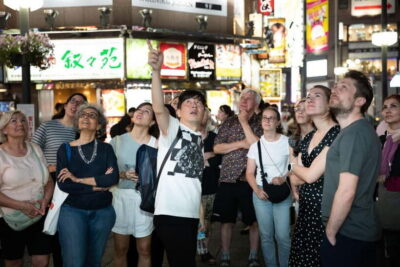 ★ 4.7Dark Side of Tokyo Shinjuku Red Light Walking TourFrom $29862 reviews
Browse the lists this tour appears in