
Reviewed · ASAKUSA TOURS
Tokyo Asakusa sightseeing and history walking tour
Old Tokyo has a pulse here.
This walking tour is built for people who want more than postcard views. You’ll start at Kaminarimon, pass through Nakamise Street, and move into the places that explain how Asakusa’s food, crafts, and faith connect to its history. I like that the guide doesn’t treat it like a checklist, and you’ll hear stories that usually don’t show up on quick temple placards.
Two things I especially like: the guide-style pace (photo stops, short breaks, and time to look around) and the food-and-shopping guidance that helps you eat and browse like a local. In several groups, the guide (for example, Hirose-san) is known for being patient, friendly, and strong on background—plus even practical details like how people traditionally bow and clap at the temple. One possible drawback to consider: language support can vary by situation, so if German is a must for your group, I’d be a bit careful and plan for the chance of more basic English than you expect.
If you’re ready for a guided stroll with real local texture, this tour gives you a fast way to understand Asakusa without rushing.
In This Review
- Key highlights worth your time
- Entering Asakusa the right way: Kaminarimon as your anchor
- Nakamise Street snacks and shopping, minus the confusion
- Sensō-ji and Asakusa Shrine: Buddhism vs Shinto, explained in real time
- Sanja Festival origins: the story behind the big energy
- How Asakusa’s cityscape changed over time
- The “in-between” stops: Asakusa Kingyo and Hogei-sen
- Food you can actually plan: traditional meals and snack strategy
- Photo stops with a purpose (and a guide who thinks like a photographer)
- Private group pacing: when you want flexibility and less stress
- Price and logistics: is $19 worth your time?
- Language fit: English, German, and the one thing to sanity-check
- Should you book this Asakusa walk?
- FAQ
- Where does the tour start?
- How long is the Tokyo Asakusa sightseeing and history walking tour?
- What languages are the live guides available in?
- What is included in the price?
- What should I bring?
- Is there a cancellation option?
Key highlights worth your time
- Kaminarimon to Nakamise Street with photo stops that help you get the classic views right
- Sensō-ji and Asakusa Shrine explained side-by-side, including Buddhism vs Shinto
- Sanja Festival origins tied to fishermen and the Kannon statue story
- Hidden back lanes and downtown feel so Asakusa doesn’t stay only tourist-famous
- Quirky stops like Asakusa Kingyo and Hogei-sen for texture and photos
- A restaurant guide that points you toward traditional meals like tempura, eel, and more
More mornings around Senso-ji and the old town
- Tokyo Asakusa sightseeing and history walking tour★ 4.7 · 9 reviews
- Asakusa Cultural Walk & Matcha Making Tour★ 4.5 · 7 reviews
- Tokyo : Kimono Rental in Asakusa Provided by RikaWafuku★ 4.5 · 4 reviews
Entering Asakusa the right way: Kaminarimon as your anchor
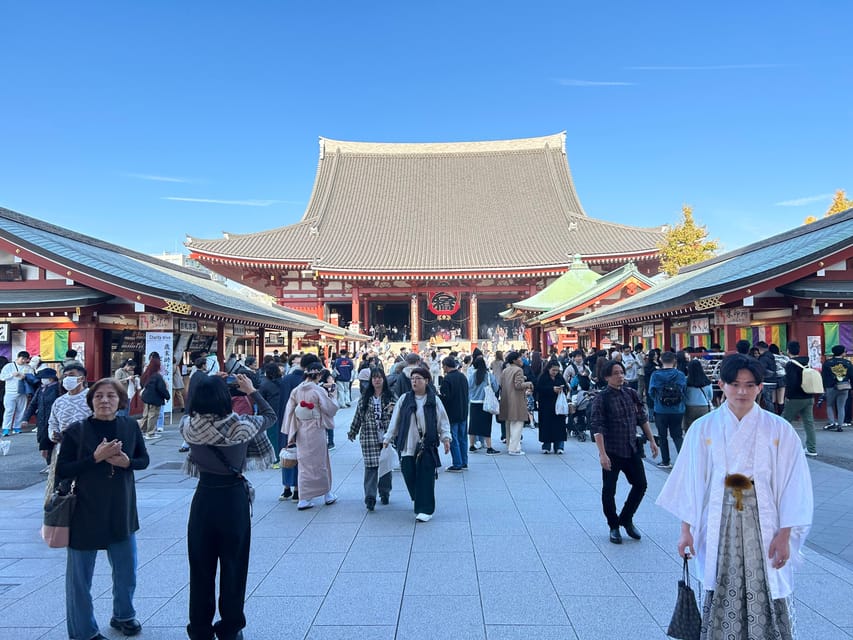
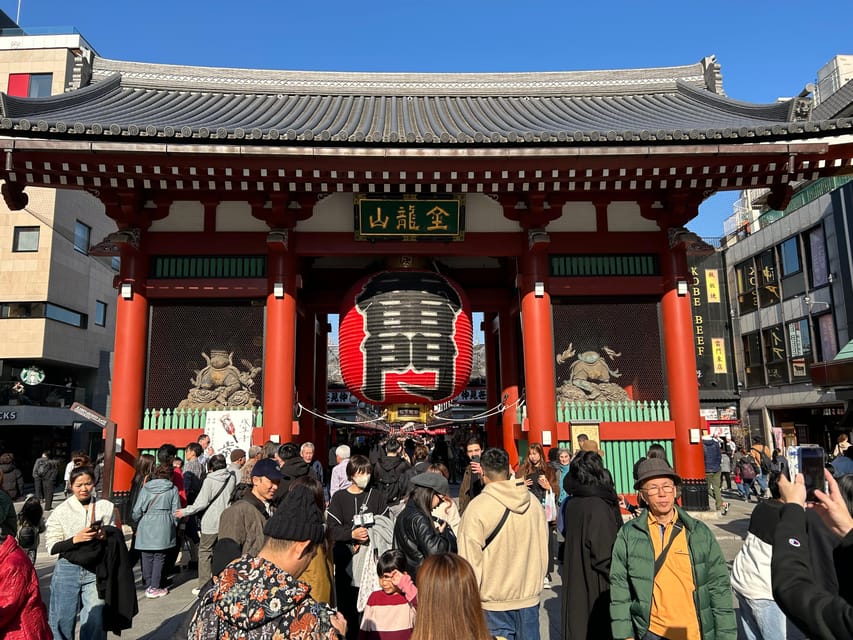
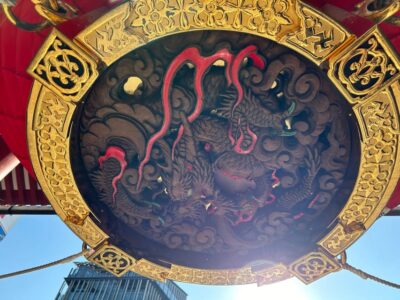
Asakusa can feel like two worlds at once: the dramatic, crowded “I recognize this place” scenes, and the calmer side streets where everyday life keeps going. This tour starts at 雷門 (Kaminarimon Gate), which is the perfect anchor. From here, you’re not just looking at Tokyo—you’re getting oriented fast.
After you meet (on the left side of Kaminarimon with a GetYourGuide sign), you’ll begin with a quick photo moment and then head toward Nakamise. That early timing matters. By the time you’re deep into the area, the guide’s story makes the space feel logical rather than random.
One more practical point: because this is a walking tour and the duration is 90 minutes, the pacing is meant to keep energy up. You’ll still have a couple of planned breaks, so you’re not stuck doing temples nonstop like a museum line.
Nakamise Street snacks and shopping, minus the confusion
“Nakamise Street” is a name you’ll hear a lot in Tokyo. Here’s the thing: it’s easy to get distracted by the storefronts and end up buying the first thing that looks cute. This tour slows that down in a good way.
You’ll get a photo stop and a guided stroll along the shopping street, with time to shop. The guide’s job isn’t just to point at stalls—it’s to help you read the place. That makes a huge difference when you’re trying to figure out what’s worth stopping for and what’s more marketing than tradition.
Also, the best part is what often comes after Nakamise: the tour nudges you away from only the most obvious lanes. One group highlighted how the guide knew back streets that tourists usually skip, plus where to find crunchy local snacks. If you’re the type who likes eating while walking, this style fits you.
Tip for your comfort: wear shoes you can stand in. This part can be busy, and the best photos are often at slightly awkward angles in a crowd. A guide who understands the flow helps you get the shot without turning it into a wrestling match.
Sensō-ji and Asakusa Shrine: Buddhism vs Shinto, explained in real time
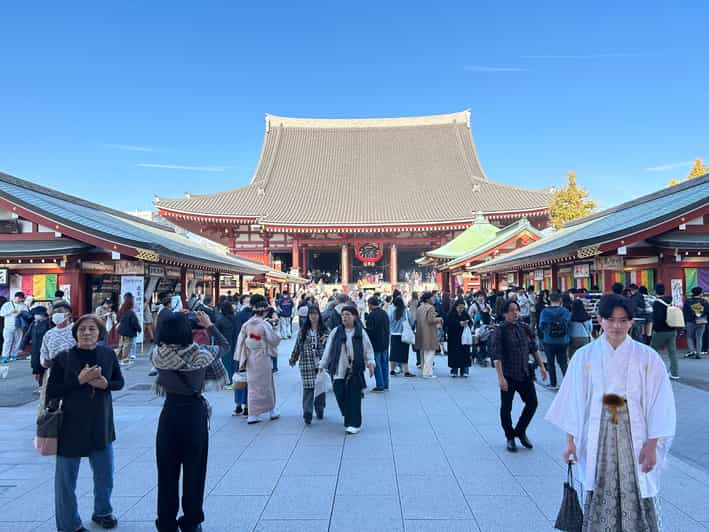
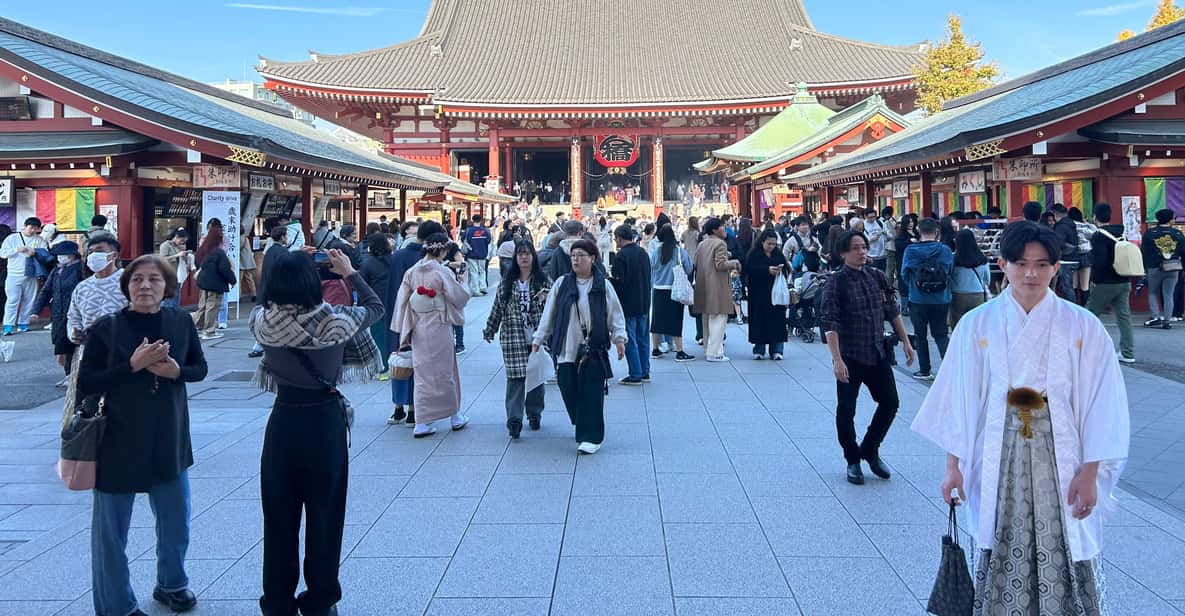
At Sensō-ji, you’ll get both guidance and breathing room. There’s a short break, a photo stop, guided time, and then free time to take in the temple atmosphere at your own pace.
What makes this stop valuable is the way faith is handled. Instead of treating each site like a separate attraction, the tour connects them. You’ll learn the difference between Sensō-ji (Buddhism) and Asakusa Shrine (Shinto), and that context helps everything click. You’ll also get practical etiquette, like how one is supposed to bow and clap at the temple—small details, but they make your visit feel respectful instead of like you’re just taking pictures.
Then you move to Asakusa Shrine. There’s another break plus guided time, so you can switch from temple intensity to shrine atmosphere without burning out. The guide also frames the sites through the local culture, not in abstract terms.
One thing to watch: these are popular places, so expect crowds. The tour format still works because the guide helps you navigate while explaining what you’re seeing, rather than leaving you to interpret everything on your own.
Sanja Festival origins: the story behind the big energy
Asakusa’s most famous festival vibe isn’t random showmanship—it has roots. The tour spends time on the Sanja Festival, explained as one of Japan’s three major festivals, and links it to specific origin stories.
A key story you’ll hear ties to brother fishermen. They used nets to pull up the Kannon statue, which becomes central to the principal image connected to Sensō-ji, and the shrine dedication connected to the master. When a guide connects a legend to a place, the festival makes sense even if you’re not visiting during festival days.
The timing in the tour matters because you get this context while you’re still standing inside the cultural geography. You’re not learning the festival story in a classroom somewhere else—you learn it while the streets and shrines around you are already showing you how important those beliefs are.
If you like history but hate the dry version, this is the sweet spot: story first, then place, then the meaning behind the scenes.


How Asakusa’s cityscape changed over time
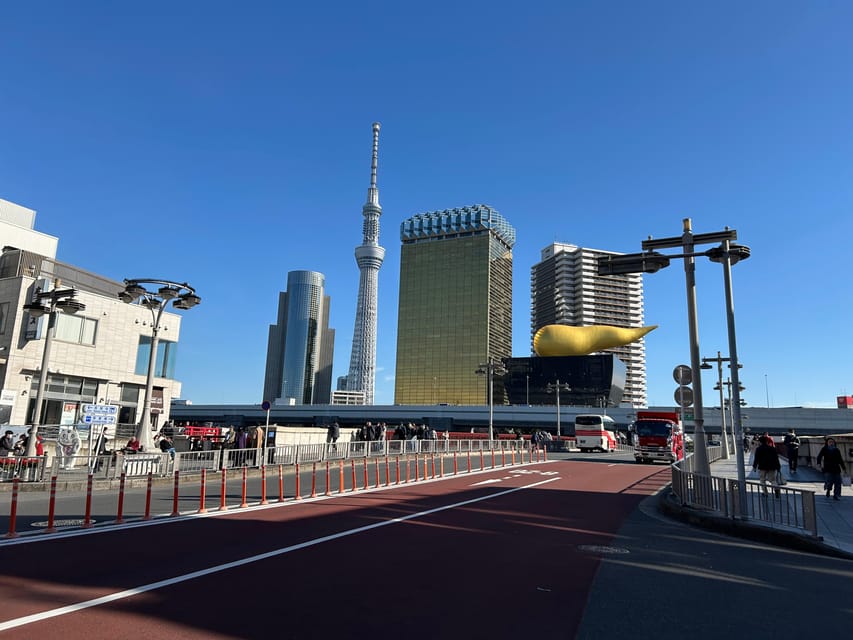
Asakusa isn’t frozen in time, and the tour treats it that way—at least in spirit. You’ll hear about Asakusa’s architecture and changes in the cityscape, including how the neighborhood developed and why it looks the way it does today.
This is a big deal for first-time visitors. Tokyo’s neighborhoods can blur together if you only see what’s currently on the street. When you understand that Asakusa’s look comes from real development and cultural layers, you start noticing details you would otherwise walk right past: different styles of facades, the rhythm of alley connections, and how the commercial street ties back to the sacred sites.
I like that the tour’s history isn’t presented as a memorization task. It’s used as a lens to make your walking make sense.
The “in-between” stops: Asakusa Kingyo and Hogei-sen
Not every stop in Asakusa is a temple or a shopping street. Two quieter, more quirky photo moments help the tour feel like a real day in the neighborhood.
You’ll stop at Asakusa Kingyo—a point that gives you a change of pace and something more photo-friendly than yet another landmark. Even if you don’t know what to expect, the guide uses the moment to keep momentum going and help you notice the local flavor.
Then there’s Hogei-sen (Whaling Ship), with a short free time window. This kind of stop is great because it breaks the “temple rhythm.” It also gives you an easy place to slow down, look around, and take photos without having to read a sign for every second.
These in-between stops are what make the tour feel less like ticking boxes and more like actually moving through Asakusa like a neighborhood, not a theme park.
Food you can actually plan: traditional meals and snack strategy
Asakusa is famous for food, but “famous” doesn’t automatically mean you’ll know what’s traditional or what’s best. This tour’s strength is that it gives you a gourmet restaurant guide and also points you toward typical meals you’ll hear about in the area—things like soba, sukiyaki, yakiniku, sushi, tempura, and eel.
Even if you don’t eat everything suggested, the value is in knowing what to look for after the tour. That means fewer wasted meals and fewer moments where you pick the “most crowded” option just because you’re hungry.
One group also highlighted a specific recommendation that included a miso don katsu place, described as delicious. You might not get the exact same pick in your group, but the underlying idea is consistent: the guide’s choices are practical and meant to match the local vibe.
Food strategy tip: if you want to try multiple snacks, leave room. Asakusa can tempt you with small bites, and it’s easy to fill up on sweets or fried things before you’ve even had your first real meal.
Photo stops with a purpose (and a guide who thinks like a photographer)
Photos are included, and that’s more than a nice extra. Being told where to stand and how to frame a shot is useful in a busy historic district.
Some participants noted that the guide is an expert photographer and takes a lot of good photos. If you care about getting clean, well-composed pictures—even when the crowds are thick—this matters. You’re not just hoping for luck; you’re letting someone experienced handle the timing.
You’ll also do multiple photo stops throughout the tour, so you’re not stuck trying to capture everything while walking. That keeps the experience from feeling like a constant phone scramble.
Private group pacing: when you want flexibility and less stress
This tour is listed as a private group, which tends to mean a calmer pace and more personal attention. The itinerary is structured with photo stops, guided segments, and free time breaks at major sites, so you don’t feel trapped in someone else’s schedule.
The 90-minute format is also a strength. You get enough time to see the core sacred sights and the key street, plus the extra stops that add local texture. It’s long enough to learn things like the religion differences and festival origins. It’s short enough to still enjoy the rest of Asakusa on your own afterward.
If you’re traveling with kids, there’s a discount policy: children under 3 can join free, and kids from 3–12 have a 50% discount. The tour also gives short “reset moments” for breaks, which is handy for families.
Price and logistics: is $19 worth your time?
At $19 per person for 90 minutes, the price is pretty low for what you’re getting: a live guide, a guided walking route through landmark areas, and specific storytelling about history that you won’t always find in guidebooks. Add in the restaurant guidance and souvenir shop info, and it starts to look less like a sightseeing add-on and more like a local planning tool.
The costs to know up front: shopping costs are not included, and transportation expenses are self-pay. That means you’re budgeting for what you buy, not for what you learn.
For value, I’d think of it like this: if you’re the type who wants to eat well and understands history in context, the guide saves you decision-making time. If you already know Asakusa deeply and only want to wander freely, you might not get as much out of a guided format. But if you’re new, the “fast orientation plus story” combo is where this tour shines.
Language fit: English, German, and the one thing to sanity-check
The guide is available in English, German, and Japanese. That’s great, and it’s enough for many groups.
Still, I’ll mention one consideration from real-world experiences: language quality can vary, especially for specific language needs. One group felt the German communication didn’t match what they expected and found more basic English. So if German is essential for your whole group, I suggest you be prepared for the possibility of partial language support and confirm expectations when you book.
If you’re flexible, this is usually an easy win. If language is the whole point, spend a few minutes checking details before you go so the tour matches your needs.
Should you book this Asakusa walk?
Book it if you want:
- A guided orientation that turns crowded landmarks into meaningful places
- Temple and shrine context, especially the Buddhism vs Shinto contrast
- Festival origin stories that connect legend to what you’re seeing
- Food and shopping help so you eat and browse with confidence
- A 90-minute time window that won’t swallow your whole day
Skip it (or adjust expectations) if:
- You only want self-guided wandering and already know exactly what you want to eat and see
- You need very consistent, high-level German-only communication for every moment
If you’re somewhere in the middle—new to Asakusa, curious about culture, hungry for good planning—this tour is a practical way to make the neighborhood click fast, without feeling like you’re rushing through it.
FAQ
Where does the tour start?
The meeting point is at 雷門 (Kaminarimon Gate). The guide will be waiting on the left side with a GetYourGuide sign (coordinates: 35.7111163, 139.7963656).
How long is the Tokyo Asakusa sightseeing and history walking tour?
It lasts 90 minutes.
What languages are the live guides available in?
The live tour guide speaks English, German, and Japanese.
What is included in the price?
Included are the tour guide, walking tour, free photos, royal tourist spots, souvenir shop information, and a gourmet restaurant guide.
What should I bring?
Bring comfortable shoes and water, plus weather-appropriate clothing.
Is there a cancellation option?
Yes. You can cancel up to 24 hours in advance for a full refund.
More Tours in Taito City
More Tour Reviews in Taito City
Around Senso-ji: More Asakusa Picks

Fresh reviews from around Taito City
Asakusa Tours, compared.
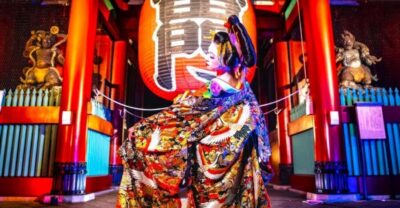 ★ 4.8Japanese Dance Cabaret Theater Asakusa-Kaguwa TicketFrom $492,270 reviews
 ★ 4.7Meiji Shrine, Asakusa, Skytree Bus Tour and CruiseFrom $1221,986 reviews
 ★ 4.8Asakusa Walking Tour with Sensoji Temple VisitFrom $221,583 reviews
 ★ 5.0Tokyo Asakusa Rickshaw TourFrom $421,375 reviews
 ★ 4.5Tokyo Panoramic 1 Day: Meiji Shrine, Asakusa, Odaiba and SKYTREE®From $851,222 reviews
 ★ 4.8Samurai Ninja Museum Asakusa: Samurai Sword Lesson & TourFrom $63306 reviews
Asakusa Sightseeing Tour by RickshawFrom $35195 reviews
Asakusa Kimono Dressing and Matcha ExperienceFrom $56173 reviews
★ 4.8Samurai Ninja Museum Asakusa: Samurai Sword Lesson & TourFrom $63306 reviews
Asakusa Sightseeing Tour by RickshawFrom $35195 reviews
Asakusa Kimono Dressing and Matcha ExperienceFrom $56173 reviews
Browse the lists this tour appears in