
Reviewed · TAITO CITY
Made from flour in 30min! Ramen-noodle Making Experience!
Your ramen starts with your hands.
I love how this experience is built around 30 minutes of hands-on noodle making, followed by 30 minutes to eat your own bowl, so it fits neatly into a packed Asakusa day. Two other things I really like are the clean, bright open-kitchen studio and the fact that you get to learn the manual technique instead of just watching. The one main consideration: kids may not be able to join solo unless they can knead and handle a large, heavy knife safely.
What makes it feel easy is the setup: a spacious first-floor studio in Kappabashi (close to the Sensoji area) plus a one free drink perk that keeps the “class” part from feeling dry. The small group format also means you’re not lost in a crowd, and staff can keep an eye on your noodle-cutting progress.
In This Review
- Key takeaways before you cut noodles
- A 50-minute ramen class you can fit between Sensoji and shopping
- Finding SOBAGIRI-RAKUJYO on Kappabashi Kitchenware Street
- The open-kitchen setup: clean, bright, and built for real photos
- How the 30-minute noodle-making really works
- Cooking your own ramen: your noodles become the bowl
- Drinks, snacks, and what value $57 buys
- Who this experience suits best (and who should skip it)
- Practical tips: safety, tables, and getting the most from the class
- The one snag to plan for: schedule changes
- Should you book SOBAGIRI-RAKUJYO for ramen noodles in Asakusa?
- FAQ
- How long is the ramen noodle making experience?
- What’s included in the price?
- Where exactly is the meeting point?
- What ramen flavors are available?
- Is this experience suitable for gluten intolerance or buckwheat allergies?
- Can children participate, and can they do it alone?
- What languages are supported?
Key takeaways before you cut noodles
- Knife-by-knife noodle cutting in an open kitchen rather than a pasta machine shortcut
- A fast 30-minute method that still covers mixing, kneading, stretching, and thin slicing
- Your noodles become your bowl with staff cooking them into the ramen you choose
- Food and drink are part of the price: one free drink plus all-you-can-eat Japanese snacks
- Multiple styles of ramen including soy sauce, miso, shio, and vegan options
- Strict but sensible limits: no buckwheat allergy participation and not suitable for gluten intolerance
Before you commit, see how this one stacks up against a few Taito City favourites:
- Tokyo Asakusa: Miu Kimono Rental and Optional Photoshoot★ 4.9 · 54 reviews
- Tokyo: Karate Experience with Former All-Japan Champion★ 4.9 · 46 reviews
- Made from flour in 30min! Ramen-noodle Making Experience!★ 4.8 · 24 reviews
A 50-minute ramen class you can fit between Sensoji and shopping
This is the kind of activity I like in Tokyo: hands-on, Japanese, and timed so you don’t lose your whole day. You’re looking at a total duration of 50 minutes, and the experience is intentionally short enough that it won’t crush your sightseeing plans.
The format is simple. You check in, wash your hands, make the noodles, and then staff cook them into ramen. That flow matters. When an activity is too long, you spend half your energy waiting. Here, you’re cutting and learning right away, and you still get a proper meal at the end.
It also helps that the ramen options aren’t one-note. You can choose from several flavors and types like soy sauce ramen, miso ramen, shio ramen, and vegan variations (including vegan soup curry ramen). That gives you a reason to take the class even if you already know you like ramen.
Finding SOBAGIRI-RAKUJYO on Kappabashi Kitchenware Street
The workshop is in Honshu, in the Asakusa area, specifically on Kappabashi Kitchenware Street. It’s on the first floor of SOBAGIRI-RAKUJYO, in an open studio space inside a store setting that’s meant for hands-on food and tools.
For your meeting point, look diagonally across from a food sample specialty store with a large beetle objet d’art on Kappabashi Kitchenware Street. That beetle is your landmark, and it’s exactly the kind of detail that makes meeting up with a small group less stressful.
Timing-wise, plan to arrive 10 minutes before your reserved time. That buffer is for reception and getting set up (including hand washing). If you’re the type who likes to stroll slowly and take photos on the way, you’ll feel calmer if you leave a little extra margin.
The open-kitchen setup: clean, bright, and built for real photos
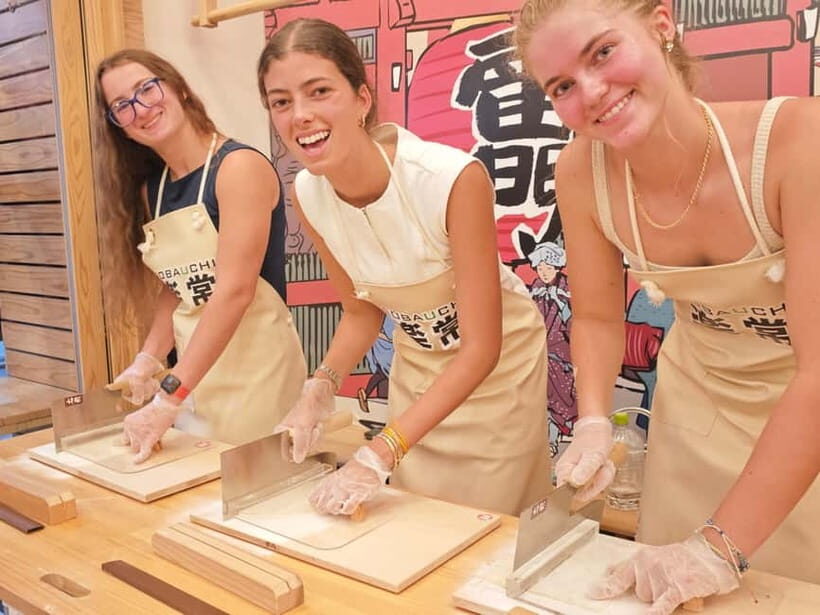
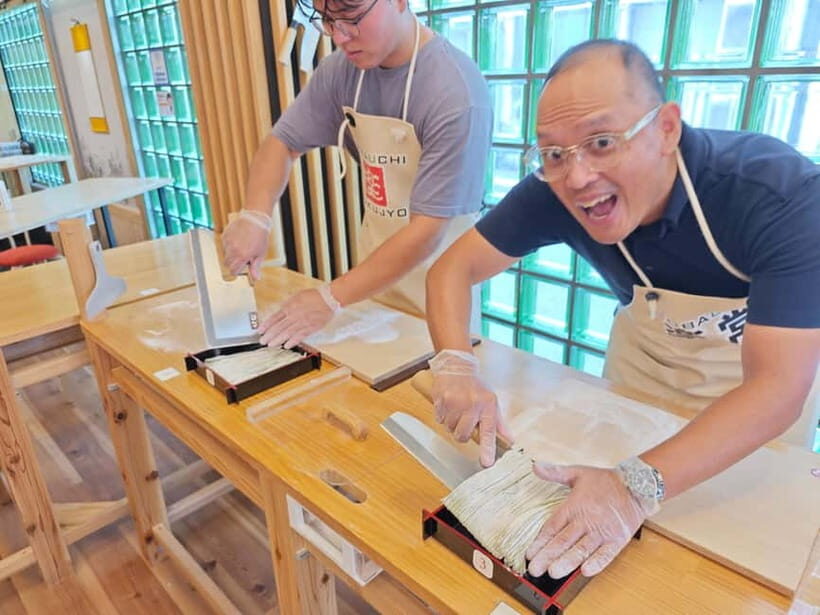
One of the best things about this class is the environment. This isn’t a dim workshop where you worry about flour stains on everything. The studio is described as spacious, clean, and stylish, with a bright interior that feels more like a modern shop floor than a messy back room.
You’re also in an open kitchen arrangement. That means you can actually see what’s happening, understand the process, and follow along with your instructor rather than getting stuck behind a curtain.
And yes, there’s a practical perk for phone users. Staff take professional-style photos during the workshop so your phone doesn’t become a flour casualty. Those photos get shared via QR code, including some clever edits. If you’re traveling with family or you want something better than shaky “I was there” snaps, this is a big plus.
How the 30-minute noodle-making really works
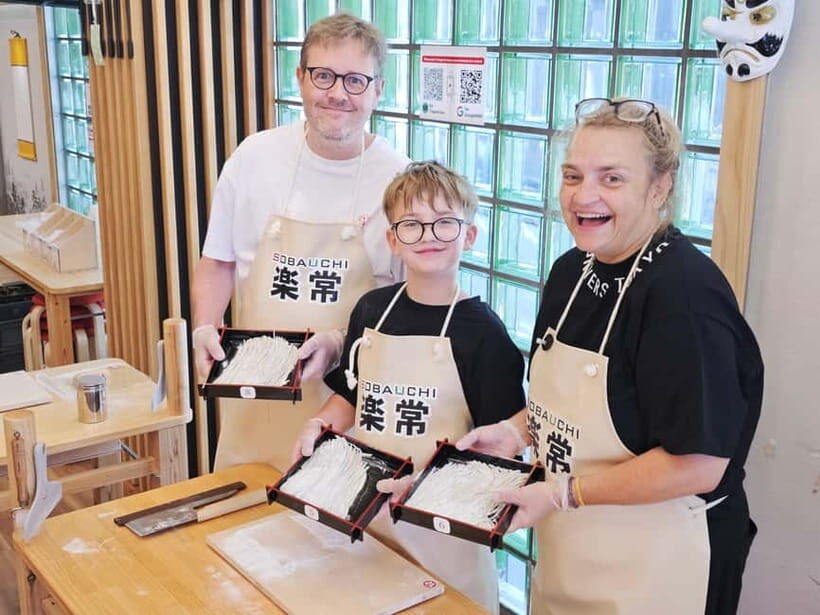
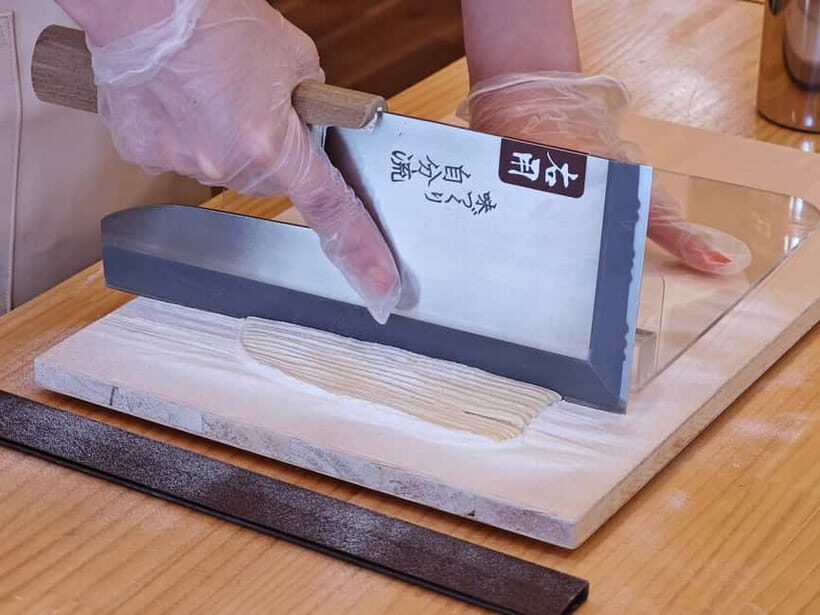
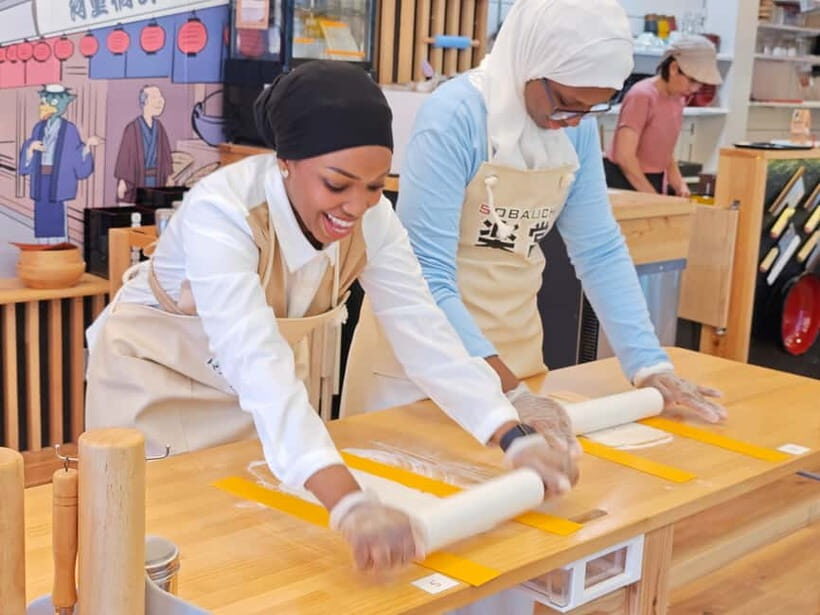
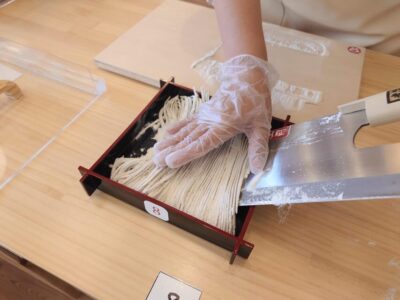
The core of the experience is learning to cut ramen noodles one by one, completely manually using a large knife designed for noodle cutting. You might have seen noodles made using a pasta machine. This is different. Here, you’re working with technique and control.
The class teaches safe, delicate cutting—especially the kind of fine motor control you’d expect from an older craft. The method is presented as one that’s been passed down in Japan since the Edo period (1603 to 1868). The “taught technique” part is important. It’s not just show-and-say. You get guidance for how to hold the knife, how to aim, and how to keep your pace steady.
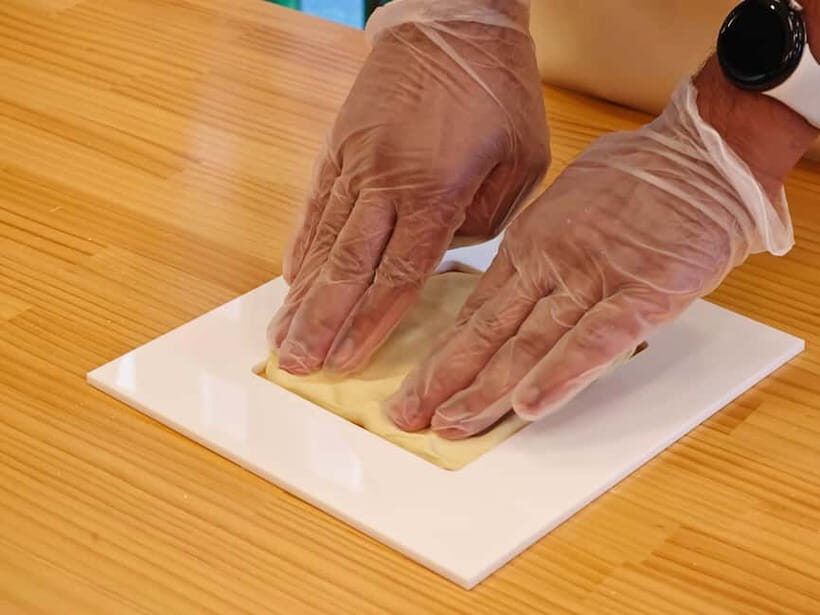
What surprised me from the way the experience is described is the speed. In 30 minutes, the process is completed: mixing flour with water, kneading, stretching flat, and cutting thin strips. That’s why the class stays fun for kids too, and why it works for adults who don’t want a half-day commitment.
If you’re worried you’ll be slow, don’t. The teaching method is designed for beginners and foreigners, and the instructors use a gentle, careful approach that’s also described as slightly amusing. The goal is to get you cutting with confidence, not to test your knife skills like a competition.



Cooking your own ramen: your noodles become the bowl
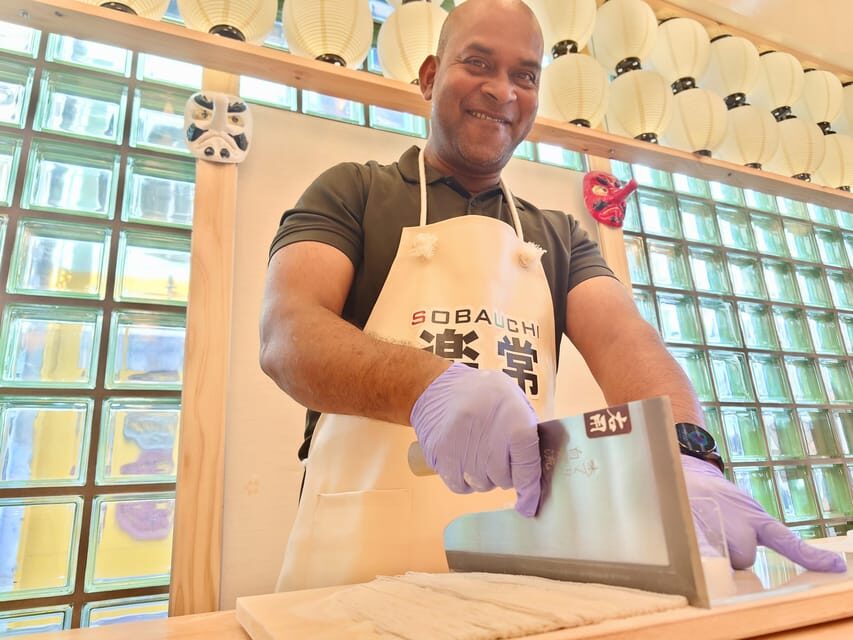
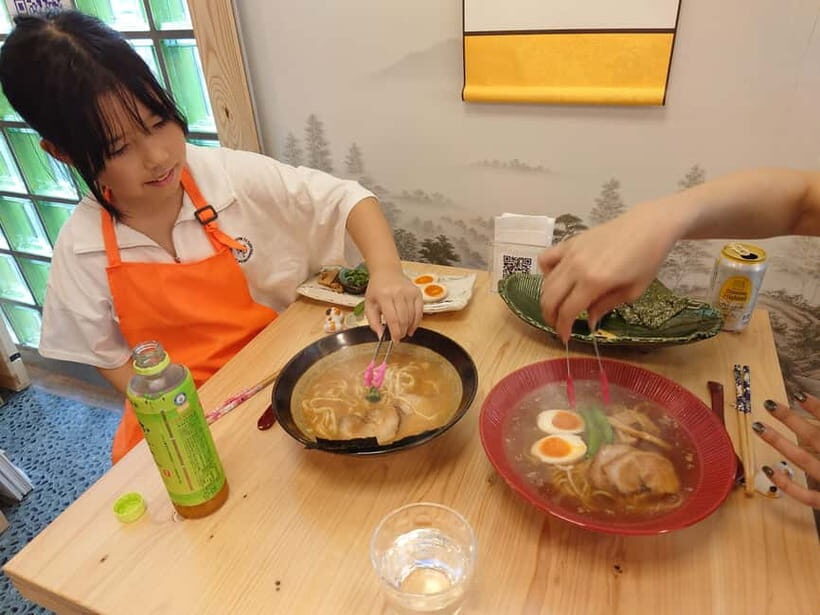
Once you finish cutting, staff handle the cooking. That split is smart: you do the hard-to-learn craft part (the cutting), and then you still get to eat ramen at the end without worrying about timing boiling and broth steps.
You’ll get your bowl made from the noodles you produced yourself. Staff are careful about ensuring you get your own noodles, so you’re not relying on luck or hoping they sort it out at serving time.
In terms of ramen selection, you’re not limited to one broth. You can choose from several flavor styles such as:
- Soy sauce ramen
- Miso ramen
- Shio ramen
- Vegan ramen
- Vegan soup curry ramen
That variety is one of the reasons I’d do this even if I’m not a total ramen fanatic. You’re learning technique, then enjoying a meal tailored to preferences (including vegan choices).
If you want a practical “when you should go” tip: choose an option you’d genuinely eat even without the class. That way you’re tasting something you already crave while also enjoying the satisfaction of noodles you made.
Drinks, snacks, and what value $57 buys
The price is $57 per person, and it’s one of those costs that makes sense only when you look at what’s included.
You get:
- The ramen noodle making experience
- Dining on ramen cut by yourself
- One free drink
- All-you-can-eat Japanese snacks
That “one free drink” is wider than beer-only. You can choose from beer, highball, lemon sour, juice, non-alcoholic beer, and more. If you don’t drink much alcohol, it’s not a problem because non-alcoholic options are listed too.
Snacks are also included in an easy way, and the key detail is that they’re all-you-can-eat and from proud Japanese manufacturers. You’re not eating a tiny token portion while your noodles cook. You can actually keep the snack energy going during the meal window.
What’s not included is drink refills, and the meal cost for attendants. That means the “good deal” angle depends on keeping add-ons simple. If you’re with someone who wants extra drinks, expect that to add up.
Still, for a first-timer ramen craft lesson plus a full meal, this price feels reasonable—especially because it’s small group limited to 6 participants, which usually correlates with more hands-on attention.
Who this experience suits best (and who should skip it)
This is best for people who like doing something with their hands and then eating the results. It’s also a strong choice if you want an activity that’s uniquely Japanese but not overly technical.
It suits:
- Couples and friends looking for a shared activity
- Families with kids who are comfortable kneading dough and following safety instructions
- Visitors who want something different than another food stall stop
- Anyone who wants vegan or vegetarian-friendly ramen options
But I’d be cautious (or skip) if:
- You have a gluten intolerance (not suitable)
- You have a buckwheat allergy (not allowed)
- Your day involves someone sick with a cold (not suitable)
- Your child is under the listed minimum ages (not suitable for babies under 1, and kids under 2 and under 3 also aren’t suitable)
Kids solo rules are also worth reading carefully. The class notes that kids solo need the ability to knead and to use a large, heavy knife by themselves. If that’s difficult, they can be paired with a parent. Also, in parent-child pairs, one adult must accompany each child. If your group includes small kids and you don’t want to manage pairing, consider choosing another activity.
Practical tips: safety, tables, and getting the most from the class
Here’s how I’d set yourself up for a smooth session.
First, go in knowing you’re working with a large, heavy knife. That changes the vibe. You’ll feel more confident if you listen early to the safety guidance and move at the pace you’re taught. The experience also makes it clear that any injuries during the experience are the participant’s responsibility, so take the safety instructions seriously.
Second, follow the simple attendance rule: arrive 10 minutes before. If you’re late, you’re more likely to miss the start of the hands-on portion.
Third, understand the table rule: three participants per table will not be allowed. That might sound trivial, but it can affect the seating plan and how much space you have for cutting. In a knife-based workshop, space matters.
Finally, you might see this activity described as fast, but fast doesn’t mean sloppy. The process is compressed into 30 minutes, so you’ll want to stay focused while you’re cutting. If you’re the kind of traveler who loves to chat nonstop, switch to “listen and watch” mode for the cutting phase. You’ll get better noodles and a better meal.
The one snag to plan for: schedule changes
Everything is set up as scheduled experiences. Still, one low rating mentions a situation where the owner said a schedule was canceled when a person arrived, which is obviously upsetting if it happens to you.
I can’t predict whether that will affect your dates, but I can tell you the best way to protect your day: confirm your reservation status and keep an alternate activity plan nearby. Asakusa can fill up fast, and your afternoon shouldn’t depend on one booking going perfectly.
Also, because the workshop isn’t observation-only, you should be ready to order your meal as part of the experience. That makes the timing commitment real, so arrive prepared.
Should you book SOBAGIRI-RAKUJYO for ramen noodles in Asakusa?
I’d book it if you want a hands-on Japanese food craft that ends with something you made and can eat immediately. The big win is the structure: a short, focused 30-minute noodle session and a meal that follows right after, all wrapped in a clean, bright, open studio.
I’d also lean toward booking if:
- You want to learn manual noodle cutting rather than watching passively
- You appreciate vegan and multiple ramen flavor choices
- You like the idea of professional photos delivered by QR code
I’d skip it if you’re dealing with gluten intolerance, buckwheat allergy, or if your kids don’t meet the kneading and knife-use requirements. In that case, the safety and format constraints can turn the experience into stress rather than fun.
For most people visiting Asakusa and doing Kappabashi shopping, this is a practical way to add something memorable without losing half your day.
FAQ
How long is the ramen noodle making experience?
The experience duration is 50 minutes total, with reception starting about 10 minutes before the event and around 30 minutes for noodle making plus time to eat.
What’s included in the price?
You get the ramen noodle making experience, you eat ramen made from your noodles, one free drink, and all-you-can-eat Japanese snacks.
Where exactly is the meeting point?
You should meet diagonally across from a food sample specialty store with a large beetle objet d’art on Kappabashi Kitchenware Street.
What ramen flavors are available?
There are several options, including soy sauce ramen, miso ramen, shio ramen, vegan ramen, and vegan soup curry ramen.
Is this experience suitable for gluten intolerance or buckwheat allergies?
No. It is not suitable for gluten intolerance, and people with buckwheat allergies are not allowed to participate.
Can children participate, and can they do it alone?
Children under 2 and under 3 aren’t suitable, and babies under 1 aren’t suitable. For kids solo, they need to be able to knead and use a large, heavy knife by themselves; if not, they’ll be paired with a parent, with one adult accompanying each child.
What languages are supported?
The instructor provides Japanese and English instruction, and an English audio guide is included.
More Tour Reviews in Taito City
Fresh reviews from around Taito City

Taito City, compared.
 ★ 4.8Sumo Show Experience with Chicken Hot Pot and a PhotoFrom $1036,678 reviews
Tokyo Asakusa: Miu Kimono Rental and Optional PhotoshootFrom $3254 reviews
★ 4.8Sumo Show Experience with Chicken Hot Pot and a PhotoFrom $1036,678 reviews
Tokyo Asakusa: Miu Kimono Rental and Optional PhotoshootFrom $3254 reviews
 ★ 4.9Karate Experience with Former All-Japan ChampionFrom $5846 reviews
 ★ 4.4Kimono Rental in Asakusa Provided by KanoWafukuFrom $1918 reviews
 ★ 4.9Japanese paper Notebook and Mizuhiki Belt Bookmark WorkshopFrom $11314 reviews
 ★ 4.7Tokyo Asakusa sightseeing and history walking tourFrom $199 reviews
 ★ 4.5Asakusa Cultural Walk & Matcha Making TourFrom $887 reviews
 ★ 5.0///Soba Making Experience///Use The BIG Soba-Knife!!From $577 reviews
Browse the lists this tour appears in