
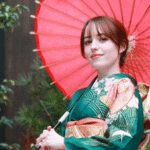
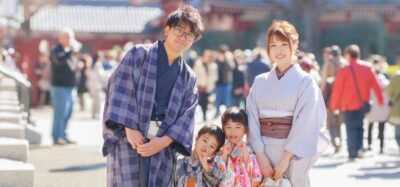
Tokyo in a kimono takes less effort than you think. I love the quick dressing (about 20 minutes for each woman) and I love the optional private studio photoshoot with 15 edited photos delivered online within 3 days. One consideration: you’ll need to stick to the return time, and the studio doesn’t offer luggage storage.
This is also a practical way to get out and enjoy Asakusa in your outfit without worrying about the basics. The meeting point is near MIMARU SUITES Hotel Tokyo Asakusa—behind the parking lot—then you take the elevator up to the 4th floor.
You can choose kimono for year-round elegance or yukata for June to September, when they offer the lighter summer version. English, Japanese, and Chinese support help you get started fast, and the staff (including Miu) can guide you through the details.
In This Review
- Key highlights at a glance
- Finding the studio above Asakusa (and keeping it simple)
- Kimono vs. yukata: pick the right outfit for the season
- What’s included: the full set plus a women’s hair plan
- Dressing time: how fast you’ll go from street clothes to kimono
- The optional private photoshoot: timing and what you actually receive
- Where the photos are taken
- What’s delivered (and what isn’t)
- Buying extra photos
- Making the most of your kimono time in Asakusa
- Photo quality tips: how to get better results without extra stress
- Where the value really is: time, included gear, and the photo package
- Small rules that matter more than you expect
- Who should book this kimono rental in Asakusa?
- FAQ
- FAQ
- Where do I meet for the Asakusa kimono rental?
- How long does it take to dress?
- Is this kimono or yukata, and when do they offer yukata?
- If I book yukata but want kimono, can I switch?
- What’s included in the rental set?
- How does the optional photoshoot work?
- Are there rules I should know before I go?
- Should you book this Asakusa kimono rental?
Key highlights at a glance
- Dressing that moves quickly so you spend more time outside in Asakusa
- Women’s hair set included with styling and accessories on the women’s plan
- Private studio photoshoot option with clear timing based on group size
- 15 edited photos per person delivered online within 3 days
- Kimono for all ages/sizes with thoughtful outfit options
- Flexible season plan: yukata in summer, kimono year-round, with a switch option
More mornings around Senso-ji and the old town
- Tokyo Asakusa sightseeing and history walking tour★ 4.7 · 9 reviews
- Asakusa Cultural Walk & Matcha Making Tour★ 4.5 · 7 reviews
- Tokyo : Kimono Rental in Asakusa Provided by RikaWafuku★ 4.5 · 4 reviews
Finding the studio above Asakusa (and keeping it simple)
The hardest part of kimono day should be choosing your outfit color—not figuring out where to go. Your start point is near MIMARU SUITES Hotel Tokyo Asakusa, behind the parking lot. Head to the elevator and go up to the 4th floor.
When you arrive, plan to go straight to the studio time you booked. You’ll want to be there at your scheduled moment or up to 5 minutes early, because they ask you to arrive on time and you may lose your reservation if you’re more than 30 minutes late without contacting them.
Also, keep your day light. The studio doesn’t provide space to store luggage, and food or drinks aren’t allowed inside the store—so you’ll be happiest if you travel with only what you need for a short walk and photo session.
Kimono vs. yukata: pick the right outfit for the season
This rental does a smart job separating kimono and yukata, because they’re not just different styles—they’re different comfort levels.
A kimono is worn year-round and has a layered, elegant look suited for all seasons. A yukata is a simpler, unlined version typically worn in summer, which makes it lighter and cooler for warmer days.
If you book the yukata plan (June to September) but you decide you want the more layered kimono look instead, there’s an upgrade option: you can switch to the kimono plan for an additional ¥2,000. That’s useful if you’re unsure ahead of time, especially if the weather changes between when you book and when you arrive.
What’s included: the full set plus a women’s hair plan
The included outfits cover the basics you actually need to look and feel correct.
For the kimono set, you get a full package: the kimono, obi belt, a Japanese clutch, sandals, and socks. The yukata set is similar in structure, including the yukata, obi belt, Japanese clutch, and sandals. (So you’re not left hunting for complementary pieces after you get dressed.)
For women, the women’s plan also includes a hair set—styling plus hair accessories. That matters more than you might think. In a kimono look, hair styling helps your whole silhouette sit right, and it saves you from trying to replicate traditional hairstyles on your own while you’re in Japan for the first time.
One practical detail: they provide language support in English, Japanese, and Chinese. That’s a big deal when you’re asking questions like how to hold your clutch, how tight the obi should feel, or what to do if something shifts while you walk.
Dressing time: how fast you’ll go from street clothes to kimono
You’re not stuck all morning in a dressing chair. The dressing time for women is about 20 minutes per woman.
That’s a good pace for a few reasons. First, it keeps your schedule from sliding, especially if you’re pairing this with other Asakusa plans. Second, quick dressing means you can get out into the neighborhood earlier—when the streets feel calmer and you can enjoy the novelty of walking in traditional clothing.
They also support different ages, genders, and sizes, so you’re not stuck with a one-size-fits-all situation. And yes, it’s designed so you can enjoy this even if you’ve never worn kimono before.
Just note the limitations: it isn’t suitable for pregnant women, and it’s not suitable for babies under 1 year. If you’re traveling with little ones, make sure you plan alternative options for them.

The optional private photoshoot: timing and what you actually receive
If you want kimono photos that look professional without dealing with a complicated street-shoot setup, the optional photoshoot is the headline upgrade.
Here’s how the shooting time works:
- 1 person: 20 minutes
- 2 people: 30 minutes
- 3 or more: 45 minutes
So your session stays reasonable whether you’re solo, a couple, or a family group.
Where the photos are taken
The photoshoot is done in a private studio setup, and they’ll suggest shooting locations based on season, weather, and time of day. That’s helpful because in Tokyo, conditions change fast—light gets tricky, and weather can decide whether you want indoor vs. outdoor backgrounds.
What’s delivered (and what isn’t)
After the session, each person receives 15 edited photos via free online download. The download link is provided within 3 days.
A couple points that help you set expectations:
- The edits adjust brightness and color.
- They do not provide unedited raw data.
- They don’t do heavy retouching like beauty filters.
If you love natural-looking results, you’ll probably appreciate that approach. If you’re expecting magazine-style face transformations, you might want to plan for a more realistic edit level.
Buying extra photos
If you want more than the included 15, additional photos can be purchased for ¥200 each. It’s a straightforward add-on if you end up loving one specific pose set.
Making the most of your kimono time in Asakusa
After dressing (and photos, if you choose them), you’re free to explore Tokyo’s Asakusa in kimono until your return time. This freedom is where the experience becomes more than a “change clothes and pose” activity.
Think of your kimono time as a walking window where you’re moving slower on purpose. You’ll notice details in the neighborhood that you’d normally skip while rushing between train stops: storefront rhythms, street textures, and the simple fun of blending into a local scene instead of just photographing it from the sidewalk.
That said, do plan realistically. You’ll need to return rental items within business hours, and late returns come with a fee of 1,000 yen per hour. If you’re the type who always stays out late, set a firm “wrap-up” time before you leave for your kimono stroll.
Also, follow the in-studio rules: no smoking indoors, no alcohol or drugs, and please keep noise down. It’s a studio environment, and quieter behavior helps everyone.
Photo quality tips: how to get better results without extra stress
Because the photos are edited for brightness and color, your best move is to help the photographer capture clean angles and good posture. You don’t need to do anything fancy—just treat it like a short, calm session rather than an endurance event.
Wear what you were given and move naturally. If something feels tight or slips while you’re getting positioned, tell the team right away. Kimono comfort is a small thing that can make photos look relaxed instead of tense.
If the photos include outdoor scenes suggested by the team, keep an eye on comfort. In cooler weather, you’ll want layers under your kimono. The studio specifically suggests wearing a U-neck undergarment on cold days—examples include Heattech (top and bottoms).
Where the value really is: time, included gear, and the photo package
At $32 per person, this rental sits in a price range that feels reasonable for Tokyo, especially because the package is practical, not just symbolic.
You’re getting:
- A full outfit set (kimono or yukata) with obi, clutch, sandals, and socks
- A women’s hair set with styling and accessories (on the women’s plan)
- Optional photoshoot with a built-in delivery system: 15 edited photos per person, downloadable within 3 days
That last part is key. Many experiences either require you to pay again for a real photographer or give you photos that look unpolished. Here, the edit level is clear: brightness and color adjustments, not heavy retouching, and no raw files.
If you plan to take your own photos, you still get something out of the shoot: it’s one less headache. You get photos that are consistent and likely shot with kimono-friendly framing and lighting in mind.
Small rules that matter more than you expect
Most rental experiences fall apart from avoidable friction, so these details are worth taking seriously.
The studio asks you to:
- Only enter if you are a designated customer
- Arrive on time or up to 5 minutes early
- Refrain from bringing food or drinks into the store
- Take your trash with you when you leave
- Return rental items within business hours
And the cold-weather advice is actually useful: you’ll likely be outside walking in Asakusa, so a U-neck underlayer can make the difference between enjoying the day and thinking about warmth the whole time.
Also, the “late fee” structure means punctuality isn’t just polite—it affects money. If your schedule tends to run late, build in extra buffer.
Who should book this kimono rental in Asakusa?
This is a great match if you want a traditional outfit experience that feels structured and easy, without turning your day into a logistics project.
It’s especially good for:
- Couples and families who want a simple way to dress up and get photos
- First-timers who appreciate support in English, Japanese, or Chinese
- Women who want a full look finished with hair styling and accessories
- Travelers who like the idea of a private photoshoot, not just phone snapshots
It may not be your best fit if:
- You’re traveling with a baby under 1 year
- You’re pregnant
- You’re expecting a lot of luggage storage or a drop-off solution (because there isn’t one)
- You need heavy retouching or raw photo files (the service is edited, not raw)
FAQ
FAQ
Where do I meet for the Asakusa kimono rental?
You meet near MIMARU SUITES Hotel Tokyo Asakusa, behind the parking lot. Go to the 4th floor by elevator.
How long does it take to dress?
For women, it takes about 20 minutes for each person to dress.
Is this kimono or yukata, and when do they offer yukata?
Kimono is year-round. Yukata is offered during summer season, June to September.
If I book yukata but want kimono, can I switch?
Yes. You can switch from the yukata plan to the kimono plan for an additional ¥2,000.
What’s included in the rental set?
For kimono: kimono, obi belt, Japanese clutch, sandals, and socks. For yukata: yukata, obi belt, Japanese clutch, and sandals. Women’s plan also includes hair styling and hair accessories.
How does the optional photoshoot work?
The photoshoot time depends on group size: 20 minutes for 1 person, 30 minutes for 2 people, and 45 minutes for 3 or more. Each person gets 15 edited photos via free download within 3 days, with additional photos available for ¥200 each.
Are there rules I should know before I go?
Smoking indoors, alcohol and drugs, and making noise are not allowed. You should also avoid bringing food or drinks into the store, take your trash with you, and return rental items within business hours.
Should you book this Asakusa kimono rental?
I’d book it if you want an easy, well-supported way to wear traditional clothing in Asakusa, plus an optional photoshoot where you get a clear deliverable: 15 edited photos per person within 3 days. The combination of fast dressing, practical included gear, and a private studio shoot option makes it feel like good value instead of a half-day hassle.
I’d hesitate only if you’re tight on schedule and don’t plan to follow return times, or if you need luggage storage, heavy beauty retouching, or raw photo files. If you like structure and you’re excited to walk around in a kimono without the guesswork, this one is a strong pick.
More Tour Reviews in Taito City
Around Senso-ji: More Asakusa Picks
Fresh reviews from around Taito City
Asakusa Tours, compared.
 ★ 4.8Japanese Dance Cabaret Theater Asakusa-Kaguwa TicketFrom $492,270 reviews
 ★ 4.7Meiji Shrine, Asakusa, Skytree Bus Tour and CruiseFrom $1221,986 reviews
 ★ 4.8Asakusa Walking Tour with Sensoji Temple VisitFrom $221,583 reviews
 ★ 5.0Tokyo Asakusa Rickshaw TourFrom $421,375 reviews
 ★ 4.5Tokyo Panoramic 1 Day: Meiji Shrine, Asakusa, Odaiba and SKYTREE®From $851,222 reviews
 ★ 4.8Samurai Ninja Museum Asakusa: Samurai Sword Lesson & TourFrom $63306 reviews
Asakusa Sightseeing Tour by RickshawFrom $35195 reviews
Asakusa Kimono Dressing and Matcha ExperienceFrom $56173 reviews
★ 4.8Samurai Ninja Museum Asakusa: Samurai Sword Lesson & TourFrom $63306 reviews
Asakusa Sightseeing Tour by RickshawFrom $35195 reviews
Asakusa Kimono Dressing and Matcha ExperienceFrom $56173 reviews
Browse the lists this tour appears in