
Reviewed · MARTIAL ARTS CLASSES
Tokyo: Karate Experience with Former All-Japan Champion
Tokyo karate hits different.
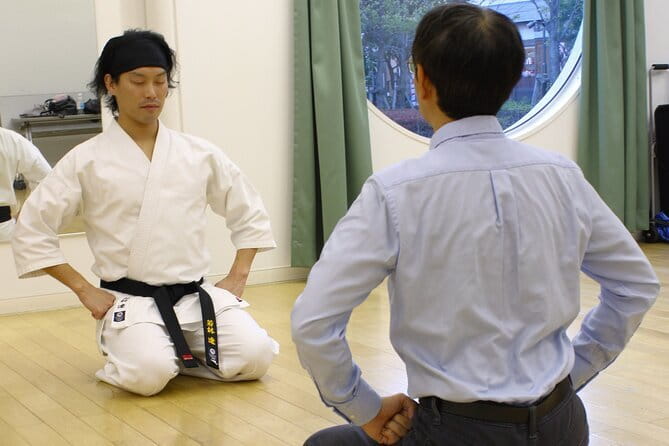
This Kyokushin experience is a 1 to 90 minute session built around real dojo basics: proper bowing, belly-breath focus, stretching, and then step-by-step punches, blocks, and kicks with a qualified instructor. I especially like that you’re working with Ryo, a Former All-Japan Champion level black belt who explains what matters and watches your form closely. One possible drawback: this is not full-contact sparring, so if you’re hunting for hard collisions, you’ll want to know the kumite is taught without physical contact.
In practice, that setup makes the session feel both safe and serious. You’ll get pad work, a kata demonstration, and non-contact sparring-style training aimed at timing and precision, with instruction in English and Japanese and options for private or small groups. Classes run out of the Asakusa area, and the meeting point can vary depending on which option you book.
In This Review
- Key points that make this Tokyo karate experience worth your time
- Finding Ryo in Asakusa: what the setting really gives you
- The bow and belly-breath routine that sets the whole tone
- Warm-ups that hit hips, shoulders, and the stuff most people ignore
- Punches, blocks, and kicks taught in clean, learnable steps
- Kata demonstration: patterns you can actually recognize later
- Self-defense concepts inside non-contact practice
- Non-contact kumite and pad work: timing with less risk
- Value check: does $58 make sense for what you get?
- Who this Tokyo karate class fits best
- What to bring, and the gi question you should double-check
- FAQ
- FAQ
- How long is the karate experience in Tokyo?
- Where does the class take place?
- What’s the main focus of the lesson?
- Is there sparring, and is it contact?
- What’s included with the booking?
- Do I need a karate gi?
- Is the instructor English-speaking?
- Is it suitable for beginners?
- Can kids join?
- Can I cancel and get a refund?
- Who is the instructor?
- Should you book this Tokyo karate session with Ryo?
Key points that make this Tokyo karate experience worth your time
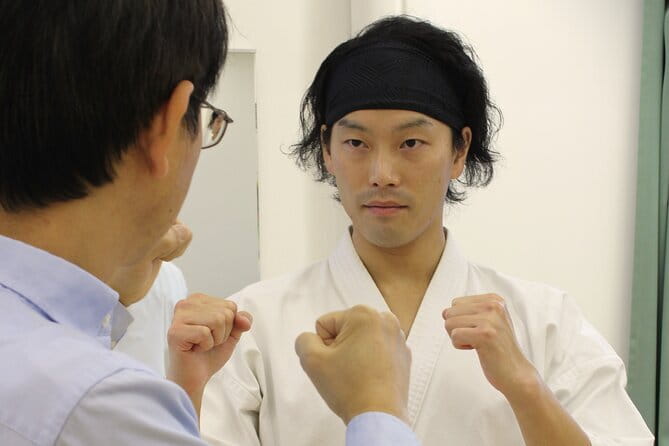
- Train with Ryo, a 2nd Dan instructor dedicated to Kyokushin karate for 20 years
- Bowing and breathing first, because karate starts with control, not power
- Warm-ups that target real joints, including hips, shoulder blades, and chest
- Techniques taught in small steps, so beginners can follow and experienced students can refine
- Kata demonstration plus practical application, not just fancy movement
- Non-contact kumite training, focusing on defense and efficiency without injury risk
Before you commit, see how this one stacks up against a few Taito City favourites:
- Tokyo Asakusa: Miu Kimono Rental and Optional Photoshoot★ 4.9 · 54 reviews
- Tokyo: Karate Experience with Former All-Japan Champion★ 4.9 · 46 reviews
- Made from flour in 30min! Ramen-noodle Making Experience!★ 4.8 · 24 reviews
Finding Ryo in Asakusa: what the setting really gives you
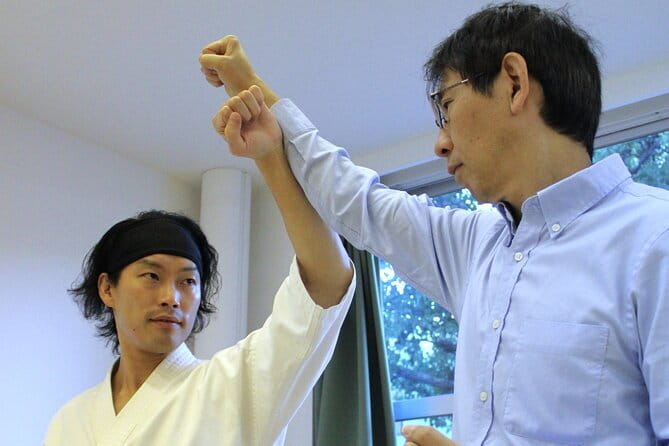
This class happens in the Tokyo area around Asakusa, which is handy if you’re already spending time in that part of town. Meeting point can vary by option, so plan to check the exact location before you go. Expect a dojo-style lesson rather than a performance.
The big advantage here is the size. It’s private or small groups, so you’re not stuck repeating the same mistake in front of 20 people. Ryo also teaches in English and Japanese, which matters more than you’d think for karate, because tiny wording differences can explain stance, angles, and timing.
Also, you’re not just learning moves. You’re learning how to do karate in the “start with a bow and end with a bow” way—ritual, discipline, and manners included. That’s the part most tourists skip, and it’s exactly what makes a martial arts class feel authentic.
The bow and belly-breath routine that sets the whole tone
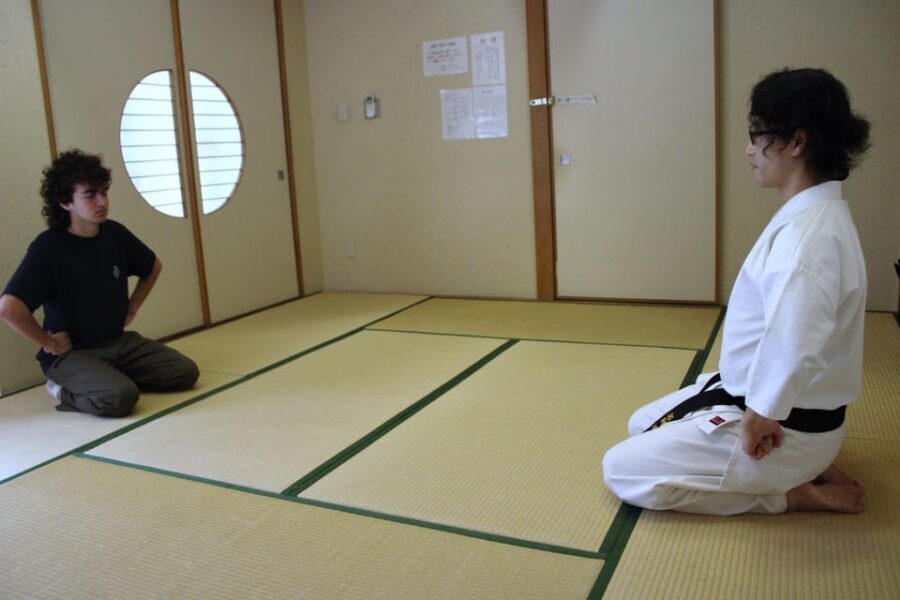
Karate etiquette is not decoration. It’s part of the training. You begin by learning how to bow properly, and the lesson reinforces the idea that practice starts and ends with respect.
Then you move into deep breathing from the belly. The point isn’t breathy calm for Instagram. It’s focus. When you can breathe steadily, you can execute techniques without tensing up too early, and you can recover faster between drills.
Ryo’s teaching style (clear explanations plus demonstrations) is built for people who are nervous, too. If you’ve never trained in a Japanese martial arts setting, you’ll likely appreciate that the class starts with simple, grounding actions before anyone asks you to kick or punch at speed.
Warm-ups that hit hips, shoulders, and the stuff most people ignore
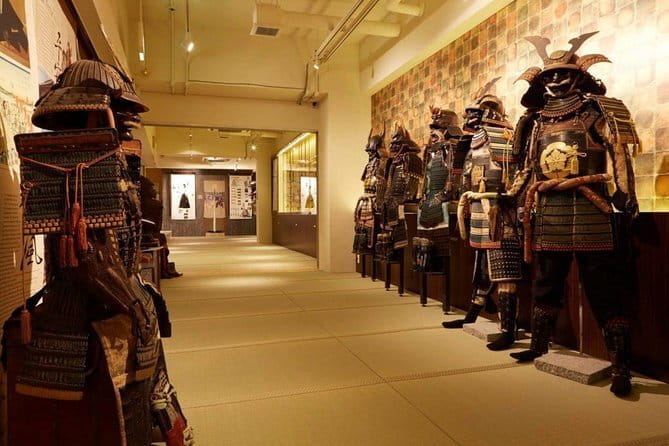
Next comes stretching for major body parts: leg muscles, hip joints, shoulder blade area, and the chest. This is more than “loosen up.” Those areas control your stance and your ability to generate power without twisting awkwardly.
If you’ve ever taken a class that skips warm-ups, you know what happens: your first kicks feel stiff, your punches collapse into bad angles, and your balance gets shaky. Here, the warm-up is structured so you’re ready to learn rather than surviving the first 10 minutes.
You’ll feel the difference most if you sit a lot during sightseeing. Tokyo walking is great, but it also tightens hips and hamstrings. Getting those areas opened before technique practice makes the rest of the session easier to understand.
Punches, blocks, and kicks taught in clean, learnable steps
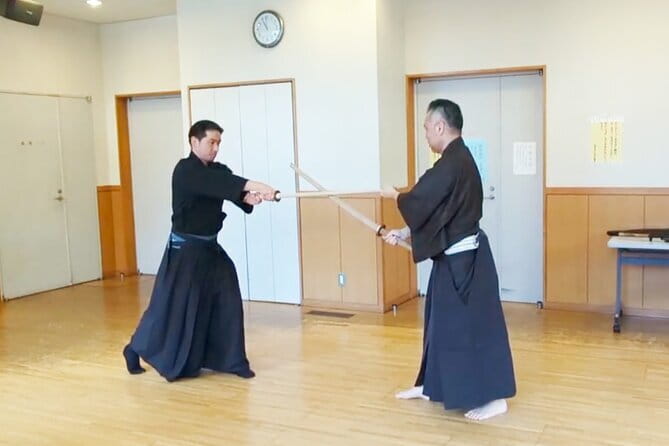
After stretching, you’ll practice the basics: punches, blocks, and kicks with proper stances. The way the class builds is one of the most praised parts—techniques are broken into smaller moves so you can learn step by step.
You’ll also see technique tips demonstrated when needed. That matters because in karate, form isn’t optional. Small changes in elbow position, wrist alignment, or stance width can turn a good technique into a shaky one. Ryo’s approach is to correct movement in a way that helps you feel what the technique should be doing.
If you already have martial arts background, you’ll still benefit. One strong theme from firsthand experiences is that even people from other karate styles find it useful. You might notice differences in how Kyokushin emphasizes full commitment in stance and how the class teaches efficiency for real application—without pushing you into risky training.




Kata demonstration: patterns you can actually recognize later
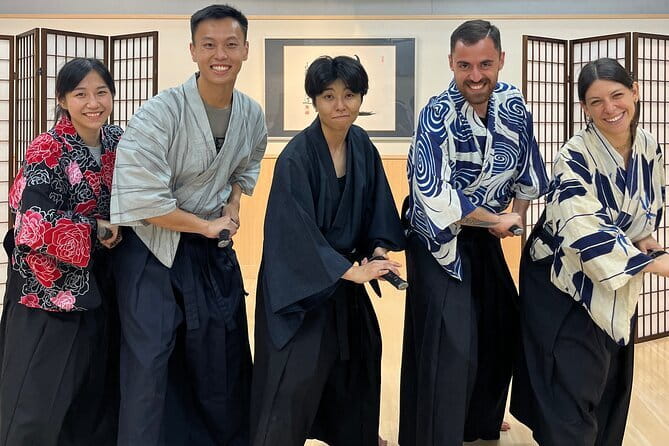
You also get a kata demonstration. Kata are patterns—sequenced movements that train your structure, timing, and decision-making. In many tourist-friendly classes, kata gets treated like a museum artifact. Here, it’s presented as part of the lesson flow, so you’re not just copying motions.
Think of kata as your “map.” Even if you don’t fully master a form in one session, seeing the pattern helps you recognize how basic techniques connect. It also reinforces manners and control, because kata are where discipline shows.
If you care about authenticity, this is a real value add. Kata is one of the easiest ways to feel the difference between a fitness class and a martial arts class. The class keeps it grounded and teaches it as part of karate’s system.
Self-defense concepts inside non-contact practice
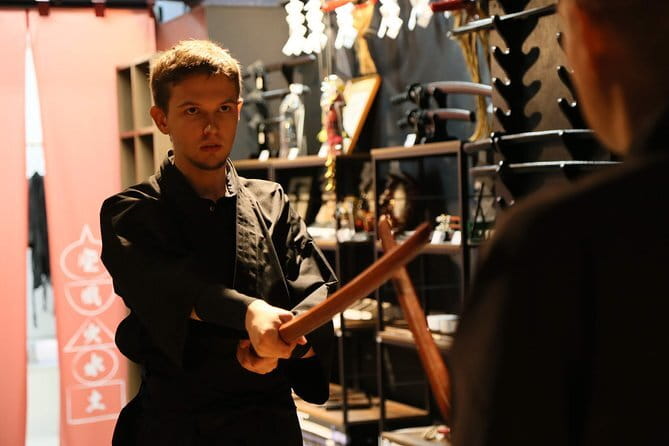
The lesson includes kumite training without physical contact. That means you practice the essence of sparring—defending against attacks and responding—while staying safe.
You’ll work on defending against attacks like punches, front kicks, and low kicks. The focus is on maximum precision and efficiency. In other words: not just “move your body,” but learn what defense is trying to accomplish—structure, distance control, and a clear counter or reset.
This part is especially useful if you want something more practical than cardio. You’re learning decisions under simple conditions. You’ll likely leave understanding how blocks and stances connect to defense, rather than just having a list of techniques.
And because it’s non-contact, you can keep your attention on form. That’s where real improvement starts for most people. You can’t train good mechanics if the session becomes a scramble to avoid impact.
Non-contact kumite and pad work: timing with less risk
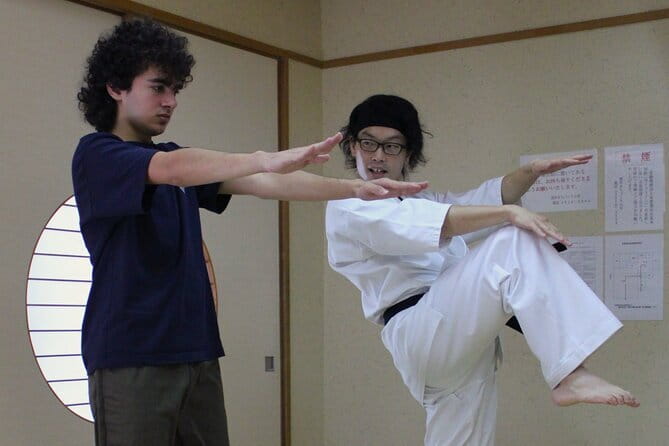
By the end, you’ll have done a combination of pad work and sparring-style drills that avoid physical contact. Pads give you feedback without bruises, and the non-contact kumite keeps the session accessible.
This approach works well for mixed skill levels. Beginners can learn safe responses, and more experienced students can focus on speed and accuracy without getting knocked around. One thing I like here is that the class still feels like karate. It doesn’t turn into a tech demo where you never test anything.
You’ll probably notice how Ryo corrects your movements while you’re actively doing the drill, not only after you stop. That’s the real difference between a lecture and a training session. You learn by doing, then adjusting.
Value check: does $58 make sense for what you get?
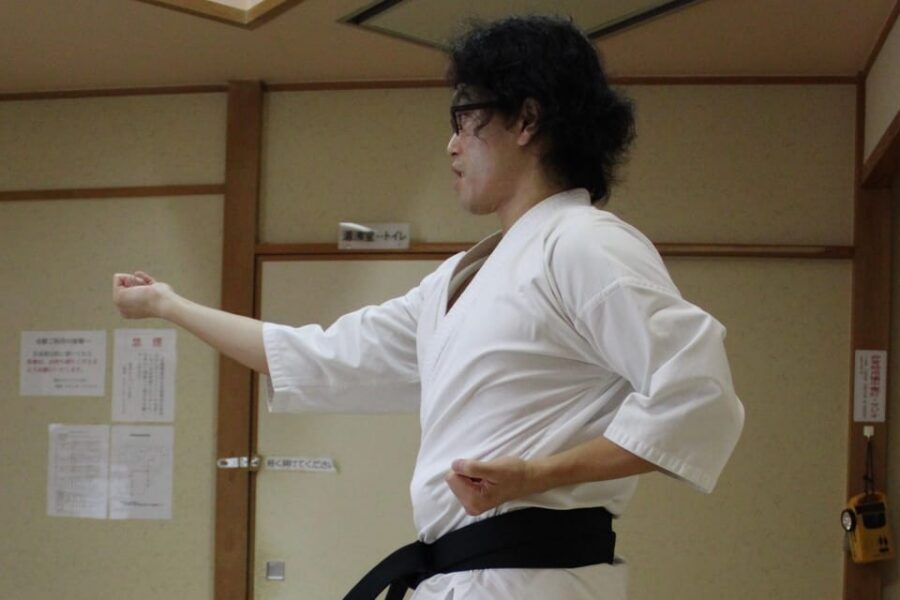
At $58 per person for a 1 to 90 minute class, you’re not paying for a casual show. You’re paying for structured instruction, pads, kata demonstration, and guided non-contact kumite training with a black belt instructor who has competed and taught for years.
The value comes from density. You’re not just learning one technique. You’re covering warm-up, etiquette, breathing, foundational mechanics (punches/blocks/kicks), kata exposure, and then the sparring essence through defensive drills. A single lesson can feel short, but the content is tightly packed.
You’re also not paying for group chaos. Private or small groups usually means more corrections and more chances to apply what you learned. For many people, that’s the biggest value driver—attention and feedback.
If your goal is a deep workout only, this might feel “short” compared with a full dojo session. But if your goal is an authentic karate experience in Tokyo that teaches real basics and safety-aware sparring concepts, the price-to-time ratio looks strong.
Who this Tokyo karate class fits best
This is a great match for:
- Beginners who want a structured start and clear instruction in English
- Experienced martial artists looking to compare Kyokushin basics and training methods
- Families since the class can be taught in a way kids can understand, with patience and pacing
- People who want authenticity without committing to a full long-term dojo membership
If you train other styles (like Shotokan or Goju Ryu), you may enjoy seeing the differences in stance and technique emphasis. Multiple experiences point to the class being adaptable—Ryo takes your level into account instead of running one fixed routine for everyone.
Kids also tend to do well because the lesson is built from understandable steps. The pacing matters, and Ryo is described as slow and supportive, which is exactly what nervous students need.
What to bring, and the gi question you should double-check
You’ll receive a karate uniform only if you select the option for a private/90 minute session with a Karate Gi. If you don’t choose that option, you should assume you may need to wear workout clothing suitable for movement.
Even though many classes provide equipment, don’t assume the gi is included in every 90 minute setup. One participant noted confusion about whether a gi was provided in the longer session, so it’s worth confirming at booking what’s included for your specific option.
Bring water or plan to drink what’s provided. A bottle of water is included, which helps after stretching and drilling.
Also, show up ready to move. Karate is physical even when it’s non-contact sparring. Wear comfortable shoes you can remove if needed, and bring layers in case the indoor space feels cool before you warm up.
FAQ
FAQ
How long is the karate experience in Tokyo?
The duration is 1 hour to 90 minutes, depending on the session option you choose.
Where does the class take place?
It’s in the Tokyo area around Asakusa, but the exact meeting point may vary depending on the option booked.
What’s the main focus of the lesson?
You’ll practice basic karate techniques (punches, blocks, kicks) with proper manners, warm-up stretching, a kata demonstration, and non-contact kumite training.
Is there sparring, and is it contact?
You’ll learn kumite training without physical contact, so you can practice without risk of injury from impacts.
What’s included with the booking?
Included items are an interactive karate lesson, kata demonstration, punching/kicking pads, and a bottle of water. Karate uniform inclusion depends on the option you select.
Do I need a karate gi?
You get a karate uniform only if you book the option that includes a Karate Gi. If you’re not booking that option, you should plan to wear suitable workout clothes.
Is the instructor English-speaking?
Yes. The instructor teaches in English and Japanese.
Is it suitable for beginners?
Yes. The lesson is designed for both beginners and people with karate experience, and techniques are broken into steps so you can follow along.
Can kids join?
You can. The experiences included families with children (like 8 to 14), and the class can be paced so kids understand the lesson.
Can I cancel and get a refund?
Yes. Free cancellation is available up to 24 hours in advance for a full refund.
Who is the instructor?
The instructor is Ryo, a qualified Kyokushin karate instructor and black belt (2nd Dan promotion completed in 2020), with competition achievements including an All-Japan champion title in Kyokushinkan International.
Should you book this Tokyo karate session with Ryo?
If you want a real karate lesson in Tokyo—manners, basics, kata exposure, and safe non-contact sparring—it’s an easy yes. The value is strongest if you like structured instruction and you want corrections on your form without injury pressure.
Book it if you’re a beginner who needs clarity, or an experienced martial artist who wants to compare Kyokushin training habits. Pass if you’re specifically chasing full-contact sparring or a high-speed fight session. This is controlled, respectful practice, and that’s exactly why it works for so many different ages and skill levels.
More Tour Reviews in Taito City
Fresh reviews from around Taito City
Martial Arts Classes, compared.
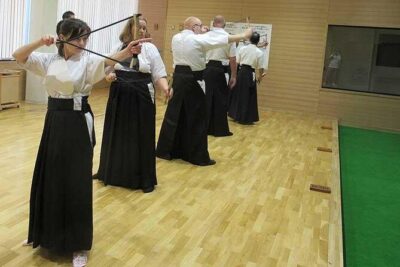 ★ 4.5Authentic Kyudo Japanese Archery Experience in TokyoFrom $12543 reviews
 ★ 5.0Tokyo Samurai Experience: Kyudo (Archery) and SwordsmanshipFrom $9614 reviews
 ★ 5.0A Tokyo Karate Dojo Activity ExperienceFrom $868 reviews
 ★ 5.0Karate Experience with the Shotokan Karate-do InstructorFrom $2205 reviews
 ★ 5.0Kickboxing & Body Training with EX-Pro FighterFrom $394 reviews
Browse the lists this tour appears in