
Reviewed · WALKING TOURS
The Old Quarter of Tokyo – Yanaka Walking Tour
Tokyo turns gentle in Yanaka.
This small-group walking tour threads together temples, shrines, and everyday back streets in a part of Tokyo many people skip, even though it survived World War II with plenty of older streetscapes still visible. I like that you get local context on foot, so the stops feel connected instead of like a checklist.
I love the chance to slow down with English-speaking guides who explain what you’re seeing and why it matters, especially around religion and local customs. I also like the payoff at the end in Yanaka Ginza, where you can snack and shop right after the sightseeing. One consideration: you’re outdoors for about 3 hours, so bring comfortable shoes and sun protection, and don’t plan this as a rainy-day backup.
In This Review
- Key points that make this Yanaka walk worth your time
- Yanaka feels like Tokyo’s “other” city
- Meeting at Nippori and finishing at Yanaka Ginza
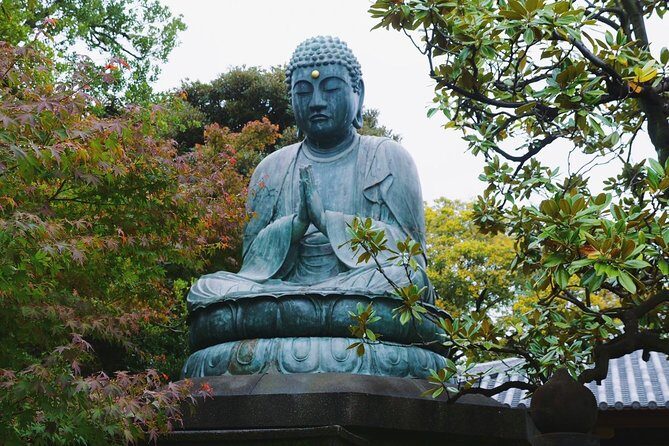
- Tennoji Temple and the Yanaka Buddha from 1690
- Yanaka Cemetery: customs you can actually follow
- Ueno-Sakuragi Atari: old houses turned into a community hub
- A century-old tree symbol and Enju-ji Temple’s strong-legs wish
- Nezu Shrine’s red torii gates and shrine etiquette that keeps things respectful
- Hebimichi back street daily life, then Yanaka Ginza for food and browsing
- Why $40 makes sense for this kind of walking tour
- Small-group experience with English-speaking local guides
- Who should book this Yanaka walking tour
- Should you book the Old Quarter of Tokyo – Yanaka Walking Tour?
- FAQ
- How long is the Yanaka walking tour?
- Where does the tour start and end?
- Is this a small-group tour?
- Is food included in the price?
- Are temple or shrine admissions included?
- Do I need mobile tickets or printed tickets?
Key points that make this Yanaka walk worth your time
- Small group (max 10) means questions actually get answered, not ignored.
- Tennoji Temple + the Yanaka Buddha (1690) gives you a concrete starting point for religious storytelling.
- Yanaka Cemetery turns a hard-to-interpret place into something you can understand with basic local etiquette.
- Ueno-Sakuragi Atari shows how old wooden houses were repurposed into a community hangout.
- Nezu Shrine delivers classic red torii gates plus practical shrine know-how for respectful visits.
- Yanaka Ginza Shopping Street ends the walk with a real local place to eat and browse (food costs extra).
Tokyo at walking pace, a few more ways
- Tokyo Tsukiji Fish Market Food and Culture Walking Tour★ 5.0 · 3,184 reviews
- Tokyo: Shinjuku Local Bar and Izakaya Guided Walking Tour★ 4.9 · 1,794 reviews
- Tokyo: Tsukiji Fish Market Food and Walking tour★ 5.0 · 1,724 reviews
Yanaka feels like Tokyo’s “other” city
Yanaka is the anti–tourist-bullet-train part of Tokyo. You come for the temples and shrines, sure, but what you really get is the sense of living neighborhood rhythms. This is walking Tokyo as a series of short transitions: from a sacred space, to a quieter residential lane, to a community pocket where locals actually stop.
The contrast is the selling point. Tokyo has plenty of impressive sights, but the city can also feel loud and fast. Yanaka slows that down fast. You’ll see older wooden homes, temple grounds, and side streets that connect like a map you can remember, not just photos you scroll past.
And because the tour is structured, you don’t waste time trying to figure out what’s important. The guide helps you read the details: how shrines operate, how cemeteries are approached, and why certain symbols keep showing up.
Meeting at Nippori and finishing at Yanaka Ginza
You start near Nippori Station, then you end in Yanaka Ginza. That end point matters. A lot of tours drop you somewhere inconvenient—like back at a transit hub. This one hands you a local shopping street right where you’ll want it: for snacks, small souvenirs, and a relaxed post-walk pace.
The tour is about 3 hours on foot, with several short stops. That timing is a sweet spot for a half-day outing. You get enough variety to feel you saw a lot, without the “we sprinted from place to place” fatigue.
You’ll have a mobile ticket, which is convenient if you don’t want to manage paper. And since it’s limited to up to 10 people, the group stays easy to manage—meaning the guide can slow down when someone has a question.
Tip: plan your day so you’re not rushing to another booking right after. The end at Yanaka Ginza is meant for lingering.
Tennoji Temple and the Yanaka Buddha from 1690
The walk opens at Tennoji Temple, where you’ll learn about the Yanaka Buddha, created in 1690. This is one of those moments where the guide turns a temple name into a story with timeline and purpose. You’ll also get a sense for how Japanese religion works in real life, not as a textbook concept.
At places like this, it’s easy to focus only on the visuals. But with the added history, you start noticing patterns: why certain sites matter locally, and why legends and religious practice get handed down the way they do.
This is also a good start because it sets the tone for the rest of the tour. After Tennoji, the cemetery and shrines don’t feel like separate sightseeing stops. They feel like connected parts of the same neighborhood world.
Stop length is brief (about 15 minutes), so come ready to absorb information quickly. If you like taking photos, you’ll have time, but the real value is the context.
Yanaka Cemetery: customs you can actually follow
Next is Yanaka Cemetery. This is not the kind of place most visitors know how to approach. The guide helps you understand what a Japanese cemetery is like, plus some customs locals follow.
That matters because cemetery etiquette isn’t obvious if you only know the headlines. You want to act respectfully without overthinking. Learning the basics on the spot makes your visit smoother, and it also helps you feel less awkward about what you’re seeing.
It’s another short stop (around 15 minutes). But the payoff is big: you’ll leave with a clearer understanding of how communities handle memory and the spiritual side of everyday life.
If you’re photographing, keep your behavior calm and low-key. This is a place where silence and care are more important than capturing the perfect angle.





Ueno-Sakuragi Atari: old houses turned into a community hub
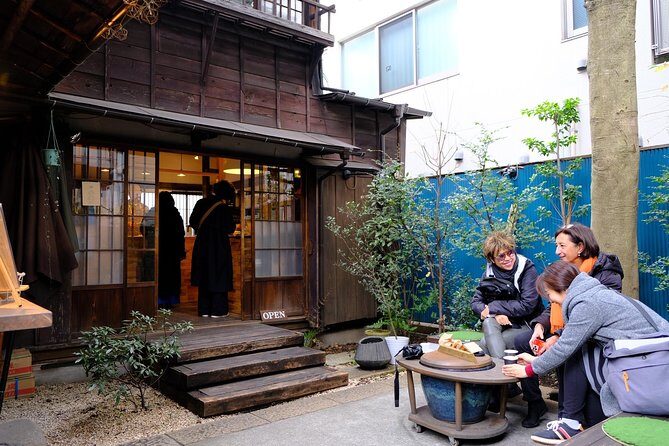
Then you reach Ueno-Sakuragi Atari, where you’ll take a break. Here’s the neat part: you’ll see how about 80-year-old wooden houses were renovated into spaces like a café, a bakery, and a beer hall—and became a community hangout.
This stop is valuable because it gives you a modern lens on old Tokyo. The story isn’t only about preservation. It’s about reuse: the way neighborhoods keep living by adapting older structures for current needs.
You’ll get around 15 minutes here. Admission isn’t included, so treat it as a break point, not a paid attraction. If you want drinks or snacks, you’ll pay for them separately.
This is also a good time to reset. After temples and cemetery quiet, the energy shifts. You can stand back, watch people, and notice how the neighborhood uses public space without making it into a spectacle.
A century-old tree symbol and Enju-ji Temple’s strong-legs wish
One of the most distinctive bits comes next: a 100-year-old cyder tree (a long-lived tree that serves as a symbol in Yanaka). Even if you don’t know what to look for, the guide points out why it’s meaningful—how local landmarks become reference points over generations.
Then you visit Enju-ji Temple, where it’s not your standard “which deity is this?” type of stop. The temple enshrines a god associated with strong legs. People write wishes on wooden boards, especially for foot-related problems.
That adds a human layer. You’re not only looking at architecture and religious ornaments. You’re seeing how belief shows up in practical concerns—walking, pain, mobility, day-to-day struggles. It turns religion into something you can understand without needing a conversion course.
This stop is short (about 5 minutes), and admission isn’t included. Plan to spend most of that time reading the boards and watching how people behave in the space.
Nezu Shrine’s red torii gates and shrine etiquette that keeps things respectful
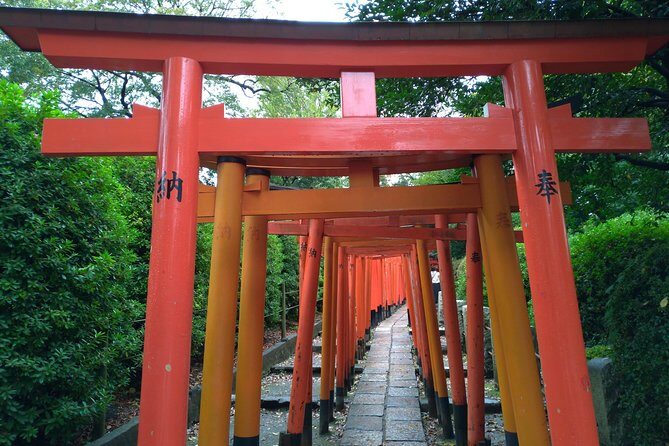
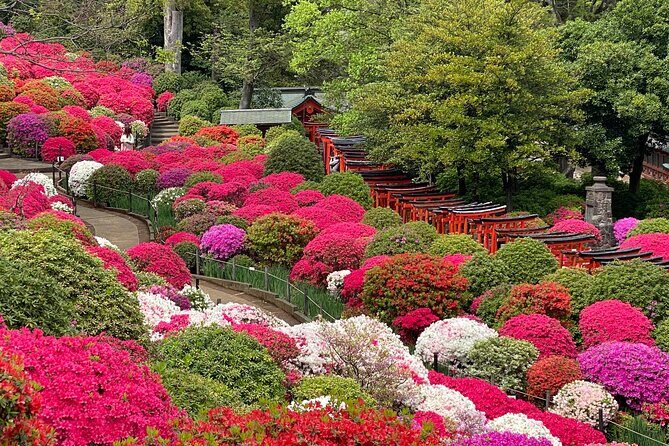
At Nezu Shrine, you’ll see a lot of red torii gates, similar in vibe to Fushimi Inari in Kyoto, but in Tokyo form. This is a straightforward win for photos, because the torii rhythm gives you depth and repeat angles.
But the real reason to go with a guide is etiquette. You’ll learn some basic shrine manners, so you can participate in a respectful way without guessing. That’s the kind of detail that makes the difference between a tourist snapshot and a meaningful visit.
The shrine stop is about 20 minutes with free admission. That gives you enough time for both: a calm look at the grounds and a few photos without feeling rushed.
Tip: keep your pace slow. Nezu’s best photos often come from walking the torii corridor at a steady rhythm, not from sprinting to the “main frame.”
Hebimichi back street daily life, then Yanaka Ginza for food and browsing
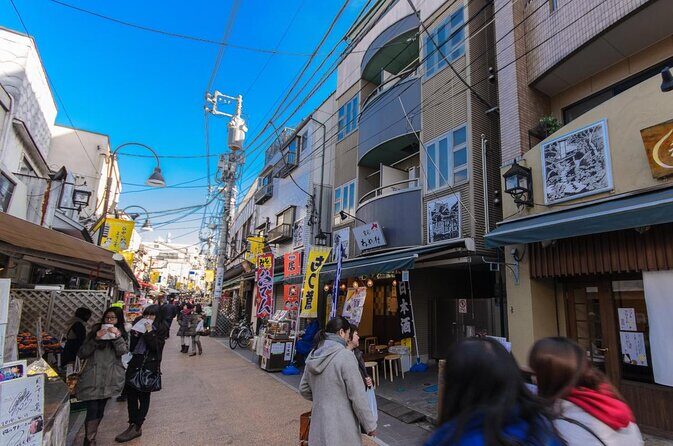
After Nezu, you’ll move into Hebimichi, a back street in the residential area. The point here isn’t a single landmark. It’s the feeling of everyday Tokyo: ordinary lanes, real housing, and the quiet texture of a neighborhood that isn’t trying to sell you anything.
This segment is short, but it can be one of the most memorable parts. You start to notice small contrasts with central Tokyo: different storefronts, different street widths, different speeds of life. That’s the Tokyo most people don’t plan to see.
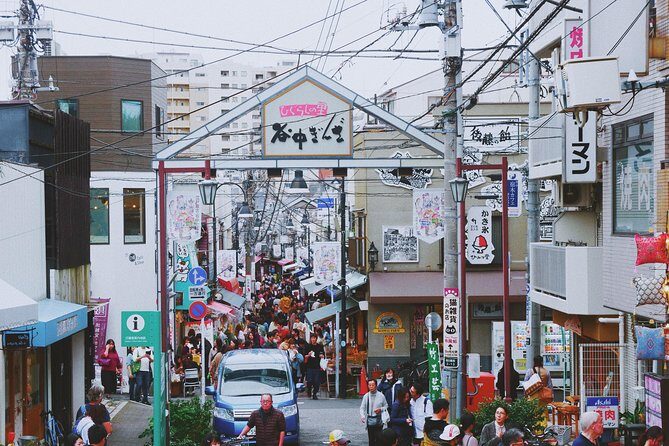
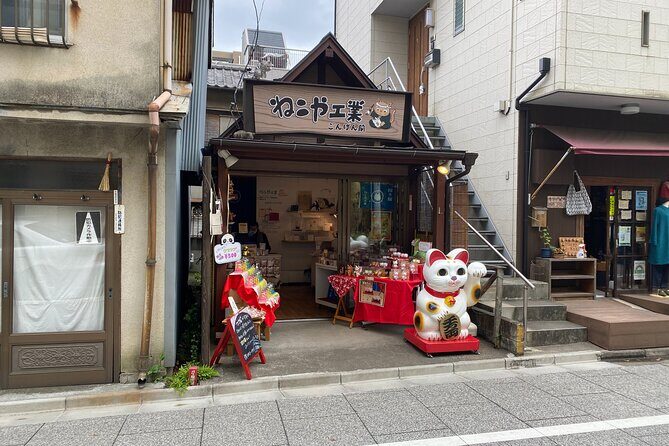
The tour then finishes at Yanaka Ginza Shopping Street (about 20 minutes). This is where you can snack and shop. The guide explains the shopping street and points out places for normal Japan lifestyle—plus you can try local foods and sweets. Food costs extra, so come with a little cash or card budget if you want to sample.
This end is practical: you’ve been walking and learning, and now you can reward that effort with something edible and small to take home.
Why $40 makes sense for this kind of walking tour
At $40 per person, this isn’t a “hop-on bus” price. You’re paying for guide time, local explanation, and a route that stitches together places you might otherwise misunderstand.
Here’s what you’re buying, in plain terms:
- Context at each stop: Tennoji and Enju-ji aren’t just scenic. The stories (1690 Yanaka Buddha, strong-legs wishes) turn them into memorable learning.
- Etiquette support: Yanaka Cemetery and Nezu Shrine are the kinds of places where a guide keeps you from doing the wrong thing out of confusion.
- A route with flow: starting near Nippori and ending in Yanaka Ginza means you don’t waste time backtracking or hunting for the next “should we go here?” moment.
- Small group comfort: max 10 people makes the whole experience feel personal enough to keep asking questions.
If you were to do this alone, you could piece it together with maps. But you’d lose a lot of what makes Yanaka click. You’d also likely spend time researching etiquette and local meaning on the fly.
So the value isn’t the attractions by themselves. It’s the translator layer—culture explained while you’re standing where it happens.
Small-group experience with English-speaking local guides
One of the strongest reasons to choose this tour is the human side. The tour is run by local experts who provide English-language guidance, and the group size stays small.
Guides such as Polina, Aya, Junko, Mami, Mei, Kiyo, Rei, and Mommi have shown up as names connected with clear explanations and steady pacing. Some guides also use helpful visual aids—like laminated photos—to make it easier to follow the story even when you can’t see everything at once.
Also, the guide is part of the neighborhood experience. Some guides live in the area, which helps them point out what you might otherwise miss—small details that make Yanaka feel specific, not generic.
Pace tip: this is structured but not rushed. Still, it’s a walk. Comfortable shoes are non-negotiable.
And if you’re visiting in hot weather, don’t underestimate it. Some people have dealt with intense heat and humidity, so plan for sun protection and water.
Who should book this Yanaka walking tour
Book it if you want Tokyo that feels quieter and more lived-in. This is a good fit if you like:
- religious sites with clear explanations (temples and shrines)
- cultural etiquette you can use in real places
- neighborhood walking with photo opportunities, but not photo-only sightseeing
- a small-group pace where you can ask questions
Skip it if you want a high-intensity “must-see highlights” tour packed with big-ticket landmarks. This is about interpretation, not scale.
Should you book the Old Quarter of Tokyo – Yanaka Walking Tour?
Yes, if your ideal Tokyo day includes side streets, older neighborhoods, and a guided read of how Japanese religious life shows up in daily space. The mix of Tennoji, Yanaka Cemetery, Nezu Shrine, and Yanaka Ginza gives you variety while keeping a consistent theme: understanding Yanaka as a real district.
I’d book it especially if you’re the type who likes getting the story behind what you see. The tour is also set up to be practical: small group size, a route with an easy finish in Yanaka Ginza, and a mobile ticket.
One final note: the experience depends on good weather. If rain is a major risk during your dates, check the forecast closely and have a flexible plan.
FAQ
How long is the Yanaka walking tour?
The tour runs for about 3 hours.
Where does the tour start and end?
It starts near Nippori Station (2 Chome-19 Nishinippori, Arakawa City, Tokyo) and ends at Yanaka Ginza (Yanaka, Taito City, Tokyo).
Is this a small-group tour?
Yes. The tour has a maximum of 10 travelers.
Is food included in the price?
Food, drinks, and personal expenses are not included. The tour ends in Yanaka Ginza, where you can try local foods and sweets, but you pay separately.
Are temple or shrine admissions included?
Some stops list free admission, while others note that admission is not included. For example, Tennoji Temple and Nezu Shrine are free, while places like Ueno-Sakuragi Atari and Enju-ji Temple say admission is not included.
Do I need mobile tickets or printed tickets?
A mobile ticket is provided.
Tokyo on Foot: More Walks



More Tours in Tokyo


More Tour Reviews in Tokyo



Fresh reviews from around Tokyo






Walking Tours, compared.
 ★ 5.0Tokyo Tsukiji Fish Market Food and Culture Walking TourFrom $993,184 reviews
 ★ 4.9Shinjuku Local Bar and Izakaya Guided Walking TourFrom $341,794 reviews
 ★ 5.0Tsukiji Fish Market Food and Walking tourFrom $301,724 reviews
 ★ 4.8Asakusa Walking Tour with Sensoji Temple VisitFrom $221,583 reviews
 ★ 4.9Tsukiji Fish Market Guided Walking TourFrom $221,397 reviews
 ★ 4.7Tokyo Castle & Imperial PalaceーShogun Walking TourFrom $231,068 reviews
 ★ 4.9Imperial Palace Japanese History Walking TourFrom $32987 reviews
 ★ 4.7Dark Side of Tokyo Shinjuku Red Light Walking TourFrom $29862 reviews
Browse the lists this tour appears in