
Reviewed · WALKING TOURS
Private Ueno Park Architecture Walking Tour
Ueno Park is more than museums and cherry blossoms. This private architecture walk makes you read the buildings like a story, with a guide pointing out the design decisions you would normally miss. I love the architecture-first focus, and I love that you get to walk between famous works without turning it into a long museum slog.
Two big wins for me: you’ll spend real time at standout sites (not quick photo stops), and you’ll have a guide who connects the dots between architects and style. My guide, Aki, also spoke excellent English and came well-prepared, which matters when architecture details get technical.
One thing to consider: this tour is aimed at architecture, not deep art or artifact viewing. If you mainly want to study paintings or treasures, you may feel slightly shortchanged on the museum content.
In This Review
- Key things to know before you go
- Why Ueno Park Architecture Feels Different Than the Usual Sightseeing
- Picking Your Departure: Morning vs Afternoon Makes a Real Difference
- Meeting at JR Ueno: Where You Start and What to Expect
- Stop 1: Le Corbusier’s National Museum of Western Art (The Main Event)
- Stop 2: Tokyo Bunka Kaikan by Kunio Maekawa (A Conversation Across the Street)
- Stop 3: The 1906 International Library of Children’s Literature (Old Stone + Renovation Lessons)
- Stop 4: Tokyo National Museum and Its Architectural Timeline
- How the Guide Turns Buildings Into Meaning (What Makes This Tour Work)
- Time, Pace, and What Your Feet Will Tell You
- Price and Value: Is $146.59 a Good Deal?
- Who This Tour Is Best For (and Who Should Skip It)
- Should You Book the Private Ueno Park Architecture Walking Tour?
- FAQ
- What is the duration of the Private Ueno Park Architecture Walking Tour?
- Is this tour private or does it join other people?
- Are there morning and afternoon departure options?
- Does the tour include museum admission?
- What does the tour include besides the guide?
- What is the cancellation window?
Key things to know before you go
- Private time with a pro guide just for your group, with a clear architecture route.
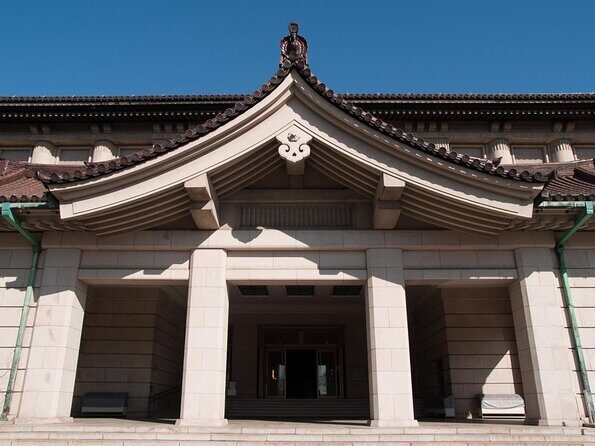
- Le Corbusier and Kunio Maekawa side-by-side in Ueno’s modern architecture conversation.
- Free entry stops mixed in so your money and time go further.
- Museum visits include major buildings and an architectural timeline approach at Tokyo National Museum.
- A coffee-and-drinks pause to keep the walk comfortable for 3.5 hours.
Tokyo at walking pace, a few more ways
- Tokyo Tsukiji Fish Market Food and Culture Walking Tour★ 5.0 · 3,184 reviews
- Tokyo: Shinjuku Local Bar and Izakaya Guided Walking Tour★ 4.9 · 1,794 reviews
- Tokyo: Tsukiji Fish Market Food and Walking tour★ 5.0 · 1,724 reviews
Why Ueno Park Architecture Feels Different Than the Usual Sightseeing
Most people come to Ueno Park for the museums. That’s fair. But the park is also a living catalog of Japanese and international architecture, where modern design and older, institutional buildings sit close enough to compare.
On this tour, you’re not just looking at facades. You’re learning how architects used materials, light, and proportions to solve real problems. You also get context for why these buildings were important—so the structures stop feeling random and start feeling intentional.
And yes, Ueno can be gorgeous in spring. Even if you’re not there for cherry blossoms, you still get a park setting that makes walking feel easy instead of like a ticket line marathon.
Picking Your Departure: Morning vs Afternoon Makes a Real Difference
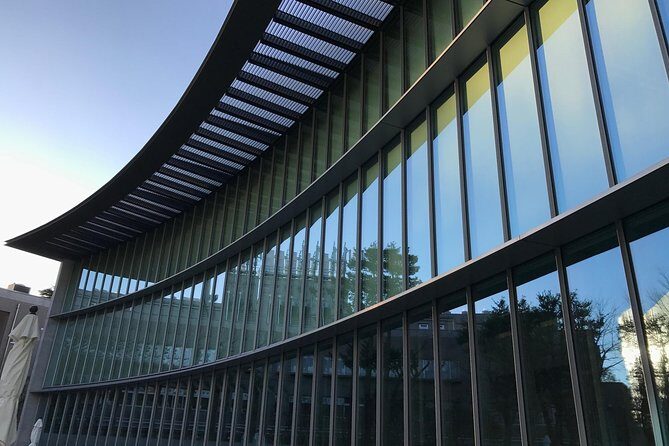
You can choose a morning or afternoon start, which is a bigger deal in Tokyo than it sounds like. If you go earlier, you often get calmer air and less crowd pressure around major buildings. If you go later, you may catch softer light on stone and concrete surfaces—helpful when the guide is pointing out design and texture.
The tour runs about 3 hours 30 minutes, and that timeframe works well for architecture because you have enough time to absorb details without feeling trapped inside.
Meeting at JR Ueno: Where You Start and What to Expect
The tour begins at 7-chōme-7-7 Uenokōen, Taito City and ends near a VIEW ALTTE 公園口券売機横 meeting area around 7-chōme-1-1 Ueno. The meeting/end point is tied to the JR Ueno Station area, so you can easily connect it with the rest of your day.
No hotel pickup or drop-off is part of the setup. That’s normal for walking tours in central Tokyo, but it means you should plan to arrive a few minutes early and walk in on your own.
Also, the route is described as suitable for people with moderate physical fitness. Expect a steady pace rather than leisurely strolling, especially when you’re moving between separate buildings.
Stop 1: Le Corbusier’s National Museum of Western Art (The Main Event)
The first stop is the National Museum of Western Art, a museum designed by Le Corbusier. It’s listed as a UNESCO World Cultural Heritage Site for its modern architectural value (listed in 2016), so you’re not only seeing an important museum—you’re seeing an important design concept made physical.
What I like about how this stop gets handled: you’re shown the building in a way that helps you understand why it looks the way it does. Le Corbusier’s work often makes people think it’s just clean lines and strong geometry. The guide helps translate that into practical design language: structure, proportion, and a kind of clarity that affects how you experience space.
Ticket note: The tour overview says admission to the National Museum of Western Art is included. But the stop-by-stop details also state the admission ticket is not included for this stop. So when you book, double-check what you personally need to pay at the museum counter (or what’s already covered on your mobile ticket).
Time at this stop is about 40 minutes, which is just enough for architecture impressions without turning into a full museum day.
More private options with your own guide



Stop 2: Tokyo Bunka Kaikan by Kunio Maekawa (A Conversation Across the Street)
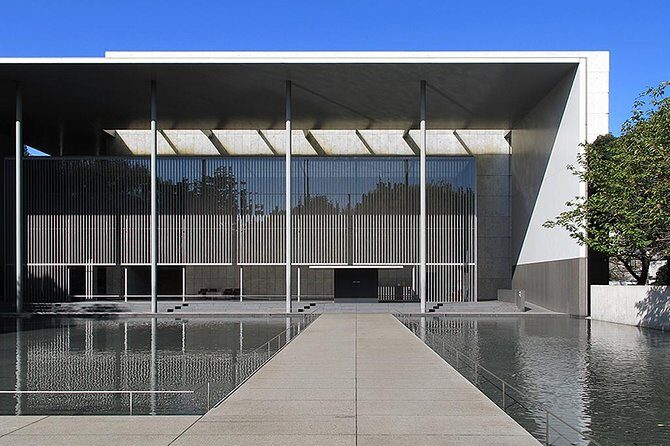
Next is Tokyo Bunka Kaikan, designed by Kunio Maekawa. The interesting detail here is the placement: it’s located opposite Le Corbusier’s museum, like two buildings are having an architectural conversation.
Maekawa is part of a larger story too. The guide frames him as one of Le Corbusier’s three local apprentices, which gives you a shortcut to understanding the style connection. When you look at the two sites back-to-back, you can start seeing how ideas travel and get reworked locally.
This stop is short—about 15 minutes—but it’s valuable because it changes your perspective fast. Instead of seeing one masterpiece in isolation, you see it in dialogue.
Good news: this stop is free.
Stop 3: The 1906 International Library of Children’s Literature (Old Stone + Renovation Lessons)
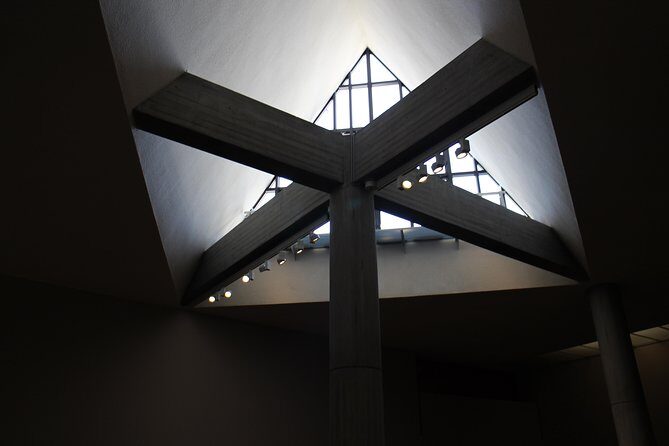
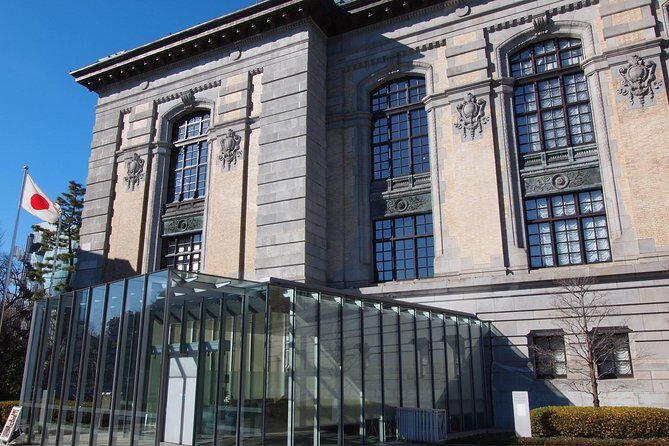
Then you hit the International Library of Children’s Literature, described as the oldest building in Ueno Park, constructed in 1906. This is where the tour does something smart: it doesn’t treat architecture as only modern design.
You’ll have time—about 40 minutes—to notice how the building has been preserved and renovated over time. That matters because restoration is a form of architecture too. It’s where you learn that “keeping” something isn’t passive. It’s active decisions about what to protect, what to update, and how to keep a building usable.
The description also points to newly built work next to the older structure, including an arched addition element. That kind of contrast is exactly what you want on this tour: a chance to compare eras and see how design choices evolve while respecting the original.
Admission here is free, which helps keep the overall value strong.
Stop 4: Tokyo National Museum and Its Architectural Timeline
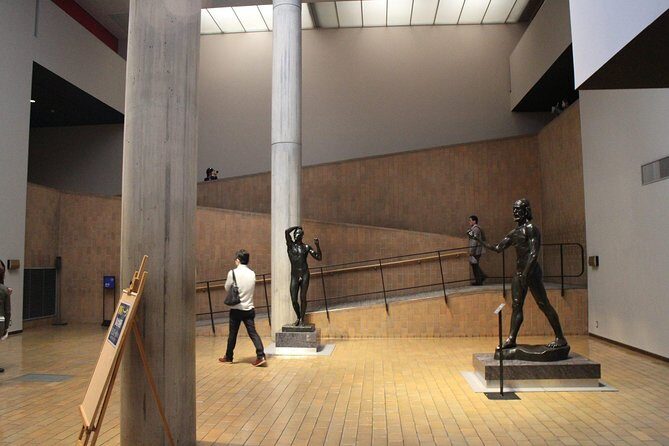
Tokyo National Museum is the final anchor. Here, the guide helps you look at the complex as a timeline rather than a pile of buildings. You’ll admire four major architectural works, including Hyokei-kan, Hon-kan, Toyo-kan, and the Gallery of Horyuji Treasure—with a span described from 1908 to 1999.
This stop is about 30 minutes, which means you’re not doing an all-day museum marathon. Instead, you’re sampling key buildings in a way that teaches you what different architectural periods look like in practice.
One practical note: the overall included list says the tour includes the Tokyo National Museum entrance fee (1000 yen). The stop-by-stop section marks this stop’s admission as not included, so again, it’s worth confirming coverage before you go. Still, the presence of an explicitly listed 1000 yen fee suggests that Tokyo National Museum entry is handled for you in many cases.
If you only do one museum while in Ueno, this is the one to attach to a guide who cares about architecture, because the building lineup itself is the story.
How the Guide Turns Buildings Into Meaning (What Makes This Tour Work)
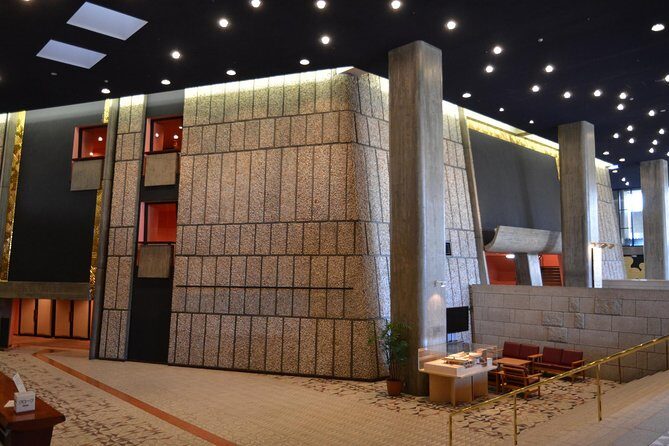
The strongest part of the experience is the way the guide interprets what you see. A lot of tours point. This one teaches you how to notice.
I found the architecture-only orientation to be a real plus. One review experience highlighted that the tour stays focused on architecture rather than museum collections. That aligns with what you should expect. The museum interiors can be part of the atmosphere, but the main event is the built design.
Also, Aki being well-prepared and speaking excellent English is not a small detail. When you’re talking about style and form, quick explanations help you keep pace, especially when you’re outdoors and inside in short sequences.
The best mindset for this tour: don’t rush your photos. Pause for a minute, watch how the building edges meet, then listen for what the guide says about the design logic.
Time, Pace, and What Your Feet Will Tell You
This is a walking tour with indoor stops, so the pace feels “structured.” You’re usually moving every segment and spending a dedicated block of time at each building.
Expect about 3.5 hours total, with roughly:
- A longer museum-focused block first
- Short architecture comparison at the second stop
- A historical building and renovation/contrast focus third
- A museum complex architecture timeline finish
If you like to linger in shops or take slow breaks, you might want to keep that for after the tour ends—otherwise the tour flow may feel a little tight.
Price and Value: Is $146.59 a Good Deal?
At $146.59 per person for a private 3 hours 30 minutes tour, you’re paying for several things at once:
- a private, professional guide
- time-efficient museum building access
- included drink pause
- and a route designed around architecture rather than general sightseeing
Is it expensive? In Tokyo, yes, it’s not the budget option. But it’s also not a random architecture chat. You’re paying to get the right explanations at the right buildings and to avoid guesswork on what matters.
Where the value gets stronger is the mix of paid and free stops: you spend time in important sites, but you’re not paying entrance fees for every single stop. And because it’s private, the guide can pace your group instead of forcing a one-size-fits-all group walk.
If you’re traveling as a pair or small group, private tours can feel much more reasonable because the cost is shared. If you’re alone, it’s still worthwhile when architecture is your priority and you want a guided plan.
Who This Tour Is Best For (and Who Should Skip It)
This works best if you:
- love architecture, design details, and comparisons between styles
- want a guided route through Ueno without building your own itinerary
- like museum buildings as much as museum contents
It might not be the best fit if:
- you mainly want to study art collections or artifacts for hours
- you prefer a more flexible, wandering style with no structured stops
Also, it’s a strong choice for first-time Ueno visitors who want to understand the park beyond “the big museums,” especially because the tour connects major architects such as Le Corbusier and Kunio Maekawa with a wider architectural conversation mentioned in the tour theme.
Should You Book the Private Ueno Park Architecture Walking Tour?
I’d book it if architecture is the core reason you’re in Tokyo. The tour’s biggest advantage is focus: you get a guided route built around specific landmark buildings, with the right time at each stop to absorb what makes them significant.
Before you click confirm, do one practical check:
- confirm which museum admissions are actually covered for the National Museum of Western Art and Tokyo National Museum, since the description and stop notes give slightly different signals.
Also, reserve in advance if you can. It’s described as commonly booked about 44 days ahead, which usually means popular time slots can disappear.
If you want Ueno Park in the background while you chase paintings and objects, you’ll probably be happier with a standard museum tour. But if you want to understand the architecture behind the experience, this private route is one of the more sensible ways to do it in a short amount of time.
FAQ
What is the duration of the Private Ueno Park Architecture Walking Tour?
It’s about 3 hours 30 minutes.
Is this tour private or does it join other people?
It’s private. Only your group participates.
Are there morning and afternoon departure options?
Yes. You can choose a morning or afternoon departure to fit your schedule.
Does the tour include museum admission?
The tour description indicates admission to the National Museum of Western Art and Tokyo National Museum. The stop details list tickets differently for each stop, so it’s smart to confirm what is included for the National Museum of Western Art and Tokyo National Museum when you book.
What does the tour include besides the guide?
It includes a professional guide, entrance fee coverage for Tokyo National Museum as listed, and a cozy pause with drinks along the way.
What is the cancellation window?
You can cancel for free up to 24 hours in advance for a full refund.
Tokyo on Foot: More Walks




More Tours in Tokyo




More Tour Reviews in Tokyo




Fresh reviews from around Tokyo






Walking Tours, compared.
 ★ 5.0Tokyo Tsukiji Fish Market Food and Culture Walking TourFrom $993,184 reviews
 ★ 4.9Shinjuku Local Bar and Izakaya Guided Walking TourFrom $341,794 reviews
 ★ 5.0Tsukiji Fish Market Food and Walking tourFrom $301,724 reviews
 ★ 4.8Asakusa Walking Tour with Sensoji Temple VisitFrom $221,583 reviews
 ★ 4.9Tsukiji Fish Market Guided Walking TourFrom $221,397 reviews
 ★ 4.7Tokyo Castle & Imperial PalaceーShogun Walking TourFrom $231,068 reviews
 ★ 4.9Imperial Palace Japanese History Walking TourFrom $32987 reviews
 ★ 4.7Dark Side of Tokyo Shinjuku Red Light Walking TourFrom $29862 reviews
Browse the lists this tour appears in