
Reviewed · SUSHI MAKING CLASSES
Private Sushi Making Tokyo Roll and Authentic Japanese Sushi
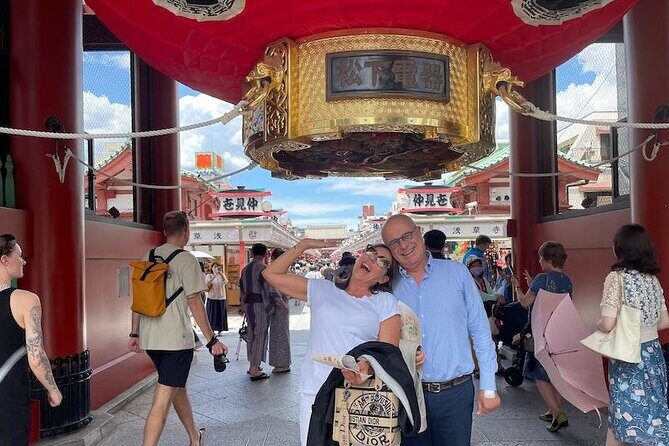
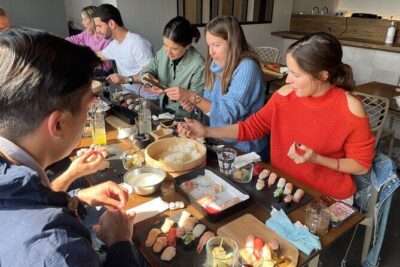
Sushi with a view and real coaching. This private class puts you in the heart of Asakusa, just steps from Sensoji Temple, where you learn by doing, not by watching. I like that it’s designed for real beginners: step-by-step guidance in English, plus cultural context as you work at the station.
You’ll get two big wins from this experience. First, you learn how to make both roll sushi and nigiri, not just one style. Second, the payoff is practical: you eat the sushi you create, instead of paying for a hands-off demonstration.
One thing to consider: this costs $1,300.72 per group (up to 15), so your value depends on how many people you’re splitting it with. Also, there’s no hotel pickup or drop-off, so you’ll want to plan your own route to the meeting point near public transportation.
In This Review
- Key highlights at a glance
- Asakusa, steps from Sensoji Temple
- What you’ll make: Tokyo rolls, nigiri, and temari moments
- The instructors: patient teaching in English (Yui, Masaki, Ayu)
- A tight 1 hour 40 minutes with a real ending
- Eating your own sushi: the part you’ll remember
- Price and value: $1,300.72 per group, up to 15
- Logistics that matter (and the ones you can ignore)
- Who should book this class in Tokyo?
- Before you go: set yourself up to learn
- Should you book Sushi Making Tokyo?
- FAQ
- How long is the sushi making class?
- Where is the meeting point?
- Is this a private tour or shared class?
- Do I need prior sushi making experience?
- What’s included in the price?
- What is the cancellation policy?
Key highlights at a glance
- Asakusa location near Sensoji Temple: easy to pair with classic sightseeing before or after
- Roll sushi + authentic nigiri: learn two core styles in one session
- English-speaking instructors: smooth for international visitors, including families
- Eat your own sushi: no mystery plate of someone else’s work
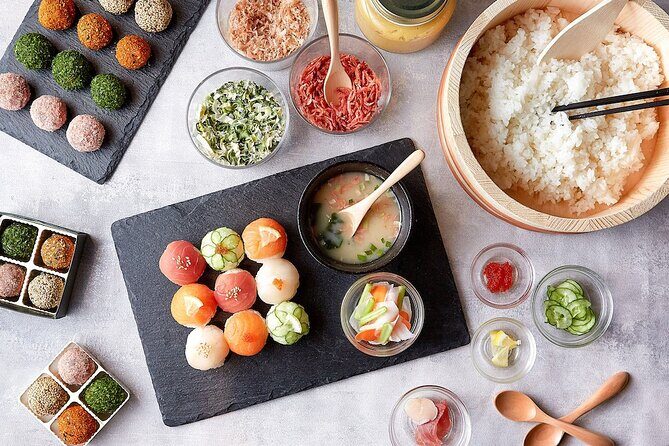
- Temari sushi and photo time: a fun extra touch during the session
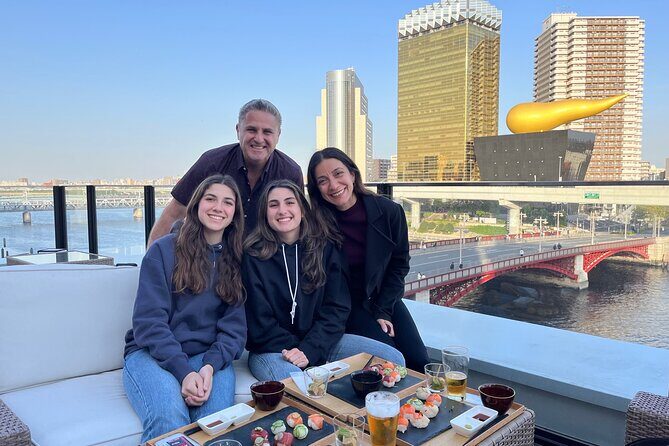
- A classroom with a great view: multiple comments mention Sumida River scenery
More private options with your own guide
- Tokyo 6hr Private Tour with Government-Licensed Guide★ 5.0 · 3,902 reviews
- Private Tour to Mt. Fuji and Hakone (Fully Licenced Operator)★ 5.0 · 1,910 reviews
- Tokyo Customized Private Tour (Must See Places in 1 Day)★ 5.0 · 1,499 reviews
Asakusa, steps from Sensoji Temple
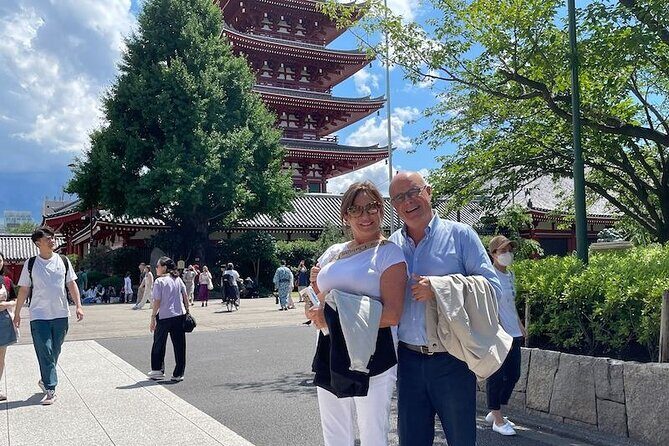
The best part about this class is where it lands you: Asakusa. You meet at 2-chōme-17-9 Kaminarimon, Taito City, Tokyo 111-0034, and the location is described as just steps from Sensoji Temple. That matters because it turns the class into part of your day, not a far-off side quest.
Asakusa is also a smart choice for food experiences. You’re not only in Tokyo—you’re in a neighborhood where Japanese daily life still feels close to the street. For you, that means you can treat this class like a guided reset button: arrive hungry and curious, learn the fundamentals, and then leave with skills you can talk through at dinner for days.
A practical note: there’s no hotel pickup, so you’ll want to be comfortable navigating using public transportation. The meeting point is near public transportation, which keeps this from feeling like a hassle, but it still means you should plan your arrival timing carefully so you’re not rushing.
What you’ll make: Tokyo rolls, nigiri, and temari moments
This is a sushi making class focused on two things: making sushi rolls and shaping authentic Japanese nigiri. The structure is step-by-step and beginner-friendly, and that’s exactly what you want if sushi feels intimidating.
Here’s what the class is built around:
- You’ll learn how to prepare and assemble roll sushi (the maki-style format).
- You’ll also learn how to make nigiri, which is a different skill set—less “rolling,” more careful shaping and topping.
- You’ll get cultural insights as you go, so it feels more like learning a craft than just following a recipe.
- Then you eat your creations at the end of the session.
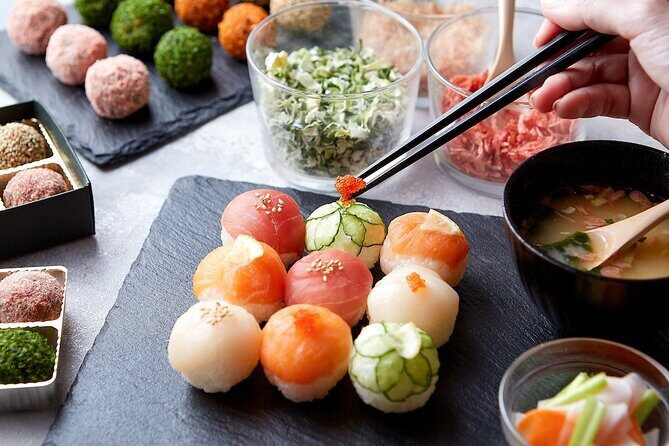
One of the nicer surprises from the experience descriptions and student feedback is that there’s fun variety. Comments include learning temari sushi with Ayu, which suggests you may get at least one extra sushi style beyond standard rolls and nigiri. Temari-style sushi is generally more hands-on and playful, so it’s a great momentum boost during the class.
Also, you should expect photo opportunities. The activity is described as allowing you to take photos after learning techniques and eating. That’s not just for social media. It’s a memory tool—when you get home and talk about the trip, you’ll have something real to show for the time spent.
The instructors: patient teaching in English (Yui, Masaki, Ayu)
What makes or breaks cooking classes in a foreign language is pacing. This one is designed with English-speaking instruction, and the feedback highlights how smoothly that works.
I’m glad they name the instructors in the kind of details that actually matter. In comments, Yui is described as fun to talk with and great at advice for making sushi pretty, and the fish is mentioned as fresh and tasting fantastic. Another review praises Masaki for being patient, enthusiastic, and joyful, with an emphasis on clear guidance. Ayu is mentioned for teaching temari sushi and for helping the class work for families.
Even without memorizing who taught you, the pattern is consistent: the staff don’t just correct mistakes—they encourage you to finish well. For you, that translates into fewer stalled moments and more confidence at the station, especially if you’ve never shaped rice or built a roll before.
A tight 1 hour 40 minutes with a real ending
The class runs about 1 hour 40 minutes. That’s a sweet spot. Long enough to learn more than one technique, short enough that you’re not eating your whole afternoon.
Because it’s a private tour/activity, only your group participates. That can be a big deal if you’re traveling with kids, friends, or a small team—questions don’t get lost in a crowd, and the instructor can adjust the pace when someone needs a slower explanation.
You also end where you started—back at the meeting point. That helps you keep your day simple. No extra transfers after you’re done, and it’s easier to connect this with other Asakusa plans.
The experience uses a mobile ticket, which is handy if you’re already juggling trains, maps, and reservations on your phone. You’ll likely want to have your ticket ready when you arrive so check-in goes fast.





Eating your own sushi: the part you’ll remember
Plenty of tours feed you. This one makes the meal part of the learning process.
After the class techniques and cultural notes, you enjoy the sushi you made yourself. That sounds obvious, but it’s where value shows up. When you build the roll, shape the nigiri, and then take your first bite, you connect the taste to the method. It sticks.
Also, at least some feedback explicitly calls out freshness—one comment mentions fresh fish tasting fantastic. While you shouldn’t assume the exact fish variety every time, the class is clearly positioned as an authentic Japanese sushi experience rather than a low-effort tourist workshop.
There’s another practical benefit: you don’t have to plan a separate meal. Since ingredients of the cooking class and the meal are included, this can replace one eating plan in your itinerary.
And yes, you’ll want to take a few photos before you start eating. Once you begin, the sushi disappears fast.
Price and value: $1,300.72 per group, up to 15
Let’s talk money in plain terms.
The price is $1,300.72 per group (up to 15). That means the per-person value depends heavily on group size. If you’re a larger group, the cost per head drops quickly. If you’re only booking for two or three, the same number can feel steep.
So how do you judge whether it’s worth it for you?
Here’s what you’re paying for, based on the experience details:
- An English-speaking instructor guiding you step by step
- Ingredients included for both making and eating
- A private setup where only your group participates
- Learning multiple sushi styles (roll sushi and nigiri, plus temari based on instruction content)
- A meal that’s part of what you produced
If you compare this to:
- hiring a private guide just to explain sushi theory, or
- taking a general cooking class that doesn’t guarantee a sushi-focused outcome,
this class has a clear built-in win: you finish with food you made, not just knowledge.
If you’re a solo traveler or a couple, the best way to make it feel like value is to treat it as an experience. Not a bargain. A craft moment. For first-timers, sushi technique instruction plus a meal can be hard to replicate elsewhere at the same convenience in Tokyo.
If you’re traveling with family, this can be a particularly good use of time. The class is described as beginner-friendly, and feedback mentions it working well for families, including a mother and daughter experience.
Logistics that matter (and the ones you can ignore)
This experience keeps logistics fairly simple, but there are a few things you should plan for:
- No hotel pickup/drop-off: you handle getting to the meeting point.
- Mobile ticket: have it accessible on your phone.
- Near public transportation: choose a route that gets you there without last-minute stress.
- Private group: only your group joins, so you’re not competing for attention.
- Service animals allowed: if that matters for your household, you’re covered.
The duration is fixed at about 1 hour 40 minutes, so build your arrival timing around that. In a place as tight as Asakusa, being 20 minutes late can shrink the time you have to learn.
Who should book this class in Tokyo?
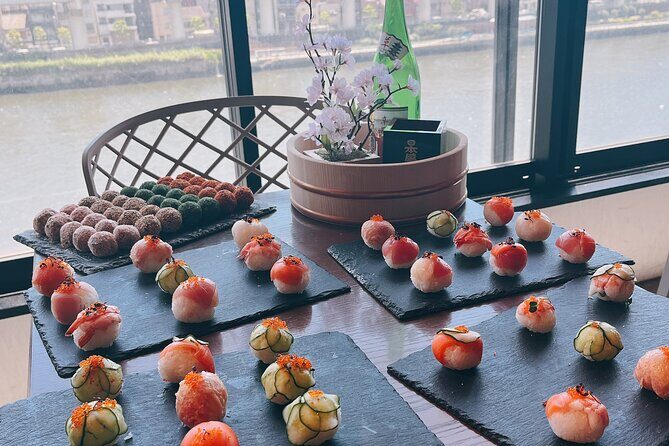
This sushi experience fits best if you want a hands-on food activity with a clear payoff.
You’ll likely enjoy it if:
- you’re a beginner who wants instruction in English
- you want to make both rolls and nigiri (not just one)
- you value eating what you make
- you’re traveling with family or a group where a private class feels worth it
- you’re already in Asakusa and want a smart, close-by activity near Sensoji
You might consider another option if:
- you mainly want a casual sushi meal and don’t care about technique
- you’re highly price-sensitive and traveling as a very small group where cost per person stays high
- you don’t want to handle finding the meeting point on your own
Before you go: set yourself up to learn
Even with beginner-friendly guidance, you’ll get more out of the class if you show up ready.
Here’s what helps, based on the format of hands-on cooking:
- Wear something comfortable. You’ll be working at a station for a chunk of the session.
- Come hungry but not stuffed. You’ll be making sushi and then eating it.
- Be ready to ask questions in English. If you don’t know what to ask, start with how to improve the roll shape or nigiri presentation—those are common points of feedback.
- Take a quick photo of your finished piece(s) before you eat. You’ll want that memory.
If you’re the kind of traveler who likes doing one meaningful thing well, this class fits.
Should you book Sushi Making Tokyo?
Here’s my honest take: I think this is a strong book if you’re in Asakusa and you want an activity with a satisfying, edible outcome.
Book it if you want:
- roll sushi + nigiri instruction in English
- a private, beginner-friendly format
- a meal that’s part of your work
- guides like Yui, Masaki, and Ayu (names that show up for a reason)
Maybe skip it if:
- you’re only looking for a sit-down sushi meal
- you’re traveling with too few people for the group price to feel fair
- you’d rather have a more flexible schedule than a set 1 hour 40 minutes
If you fall somewhere in the middle—especially if you love food and want real skill, not just a photo—this is one of those Tokyo experiences that pays you back every time you talk about the trip.
FAQ
How long is the sushi making class?
It runs about 1 hour 40 minutes.
Where is the meeting point?
The meeting point is Sushi Making Tokyo No 1 Cooking Class in Japan, 2-chōme-17-9 Kaminarimon, Taito City, Tokyo 111-0034, Japan.
Is this a private tour or shared class?
This is a private tour/activity, so only your group will participate.
Do I need prior sushi making experience?
No experience is needed. The class is beginner-friendly and guided in English.
What’s included in the price?
The experience includes an English speaking instructor and the ingredients of the cooking class and meal.
What is the cancellation policy?
You can cancel for a full refund if you cancel at least 24 hours before the experience starts. If you cancel within 24 hours of the start time, the amount you paid will not be refunded.
Just Your Group: Private Options



More Tour Reviews in Tokyo



Fresh reviews from around Tokyo






Sushi Making Classes, compared.
 ★ 5.0Sushi Making Tokyo Roll and Authentic Japanese Sushi ClassFrom $593,971 reviews
 ★ 5.0Tokyo Sushi Making Class in Tsukiji with Professional ChefFrom $491,177 reviews
 ★ 5.0Tsukiji Fish Market Guided Tour and Sushi Making with Pro ChefFrom $104775 reviews
 ★ 4.9Tsukiji Fish Market Sushi Making Class with Pro ChefFrom $63506 reviews
 ★ 5.0Tokyo Tsukiji Fish Market Tour and Sushi Making LessonFrom $99390 reviews
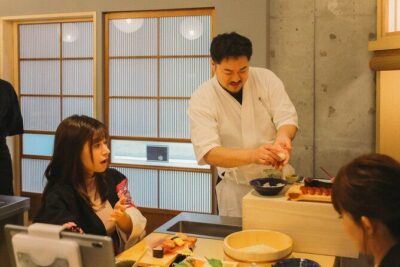 ★ 5.0Popular Sushi Making Class near Tokyo TowerFrom $87229 reviews
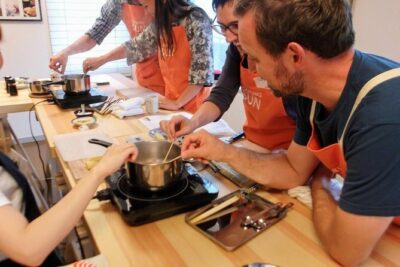 ★ 5.03-Hour Small-Group Sushi Making Class in TokyoFrom $72166 reviews
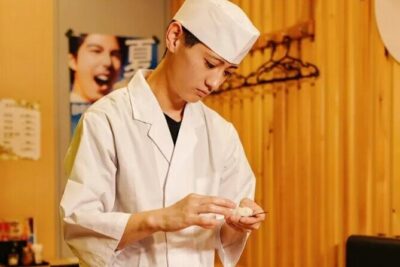 ★ 5.0Tokyo Sushi Making Experience & Japanese Cooking ClassFrom $59150 reviews
Browse the lists this tour appears in