
Reviewed · HARAJUKU TOURS
Private Harajuku Omotesando Architecture Tour
Tokyo’s architecture here feels personal. This private tour walks you through Harajuku and Omotesando with a strong focus on photo-ready design and clear explanations of why this stretch pulls in world-class stores and architects. I love how the route pairs big-name landmarks with smaller side streets, so you don’t just see facades—you understand the vibe behind them. I also love that the guide can adapt to your questions, using real architectural context instead of generic sightseeing.
One possible drawback: it’s about 3.5 hours of walking, and you’ll want comfortable shoes and a willingness to pause often for photos. If you prefer short stops with minimal walking, this may feel like a brisk pace rather than a relaxed stroll.
In This Review
- Key Things You’ll Notice on This Omotesando Tour
- Why Omotesando Feels Different from Other Shopping Streets
- Meeting at Meiji Shrine’s Big Entrance Area: Start with a Great Visual Warm-Up
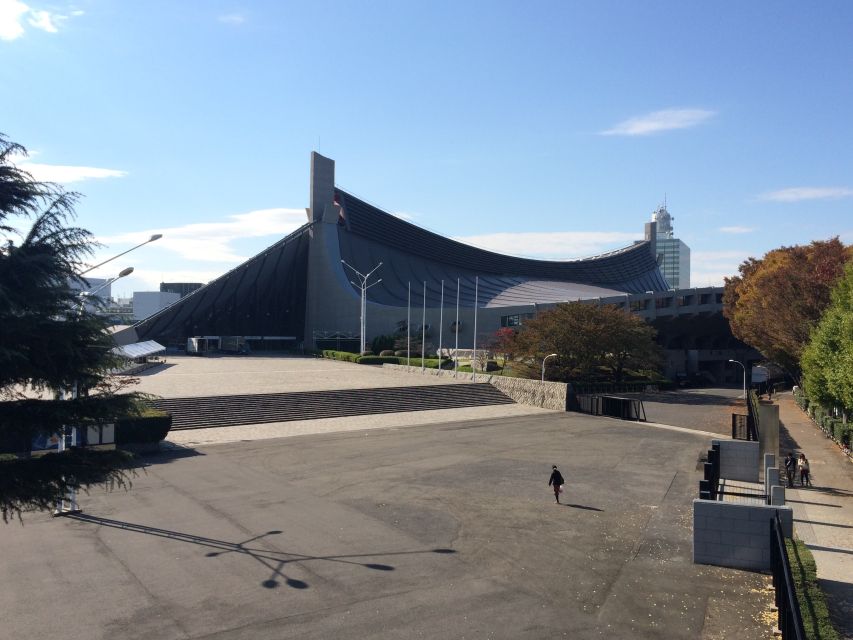
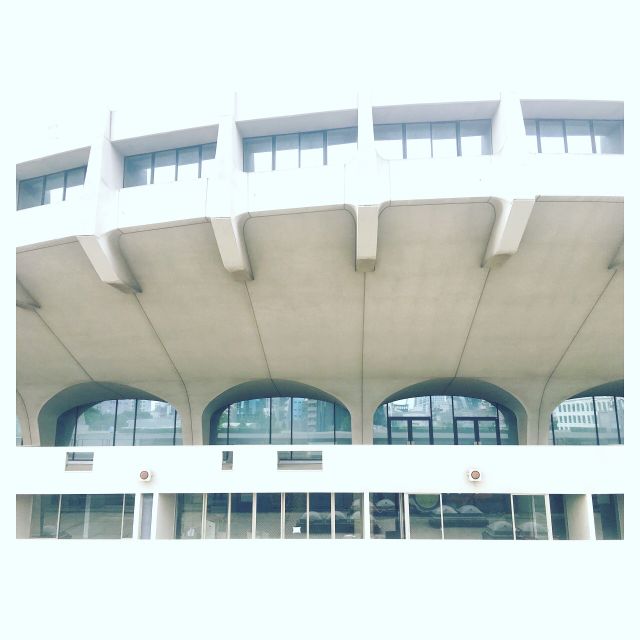
- First Photo Stretch: Yoyogi Gymnasium from a Distance
- Designer-Store Modernism: Iceberg, Dior, Louis Vuitton, Sunny Hills, Prada
- The Side Trip into Back Streets: Where Omotesando Changes Its Face
- A Night Tour for Different Lighting and Different Meaning
- Break Time with Drinks: Keep Your Feet Happy (and Your Photos Sharp)
- Pace, Walking, and Who This Tour Fits Best
- Price and Value: Is $129 Worth It?
- Practical Tips Before You Go
- Should You Book This Private Harajuku Omotesando Architecture Tour?
- FAQ
- How long is the Private Harajuku Omotesando Architecture Tour?
- Where do we meet for the tour?
- Is the tour guide English-speaking?
- What is included in the price?
- Are meals included?
- Does the tour include transportation to and from Harajuku Omotesando?
- Is the tour wheelchair accessible?
- Can I take the tour at night?
Key Things You’ll Notice on This Omotesando Tour
- Jingubashi to Meiji Shrine approach sets the stage, right at the start of the route
- Yoyogi Gymnasium in the distance helps you get your bearings before the designer stops
- Designer-store architecture stop list includes the Iceberg, Dior, Louis Vuitton, Sunny Hills, and Prada
- Backstreet detour shows how the area changes once you step off the main drag
- Night timing changes how the buildings read, with a different mood and lighting
More colour: other Harajuku wanders
- Tokyo Go-Kart Tour Shibuya-Harajuku-Shinjuku (*IDP Required)★ 5.0 · 217 reviews
- Tokyo: Guided Go Kart Tour from Harajuku to Shibuya Crossing★ 4.5 · 166 reviews
- Shibuya & Harajuku: Hidden Gems & Highlights Private Tour★ 4.7 · 139 reviews
Why Omotesando Feels Different from Other Shopping Streets
Omotesando isn’t trying to be the same kind of shopping street as places like Ginza. Yes, you’ll see high-end brands, polished storefronts, and sleek streets—but what makes it worth a dedicated architecture tour is the way the buildings themselves behave like the main characters.
This is a corridor where design is part of the daily routine. Stores aren’t just selling products. Their buildings are showing off: clean lines, surprising shapes, and facades built to be looked at from multiple angles. When you walk with a licensed English-speaking guide, you start noticing the small decisions—materials, proportions, how entrances meet the sidewalk—that explain why so many famous architects and designer labels want to be here.
And you’ll get more than “pretty building pictures.” The guide helps you connect the dots between the architecture and the culture: Harajuku’s youthful energy, Omotesando’s fashion polish, and the way side streets reveal everyday Tokyo life behind the branding.
Meeting at Meiji Shrine’s Big Entrance Area: Start with a Great Visual Warm-Up
Your tour starts at a cafe called CAFÉ Mori no Terrace, in front of the open space near the large wooden entrance gate of Meiji Shrine. This is a smart launch point because you get contrast right away: the calm, forest-edge feel of Meiji Shrine on one side, then the urban energy that quickly takes over as you move toward Harajuku and Omotesando.
From there, you’ll begin around Jingubashi bridge in the Meiji Shrine area. Even if you’re not a shrine expert, this start helps you understand the “why” of the area: Tokyo’s major modern fashion zone isn’t floating in a vacuum. It grew up next to big cultural landmarks, and the pedestrian experience matters.
Practical tip: plan on taking photos right near the start. The lighting and angles around the shrine area give you a clean “before you hit the boutiques” frame for your trip.
First Photo Stretch: Yoyogi Gymnasium from a Distance
Early on, you’ll see Yoyogi Gymnasium from a distance as you’re moving through the area. You’re not doing a full stadium visit; instead, the point is orientation. That sightline gives you scale—this neighborhood isn’t just about small storefront architecture. It’s part of Tokyo’s modern landmark map.
This is also where a good guide earns their fee. If you’re standing in the right place and you know what you’re looking at, you can pick out how buildings align with the street and how long views shape the feel of the walk. You’ll be better prepared for what comes next, when the designer-store blocks start stacking up close to the sidewalk.
Designer-Store Modernism: Iceberg, Dior, Louis Vuitton, Sunny Hills, Prada
This is the core of the tour: a stretch of contemporary and emerging architecture tied to major fashion and design brands. You’ll pass notable buildings including The Iceberg, Dior, Louis Vuitton, Sunny Hills, and Prada—and you’ll do it in a way that makes the architecture easier to remember than a random shop crawl.
Here’s how I’d think about these stops when you’re on the street:
- Each storefront is designed to be seen in passing, but also to reward a slower look. If you hold your phone camera for a few seconds longer, you start catching the details the first glance misses.
- The guide helps you read the buildings like structures, not just logos. You’ll get explanations about form, style choices, and why the location works for designers and architects.
- You’ll learn what separates Omotesando from other high-end shopping zones. In places like Ginza, you often get a more classic streetscape feel. In Omotesando, the architecture tends to feel more experimental in how it presents itself to pedestrians.
This matters because architecture tours can turn into look-and-go photo time. Here, you get context, and that makes your photos better later. Even if your photos are imperfect, you’ll remember what you saw and why it was designed that way.
One more value point: some guides are former professionals in city planning and design, and the tour reflects that seriousness. For example, one guide profile includes a retired urban planner who studied at MIT and can answer questions about architects, including references to major international design recognition. If you ask “why this style here,” you’ll usually get a real answer, not a shrug.
More private options with your own guide



The Side Trip into Back Streets: Where Omotesando Changes Its Face
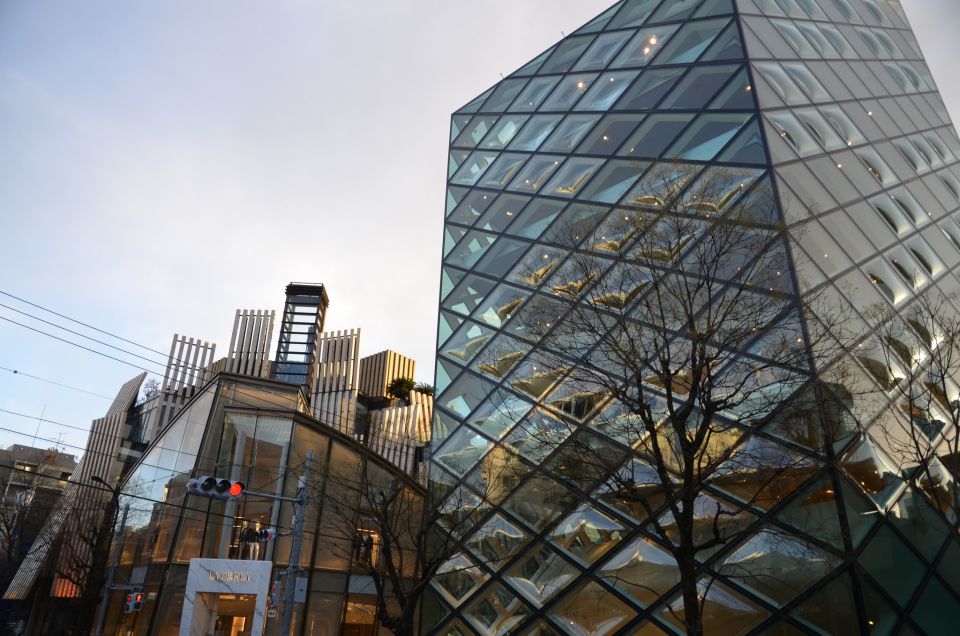
Main Omotesando can look like a runway. The tour also takes you into back streets so you can see another version of the area—one that feels more like real Tokyo day-to-day life, rather than a showroom.
This is the part I’d call the “breathing room” in the experience. The backstreet segment helps you understand the neighborhood as a place people live in and move through, not just a place people visit for shopping. You might notice different storefront rhythms, different building scales, and little everyday scenes that don’t scream brand partnerships.
You’ll also get a chance to talk with the guide about what you’re seeing. I like this style of tour because it doesn’t only point out famous structures. It also helps you read the less dramatic architecture, so the whole walk becomes coherent.
If your guide is the type to go the extra mile, you could also pass through lively nearby lanes like Cat Street—the kind of area that’s fun to return to on your own after the tour, because you’ll already know what makes it special.
A Night Tour for Different Lighting and Different Meaning
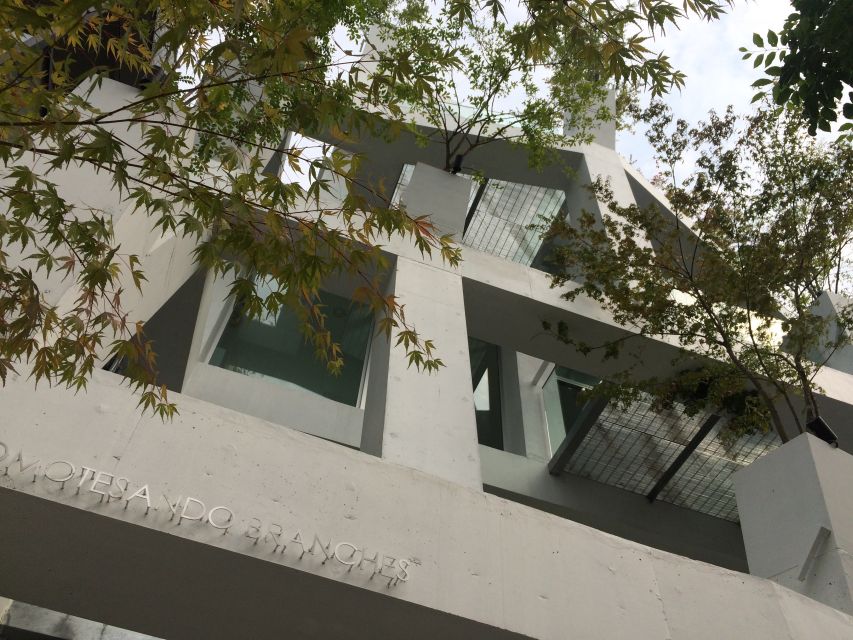
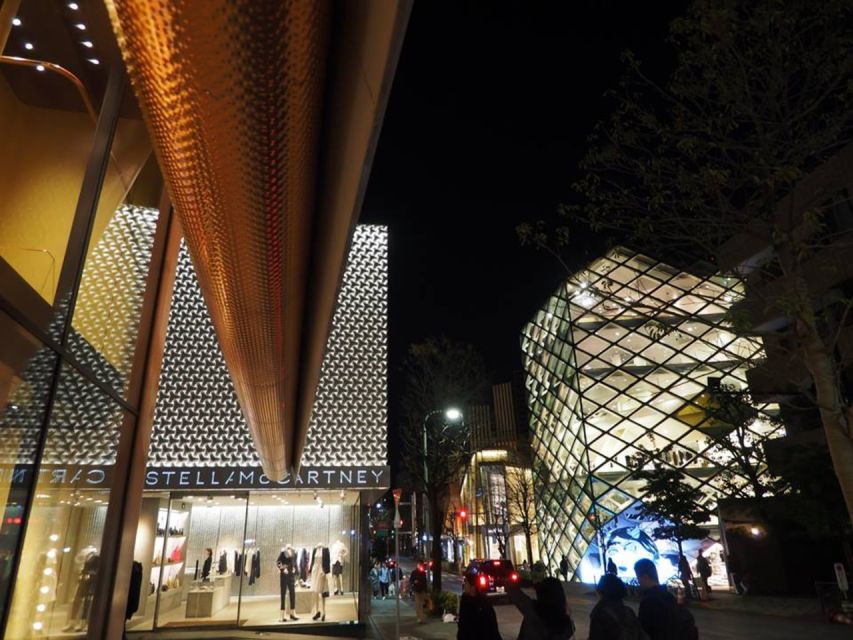
If you have the option to take this tour at night, do it. The area shifts tone after dark. Bright storefronts and street lighting change the way facades look, and you’ll pick up contrasts you might miss in daylight.
Architectural photography at night is not just about getting “cool city vibes.” Lighting reveals edges, depth, and textures. The same building that looks crisp and flat by day can feel more dimensional at night when shadows and reflections do the work.
Plus, night walking suits the tour theme: you’re not just shopping at night. You’re observing architecture as performance—how it communicates through light, signage, and angles as people move past.
Break Time with Drinks: Keep Your Feet Happy (and Your Photos Sharp)
The tour includes a break time with drinks, which sounds small but matters. After a few focused photo stops and architectural explanations, your brain needs a reset and your legs need a breather.
This pause is useful for another reason too: it gives you time to reorganize your priorities. If you’ve been snapping photos and feel like you missed a detail, this is when you can ask the guide to point out what to watch for next. Some guides are especially responsive and will incorporate what you’re interested in along the way, so the break helps you “steer” the last stretch.
Pace, Walking, and Who This Tour Fits Best
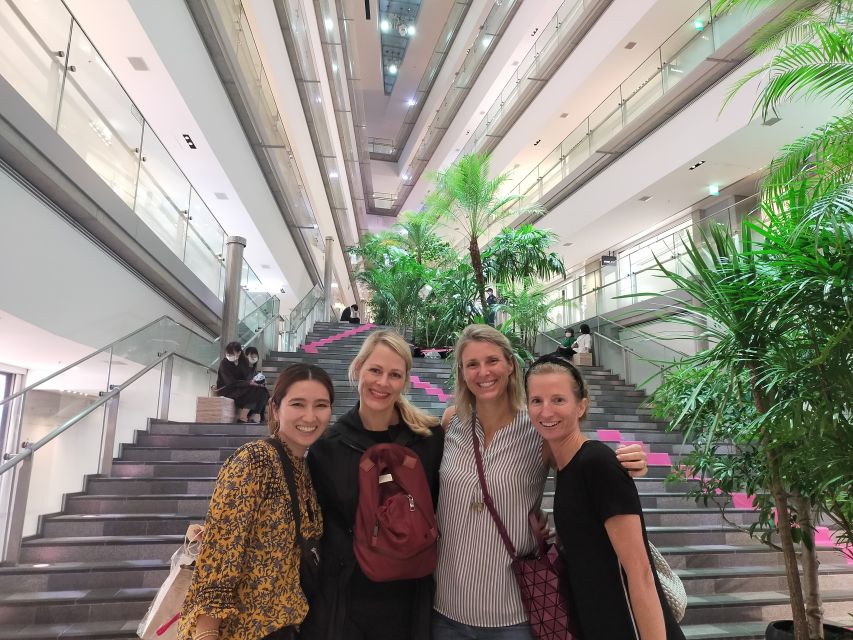
This tour runs 210 minutes—about 3.5 hours. That’s enough time to cover a lot of ground and still keep it coherent, but it’s not a sit-down museum-style experience.
You’ll get the most out of it if:
- You like architecture, even casually. You don’t need to be an expert to follow along.
- You’re the type who pauses mid-walk because you notice design details.
- You want a guided route that compresses the area’s highlights into a single morning or evening.
It also works well for solo travelers because you’ll get individual attention in a private group setting. One-person tours often turn into good conversation with the guide, especially if you have questions about what you’re seeing.
The tour is wheelchair accessible, so it’s designed to accommodate more than just able-bodied walkers. Still, wear shoes you trust—this is Tokyo, and you’ll be covering sidewalk after sidewalk.
Price and Value: Is $129 Worth It?
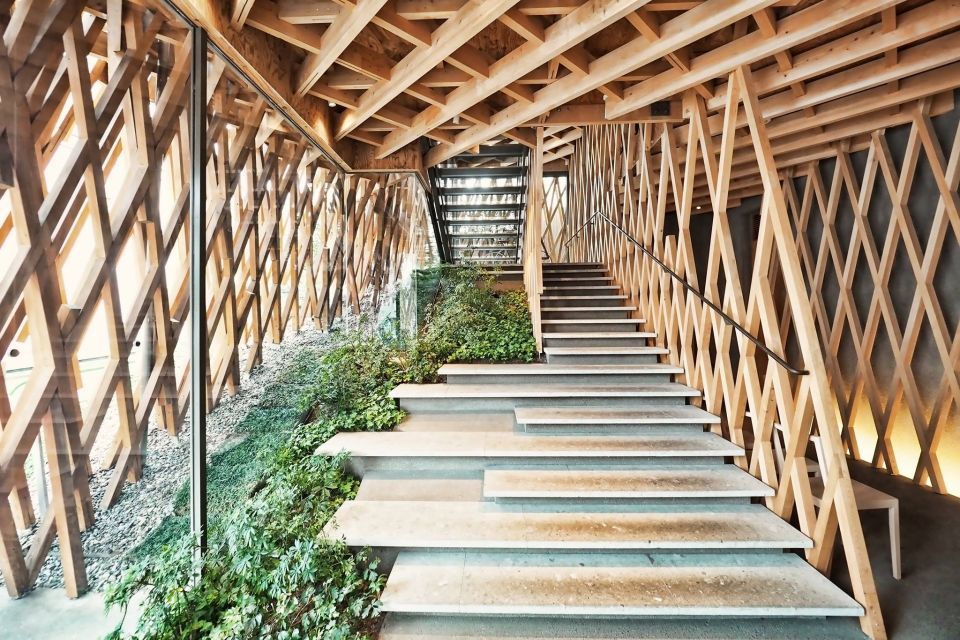
At $129 per person, you’re paying for three things: a licensed English-speaking guide, a private route, and time spent focusing on architecture rather than general sightseeing.
If you were to try to do this on your own, you’d likely end up with a photo checklist: I saw this facade, I saw that storefront, nice walk. What you’re buying here is interpretation—learning why designers and architects are drawn to Omotesando, how it differs from other upscale areas, and what to notice when you’re standing in front of the Iceberg, Dior, Louis Vuitton, Sunny Hills, and Prada.
Is it a bargain? It’s not a budget tour. But it’s also not paying for a museum ticket plus long transit plus a rushed group. You’re paying for concentrated, high-signal time in one of Tokyo’s most design-forward neighborhoods.
If you care about architecture enough to want context, that’s where the value clicks.
Practical Tips Before You Go
- Bring comfortable shoes. This is walking-first.
- Wear something easy to move in and bring a light layer if you’re doing it at night.
- Bring your camera, but also look with your eyes. A couple of minutes watching how people flow past entrances will help your photos.
- Have one or two questions ready, like why the architecture here feels different from Ginza or what to look for in building facades as you walk.
And if your guide asks what you want to see, don’t be shy. The best version of this tour is when you steer it slightly—maybe you want more focus on modern storefront design, or you’re most excited about learning the architect-driven ideas behind the brands.
Should You Book This Private Harajuku Omotesando Architecture Tour?
Book it if you want your Omotesando experience to be more than shopping photos. This tour gives you a structured way to see big-name architectural works, understand why the area draws designer labels and architects, and then step into side streets for a real-feeling contrast.
Skip it if you dislike walking or you’d rather do a free-form boutique crawl where you can stop and shop without interruptions. Also consider your timing: the route is built to cover a lot in about 3.5 hours, so it rewards people who like momentum.
For architecture lovers, design-curious travelers, and anyone who wants a smarter way to experience Harajuku and Omotesando, this is a strong value choice.
FAQ
How long is the Private Harajuku Omotesando Architecture Tour?
It lasts 210 minutes, about 3.5 hours.
Where do we meet for the tour?
You meet in front of the cafe near the open space by Meiji Shrine, at CAFÉ Mori no Terrace, 1 Yoyogikamizonocho, Shibuya City, Tokyo 151-0052, Japan.
Is the tour guide English-speaking?
Yes. The tour includes a licensed English-speaking tour guide.
What is included in the price?
The tour includes the licensed guide and break time with drinks.
Are meals included?
No. Meals are not included.
Does the tour include transportation to and from Harajuku Omotesando?
No. The transportation fee to/from the area is not included.
Is the tour wheelchair accessible?
Yes. The tour is wheelchair accessible.
Can I take the tour at night?
Yes. The experience notes that you can take it at night to appreciate the masterpieces from a different perspective.
More Tours in Tokyo




More Tour Reviews in Tokyo




More Harajuku to Wander


Fresh reviews from around Tokyo






Harajuku Tours, compared.
 ★ 5.0Tokyo Go-Kart Tour Shibuya-Harajuku-Shinjuku (*IDP Required)From $88217 reviews
 ★ 4.5Guided Go Kart Tour from Harajuku to Shibuya CrossingFrom $103166 reviews
 ★ 4.7Shibuya & Harajuku: Hidden Gems & Highlights Private TourFrom $64139 reviews
Harajuku Kawaii Fashion and Pop-Culture TourFrom $7994 reviews
Harajuku Private Tour: Kawaii Fashion & Animal Cafe IncludedFrom $11869 reviews
★ 4.7Shibuya & Harajuku: Hidden Gems & Highlights Private TourFrom $64139 reviews
Harajuku Kawaii Fashion and Pop-Culture TourFrom $7994 reviews
Harajuku Private Tour: Kawaii Fashion & Animal Cafe IncludedFrom $11869 reviews
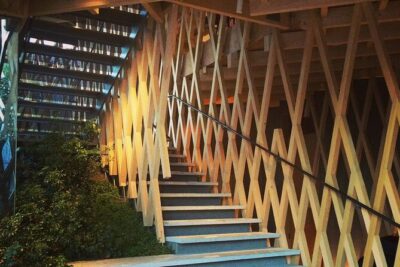 ★ 5.0Private Harajuku Omotesando Architecture Walking TourFrom $13267 reviews
 ★ 5.0Harajuku Meiji Shrine Walking Tour in TokyoFrom $2561 reviews
 ★ 5.0Kawaii Food Tour of Harajuku TokyoFrom $20949 reviews
Browse the lists this tour appears in