
Reviewed · HAKONE DAY TRIPS
Hike Hakone Hachiri
Old paths, big cedar shade, and history. This Hakone Hachiri hike follows a slice of the ancient Tokaido Highway, and I love kicking off at Amazake Chaya with 13th-generation manager Mr. Yamamoto and then walking the shaded Cedar Avenue lined by centuries-old cedars. One thing to plan for: views of Mt. Fuji are weather-dependent, so cloud cover or rain can change the payoff.
What makes the day feel special is the human touch. Your guide Tony brings the route to life with clear history, and he’s the kind of person who can adjust when the weather turns messy (and still keeps the group moving). You’ll also get a mobile ticket for a smoother start, and it stays private to your group.
The route is long enough to be a real hike (about 9 hours), with stone sections and uneven ground. The good news: it’s rated as moderate fitness, so if you can walk uphill and handle a few rocky bits, you’ll be fine.
In This Review
- Key things I’d circle before you book
- Why Hakone Hachiri feels like the old Tokaido, not a theme park
- Start at Mishima Station at 8:30: plan for a full walking day
- Stop 1: Amazake Chaya and Mr. Yamamoto’s family teahouse culture
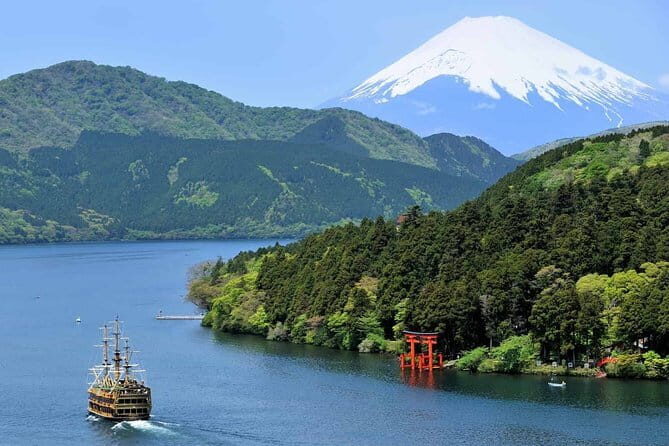
- Lake Ashinoko break: crater-lake vibes and red torii gates
- Cedar Trees of the Hakone Old Road: Tokugawa Hidetada planted the shade
- Hakone Sekisho and the museum: the Tokaido’s checkpoint system in real life
- Yamanaka Castle Ruins: a mountain boundary with Mt. Fuji potential
- The real workout: the 12 km Tokaido Odawara Shuku stretch toward Mishima
- Genbegawa World Water Heritage Area: a short nature walk with world-scale meaning
- Price value: what you’re paying for at $231.18
- Rain, shoes, and flexibility: the day’s real “secret ingredient”
- Who should book this Hakone Hachiri hike
- Should you book this hike?
- FAQ
- FAQ
- How long is the Hakone Hachiri hike?
- Where does the tour start and end?
- What time does the tour begin?
- How much does it cost?
- What’s included in the price?
- Is lunch included?
- Do I need to buy tickets for each stop?
- Is this a private tour?
- Do I need good weather?
- What level of fitness do I need?
Key things I’d circle before you book
- Amazake Chaya with Mr. Yamamoto: a rare, family-run teahouse stop tied to the old Tokaido
- Cedar Avenue shade: Edo-era cedar planting with towering trees you can feel on your skin
- Hakone Sekisho checkpoint + museum: the Tokaido system of control, explained in plain terms
- Yamanaka Castle Ruins views (if weather cooperates): plus the story of defenses in mountain terrain
- A long preserved Tokaido stretch (Odawara Shuku): a real 12 km old-road walking day
- Genbegawa World Water Heritage Area: a quick add-on that connects Hakone’s nature to world heritage
Why Hakone Hachiri feels like the old Tokaido, not a theme park
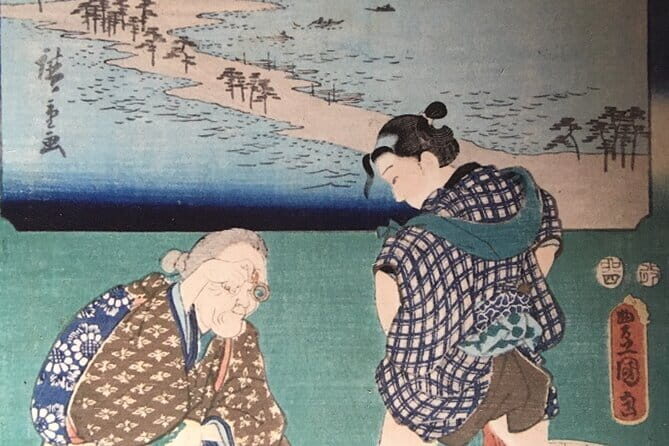
Hakone Hachiri is part of the classic route that once linked Tokyo with Kyoto and Osaka. This specific section matters because it’s been recognized as part of a Japan Heritage Area, so you’re not just walking in pretty nature—you’re walking through a corridor that mattered to how people traveled and governed the country.
The tone is historical, but it never feels like you’re trapped in a classroom. Tony’s approach (friendly, a little funny, and very focused) turns each stop into a reason to keep moving: why a checkpoint existed, why a teahouse survived, why cedars were planted, and why a castle site ended up in this exact spot.
And honestly, the day has the kind of pacing that makes you feel like you worked for your views. You get stretches of walking, then you get breaks where the story lands and you can catch your breath.
Start at Mishima Station at 8:30: plan for a full walking day
The meeting point is Mishima Station, with a start time of 8:30 am. The tour ends back at Mishima Station, and the total time is about 9 hours.
Because it’s a hike (not a sightseeing bus day), how you show up matters. Wear sturdy, comfortable shoes with grip—several parts are described as moderate with stone sections. If you’re the type who normally wears sneakers for city walking only, upgrade those shoes here. Rain makes traction even more important.
Also note what’s not included: there’s no air-conditioned vehicle, and lunch isn’t included. In other words, you’ll want to treat this as a walk-with-support day: the guide handles the route and explanations, but you’ll handle meals and snacks.
One more practical thing: you get a mobile ticket, and you should receive confirmation at booking. That helps you avoid last-minute stress.
Stop 1: Amazake Chaya and Mr. Yamamoto’s family teahouse culture
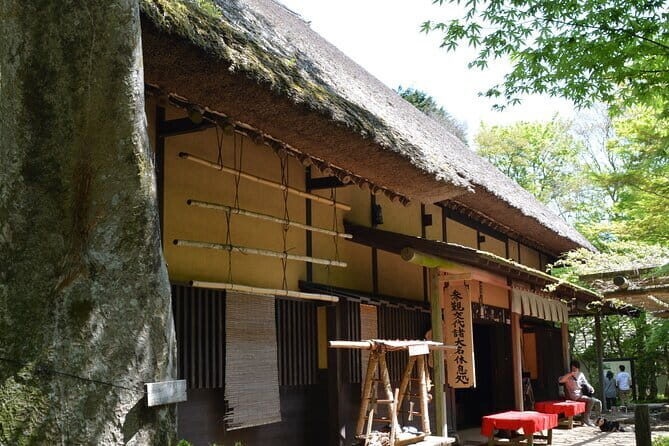
Your first stop is the Hakone Amazake Tea House, Amazake Chaya. This matters more than it sounds. Along the old Tokaido, teahouses lined the road because travelers needed places to rest, eat simply, and take in local hospitality. Today, only a few of those teahouses remain.
Here, you meet Mr. Yamamoto, the thirteenth generation manager. The name alone tells you why this stop hits differently: it’s not a modern “tourist experience” built from scratch. It’s a long-running family operation with continuity, and you can feel that in how the place is presented.
If you like food stops that are more about local tradition than just a snack, this is your moment. It’s also a good way to set the tone for the rest of the walk: you’re not only learning about the past—you’re starting the day inside a living piece of it.
Consideration: admission is included for this first stop, but coffee or tea later is not included, so if you’re the caffeine type, plan your own. Also, you’ll want to be ready for the early start—this is where your day begins, not where you warm up.
Lake Ashinoko break: crater-lake vibes and red torii gates
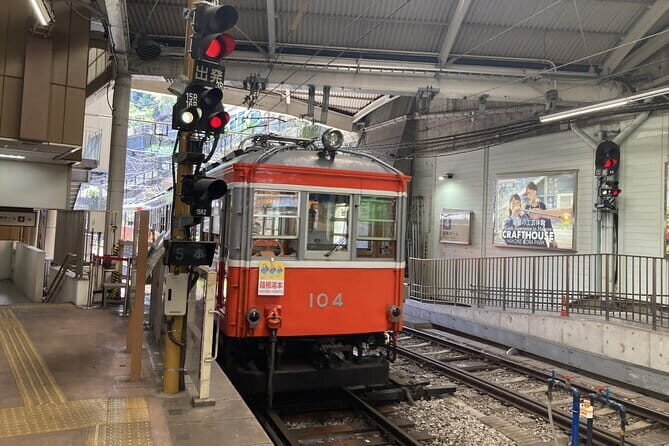
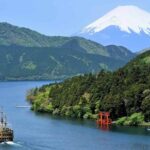
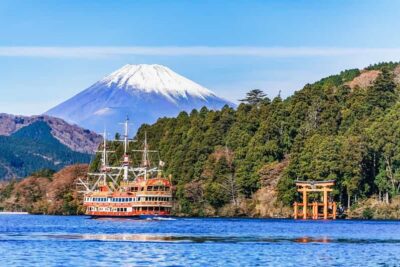
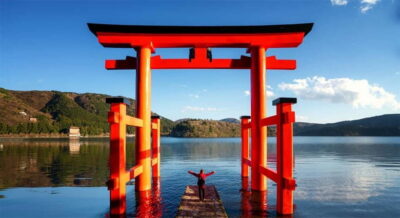
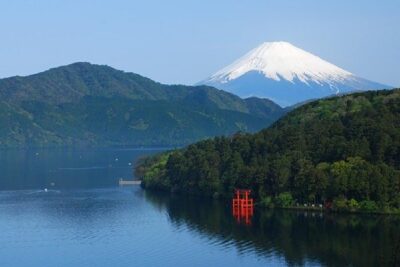
Next up is Lake Ashinoko. The tour schedules a lunch break near the lake, and Lake Ashinoko is described as a deep crater lake (about 700 meters). You also get the famous visual: red tori gates out on the water.
This is one of those stops where you get two payoffs at once:
1) a needed reset for your legs, and
2) a dramatic setting that reminds you this route wasn’t only about people—it was also about terrain.
Just remember the meal detail: lunch isn’t included, even though you’ll be eating around this area. The tour gives you the time and location; you bring your wallet for the actual food.
Cedar Trees of the Hakone Old Road: Tokugawa Hidetada planted the shade

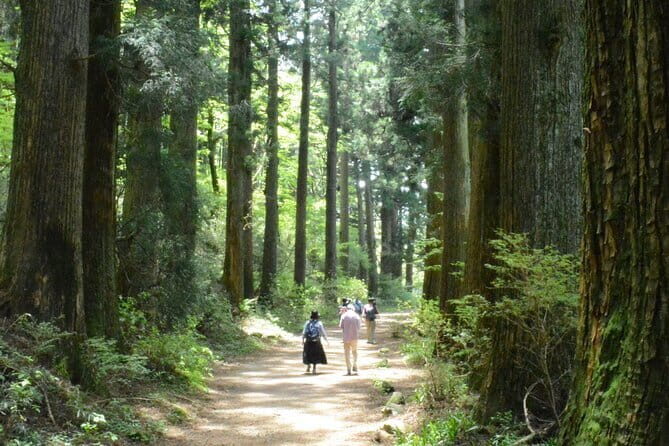
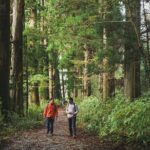
Then comes Cedar Avenue, a short stop on paper (about 30 minutes) that can feel longer because the trees are that big. The cedars here are described as around 400 years old, and the planting story ties directly into the Edo period.
Four centuries ago, the second Edo shogun, Tokugawa Hidetada, ordered sugi (Japanese cedar) planted along both sides of the Tokaido to provide shade. So when you’re under these towering trees, you’re walking on a corridor that was intentionally engineered for traveler comfort and control.
This is also a great “leg-saver” moment. Even if you only get a short walk here, the shade and cool air can make the rest of the day feel more manageable.
One more practical note: because these are old trees and the path can be uneven, keep your eyes on your footing. You’re allowed to look up—but don’t let that replace balance.
Hakone Sekisho and the museum: the Tokaido’s checkpoint system in real life
After the cedars, you reach Hakone Sekisho and the Hakone Sekisho Museum. The Tokaido had checkpoints at intervals to make sure travelers were legitimate and to help protect the shogun in Edo.
Hakone was the closest checkpoint to Edo, so it was one of the most heavily policed. That’s the kind of detail that makes you see the country differently. This wasn’t a free-for-all road where everyone just wandered along. Movement was organized, monitored, and explained with a lot of rules.
This stop is about “why” more than “what.” You’ll leave with a clearer picture of how the checkpoint culture worked, then you get to connect that with the rest of the hike where you’ll see how the landscape shaped enforcement.
Good to know: admission is free at these stops, which helps keep the day’s value strong.
Yamanaka Castle Ruins: a mountain boundary with Mt. Fuji potential
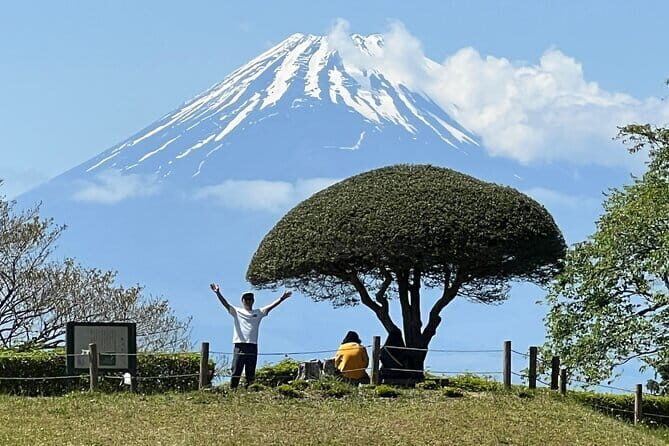
Next is Yamanaka Castle Ruins. The name translates to castle in the middle of the mountain, and the site is protected by earthworks designed for defense. The story goes back to around 1590, tied to the boundary defense of Hojo’s western territory.
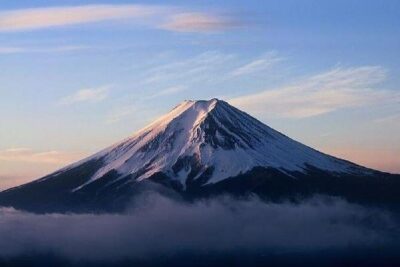
This is also where the tour notes stunning views of Mt. Fuji when weather permits. So if the sky clears, you might get an extra wow moment. If it doesn’t, the value shifts toward the terrain and the defensive logic of the site—still interesting, just different.
Expect around 30 minutes here: enough time to orient yourself, hear the explanation, and appreciate why this spot mattered even without a view of the distant iconic peak.
The real workout: the 12 km Tokaido Odawara Shuku stretch toward Mishima
Now we get to the long walking portion. You’ll hike about a 12 km stretch of the Old Tokaido Foot Highway between Odawara and Mishima, preserved as a Japan Heritage Area.
This is the heart of the day. It’s where the idea of “old road under your feet” becomes real—not just a stop-by-stop story. You’ll likely feel it as a steady, physical effort, especially if rain makes the stones slick or cold.
Why it’s worth doing: this is not a walk that’s only about one viewpoint. It’s about sustained rhythm. And on a route like this, the stories you hear at earlier stops start to “click” because you’re experiencing the corridor those systems and teahouses served.
Tip: bring a snack strategy. Even if lunch happens near Lake Ashinoko, you’ll likely want something small for the second half.
Genbegawa World Water Heritage Area: a short nature walk with world-scale meaning
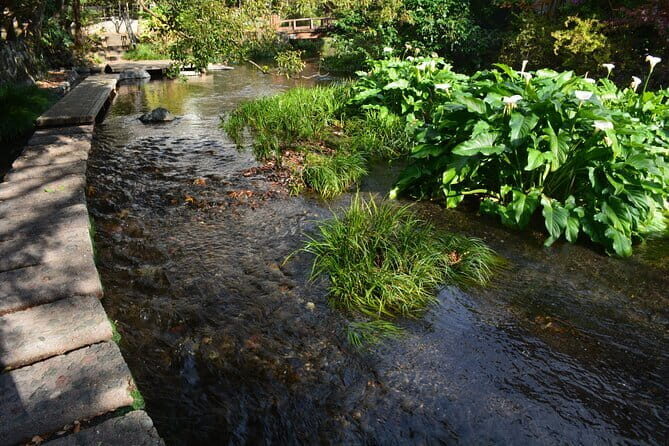
Near the end, you walk along the Genbegawa World Water Heritage Area. The time here is brief (around 30 minutes), but it adds variety and shifts the focus from footpaths and fortifications to water systems and natural heritage.
This kind of stop is useful because it keeps the day from becoming only “history, history, history.” You get a reminder that routes like the Tokaido existed inside full ecosystems—water, vegetation, and terrain influenced where people could walk and how communities formed.
Price value: what you’re paying for at $231.18
At about $231.18 per person, this hike isn’t the cheapest way to spend a day in Hakone. But it’s also not trying to be. The value comes from the mix of guided interpretation plus multiple meaningful stops spread across a long walking day.
Here’s what your money supports:
- Guide fee is included, and you’re getting a very story-driven tour led by Tony
- Admissions are included/free at multiple points (including the tea house)
- You get a private tour/activity, so you’re not squeezed into a crowd
- The experience is built around a preserved route segment, not just scenic wandering
What isn’t included is also part of the math: lunch and coffee/tea aren’t included, so you should budget a bit extra for food. The good news: because the tour is walking-centered with free admission at several stops, you’re not paying nonstop entry fees throughout the day.
If you want a guided day that helps you understand what you’re seeing—and you’re happy to walk—this price can feel fair.
Rain, shoes, and flexibility: the day’s real “secret ingredient”
The cancellation terms say the experience requires good weather, and if it’s canceled due to poor weather you’ll be offered another date or a full refund. That’s the official side.
The practical side is even more important: Tony is willing to adapt when conditions are rough. There are rainy-day reviews that point to him changing things up when weather gets terrible, and keeping the vibe positive. That matters because this hike includes stone sections and old-route terrain where conditions can change fast.
So your best move is simple:
- pack a rain layer you can wear while hiking
- wear good shoes
- keep expectations flexible on Mt. Fuji visibility
If you can do that, the day remains enjoyable even when the forecast isn’t perfect.
Who should book this Hakone Hachiri hike
This works best if you:
- like walking and want a full, active day (about 9 hours)
- enjoy history explained in a grounded way, not through lectures
- care about local culture stops like Amazake Chaya with Mr. Yamamoto
- prefer fewer people and a private feel to your day
You might want to consider something else if you:
- hate uneven ground or rocky paths
- need a lot of breaks and minimal walking time
- expect constant postcard views regardless of weather
Should you book this hike?
If your ideal day in Hakone is part hiking, part real culture, and part “I understand what I’m seeing now,” I think this is a smart choice. The cedar avenue, the checkpoint museum, the castle ruins, and the long old-road stretch add up to a day that feels coherent, not random.
Book it if you can handle moderate hiking and you’re okay with the fact that Mt. Fuji views depend on conditions. Pass (or pick an easier alternative) if you’re aiming for a mostly level stroll or you want meals and drinks fully included.
FAQ
FAQ
How long is the Hakone Hachiri hike?
The tour lasts about 9 hours (approx.).
Where does the tour start and end?
It starts at Mishima Station (16-1 Ichibanchō, Mishima, Shizuoka 411-0036) and also ends at Mishima Station.
What time does the tour begin?
The start time is 8:30 am.
How much does it cost?
The price is $231.18 per person.
What’s included in the price?
The guide fee is included. The tea house stop includes an admission ticket, and several other stops are listed as admission free.
Is lunch included?
No. Lunch is not included in the listed inclusions, even though there is a scheduled lunch break near Lake Ashinoko.
Do I need to buy tickets for each stop?
Admission is listed as included or free for multiple stops. The tea house stop includes an admission ticket, while places like Lake Ashinoko, Cedar Trees, Hakone Sekisho/Museum, Yamanaka Castle Ruins, and other segments are listed as free.
Is this a private tour?
Yes. It’s described as a private tour/activity, with only your group participating.
Do I need good weather?
The experience requires good weather. If it’s canceled due to poor weather, you’ll be offered a different date or a full refund.
What level of fitness do I need?
It’s recommended for travelers with moderate physical fitness. Expect a hike with stone and walking portions.
More Hiking & Trekking in Hakone

More Tour Reviews in Hakone

Hakone, Three More Ways
Hakone Day Trips, compared.
 ★ 4.0Mt Fuji & Hakone Cruise, Drum Show Bullet Train 1 Day from TokyoFrom $1497,413 reviews
 ★ 4.4Tokyo Mt Fuji 5th St & Hakone Cruise Bus Tour w/Bullet TrainFrom $1545,024 reviews
 ★ 4.7Mt. Fuji Tour, Hakone Ropeway, Owakudani, Lake AshiFrom $544,002 reviews
 ★ 5.0Private Tour to Mt. Fuji and Hakone (Fully Licenced Operator)From $4971,910 reviews
 ★ 4.0Mt Fuji & Hakone Cruise, Drum Show Bus 1 Day from TokyoFrom $1221,287 reviews
 ★ 4.2From Tokyo: Mt. Fuji & Hakone Tour w/ Return by Bullet TrainFrom $1171,278 reviews
 ★ 4.5Mt. Fuji & Hakone Private Day Tour with English-Speaking DriverFrom $453824 reviews
 ★ 4.2Hakone Fuji Day Tour w/ Cruise, Cable Car, VolcanoFrom $98724 reviews
Browse the lists this tour appears in