
Reviewed · WALKING TOURS
Private Ginza Architecture Walking Tour
Ginza has layers, and this tour shows them. With a private guide who adapts to what you care about, you get the story behind both the newer showpiece buildings and the older Tokyo texture. I love that you can go inside several key stops instead of only peeking from the sidewalk. One thing to consider: some of the most famous Ginza sights here are quick photo stops, so if you want long, slow time inside a single building, you’ll want to tell your guide early.
This is a 3 hours 30 minutes walk at your own pace, with two departure times so you can fit it around your day. The group stays small (max 5), and you’ll start near Tsukiji Station (Exit 1 area) and finish at the Ginza 4-chome intersection by Mitsukoshi. Since there’s no hotel pickup, you’ll arrive on your own and be ready for moderate walking.
In This Review
- Key Things I’d Plan For
- What Makes a Private Ginza Architecture Walk Worth Your Time
- Getting There and Finding the Stops (Without Stress)
- Ginza on Foot: The 40-Minute Set-Up for Everything Else
- Tsukiji Hongwanji Temple: A Calm Interior Reset
- Kabukiza Theater: Architecture Built for Performance
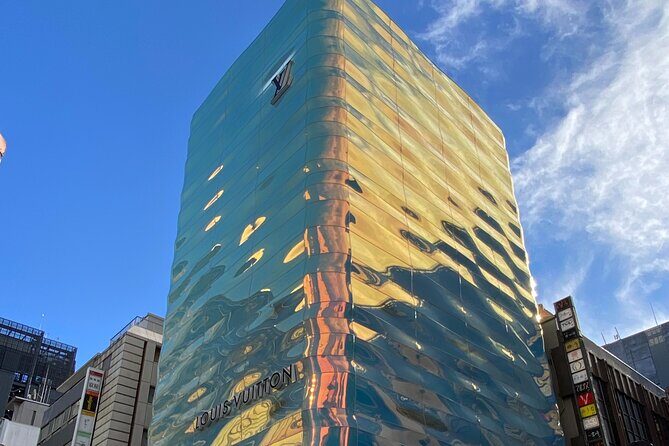
- Nicolas G. Hayek Center: Modern Design in the Ginza Mix
- Toyoiwa Inari Shrine: Short Stop, Strong Tokyo Character
- Ginza Maison Hermes Le Forum: When Retail Architecture Gets Serious
- Mikimoto Boutique Ginza 2-chome and the Time Question
- Outside Looks: UNIQLO Tokyo, Mikimoto Ginza 4-chome, and Wako Ginza
- Okuno Building Inside: A Short Wrap That Leaves You Looking Up
- Drinks Pause and the Photo Finale
- Guides, Customization, and the Human Part of the Story
- Who This Tour Is Best For
- Price and Value: Is $132.10 Fair for a Private Tour?
- Booking Timing: 44 Days Ahead Makes Sense
- Should You Book This Private Ginza Architecture Tour?
- FAQ
- How long is the Private Ginza Architecture Walking Tour?
- What is the maximum group size for this private tour?
- Where do we meet and where does the tour end?
- Is the tour in English and is it customizable?
- What stops are included during the walk?
- Are tickets or admissions included?
- Can I cancel and get a full refund?
Key Things I’d Plan For
- Private guide, customized route talk based on your interests and knowledge level
- Multiple interior visits including a Buddhist temple and a major theater
- A included drink pause to reset before the next architectural set-piece
- A mix of old-meets-new Ginza: shrines, performance spaces, retail architecture, and office/building design
- Small group size (up to 5) keeps the pace flexible and questions welcome
Tokyo at walking pace, a few more ways
- Tokyo Tsukiji Fish Market Food and Culture Walking Tour★ 5.0 · 3,184 reviews
- Tokyo: Shinjuku Local Bar and Izakaya Guided Walking Tour★ 4.9 · 1,794 reviews
- Tokyo: Tsukiji Fish Market Food and Walking tour★ 5.0 · 1,724 reviews
What Makes a Private Ginza Architecture Walk Worth Your Time
Ginza can look polished and predictable if you only shop your way down the main streets. This tour is different because it’s built to make you look up, slow down, and notice how buildings communicate status, tradition, and city life in Tokyo.
The private format matters. With a guide, you’re not stuck reading plaques or guessing what you’re seeing. When the guide tailors the explanations to your interests, the architecture clicks faster—whether you care more about historical context, design ideas, or just getting great photos without awkward stopping-and-starting.
You also get a walking pace that actually works for normal humans. You can linger when something catches your eye, and you’re not forced into a rigid group rhythm.
The only “trade” is that Ginza is Ginza—expect a fair amount of retail-forward scenery. If you came for quiet neighborhoods only, you’ll need your guide to steer your attention toward the architecture and cultural stops.
Getting There and Finding the Stops (Without Stress)
You’ll meet at a Tsukiji meeting place near Tsukiji Station, Exit 1 (Chuo City, Tsukiji, 3-chome area). The end point is at the Ginza 4-chome intersection in front of Mitsukoshi department store.
No hotel pickup means you’ll want to do a quick check of how long it takes you to reach Tsukiji Station that day. The tour is close to public transportation, which helps, but you’ll still want to arrive a few minutes early so you can start smoothly.
The walking time is roughly spread across the district, and the whole experience clocks in around 3.5 hours. It’s a good length for an architecture-focused morning or afternoon—long enough to feel like you learned the neighborhood, not so long that you’re fading by the midpoint.
Ginza on Foot: The 40-Minute Set-Up for Everything Else
Your tour begins in Ginza with about 40 minutes of walking between sites. This isn’t filler time. This is where your guide helps you learn the “language” of the area—how streets, entrances, and building fronts are composed for pedestrians who are moving fast.
I like this start because it sets your eye. Instead of jumping to big interiors immediately, you build a sense of scale and rhythm first. Once you do that, the later stops feel more meaningful, not random.
If you’re a “take photos constantly” person, tell your guide upfront. With a private group, you can set expectations and avoid feeling rushed at the most photogenic moments.
Tsukiji Hongwanji Temple: A Calm Interior Reset
Next comes Tsukiji Hongwanji Temple, where you’ll go inside for about 10 minutes. This is a valuable contrast in the middle of a district known for luxury storefronts.
A temple stop like this changes how you read the city. Even in a modern capital, sacred spaces keep their own rules for movement, sound, and attention. You’ll come away with a different sense of Tokyo’s layers—religion and ritual living right alongside commerce.
The downside is time. Ten minutes is enough to see and learn, but not to treat it like a long museum visit. If you’re hoping for deep quiet time, lean on your guide for the key points you should focus on, then slow down for a few extra moments yourself.
More private options with your own guide



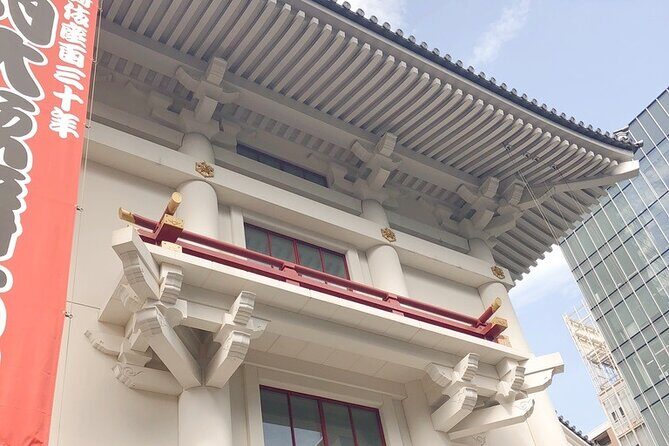
Kabukiza Theater: Architecture Built for Performance
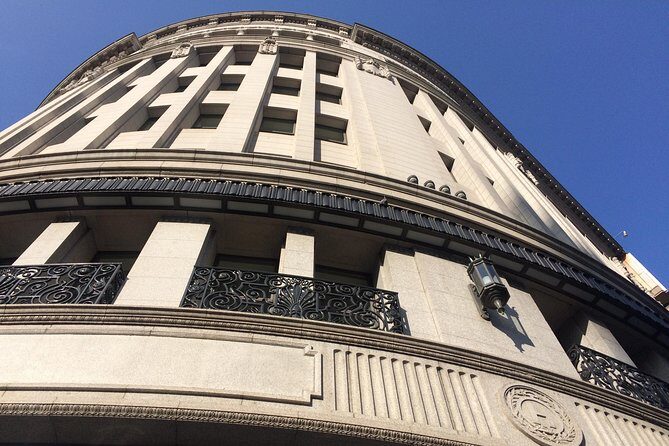
Then you move to Kabukiza Theater, where you’ll go inside for about 20 minutes. A theater building is architecture with a job: shaping movement, views, and the mood for a live audience.
What I like about this stop is that it pushes you beyond facades. Even if you’re not an architecture expert, stepping inside a major performance space helps you understand how buildings guide people.
This can also be a fun stop even if you don’t know much about kabuki. Your guide’s job is to translate what you’re seeing into context—how the building works culturally and physically.
If you’re traveling with someone who gets impatient in dark spaces, just know this is still time-managed. You’ll get in, look, learn, and move on without losing the tour’s momentum.
Nicolas G. Hayek Center: Modern Design in the Ginza Mix
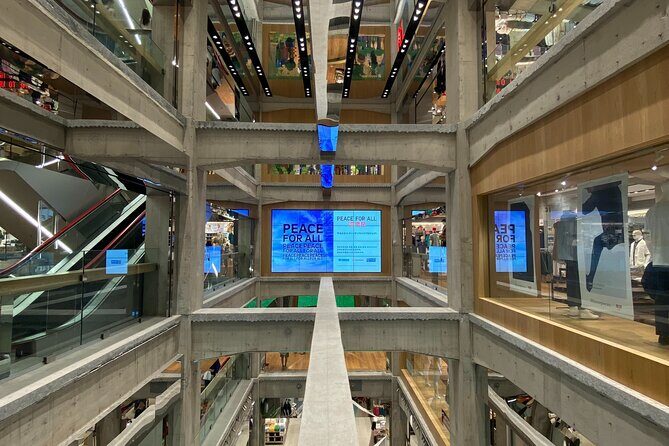
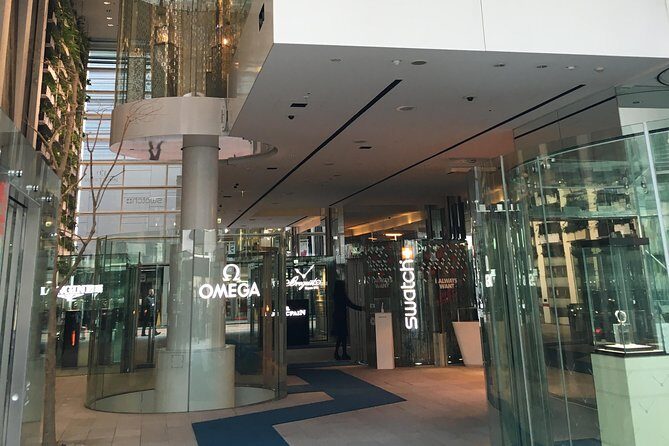
Your tour includes a stop at the Nicolas G. Hayek Center for about 15 minutes, and you’ll go inside. This adds a modern design angle to the day.
In a neighborhood like Ginza, modern architecture can feel like it’s showing off. With a guide, you can pick apart what makes it functional, how it reads from the street, and how it changes the way you experience the block.
This is also a “depends on your taste” stop. If you love design-forward spaces, you’ll likely enjoy it. If your focus is strictly traditional architecture, you may want to ask your guide to connect this modern stop back to the older elements you’ll see later.
Toyoiwa Inari Shrine: Short Stop, Strong Tokyo Character
After that, you’ll visit Toyoiwa Inari Shrine for about 5 minutes. This is brief by design, but shrines are where Tokyo often feels most human—small rituals, recognizable details, and a sense of continuity.
Even a short visit can give you a different texture for your photos. Instead of only shooting shiny building fronts, you’ll catch a more intimate scene type.
Since it’s only five minutes, I’d treat this as a “see and understand” moment. Ask your guide what to look for fastest, then take a couple of careful photos before moving on.
Ginza Maison Hermes Le Forum: When Retail Architecture Gets Serious
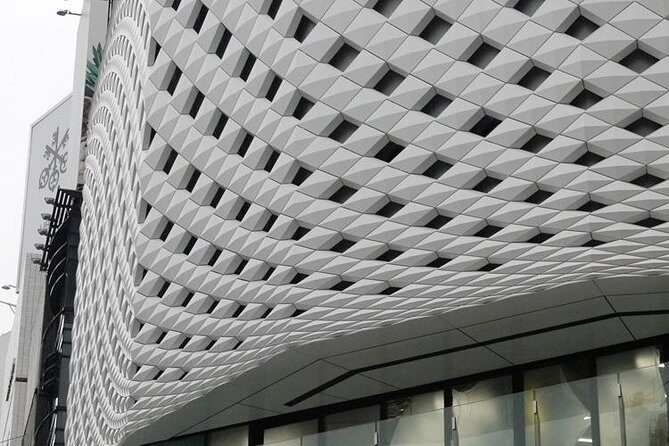
Next is Ginza Maison Hermes Le Forum, with about 15 minutes inside. Ginza’s retail buildings are not just boxes; they’re designed to project identity and craft.
I like that this stop makes the tour feel real. Ginza isn’t only history—it’s also today’s design world, with brand architecture that’s meant to be noticed. If you’ve ever wondered why store fronts in Ginza feel like destinations, this is where you’ll start connecting the dots.
One practical consideration: interior retail spaces can be crowded depending on the time of day. If you get claustrophobic in busy indoor areas, keep your expectations flexible and plan to rely on your guide to choose the least crowded viewing angles.
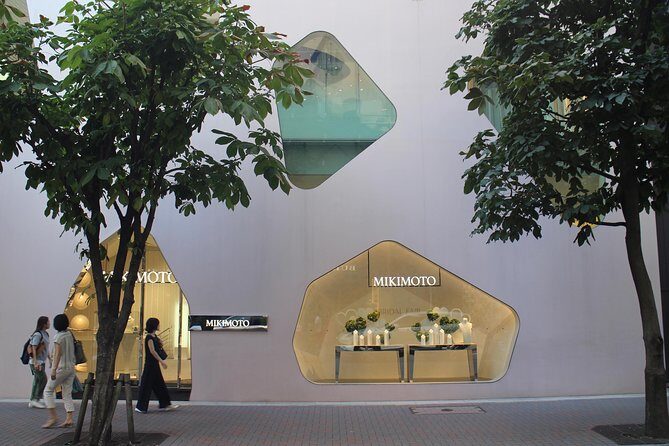
Mikimoto Boutique Ginza 2-chome and the Time Question
The tour includes Mikimoto Boutique Ginza 2-chome for about 5 minutes, inside, if there’s time. That “if we have time” piece matters because it keeps the tour adaptable.
I appreciate this approach. Some days you’ll need to move a bit faster between stops; other days you’ll end up slower because you’re pausing for photos. With a private guide, you’re not punished for taking your time—you just adjust.
If you care a lot about this specific stop, say so early. Your guide can prioritize how the day fills up.
Outside Looks: UNIQLO Tokyo, Mikimoto Ginza 4-chome, and Wako Ginza
You’ll then do a few outside photo-and-observation stops:
- UNIQLO Tokyo for about 10 minutes (view from outside)
- Mikimoto Ginza 4-chome Honten for about 5 minutes (view from outside)
- Wako Ginza for about 10 minutes (view from outside)
This cluster is a nice reminder that architecture isn’t only what happens indoors. Ginza is built for street viewing: entrances, signage, façades, and how buildings frame pedestrians.
I also like the rhythm here. The day alternates between inside and outside spaces, so you don’t feel like you’re stuck in one mode. You get outdoor breathing room, then you’re back in with context again.
The trade-off is obvious: when you’re outside, you can’t experience materials and details the same way. But that’s the point—your guide helps you “read” what’s visible from the street so you don’t miss the architecture even when you can’t enter every place.
Okuno Building Inside: A Short Wrap That Leaves You Looking Up
The last major stop is Okuno Building, with about 10 minutes inside. This is a fast finale, but it works because by now you’ve trained your eye.
By the end of the walk, you’ll likely start noticing the patterns your guide emphasized—how Ginza mixes styles, how different building types treat light and entrance space, and how the district’s identity shows up in design choices.
It’s a good time to ask your final questions too. If you save your “quick curiosity” questions for later, your guide can anchor them in what you’ve already seen.
Drinks Pause and the Photo Finale
One included element is a cozy pause with drinks along the way. I like that this isn’t just a token stop. It gives you a mental reset so you can keep paying attention instead of forcing through fatigue.
Your tour also ends with help for photos. The tour’s goal is that you finish feeling like you understand Ginza, not just that you walked past buildings. That matters because good travel photography often comes from knowing where the story is happening—on street level, or looking upward, or at a specific corner.
If you’re planning to shoot a lot, pack light and be ready to move. It’s a walking tour, not an all-day museum loop.
Guides, Customization, and the Human Part of the Story
This tour is explicitly private, and the guide is there to personalize. The result is that you might end up with a conversation that feels like architecture plus Tokyo culture, not a scripted slideshow.
I’ve seen this personalization show up in the details: guides who adapt their explanations to your questions, guides with backgrounds that help explain urban planning, and guides who answer translation questions on the fly. Names like Yoko, Yuki, Taka Yamamura-San, Yoshi, Mari, Eriko, and Haruka come up in past tours, and they all point to one theme: your guide’s energy can make the architecture feel easier to understand.
There’s one small caution. One past experience flagged that English can be uneven. So if English clarity is critical for you, don’t be shy about asking questions before you book about your guide’s language comfort.
Who This Tour Is Best For
This tour is ideal if you:
- want a guided way to see both modern and historic Tokyo in a single neighborhood
- enjoy architecture but don’t want to feel lost guessing meanings
- like interactive tours where questions are welcomed
- travel in a group small enough to stay flexible (max 5)
It also suits first-timers to Tokyo who want a high-quality taste of Ginza without spending hours researching what to see. And if you’ve been to Tokyo before, it can still be fresh because the focus is specifically the built environment, not the usual checklist.
If you’re the type who wants only temples and traditional streets, you may find the retail architecture portion takes up more mental space than you want. In that case, your best move is telling the guide to emphasize the cultural stops early.
Price and Value: Is $132.10 Fair for a Private Tour?
At $132.10 per person for about 3.5 hours, you’re paying for two things: a private English-speaking guide and time-efficient access to notable stops (including going inside several places). This kind of pricing is common in Tokyo, but you still want to judge value.
Here’s what adds value in this specific tour:
- Private format for your group (max 5), not a mixed large group
- English tour with cultural and historical context woven into what you see
- Included drink pause
- Many stops are listed with admission as free for the tour experience, so you’re not constantly adding extra costs mid-walk
The best “value case” is when you can book for multiple people within the allowed group size. The cost can feel much lighter per person when you split it among a small group and everyone benefits from the guide tailoring the conversation.
If you’re traveling solo and want a lot of time inside only one building, you might compare this to longer, single-theme architecture tours. But for a first Ginza architecture education, the structure is strong.
Booking Timing: 44 Days Ahead Makes Sense
On average, this is booked about 44 days in advance, which tells you it’s popular. Ginza walks with interior access and a private guide aren’t the easiest thing to fill last minute, especially if you have a specific departure time in mind.
If your schedule is fixed, booking sooner is the simplest way to avoid getting stuck with the one time slot that doesn’t quite work.
Should You Book This Private Ginza Architecture Tour?
If you want Ginza explained in a way that makes the city feel more readable, I’d book it. The mix of inside temples, a major theater interior, shrine details, and high-profile retail architecture gives you a balanced view of how Tokyo builds meaning into stone, glass, and street design.
You should skip or reconsider if:
- you hate shopping-zone scenery and only want quiet residential streets
- you want long stays inside a few sites rather than a guided sampler
- you’re very sensitive to minor language variation and need near-perfect English every minute
For most people, though, this is a smart use of a half-day. You finish with photos you’ll understand, and with a “why this building looks like this” mindset that sticks for future walks in Tokyo.
FAQ
How long is the Private Ginza Architecture Walking Tour?
It’s approximately 3 hours 30 minutes.
What is the maximum group size for this private tour?
The tour is private with a maximum of 5 people per booking.
Where do we meet and where does the tour end?
You start at the Tsukiji meeting place near Tsukiji Station, Exit 1 area. You finish at the Ginza 4-chome intersection in front of Mitsukoshi.
Is the tour in English and is it customizable?
Yes. The tour is an English language tour, and it’s described as personalized to your interests.
What stops are included during the walk?
The tour includes stops such as Tsukiji Hongwanji Temple, Kabukiza Theater, Nicolas G. Hayek Center, Toyoiwa Inari Shrine, Ginza Maison Hermes Le Forum, plus views and/or visits around Mikimoto, UNIQLO Tokyo, Wako Ginza, and Okuno Building.
Are tickets or admissions included?
The itinerary lists admission as free for the stops where you go inside.
Can I cancel and get a full refund?
Yes. You can cancel for a full refund if you cancel at least 24 hours before the start time.
Tokyo on Foot: More Walks



More Tours in Tokyo




More Tour Reviews in Tokyo




Fresh reviews from around Tokyo






Walking Tours, compared.
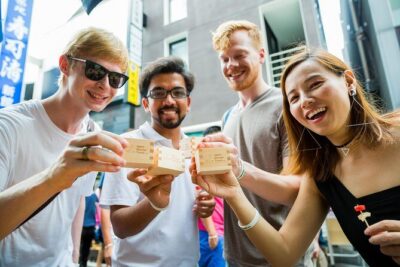 ★ 5.0Tokyo Tsukiji Fish Market Food and Culture Walking TourFrom $993,184 reviews
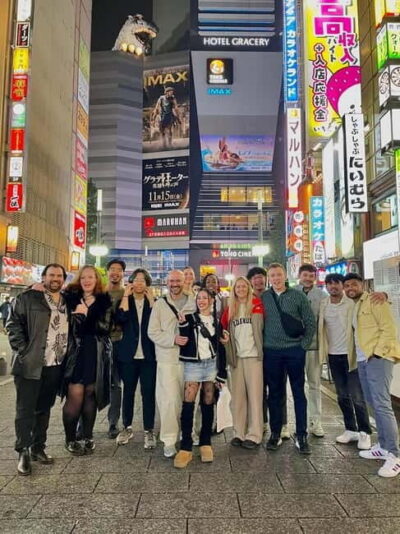 ★ 4.9Shinjuku Local Bar and Izakaya Guided Walking TourFrom $341,794 reviews
 ★ 5.0Tsukiji Fish Market Food and Walking tourFrom $301,724 reviews
 ★ 4.8Asakusa Walking Tour with Sensoji Temple VisitFrom $221,583 reviews
 ★ 4.9Tsukiji Fish Market Guided Walking TourFrom $221,397 reviews
 ★ 4.7Tokyo Castle & Imperial PalaceーShogun Walking TourFrom $231,068 reviews
 ★ 4.9Imperial Palace Japanese History Walking TourFrom $32987 reviews
 ★ 4.7Dark Side of Tokyo Shinjuku Red Light Walking TourFrom $29862 reviews
Browse the lists this tour appears in