
Reviewed · MARKETS
Master the art of Sushi : Toyosu Market Tour & Tuna Cutting
Tokyo mornings taste like answers. This tour takes you to Toyosu Market for the real work behind sushi: how tuna is evaluated, cut, and matched to the right style of nigiri. You also get a guided comparison with Tsukiji Jogai Market, so you can see what changed and what stayed the same in Tokyo’s seafood world.
I particularly love the hands-on part in Azabujuban, where you cut and make nigiri with a sushi chef. I also like the live tuna-cutting moment at Toyosu, because it turns sushi from an order-at-a-restaurant habit into a skill you can explain and use later.
One thing to consider: the day starts early (7:00 am) and you’ll move between stops by subway or bus, so plan for travel time. If you’re hoping for a slow, relaxed food stroll, this one is more “morning mission” than “wander and snack.”
In This Review
- Key highlights worth planning for
- Toyosu at 7:00 AM: Seeing Japan’s seafood engine before the day warms up
- Tuna-cutting show: What you’ll learn about freshness and sushi-grade fish
- Toyosu wholesaler market time: Free ticket, guided viewing, and optional fish shopping
- Tsukiji Jogai Market: Walking the old market and spotting the differences
- Azabujuban nigiri workshop: Cutting tuna and making sushi the same way chefs think
- Price and logistics for a focused 4-hour sushi day
- Who should book this Toyosu Market + tuna cutting tour
- Should you book? My practical take
- FAQ
- What’s the duration of the Toyosu Market tour with tuna cutting?
- Where does the tour start and end?
- What time does the tour begin?
- Is lunch included?
- Is an English guide included?
- How big is the group?
- Is transportation between stops included in the price?
- Does the tour have a weather requirement?
- Can I get a full refund if I cancel?
Key highlights worth planning for
- Toyosu wholesaler market access with a guide and time to see how auctions-style seafood culture works
- Live tuna-cutting show focused on freshness and sushi-grade standards
- Tsukiji Jogai Market comparison walk to understand what’s different between old and new market areas
- Azabujuban sushi workshop with tuna parts and nigiri making you do yourself
- Lunch included, built around the tuna and sushi you make during the workshop
More shopping runs through Tokyo
- Tokyo Tsukiji Fish Market Food and Culture Walking Tour★ 5.0 · 3,184 reviews
- Tokyo: Tsukiji Fish Market Food and Walking tour★ 5.0 · 1,724 reviews
- Tokyo: Tsukiji Fish Market Guided Walking Tour★ 4.9 · 1,397 reviews
Toyosu at 7:00 AM: Seeing Japan’s seafood engine before the day warms up
This is a morning tour, starting at 7:00 am at Shijō-mae Sta. (6 Chome-3, Toyosu). That timing matters. You’re not just visiting a food spot. You’re seeing the market at the hour when people who work in seafood actually care about speed, temperature, and quality.
You’ll be in a small group (up to 6 travelers), which makes a difference in a hands-on experience like sushi prep. With fewer people, questions land faster and the guide can keep the group moving without turning the day into a long shuffle.
And since the tour includes a mobile ticket, you won’t be wasting time figuring out paper vouchers. You show up, follow the plan, and get to the point: tuna, market work, and sushi technique.
Tuna-cutting show: What you’ll learn about freshness and sushi-grade fish
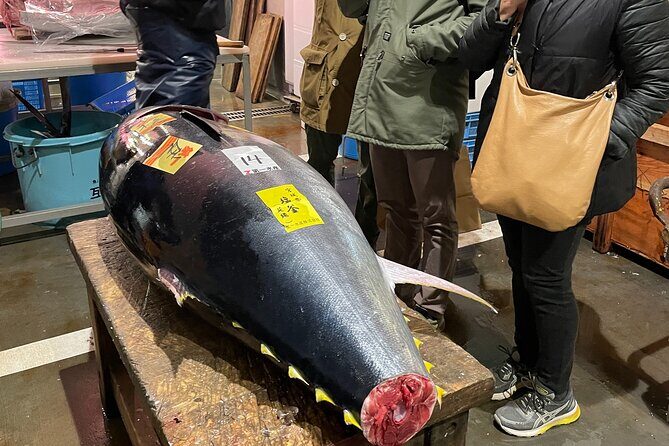
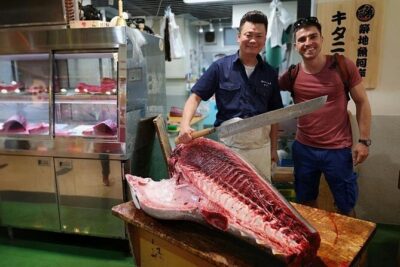
The tour’s core is the tuna-cutting demonstration. This isn’t a generic food show. The focus is on the trade: how tuna is selected, how freshness is judged, and what sushi-grade standards mean in real life.
Here’s why that’s so valuable. In most sushi meals, you get to taste the result. This tour tries to teach you how the result is earned. You watch the cutting itself, and then you’re given guidance on what makes one piece different from another.
Later, the Azabujuban workshop builds on that. Instead of treating sushi like a mystery you pay to solve, you get a framework you can use when you’re choosing seafood or trying to recreate sushi at home.
Toyosu wholesaler market time: Free ticket, guided viewing, and optional fish shopping
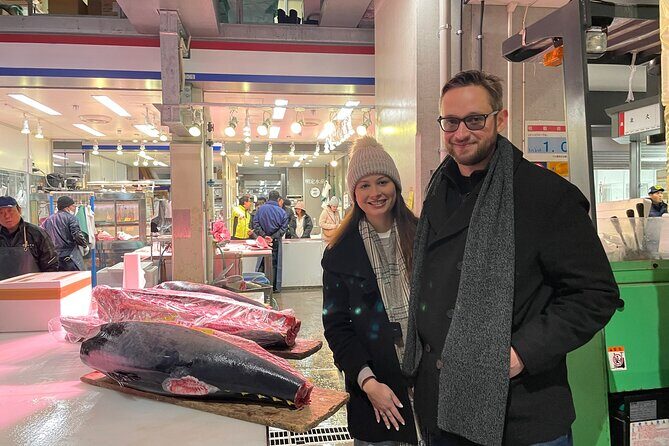
At Toyosu, the first stop is time at the wholesaler market with a guide. You’ll have about 45 minutes there, with admission ticket free for that portion of the tour.
What you should expect in this window is contrast: lots of action around fish, and a very working-person approach to seafood. You’re not just sightseeing. You’re getting oriented in a market environment that runs on systems.
There’s also an option to purchase fish at the wholesaler. If you plan to do that, think ahead about how you’ll carry it and how you’ll keep it at the right temperature until you can store it. Toyosu is a place where seafood gets handled carefully for a reason.
If you’re not buying fish, you can still get a lot out of the stop by focusing on the “how it’s done” details your guide points out, like how tuna quality is discussed and why certain pieces matter more for sushi than for other dishes.
Tsukiji Jogai Market: Walking the old market and spotting the differences
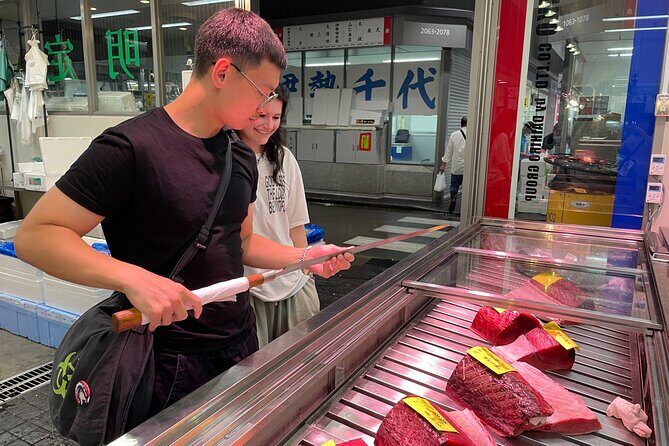
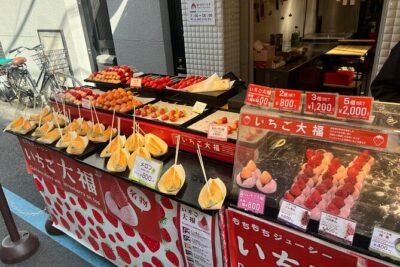
After Toyosu, the schedule shifts to Tsukiji Jogai Market. This part is about 1 hour, and it includes shopping and eating while you walk through different stores.
This stop is useful because it gives you a comparison with Toyosu. The tour explicitly frames it that way: you’ll experience the differences between Tsukiji and Toyosu, rather than treating Tsukiji as a standalone attraction.
Practically, this is also where you get an easier rhythm. The pace is still guided, but you’re moving through storefronts and stalls in a more visitor-friendly way than the wholesaler side of Toyosu. The goal isn’t just to sample food. It’s to see how the market culture shows up for people buying to cook and people buying to eat right away.
One smart way to get value here: use the Tsukiji walk to notice what type of seafood messaging you hear, what kinds of items feel “market-first,” and how that compares to the more behind-the-scenes tone you saw earlier in Toyosu.
More market mornings in Tokyo

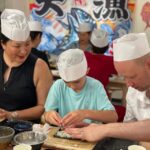
Azabujuban nigiri workshop: Cutting tuna and making sushi the same way chefs think
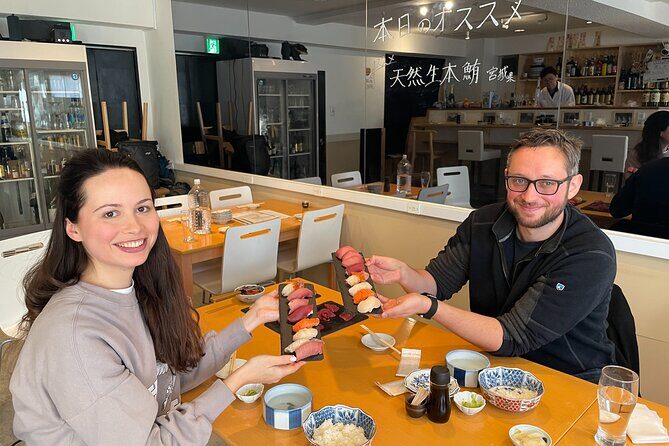
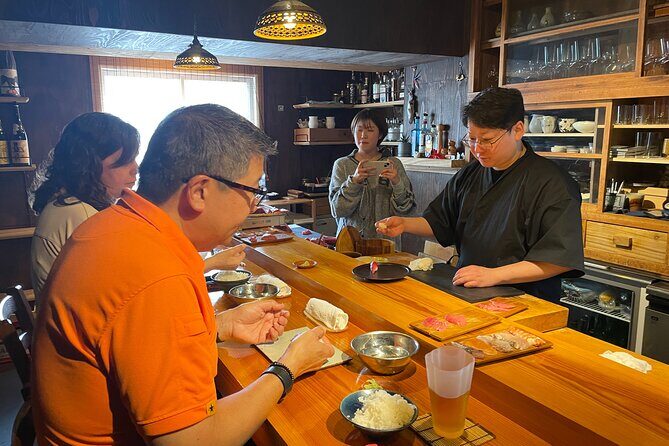
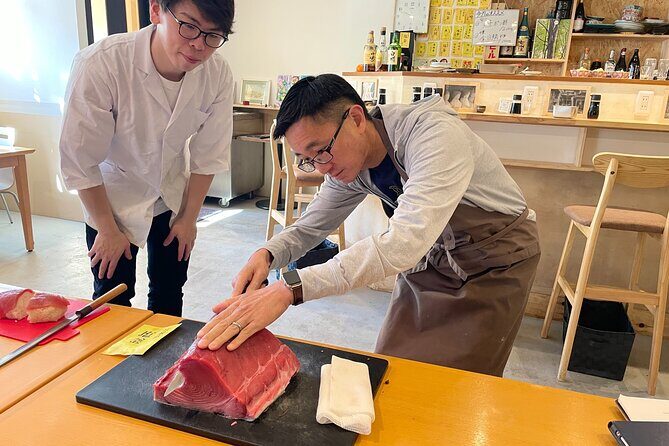
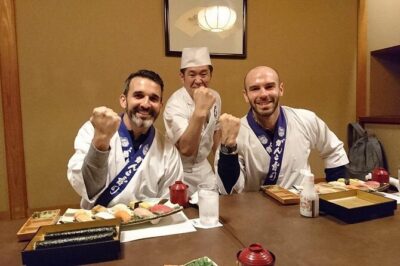
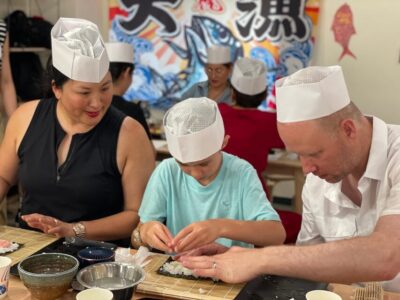
This is the part most sushi lovers remember. In Azabujuban, you work with a sushi chef in a Japanese restaurant to experience the process of cutting tuna and making nigiri sushi.
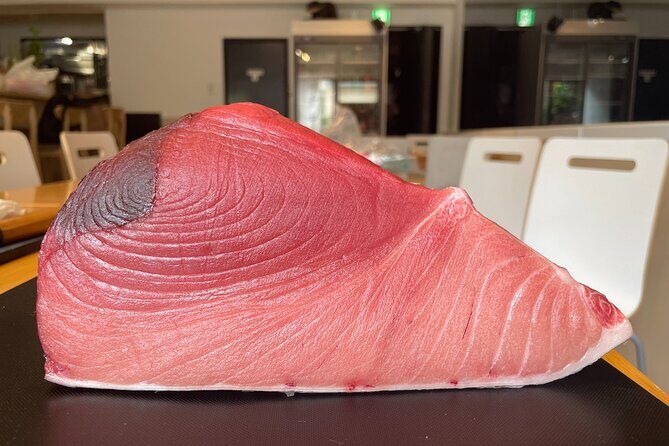
The tour is built to help you compare the tuna you’re working with. You’ll be able to look at different parts and learn ways of eating tuna that make sense with those parts.
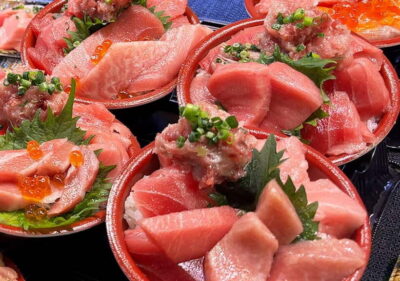
A standout detail from the experience is the scale and focus during the cutting: the group learned to cut tuna into different types, including fatty, middle, and lean sections, and then put those into the sushi you eat. One memorable moment involves making sushi and using the different tuna parts as the lesson itself, not just as a variety of flavors on the plate.
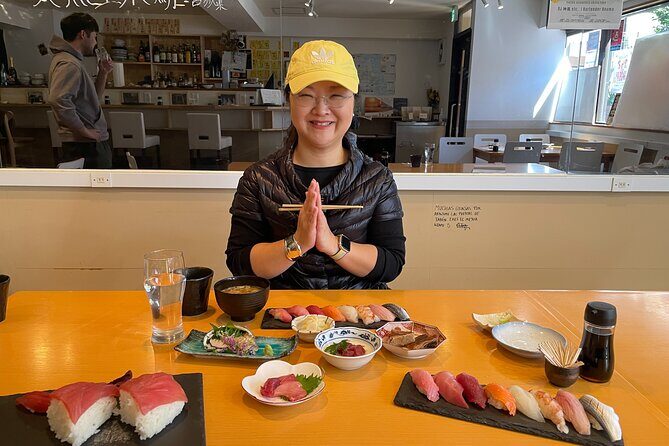
You also get lunch included, and it’s not a separate add-on. It comes with tuna and sushi made by yourselves during the workshop. That matters because you’re eating what you produced, which makes the technique feel real instead of performative.
If you want a takeaway for home, aim to remember the logic your chef teaches: how the cut affects the bite, and how the sushi form is tied to the tuna quality. Even if you never replicate the exact cut, you’ll leave knowing what to ask for and what to pay attention to.
At the end, the tour finishes in Azabujuban (at 3-chome-3-4 Azabujūban). So you can plan your next activity nearby, or take your time on the way back since you’re not ending in the middle of nowhere.
Price and logistics for a focused 4-hour sushi day
The price is $297.23 per person for about 4 hours (approx.), and the experience is small-group with an English guide and lunch included.
So is it worth it? For me, the value depends on what you care about:
- If you want sushi as a meal, you can do Tokyo much cheaper.
- If you want tuna cutting and sushi prep as an actual skill you practice with a chef, the price starts to make sense.
You’re paying for instruction, ingredients, and access to a market sequence that’s hard to stitch together on your own in a way that explains what you’re seeing. The fact that the day includes Toyosu + Tsukiji comparison + an Azabujuban workshop means you’re not just watching one thing. You’re seeing the full chain: market culture, quality thinking, and then technique.
Logistics to know up front:
- Transportation between stops is by subway or bus, and that cost is not included in the price.
- The day requires good weather. If conditions are poor, you’ll be offered a different date or a full refund.
- You start early. That’s not a flaw, but it is a planning factor.
If you budget the extra transit cost and you like early starts, this price feels more like paying for a guided culinary lesson than a standard sightseeing ticket.
Who should book this Toyosu Market + tuna cutting tour
This is a strong fit if you:
- Love sushi and want to understand it beyond ordering
- Want behind-the-scenes insight into how tuna is judged and cut
- Like practical food learning (you’ll actively make sushi, not just watch)
- Prefer smaller groups (max 6) for better interaction
It might be less ideal if you:
- Hate early mornings and can’t handle a 7:00 am start
- Expect a relaxed day with minimal moving around
- Are extremely price sensitive, since this isn’t a low-cost food crawl
Also consider your comfort with public transit days. The tour uses subway/bus between stops, and some time in the middle comes from travel between locations.
Should you book? My practical take
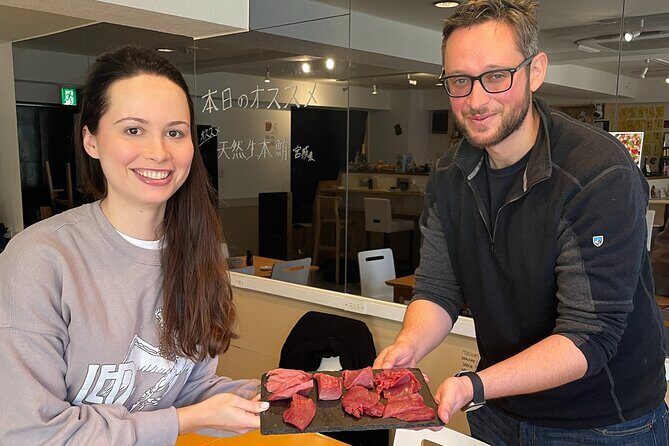
If your goal is to learn what makes sushi quality and to see tuna handling up close, I’d book it. The combination of a live tuna-cutting show, a market-to-market comparison, and then a chef-led nigiri workshop is exactly the kind of structured Tokyo food day that’s hard to DIY without turning it into confusion.
If your goal is only to eat great sushi and you don’t care about technique, you can probably find cheaper meals and workshops elsewhere. But if you want the “how” as much as the “what,” this tour gives you a clear story you can actually remember.
One last tip: wear comfortable shoes. Even with guided timing, you’re walking and moving between market areas and a restaurant workshop. Good footwear makes the morning easier from start to finish.
FAQ
What’s the duration of the Toyosu Market tour with tuna cutting?
It’s about 4 hours (approx.).
Where does the tour start and end?
It starts at Shijō-mae Sta. 6 Chome-3 Toyosu, Koto City, Tokyo 135-0061, Japan and ends at 3-chōme-3-4 Azabujūban, Minato City, Tokyo 106-0045, Japan.
What time does the tour begin?
The start time is 7:00 am.
Is lunch included?
Yes. Lunch is included and includes tuna and sushi made by yourselves.
Is an English guide included?
Yes, an English guide is included.
How big is the group?
The maximum group size is 6 travelers.
Is transportation between stops included in the price?
Transportation within the tour is by subway or bus, but the cost of that transportation is not included.
Does the tour have a weather requirement?
Yes. The experience requires good weather. If it’s canceled due to poor weather, you’ll be offered a different date or a full refund.
Can I get a full refund if I cancel?
Yes. You can cancel up to 24 hours in advance of the experience for a full refund.
Bring an Empty Suitcase

More Tours in Tokyo




More Tour Reviews in Tokyo




Fresh reviews from around Tokyo






Markets, compared.
 ★ 5.0Tokyo Tsukiji Fish Market Food and Culture Walking TourFrom $993,184 reviews
 ★ 5.0Tsukiji Fish Market Food and Walking tourFrom $301,724 reviews
 ★ 4.9Tsukiji Fish Market Guided Walking TourFrom $221,397 reviews
 ★ 5.0Tsukiji Fish Market Guided Tour and Sushi Making with Pro ChefFrom $104775 reviews
★ 4.7Tsukiji Fish Market Food and Culture Walking TourFrom $96757 reviews
★ 5.0Tsukiji Fish Market Guided Tour and Sushi Making with Pro ChefFrom $104775 reviews
★ 4.7Tsukiji Fish Market Food and Culture Walking TourFrom $96757 reviews
 ★ 5.0Tsukiji Fish Market: Street Food & Culture Walking TourFrom $33669 reviews
 ★ 5.0Tsukiji Fish Market Small-Group Food Walking TourFrom $87621 reviews
 ★ 4.9Tsukiji Fish Market Sushi Making Class with Pro ChefFrom $63506 reviews
Browse the lists this tour appears in