
Reviewed · HISTORICAL TOURS
Kyoto: Nijo Castle World Heritage Guided Tour with Admission
Silent floors, loud history. This guided walk through Nijo Castle turns Japan’s power struggle into something you can feel in your feet and see in the rooms. I especially love the small group size (up to 10) and the chance to experience the famous nightingale-floor effect in the Ninomaru Palace. One thing to plan for: you must remove your shoes when entering the palace.
You start at Nijōjō-mae Station, then move through spaces built less for fighting and more for control, intimidation, and strict social order. Expect a guide who connects the shogun vs. emperor rivalry to what you’re walking past, including the moment in 1867 when Tokugawa Yoshinobu returned authority to the Emperor.
In This Review
- Key things you’ll remember about this Nijo Castle tour
- Nijo Castle isn’t a fortress. It’s a stage for control.
- Finding your guide at Nijōjō-mae Station, Exit 1
- Gardens and moats with koi: the calm before the power talk
- Ninomaru Palace rooms: how architecture enforces social rank
- The chirping nightingale floors: the effect you can’t fake
- Layered corridors and gates: psychological pressure in plain sight
- Shogun vs. Emperor rivalry, explained through what you’re standing in
- The 1867 moment: where power shifts back to the Emperor
- Price and value: why $40 can be a good deal here
- Who should book this tour (and who might skip it)
- Practical notes that matter before you go
- Should you book this Nijo Castle guided tour?
- FAQ
- Where do I meet the guide?
- How long is the tour?
- Is admission included?
- Is the tour in English?
- How big is the group?
- Do I need to remove my shoes?
- Is it wheelchair accessible?
- Can I cancel or pay later?
Key things you’ll remember about this Nijo Castle tour
- Up to 10 people means you can actually ask questions instead of shouting over a crowd
- Admission included so you don’t have to handle ticket logistics before you start
- Nightingale floors underfoot, plus layered corridors and gates designed to unsettle
- Shogun vs. Emperor power theater, explained in plain language
- Koi carp moats and photogenic gardens that make breaks between indoor rooms worthwhile
- A guided walk that connects to 1867, when the shogunate ended
More days made easy by a guide
- Tokyo 6hr Private Tour with Government-Licensed Guide★ 5.0 · 3,902 reviews
- Tokyo: Shinjuku Local Bar and Izakaya Guided Walking Tour★ 4.9 · 1,794 reviews
- Tokyo: Private City Highlights Tour with Local Guide★ 4.8 · 1,433 reviews
Nijo Castle isn’t a fortress. It’s a stage for control.

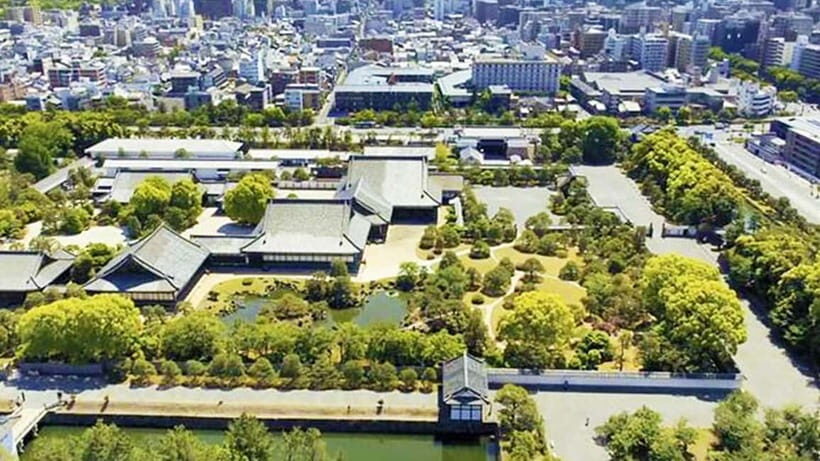
Nijo Castle is UNESCO-listed, but what makes it memorable is how the design tells a story. A lot of castles scream defense. This one explains authority. You’ll walk through areas built for display and silent pressure, where architecture quietly tells visitors: you’re not in charge here.
The tour frames the big idea fast: the Tokugawa shoguns ruled from distant Edo (now Tokyo) but built a lavish palace right in the Kyoto power center. That sounds political on paper. On-site, it feels like a message sent without a single sword drawn.
Finding your guide at Nijōjō-mae Station, Exit 1
This tour is built for an easy start. Meet outside Entrance (Exit) 1 of Nijōjō-mae Station. Your guide will be holding a sign that says Local Guide Stars. From there, the tour flows on foot, with a planned walking route that keeps the pace gentle enough for most people (it’s mostly flat terrain).
A nice bonus for English-speaking visitors: this is a live English-speaking guide experience, not a headset script. In past departures, guides like Nao, Uta, Alexander, and Benjamin have led the tour, and they’re known for answering questions clearly and staying engaged with the group’s interests.
Gardens and moats with koi: the calm before the power talk
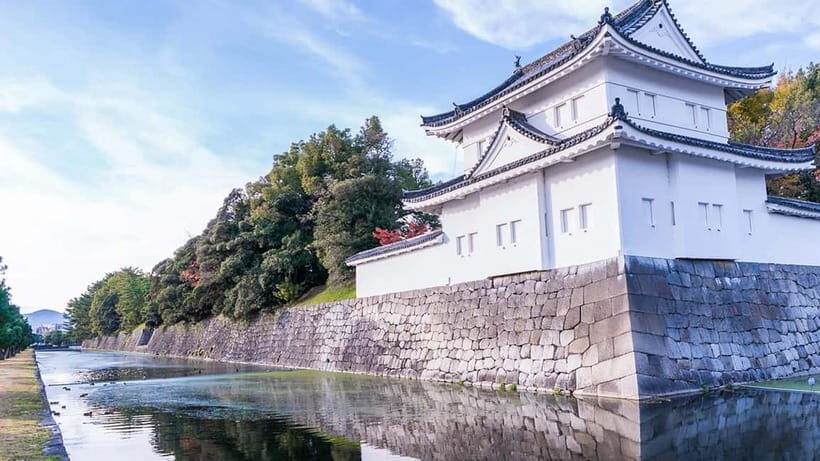
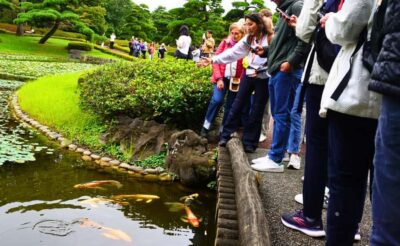
Before you get deep into the palace, you’ll get that Kyoto “slow down” moment. The gardens and the moats are especially photogenic, with colorful koi carp swimming through the water near the castle grounds. It’s the kind of scene that makes the place feel less like a museum set and more like a living landscape with layers of meaning.
I like that the tour doesn’t shove you indoors immediately. You get a visual break first, then you move into the palace spaces where the tone turns serious. If you’re the type who likes to understand mood and setting, this order works well.
Ninomaru Palace rooms: how architecture enforces social rank
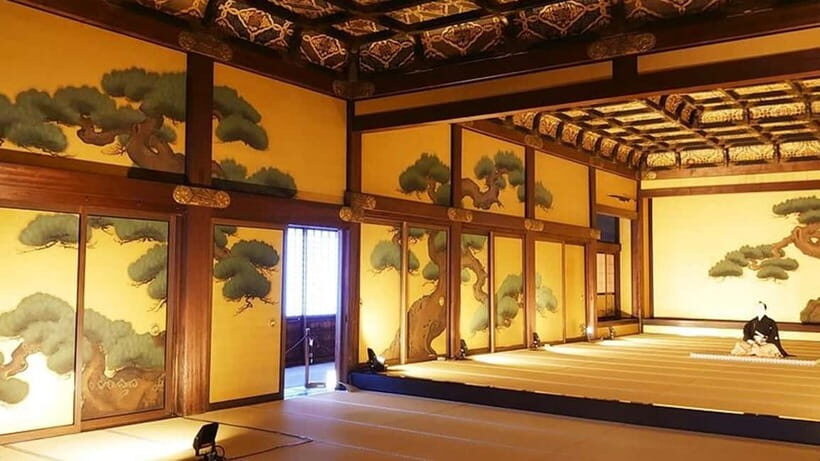
The main indoor highlight is the Ninomaru Palace, where the design is basically a rulebook. The tour explains how room size, floor height, and decoration reflect strict social hierarchy. You’re not just looking at fancy interiors. You’re seeing how power gets measured and practiced through everyday details.
Here’s what I think makes this section click for visitors: you start noticing “minor” features as meaningful choices. Higher or lower floors aren’t just design. They’re status. The way space is arranged isn’t random. It shapes behavior. Even if you don’t catch every historical nuance, you’ll feel the intention.
Expect a guided walk through the palace areas that connect physical layout to Tokugawa strategy: dominance without war, control without spectacle.
More paths into old Tokyo

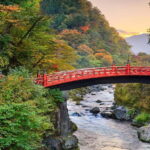

The chirping nightingale floors: the effect you can’t fake
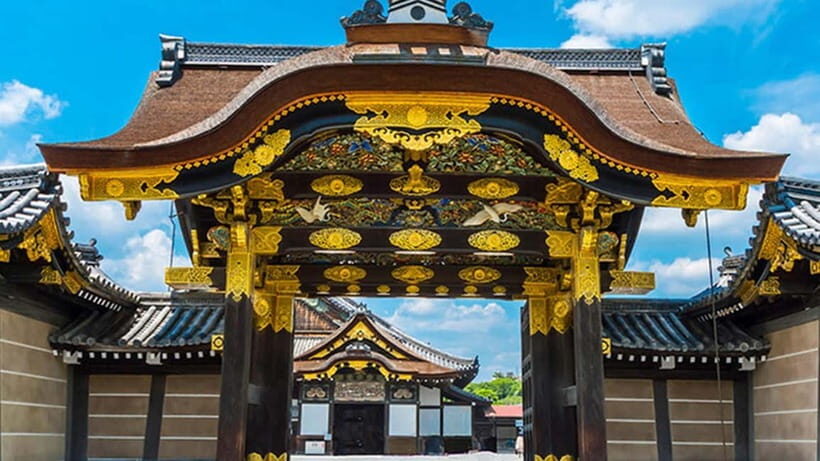
Then comes the moment people talk about for a reason: the famous nightingale floors. When you step on these specially built floorboards, they produce a chirping sound intended to expose intruders.
What’s cool is how the guide ties the effect to the castle’s overall purpose. This is not just a gimmick to “prove you were here.” It’s part of a system of layered control—sound, movement, and space working together. Once you hear and feel it, the castle’s purpose becomes less abstract.
If you’ve read about Nijo Castle before, this is where your notes turn into something real under your feet.
Layered corridors and gates: psychological pressure in plain sight
A castle isn’t only walls. It’s paths. This tour walks you through corridors and gates designed to overwhelm visitors psychologically. It’s the kind of design that feels intentional even if you’re not trained in architecture.
The best way to experience this is to slow your thinking down and pay attention to sequencing: where you’re pushed to turn, where you pause, and how movement changes your sense of control. A good guide makes that clear, and guides on this tour often do a solid job explaining how these “passages” supported authority.
It’s also a great segment for questions. People often want to know why something is built a certain way. When your guide can connect the design to the shogunate’s goals—especially their need to project power in Kyoto—it stops feeling like trivia.
Shogun vs. Emperor rivalry, explained through what you’re standing in
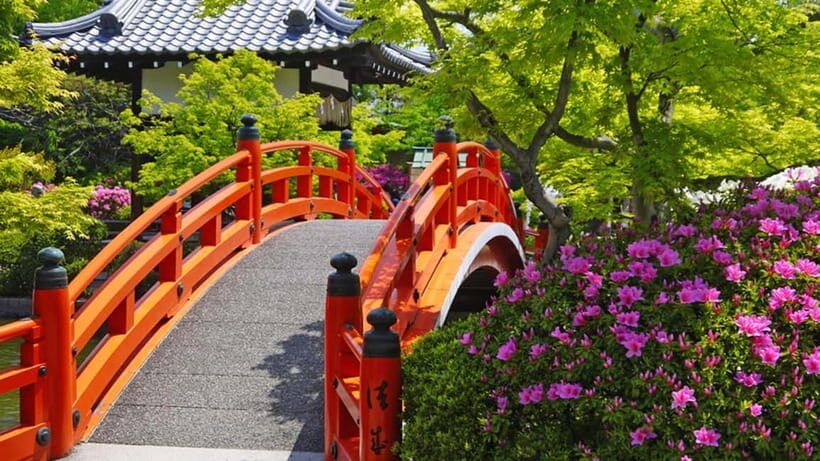
The tour doesn’t treat the shogun vs. emperor rivalry like a distant textbook topic. It uses location and layout to explain why the Tokugawa rulers built right near the Emperor’s sphere of influence.
I like how the guide frames it as strategic positioning. The shoguns ruled from Edo, but they weren’t comfortable being “far away.” So they created a lavish palace in Kyoto to assert authority where it mattered. You’ll learn the contrast between the official center of imperial power and the Tokugawa leadership trying to dominate from the side.
And as you move through rooms and controlled routes, that rivalry stops being just names and dates. It becomes a physical experience—quietly enforced.
The 1867 moment: where power shifts back to the Emperor
One of the tour’s most memorable endpoints is the historical turning point in 1867. You’ll stand in the area connected with the moment when Tokugawa Yoshinobu returned authority to the Emperor, ending more than 260 years of shogunate rule and ushering in the Meiji Restoration.
This part works because the tour connects the story to the physical space you’ve been walking through. You’re not just hearing an event. You’re landing on a “then what?” moment after seeing how shogunate authority operated.
The guided walk also marks the broader arc of the shogunate’s end, which gives the whole visit a clean narrative shape. You leave understanding not only what Nijo Castle was for, but what it became as Japan changed.
Price and value: why $40 can be a good deal here
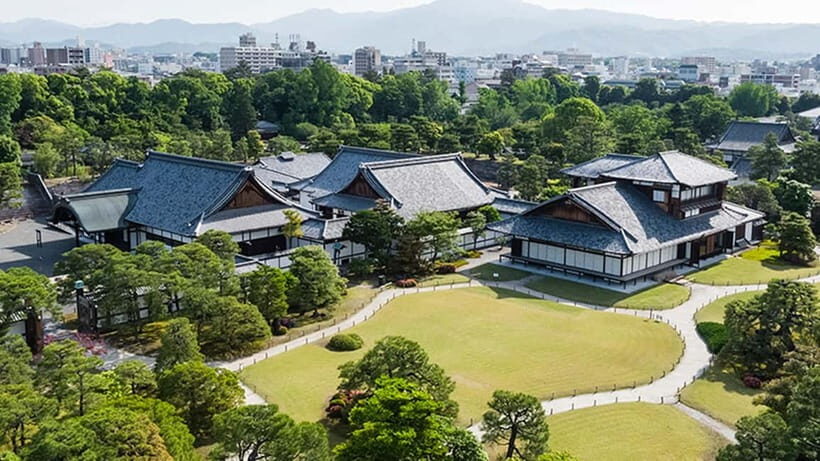
At $40 per person for a 90-minute guided tour with admission included, the value mostly comes from two places: access and interpretation. Admission alone can be the kind of small cost that feels minor until you add the rest of your day’s planning. Here, admission is included, so you get a smoother start.
Then there’s the guide factor. This castle’s meaning shows up through explanation—why the design is the way it is, what intimidation-by-architecture looked like, and how the 1867 authority shift connects to the spaces you toured. With a small group capped at 10, you’re not just buying a walk. You’re buying a guided story with room for real questions.
Is it perfect value if you’re the kind of visitor who hates guided time limits? Maybe not. But if you want a more complete understanding in a short window, it’s a practical pick.
Who should book this tour (and who might skip it)
I’d point you toward this tour if you want:
- A guided history experience that explains design choices, not just dates
- A small-group setting where questions get answered
- The specific “nightingale floor” experience at Nijo Castle with context
You might think twice if:
- You strongly dislike shoe removal when entering palace spaces
- You want a totally self-directed visit with no guided flow
Practical notes that matter before you go
The tour is designed to be easy on logistics: a single meeting point outside Exit 1 of Nijōjō-mae Station and a return to the same station after the guided walk. The walking is mostly flat, and the tour is wheelchair accessible.
The key practical detail is shoe removal when entering the palace. If that’s a hassle for you, it’s worth building a quick mental plan for how you’ll handle it comfortably before the tour starts.
Also, since this is a small-group tour, timing and attention matter. If you show up ready to move and listen, the 90 minutes feels satisfying rather than rushed.
Should you book this Nijo Castle guided tour?
If you’re choosing between a quick, self-guided castle visit and a guided one, I’d lean toward booking. This tour gives you the best parts of Nijo Castle in a tight time window: the Ninomaru Palace hierarchy details, the nightingale floors, and the shogun-to-Emperor story ending in 1867.
And because it’s limited to up to 10 people, you’re more likely to get answers that fit your questions—whether you’re curious about the rivalry, the design meant to unsettle visitors, or how the palace’s purpose shifted at the start of the Meiji era.
FAQ
Where do I meet the guide?
Please meet outside Entrance (Exit) 1 of Nijōjō-mae Station. The guide will be holding a sign that says Local Guide Stars.
How long is the tour?
The tour lasts about 90 minutes, including a 1.5-hour guided component.
Is admission included?
Yes. Admission to Nijo Castle is included in the tour price.
Is the tour in English?
Yes. The tour has a live guide in English.
How big is the group?
It’s a small group limited to up to 10 participants.
Do I need to remove my shoes?
Yes. When entering the palace, all visitors must remove their shoes.
Is it wheelchair accessible?
Yes, the tour is wheelchair accessible. The route is mostly flat terrain.
Can I cancel or pay later?
You can reserve now and pay later, and you can cancel up to 24 hours in advance for a full refund.
Easier with a Guide




More Tours in Tokyo




More Tour Reviews in Tokyo




Fresh reviews from around Tokyo






Historical Tours, compared.
 ★ 4.9Imperial Palace Japanese History Walking TourFrom $32987 reviews
 ★ 5.0Shinjuku Historical Walking Tour & Secret BackstreetsFrom $25530 reviews
 ★ 4.9From Tokyo: Nikko World Heritage Site Private Full-Day TripFrom $483243 reviews
 ★ 5.0Yanaka Historical Walking Tour in Tokyo’s Old TownFrom $81182 reviews
 ★ 5.0Kamakura Historical Walking Tour with the Great BuddhaFrom $98129 reviews
From Tokyo: Nikko World Heritage Sight Full Day Private TourFrom $362127 reviews
★ 5.0Kamakura Historical Walking Tour with the Great BuddhaFrom $98129 reviews
From Tokyo: Nikko World Heritage Sight Full Day Private TourFrom $362127 reviews
 ★ 4.8Yanaka District: Historical Walking Tour in Tokyo’s Old TownFrom $79117 reviews
 ★ 4.8Nikko Heritage & Nature Day Trip from TokyoFrom $39194 reviews
Browse the lists this tour appears in