
Reviewed · TSUKIJI FISH MARKET TOURS
Inside Tokyo’s Kitchen: Tsukiji Market, Food & Culture Tour
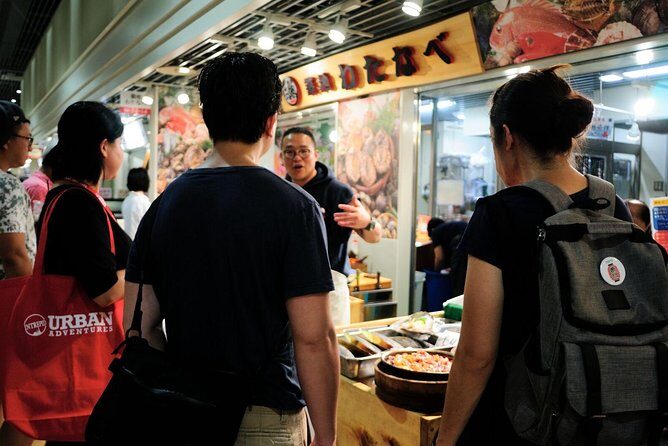
Tsukiji can overwhelm you fast. This 3-hour Tokyo food and culture tour makes it manageable, with a small group and a local guide who helps you keep your bearings in the narrow alleys around Tsukiji Outer Market. It’s not just tasting, either: you’ll start near Kabukiza and end with a quieter shrine stop before heading back toward Tsukiji Station.
I especially like freshly made sushi and the chance to taste kawaii wagashi alongside savory snacks. The group stays small (max six), so the guide can answer questions and steer you to the good stuff without you feeling rushed or lost.
One thing to consider: vegetarian and vegan options are available, but the selection is limited. If you have strict dietary needs, you’ll want to go in with a flexible mindset and be ready for fewer choices than the meat-and-fish crowd.
In This Review
- Key things I’d plan around
- Why this Tsukiji Outer Market tour is easier than going solo
- Stop 1 near Kabukiza: Kabuki Inari Shrine and a quick culture warm-up
- Tsukiji Outer Market in about 2 hours: what you’ll actually cover
- Fresh sushi, Japanese snacks, and wagashi sweets: how the tasting works
- Shrine stop at the end: Namiyoke Inari Shrine and a calmer finish
- Group size, timing, and what a 3-hour tour means for your day
- Price and value: is $83.35 a smart buy?
- Vegetarian and vegan needs: yes, but with limits
- Who should book this Tsukiji Outer Market experience
- Should you book this Tsukiji Outer Market and shrine food tour?
- FAQ
- What time does the tour start?
- How long is the Tsukiji food and culture tour?
- How big is the group?
- What is included in the tour price?
- Are drinks included?
- Is the tour vegetarian or vegan-friendly?
- Where do you meet, and where does the tour end?
- What should I wear for this tour?
- Can I cancel and get a full refund?
Key things I’d plan around
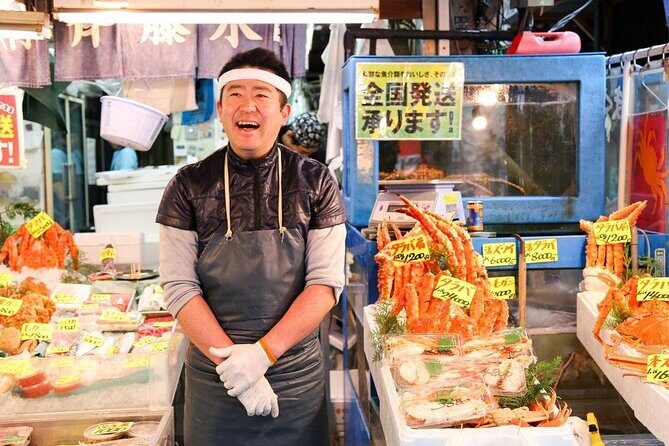
- Max 6 people keeps the pace human and the tour easier to follow
- Fresh sushi and wagashi sweets give you a real mix of savory and sweet
- Two shrine stops add context without turning the day into a sightseeing marathon
- Narrow market alleys + wet spots mean closed-toe shoes are a must
- Outer-market focus helps you avoid the chaos that can swallow big crowds
- Guides may add hands-on touches like wasabi prep, depending on the day
Still hungry? More Tsukiji breakfasts and market walks
- Tokyo Tsukiji Fish Market Food and Culture Walking Tour★ 5.0 · 3,184 reviews
- Tokyo: Tsukiji Fish Market Food and Walking tour★ 5.0 · 1,724 reviews
- Tokyo: Tsukiji Fish Market Guided Walking Tour★ 4.9 · 1,397 reviews
Why this Tsukiji Outer Market tour is easier than going solo
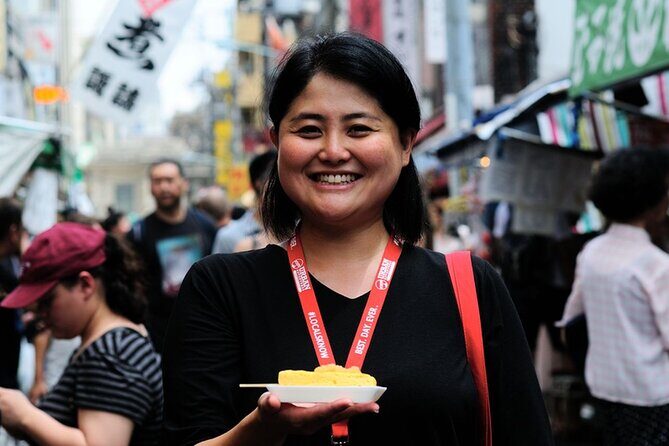
Tsukiji is famous, but that fame comes with a downside: crowds, confusion, and a lot of stalls yelling in every direction. This tour’s value is simple. You get a guide to map the market movement for you, so you don’t waste your energy hunting for the “right” places.
You also get food that’s chosen for the walk. Instead of bouncing between unrelated shops, you’ll taste sushi and snack-style items in a way that fits the route. And because the group is limited to six, questions don’t get lost in the shuffle—big deal in a place where you’re surrounded by signs, tools, and fast-moving vendors.
Most tours at Tsukiji only cover food. This one adds small doses of culture with Kabuki Inari Shrine at the start and Namiyoke Inari Shrine at the end. It’s a nice break from pure eating and gives you a clearer sense of what you’re seeing and why people do it.
Stop 1 near Kabukiza: Kabuki Inari Shrine and a quick culture warm-up
The tour starts at Kabuki Inari Shrine by Kabukiza (the address is 4 Chome-12 Ginza, Chuo City). You meet in front of the shrine and begin with a short introduction—about 10 minutes—with a focus on Kabuki, Japan’s dramatic mix of dance and theater.
This first stop works for two reasons. First, it sets a calm tone before the market noise. Second, it gives you an easy, memorable cultural hook before you start looking at food as something more than fuel. You’re not just walking through alleys—you’re walking through a neighborhood where old-school traditions and everyday commerce sit side by side.
In past tour feedback, guides named Mihari and Koz have been praised for making this opening feel lively rather than like a mandatory lecture. Even if your guide takes a more straightforward approach, you’ll still get a quick sense of place before you move into the food lanes.
Tsukiji Outer Market in about 2 hours: what you’ll actually cover
After the shrine warm-up, you’ll spend roughly 2 hours in Tsukiji Outer Market. This is the part you came for, and it’s where the guide earns their keep.
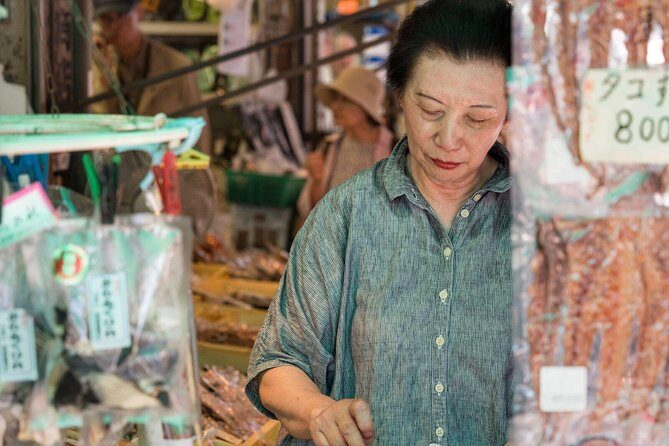
You’ll walk through narrow streets packed with seafood, vegetables, and snack shops. The tour route is designed so you don’t have to decide everything for yourself. You’ll get a guided path through the busiest areas and the places where food culture is easier to understand through tasting.
One smart benefit here: you get to sample without needing perfect language skills. The tour information notes that you won’t face language barriers because the guide helps translate. In practice, that means you can ask what’s what—fish types, snack names, and what you’re supposed to notice—without turning your experience into a guessing game.
Two practical considerations for the market walk:
- Shoes matter. The tour notes inner market floors can be wet, so bring closed-toe sneakers with decent grip.
- The pace can feel full. It’s about food, walking, and learning, and it moves from stop to stop fast. If you’re hoping for a leisurely browse where you stop to window-shop every stall, you might feel a little time pressure.
Fresh sushi, Japanese snacks, and wagashi sweets: how the tasting works
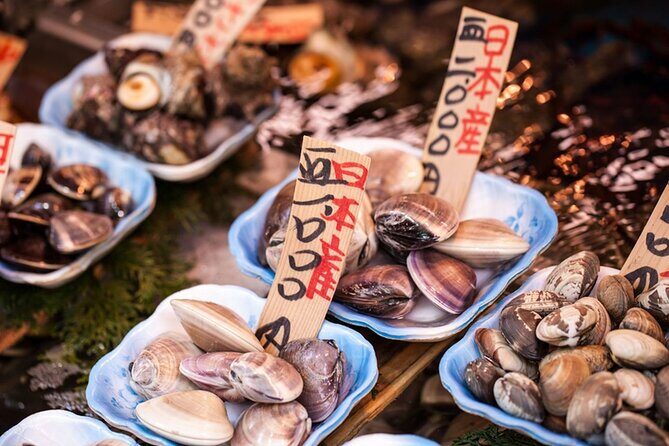
The big promise is food—specifically sushi and sweets—but the real value is the mix and the guidance. You’ll taste fresh sushi, Japanese snacks, and Kawaii Wagashi sweets during the market portion.
This mix is ideal because it covers multiple parts of Japanese snacking culture:
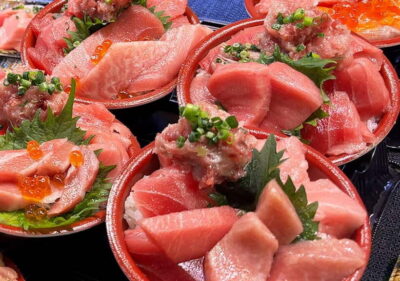
- Sushi gives you the “main event” flavor profile—clean, fish-forward, and best when you compare different cuts or styles.
- Snack items help you understand the broader market mentality: quick bites that travel well and taste good without a sit-down meal.
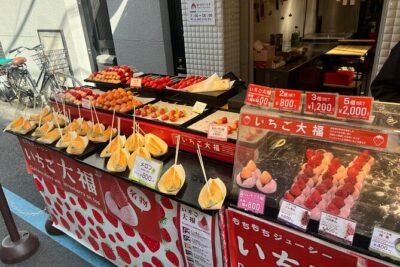
- Wagashi brings in texture and form. The sweets are often colorful and shaped, and they help you see why Japanese confections can feel like art, not just dessert.
Now for the honest part: you’re not getting unlimited food. You’re getting selected tastes. That’s why I like the tour as an add-on to your Tokyo day, not as the only eating plan you build your schedule around.
A couple of hands-on details show up in real tour feedback. One guide named Yuri was praised for bringing a wasabi tool so you could grind real wasabi and taste it with sushi. Another guide, Aya, has been noted for guiding tastings like satsumaage (fish cake), tamagoyaki (omelette), tuna nigiri, and even a sea eel roll. These aren’t guaranteed, but they show what kind of thoughtful moments a strong guide can add.
If your expectations are: I want a few standout bites and I want them explained—this tour fits perfectly.
Other plates worth crossing Tokyo for



Shrine stop at the end: Namiyoke Inari Shrine and a calmer finish
The last scheduled cultural moment is Namiyoke Inari Shrine, with about 10 minutes to soak in the quieter atmosphere. The tour then ends with a short walk—around 10 minutes—to the nearest station.
This ending is a smart design choice. Markets can leave you wired and oversaturated. The shrine stop gives you a natural cool-down where you can reset your senses and take a breath before your next train.
It also helps with orientation. Ending near Tsukiji Station (the Hibiya Tokyo Metro Line is mentioned) makes it practical for building the rest of your day. You’re not left wandering around trying to find your way after the final tasting.
Group size, timing, and what a 3-hour tour means for your day
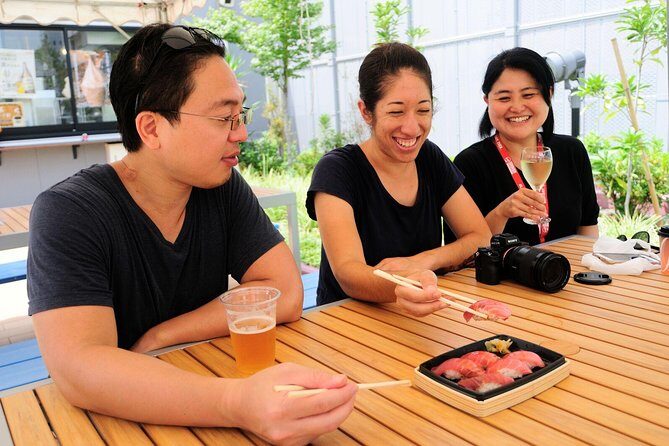
This is a small-group experience with a maximum of six travelers, and it runs about 3 hours. It starts at 8:00 am and uses a mobile ticket.
That timing matters more than it sounds. Tsukiji is the kind of place where early hours help. You’re more likely to enjoy the market without getting stuck in slow-moving crowds, and you’ll have energy for the walking part when the day is still fresh.
The 3-hour duration is also a sweet spot. You get enough time to taste multiple items and learn what to look for, but you still have the rest of your morning or early afternoon to do other Tokyo classics. If you’re planning multiple neighborhoods in a day, this tour is light enough to not crush your itinerary.
One logistical note that came up in tour feedback: the meeting point matters. People can accidentally walk past it if they’re moving fast or relying on general area directions. So I’d treat the start location like a meeting appointment—arrive a few minutes early and double-check that you’re at the Kabukiza/Kabuki Inari Shrine area.
Price and value: is $83.35 a smart buy?
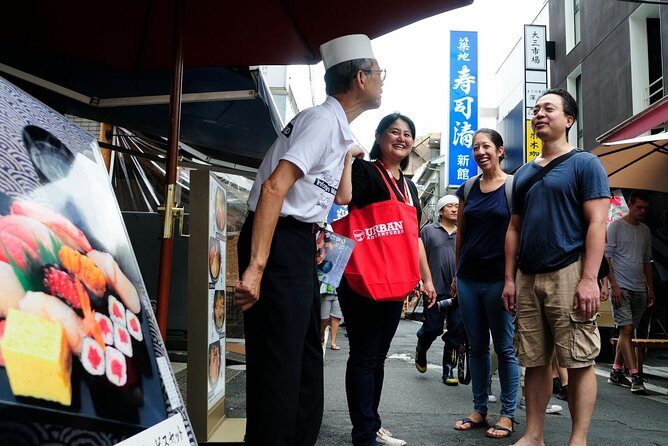
At $83.35 per person, this tour isn’t a budget snack crawl. But it can still be good value if you care about both food and guidance.
Here’s where the price makes sense:
- You’re paying for a guide who reduces decision fatigue in a complex market.
- You get multiple tastings that include sushi and sweets, not just one sample bite.
- You’re also paying for cultural context with two shrine stops, plus tips on where to eat and what to notice.
You should also factor in what’s not included. Drinks and additional food aren’t included, and tips/gratuities for the guide aren’t included. That means you’ll probably want a plan for water and any extra calories after the tour ends—especially if you’re a big eater.
A key detail from past feedback is that some guides were praised for covering many tasting experiences during the tour. When that happens, the tour feels even more like value, because you’re not constantly wondering what you’ll have to pay for at each stop.
There is also a possible mismatch to be aware of. One piece of feedback mentioned food that seemed more packaged than expected and suggested the tasting didn’t happen where rolls are made in view. I can’t promise what your day will look like, but it’s a good reminder to set expectations: this is an outer-market tasting walk, not a behind-the-scenes factory tour of every sushi counter.
Vegetarian and vegan needs: yes, but with limits
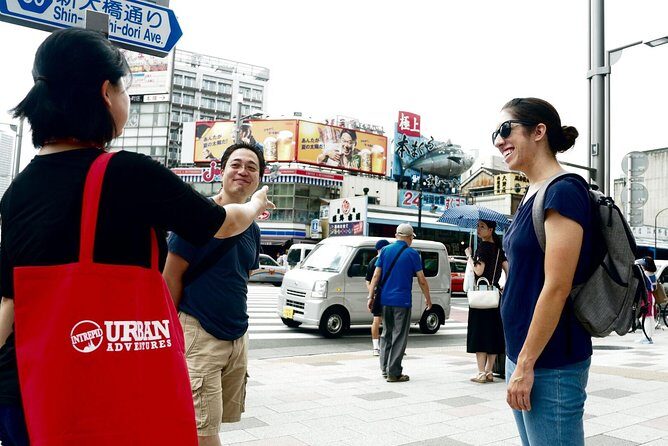
The tour lists vegetarian and vegan options as available, though food selection is limited.
So here’s the practical way to handle it:
- Come prepared for fewer choices than what fish-and-meat lovers will get.
- Be ready for the sweets and snack portion to carry more of the meal experience than you might expect.
- If you have strong dietary restrictions (no fish sauce, no shellfish, etc.), you’ll want to communicate clearly with the guide when the tour starts.
This is still a worthwhile option for many non-meat eaters, as long as you don’t plan your whole day assuming a full, varied menu. Think: tasting tour with some flexible options, not a strict vegetarian food market tour.
Who should book this Tsukiji Outer Market experience
I’d recommend this tour if you’re:
- A first-timer at Tsukiji who wants an easy route and help ordering your attention
- A sushi fan who wants a guided tasting mix of fish and snacks
- Someone who likes small-group tours where the guide can actually talk to you
- A traveler who enjoys cultural side stops, not just food
You might skip it if:
- You want a super-long browsing session where you can linger in every stall
- You expect every tasting to be made in front of you
- You want a full meal with drinks included (this is tasting-focused)
Should you book this Tsukiji Outer Market and shrine food tour?
If your priority is getting oriented fast and eating a smart mix of sushi, snacks, and wagashi in a route that makes sense, then yes, this is a strong pick. The small group size, the translation support, and the shrine stops make it feel like more than a checklist.
I’d especially book it if you like structure. Tsukiji is overwhelming without it, and paying for that guidance can turn stress into an enjoyable morning. Just go in knowing it’s limited tastings, drinks aren’t included, and vegetarian/vegan options exist but won’t be as broad as the standard menu.
FAQ
What time does the tour start?
The tour starts at 8:00 am.
How long is the Tsukiji food and culture tour?
It lasts about 3 hours.
How big is the group?
The tour has a maximum of six travelers.
What is included in the tour price?
You’ll savor freshly made sushi, local snacks, and wagashi sweets, plus a guided stroll through Tsukiji Outer Market and visits to Kabuki Inari Shrine and Namiyoke Inari Shrine.
Are drinks included?
No. Drinks and additional food are not included.
Is the tour vegetarian or vegan-friendly?
Vegetarian and vegan options are available, but the food selection is limited.
Where do you meet, and where does the tour end?
You start at Kabuki Inari Shrine at 4 Chome-12 Ginza, Chuo City, Tokyo. The tour ends at Tsukiji Fish Market near Tsukiji Station.
What should I wear for this tour?
Wear closed-toe shoes. The tour notes inner market floors can be wet, and sneakers are recommended.
Can I cancel and get a full refund?
Yes. You can cancel up to 24 hours in advance for a full refund.
More Tours in Tokyo




More Tour Reviews in Tokyo




Back to the Market: More Tsukiji Tours



Fresh reviews from around Tokyo






Tsukiji Fish Market Tours, compared.
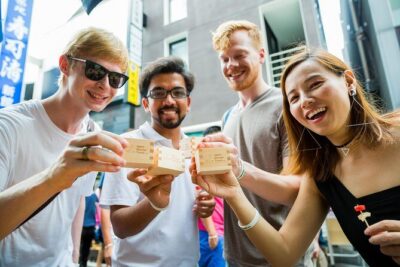 ★ 5.0Tokyo Tsukiji Fish Market Food and Culture Walking TourFrom $993,184 reviews
 ★ 5.0Tsukiji Fish Market Food and Walking tourFrom $301,724 reviews
 ★ 4.9Tsukiji Fish Market Guided Walking TourFrom $221,397 reviews
 ★ 5.0Tokyo Sushi Making Class in Tsukiji with Professional ChefFrom $491,177 reviews
 ★ 5.0Tsukiji Fish Market Guided Tour and Sushi Making with Pro ChefFrom $104775 reviews
★ 4.7Tsukiji Fish Market Food and Culture Walking TourFrom $96757 reviews
★ 5.0Tsukiji Fish Market Guided Tour and Sushi Making with Pro ChefFrom $104775 reviews
★ 4.7Tsukiji Fish Market Food and Culture Walking TourFrom $96757 reviews
 ★ 5.0Tsukiji Fish Market: Street Food & Culture Walking TourFrom $33669 reviews
 ★ 5.0Tsukiji Fish Market Small-Group Food Walking TourFrom $87621 reviews
Browse the lists this tour appears in