
Reviewed · IMPERIAL PALACE TOURS
Imperial Palace run with fun trivia by an Imperial Palace geek
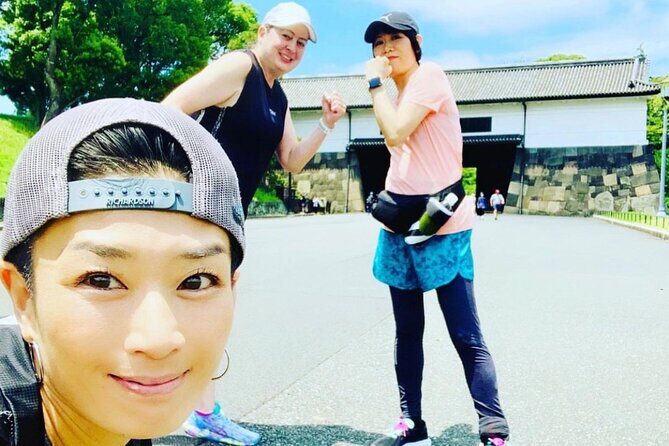
Imperial Palace, but with a running twist. This tour turns an early-morning loop into a guided scavenger hunt through gates, bridges, and famous spots, with Imperial Palace Run stories mixed in. You get to see the grounds with fewer people around, and your guide keeps things lively with fun trivia tied to what you’re passing.
I especially like the flexible pace. It’s casual enough for first-timers, and you can also walk instead of running the whole time. I also like that your guide, YUKO, brings a true Imperial Palace obsession to the tour, so you’ll hear details you’d never guess just by looking.
One thing to consider: this is still an active tour. You should have moderate fitness, and the day starts early at 8:30 am, with some uphill running near the end.
In This Review
- Key Things That Make This Tour Fun (and Actually Useful)
- Why This Imperial Palace Run Feels Different at 8:30 am
- Meeting at JOGLIS: Show Up Ready to Move
- The Route: Hanzomon, Miyake-zaka, and Sakuradamon’s “Runner Secrets”
- Stop 1: JOGLIS (Briefing + warm start)
- Stop 2: Hanzomon Gate (Start point + big Tokyo views)
- Stop 3: Sakuradamon Gate (Largest gate + a calm “reset”)
- Stop 4: Sakuradamon Square (The clock detail runners talk about)
- Nijubashi Bridge and Gyoko-dori: The Tour’s Photo and Story Peak
- Stop 5: Two-tiered Bridge (Ni-ju Bashi)
- Stop 6: Gyoko-dori Avenue (Tokyo Marathon finish vibes)
- Into the East Gardens at Kokyo Otemon: Where the Edo Clues Show Up
- Stop 7: Kokyo Otemon Gate (Main gate of Edo Castle + Shachihoko)
- Stop 8: Fujimi-yagura (The “little castle” turret)
- Stop 9: Tenshudai (Remains of the main tower)
- Back Out Through Kita Hanebashi: The Uphill Moment
- Cherry Blossom Spots Without the Chaos: Daikancho and Chidorigafuchi
- Stop 11: Daikancho-dori (Daimyo residences + cherry viewing)
- Stop 12: Chidoriga-fuchi Park (Cherry tree secrets)
- Stop 13: Back at JOGLIS (Finish + shower option)
- Price and Value: Is $90 a Good Deal for This Imperial Palace Run?
- The Real Standout: YUKO Makes It Feel Like an Imperial Palace Fan Club
- Who Should Book This (and Who Might Skip It)
- Should You Book the Imperial Palace Run?
- FAQ
- How long is the Imperial Palace run tour?
- What is included in the price?
- Do I need cash for lockers or showers?
- Is it running only, or can I walk?
- How big is the group?
- What languages does the guide use?
- Where do I meet, and what time does it start?
- What happens if the weather is bad or I need to cancel?
Key Things That Make This Tour Fun (and Actually Useful)
- Small-group size (max 8): you’ll get a more personal experience and easier chances to ask questions.
- Running or walking: you’re not locked into sprinting the whole route.
- YUKO-led trivia: the story bits connect to gates, squares, and the little weird details runners love.
- Iconic photo moments: think Nijubashi Bridge and the Gyoko-dori marathon-style finish scene.
- Two-language guide support: the tour uses Japanese and simple English, so you’re not left guessing.
- Optional JOGLIS facilities: lockers and showers are available for an extra fee at the start/end point.
Before you commit, see how this one stacks up against a few Tokyo favourites:
- Mt Fuji and Hakone 1-Day Bus Tour Return by Bullet Train★ 5.0 · 26,383 reviews
- 1-Day Tokyo Bus Tour★ 5.0 · 14,250 reviews
- Tokyo: teamLab Planets TOKYO Digital Art Museum Entry Ticket★ 4.6 · 9,779 reviews
Why This Imperial Palace Run Feels Different at 8:30 am
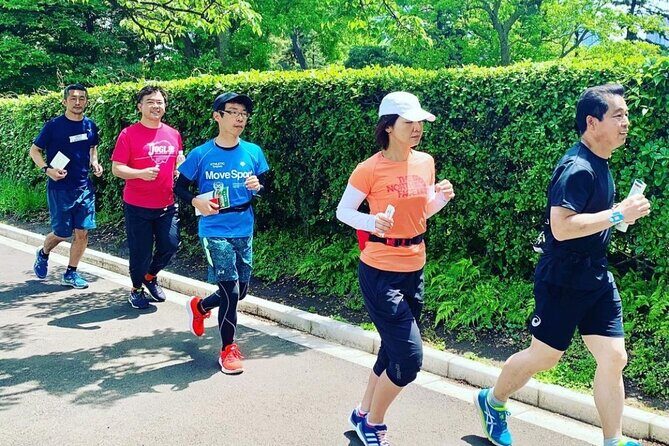
Tokyo’s Imperial Palace grounds can get crowded later in the day. What makes this experience smart is the timing. You head out early, when the pace of the area feels calmer and you’re more likely to enjoy the route without constantly dodging other people. Even if you’re not a hardcore runner, that quiet factor matters.
Then there’s the way the tour is structured: it’s not a single long stretch of steady running. You get frequent moments to pause, listen, and absorb what you’re seeing. That means you’re not just “getting exercise,” you’re also building context for the places you’re walking through—gates, bridges, and specific sections of the East Gardens.
Meeting at JOGLIS: Show Up Ready to Move
The tour starts at JOGLISJapan in Chiyoda (Kōjimachi area), with a start time of 8:30 am. You’ll finish back at the same meeting point. The tour uses a mobile ticket, which cuts down on time spent handling paper and helps you start smoothly.
Gear is straightforward. Running clothes, shoes, and towels are available for rent for a fee (so don’t panic if you travel light). You can also use JOGLIS locker and shower facilities for an extra ¥1,500 per person. If you care about arriving comfortable and leaving refreshed, this is worth factoring into your budget.
One practical note: the tour is designed for people with at least moderate physical fitness. It’s not described as a sprint event, but the route includes running segments and an uphill climb toward the return.
The Route: Hanzomon, Miyake-zaka, and Sakuradamon’s “Runner Secrets”
The tour begins at JOGLIS with a briefing that covers the history basics and the rules of the Imperial Palace Run. That matters more than you might think. When a tour is inside a formal, high-attention area like these grounds, knowing what to expect reduces awkwardness and lets you focus on the experience.
Stop 1: JOGLIS (Briefing + warm start)
This is where you’ll get the foundation: what this run is about, how to follow the route, and what behavior is expected. If you want locker and shower access, this is also your chance to handle that before you head out.





Stop 2: Hanzomon Gate (Start point + big Tokyo views)
The running tour proper starts at Hanzomon, one of the Imperial Palace entrances. As you descend Miyake-zaka, you can see major landmarks in the surrounding area, including the National Theatre and the Diet Building. This is a great moment for non-runners too, because the downward slope naturally helps you settle into motion without forcing effort.
Stop 3: Sakuradamon Gate (Largest gate + a calm “reset”)
You pass under Sakuradamon, described as the largest gate in the Imperial Palace. The guide also shares the belief in Mt. Fuji, which many Japanese cherish, and the idea of this spot being a power location for recharging.
Stop 4: Sakuradamon Square (The clock detail runners talk about)
Right after, you hear the secret of the clock in Sakuradamon square, a place where many runners gather. The fun here is the contrast: you’re surrounded by an important historic site, but you’re also getting the kind of practical, quirky insight that makes running tours feel like they’re run by people who actually care.
Why these early stops matter: you’re stacking small “wow” moments back-to-back—big views, major gates, and a runner-specific trivia layer—before you even hit the bridge section.
Nijubashi Bridge and Gyoko-dori: The Tour’s Photo and Story Peak

After the gate section, the route shifts into beautiful, classic Imperial Palace visuals. This is where the tour feels most like a morning walk that happens to include running.
Stop 5: Two-tiered Bridge (Ni-ju Bashi)
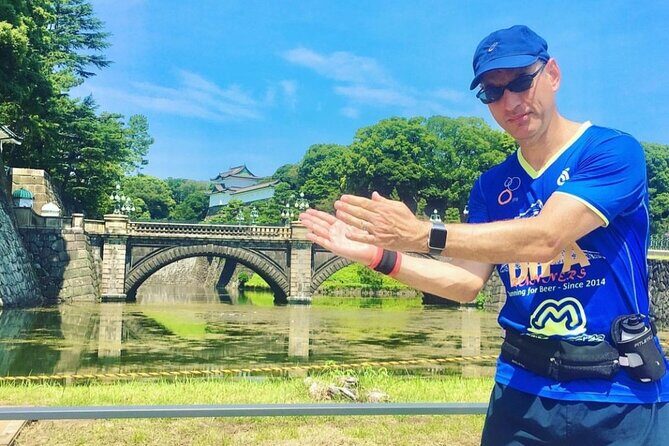
You visit Nijubashi Bridge, one of the most beautiful bridges in the Imperial Palace. There’s time for a commemorative photo. This is the moment where you’ll likely stop thinking like a tourist and start noticing symmetry, lines, and how the grounds are organized.
Stop 6: Gyoko-dori Avenue (Tokyo Marathon finish vibes)
At Gyoko-dori Avenue, you’re at the finish area of the Tokyo Marathon. The guide also talks about secrets connected to Tokyo Station, the Emperor, and the Tokyo Marathon. Then you take pictures that mimic the marathon finish line scene.
Even if you’re not a marathon runner, this is a clever way to make the space feel alive. It’s also a good energy bump. You get to experience the area through a familiar modern lens (the marathon) while still staying inside the Imperial Palace world.
Small drawback to be aware of here: photo and “story moments” create natural waiting periods. That’s part of the charm for most people, but if you want uninterrupted running, you might find it less satisfying.
Into the East Gardens at Kokyo Otemon: Where the Edo Clues Show Up
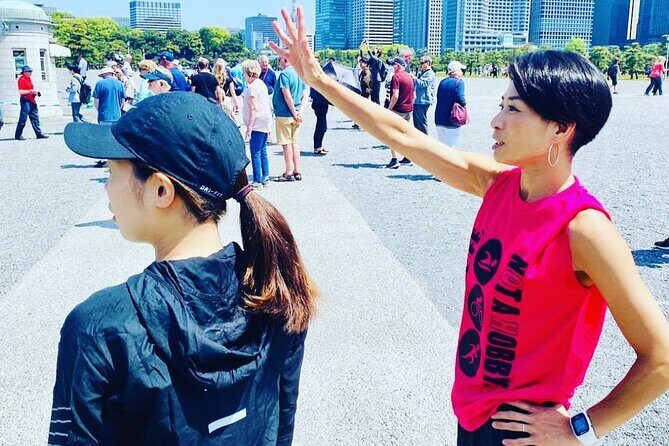
The tour’s next phase is about entering the East Gardens and connecting modern viewpoints to older structures. You’ll have a baggage inspection before you enter, so plan to move calmly and keep items easy to check.
Stop 7: Kokyo Otemon Gate (Main gate of Edo Castle + Shachihoko)
From Kokyo Otemon Gate, you enter the East Gardens. This Ote-mon Gate was the main gate of Edo Castle. Inside, you’ll be greeted by a Shachihoko, a decorative figure associated with castle architecture.
This is one of those tour moments that makes your brain click. You start seeing the grounds as a layered story: not just gardens and gates, but specific pieces that echo Edo-era design.
Stop 8: Fujimi-yagura (The “little castle” turret)
You’ll see Fujimi-yagura, described as beautiful turrets that served as a substitute for the Edo Castle keep. The guide calls it our little castle. The nickname is what makes it memorable. Instead of treating it like distant architecture, you’re given a “runner-friendly” way to think about it.
Stop 9: Tenshudai (Remains of the main tower)
Next is Tenshudai, where stone walls of the Edo Castle keep can be seen. The original keep, destroyed by fire, can no longer be seen, but a reconstructed model is visible.
That’s a useful detail for visitors who like accuracy without getting lost in academic explanations. You don’t just hear that something used to exist—you also learn what you can actually see today.
Back Out Through Kita Hanebashi: The Uphill Moment
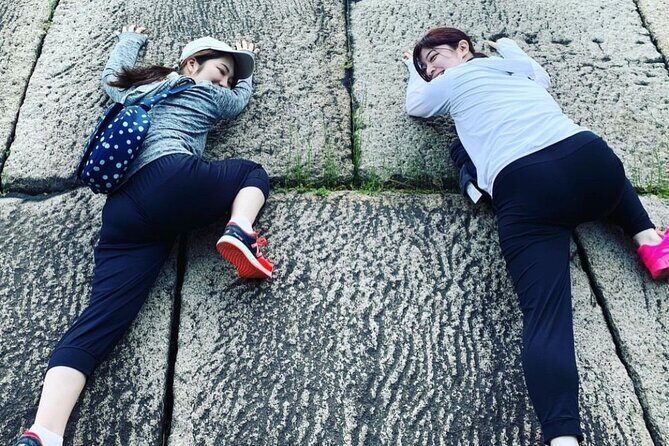
After the East Gardens, you return outside via Kita Hanebashi-mon Gate. The guide mentions it was a drawbridge of Edo Castle. From here, an uphill climb begins, but you run at your own pace and enjoy it.
This is a good section for self-management. If you’re the type who likes control, you can let the group move gently while you find your rhythm on the climb. If you’re more walking-focused, this is still manageable because the tour is set up with pauses and flexible pace.
Cherry Blossom Spots Without the Chaos: Daikancho and Chidorigafuchi
Not every run-tour includes breathing room for seasonal areas. Here you get two cherry-viewing-related stops that feel like a natural, easy transition.
Stop 11: Daikancho-dori (Daimyo residences + cherry viewing)
Daikancho Street was where daimyo residences were during the Edo period. It’s also known as a cherry blossom viewing spot. You get a short stop, but the point is simple: you’re walking a street with a clear past, while also connecting it to a Japanese tradition many visitors look for in spring.
Stop 12: Chidoriga-fuchi Park (Cherry tree secrets)
At Chidorigafuchi Park, the guide teaches secrets about cherry trees that Japanese people cherish.
Even without a long lecture, this kind of guided attention makes a big difference. You’ll notice things because someone prompts you on what to look for and why it matters.
Stop 13: Back at JOGLIS (Finish + shower option)
When you return to JOGLIS, you’re dismissed. If you paid for the facilities, you can take a shower. That’s a practical finish for anyone who plans to continue exploring Tokyo afterward.
Price and Value: Is $90 a Good Deal for This Imperial Palace Run?
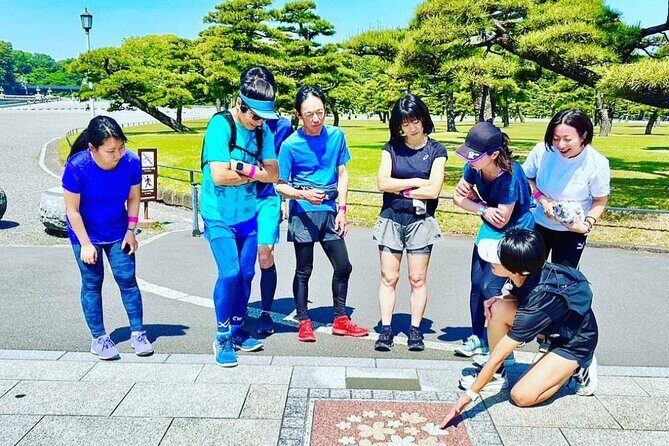
$90 for about 2 hours 30 minutes with a guide is not cheap on paper. But when you break down what you get, it starts to make sense.
You’re paying for:
- A guided route through multiple gates, bridge areas, and the East Gardens section
- Fun trivia and specific story beats tied to locations runners actually care about
- Small-group attention (max 8), which matters when you want to ask questions
- Structured timing with photo moments and built-in breaks so you’re not figuring everything out alone
If you were to try this on your own, you might see some of the gates and bridges, but you’d miss the clock secret, the Mt. Fuji belief framing, and the marathon-finish photo idea. Those details are exactly what make this worth paying for.
The optional costs are also predictable. Locker and shower at JOGLIS are ¥1,500 per person, and rentals for clothing/shoes/towels are available for a fee. If you budget for that, you’ll avoid surprises.
The Real Standout: YUKO Makes It Feel Like an Imperial Palace Fan Club
The best part of this experience is the energy and pride your guide brings. Your guide, YUKO, clearly has a love for the Imperial Palace and for running there, and it shows in how the tour moves. You’re not just listening to facts—you’re getting someone’s personal way of seeing the grounds.
That’s also why first-timers and experienced runners can both enjoy the route. The pacing includes walking and stops, so you’re not punished for being new. At the same time, runners still get the fun details that make a course feel like more than a loop around pretty buildings.
Who Should Book This (and Who Might Skip It)
This tour is a strong fit if:
- You want Imperial Palace time that feels more lively than a straight sightseeing walk
- You like the idea of running with trivia, not sprinting for fitness only
- You prefer a small group where asking questions feels normal
- You’re traveling with someone who may walk sometimes, since running is not the only option
You might skip it if:
- You want a long, uninterrupted run with minimal stopping
- You’re very sensitive to uphill sections and early starts
- You’re hoping for a totally self-directed pace with no briefing or route structure
Should You Book the Imperial Palace Run?
If your ideal Tokyo morning includes exercise, photo moments, and a guide who adds real trivia flavor, I’d book this. It’s well matched to the early-day crowd pattern, the group size keeps it personal, and the route hits a nice mix of iconic areas and runner-specific stories.
I’d especially recommend it as your first Imperial Palace experience. You’ll leave with a clearer mental map of what you saw, plus a handful of small details that make the next visit easier and more enjoyable.
FAQ
How long is the Imperial Palace run tour?
It runs for about 2 hours 30 minutes.
What is included in the price?
The guide fee is included.
Do I need cash for lockers or showers?
Lockers at JOGLIS cost ¥1,500 per person, and showers are available if you use the JOGLIS facilities (also tied to that ¥1,500 option). This is not included in the tour price.
Is it running only, or can I walk?
You can also walk. The tour is designed so you do not have to run the entire time.
How big is the group?
The tour has a maximum of 8 travelers.
What languages does the guide use?
The tour is conducted in Japanese and simple English.
Where do I meet, and what time does it start?
You meet at JOGLISJapan in Chiyoda (Kōjimachi area), and the start time is 8:30 am.
What happens if the weather is bad or I need to cancel?
The experience requires good weather. If it’s canceled due to poor weather, you’ll be offered a different date or a full refund. You can cancel for free up to 24 hours in advance for a full refund.
More Tour Reviews in Tokyo



Fresh reviews from around Tokyo






Imperial Palace Tours, compared.
 ★ 4.9Imperial Palace Japanese History Walking TourFrom $32987 reviews
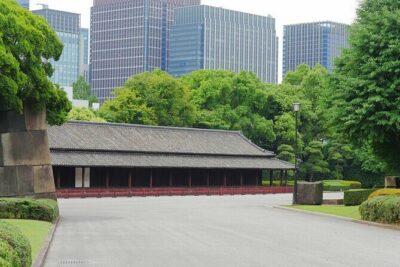 ★ 5.0Imperial Palace East Garden and Edo Castle Walking Tour in TokyoFrom $25510 reviews
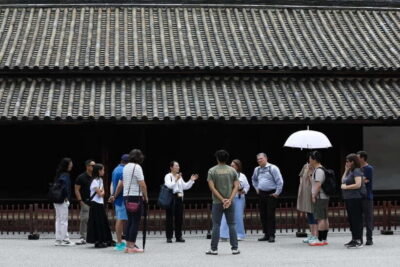 ★ 4.8Imperial Palace East Gardens Walking TourFrom $19353 reviews
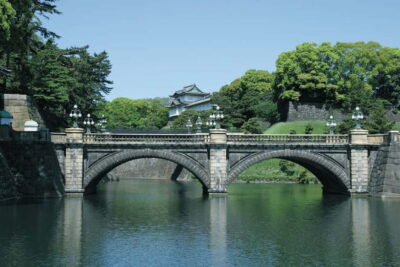 ★ 4.5Imperial Palace, Sensō-ji Temple, & Tokyo Tower TourFrom $40339 reviews
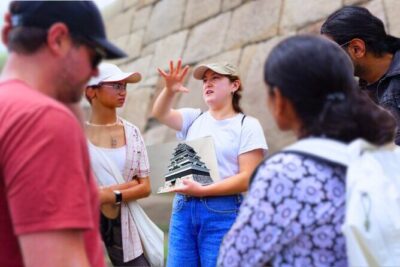 ★ 5.0Tokyo Castle, Imperial Palace, Shogun & Garden Walking TourFrom $31211 reviews
 ★ 4.7Edo Castle & East Garden of the Imperial Palace TourFrom $42112 reviews
 ★ 5.0Tokyo Private Tour! Edo Castle & Imperial Palace East GardensFrom $65105 reviews
 ★ 5.0Imperial Palace, the history of Japan (ENGLISH GUIDE)From $4077 reviews
Browse the lists this tour appears in