
Reviewed · FOOD & DRINK
Flavours of Tokyo: A Journey Through Time – Small Group Food Tour
Food in Tokyo has layers.
This small-group tour weaves past-present-future through three districts and 14 tastings, from dashi basics to rail-side bites and Akihabara desserts. I love how the food isn’t random; it’s tied to the way Tokyo changed over time. I also like the group stays under 9, so you can ask questions instead of shouting over a crowd. One caution: plan on about 6.5 km of walking and lots of subway stairs, plus you pay for two short subway rides.
The best part is the guide-driven storytelling. Guides such as Yasu, Keiko, and Miko come across as real people who can connect ingredients to everyday life, not just recite facts. In some groups, you may even get extra help like a booklet or extra photos after the tour, depending on who’s leading.
You’ll get a mix of snacks and a proper lunch, plus one included drink (a lemon sour). The tour requires good weather, so if rain is on your forecast, you’ll want to be flexible.
In This Review
- Key Things You’ll Notice on This Tokyo Food Tour
- Group Size, Walking Route, and Getting There
- The Time-Travel Idea: Why This Tour Works Better Than a Generic Tastings Walk
- Nihonbashi: Where Dashi, Kombu, and Katsuobushi Start the Story
- Fukutoku Shrine: Shrines vs. Temples and the Meaning of Cleansing
- Ginza and Yurakucho: Industrial Tokyo, Salarymen, and Railside Gado Shita Bars
- Tokyo International Forum and Kitte: A Quick Architectural Breather Between Bites
- Tokyo Station and the Commute Plates: Tamagoyaki and Fruits Sando
- Akihabara: Pokémon Taiyaki, Daifuku/Dorayaki, and What Comes Next
- What You Actually Eat: 14 Dishes, Snacks Plus Lunch
- Guides and the Little Extras That Improve the Day
- Price and Value: Why $176 Can Make Sense for This Format
- Should You Book Flavours of Tokyo: A Journey Through Time?
Key Things You’ll Notice on This Tokyo Food Tour
- Edo-era flavor basics first: you start with the stock logic behind Japanese comfort foods
- Three districts, one storyline: Nihonbashi to Ginza/Yurakucho to Akihabara
- Small-group pacing: up to 9 people, with time to talk and move as a group
- A mix of food styles: izakaya-style bites, commuter snacks, and sweet experiments
- You’ll walk, not just snack: about 6.5 km and many station stairs
Other plates worth crossing Tokyo for
- Tokyo: Shinjuku Food Tour (13 Dishes at 4 Local Eateries)★ 5.0 · 6,603 reviews
- Tokyo Tsukiji Fish Market Food and Culture Walking Tour★ 5.0 · 3,184 reviews
- Tokyo: Shinjuku Food Tour (15 Dishes and 4 Eateries)★ 4.9 · 2,033 reviews
Group Size, Walking Route, and Getting There
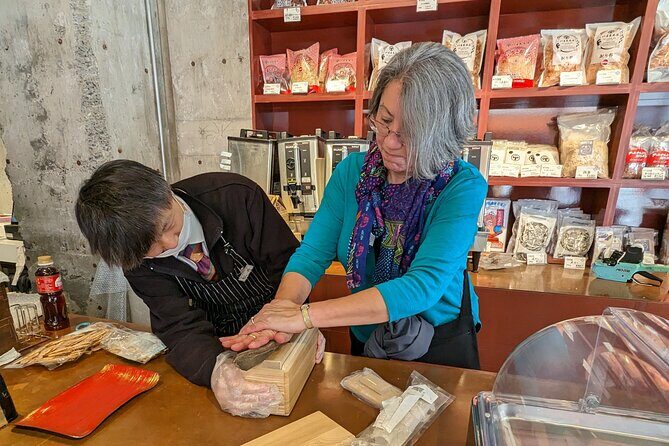
This is not the kind of food tour where you hop on and off a bus. You’ll be walking for about 5.5 hours, covering roughly 6.5 km total. Expect up-and-down stairs at subway stations, which matters in Tokyo—many platforms are deep, and elevators aren’t always where you want them.
The group size cap of 9 travelers is the main value play here. With a smaller group, your guide can slow down when a question comes up, and you’re not stuck trying to understand someone’s explanation while they’re already moving to the next stop.
One more practical note: transport isn’t included. You’ll take two short subway rides, and you’ll pay for those yourself. The tour uses a mobile ticket, which is handy, especially if you’re juggling transit apps and maps.
The Time-Travel Idea: Why This Tour Works Better Than a Generic Tastings Walk
A lot of Tokyo food tours are basically a sampling route. This one tries to explain why certain flavors show up where they do. The theme is simple: Tokyo’s food evolved as the city evolved.
You’ll see that idea in the stop order. You begin with foundational ingredients (the kind that still matter today). Then you move into post-war industrial Tokyo, where salarymen culture reshaped eating habits. Finally, you finish in Akihabara, where modern pop culture has turned sweets into something playful and very current.
That structure is why I think this tour is a better match for people who want context. You’ll taste things, yes—but you’ll also leave with a mental map of Tokyo’s culinary “eras,” so you can recognize the patterns later when you’re eating on your own.
Nihonbashi: Where Dashi, Kombu, and Katsuobushi Start the Story
Your day begins in Nihonbashi, a district that connects to older Tokyo food routes. This first stretch is about ingredients—the stuff that makes Japanese food feel like Japanese food.
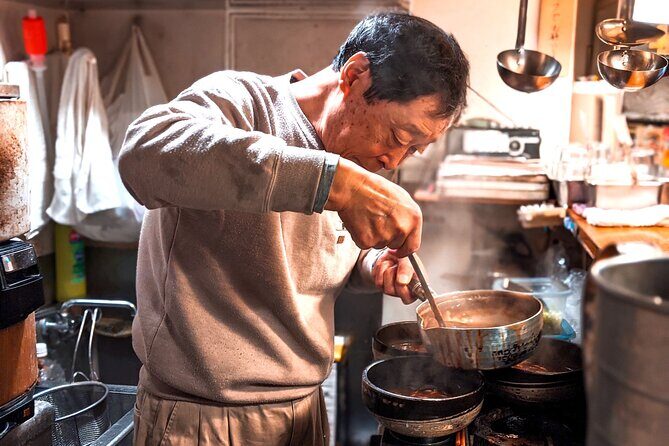
You’ll focus on dashi, the stock that forms the base of many dishes. The tour highlights the building blocks: kombu and katsuobushi. If you’ve ever wondered why Japanese soups and sauces taste so layered but still clean, this is where the answer starts.
Along the way, you’ll also get snack-style tastings that feel like a culinary primer. It’s the kind of first stop that makes later bites make more sense, because you’ve already learned the flavor logic.
A nice bonus here: the tour doesn’t treat dashi like a museum topic. It frames it as something practical that underpins daily meals, from home cooking to restaurant staples.
Fukutoku Shrine: Shrines vs. Temples and the Meaning of Cleansing
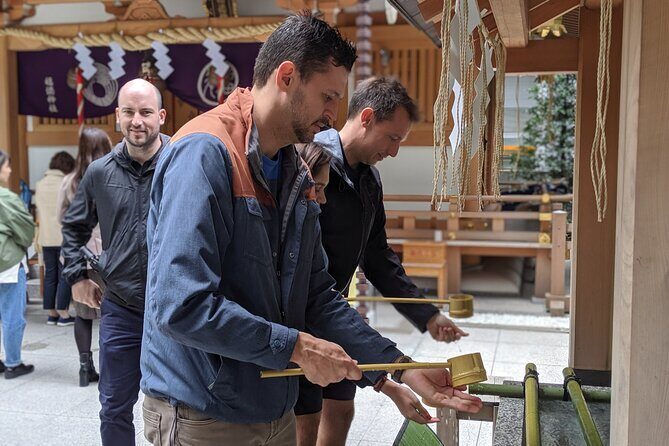
Between food neighborhoods, you stop at Fukutoku Shrine. This part isn’t about eating; it’s about understanding a basic Japanese concept that affects how people “step into” public spaces.
You’ll learn the difference between shrines and temples, and you’ll hear how people cleanse their spirit and pray at a shrine. For many visitors, this is a quick reset. It also helps explain why certain food and cultural moments feel ritual-like in Japan, even when you’re just grabbing street snacks.
If you’re short on patience, this could feel like a break from eating. But it’s brief, and it gives you cultural grounding that pays off later when you see how seriously Japanese daily life treats order and etiquette.
Worth weighing up alongside this Tokyo pick:


Ginza and Yurakucho: Industrial Tokyo, Salarymen, and Railside Gado Shita Bars
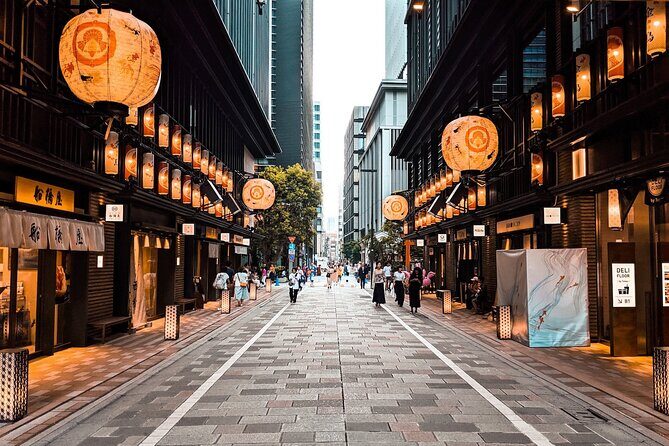
From there you shift to Ginza and Yurakucho, and the tour turns to the modern era. The story here is post-war industrialization—when work schedules, crowds, and commuting became a defining part of life.
With industrialization came salarymen, and with salarymen came gado shita: small bars and eateries built under the rails. It’s a very Tokyo idea—food shaped by the geometry of the city and the routines of working people.
This is where you’ll likely appreciate the value of the guide. You’re not just walking past buildings; you’re learning what those spaces were for. It helps you understand why Tokyo has so many compact places to eat, and why convenience and speed became part of the food identity.
You’ll also see how “local” in Tokyo can mean “tucked under infrastructure,” not just a neighborhood full of quaint streets.
Tokyo International Forum and Kitte: A Quick Architectural Breather Between Bites
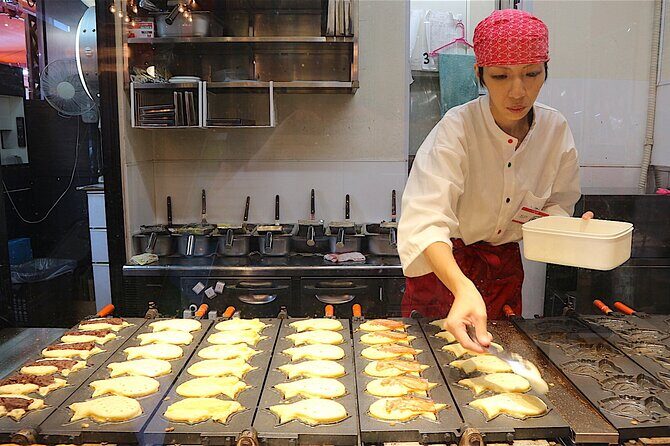
As you move toward Tokyo Station, you pass through major landmarks, including the impressive Tokyo International Forum and the Kitte Marunouchi area.
These stops matter because they connect the food story to the city’s present-day shape. Tokyo doesn’t preserve history only by keeping old buildings. It also layers old and new in the same streets, and those transitions show up visually as much as in the food.
This section isn’t heavy on explanations, but it gives you breathing space and a wider view of how central Tokyo functions. It’s also a good time to refill your focus before the station stops, which are where the meal portion really ramps up.
Tokyo Station and the Commute Plates: Tamagoyaki and Fruits Sando
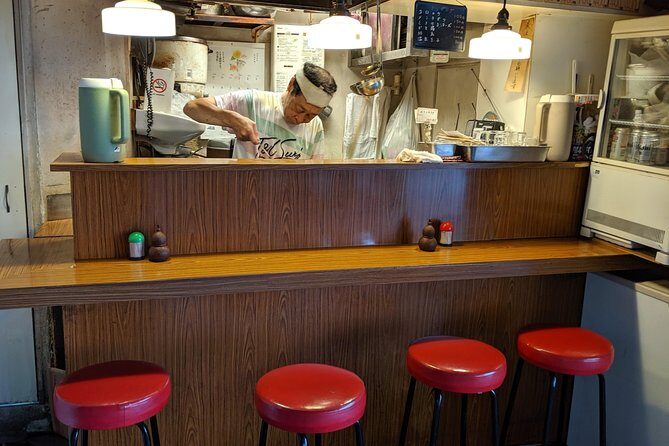
Now you hit the real commuter-food phase. At Tokyo Station Marunouchi Ekimae Hiroba, you’ll try foods that people commonly eat on the way home, including tamagoyaki (Japanese omelette) and a fruits sando (milk bread sandwich with fresh fruit and whipped cream).
Then the tour repeats a similar theme with more station-area offerings at Daimaru Tokyo. You’re basically getting a guided look at how Tokyo turns everyday hunger into something structured and portable.
This is one of the best value moments on the tour because it feels like a peak example of Japanese “small comfort” eating. The flavors are approachable, and the format is very real-world: grab, eat, move.
If you’re the type who worries you’ll get stuck on foreign-tour “tasting portions,” this part helps reassure you. You’re eating actual meal-like items, not only tiny samples.
Akihabara: Pokémon Taiyaki, Daifuku/Dorayaki, and What Comes Next
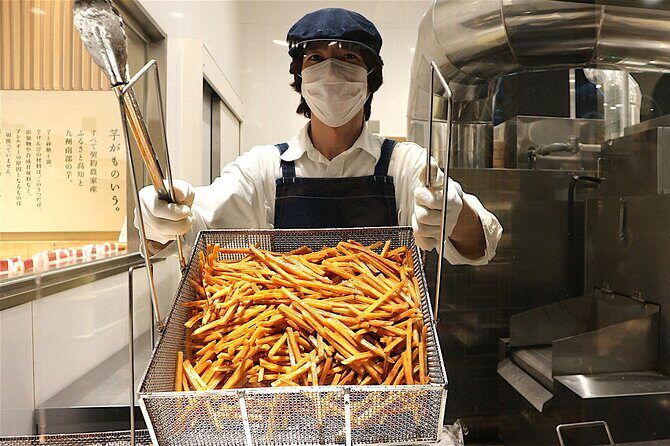
Ending in Akihabara is a smart choice for the tour’s time theme: the future of Tokyo food doesn’t just mean new ingredients. It means new formats, new branding, and new ways of making sweets fun.
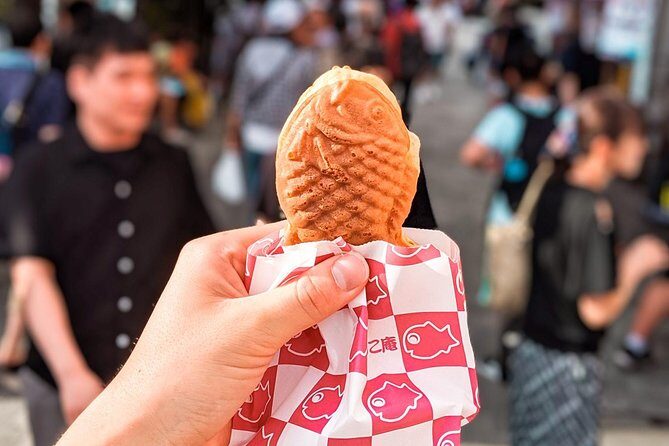
Akihabara is known for electronics and anime culture, and on this part of the tour you consider the future of food in Japan through dessert tastings. Expect items like daifuku or dorayaki, Pokémon taiyaki, and options such as matcha (green tea) bubble tea or ice cream.
You’ll also likely taste snacks tied to the ingredient story you began with—things like imo kenpi (candied potato) and other classic sweet textures. It’s a neat contrast: you start with stock and savory foundations, and you end with playful cultural desserts.
Potential drawback: if you don’t care much about sweets, Akihabara could feel less exciting than the savory-focused earlier sections. On the other hand, even if you’re not a dessert-first person, Pokémon taiyaki and matcha drinks are the kind of food moments that translate well into photos and memories.
What You Actually Eat: 14 Dishes, Snacks Plus Lunch
The tour is built around 14 dishes plus lunch-style offerings. From the included list, you should expect a spread that mixes foundational flavors and snack culture.
Included snacks can include:
- Dashi and the ingredients behind it like katsuobushi and kombu
- Satsuma-age
- Amazake
- Imo kenpi
- Daifuku or dorayaki
- Pokémon taiyaki
- Matcha bubble tea or ice cream
Included lunch includes:
- Yakitori
- Tempura soba
- Tamagoyaki
- Fruits sando
And you get an included adult drink: lemon sour.
My practical advice: treat the day as a full meal plan, not a light snack crawl. One person in feedback felt left hungry on a similar tour style, but the overall design is clearly meant to be filling for most people. Still, you’ll walk a lot—if you have a big appetite, consider carrying a small backup snack just in case.
Guides and the Little Extras That Improve the Day
One theme from the experiences shared with this tour: the guides can really shape how fun it feels.
Some guides have been described as:
- Yasu: sharing Japan history in an engaging way and handling small hiccups with patience
- Keiko: thoughtful, friendly, and focused on tying culture to food choices
- Miko: bringing extra materials like a presentation booklet and following up after with photos
This doesn’t mean every guide will do the exact same thing. But it does suggest you should look forward to more than rote explanations. If you like learning through dialogue, a small-group layout helps you get that.
Price and Value: Why $176 Can Make Sense for This Format
At $176 per person, you’re paying for several things at once:
- a small-group format (max 9)
- a guided narrative across three distinct districts
- a long-ish walking route over 5.5 hours
- multiple snack tastings and a full lunch
- at least one included drink
If you’re comparing it to cheap sampler tours, it’s pricier. But if you compare it to the real cost of eating (and paying for guided time in central Tokyo), the included meals and desserts start to justify the price—especially because the tour isn’t only about food; it’s about why the food belongs where it belongs.
My suggestion: if your Tokyo plan includes lots of самостоятель eating, this tour can act like a “training session.” It teaches you what to look for and what to order later without guessing.
Should You Book Flavours of Tokyo: A Journey Through Time?
Book it if you want:
- a Tokyo food tour with context, not just a list of snacks
- a small group where the guide can explain and you can talk
- a day that connects Edo-era fundamentals to today’s commute eating and modern pop-culture sweets
- a route that includes Nihonbashi, Ginza/Yurakucho, and Akihabara, so you don’t just repeat the same “central Tokyo” loop
Skip it (or consider a different style) if:
- you hate walking and stair-heavy subway stations
- you’re mainly after a food-only crawl with minimal cultural stops
- you want a super-fast tour—this is more paced and structured than that
If you like the idea of eating your way through Tokyo’s timeline, this is a strong pick. The ingredients-to-eras approach makes the food feel more memorable, and the small-group size keeps it from turning into a rush.
Eat Your Way Round Tokyo

More Tours in Tokyo


More Tour Reviews in Tokyo




Fresh reviews from around Tokyo






Food & Drink, compared.
 ★ 5.0Shinjuku Food Tour (13 Dishes at 4 Local Eateries)From $866,603 reviews
 ★ 5.0Tokyo Tsukiji Fish Market Food and Culture Walking TourFrom $993,184 reviews
 ★ 4.9Shinjuku Food Tour (15 Dishes and 4 Eateries)From $852,033 reviews
 ★ 5.0Tsukiji Fish Market Food and Walking tourFrom $301,724 reviews
 ★ 5.0Eat and Drink Like a Local: Tokyo Ueno Food Tour-Taverns&RamenFrom $95957 reviews
 ★ 5.0Shibuya Food Tour (13 dishes and 4 Eateries)From $77770 reviews
★ 4.7Tsukiji Fish Market Food and Culture Walking TourFrom $96757 reviews
★ 5.0Shibuya Food Tour (13 dishes and 4 Eateries)From $77770 reviews
★ 4.7Tsukiji Fish Market Food and Culture Walking TourFrom $96757 reviews
 ★ 5.0Tsukiji Fish Market: Street Food & Culture Walking TourFrom $33669 reviews
Browse the lists this tour appears in