
Reviewed · TSUKIJI FISH MARKET TOURS
Guided Tsukiji’s Local Food Tour
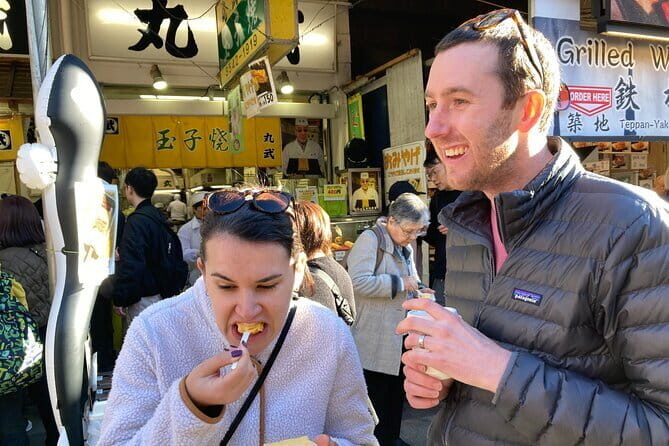
Tsukiji tastes better with a guide. In a fast 1 hour 30 minutes, you’ll follow Hisayoshi Kioka (Yoshi) through Tsukiji’s outer-market lanes, sampling seafood snacks and green tea ice cream while he explains how the market changed after the wholesale move to Toyosu.
I love two things most. First, I like the small group of up to 4 people. You get time to ask questions, and you can actually hear the explanations instead of shouting over other groups. Second, I like that you don’t just leave with food—you get recommendations for local shops and restaurants to keep your morning going.
One consideration: food costs are separate. The tour price covers the guide and walking experience, but you should plan on bringing about JPY 2,000–5,000 in cash for street food.
In This Review
- Key highlights that matter
- Tsukiji in 90 minutes: what this tour actually delivers
- Meeting at Tsukiji: the 8:00 am start and small-group pace
- Tsukiji Fish Market outer lanes: street food you can follow
- Stop focus: what you experience in the market
- The drawback of any market food tour
- How Yoshi turns chaos into understanding
- What you might eat: seafood, tamagoyaki, and green tea ice cream
- Street-food cash reality: planning for JPY 2,000–5,000
- Price and value: paying for guidance, not just bites
- From Namiyoke Shrine to your next stop
- Who should book, and who should skip
- Should you book this Tsukiji local food tour?
- FAQ
- How long is the Tsukiji local food tour?
- What is the price per person?
- What’s included in the tour price?
- Do I need cash for the food?
- Where does the tour start?
- Where does the tour end?
- What time does the tour begin?
- How many people are in the group?
- Is free cancellation available?
Key highlights that matter
- Up to 4 people means a calmer walk and more conversation with Yoshi
- 90 minutes is a practical length for a busy market area
- Outer Tsukiji market focus after the wholesale shift to Toyosu
- Japanese-only menus support so you’re not stuck guessing what to order
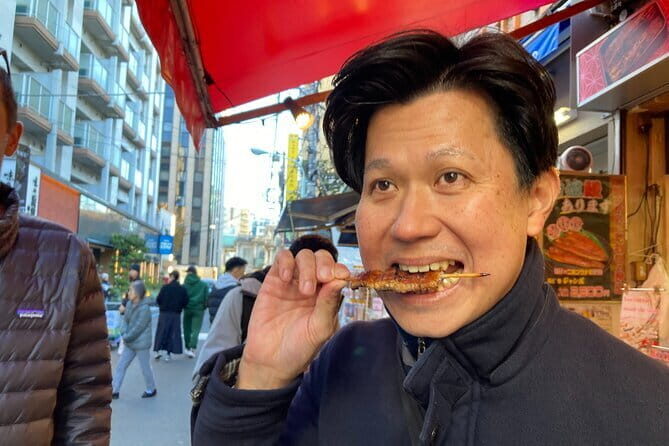
- Taste variety ranging from grilled seafood to tamagoyaki and green tea ice cream
- Finish at Namiyoke Shrine (波除稲荷神社) so you can keep exploring right after
Still hungry? More Tsukiji breakfasts and market walks
- Tokyo Tsukiji Fish Market Food and Culture Walking Tour★ 5.0 · 3,184 reviews
- Tokyo: Tsukiji Fish Market Food and Walking tour★ 5.0 · 1,724 reviews
- Tokyo: Tsukiji Fish Market Guided Walking Tour★ 4.9 · 1,397 reviews
Tsukiji in 90 minutes: what this tour actually delivers
If you’ve ever wandered a Tokyo market area on your own, you already know the problem. It’s crowded, the signage can be confusing, and the best smells are often coming from places you would not notice from the sidewalk.
This tour tackles that head-on. You start early at 8:00 am and walk through the Tsukiji Fish Market outer area, where vendors still sell fresh seafood, traditional snacks, and local delicacies. Even though the main wholesale action moved to Toyosu, Tsukiji’s outer market remains a go-to place to eat like a local for breakfast.
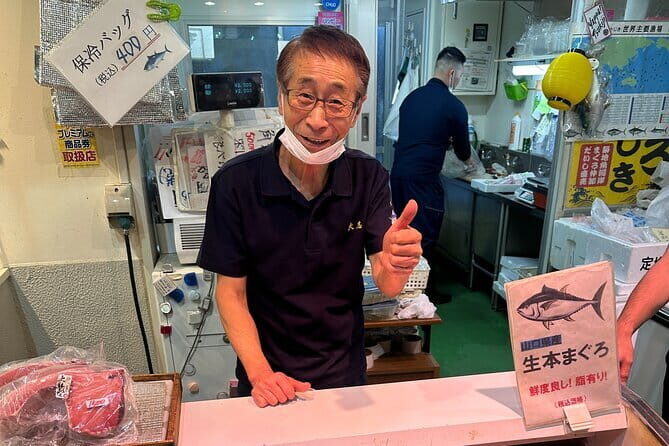
The guide aspect is the real value. Hisayoshi Kioka, who goes by Yoshi, doesn’t just lead you from stall to stall. He explains the market’s history and how to read the food scene so you can make smarter choices while you’re there.
You also get a gentle “use your senses” approach. You’ll be pointed toward popular local foods—like grilled seafood, tamagoyaki, and green tea ice cream—but you’re doing it with context, not blindly following a crowd. That’s a big difference when you only have 90 minutes.
Meeting at Tsukiji: the 8:00 am start and small-group pace
You meet at 4-chōme-8-1 Tsukiji, Chuo City, Tokyo. The end point is right by the action too: Namiyoke Shrine (波除稲荷神社), at Tsukiji, 6-chōme 20-37, so it’s easy to continue exploring afterward.
The timing matters. An early start is what lets a walking food tour feel possible. Tsukiji is the kind of place where an hour can disappear fast if you’re constantly stopping to figure out what’s what. By going at 8:00 am, you’re more likely to enjoy your tastings without feeling rushed.
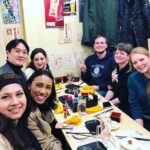
The group size is limited to a maximum of 4 travelers, which changes the whole feel. You’re not stuck behind a parade of other people. If you have dietary questions or want to slow down to understand the stalls, your guide can adapt in real time. And because it’s small, you spend more time actually eating and listening, and less time waiting.
You’ll also use a mobile ticket, and confirmation is sent within 48 hours of booking, depending on availability. That’s a practical setup for Tokyo, where plans can move quickly.
Tsukiji Fish Market outer lanes: street food you can follow
Your main walk happens in the outer market area. This is the part of Tsukiji that’s still busy with vendors and little food counters, even after the wholesale market shifted to Toyosu.
During the walk, Yoshi introduces you to the kinds of stalls and shops that are worth your attention. You’re not just browsing; you’re moving with purpose. And you’re doing it at a pace designed for tasting, not marathon sightseeing.
Stop focus: what you experience in the market
You spend about 1 hour 30 minutes total, and the market portion is where the experience really comes alive. Expect to see and sample classic market-friendly foods, including:
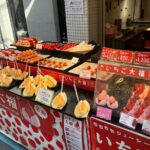
- Tamagoyaki, the slightly sweet rolled omelet that’s easy to eat while walking
- Grilled seafood, the kind of smoky bite that makes you stop mid-step
- Green tea ice cream, a cool, comforting finish that works well in the middle of a walking tour
Why this matters: market food isn’t just about taste. It’s also about learning how local people eat there. Many stalls are built for speed and small portions. If you go in without understanding that rhythm, you can end up with plates that are too big, wrong timing, or food you don’t actually want.
With the guide leading the way, you get the rhythm. You can focus on what you like, and you’ll understand what you’re being served and why it’s popular in that specific spot.
Other plates worth crossing Tokyo for


The drawback of any market food tour
The market environment is what it is: tight spaces, lots of movement, and constant noise. Even with a small group, you should expect some standing and weaving. If you’re hoping for a relaxed sit-down meal, this isn’t that. It’s a walk-and-sample experience.
How Yoshi turns chaos into understanding
What I like about this kind of guided food tour is the explanation layer. In Tsukiji, the “why” behind the food scene makes the tasting feel smarter.
Yoshi tells you what you need to know about Tsukiji’s evolution: the old wholesale market moved to Toyosu, but the outer market still functions as a place for people to shop, eat, and snack. That context helps you understand why you’re seeing what you’re seeing today.
He also helps with the practical problems that hit non-Japanese speakers. In a market, menus can be handwritten, labels can be minimal, and some stalls may be oriented to regular locals. Having a guide who handles language barriers means you’re more likely to order confidently and avoid the awkward moment of pointing at a list you can’t read.
From the tour style and the guide’s reputation, the route is built around getting you to places you likely wouldn’t find on your own. That’s not about keeping things secret. It’s about navigating real daily details—where to stand, when to move, and which stalls are best at the time you’re there.
And it’s not only about food. Yoshi also shares recommendations for local shops and restaurants during the tour, so you can keep the story going after you leave.
What you might eat: seafood, tamagoyaki, and green tea ice cream
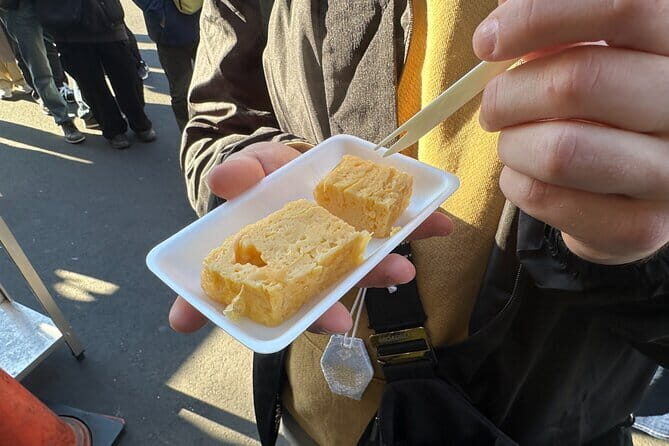
You’ll try many local specialties, with the biggest categories coming from street-food style bites. The tour description points to grilled seafood and green tea ice cream, and the market setting also strongly fits quick, snackable items.
From the kinds of experiences described with this tour, you should expect a range that often includes things like:
- fresh seafood items offered at market stalls
- tamagoyaki as a classic snack
- green tea ice cream as a palate cool-down
Some past guests also mention tasting items such as tuna, oysters, and sake during the morning. You shouldn’t treat that as guaranteed, because market selections can shift, but it gives you a good sense of the food direction: fresh, seafood-forward, and breakfast-appropriate.
Here’s how to think about the eating part: a food tour like this is designed to get you variety without overstuffing you. You’ll sample enough to feel like you ate a real Tsukiji breakfast, not just one plate.
Street-food cash reality: planning for JPY 2,000–5,000
The tour price is $32.52 per person, and that covers the guide and the walking experience. Food purchases are separate.
So you’ll want Japanese Yen cash, typically around JPY 2,000–5,000, for street food. This is common for market tours in Tokyo: vendors sell directly, and the guide helps you choose and order, but you still pay at the stalls.
Practical tip: arrive ready to pay small amounts quickly. Markets move. If you need to hunt for coins or run out to an ATM mid-walk, you lose momentum. Cash in hand keeps things smooth.
Also note: the tour includes an admission ticket statement as not included. That’s usually fine in practice for market walking tours, but it’s worth keeping in mind in case you expected an all-in price.
Price and value: paying for guidance, not just bites
On paper, $32.52 doesn’t look like a lot for a market experience. The value comes from what that fee buys you.
You’re paying for:
- a professional local guide
- an efficient walking route through recommended stalls and shops
- help with history and practical understanding of the area
- small-group time (maximum 4 travelers)
If you tried to do Tsukiji on your own, you’d still spend money on food. The question is whether you’ll spend it wisely. A guided walk helps you avoid the “wrong stall, wrong order, wrong timing” problem.
You also get something intangible but real: confidence. When you can ask questions and understand what you’re eating, the whole morning feels more meaningful. That’s especially important in Tsukiji, where the experience is as much about the market culture as it is about any single bite.
From Namiyoke Shrine to your next stop
The tour ends at Namiyoke Shrine (波除稲荷神社), right next to Tsukiji Fish Market. I like this kind of finish because it gives you an easy “second act.”
After you wrap, you’re not forced to travel far to keep exploring. You can linger in the area and continue browsing and snacking on your own if you want. Even if you’re not a return-for-more person, the location still makes sense. You’re basically at the starting energy of Tsukiji, not across town.
This ending also fits the tone of the tour: it’s about getting your bearings and then letting you explore further at your own pace.
Who should book, and who should skip
This tour is a strong match if you want:
- a guided food-focused morning in a market environment
- help with Japanese-only menus
- a small group and a guide named Hisayoshi Kioka (Yoshi)
- a practical route that includes seafood snacks and green tea ice cream
- recommendations for more food in the area after your walk
You might skip it if you prefer solo wandering and don’t want to follow a set route. Also, if you hate early mornings, remember the start is 8:00 am.
And if you’re picky about food you can’t easily identify, do still consider this tour—but bring your expectations. The cash-based nature of market purchases means you’ll be making choices at stalls, with the guide helping you.
Should you book this Tsukiji local food tour?
If you want a Tsukiji breakfast that feels guided but not stiff, this is an easy yes. The small group size, the guide’s market familiarity, and the practical help with ordering are exactly what make the morning worth paying for.
Book it if you’re ready to bring some cash for street food and you want to leave with both tastes and next-step recommendations. Skip it if you’d rather spend the morning wandering without support and you’re not interested in learning how Tsukiji works after the wholesale shift to Toyosu.
Either way, going early with a guide is the big lever here—and it’s the one that turns Tsukiji from overwhelming into manageable.
FAQ
How long is the Tsukiji local food tour?
It lasts about 1 hour 30 minutes.
What is the price per person?
The tour costs $32.52 per person.
What’s included in the tour price?
You get a professional local guide, introductions to recommended shops during the walk, and a comfortable walking tour with cultural and historical insights.
Do I need cash for the food?
Yes. The tour suggests bringing Japanese Yen cash of about JPY 2,000–5,000 for street food purchases.
Where does the tour start?
It starts at 4-chōme-8-1 Tsukiji, Chuo City, Tokyo 104-0045, Japan.
Where does the tour end?
It ends at Namiyoke Shrine (波除稲荷神社), right next to Tsukiji Fish Market.
What time does the tour begin?
The start time is 8:00 am.
How many people are in the group?
The tour has a maximum of 4 travelers.
Is free cancellation available?
Yes. You can cancel up to 24 hours in advance for a full refund, and it is also weather-dependent.
More Tours in Tokyo




More Tour Reviews in Tokyo




Back to the Market: More Tsukiji Tours


Fresh reviews from around Tokyo






Tsukiji Fish Market Tours, compared.
 ★ 5.0Tokyo Tsukiji Fish Market Food and Culture Walking TourFrom $993,184 reviews
 ★ 5.0Tsukiji Fish Market Food and Walking tourFrom $301,724 reviews
 ★ 4.9Tsukiji Fish Market Guided Walking TourFrom $221,397 reviews
 ★ 5.0Tokyo Sushi Making Class in Tsukiji with Professional ChefFrom $491,177 reviews
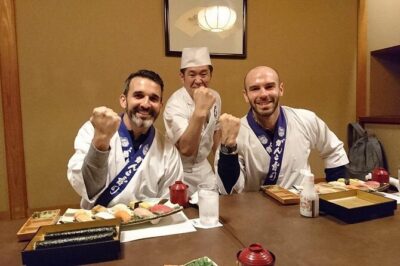 ★ 5.0Tsukiji Fish Market Guided Tour and Sushi Making with Pro ChefFrom $104775 reviews
★ 4.7Tsukiji Fish Market Food and Culture Walking TourFrom $96757 reviews
★ 5.0Tsukiji Fish Market Guided Tour and Sushi Making with Pro ChefFrom $104775 reviews
★ 4.7Tsukiji Fish Market Food and Culture Walking TourFrom $96757 reviews
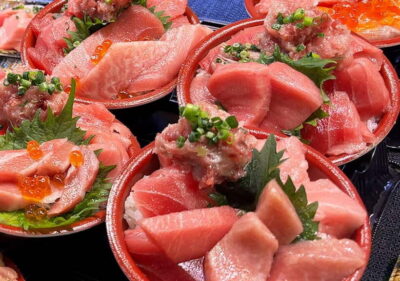 ★ 5.0Tsukiji Fish Market: Street Food & Culture Walking TourFrom $33669 reviews
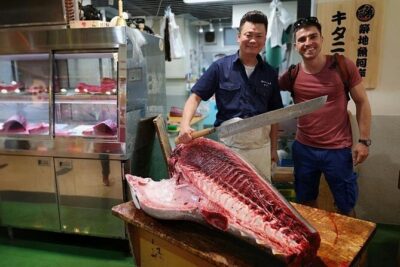 ★ 5.0Tsukiji Fish Market Small-Group Food Walking TourFrom $87621 reviews
Browse the lists this tour appears in