
Reviewed · TSUKIJI FISH MARKET TOURS
From Ocean to Chopsticks Tsukiji Market Food Tour By Local Expert
Tsukiji can overwhelm you fast. This tour helps you stay oriented in one of Tokyo’s most food-focused areas by pairing key stops with a local guide’s commentary that explains what you’re seeing and tasting. You start at Tsukiji Hongwanji Temple, then move into the market areas where everything from kitchen supplies to seafood and sushi is on display.
Two things I really like: you get a small group size of up to eight travelers, which makes questions easier and the pace calmer. And you’re not stuck deciding where to eat—expect 4 to 5 food stations selected for you, plus 2 soft drinks and water. One possible drawback is that Tsukiji is always lively, so if you hate crowds and noise, you may find the sensory input a lot even with the guide’s help.
In This Review
- Quick hits: what makes this Tsukiji tour work
- Why Ocean to Chopsticks feels easier than doing Tsukiji solo
- Tsukiji Hongwanji Temple: a calm start with real cultural grounding
- Jogai Market time: tools, groceries, and the fast path to good bites
- A small caution for this segment
- Tsukiji Fish Market streets: sushi access and more local seafood variety
- What to expect in real life
- What you actually eat: 4 to 5 stations chosen for you
- About alcohol
- Price and value: is $195 fair for Tsukiji?
- Logistics you’ll appreciate on a tight Tokyo day
- Tips to make your 4-hour Tsukiji walk more enjoyable
- Who this tour is best for (and who may want to skip)
- Should you book this Tsukiji Market food tour?
- FAQ
- What is the duration of the Ocean to Chopsticks Tsukiji Market Food Tour?
- How many people are in the group?
- Where does the tour start?
- Is admission required for the temple and market stops?
- What food and drinks are included?
- Are alcoholic drinks included?
- Does the tour use a mobile ticket?
- Is the tour near public transportation?
- What is the cancellation policy?
Quick hits: what makes this Tsukiji tour work
- Small group (max 8) keeps the walk conversational instead of chaotic
- Temple stop at Tsukiji Hongwanji gives cultural context before food overload
- Outer market vs fish market time split helps you understand what you’re seeing
- 4 to 5 chef-chosen stations removes guesswork on what to try
- Drinks included (water + soft drinks) keep you comfortable mid-walk
- Mobile ticket + near public transportation makes the start simple
Still hungry? More Tsukiji breakfasts and market walks
- Tokyo Tsukiji Fish Market Food and Culture Walking Tour★ 5.0 · 3,184 reviews
- Tokyo: Tsukiji Fish Market Food and Walking tour★ 5.0 · 1,724 reviews
- Tokyo: Tsukiji Fish Market Guided Walking Tour★ 4.9 · 1,397 reviews
Why Ocean to Chopsticks feels easier than doing Tsukiji solo
Tsukiji is famous, but fame can be misleading. Yes, it’s the place to come for seafood and sushi ideas, yet the real challenge is navigation: you’ll see so many stalls, restaurants, and shops that it’s easy to lose your plan.
That’s where the format really helps. You get a guided route that moves you through the right zones in a logical order, and your guide adds context while you’re walking. Instead of eating randomly because something smells good (which can happen), you learn how the area works and why certain foods and shops matter.
The walking tour runs about 4 hours, and it stays intentionally efficient. You’re not trying to cover every single stall in Tsukiji. You’re getting the best shots at the right moments, with a pace that makes room for eating without turning the whole trip into a sprint.
Tsukiji Hongwanji Temple: a calm start with real cultural grounding
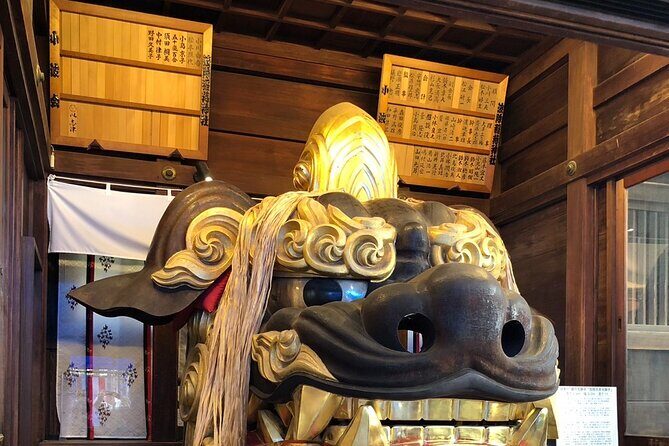
The tour begins at Tsukiji Hongwanji (Hongan-ji) Temple, located right near Tsukiji Station on the Tokyo Metro Hibiya Line. The entrance here is free, so you can focus on the experience rather than thinking about tickets or logistics.
What I like about this first stop is what it does to your mindset. Market food tours often jump straight into eating. Starting at a Buddhist temple gives you a different lens—history, local practice, and the idea that this district isn’t just about commerce.
Even if you don’t know a lot about Japanese Buddhism, you’ll get a sense of place: why this area exists where it does, and how it ties into the rhythm of the neighborhood. It’s a short breather before the sensory intensity of the markets.
Jogai Market time: tools, groceries, and the fast path to good bites
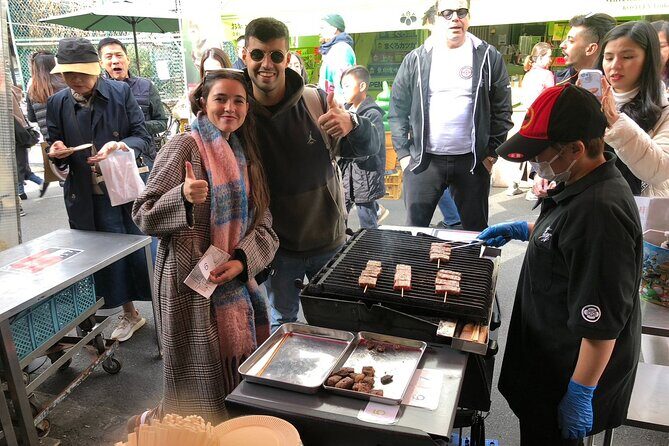
After the temple, you move into the Tsukiji Jogai Market, often called the outer market. This area is a mix of wholesale and retail shops—kitchen tools, groceries, seafood, and lots of places that feed hungry people right then and there.
This is the part of Tsukiji that teaches you how Japanese food culture thinks. It’s not just about buying ingredients; it’s about understanding what tools matter, what goods are important, and how shops connect to restaurants. The streets can be busy, but the point isn’t to stare at everything. Your guide keeps you focused on what to notice.
A practical upside: this is where you can get a variety of flavors without needing a reservation or a long sit-down meal. If you like tasting your way across a food district, the outer market setup is ideal.
A small caution for this segment
The outer market can be visually noisy. If you’re the type who wants to take hundreds of photos, you might feel tugged in too many directions. The tour helps by keeping the route tight, but you’ll still want to stay present so the commentary and food stations land well.
Other plates worth crossing Tokyo for


Tsukiji Fish Market streets: sushi access and more local seafood variety
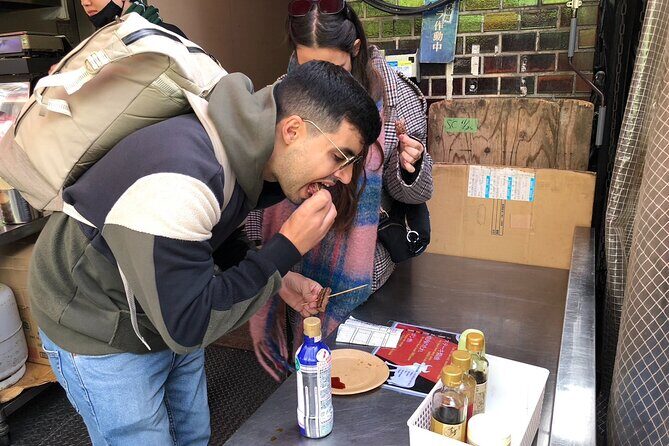
Next comes the part most people picture first: the Tsukiji Fish Market area. In practice, it’s less like one giant restaurant and more like Tokyo’s food street network—shops, small counters, and food-focused businesses in tight lanes.
The tour’s value here is that you’re not just walking through name-brand chaos. You’re there at the right time to get a guided sense of what’s where and what to try. Since Tsukiji is Japan’s largest fish market, it’s also a great place to build your sushi instincts: what makes good seafood taste clean and bright, and how different preparations show off different parts of the fish.
Your guide’s commentary matters a lot during this stretch. In a place like this, it’s easy to think you’re just following your nose. With guidance, you understand what you’re eating in a more grounded way—why a stall might be known for a certain ingredient, or how market culture influences what ends up on plates.
What to expect in real life
- You’ll walk a fair amount in market terrain.
- There are lots of food options, so the guided plan helps you avoid decision fatigue.
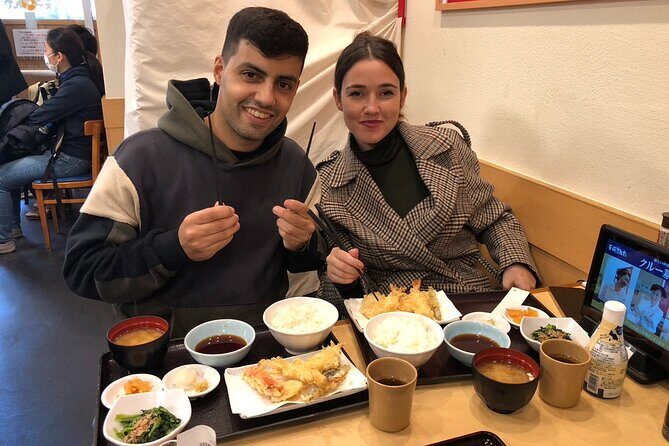
- You’ll likely eat multiple things across different stations, rather than one big meal.
If you’re someone who wants one perfect sushi spot, this might feel like less of a single highlight and more of a tasting pathway. But if you like variety, this segment is where the tour delivers.
What you actually eat: 4 to 5 stations chosen for you
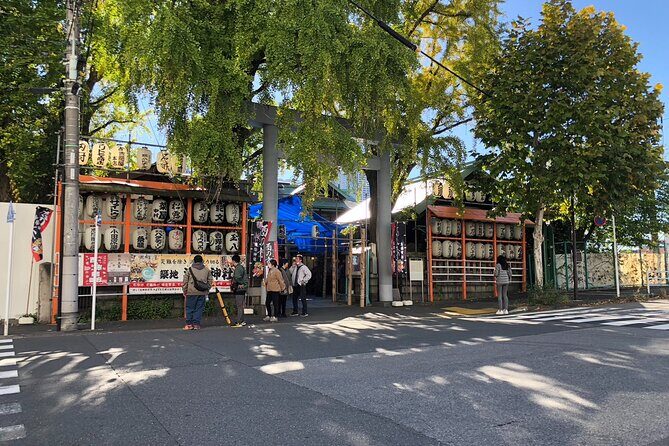
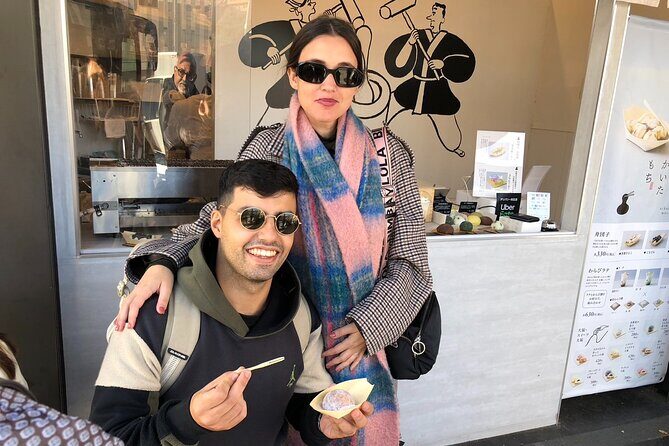
You’re not on your own to figure out what counts as a good Tsukiji bite. The tour includes 4 to 5 food stations, chosen by master chefs, plus 2 soft drinks and water. That combination is the sweet spot for most people: you get enough sampling to feel like you ate your way through Tsukiji, but you don’t leave with regret because you picked the wrong stall.
This matters for value. Tsukiji has everything, including tourist traps. Even if you’re adventurous, it’s hard to filter quality when you’re dealing with crowds and menus you can’t read quickly. Chef-chosen stations lower that risk.
Also, included drinks are underrated. Market days can involve waiting, standing, and quick tastings that run back-to-back. Having water and soft drinks included helps you keep your energy up and avoid paying for refreshments on top of the tour.
About alcohol
Alcohol isn’t included. You can purchase it, and the information states that only those aged 18 and older are allowed to buy alcohol.
Price and value: is $195 fair for Tsukiji?
At $195 per person for about 4 hours, you’re paying for three things that are hard to recreate if you go solo:
- Expert guidance in a complex place
Tsukiji is confusing by design—tight streets, many vendors, and rapid turn-over energy. A guide reduces the guesswork and helps you spend time eating, not wandering.
- Pre-planned tastings (4 to 5 stations)
You’re not just buying food; you’re getting a sequence. That’s the difference between random snacks and a structured sampling experience.
- Small group size (max 8)
When it’s intimate, the tour feels more like a conversation than a parade. And it becomes easier to ask questions about what’s in front of you.
That said, it’s not a bargain-food deal in the way some street-food tours can be. If your priority is maximum quantity for the lowest cost, you might feel the price pinch. But if your priority is smart selection, good context, and a smooth path through Tsukiji, the pricing makes more sense.
Logistics you’ll appreciate on a tight Tokyo day
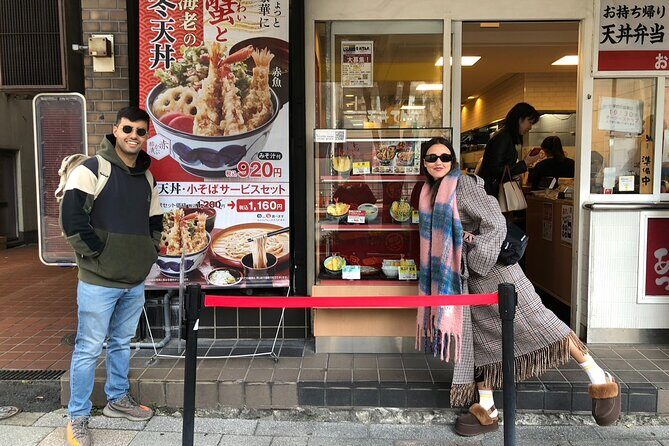
This tour is designed for easy integration into a Tokyo itinerary. It uses a mobile ticket, and the meeting point is straightforward: Tsukiji Hongan-ji Temple (3-chōme-15-1 Tsukiji, Chuo City, Tokyo 104-8435, Japan). The tour ends back at the meeting point, which means you’re not stuck hunting for transit at the end while full of market snacks.
It also runs near public transportation, so you can reach the starting area without a major detour. That matters in Tokyo, where time and walking can add up fast.
Tips to make your 4-hour Tsukiji walk more enjoyable
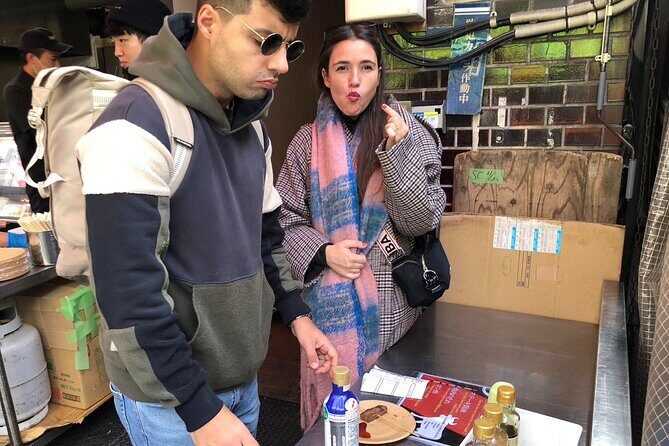
You don’t need special skills, but these small moves help.
- Go with the plan. The guide’s route is the product. Let it lead you through the crowds instead of fighting it.
- Wear comfy shoes. Market walking adds up, and you’ll be on your feet more than you think.
- Keep your questions simple. Ask what you’re eating and what to pay attention to. The commentary is part of the experience.
- Plan for variety. Expect multiple tastes, not just one big lunch.
- Don’t overdo photos at the expense of eating. Tsukiji rewards being present more than capturing every corner.
If you do these, the tour should feel like a guided tasting that actually teaches you something—rather than a checklist of bites.
Who this tour is best for (and who may want to skip)
This experience is a strong fit if you want:
- A structured food plan without committing to reservations
- Context about history and culture alongside eating
- A smaller group where your guide can keep things flowing
- The chance to sample a range of local delicacies in a short window
It may be less ideal if:
- You strongly dislike busy, sensory-heavy environments
- You’re looking for a full sit-down meal (this is more tasting focused)
- You need highly specific dietary accommodations (the stations are chosen in advance, so you’ll want to confirm your situation)
Should you book this Tsukiji Market food tour?
I’d book it if your goal is to eat well in Tsukiji without losing time. The biggest strengths are practical: small group size, chef-chosen tasting stations, and a route that starts with culture at Tsukiji Hongwanji Temple before moving into the food-focused chaos.
If you’re planning a first trip to Tokyo and want a food experience that helps you understand the market rather than just sample it, this one is a solid choice. For me, that combination—context first, then tastings—hits the sweet spot of value at $195.
FAQ
What is the duration of the Ocean to Chopsticks Tsukiji Market Food Tour?
It lasts about 4 hours.
How many people are in the group?
The tour has a maximum of 8 travelers, which keeps it more intimate.
Where does the tour start?
The meeting point is Tsukiji Hongan-ji Temple, located at 3-chōme-15-1 Tsukiji, Chuo City, Tokyo 104-8435, Japan.
Is admission required for the temple and market stops?
The temple stop is listed with free admission, and the tour is structured around visiting the market areas.
What food and drinks are included?
You get 2 soft drinks and water, plus 4 to 5 food stations chosen by master chefs.
Are alcoholic drinks included?
No. Alcoholic drinks are not included, but you can purchase them. The information states that alcohol is allowed only for guests aged 18 and older.
Does the tour use a mobile ticket?
Yes, it includes a mobile ticket.
Is the tour near public transportation?
Yes, the meeting point is near public transportation.
What is the cancellation policy?
Free cancellation is available. You can cancel up to 24 hours in advance for a full refund; if you cancel less than 24 hours before the start time, the amount paid will not be refunded.
More Tours in Tokyo




More Tour Reviews in Tokyo




Back to the Market: More Tsukiji Tours


Fresh reviews from around Tokyo






Tsukiji Fish Market Tours, compared.
 ★ 5.0Tokyo Tsukiji Fish Market Food and Culture Walking TourFrom $993,184 reviews
 ★ 5.0Tsukiji Fish Market Food and Walking tourFrom $301,724 reviews
 ★ 4.9Tsukiji Fish Market Guided Walking TourFrom $221,397 reviews
 ★ 5.0Tokyo Sushi Making Class in Tsukiji with Professional ChefFrom $491,177 reviews
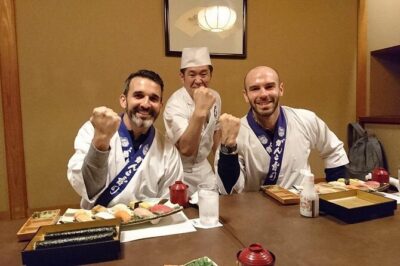 ★ 5.0Tsukiji Fish Market Guided Tour and Sushi Making with Pro ChefFrom $104775 reviews
★ 4.7Tsukiji Fish Market Food and Culture Walking TourFrom $96757 reviews
★ 5.0Tsukiji Fish Market Guided Tour and Sushi Making with Pro ChefFrom $104775 reviews
★ 4.7Tsukiji Fish Market Food and Culture Walking TourFrom $96757 reviews
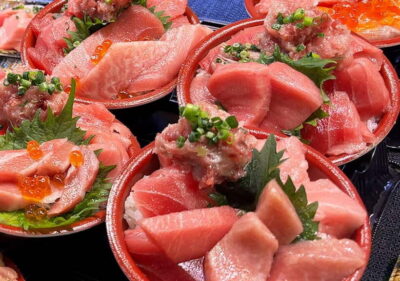 ★ 5.0Tsukiji Fish Market: Street Food & Culture Walking TourFrom $33669 reviews
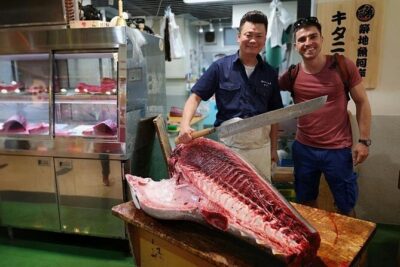 ★ 5.0Tsukiji Fish Market Small-Group Food Walking TourFrom $87621 reviews
Browse the lists this tour appears in