
Reviewed · ASAKUSA TOURS
Asakusa Historical And Cultural Food Tour With A local Guide
Asakusa is one of those places where you can walk a few blocks and feel Tokyo’s older side. This tour strings together the sights around Sensō-ji and Nakamise Street with real eating stops, so you’re not just sightseeing. I like that it’s built for a 4-hour pace with a small group limit, meaning you spend more time on the street and less time waiting.
Two things I especially like: first, you get guided context at the big landmarks like Sensō-ji, not just photos and head-counting. Second, the food portion is practical and location-based, with tastings such as beef, sushi, and tempura plus sweets like dango and daifuku you can only really appreciate in this neighborhood.
One consideration: this is a walking tour with multiple short sightseeing/shopping blocks, so you’ll want comfortable shoes. Crowds around Sensō-ji and Nakamise can also slow things down a bit.
In This Review
- Key highlights you’ll feel right away
- Asakusa still feels like an older Tokyo, in a good way
- Price and value: $180 for a food-and-sights mix that saves you decisions
- Where the tour starts: Asakusa Culture Tourist Information Center
- Nakamise Shopping Street: 30 minutes of snacks and simple shopping wins
- Sensō-ji Temple: a 30-minute sightseeing stop that sets the tone
- Asakusa shopping and the Asakusa Shrine stop: where the route adds texture
- Culture Tourist Information Center: using it like a local rather than a tourist desk
- Hanayashiki Amusement Park: the old-school fun break
- Tokyo Skytree: how to use the tour to grasp Tokyo’s scale
- What you’ll eat (and why it works in Asakusa)
- The pace: 4 hours, short blocks, and steady walking
- Who this tour suits best
- Should you book this Asakusa Historical and Cultural Food Tour with a local guide?
- FAQ
- What is the duration of the Asakusa Historical and Cultural Food Tour?
- Where does the tour meet?
- What languages are available for the live guide?
- How big is the group?
- What food and drinks are included?
- Is there a cancellation option?
Key highlights you’ll feel right away
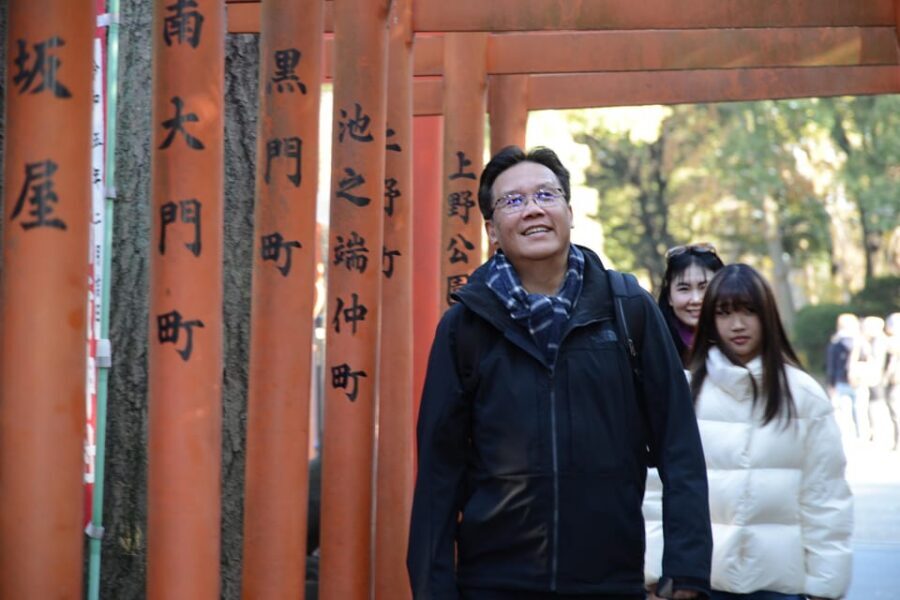
- Small group (up to 10) keeps the pace human and the questions flowing
- Sensō-ji Temple and Nakamise Street in one tight route, so you don’t waste time guessing where to go
- Food tastings across classic Asakusa lanes like tempura, sushi, and local sweets
- Asakusa Culture Tourist Information Center for quick orientation and practical local pointers
- Hanayashiki Amusement Park adds a fun, older-Tokyo flavor beyond temple and shopping
More mornings around Senso-ji and the old town
- Tokyo: Japanese Dance Cabaret Theater Asakusa-Kaguwa Ticket★ 4.8 · 2,270 reviews
- Tokyo: Asakusa Walking Tour with Sensoji Temple Visit★ 4.8 · 1,583 reviews
- Tokyo Asakusa Rickshaw Tour★ 5.0 · 1,375 reviews
Asakusa still feels like an older Tokyo, in a good way
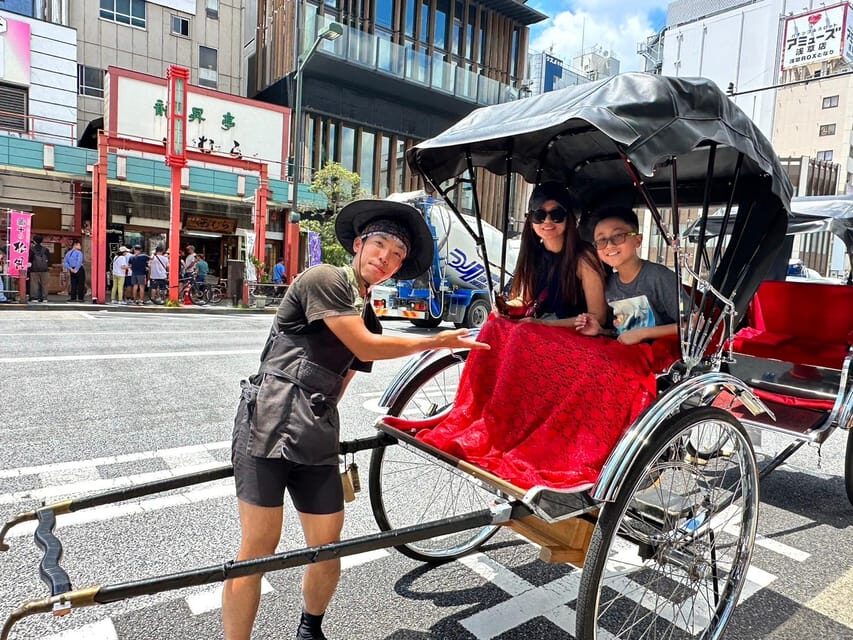
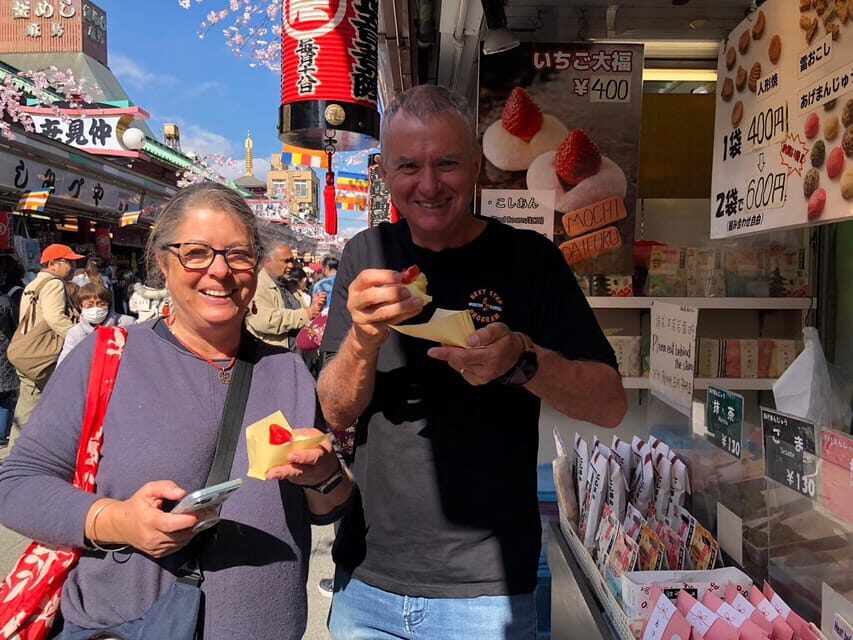
Asakusa has that classic “let’s stroll” energy. You’re in Honshu, near the historic core of Tokyo, where traditional shopfronts and snack stalls sit close to landmark streets. It’s the kind of area where you can watch daily life—people buying small gifts, grabbing something hot to eat, then heading toward the temple.
What makes this tour work is that it doesn’t treat the neighborhood like a museum. It uses the walking route to connect what you’re seeing with what you’re tasting. One moment you’re looking at temple architecture and street signs, and the next you’re sampling food that fits the place and the season.
Price and value: $180 for a food-and-sights mix that saves you decisions
At $180 per person for about 4 hours, the price is aiming at one thing: reducing guesswork. You’re paying for a local guide, a small-group pace, and multiple planned tastings rather than wandering and picking at random.
Here’s what’s included that really matters for value:
- A 4-hour walking tour with a live English/Japanese local guide
- A set of tastings that covers savory standbys like beef, sushi, and tempura
- Snacks and desserts, plus 2 soft drinks and water
- Time set aside to shop and see key spots tied to Asakusa’s culture
What’s not included is alcohol, which you can buy separately. If you’re expecting a full drinking experience, this isn’t that kind of tour. But if you want to leave with a list of foods you actually ate in Asakusa—and not just random street snacks—this format makes sense.
Where the tour starts: Asakusa Culture Tourist Information Center
Your meeting point is the Asakusa Culture Tourist Information Center at 2-chōme-18-9 Kaminarimon, Taito City, Tokyo 111-0034, Japan.
I like starting here because it gives you a clean “reset” before the walking begins. It’s also the kind of place that tends to orient you fast: you get a sense of where the main streets are, what’s closest, and how the day’s stops connect.
If you’re the type who likes to understand the neighborhood grid before you start ordering, this is a good start. It also helps if you’re jet-lagged and want a guide to take the first steps with you.
Nakamise Shopping Street: 30 minutes of snacks and simple shopping wins
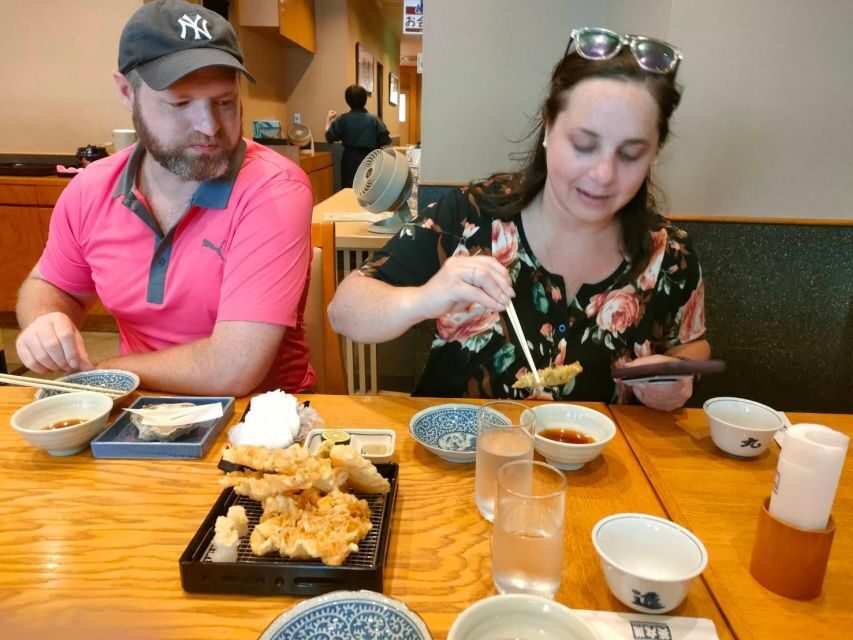
Nakamise Shopping Street is the corridor that most people associate with temple-area Tokyo shopping. Your tour gives you a focused 30 minutes here, which is perfect for two reasons.
First, Nakamise is great for quick sampling. Think sweet bites and classic snack culture—easy to try, easy to share, and easy to move through without committing to one long sit-down meal. If your guide works the route well, you’ll get more variety than you’d get by picking one thing and calling it dinner.
Second, it’s also practical for shopping, even if you’re not planning to buy a lot. You’ll likely find traditional craft shops and the kind of small souvenirs that are genuinely tied to the area rather than generic Tokyo-branded items.
The only downside to Nakamise is the obvious one: it can get crowded near peak times. That’s not a reason to avoid it, but it is why you’re on a timed tour. You don’t want to spend half your energy just shuffling.
Other plates worth crossing Tokyo for


Sensō-ji Temple: a 30-minute sightseeing stop that sets the tone
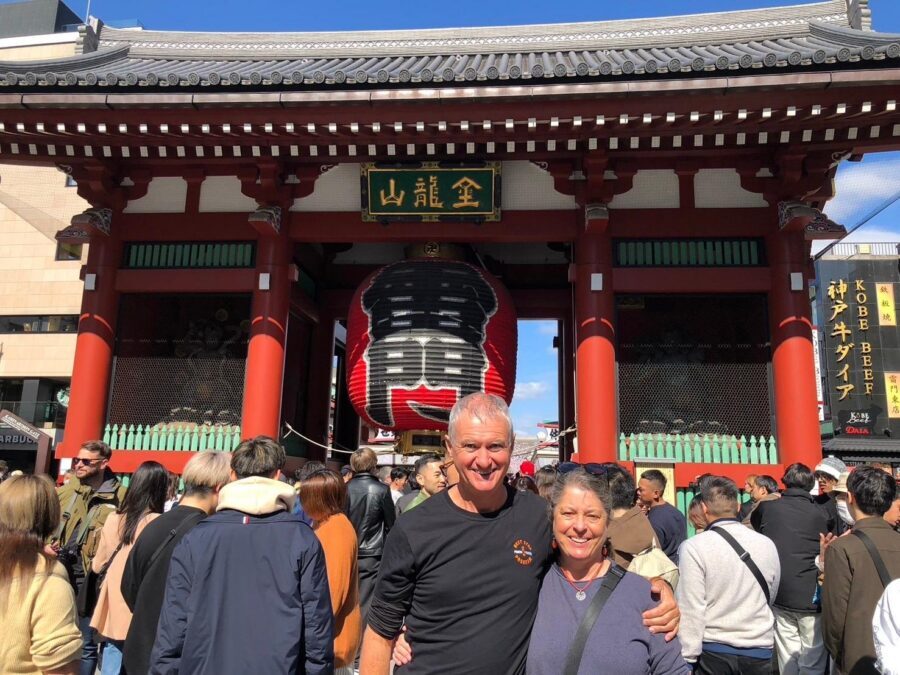
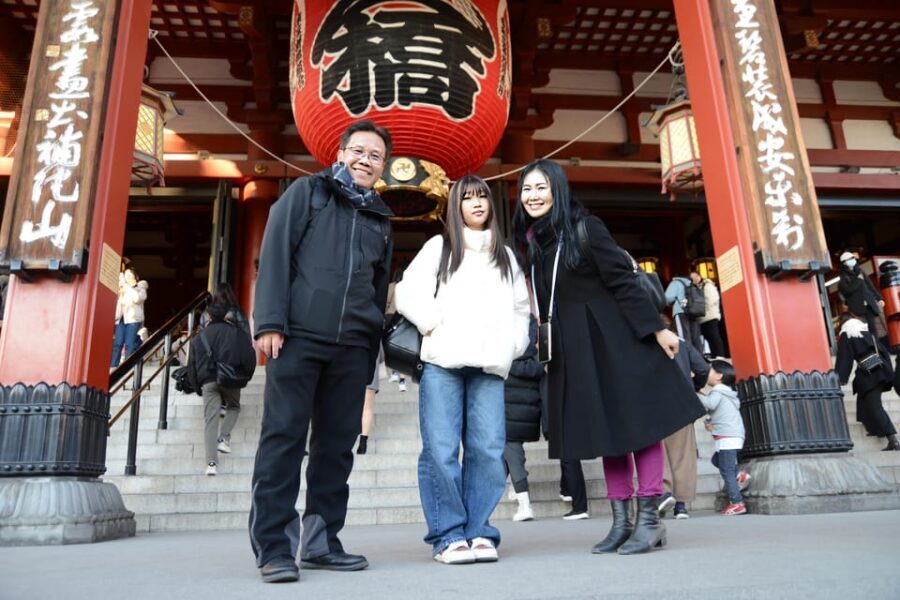
Your next landmark is Sensō-ji Temple (浅草寺), one of Tokyo’s most visited Buddhist sites. The tour sets aside 30 minutes for sightseeing, which works best for people who want the highlights and the meaning, without turning the day into a long museum visit.
Sensō-ji can overwhelm you if you show up cold: too much to see, too many angles for photos, too many people moving in every direction. A guide helps you get your bearings fast—what you should prioritize first, where to look for key temple details, and how the street-to-temple transition actually feels from ground level.
This is also where you get a stronger emotional picture of Asakusa. You’re standing in the middle of a living landmark area, not just outside a photo-worthy building. The guide’s explanations make the whole walk feel less random.
Asakusa shopping and the Asakusa Shrine stop: where the route adds texture
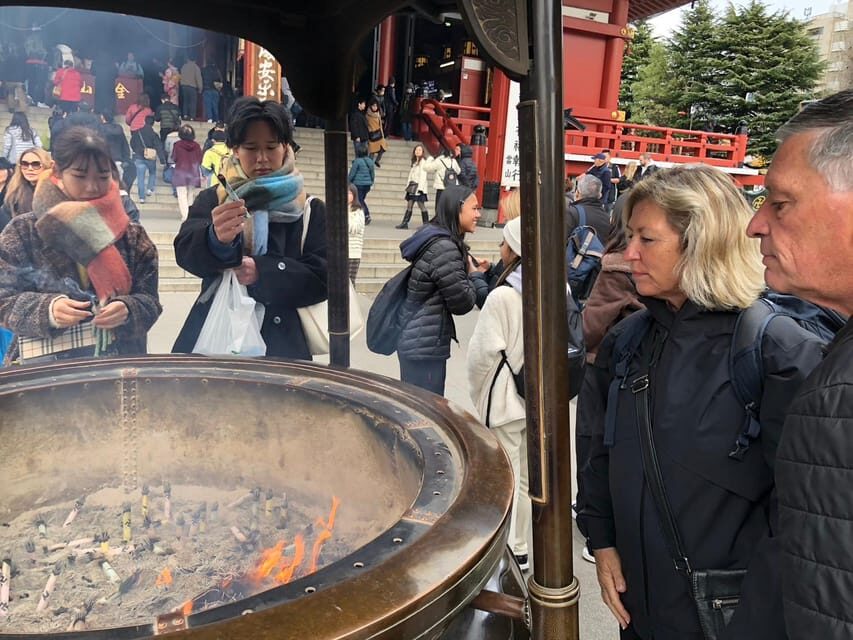
After Sensō-ji, you’re back into the neighborhood rhythm with another 30 minutes in Asakusa for shopping and then Asakusa Shrine for 30 minutes of sightseeing.
That rhythm is the point. Sensō-ji draws the crowds, but Asakusa Shrine helps you feel the quieter layer of the district. It’s a different vibe: still religious and traditional, but it doesn’t have the same circus-level attention.
This part of the tour is also where the food stops start to feel more like a story than a checklist. You’re tasting while you’re walking, with brief pauses that keep you from feeling like you’re stuffing your face in silence. You get the rhythm of a local pace: snack, stroll, look around, and repeat.
Culture Tourist Information Center: using it like a local rather than a tourist desk
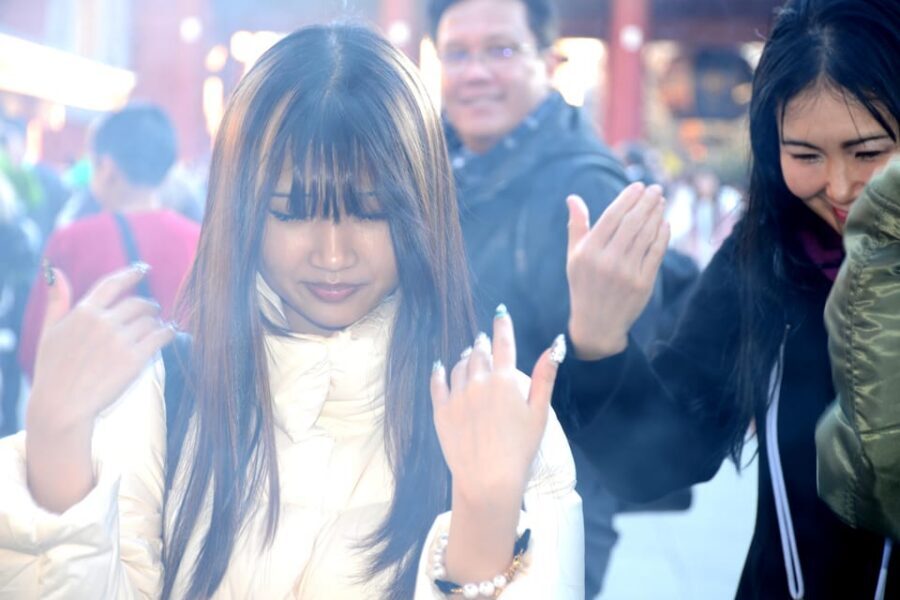
You come back to the Asakusa Culture Tourist Information Center for 30 minutes.
I like this because it changes the role of the meeting point. Instead of just being a start location, it becomes a reset and a reference point. If you want to keep exploring after the tour, having a guide-led “why this place, why this street” explanation can save you time later.
It’s also a smart stop because it breaks up the temple-and-street intensity. You get a chance to regroup, refill water (water is included), and plan your next steps without scrambling.
If you’re the type who asks questions, this is a good moment. A local guide can help with what’s nearby, what tends to be open, and what you might want to skip depending on your interests.
Hanayashiki Amusement Park: the old-school fun break
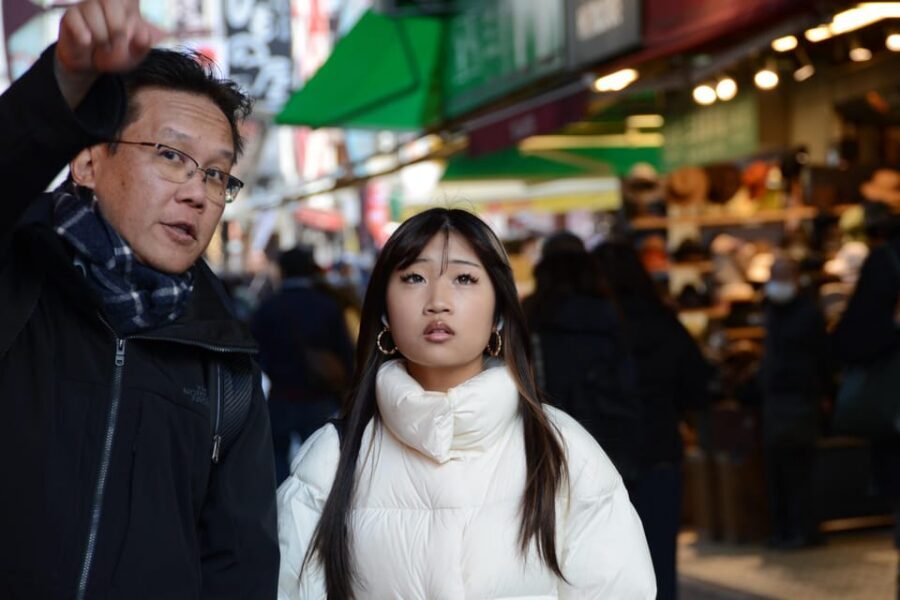
Next up: Hanayashiki Amusement Park, with 30 minutes for sightseeing and walking.
It’s an interesting addition because it shows a different side of Asakusa. Temple streets tell you about tradition. Hanayashiki reminds you that this area also has a leisure side—rides, cafes, and the kind of retro amusement vibe that makes Tokyo feel more human.
You don’t need to be an adrenaline fan to enjoy the stop. Think of it as a palate cleanser. By the time you reach Hanayashiki, you’ve probably already sampled savory foods and sweets, seen the big religious landmark, and walked through shopping corridors. This is where the tour stops being only about temple culture and starts feeling like a full neighborhood day.
Also, it’s shorter than a full theme park visit. That means you’re not locked into waiting around for long lines or spending your whole afternoon there.
Tokyo Skytree: how to use the tour to grasp Tokyo’s scale
The tour description flags Tokyo Skytree as a must for understanding Tokyo’s sheer size and density, and it highlights the tower’s 634-meter height and 360-degree views.
One important note: your provided route details don’t explicitly map where Skytree fits into the 4 hours. So treat it like a theme the day is pointing you toward, not a guaranteed high-altitude ticket.
Still, you can use the tour wisely. Ask your guide about the best way to catch a Skytree view from your direction, or what photo angle you should aim for while you’re already out in Asakusa. Even if you don’t go up, orienting yourself to how enormous Tokyo is can make the rest of your trip feel clearer.
What you’ll eat (and why it works in Asakusa)
This is a food tour where the tastings are tied to what’s around you, not random stops across the city. Included items can include:
- Beef
- Sushi
- Tempura
- Snacks and desserts
- 2 soft drinks and water
The sweets angle is a big part too. You’ll run into street-style treats like dango and daifuku, which are the kind of desserts that feel like they belong in a temple shopping lane.
Here’s why this matters: in Asakusa, a lot of the best “food moments” happen at small stalls and shop windows where timing and ordering are part of the experience. A guide removes the friction—what to order, how to eat it on the go, and how much you’ll realistically be able to try while still enjoying the sights.
And because it’s a 4-hour format with multiple stops, you’re more likely to leave with a variety of flavors in your memory. That’s the goal.
The pace: 4 hours, short blocks, and steady walking
The tour is built around short segments—often 30 minutes each—so your day doesn’t drag. The upside is you get to cover a lot. The downside is you can’t slow down for long lines or deep browsing without sacrificing something else.
With a group limited to 10 participants, you’re not going to feel like a giant crowd cluster. But you still should assume you’ll move with the guide and the flow of people near the temple area.
If you like structure, you’ll appreciate that. If you prefer to wander freely with no schedule at all, this tour may feel a little “planned.” The good news is the shopping windows give you some freedom.
Who this tour suits best
This experience is a strong fit if you:
- Want a guided walk through Asakusa’s top landmarks without overplanning
- Like tasting food in the exact neighborhood where it belongs
- Appreciate English or Japanese interpretation (the tour is live guided in both)
- Prefer small groups and a steady walking pace
It may not be ideal if you:
- Want a long, sit-down meal experience (this is tastings and strolling)
- Have very limited walking tolerance
- Expect alcohol to be included (it’s not)
Should you book this Asakusa Historical and Cultural Food Tour with a local guide?
I’d book it if you’re visiting Tokyo and want Asakusa to feel meaningful fast. The mix of Sensō-ji, Nakamise Street shopping, a return stop at the Asakusa Culture Tourist Information Center, and a classic fun break at Hanayashiki makes the day feel like an actual neighborhood outing.
It’s also good value for the format. You’re paying for a local guide, small-group pacing, and multiple included tastings plus drinks. If that’s what you want, this tour saves time and reduces stress.
If you’re only interested in one thing—either temples only or food only—then you might pick a different style of tour. But if you want the whole Asakusa picture in one afternoon, this one is an easy yes.
FAQ
What is the duration of the Asakusa Historical and Cultural Food Tour?
The tour lasts 4 hours.
Where does the tour meet?
The meeting point is Asakusa Culture Tourist Information Center, 2-chōme-18-9 Kaminarimon, Taito City, Tokyo 111-0034, Japan.
What languages are available for the live guide?
The live tour guide is available in English and Japanese.
How big is the group?
The tour is limited to a small group of up to 10 participants.
What food and drinks are included?
You’ll get included tastings such as beef, sushi, and tempura, plus snacks and desserts. The tour also includes 2 soft drinks and water. Alcoholic drinks are not included.
Is there a cancellation option?
Yes. Free cancellation is available up to 24 hours in advance for a full refund.
More Tours in Tokyo



More Tour Reviews in Tokyo




Around Senso-ji: More Asakusa Picks

Fresh reviews from around Tokyo






Asakusa Tours, compared.
 ★ 4.8Japanese Dance Cabaret Theater Asakusa-Kaguwa TicketFrom $492,270 reviews
 ★ 4.7Meiji Shrine, Asakusa, Skytree Bus Tour and CruiseFrom $1221,986 reviews
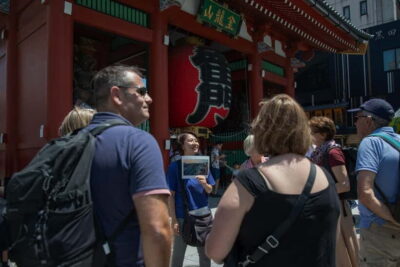 ★ 4.8Asakusa Walking Tour with Sensoji Temple VisitFrom $221,583 reviews
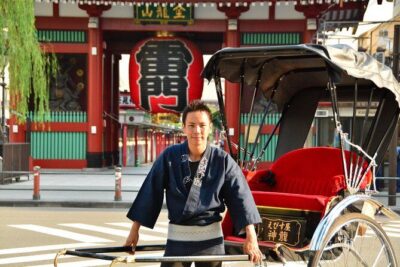 ★ 5.0Tokyo Asakusa Rickshaw TourFrom $421,375 reviews
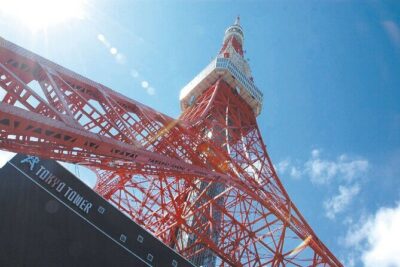 ★ 4.5Tokyo Panoramic 1 Day: Meiji Shrine, Asakusa, Odaiba and SKYTREE®From $851,222 reviews
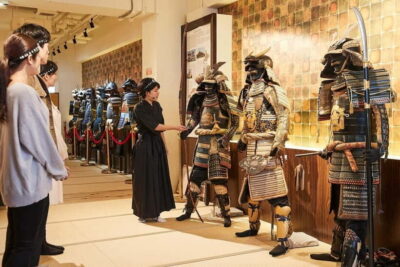 ★ 4.8Samurai Ninja Museum Asakusa: Samurai Sword Lesson & TourFrom $63306 reviews
Asakusa Sightseeing Tour by RickshawFrom $35195 reviews
Asakusa Kimono Dressing and Matcha ExperienceFrom $56173 reviews
★ 4.8Samurai Ninja Museum Asakusa: Samurai Sword Lesson & TourFrom $63306 reviews
Asakusa Sightseeing Tour by RickshawFrom $35195 reviews
Asakusa Kimono Dressing and Matcha ExperienceFrom $56173 reviews
Browse the lists this tour appears in