
Reviewed · TOKYO
Tokyo: Visit Sumo Morning Practice with English Guide
One early morning and you’re inside sumo life. This sumo stable training visit is special because you see practice up close in a place that usually keeps the public out, then you get context on the traditions and rules that shape every session. It’s timed well for Tokyo sightseeing after, especially if you want to roll right into Asakusa later.
Two things I really like: you get a strong English guide who helps you follow what you’re seeing (and you can ask questions), and you also leave with a commemorative photo with the wrestlers. One thing to consider is comfort and crowding: the stable setting is small, seating can get tight, and you’ll likely sit low or on simple gear for 1.5 to 2 hours.
In This Review
- Key Highlights
- Sumo Morning Practice in a Real Stable: Why This Feels Different
- Ryogoku Station to Takasagobeya: The Part You Can’t Rush
- What You Actually See: The Training Sequence Up Close
- The Guide Makes It Click: Traditions, Terms, and Q&A
- Seating, Comfort, and Small-Room Reality
- Photo with the Wrestlers: Your Souvenir That Actually Fits
- Asakusa After: How to Pair This Morning with Real Tokyo Color
- Timing and Group Size: Why It Stays Personal
- Price and Value: Is $98.53 Worth It?
- Who This Tour Suits Best
- Should You Book This Sumo Morning Practice Tour?
- FAQ
- How long is the sumo morning practice tour?
- What’s included in the price?
- Where do I meet for the tour?
- Is an English guide provided?
- What will I do during the practice?
- What’s the maximum group size?
- Is free cancellation available?
Key Highlights
- Rare stable access: training is usually closed off, and you get special viewing permission
- English guidance with real Q&A: ask about techniques, traditions, and what each drill means
- Up-close training energy: the sounds, sweat, and intensity come through in a small room
- Photo souvenir: a commemorative picture with the wrestlers is part of the experience
- Perfect pairing with Asakusa: finish in time to keep your morning going
Before you commit, see how this one stacks up against a few Tokyo favourites:
- Mt Fuji and Hakone 1-Day Bus Tour Return by Bullet Train★ 5.0 · 26,383 reviews
- 1-Day Tokyo Bus Tour★ 5.0 · 14,250 reviews
- Tokyo: teamLab Planets TOKYO Digital Art Museum Entry Ticket★ 4.6 · 9,779 reviews
Sumo Morning Practice in a Real Stable: Why This Feels Different
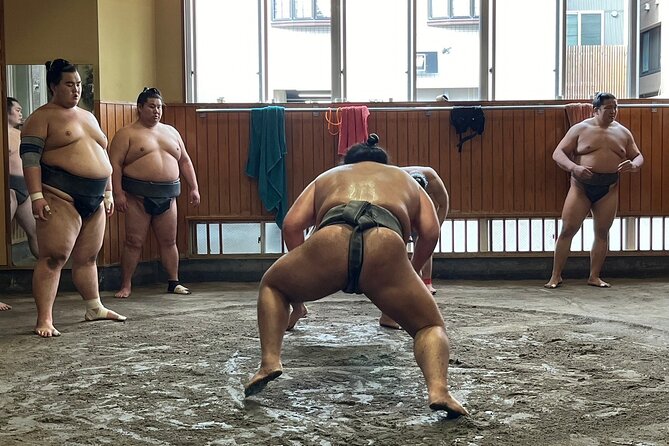
Sumo looks simple until you watch it as practice, not performance. In this tour, you’re not waiting for a big arena moment. You’re watching the work: warmups, stretching, preparation, and the serious back-and-forth that builds into training bouts.
The big value is access. Stable life is private by design, so being allowed into the training space lets you see the sport from the athlete’s point of view. It also makes live sumo matches later feel clearer, because you’ll recognize drills and intensity levels you saw in motion.
Ryogoku Station to Takasagobeya: The Part You Can’t Rush
Your morning starts near Ryogoku Station, one of Tokyo’s easiest bases for sumo culture. The meeting point is listed at Ryogoku Sta. (Yokoami, Sumida City), and the tour includes a guided walk to the stable.
Here’s the practical tip that matters: plan to show up early for the station exit handoff. One key detail that comes up is the A3 exit timing—your group is expected to depart promptly—so I’d rather you arrive with time to spare than sprint with your ticket in hand. If you’re the type who likes buffer time, this is one of those mornings to use it.
At the end, the tour dismisses you at the stable area (listed end address is in Ishiwara, Sumida City). Your guide will show you how to get to your next stop, which is handy if you’re immediately heading toward Asakusa.
What You Actually See: The Training Sequence Up Close
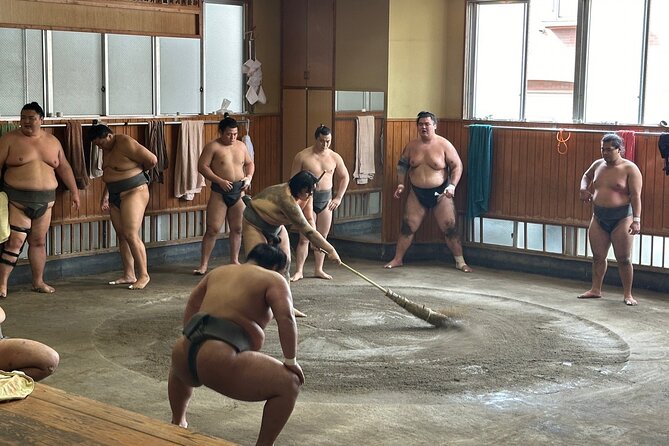
This isn’t a show with a timed script. It’s real practice, which means the session rhythm can feel intense and very grounded. Expect close viewing in a smaller indoor space where the action is more physical than you may imagine.
From what you’ll see, the session tends to move through a few stages:
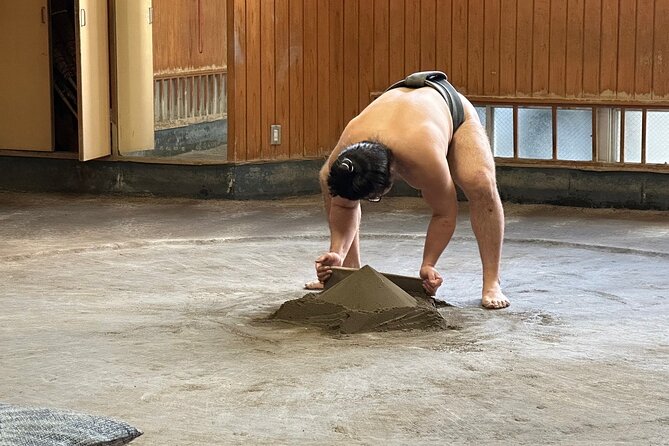
- body prep, stretching, and warmups
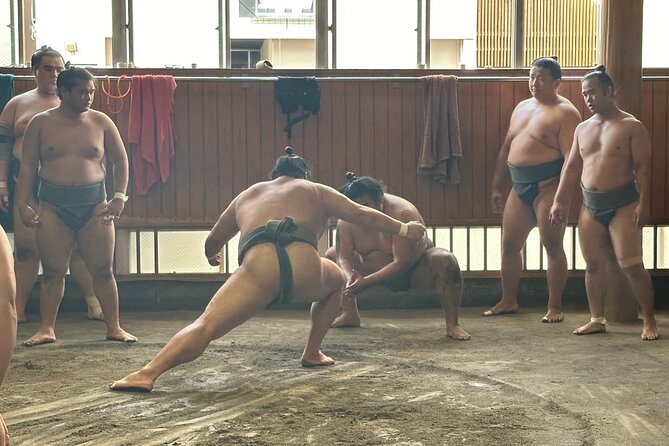
- practice bouts, including younger wrestlers challenging each other
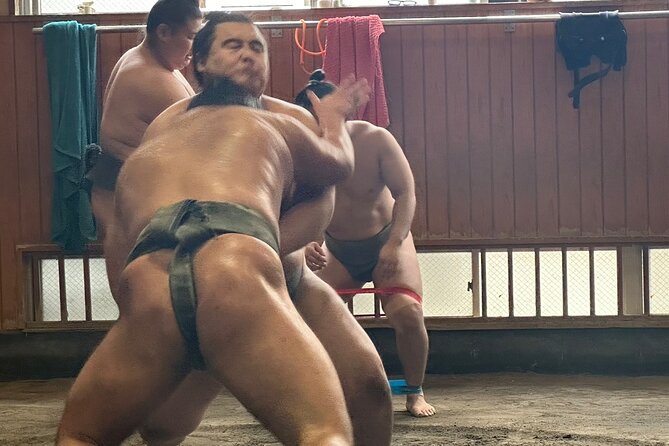
- then the more powerful wrestlers going at it with serious intensity
Even if you know nothing about sumo, this structure helps. Your brain starts sorting what’s happening and why, and you’ll feel the effort level as the session tightens.
One more thing: it’s often quieter in terms of spectacle, but louder in the ways that matter. You’ll hear the training sounds—impact, breathing, and footwork—because you’re close enough to notice details that you’d never catch from a distant match seat.
The Guide Makes It Click: Traditions, Terms, and Q&A
The English guidance is one of the strongest reasons to book. You’re not just watching; you’re getting help decoding what you see. The guide explains sumo traditions and history, and also walks you through what the athletes are doing during drills.
A nice bonus is the ability to ask questions. That’s where the experience becomes yours, instead of just a passive visit. If you want to know why certain steps happen, how wrestlers prepare, or what different parts of the routine mean, this tour is built for that.
Some guides bring extra material too. In one experience, a guide shared a fact sheet with terms and training details, which makes it easier to follow along in real time. If you’re traveling with teens or first-timers, that kind of handout can turn a cool watch into a meaningful learning moment.
If you’re lucky with timing, you might get a guide like Naomi, who was described as warm, friendly, and willing to answer a long list of questions before and after training. Even when guides differ, the tour’s promise is consistent: language barriers shouldn’t stop you from understanding what’s happening.





Seating, Comfort, and Small-Room Reality
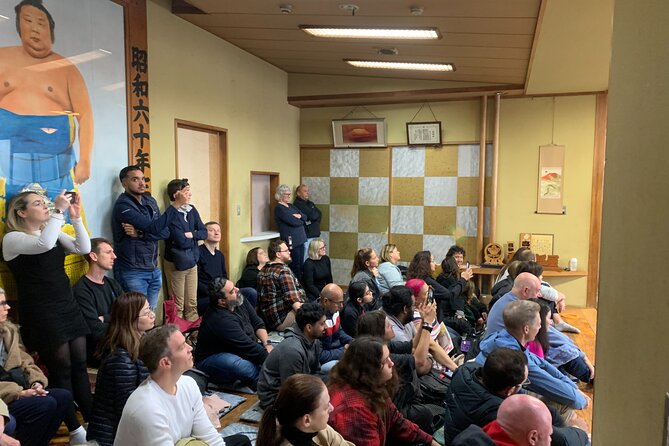
This is the one area where you should set expectations. The stable viewing space is described as small, and seating can be squeezed. You may sit on the floor or on simple traditional options, and for some people that means an uncomfortable couple of hours.
If you’re sensitive to sitting low, bring it up front. Consider wearing layers you can adjust, and bring a small travel pad if you use one at home. Also, keep your pace calm. You’ll spend more time seated than you think, and you’ll want to be comfortable enough to watch every round.
Crowding can also happen. The session is limited, but there can be extra visitors (like groups arriving unexpectedly). If the room fills a bit, the viewing still works, but the atmosphere turns more social and less spacious—so don’t expect luxury seating.
Photo with the Wrestlers: Your Souvenir That Actually Fits
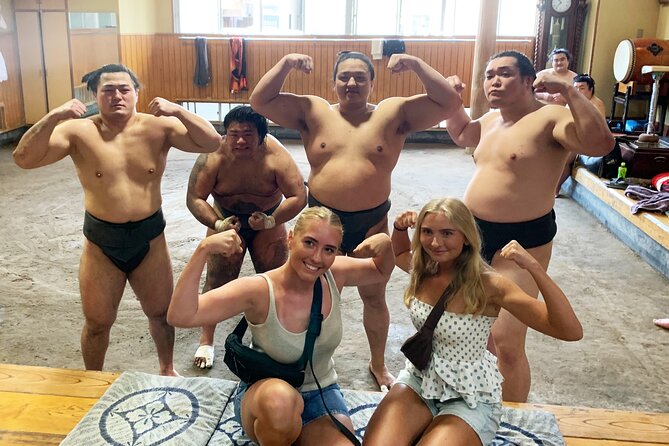
A commemorative photo is included, and that’s not just a random add-on. It’s one of those tangible takeaways that makes the experience stick in your memory.
Because the photo happens at the end, it also gives your morning a natural finish line. You go from watching the work, to learning what it means, to closing with a keepsake. If you’re coming from a big Tokyo “site list” mindset, this feels more personal because you’re interacting with the experience in the right order.
Asakusa After: How to Pair This Morning with Real Tokyo Color
One of the easiest ways to get more out of this tour is to stack it with Asakusa. The tour ends at the stable location, and since it’s in the Sumida area, you can keep your day moving without wasting half your schedule on transit.
Asakusa is perfect afterward because you’ll likely be mentally wired from sumo practice. Markets, old-street vibes, and casual wandering become a fun contrast to the discipline you just watched. It’s also a smoother schedule than trying to do Asakusa first when you’re still figuring out the morning logistics.
Practical advice: plan a light gap buffer. You’ll be out early, and you’ll have a lot to process. A short meal and a walk to get oriented before you dive into sightseeing helps a lot.
Timing and Group Size: Why It Stays Personal
This experience has a maximum of 20 people, and that smaller size is a big deal in a stable environment. In tight spaces, smaller groups mean you’re more likely to see clearly and less likely to feel shoved.
Timing also matters. The tour is set for a morning start (listed start time is 8:00 am), and there’s an expectation you arrive on time for the station exit and walk. In a small-room setting, delays aren’t just inconvenient—they can affect how the group is positioned.
If you prefer structure, you’ll likely appreciate how the plan flows: meet, walk, watch, learn, photo, then dismissal with directions onward.
Price and Value: Is $98.53 Worth It?
At $98.53 per person, this isn’t the cheapest activity in Tokyo. The value comes from what you can’t easily DIY.
You’re paying for:
- entry into a sumo stable training session (an access element that’s hard to replicate on your own)
- an English-speaking guide to explain what you’re seeing
- structured time so you’re not guessing where to stand or when things happen
- admission ticket included
- a commemorative photo as part of the experience
If you’re the kind of traveler who likes cultural context and wants to leave with a story that feels real, this price can make sense. If you’re only looking for distant viewing with minimal explanation, there are cheaper ways to find sumo-related sights. But the whole point here is up-close training plus guidance.
Who This Tour Suits Best
This tour fits best if you want more than a quick photo stop. I’d recommend it for:
- sumo fans who want to see the work behind the matches
- first-timers who need help understanding the sport’s routines
- families with older kids who can sit for 1.5 to 2 hours
- travelers who enjoy small-group, guided cultural experiences
It’s also a good fit if you like early mornings and want your day to get rolling before the rest of Tokyo fully wakes up.
Should You Book This Sumo Morning Practice Tour?
I’d book it if your top priority is seeing serious training up close with a guide who helps you understand what’s going on. The combination of access, Q&A, and a photo souvenir is exactly the kind of “small but meaningful” Tokyo experience that pays off later when you watch sumo matches and recognize what you’ve already seen.
Skip it or adjust your expectations if you’re very worried about comfort. The setting is traditional and seating can be tight. Also, arrive early and follow the meeting instructions closely—this is one activity where being late can genuinely mess with your morning.
If you want a straightforward way to get an authentic sumo experience without language stress, this is a strong choice. Plan for a real training session morning, bring a little patience for small-room conditions, and you’ll likely leave with a memory that feels way more personal than a big-event photo.
FAQ
How long is the sumo morning practice tour?
The tour is listed at about 1 hour 30 minutes to 2 hours.
What’s included in the price?
Admission is included, and there’s also a commemorative photo as part of the experience.
Where do I meet for the tour?
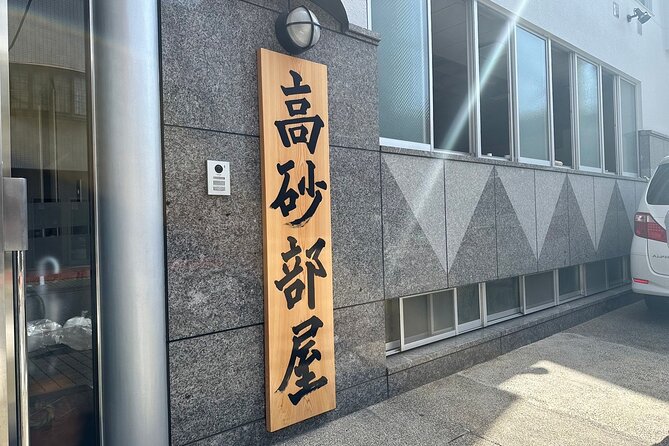
The meeting point is at Ryogoku Sta. (1-chōme-4-29 Yokoami, Sumida City). The tour ends at Takasago Stable (2-chōme-30-1 Ishiwara, Sumida City).
Is an English guide provided?
Yes. The tour is described as having an English guide to help with language barriers.
What will I do during the practice?
You’ll watch wrestlers train in a stable setting, learn about traditions and history from your guide, and you’ll be able to ask questions.
What’s the maximum group size?
The tour has a maximum of 20 participants.
Is free cancellation available?
Yes, free cancellation is available up to 24 hours before the experience’s start time for a full refund.
More Tour Reviews in Tokyo



Fresh reviews from around Tokyo






Tokyo, compared.
 ★ 5.0Mt Fuji and Hakone 1-Day Bus Tour Return by Bullet TrainFrom $16326,383 reviews
 ★ 5.01-Day Tokyo Bus TourFrom $12914,250 reviews
 ★ 4.6teamLab Planets TOKYO Digital Art Museum Entry TicketFrom $259,779 reviews
 ★ 4.0Mt Fuji & Hakone Cruise, Drum Show Bullet Train 1 Day from TokyoFrom $1497,413 reviews
 ★ 5.0Shinjuku Food Tour (13 Dishes at 4 Local Eateries)From $866,603 reviews
 ★ 4.4Tokyo Mt Fuji 5th St & Hakone Cruise Bus Tour w/Bullet TrainFrom $1545,024 reviews
 ★ 5.0Flagship 2-Hours Official Street Go-Kart Tour – Tokyo Bay ShopFrom $644,974 reviews
 ★ 4.5From Tokyo: Mount Fuji Full-Day Sightseeing TripFrom $684,970 reviews