
Reviewed · SHIBUYA TOURS
Tokyo: Shibuya Crossing & Hidden Streets Walking Tour
A walking tour that actually makes Shibuya make sense. This one kicks off with the Myth of Tomorrow mural, then strings together the big-and-small sides of the neighborhood: peak-activity Shibuya Crossing, tucked lanes like Nonbei Yokocho, and modern hangouts around Miyashita Park and Center Gai. It ends where your brain slows down again at the Hachikō statue, which turns the whole district into something with meaning, not just noise.
Two things I like a lot: the story-led stops (including a photo moment at Shibuya Crossing and the nuclear-hope theme tied to the Taro Okamoto mural) and the guide experience. In the reviews, guides like Loc, Rio, Kumi, and Grey consistently sound like they enjoy teaching, answering questions, and helping with great photos—useful if you’re solo. One drawback to plan for: Shibuya is crowded and you’re on your feet for two hours, so the tour moves at a walking pace and the meetup is easy to miss if you’re late.
In This Review
- Key things you’ll notice on this Shibuya walk
- Starting at SABON Shibuya Mark City: get your bearings fast
- The Myth of Tomorrow mural: more than a photo stop
- Shibuya Crossing: learn how to watch the chaos
- Nonbei Yokocho (Drunkard’s Alley): old Tokyo in a tight space
- Miyashita Park: the modern pause you didn’t know you needed
- Center Gai: youthful energy with a guided lens
- Maruyama-cho: historical streets that now feel like night out
- Ending at Hachikō: loyalty, right in the middle of it all
- Price and value: why $22 for two hours can be worth it
- What you should bring (and what to expect in motion)
- Who this tour suits best
- Should you book this Shibuya Crossing and hidden streets tour?
- FAQ
- Where does the tour meet?
- What’s the exact duration of the tour?
- How much does it cost?
- Is the tour guide available in English?
- Where does the tour end?
- Which stops are included along the route?
- Is there free cancellation?
- Can I pay later?
Key things you’ll notice on this Shibuya walk
- Myth of Tomorrow’s message: a powerful start that frames the rest of the district through hope and reflection
- Shibuya Crossing, on purpose: not just a view, but a guided photo-and-context stop
- Nonbei Yokocho’s old-life texture: short guided time that helps you spot what’s local
- Miyashita Park as a reset button: multi-level space to breathe between street scenes
- Center Gai and Maruyama-cho mix: youth energy plus a nightlife lane with history behind it
- Finish at Hachikō: a symbol of loyalty that gives the walk a clean emotional landing
More to do within sight of the Crossing
- Official Street Go-Kart in Shibuya★ 5.0 · 3,435 reviews
- Tokyo: Street Kart Experience in Shibuya★ 4.9 · 1,484 reviews
- Shibuya Meltdown Nightlife Tour: All-You-Can-Drink Bar Hopping★ 5.0 · 1,058 reviews
Starting at SABON Shibuya Mark City: get your bearings fast
The tour starts at SABON Shibuya Mark City, and that’s the first practical test of the day. The meeting point is inside Mark City on the 3rd floor, and if you’re on your first Tokyo trip, it can take a minute to locate the right entrance and level. The guide will be holding a sign, so give yourself buffer time and don’t try to thread the needle right on the start time.
Why that matters: Shibuya Station is big, and people move fast. Once the tour begins, the rhythm is walking with short guided stops, so being late can throw off the flow for everyone.
If you’re coming from elsewhere in Shibuya, I’d treat this like an arrival for a show: arrive early, find the marker, then relax. This is a tour where timing helps you enjoy the sights instead of rushing for them.
The Myth of Tomorrow mural: more than a photo stop
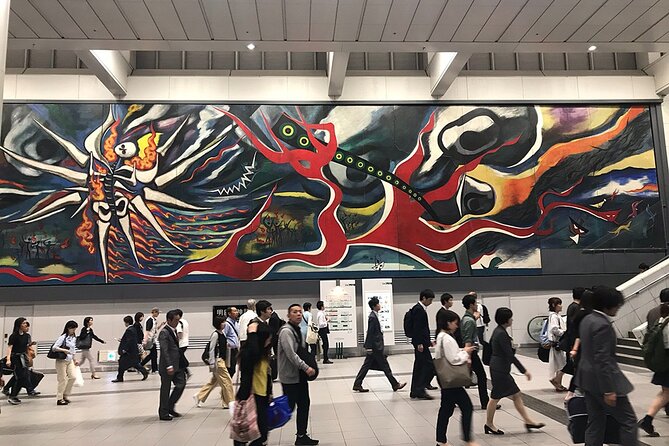
The first dramatic moment is the Myth of Tomorrow, a mural by Taro Okamoto. Expect a guided moment that frames it as a reflection on nuclear impacts with a message of hope—heavy subject matter, but it’s presented in a way that gives the walk a purpose.
Then you get a photo stop. This is one of those cases where the picture is only half the value. The real payoff is understanding why the mural shows up right at the start of a modern shopping-and-street scene, and how Shibuya can hold both city energy and big moral questions in the same frame.
If you like tours that teach you how to read the city, this opening works. It also helps if you’re short on time and want your one Shibuya day to feel intentional.
Shibuya Crossing: learn how to watch the chaos
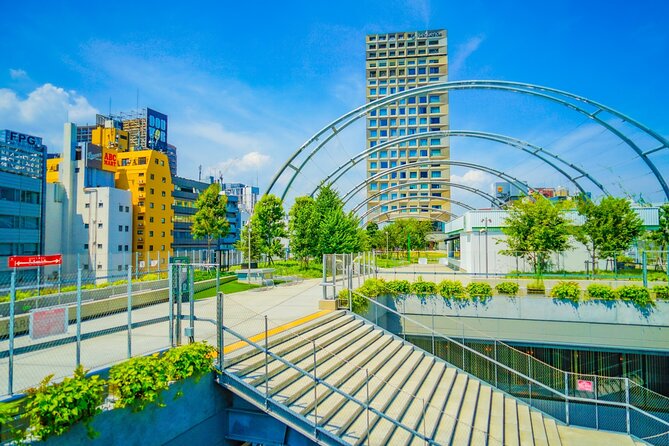
Then you hit Shibuya Crossing, the world-famous intersection that turns your phone into a camera and your brain into a bystander. You’ll stop for photos and get guided context, which is the smart way to experience this place because it’s easy to just stare.
What the guide adds here is the difference between seeing the crossing and understanding it. You’ll get practical direction for where to stand and how to frame the shot, plus cultural context for why the area functions the way it does.
One small comfort from the reviews: guides like Loc have a track record of helping solo travelers with photos. If you’re traveling alone, that’s a real advantage because Shibuya Crossing is exactly where you usually struggle to get a decent shot without help.
Nonbei Yokocho (Drunkard’s Alley): old Tokyo in a tight space
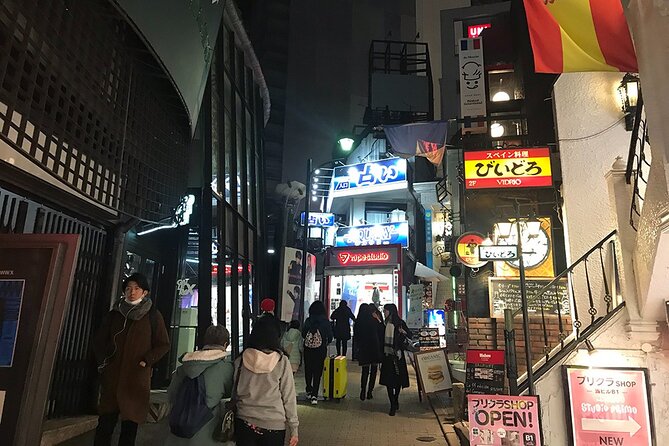
After the big visual shock of Shibuya Crossing, you switch to older street texture at Nonbei Yokocho, often described as Drunkard’s Alley. This stop is short—about 10 minutes of guided time—but it’s designed for impact.
You’re looking for the atmosphere: narrow lanes, the sense of local history, and the feeling that Shibuya isn’t only about brand-name shopping and giant crossings. A guide helps you see what you might otherwise miss in a compact area, like how the lane fits into the neighborhood’s timeline and daily life.
This is also a nice contrast stop. If Shibuya Crossing feels like sensory overload, Nonbei Yokocho gives you something quieter to read. You’ll likely come out feeling like you’ve seen two Shibuya cities in one afternoon.
Tokyo at walking pace, a few more ways

Miyashita Park: the modern pause you didn’t know you needed
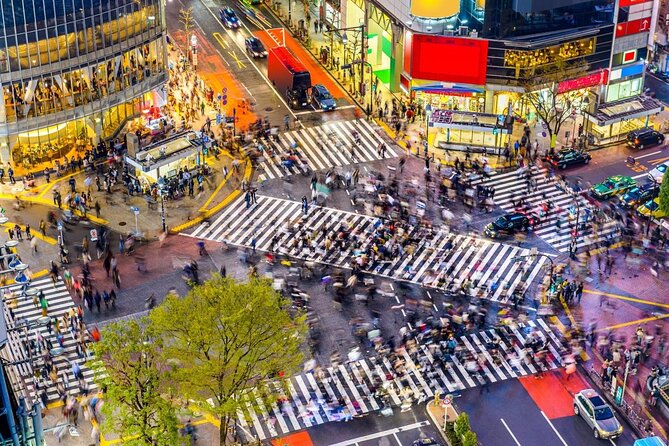
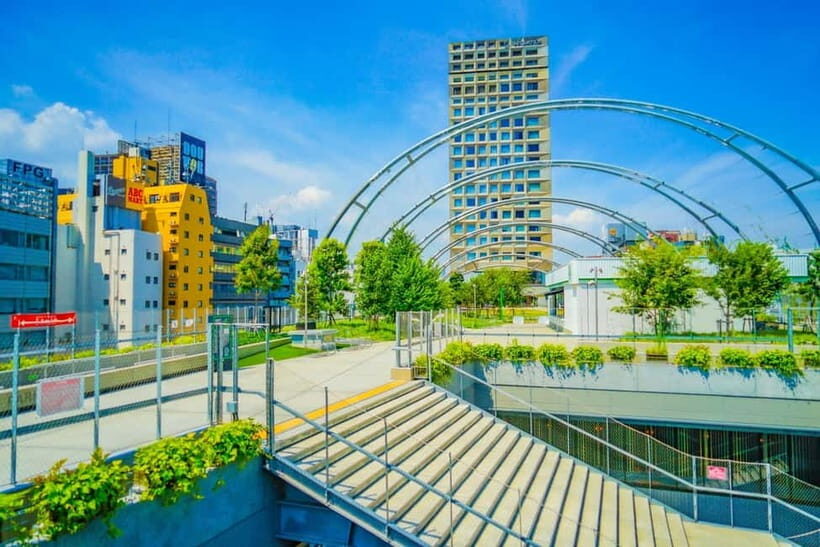
Next is Miyashita Park, a multi-level urban oasis. The point here isn’t just scenery—it’s recovery. After walking through lanes and intersections, Miyashita Park gives you a place to slow down, look around, and take a breath before the tour gets more nightlife-leaning.
You’ll have about 20 minutes for this stop, which is great because it’s enough time to notice the different levels and how the park fits into the surrounding building world. It’s the kind of place where you can sit for a minute even if you’re not a park person, because it’s clearly built for city downtime.
If you’re traveling with kids or you’re carrying a camera and water bottle, this pause is genuinely useful. The rest of the tour is fast-moving streets, so this stop prevents the whole two hours from feeling like a sprint.
Center Gai: youthful energy with a guided lens
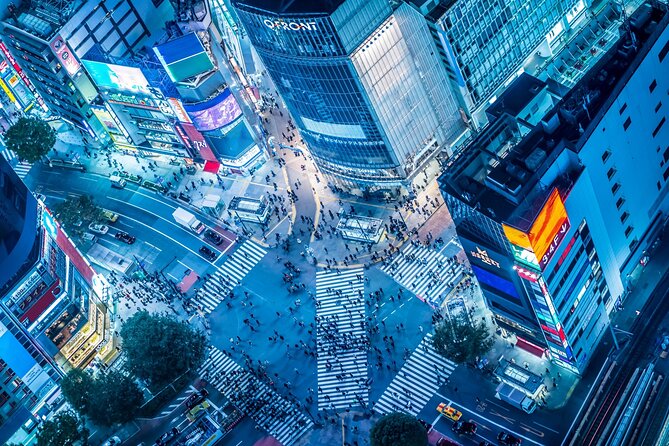
Then it’s Center Gai, another short guided stop (about 10 minutes). This is where Shibuya’s youth culture and street commerce feel very in-your-face.
The value of having a guide here is interpretation. Center Gai can look like just another shopping strip if you walk through it at random. With guidance, you start to see why the area became a magnet and what kind of vibe it’s known for.
In the reviews, guides repeatedly get praised for answering questions and offering practical cultural context. That’s exactly what you want at a place like Center Gai, where a little explanation turns your walking into understanding.
Maruyama-cho: historical streets that now feel like night out
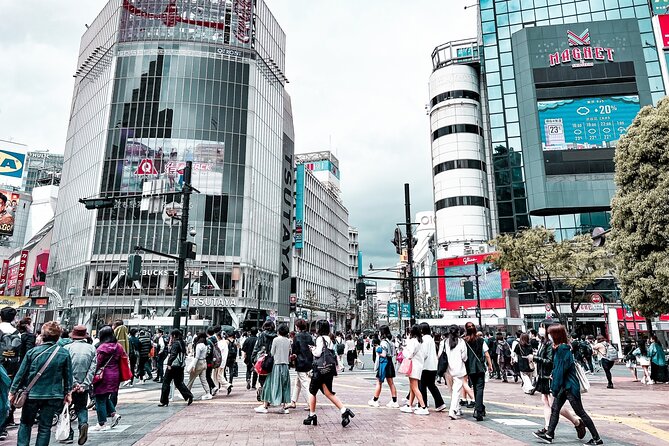
Finally, you head into Maruyama-cho, described as historical streets that have become a hub for modern nightlife. This stop again is guided for about 10 minutes, but it hits a different mood than Center Gai.
Here, you get the sense that Shibuya changes tone as evening approaches. One minute you’re in bright commercial energy; the next you’re in streets where the past still shapes the layout, and current life fills the gaps.
If you like to plan where you’ll go next after the tour, this is a smart penultimate stop. You’ll leave with a better idea of the streets that are likely to fit your evening style—casual wandering, food-and-drink hopping, or just exploring with a calmer pace than the crossing.
Ending at Hachikō: loyalty, right in the middle of it all
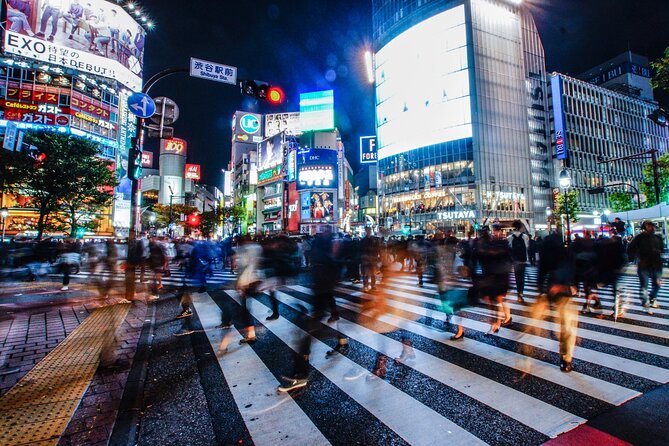
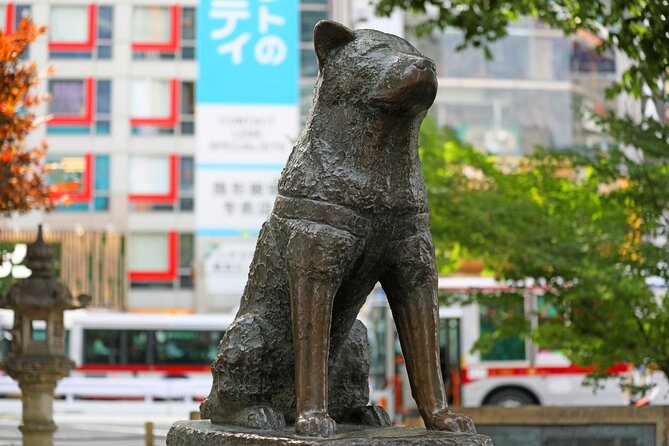
The tour closes at the Hachikō Memorial Statue, the iconic symbol of loyalty in Shibuya. Finishing here works because it’s a shift from street energy to something human-scaled and emotionally clear.
This is also where the tour’s earlier meaning clicks. The first stop deals with hope after nuclear impacts, and the last stop gives you a simple symbol you can carry with you as you continue exploring on your own. The whole two-hour loop feels less like sightseeing and more like a story about how Shibuya remembers, adapts, and keeps moving.
If you’re the type who likes a strong ending point for photos, this one does the job.
Price and value: why $22 for two hours can be worth it
At about $22 per person for a two-hour walking tour, the price sits in the sweet spot for what you actually get: a guided walkthrough of multiple Shibuya zones with short teaching segments at each stop.
Here’s the practical value math:
- You’re not just seeing one attraction. You’re moving through a cluster of places that would take a lot longer to interpret on your own.
- You’re getting an English guide for the full experience, not just a meet-and-greet.
- The guide helps you navigate the district’s flow, which matters in Shibuya where directions and crowds can wear you down.
If you only have one or two hours and you want your day to feel organized, this price is reasonable. If you’re a super confident navigator who already knows Shibuya street geography, you might see it more as a learning bonus than a must-do. Either way, the guide-led context is the part you’re paying for, and the reviews back up that guides take the role seriously.
What you should bring (and what to expect in motion)
This is a walking tour with frequent small stops. That means practical footwear is non-negotiable. Wear shoes you can stand in for a while, and plan for crowds—especially at Shibuya Crossing.
Bring:
- A charged phone for photos
- Water (Shibuya can be a lot even when the tour is short)
- A small bag you can handle in busy sidewalks
Also, expect a pace that keeps the schedule tight. The stops aren’t long, so if you want shopping time inside each area, you’ll need to save that for after the tour.
One more tip based on how guides are described: if you care about photos, ask early. Guides like Loc are noted for taking great photos and being understanding with timing, which helps if you’re a solo traveler or you want a couple of clean shots without chasing people down for help.
Who this tour suits best
This tour is a strong fit if you:
- Are in Tokyo for a limited time and want a smart first Shibuya day
- Want both iconic landmarks and smaller streets that feel more local
- Like learning cultural context, not only checking boxes
- Travel solo and would like photo support at big spots
It can feel less ideal if you:
- Want long stays in any one place (this is a rotation of sights)
- Don’t like crowds at all, because Shibuya Crossing and surrounding streets are active by nature
- Prefer museum-style pacing over street walking
Should you book this Shibuya Crossing and hidden streets tour?
If you want a guided Shibuya that goes beyond the obvious, I’d book it. The combination of Myth of Tomorrow, Shibuya Crossing, Nonbei Yokocho, Miyashita Park, Center Gai, Maruyama-cho, and Hachikō is a tight route that covers the district’s personality in just two hours.
The big reason to choose it is the guide factor. Reviews highlight English guides like Loc and Rio for clear explanations, flexible attitude when plans shift, and helpful photo moments—exactly what makes a short walking tour feel like more than a checklist.
If Shibuya is your only neighborhood day, this is a solid way to get oriented fast and leave with a mental map of where to explore next.
FAQ
Where does the tour meet?
The meeting point is SABON Shibuya Mark City, inside the building called Mark City on the 3rd floor. The guide will be holding a sign, and it can be difficult to find if it’s your first day in Tokyo.
What’s the exact duration of the tour?
The tour runs for 2 hours.
How much does it cost?
The price is $22 per person.
Is the tour guide available in English?
Yes, the tour is guided in English.
Where does the tour end?
The tour finishes at the Hachikō Memorial Statue.
Which stops are included along the route?
You’ll visit Shibuya Nonbei Yokocho, make a photo stop at the Myth of Tomorrow mural, visit Shibuya Crossing, explore Miyashita Park, visit Center Gai, walk through Maruyamacho, and end at Hachikō.
Is there free cancellation?
Yes, you can cancel up to 24 hours in advance for a full refund.
Can I pay later?
Yes. You can reserve now and pay later.
More Tours in Tokyo





More Tour Reviews in Tokyo




Still in Shibuya? Keep Going





Fresh reviews from around Tokyo






Shibuya Tours, compared.
 ★ 5.0Official Street Go-Kart in ShibuyaFrom $763,435 reviews
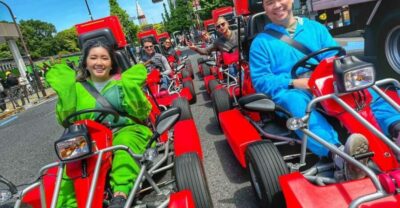 ★ 4.9Street Kart Experience in ShibuyaFrom $741,484 reviews
 ★ 5.0Shibuya Meltdown Nightlife Tour: All-You-Can-Drink Bar HoppingFrom $1061,058 reviews
 ★ 5.0Shibuya Official Street Go-Kart in Shibuya AnnexFrom $69972 reviews
 ★ 5.0Shibuya Food Tour (13 dishes and 4 Eateries)From $77770 reviews
 ★ 5.0Best of Shibuya Food TourFrom $217612 reviews
 ★ 4.8Shibuya Highlights Walking TourFrom $19601 reviews
 ★ 4.7Premium Go-Kart Tour with Tower & Shibuya CrossingFrom $116528 reviews
Browse the lists this tour appears in