

Reviewed · SHIBUYA TOURS
Shibuya Official Street Go-Kart in Shibuya Annex
Shibuya by go-kart feels unreal. You ride with a small-group guide, take on the world-famous Shibuya Crossing from different angles, and get hands-on coaching in real traffic. I love the in-kart guidance that keeps you confident, and I also like the way the route threads iconic neighborhoods without feeling like a long, boring bus tour. One potential drawback: the required driving documents (especially an IDP) can be the make-or-break part.
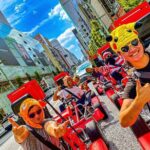
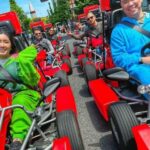
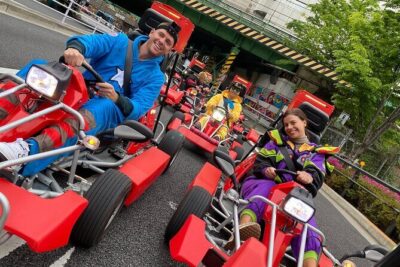
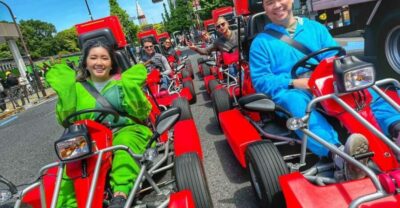
What makes this version of the ride extra fun is the mix of neon chaos and fashion street energy. You’ll grab a costume, follow a guide who’s big on clear instructions (names like Abrar, Cole, Newaz, and Tomas pop up for good reasons), and come away with tour photo data even if you never touch your phone. Wear flat, closed shoes—no flowy skirts—and plan for some exhaust in your face once you’re moving through the city.
In This Review
- Key Points to Know Before You Start
- Shibuya Crossing by Kart: A Tokyo Shortcut to Pure Energy
- Street Kart Shibuya Annex: What to Expect at Check-In
- The Route Really Works: Crossing, Harajuku, and Omotesando Backstreets
- World’s Busiest Crosswalk, Multiple Angles
- Harajuku: Pop Fashion and Constant Street Change
- Where Harajuku Meets Omotesando, Plus Side Streets
- How Long It Takes (and Why 90 Minutes Feels Just Right)
- Price and Value: What $69.64 Actually Covers
- Driving Rules That You Must Get Right
- Night vs Day: When Shibuya Looks Its Best
- Who This Tour Fits Best
- Should You Book Street Kart Shibuya Annex?
- FAQ
- FAQ
- Do I need an International Driving Permit (IDP) to drive a go-kart in Japan?
- What documents do I have to carry with me?
- Is an action camera included in the price?
- What’s included in the tour price?
- Can kids or non-drivers ride along?
- What should I wear to the meeting point?
- How many people are in each group, and where does the tour start?
Key Points to Know Before You Start
- Real Shibuya Crossing passes: You don’t just pose outside the scramble; you move through it with a guide.
- Small group size (max 6): You’ll get more attention than the big attraction lines.
- Costumes + photos: You’re dressed for the moment, and you’ll leave with photo data from your session.
- Harajuku meets Omotesando: Pop-culture streets shift into more mature shopping streets as you drive.
- Mid-ride rotation: Karts stop and riders rotate, so front and back views get shared.
- Paperwork matters: You must have the right driving documents and carry the physical versions.
More to do within sight of the Crossing
- Official Street Go-Kart in Shibuya★ 5.0 · 3,435 reviews
- Tokyo: Street Kart Experience in Shibuya★ 4.9 · 1,484 reviews
- Shibuya Meltdown Nightlife Tour: All-You-Can-Drink Bar Hopping★ 5.0 · 1,058 reviews
Shibuya Crossing by Kart: A Tokyo Shortcut to Pure Energy
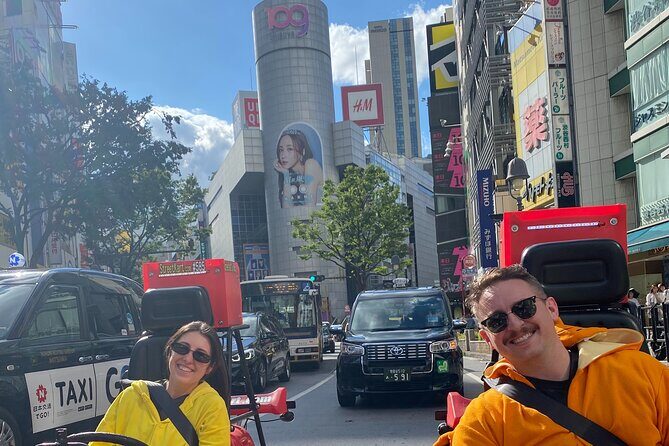
This is the part you’re really paying for: the chance to drive through the famous scramble crosswalk as traffic moves around you. Expect lots of attention—people stare, and you’ll see plenty of phones and cameras pointed your way. It’s intimidating for about the first minute, then it clicks once your guide has you positioned and steering with a rhythm that fits the flow.
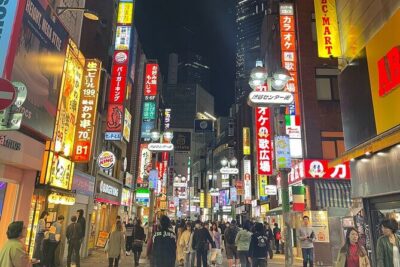
I especially like how the crossing is experienced from different angles. That means you’re not just doing one repeat view for photos; you’re getting multiple perspectives of the chaos. Night sessions tend to crank the vibe even higher, with neon lights reflecting off buildings and faces, and some groups report multiple passes over the crossing during evening rides.
The speed is sporty but not reckless. That’s a good thing in Shibuya, because your job is to focus on the guide ahead, watch intersections, and keep smooth control—not sprint like a video game.
Street Kart Shibuya Annex: What to Expect at Check-In
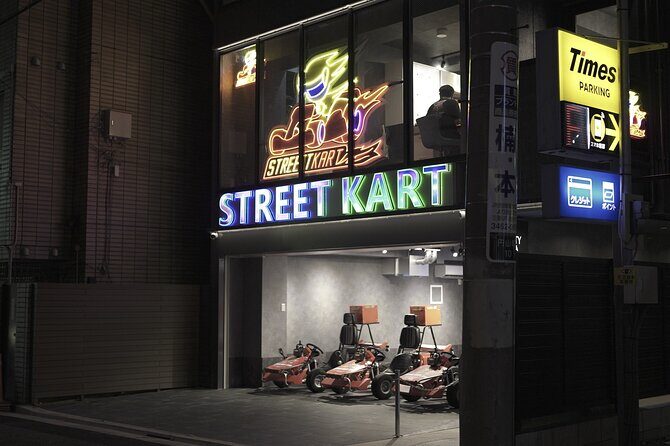
Your meeting point is at STREET KART Shibuya Annex in Maruyama-Cho (Shibuya), and the activity ends back at the same place. It’s near public transportation, so you shouldn’t need a taxi just to start—though you do want to arrive early enough to handle check-in without stress.
Check-in is where the nervous energy usually happens. You’ll confirm your details, sort the driving-document situation, and get briefed before you ride. If you miss your time slot, you may have to reschedule, so treat your start time like a train connection, not a suggestion.
Then comes the fun part: costumes. You’ll pick from the available options, and this is where the ride shifts from sightseeing into a full-on experience. People often notice they’re in a more colorful area around the shop (love hotels nearby), but the staff process is what matters—get through paperwork, get dressed, then you’re ready to drive.
If you’re bringing a phone or camera, I’d still keep it simple. The operation is focused on getting you riding safely, and the team provides tour photo data so you don’t have to nail every shot yourself. If you want actual ride footage, consider the action camera upgrade; more on that soon.
The Route Really Works: Crossing, Harajuku, and Omotesando Backstreets
The ride has a clean flow: crossing, then fashion streets, then a style mix at the edge of two worlds.
World’s Busiest Crosswalk, Multiple Angles
First up is the scramble crosswalk. Instead of watching it from the curb, you experience it as moving traffic with lanes, turns, and timing. You’ll be guided through it from different angles, which is key because the crosswalk is huge and your perspective changes fast as you enter and exit.
Watch for this: the city is busy, but your guide is in the same action pattern as you. Your focus should be on their movements and the course ahead, not on trying to look around and film constantly.
A practical consideration here is simply attention. People will look at you. That’s part of the experience. But keep your head in the driving task and let the moment happen around you.
Other ways to drive the city in costume



Harajuku: Pop Fashion and Constant Street Change
Next is Harajuku, with all the visual noise that makes the neighborhood famous—fashion storefronts, energy on the sidewalks, and that pop-culture feeling that makes Tokyo look like Tokyo. You’ll enjoy street views that shift as the route moves, so you’re not just repeating the same scenery.
This stop is ideal if you like watching how different blocks feel. One street feels playful and youth-heavy; another feels more styled and brand-focused. From a driving perspective, it also gives you time to settle into the controls with your guide steering the pacing.
Where Harajuku Meets Omotesando, Plus Side Streets
Then you drive through the intersection where Harajuku (pop fashion) meets Omotesando (a more mature, polished style). After that, you’ll also hit the backstreets of Omotesando.
This contrast is why the route feels more than a single-photo stunt. You go from high-energy street fashion to smoother, upscale shopping streets, and then you thread through smaller roads that let you see a different Tokyo layer. It’s still hands-on driving, just with scenery that changes tone.
Backstreet driving is often where you’ll feel the city rhythm most. It’s quieter than the scramble, but Tokyo still stays awake. Stay focused on corners and guide cues, especially if you’ve never driven on tight urban lanes.
How Long It Takes (and Why 90 Minutes Feels Just Right)
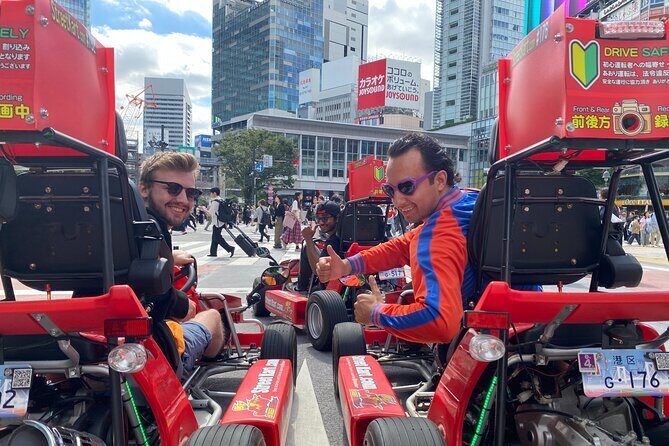
The whole experience runs about 1 hour 30 minutes. The kart rental fee included is 1 hour, but the total time needs extra buffer for check-in, briefing, costume selection, and the ride itself.
That timing is valuable for two reasons. First, it fits inside a normal Tokyo day plan without stealing your entire afternoon. Second, it gives you enough ride time to feel the neighborhoods instead of snapping through them like a 20-minute gimmick.
If you’re the type who wants time after the ride to keep exploring on foot, this pacing helps. You can come out with new eyes on Shibuya, Harajuku, and Omotesando, and then walk around where you want to linger.
Price and Value: What $69.64 Actually Covers
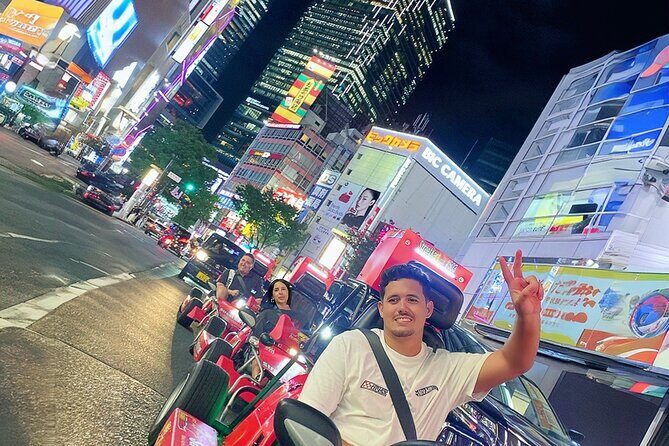
At about $69.64 per person, you’re paying for a guided, street-level Tokyo experience—not just a kart rental. Here’s what’s included: the 1 hour kart rental fee, a lead guide riding with you, costume rental, all fees and taxes, and tour photo data from the guide.
That bundle adds up. Independent kart rentals in Tokyo usually don’t include a guide who’s managing traffic flow, and they definitely don’t include costume dressing or the photo data element. This is closer to a guided performance with a street-driving twist.
What costs extra:
- Action camera rental fee, plus you need a micro SD card (not included).
- Full coverage insurance is listed as an additional ¥1,000 per person.
That insurance detail matters because some people like clarity up front. If you’re risk-averse or you’re worried about the learning curve in a busy area, look at the full coverage option. If you’re comfortable driving carefully and following instructions, you might decide you’re fine without it. The key is you can’t make that decision after you’re already out on the road.
Driving Rules That You Must Get Right
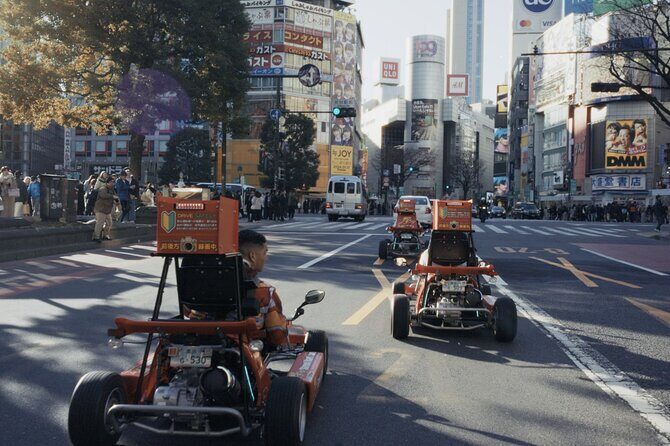
This is a street activity in Japan, so the rules are strict. You must be at least 18 years old, and the kart is single-seater only. No license, no drive. That also means you don’t “ride along” as a passenger—this isn’t built for kids or non-drivers to participate in the kart seat.
The biggest practical task is your driving document:
- For most countries, you need an International Driving Permit (IDP) in the booklet format compliant with the 1949 Geneva Convention.
- You cannot obtain those IDPs online while traveling; it must be issued by the same country that issued your domestic license.
- For Switzerland, Germany, France, Taiwan, Belgium, or Monaco, you need a Japanese translation via the Japan Automobile Federation (JAF), not the standard IDP.
And very important: a domestic driver’s license alone is not accepted as legal proof. You must carry the physical IDP (or the physical domestic license plus official translation for the listed countries) and a physical passport.
A small but real comfort note: you may get exhaust in your face. Plan for that if you’re sensitive to strong smells or prefer fresh-air activities.
Safety-wise, the setup is built for first-timers. You’ll get an informative video before riding, and your lead guide is inside the kart flow. Many riders also comment that the staff are patient and keep you on track, especially when Shibuya feels like the whole world is watching.
Also note: the group cap is 6 travelers. That small size is part of why instructions stay clear.
Night vs Day: When Shibuya Looks Its Best
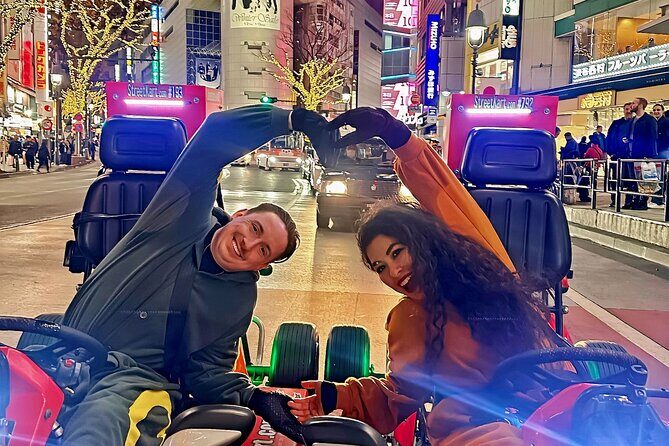
If you can pick your start time, night sessions are the obvious treat. Reviews highlight neon lights, bright city glow, and that adrenaline boost when traffic lights and signage reflect off the streets. Some groups even describe multiple Shibuya Crossing passes during evening rides.
Day rides can still be great, especially if you want easier visibility and a less intense sensory load. The crosswalk is always the headline, but the light changes the mood.
Weather can affect the ride. The activity requires good weather, and if it’s canceled for poor weather, you’ll be offered a different date or a full refund. On the day, wear shoes you can stand and drive in comfortably for the full session.
Who This Tour Fits Best
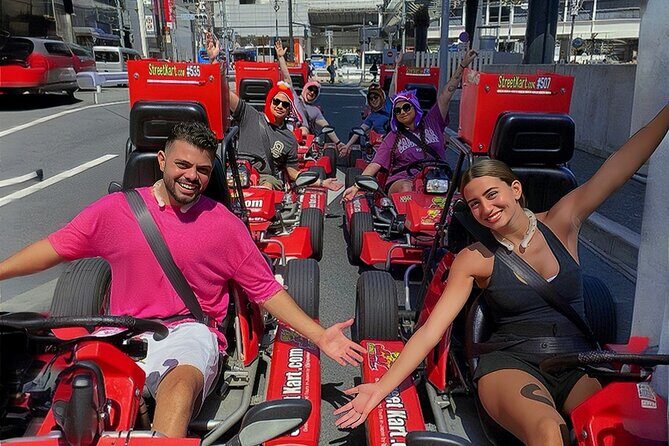
This works best for people who want action. Not dangerous action—just the kind that gets your heart moving and turns Tokyo sightseeing into something you physically do.
It’s a strong match for:
- Couples and friend groups who want a shared story they’ll replay for years.
- First-time Tokyo visitors who want more than a photo-op view.
- Teens and families where the drivers are adult and comfortable following instructions; the small-group size helps keep it manageable.
It’s not ideal if:
- You don’t have your IDP (or correct translation) lined up well before you arrive.
- You hate being in traffic with lots of attention from strangers.
- You’re sensitive to exhaust or anxious about tight steering in dense areas.
Should You Book Street Kart Shibuya Annex?
Yes, if you meet the two big conditions: you can handle the driving-document requirements and you’re up for a guided ride that feels like Tokyo with the volume turned up.
This tour is great value when you look at what you get: a lead guide in the kart, costumes, photo data, and the ability to drive Shibuya Crossing and move through Harajuku and Omotesando like you belong there. If you care about capturing the ride, consider the action camera add-on early so you’re not scrambling for options in the moment.
If paperwork could stress you out, fix that first. If you can’t drive legally in Japan, skip the plan and save your day.
FAQ
FAQ
Do I need an International Driving Permit (IDP) to drive a go-kart in Japan?
For most countries, you’ll need an International Driving Permit (IDP) in the booklet format compliant with the 1949 Geneva Convention. It must be issued by the same country that issued your domestic license and cannot be obtained online while traveling. Some countries (Switzerland, Germany, France, Taiwan, Belgium, Monaco) require a Japanese translation through the JAF instead of an IDP.
What documents do I have to carry with me?
You must carry your physical IDP (or, for the listed exception countries, your physical domestic license plus the official Japanese translation) and a physical passport. A domestic license alone is not accepted as a legal document to drive in Japan.
Is an action camera included in the price?
No. You can upgrade to add an action camera, but the action camera rental fee and the micro SD card are not included.
What’s included in the tour price?
The price includes the 1 hour kart rental fee, a lead guide in a kart, costume rental fee, all fees and taxes, and tour photo data from the guide.
Can kids or non-drivers ride along?
No. The karts are single-seaters only, and all participants must be 18 years or older and hold a valid driver’s license in Japan.
What should I wear to the meeting point?
Wear flat closed footwear. Avoid long flowy skirts or dresses.
How many people are in each group, and where does the tour start?
The tour has a maximum of 6 travelers. You meet at STREET KART Shibuya Annex in Shibuya, and the activity ends back at the meeting point.
More Tour Reviews in Tokyo






More Street Karting in Tokyo

Still in Shibuya? Keep Going


Fresh reviews from around Tokyo






Shibuya Tours, compared.
 ★ 5.0Official Street Go-Kart in ShibuyaFrom $763,435 reviews
 ★ 4.9Street Kart Experience in ShibuyaFrom $741,484 reviews
 ★ 5.0Shibuya Meltdown Nightlife Tour: All-You-Can-Drink Bar HoppingFrom $1061,058 reviews
 ★ 5.0Shibuya Food Tour (13 dishes and 4 Eateries)From $77770 reviews
 ★ 5.0Best of Shibuya Food TourFrom $217612 reviews
 ★ 4.8Shibuya Highlights Walking TourFrom $19601 reviews
 ★ 4.7Premium Go-Kart Tour with Tower & Shibuya CrossingFrom $116528 reviews
Shibuya Kart: Premium Go-Karting Tour through Shibuya, TokyoFrom $63463 reviews
★ 4.7Premium Go-Kart Tour with Tower & Shibuya CrossingFrom $116528 reviews
Shibuya Kart: Premium Go-Karting Tour through Shibuya, TokyoFrom $63463 reviews
Browse the lists this tour appears in