
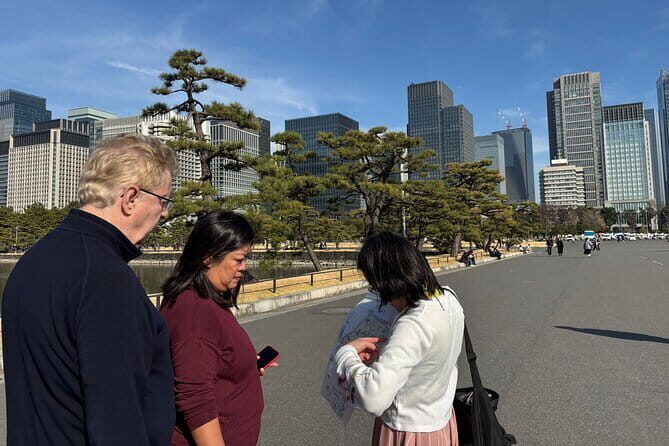
Reviewed · HISTORICAL TOURS
Tokyo Imperial Palace and Heritage of Edo Castle Private Tour
Imperial Tokyo feels different up close. This private tour gives you a slower pace and more meaning than a quick stroll through the Imperial Palace area. You’ll connect the dots between the shogun-era city and modern Tokyo, with guide-led context that makes the streets and walls feel like a living timeline.
I love two things most: the chance to start at Tokyo Station’s historic core and then move into the palace grounds with clear, spoken explanations, not just photos. I also like the give-and-take style—ask questions freely, and you’ll get answers that fit what you’re looking at, not a lecture you can’t use.
One real consideration: this is an outdoor walking experience and it’s weather-dependent, plus no hotel pickup means you’ll need to reach the meeting point on your own.
In This Review
- Key Highlights You’ll Actually Care About
- How a Private 3-Hour Imperial Tokyo Walk Really Works
- Tokyo Station at the Start: Red Brick and Rail-Driven Modernity
- Imperial Palace: Where Edo Castle Meets the Present
- East Gardens and Edo Castle Ruins: A Quiet Walk With Meaning
- Nihonbashi Street-Layer Stories: Seeing the 400-Year Link
- Value Check: Is $83.24 Worth It?
- Practical Tips for Your Walk (So You Get the Best Day)
- Who This Tour Fits Best
- Should You Book This Imperial Palace and Edo Castle Private Tour?
- FAQ
- How long is the tour?
- Is this a private tour?
- Where do I meet the guide?
- Where does the tour end?
- Are tickets or entry fees included?
- What language will the guide speak?
- Is transport included?
- Is hotel pickup or drop-off included?
- Do I need a physical ticket?
- Is the tour affected by weather?
- Are service animals allowed?
Key Highlights You’ll Actually Care About
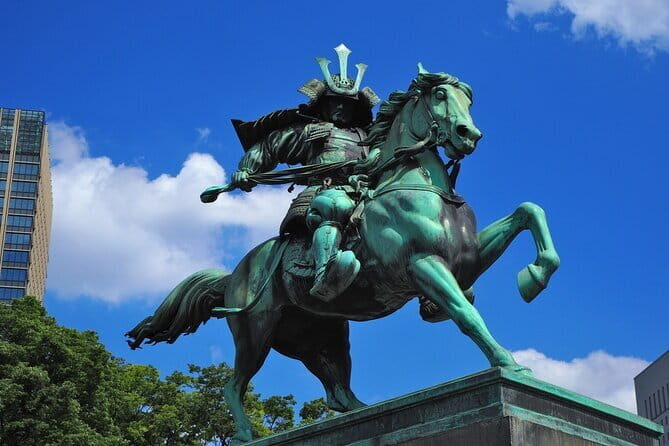
- A private format: only your group, so the guide can slow down, stop, and answer.
- Free entry stops: you won’t be hunting for ticket counters for the palace-area parts.
- Edo Castle context in plain language: you’ll learn what used to be there and why it matters.
- Tokyo Station as a historical starting line: red-brick details help you orient fast.
- Nihonbashi brought into the story: the guide links the 400-year-old district to what you see next.
- A real Q&A friendly guide: you can ask as you go (and you’ll get patient, direct answers).
More private options with your own guide
- Tokyo 6hr Private Tour with Government-Licensed Guide★ 5.0 · 3,902 reviews
- Private Tour to Mt. Fuji and Hakone (Fully Licenced Operator)★ 5.0 · 1,910 reviews
- Tokyo Customized Private Tour (Must See Places in 1 Day)★ 5.0 · 1,499 reviews
How a Private 3-Hour Imperial Tokyo Walk Really Works
Tokyo can be a little noisy in your head. Too many signs, too many timelines, and it’s easy to miss why a place matters. This tour is built to fix that. You get a private walking route that focuses on a small set of historic power centers and turns them into one connected story: Edo Castle → shogun rule → today’s imperial setting → the surrounding neighborhoods that carried the old city forward.
The timing is compact—about 3 hours—which is a smart way to do history in Tokyo. If you’ve ever spent half a day “just walking” and still felt like you saw nothing but stone and gates, this format helps. Your guide keeps you on track, but you’re not stuck behind a rigid group pace.
You’ll also feel the difference in how the tour is run. It’s not just “look over there.” It’s more like: you stand somewhere meaningful, ask questions, and the guide answers while pointing out what you’re seeing. That’s especially helpful if you like details such as how the Edo era relates to modern Tokyo street life.
Tokyo Station at the Start: Red Brick and Rail-Driven Modernity
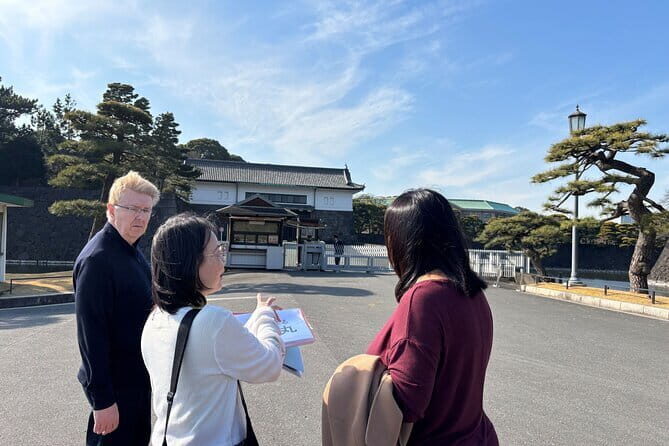
You meet near Marunouchi Police Department / Tokyo Station Police Box. From there, you start with Tokyo Central Railway Station, a historic landmark completed in 1914. The red-brick façade is the kind of detail that usually gets passed by if you’re rushing to a platform, but here it becomes a reference point.
Why start here? Because Tokyo Station is more than a transit hub. It’s a reminder that the city keeps layers. You’re standing in a modern city that still remembers when railroads started reshaping daily life. The guide’s explanation helps you connect that shift to what’s just a short walk away—centuries-old power structures around the imperial area.
Practical tip: Tokyo Station is busy. Give yourself a few extra minutes so you’re not arriving at the exact second and trying to “find the meeting spot while dodging commuters.” The better you feel at the start, the more you’ll get out of the whole walk.
Imperial Palace: Where Edo Castle Meets the Present
Next comes the heart of the experience: the Imperial Palace area. This is the site that used to be Edo Castle, the seat from which the Tokugawa shoguns ruled. Today, the grounds function as the home of Japan’s Emperor, and the area has a major symbolic weight in the city.
What I like about this stop is how it frames the transition. You’re not just learning names; you’re learning how power changes form over time. Edo Castle wasn’t only a building—it was a system. And when the shogun era ended, the site didn’t disappear. It shifted role, while still keeping the cultural gravity that made it important in the first place.
Another benefit: admission is free for this portion, so you’re not burning time and money on ticket logistics while you’re already on foot in the right place. Your guide helps you understand what’s significant about what you can see from the outside and what you should pay attention to as you walk.
If you enjoy history that stays practical—things you can point to, not just dates—this stop delivers. You’ll leave with a clearer sense of what Edo Castle was in everyday terms: not a distant legend, but the engine behind the city’s development.
East Gardens and Edo Castle Ruins: A Quiet Walk With Meaning
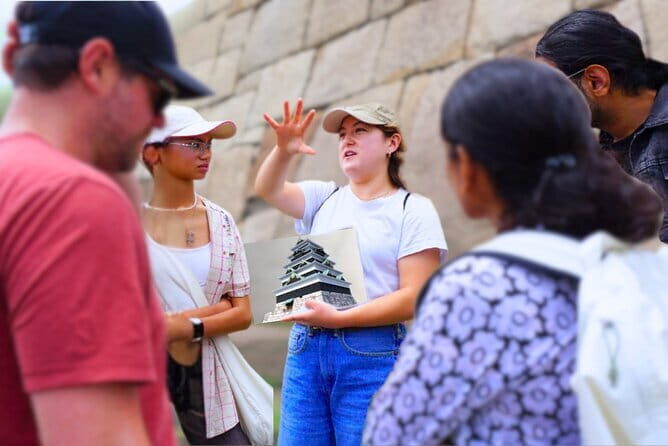
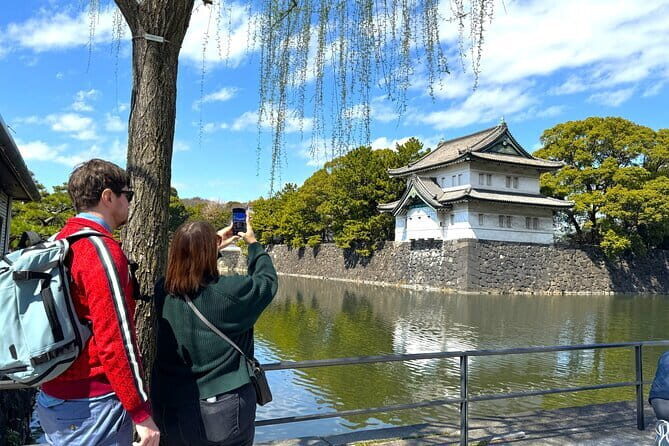
Then you move into the East Gardens of the Imperial Palace, which also includes Edo Castle ruin areas. This part is a breather compared with the station energy. It’s also where the tour becomes more than “political history,” because gardens and ruins are emotional. They slow you down.
You’ll have about 1 hour 30 minutes here, which is long enough to actually absorb the atmosphere. The gardens can be especially pleasant because the guide points out features that are easy to miss when you’re scanning for photo angles. Seasonal flowers may be part of what you see, and the ruins add another layer: you’re looking at remnants of the Edo-era layout rather than just a modern, polished view.
Why this stop matters: ruins without context are just rocks. Context without time to feel the place is just information. You get both here. You can ask questions while walking, and the guide can tie what you see back to the shogun-era site that came before.
A quick note on your expectations: this isn’t a “ride past the palace in 15 minutes” style stop. It’s designed for lingering. If you like your history with your feet on the ground, you’ll appreciate the extra time.
More paths into old Tokyo

Nihonbashi Street-Layer Stories: Seeing the 400-Year Link
One of the best parts of this tour is that it doesn’t end at the palace grounds. Tokyo isn’t only the imperial center. It’s also the neighborhoods that supported daily life and commerce around it.
That’s why you’ll get time and guidance around Nihonbashi, a 400-year-old district tied to the city’s trading history. Even if you’ve seen Nihonbashi mentioned on your itinerary planning, the difference here is that the guide connects it to what you’re learning in the palace and Edo Castle areas. You start to understand Tokyo’s layout as a lived system: power and governance nearby, commerce and movement feeding the city’s rhythm.
If you’re the type of traveler who likes to understand how districts relate to each other, you’ll get a lot from this segment. If you only care about palace scenery, you might notice it feels more like “story time on the street” than a stand-alone museum moment. Either way, it helps the whole experience click into place.
Value Check: Is $83.24 Worth It?
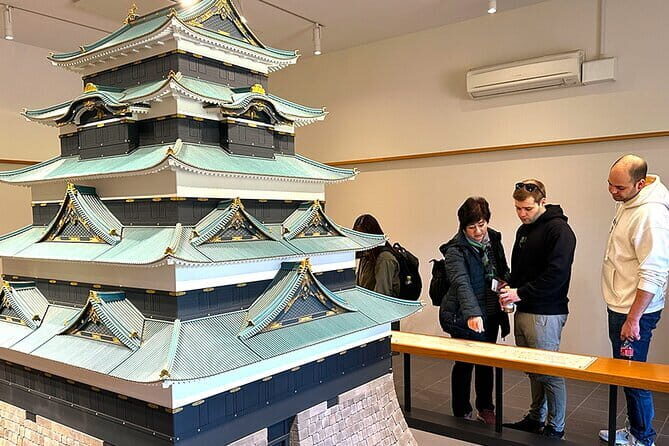
At $83.24 per person, this tour isn’t the cheapest way to see parts of central Tokyo. But it also isn’t trying to be. The value is in what you’re buying: a private guide, the ability to ask questions freely, and a route that stacks multiple major highlights into a single, coherent visit.
Here’s what you’re getting for your money:
- A private walking format (your group only).
- A guide available in English/Chinese/Korean/Japanese.
- Free admission for the key stops listed for the route.
- A guide who can explain what you’re looking at while you’re looking at it.
What you aren’t getting:
- Hotel pickup and drop-off.
- Transport coverage.
So the math becomes personal. If you’re already staying near transit and you like walking, this can be a great use of a short Tokyo window. If you’re planning to rely on taxis or you need a full logistics package from your hotel, it may feel pricey because you’ll still need to handle getting to the meeting point yourself.
My take: this price makes sense when you want structure plus flexibility. You’re not paying for a crowd experience. You’re paying for a knowledgeable guide format with pace control.
Practical Tips for Your Walk (So You Get the Best Day)
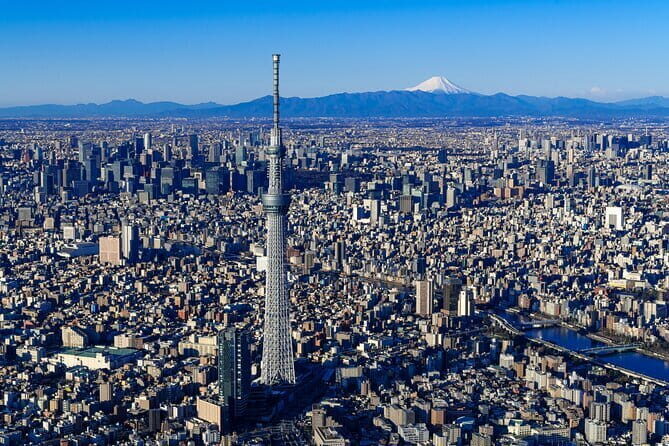
This is a 3-hour walking tour with time at Tokyo Station, the Imperial Palace area, and the East Gardens. The good news: it’s compact. The not-so-fun news: you’re outside, so you’ll want to plan around weather.
A few practical things to do before you go:
- Wear shoes you can walk in comfortably for the whole route. Tokyo sidewalks are great, but the session is long enough to notice sore feet.
- Bring a small umbrella or light rain gear if conditions look uncertain. The tour requires good weather, so you’ll want to be ready for adjustments.
- Arrive at the meeting point with extra time. The meeting location is specific (Marunouchi Police Department / Tokyo Station Police Box), and Tokyo Station is a maze of movement.
One helpful perk: the tour can sometimes escort you to Tokyo Station after the tour depending on timing and where your day goes next. That matters if you’re hopping to another appointment nearby.
Also, you can use a mobile ticket. That’s a small thing, but in Tokyo it saves you from stress when you’re juggling trains, cashless payments, and last-minute directions.
Who This Tour Fits Best
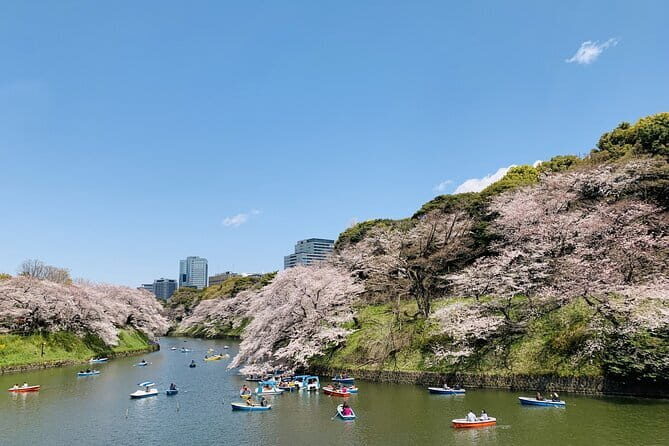
This is a smart choice if:
- You want imperial and Edo Castle context without doing it as a solo scavenger hunt.
- You prefer a private pace where you can ask questions and not feel rushed.
- You enjoy connecting history to modern Tokyo geography (station → governance zone → nearby commerce district).
It’s also a decent option for families because the guide is used to answering lots of questions. One past guide, Sakamoto, stood out for being patient with questions even from a younger family member. That kind of pacing can make history feel approachable instead of formal.
If you’re expecting a “theme park of samurai swords,” you might find it more grounded and reflective than action-heavy. This tour is about understanding the place—and understanding it well.
Should You Book This Imperial Palace and Edo Castle Private Tour?
I’d book this tour if you want a high-quality, guided way to see several major highlights in one clean plan, with time to ask questions and slow down where it matters. The combination of Tokyo Station’s historic start, the Imperial Palace / Edo Castle storyline, and the East Gardens with Edo ruin context is exactly the kind of structure that prevents Tokyo history from feeling like random stops.
Skip it only if you truly hate walking, you need a full hotel-to-hotel service, or you’re traveling in weather that’s likely to be rough. Otherwise, this is one of those purchases that pays off fast—because once you understand what you’re looking at, Tokyo becomes easier to read for the rest of your trip.
FAQ
How long is the tour?
It runs about 3 hours (approx.).
Is this a private tour?
Yes. It’s private, and only your group participates.
Where do I meet the guide?
You meet at Marunouchi Police Department Tokyo Station Police Box (1-chōme-9-1 Marunouchi, Chiyoda City).
Where does the tour end?
It ends at the Imperial Palace East National Gardens (1-1 Chiyoda, Chiyoda City).
Are tickets or entry fees included?
Admission is listed as free for the stops included in the route.
What language will the guide speak?
The guide can speak English, Chinese, Korean, or Japanese.
Is transport included?
No. Transport is not included.
Is hotel pickup or drop-off included?
No. Hotel pickup and drop-off are not included.
Do I need a physical ticket?
You’ll use a mobile ticket.
Is the tour affected by weather?
Yes. It requires good weather; if it’s canceled due to poor weather, you’ll be offered a different date or a full refund.
Are service animals allowed?
Yes. Service animals are allowed.
Just Your Group: Private Options



More Tours in Tokyo




More Tour Reviews in Tokyo




Fresh reviews from around Tokyo






Historical Tours, compared.
 ★ 4.9Imperial Palace Japanese History Walking TourFrom $32987 reviews
 ★ 5.0Shinjuku Historical Walking Tour & Secret BackstreetsFrom $25530 reviews
 ★ 4.9From Tokyo: Nikko World Heritage Site Private Full-Day TripFrom $483243 reviews
 ★ 5.0Yanaka Historical Walking Tour in Tokyo’s Old TownFrom $81182 reviews
 ★ 5.0Kamakura Historical Walking Tour with the Great BuddhaFrom $98129 reviews
From Tokyo: Nikko World Heritage Sight Full Day Private TourFrom $362127 reviews
★ 5.0Kamakura Historical Walking Tour with the Great BuddhaFrom $98129 reviews
From Tokyo: Nikko World Heritage Sight Full Day Private TourFrom $362127 reviews
 ★ 4.8Yanaka District: Historical Walking Tour in Tokyo’s Old TownFrom $79117 reviews
 ★ 4.8Nikko Heritage & Nature Day Trip from TokyoFrom $39194 reviews
Browse the lists this tour appears in