
Reviewed · WORKSHOPS
Tokyo: Chopstick Making Workshop with Artisan
Handmade chopsticks are weirdly satisfying.
This Tokyo workshop takes you into a traditional craft neighborhood and puts a pair of wooden chopstick blanks in your hands. I love that you can choose from 10+ types of wood, with 3 included free, so your souvenir isn’t one-size-fits-all. The one thing to keep in mind: the hour can feel a little tight if you’re taking your time, and some groups may not move at exactly the same pace.
My other favorite part is the coaching. In small groups (up to 10), English-speaking staff like Yuki, Angie, Chihiro, Tomo, and others guide you with practical tweaks—things like how to shave and smooth without overdoing it. A possible drawback is that the flow can feel rushed for a few participants when there are fewer instructors handling the room at once.
Still, you’ll leave with a finished pair you made yourself—ready to use, or wrap as a gift. And because you take them home the same day, you don’t have to plan around shipping or waiting.
In This Review
- Key things to know before you carve
- Enter Hashiyuki Chopsticks Shop and Workshop in Taito-ku
- Price and value: $16 for a hands-on keepsake
- How your hour usually goes: carve, smooth, finish
- Step 1: Pick your wood
- Step 2: Carve and shape with traditional tools
- Step 3: Smooth the surface
- Step 4: Finish and get your take-home pair
- The cultural significance lesson that makes the souvenir smarter
- Small-group guidance: what the best workshops get right
- One consideration: time can feel tight
- Your take-home chopsticks: gift-ready and actually usable
- Optional personalization: engraving for an extra fee
- Who should do this chopstick workshop
- Booking and logistics you should plan for (without the fine print)
- Should you book this chopstick making workshop?
- FAQ
- Where is the meeting point?
- How long is the workshop?
- How much does it cost?
- How many people are in the group?
- Are staff available in English?
- Can I choose the type of wood?
- Can I take my chopsticks home the same day?
- Is engraving available?
- What is the cancellation policy?
- Is the workshop wheelchair accessible?
Key things to know before you carve
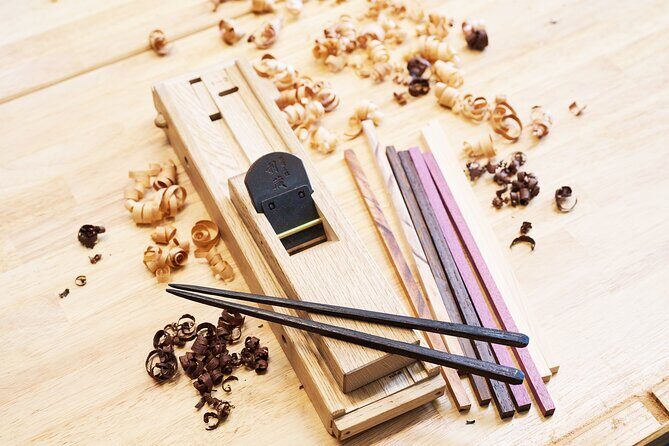
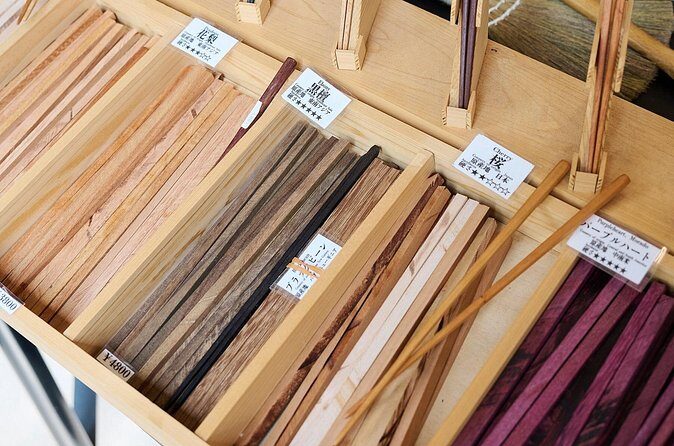
- Choose from 10+ woods, with 3 types included free and other higher-grade options available for an extra fee
- Learn by doing: carve, shape, and smooth using traditional tools and techniques
- Small group setting limited to 10 participants for hands-on guidance
- Culture time is built in, with an explanation of the cultural significance of chopsticks in Japan
- Same-day take-home souvenir, wrapped and ready to use or gift
- Extra personalization is possible, since some people add engraving for an additional fee
More things to make with your own hands
- Sushi Making Tokyo Roll and Authentic Japanese Sushi Class★ 5.0 · 3,971 reviews
- Tokyo Shinjuku Chopsticks Making Class★ 5.0 · 1,763 reviews
- Chopstick Making Workshop in Ginza★ 4.8 · 1,366 reviews
Enter Hashiyuki Chopsticks Shop and Workshop in Taito-ku
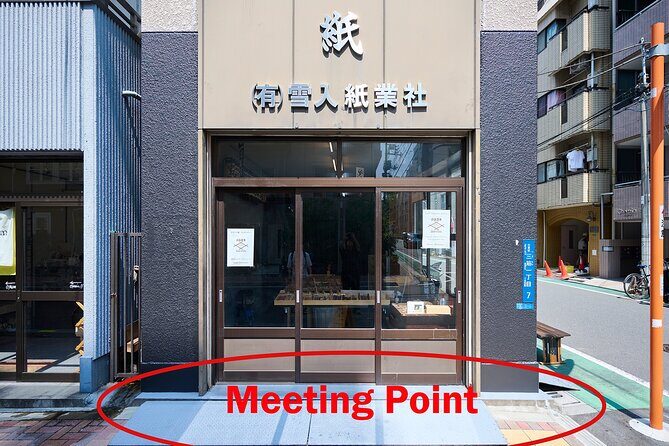
You meet at Hashiyuki Chopsticks Shop & Workshop, 1-7-1 Misuji, Taito-ku, Tokyo (you can also find it using the coordinates 35.7032168, 139.7853879). This matters because it’s not a generic museum experience. It’s a working shop-style environment where making chopsticks is part of everyday life.
Tokyo can feel like nonstop walking and decision-making. This workshop is different. It asks you to slow down and focus on a single task: working the wood little by little until the shape feels right.
The setting also helps your brain. Instead of standing in line or trying to keep up with big-group timing, you’re seated and guided. That’s a big reason many people describe it as calming.
Price and value: $16 for a hands-on keepsake
At $16 per person for a 1-hour workshop, this is one of those experiences where the value comes from what you actually produce, not just the viewing.
Here’s what you get for your money:
- You make your own chopsticks using all tools and materials provided
- You choose your wood from over 10 types
- English-speaking staff are on hand
- You take your chopsticks home the same day
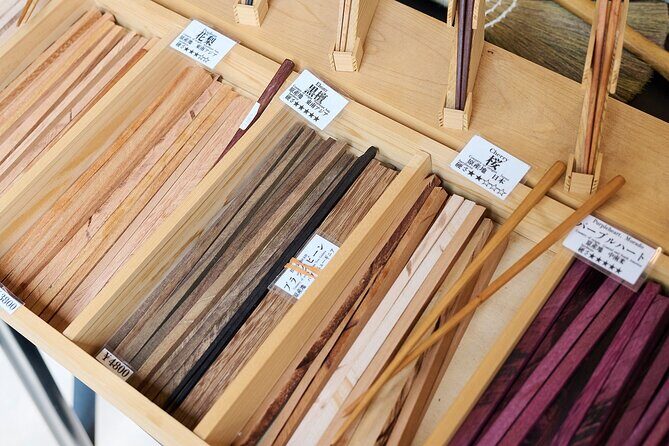
One key value point: you don’t have to pay extra to participate. The workshop includes 3 wood types for free, and higher-grade woods are available for an additional fee. That means you can pick something simple and still walk out with a meaningful souvenir—or you can splurge on a nicer wood if you want.
If you’ve spent time in Japan buying chopstick sets as gifts, you know the downside of souvenirs: they can feel mass-made. Here, your hands do the work. Even if your first pair isn’t perfect, you’ll still own the process—and that’s what makes it feel worth it.
How your hour usually goes: carve, smooth, finish
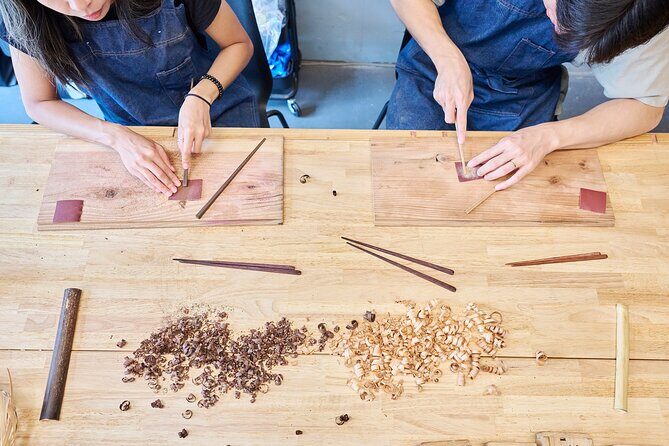
The experience is built around a straightforward making sequence: you carve, shape, smooth, and finish your chopsticks with guidance. The workshop is designed to be approachable for beginners, which is good news if your “craft skill” is mostly opening packages.
Step 1: Pick your wood
Early on, you choose from the available options. With over 10 types of wood on the table, you can match your choice to the vibe you want—lighter, darker, or whatever grabs you in the moment.
Why this step matters: your wood choice affects the look of the final piece, so it’s one of the best ways to make the souvenir feel personal even if you’re not adding extra engraving.





Step 2: Carve and shape with traditional tools
Then you start the hands-on part—using traditional tools and techniques to carve and shape the wood. The staff are there to help you keep going without turning the task into a frustration marathon.
A lot of past participants talk about help fixing mistakes. That’s important because chopsticks are small and precise; one slip can change the final feel. The better the coaching, the more likely you’ll end up with something you’re happy to actually use.
Step 3: Smooth the surface
Next comes smoothing. You’ll work on the surface until it feels right to the touch. This is where patience pays off.
Also, don’t expect perfection at first try. Think of this as training your hands, guided by someone who’s done it a hundred times.
Step 4: Finish and get your take-home pair
Finally, you finish your chopsticks. By the end of the session, you have your own pair, wrapped nicely.
Taking them home the same day is a big practical advantage. You don’t need to store them for days or worry about delivery.
The cultural significance lesson that makes the souvenir smarter
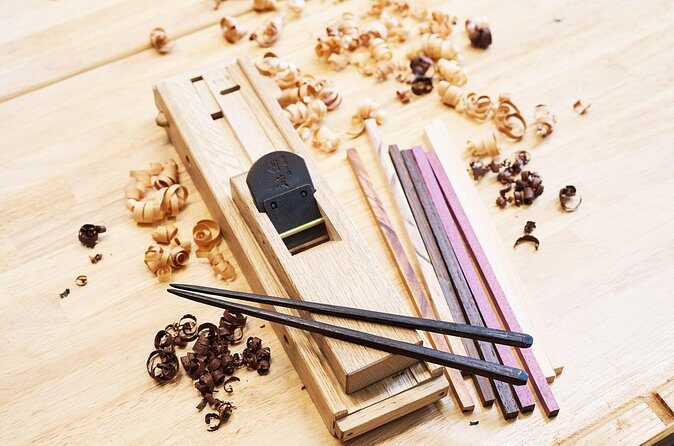
Chopsticks are everyday items in Japan, which means they come with etiquette and cultural meaning—even when you’re just using them to eat.
During the workshop, you’ll learn about the cultural significance of chopsticks in Japan. The goal isn’t to memorize rules for a test. It’s to help you understand why chopsticks are treated with respect and why the craft matters.
That matters for two reasons:
- You’ll use your chopsticks with more awareness once you know what they represent.
- Your souvenir becomes a conversation starter, because you can explain what you learned—not just show a carved stick and hope for the best.
If you want an extra meaningful connection, consider making the pair as a gift. One of the nicest things about chopsticks is that they feel personal even when they’re not expensive.
Small-group guidance: what the best workshops get right
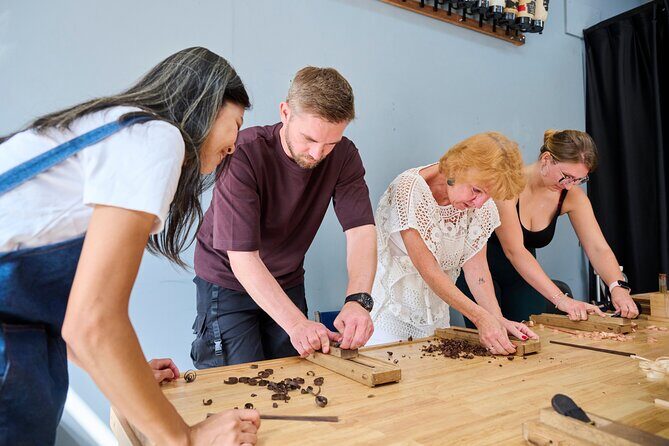
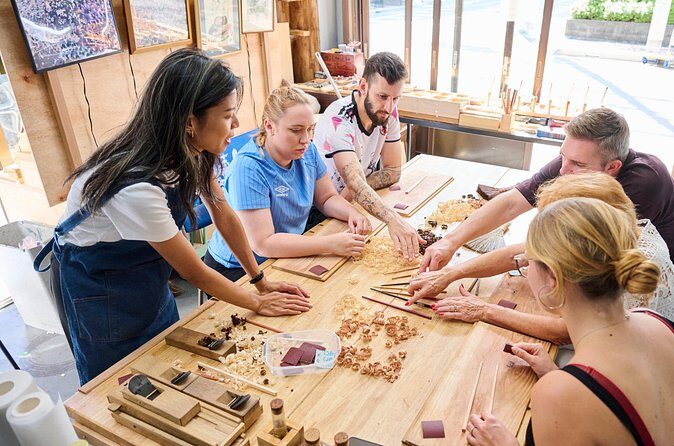
This workshop keeps groups small, limited to 10 participants. In practice, that size is the difference between watching others work and actually learning what to do next.
The instruction is hands-on and interactive. Past participants specifically highlight the helpfulness of guides such as Yuki, Angie, Chihiro, Tomo, and others who offered detailed explanations and troubleshooting during the carving and smoothing process.
Here’s the practical side of why you should care:
- If you’re a beginner, you’ll want someone watching your work closely
- If you’re unsure about the tools, guidance keeps you from doing something unsafe or irreversible
- If your chopsticks start to go off-shape, quick corrections save your final pair
Many people also describe the workshop as relaxing and well run. That fits the format: it’s a focused activity with plenty of quiet concentration time.
One consideration: time can feel tight
One participant noted that the hour can feel rushed, especially when groups don’t start in unison or when only a couple instructors are working with a larger group. That doesn’t mean it’s bad—it’s just useful to know what can affect the pace.
If you prefer a slower craft session, you might want to choose a time slot where you can arrive calmly and fully focused.
Your take-home chopsticks: gift-ready and actually usable
You get your finished chopsticks to take home the same day, wrapped nicely. That’s huge for travel because you can turn the workshop into a ready-to-go souvenir without planning around shipping.
What makes the take-home product extra satisfying is that it’s not just “I bought chopsticks.” It’s “I made these.” Even if you’re not a craft wizard, you’ll recognize your own choices—especially your wood type.
Optional personalization: engraving for an extra fee
Some participants paid extra for engraving (one mentioned an additional ¥1000). If you’re making this as a gift—names, a small message, or a personal detail—it can take the souvenir from nice to memorable.
If engraving isn’t your priority, you can still leave with a beautiful set that feels special because you made it.
Who should do this chopstick workshop
This is a great fit if you want a break from big sightseeing days and you like doing something with your hands.
You’ll likely enjoy it if:
- you want a beginner-friendly craft activity in Tokyo
- you like small-group settings and direct coaching
- you’re looking for a souvenir that has a story (not just a price tag)
- you want a calming change of pace from crowded neighborhoods
It might be less ideal if:
- you get stressed by time pressure
- you need long, quiet “perfecting time” with no sense of a schedule
If you’re traveling with family, it can also work well. One family group reported enjoying it across a wide age range, because the activity is hands-on but guided.
Booking and logistics you should plan for (without the fine print)
The workshop runs for 1 hour, so treat it like a real appointment. Arrive with enough buffer time to settle in and start relaxed—because you’ll do better when you’re not rushing.
The staff include English-speaking support, and Japanese is also used. The location is straightforward to find once you have the shop name and address.
If you’re planning your day, pair this workshop with lighter walking afterward. You’ll likely want time to enjoy the area nearby rather than immediately jumping into a long transit schedule.
Should you book this chopstick making workshop?
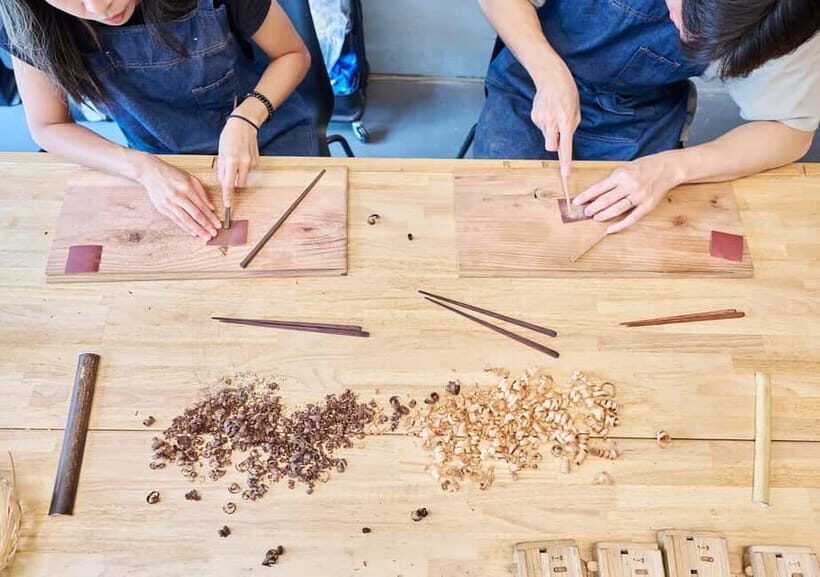
Yes, book it if you want a genuine Tokyo craft moment where you actually make something you’ll keep. For $16 and a 1-hour commitment, the experience checks the boxes: hands-on work, small group size, English-speaking guidance, and a take-home souvenir made by you.
I’d book it even if you’re not sure you’re “good at crafts.” The value here is the guidance. Names like Yuki, Angie, Chihiro, and Tomo show up repeatedly in participants’ memories for a reason: they help you get to a final result you can be proud of.
The only real reason to hesitate is if you strongly dislike time pressure and you know you’re a slow perfectionist. If that’s you, choose your timing carefully and give yourself a calm arrival.
If you want a souvenir with real meaning, this is one of the easiest ways to earn it.
FAQ
Where is the meeting point?
You meet at Hashiyuki Chopsticks Shop & Workshop, 1-7-1 Misuji, Taito-ku, Tokyo. The provided coordinates are 35.7032168, 139.7853879.
How long is the workshop?
The workshop lasts 1 hour.
How much does it cost?
The price is $16 per person.
How many people are in the group?
The workshop is a small group, limited to 10 participants.
Are staff available in English?
Yes. The workshop includes English-speaking staff (and Japanese is also used).
Can I choose the type of wood?
Yes. You can choose from over 10 types of wood. 3 types are included free of charge, and other higher-grade woods are available for an additional fee.
Can I take my chopsticks home the same day?
Yes. You take your personalized chopsticks home the same day.
Is engraving available?
There is mention of engraving being added for an extra fee (one participant noted ¥1000). The workshop data also indicates personalization and finishing, with some visitors choosing optional add-ons.
What is the cancellation policy?
There is free cancellation up to 24 hours in advance for a full refund.
Is the workshop wheelchair accessible?
Yes, it is wheelchair accessible.
Make Something to Take Home



More Tour Reviews in Tokyo



Fresh reviews from around Tokyo






Workshops, compared.
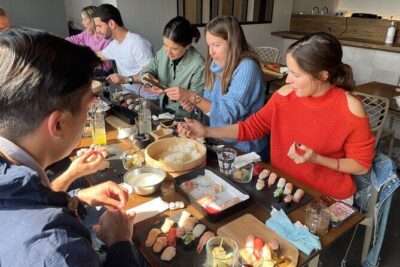 ★ 5.0Sushi Making Tokyo Roll and Authentic Japanese Sushi ClassFrom $593,971 reviews
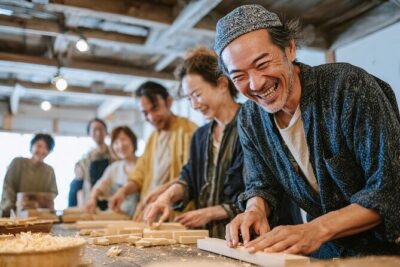 ★ 5.0Tokyo Shinjuku Chopsticks Making ClassFrom $201,763 reviews
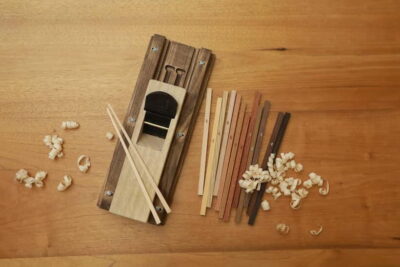 ★ 4.8Chopstick Making Workshop in GinzaFrom $251,366 reviews
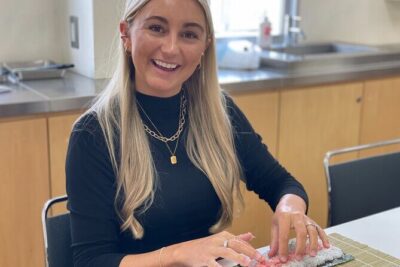 ★ 5.0Tokyo Sushi Making Class in Tsukiji with Professional ChefFrom $491,177 reviews
 ★ 5.0Ramen & Gyoza Cooking Class in Tokyo with Local Supermarket VisitFrom $122823 reviews
 ★ 5.0Matcha Making Class in Tokyo with Authentic Japanese Sweets SetFrom $21744 reviews
 ★ 5.0Samurai Sword & Archery Class from Samurai DescendantFrom $193603 reviews
 ★ 4.9Tsukiji Fish Market Sushi Making Class with Pro ChefFrom $63506 reviews
Browse the lists this tour appears in