
Reviewed · PHOTOGRAPHY SESSIONS
Tokyo by Night Photography Tour (Private Option Available)
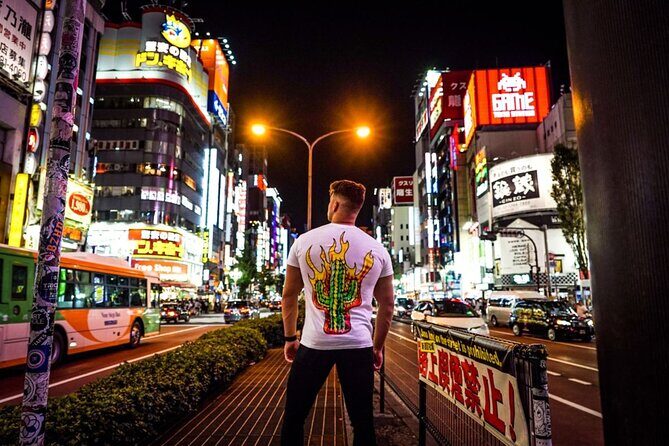
Neon streets make photos feel easy. This Tokyo by Night Photography Tour is built for night lighting and fast, guided positioning in Shinjuku and Shibuya, with stops that range from alley-style nightlife to major photo targets like Shibuya Crossing. You’ll also get 20 edited images, so you’re not just wandering and hoping.
I especially like that the group stays small—up to 6 people—so you’re not lost in a crowd. A working photographer-guide handles the route and the shooting plan, and many reviews call out how much they helped with angles and poses.
One thing to consider: some areas have strict photography rules, including Shinjuku Golden Gai (and Memory Lane). If you’re the type who wants to shoot nonstop with your own camera, plan to follow the boundaries and trust the guide’s timing.
In This Review
- Quick Hits You’ll Care About
- Tokyo by Night Photography: Why This Route Works After Dark
- Where You Start in Shinjuku (and How to Be Ready)
- How the Photo Session Actually Feels (You’re the Subject)
- Shinjuku Golden Gai: Alley Mood and the Important Photo Rule
- Passing Tokyo’s Big Names: Shibuya 109 and Night Street Energy
- Tokyo Metropolitan Government Buildings Area: City Glow Shots Without the Ticket Hassle
- Kabukicho District: Where Neon Meets Tight Timing
- Shibuya Crossing and the Hachiko Moment: The Famous Stop Done Right
- The One-Drink Included Detail (and Why It Matters)
- What You Receive: 20 Edited Photos and Fast Turning
- Value Check: Is $105.71 Worth It?
- Who This Tour Fits Best (and Who Should Skip It)
- Quick Tips That Improve Your Photos Right Away
- Should You Book This Tokyo Night Photo Tour?
- FAQ
- What time does the Tokyo by Night Photography Tour start, and where do I meet?
- What’s included in the price?
- How many people are in the group?
- Do I need to bring a camera?
- How long does the tour take?
- Are there places where photography is not allowed?
Quick Hits You’ll Care About
- 20 edited photos included so the night has a clear finish line
- Small group (max 6) for quicker help and less waiting
- Shinjuku Golden Gai, Kabukicho, and Shibuya Crossing in one evening route
- You get guided posing ideas and route reminders from the photographer
- One included drink (with some nights featuring a fun bar stop)
- Photography restrictions apply in certain alleys and lanes
More private options with your own guide
- Tokyo 6hr Private Tour with Government-Licensed Guide★ 5.0 · 3,902 reviews
- Private Tour to Mt. Fuji and Hakone (Fully Licenced Operator)★ 5.0 · 1,910 reviews
- Tokyo Customized Private Tour (Must See Places in 1 Day)★ 5.0 · 1,499 reviews
Tokyo by Night Photography: Why This Route Works After Dark
Tokyo at night is a different city. Street signage, storefront lighting, traffic glow, and reflections on pavement all change how photos look. That’s exactly why this tour focuses on the dark hours in areas where light is everywhere and the backgrounds stay visually busy.
What makes this outing more practical than a self-guided photo walk is that you’re not trying to solve timing, crowd flow, and camera positioning on your own. The photographer-guide sets up opportunities as you move—so you get to focus on standing where the light hits you, not hunting for the right corner.
You’ll also see a mix of styles. The route leans from Shinjuku’s back-alley atmosphere to more famous intersections and landmark-adjacent streets. If you want a “Blade Runner–esque” feel, the Shinjuku segments help you get there because the lighting is dramatic and the streets feel cinematic.
Where You Start in Shinjuku (and How to Be Ready)
The tour starts at 5:30 pm at Miraion Lion Square, 3 Chome-38, Shinjuku. It’s near public transportation, which matters because you’ll still be walking through Tokyo while everyone else is heading to dinner or shifting nightlife plans.
Because the start is firm, be early. The policy is clear: if you’re late by more than 15 minutes, you can’t join and there’s no refund or reschedule. So I’d treat this like an appointment, not like a casual meet-up.
Also, come prepared for weather. Japan can swing hard—summer highs can hit 40°C and winter can drop to -5°C. Wear layers in winter and don’t underestimate heat and humidity in summer. Night photography is still outdoors work.
How the Photo Session Actually Feels (You’re the Subject)
This is not a tour where you watch someone take photos and then copy their homework. You’ll be photographed by the professional and guided through where to stand and how to pose.
Many reviews highlight that the guide gives helpful direction on angles and encourages you through quick prompts. One review mentioned getting a map and route explanation ahead of time, then receiving reminders along the walk—exactly what you want when you’re trying to keep up with city crowds and multiple shooting spots.
You also don’t need your own camera. The tour says cameras are not required unless you want to take pictures of your own. That’s a big deal if you hate juggling gear. If you do bring a phone or camera, you’ll still be following the guide’s schedule and rules.
Shinjuku Golden Gai: Alley Mood and the Important Photo Rule
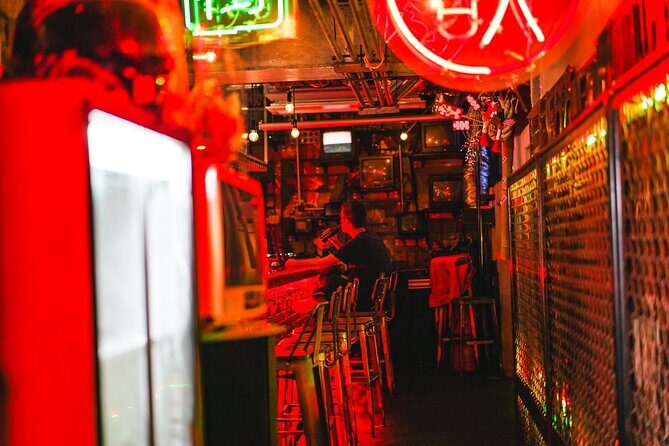
Golden Gai is a cluster of narrow lanes packed with bars. It’s known for its dense night atmosphere and tight composition, which can look fantastic in low light.
But here’s the key consideration: photography is strictly prohibited in some areas, and Shinjuku Golden Gai is specifically called out. That doesn’t mean the stop is useless—it means you should expect a look-and-feel moment rather than a free-for-all shooting session in every nook. Let the photographer lead the timing and positioning around what’s allowed.
In short: come for the mood and the route, not for the idea that you’ll shoot uninterrupted with your own camera in every doorway and alley.
Other ways into a Tokyo evening
Passing Tokyo’s Big Names: Shibuya 109 and Night Street Energy
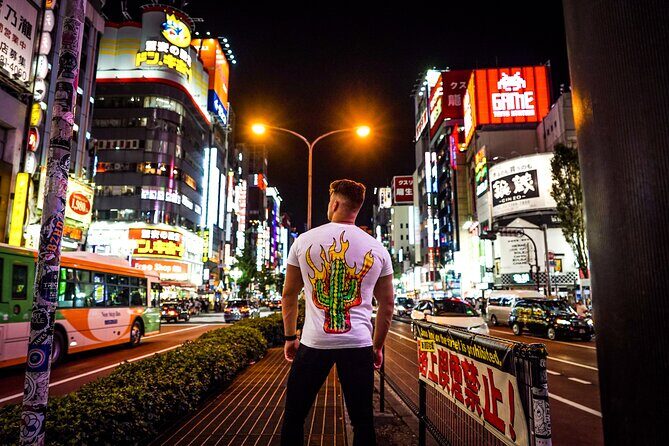
You’ll also pass Shibuya 109, a fashion and entertainment building that’s well known for its theme of SHIBUYA109LAND. This part of the route reads like a visual shortcut: you get a sense of Shibuya’s youth energy without needing to stop inside.
The practical value here is background variety. Your final photos don’t all need to be the same kind of shot. This pass-by adds pop from a building front and helps break up the night visually as you transition into the biggest crowd zone.
Tokyo Metropolitan Government Buildings Area: City Glow Shots Without the Ticket Hassle
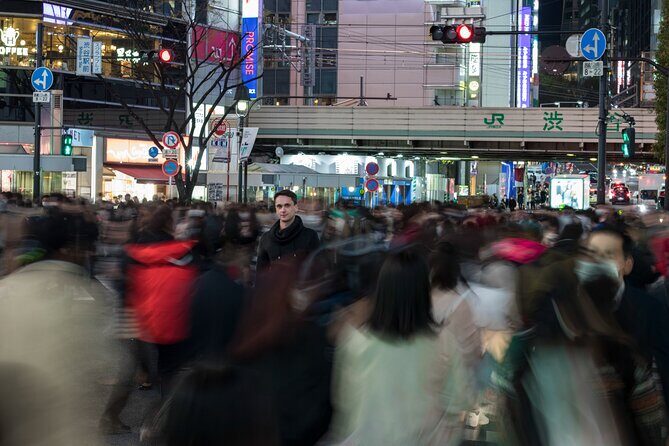
The tour includes street-level photo time near the Tokyo Metropolitan Government Buildings area, and the tour description mentions the observation deck is on the 45th floor. The stop itself is focused on taking photos on the street nearby, so you can get the benefit of the architecture and skyline feel without turning the night into a paid ticket plan.
This area tends to work well for night photography because you can layer elements: building lights, street lines, and pedestrian bridges. One route detail includes a path that references a temple area, a pedestrian bridge, a love sculpture, then the Metropolitan Government Building and the nearby Yodobashi Camera area. That gives you multiple visual anchors even if you’re only walking a short distance.
If you’re trying to get photographs that feel more “Tokyo” than “random street,” this is the kind of stop that helps.
Kabukicho District: Where Neon Meets Tight Timing
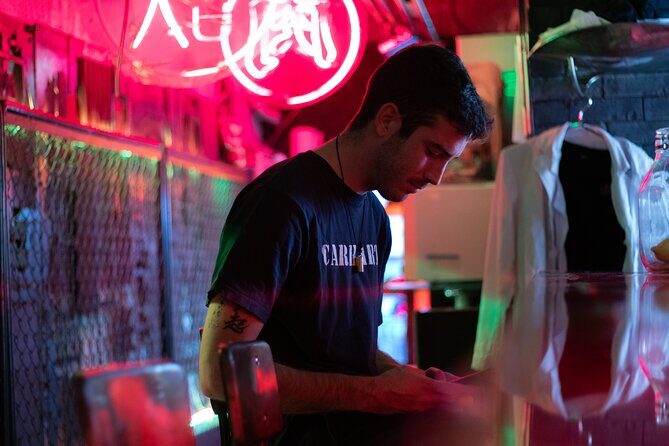
Kabukicho is Shinjuku’s nightlife core, with lots of energy and plenty of photo-ready corners. The tour gives you around 30 minutes here, which is long enough to capture a handful of angles without turning it into an endless detour.
The trade-off is that this part of Shinjuku can be busy. You’ll want to keep moving, listen for the next setup, and avoid stopping mid-street longer than necessary. The photographer-guide is directing timing so the group can keep pace and still get decent shots.
One review mentioned the guide walking at a fast pace but still letting the group keep up. So yes, it’s active. Bring comfortable shoes—this is city-walking, not a museum stroll.
Shibuya Crossing and the Hachiko Moment: The Famous Stop Done Right
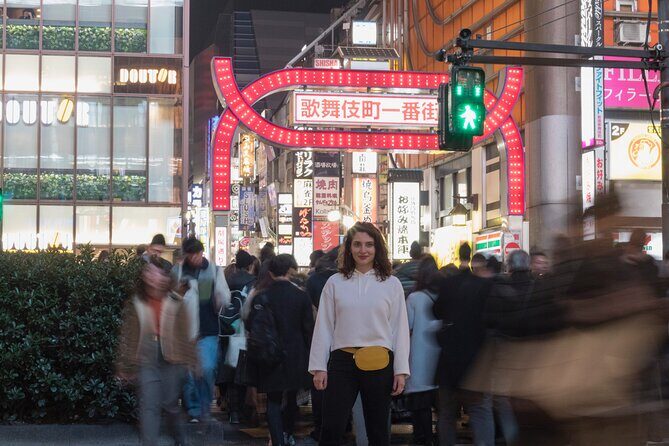
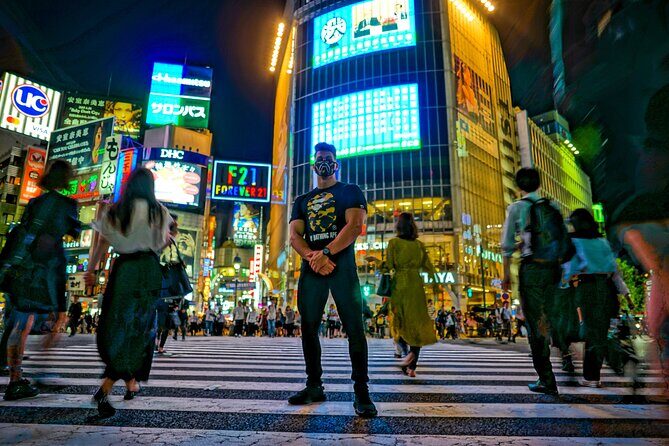
No Tokyo night photo plan is complete without Shibuya Crossing. The tour schedules a dedicated photo window of about 40 minutes here, which is helpful because it gives you time to handle crossing light changes and crowd flow.
Right around Shibuya Crossing, you’ll also pass Hachiko, the bronze statue that people use as a meeting point. This stop is less about the technical challenge and more about including a recognizable cultural landmark so your set feels grounded.
You’ll also pass by Shibuya Center gai, an area associated with shopping and nightlife into midnight. And the route is designed to keep you seeing the real flow of the district—where people head, where lights are strongest, and how the street scene looks when the city is fully awake.
The One-Drink Included Detail (and Why It Matters)
The tour includes 1 drink. That sounds minor until you realize how often photo tours skip the small comfort items that keep you feeling human during an active evening.
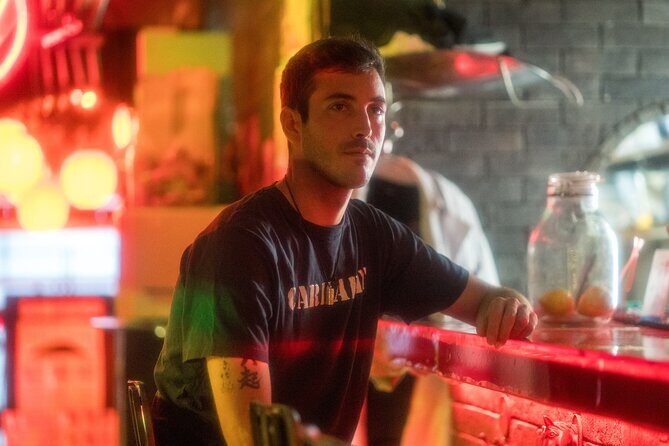
One review mentioned a surprise stop at a steam punk bar for that drink, which suggests the included beverage can come from a fun nightlife stop rather than a bland convenience option. Even if your drink spot differs, the value is the same: you’re not spending extra money to keep your energy up mid-walk.
What You Receive: 20 Edited Photos and Fast Turning
The big payoff here is that you’re not left with nothing after the night. You receive 20 edited photos during your tour.
A couple of reviews point out that photos can arrive quickly—sometimes even that same night. While delivery speed isn’t guaranteed in every case, the consistent message is that the editing process is a major part of the service, not an afterthought.
Why this matters for your travel math: if you’re paying around $105.71 and you have 20 usable, edited images, you’re effectively buying time-saving and quality control. You’re also buying peace of mind. You don’t have to worry whether your own settings nailed the reflections.
Value Check: Is $105.71 Worth It?
At $105.71 per person, this isn’t a budget impulse buy. So I look at it like this: you’re paying for a photographer-guide, a structured nighttime route, and 20 edited photos—plus an included drink.
If you were to reproduce this alone, you’d spend time figuring out spots, standing in crowds without a plan, and then editing your own photos later to remove blur or bad exposure. Most people don’t mind the learning curve in the daytime. At night, it’s harder.
This tour also keeps the group tight at max 6, so you’re not paying for a mass stroll where you wait your turn. That personal guidance is what turns the night from a walk into results.
If you want a slow, flexible night with no guidance, this might feel too structured. If you want strong Tokyo-night photos with minimal stress, the price starts to make sense.
Who This Tour Fits Best (and Who Should Skip It)
This tour is a good match if:
- you want pro-level guidance with posing and angles
- you prefer to focus on being photographed instead of managing your own camera nonstop
- you like mixing famous stops (like Shibuya Crossing) with more atmospheric Shinjuku streets
- you’re traveling solo or as a small group and want a low-effort plan
I’d think twice if:
- you want to photograph in every lane you see, especially in areas where photos are restricted
- you dislike walking and moving quickly between stops
- you hate unpredictable timing caused by crowds or day-to-day photo conditions
One more note: the tour duration is approximate—around 2 to 2.5 hours—and isn’t fixed. It can vary depending on photo conditions, crowd levels, and group size. If you have a hard reservation right after, build in buffer.
Quick Tips That Improve Your Photos Right Away
These come straight from what people repeatedly praise and what the route implies:
- Wear comfortable shoes. The walk can be around a few kilometers in an active evening.
- Keep your essentials ready. One review suggested not bringing extra bags because you may need to set them down at photo spots.
- Dress for extremes. Nights can be brutally hot or very cold.
- Listen for pose prompts. Reviews mention the photographer’s direction on angles and body positions.
- Expect a fast pace. It’s photo-focused, so it’s not meant to be slow sightseeing.
Should You Book This Tokyo Night Photo Tour?
Yes, I think you should book it if you want a results-driven Tokyo night plan: a pro photographer-guide, a compact group, and 20 edited photos to take home. It’s also a smart pick if you’re short on time and want Shinjuku plus Shibuya in one evening without planning the route.
Skip it if you’re hoping for a long, unstructured evening or you’re the type who wants to shoot constantly in every restricted alley. Also skip if you can’t be on time, since delays can mean you miss the tour.
If you’re on the fence, here’s the easiest decision rule: if you want someone to handle positioning and photo timing so you can look great in the frame, this tour fits.
FAQ
What time does the Tokyo by Night Photography Tour start, and where do I meet?
The tour starts at 5:30 pm. The meeting point is Miraion Lion Square, 3 Chome-38 Shinjuku, Shinjuku City, Tokyo 160-0022, Japan.
What’s included in the price?
The tour includes 20 edited photos, an English-speaking local guide/photographer, and 1 drink. You also get a certified guide by MagicalTrip as part of the experience.
How many people are in the group?
The tour has a maximum group size of 6 travelers, so it stays small enough for more personal guidance.
Do I need to bring a camera?
No. You do not need a camera, unless you want to take pictures of your own during the walk.
How long does the tour take?
The duration is about 2 hours to 2.5 hours. The exact timing can vary based on photo conditions, crowd levels, and group size.
Are there places where photography is not allowed?
Yes. Photography is strictly prohibited in some areas, including Shinjuku Golden Gai and Memory Lane. You’ll need to follow the guide’s direction and the posted restrictions.
Just Your Group: Private Options

More Tours in Tokyo



More Tour Reviews in Tokyo




Fresh reviews from around Tokyo






Photography Sessions, compared.
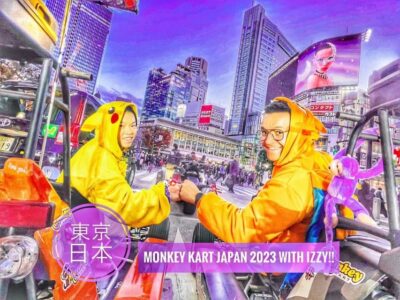 ★ 4.8Tokyo Go-Karting Experience: Shibuya Crossing with PhotosFrom $90190 reviews
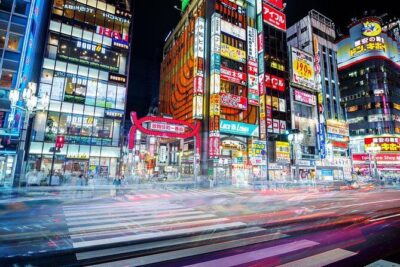 ★ 5.0Tokyo Cyberpunk Street Photo TourFrom $184165 reviews
 ★ 5.0Tokyo Shinjuku Night Photo Tour with Pro GotaFrom $85142 reviews
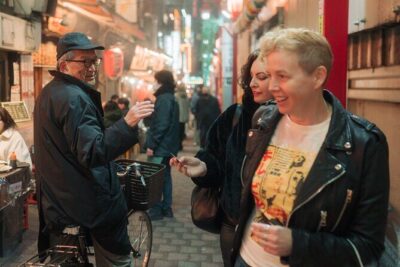 ★ 5.0Tour with Pro Tokyo Photographer and take Edgy Unique PortraitsFrom $14580 reviews
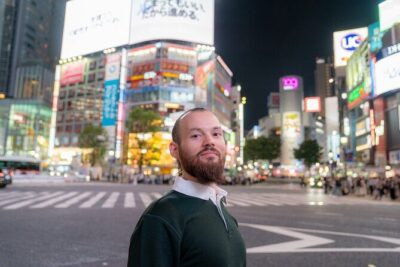 ★ 5.0Tokyo Portrait Tour with a Professional PhotographerFrom $9258 reviews
Tokyo Asakusa: Miu Kimono Rental and Optional PhotoshootFrom $3254 reviews
★ 5.0Tokyo Portrait Tour with a Professional PhotographerFrom $9258 reviews
Tokyo Asakusa: Miu Kimono Rental and Optional PhotoshootFrom $3254 reviews
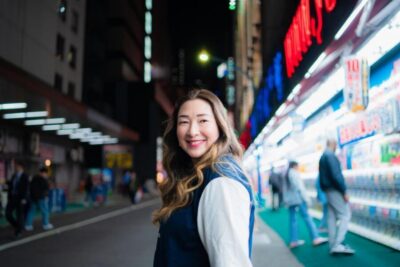 ★ 5.0Photo Shoot with a Private Vacation PhotographerFrom $28353 reviews
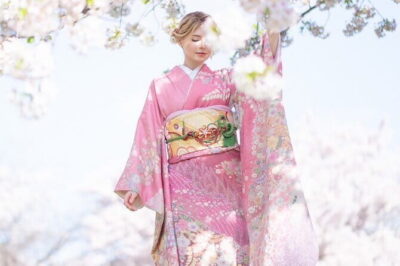 ★ 5.0Tokyo Authentic Kimono Rental in Asakusa with Photography OptionFrom $4546 reviews
Browse the lists this tour appears in