
Reviewed · FOOD & DRINK
Tokyo After 5: Authentic Japanese Food & Drink Night Tour
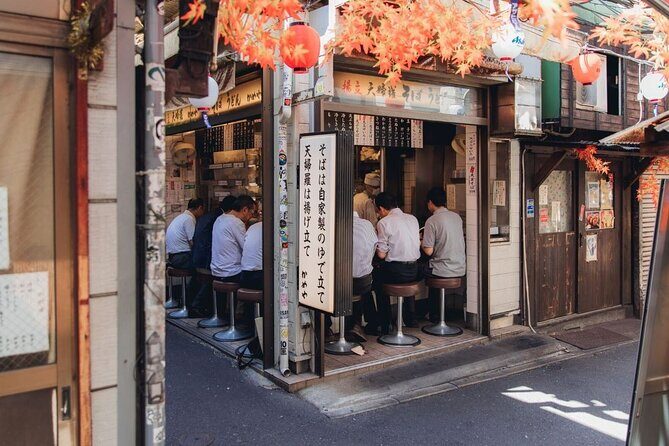
Tokyo after 5 sounds simple. It is a local-food night built around classic bites, with a guide to translate menus and explain what you are really eating. I love the chance to try monjayaki in Tsukishima, when you can see it cooking right at the table and understand why it is so Tokyo-specific.
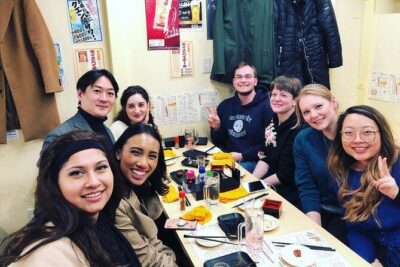
I also like how the pace stays social, not chaotic: a small group (up to 8) with an English-speaking guide means you actually get to ask questions. If you get a guide like Yuko, Mizuki, Shoehi, Yuki, or Rocky, the evening can feel well-paced and fun. One possible drawback to plan for: the experience is still a lot of walking and some days can feel fast, and not every group gets the same level of explanation.
In This Review
- Key Things You’ll Notice Right Away
- Ginza After Dark: Meeting at Mitsukoshi and Getting Your Bearings
- Wagashi and the Ginza Lights: A Sweet Start That Sets the Tone
- Tsukishima Monja Street: Watching Monjayaki Cook and Learn the Why
- Yurakucho and Yakitori Alley: Sake or Beer With Local Tare Sauce
- Price and Logistics: Is $122.33 Worth It?
- Who This Tour Fits Best (and Who Should Rethink It)
- Practical Tips Before You Go
- FAQ
- What’s the duration of the Tokyo After 5 tour?
- What food and drinks are included?
- How many people are on the tour?
- Is alcohol included, and what about age limits?
- Are vegetarian, vegan, or gluten-free options available?
- Where does the tour start and end?
- Should You Book Tokyo After 5?
Key Things You’ll Notice Right Away
- Three classic stops: wagashi, monjayaki, and yakitori (plus snacks) designed as an easy-to-follow evening flow
- Night food, local neighborhoods: Ginza after-hours, then the Tsukishima monja area, finishing in Yurakucho’s yakitori zones
- Cooking at the table: monjayaki arrives as a scene, not just a plate
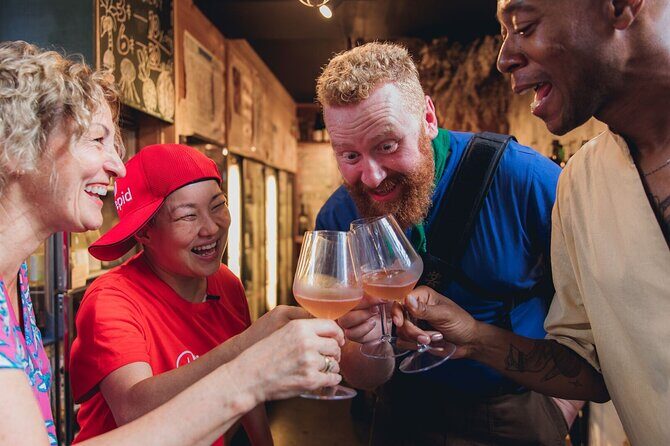
- Two drinks included: you’ll have a choice like beer or sake, but non-alcoholic drinks are used for guests under 20
- Small group attention: max 8 people keeps the guide-to-you ratio strong
- Caution on dietary needs: vegetarian, vegan, and gluten-free options aren’t available on this tour
Other plates worth crossing Tokyo for
- Tokyo: Shinjuku Food Tour (13 Dishes at 4 Local Eateries)★ 5.0 · 6,603 reviews
- Tokyo Tsukiji Fish Market Food and Culture Walking Tour★ 5.0 · 3,184 reviews
- Tokyo: Shinjuku Food Tour (15 Dishes and 4 Eateries)★ 4.9 · 2,033 reviews
Ginza After Dark: Meeting at Mitsukoshi and Getting Your Bearings

This tour starts in Ginza, one of Tokyo’s most well-known shopping districts, but it is the evening version that makes it interesting. You meet at Mitsukoshi Ginza near the Lion statue facing Chuo Street, and the timing matters because you are meant to hit the right rhythm once businesses switch gears after 5 pm.
What I like here is the built-in orientation. Ginza can feel busy even when it is lit up like a showroom, and having a guide means you are not just wandering. You get a structured night route, plus the kind of practical context that helps you later on your own. You will also pick up small translation help—useful in Japan, where menus and signage can be a puzzle if you do not have someone to point things out.
A small heads-up: you are on foot for the entire experience, and you may run into stairs when moving between areas and through indoor/outdoor connections. Comfortable shoes are not optional. If you hate speed-walking or hate stairs, this might feel like a workout disguised as a food crawl.
Wagashi and the Ginza Lights: A Sweet Start That Sets the Tone
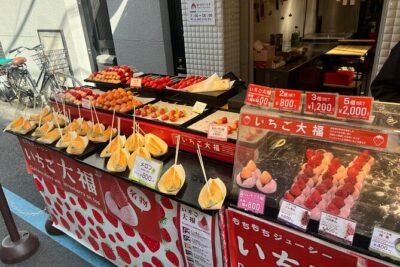
The first tastings lean sweet, and that’s smart. The tour includes wagashi, which is traditional Japanese confectionery. In Ginza, you are surrounded by the kind of shops that treat stationery, paper goods, and small gifts like art—so the wagashi stop works as both a snack and a cultural reset.
From there, you stroll through Ginza’s lit streets. The tour may include a quick look at Itoya, a famous stationery store. Even if you are not a stationery person, it is a handy way to understand Ginza’s obsession with craft and presentation. Japan’s retail culture can feel very specific, and this kind of stop gives you something to look at besides food while you move between bigger meal moments.
One thing to keep in mind: early on, you will likely taste something small and focused. The goal is to keep you hungry for what comes next—so if you arrive stuffed from a big dinner, you might not enjoy the flow as much.
Tsukishima Monja Street: Watching Monjayaki Cook and Learn the Why
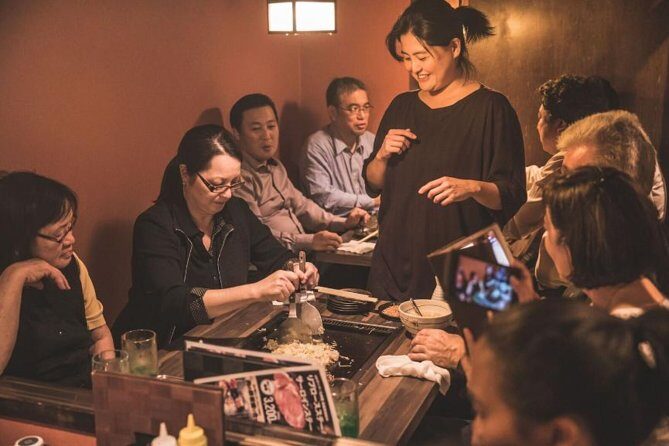
The Tsukishima stop is the reason I would schedule this tour. It is not just about eating—it is about learning why monjayaki is a Tokyo signature, and you get to see it cooking. You take the subway to Tsukishima Monja Street, a local area famous for this pan-fried specialty.
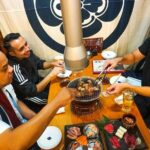
At the table, you get a real cooking experience. Monjayaki is made on a hot grill surface, and you can often hear the sizzle as it cooks. You will also chat with the chef, and the guide helps explain the origin and traditions behind it. That matters because monjayaki can look unfamiliar at first glance—thicker than you might expect, topped with ingredients, and cooked until it turns into something you scoop or share.
A practical note: monja is a cabbage-forward dish for many versions. One of the most common issues people bring up is that cabbage is not for everyone. If you dislike cabbage or you hate foods with a savory, mixed-ingredient texture, this may not be your favorite moment. Still, seeing it prepared live usually makes the difference between thinking it is strange and actually getting it.
You also get a longer chunk of time here—about 1 hour 30 minutes—which is valuable. Some food tours feel rushed. This one gives you time to taste, ask questions, and watch the process instead of grabbing a bite and running.
Yurakucho and Yakitori Alley: Sake or Beer With Local Tare Sauce
After Tsukishima, the tour shifts into the izakaya world: grilled meats, sauces, and after-hours energy. The final stretch focuses on yakitori and the Yakitori Alley area around Yurakucho.
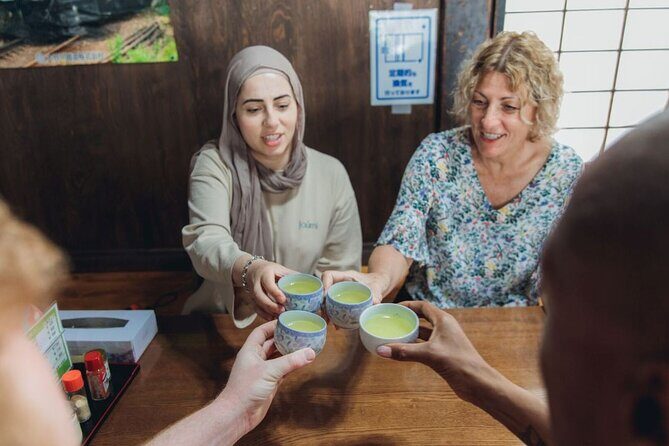
You wrap up at Yurakucho’s dining alley zone, then enjoy the last meal with a drink. You get two drinks total across the tour, which can include beer or sake (and non-alcoholic options for younger guests). Yakitori here comes with tare sauce, the sweet-salty glaze that makes each skewer taste like its own flavor story.
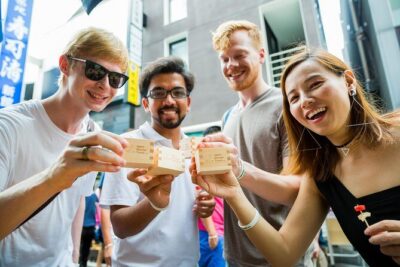
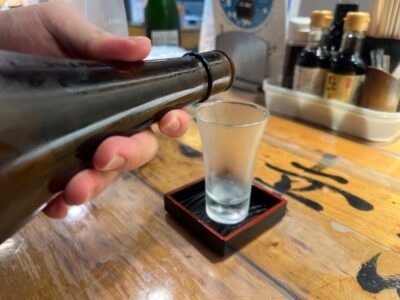
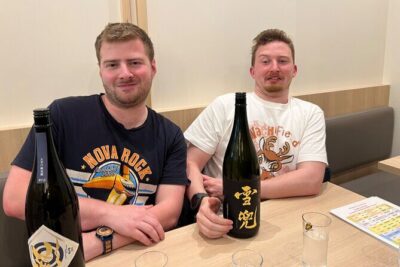
One detail I found especially fun from past groups: the sake can be served in a very showy way. On some nights, you may see the glass placed inside a small wooden box and the sake poured until it overflows a bit. It is a small ritual, but it turns a drink into a memory and adds to the sense that this is a local night out, not a staged tasting.
This last stop is about comfort and atmosphere. The shops you visit are 100% owned and run by locals, and the tour is designed so you experience the kind of places you would struggle to find on your own. That is where the guide really earns their keep: they help you order, translate, and understand what you are tasting while you soak up the vibe.
Worth weighing up alongside this Tokyo pick:


Price and Logistics: Is $122.33 Worth It?
Let’s talk value without pretending it is a bargain. At $122.33 per person for about 3 hours 30 minutes, you are paying for more than food. You are paying for:
- Three main tasting items tied to Japanese staples: wagashi, monjayaki, and yakitori
- Two drinks included
- An English-speaking guide to translate and explain customs
- Subway support, including 2 subway tickets
- A small group size (max 8)
If you were doing this on your own, you would still pay for the food. But finding the right places in Ginza, Tsukishima, and Yurakucho—and ordering comfortably without guessing at menu language—usually takes time. The tour compresses that work into one evening.
That said, value depends on your expectations. If you want a deep, slow, sit-down culinary documentary, this tour may feel like too much movement. If you want an efficient way to eat, drink, and learn the basics of Japanese night food culture, it is priced like a practical experience.
Also, note the additional drinks are not included. You will be tempted once you see the variety on the menu, especially at the yakitori and izakaya-style stops. If you plan your budget for that, you will enjoy the evening more.
Who This Tour Fits Best (and Who Should Rethink It)
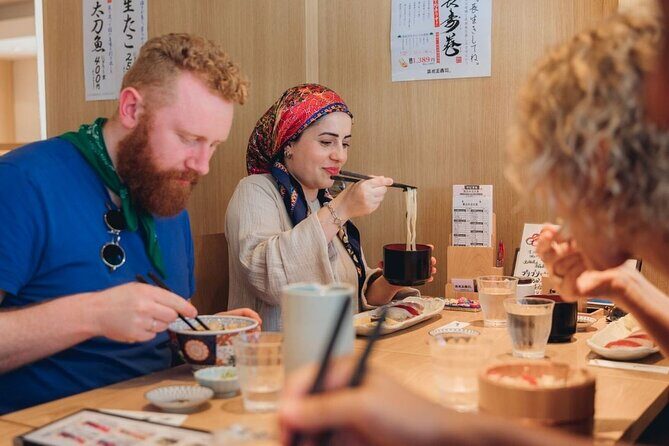
This tour is best for people who:
- Like walking at a steady pace and want a night “route,” not just a single restaurant meal
- Want an introduction to Japanese street and izakaya-style foods in a structured way
- Are comfortable eating non-American flavors and ingredients like cabbage in monjayaki
It may feel less ideal if:
- You strongly prefer vegetarian, vegan, or gluten-free meals. This tour does not offer those options.
- You want lots of detailed history in English. The guides are described as English-speaking, but real-world language ability can vary by guide and group.
- You hate surprises in food texture. Some groups have reported disappointment with specific yakitori cuts or expected items. If you have very strict preferences about meat cuts or how a dish should taste, you should be cautious.
There is also an honesty point about pacing. Even with a planned route, you may experience a fast move between areas, and stairs can show up. One group mentioned they felt a lot of high-speed walking. You do not need to panic, but it helps to know your comfort level with movement before booking.
Practical Tips Before You Go
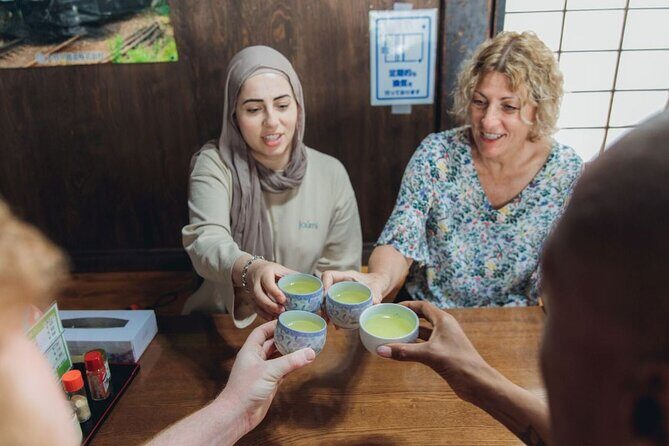
Come hungry, but not desperate. Wagashi early on is a small portion by design, and monjayaki and yakitori are the real anchors of the meal. If you arrive starving, you may be happy with the sweet start and then quickly rewarded at Tsukishima and Yurakucho. If you arrive too full, you might feel like you are paying for motion more than for food.
Dress for walking. Comfortable shoes matter most.
If you want alcohol, plan to enjoy it responsibly. In Japan, the legal drinking age is 20. Guests under 20 will be served non-alcoholic drinks. The tour still includes drinks for everyone—it just changes what shows up in your glass.
Also, keep your expectations realistic about variety. You are visiting three eateries, and the emphasis is on Japanese staples presented as tastings rather than a long multi-course dinner with many sit-down plates.
FAQ
What’s the duration of the Tokyo After 5 tour?
It’s listed at about 3 hours 30 minutes.
What food and drinks are included?
You get three local dishes (yakitori, monja-yaki, and wagashi) and two local drinks (like beer or sake, and soft drinks where applicable).
How many people are on the tour?
The tour has a maximum group size of 8 travelers.
Is alcohol included, and what about age limits?
Alcohol is included for those of legal age in Tokyo. The legal drinking age is 20, and guests under 20 will only be served non-alcoholic drinks.
Are vegetarian, vegan, or gluten-free options available?
No. The tour does not offer vegetarian, vegan, or gluten-free options.
Where does the tour start and end?
It starts at Mitsukoshi Ginza near the Lion statue facing Chuo Street, and ends at Ginza Station.
Should You Book Tokyo After 5?
If you want a guided night route through Ginza, Tsukishima, and Yurakucho with three tastings and two drinks, I think this is a smart choice. The combination of monjayaki cooked at the table plus yakitori in local alleys is exactly the kind of experience that feels hard to replicate solo.
Book it if your priority is good food, friendly guidance, and a small-group evening you can remember. Skip it (or choose something else) if you need vegetarian/vegan/gluten-free options, if you dislike cabbage-forward flavors, or if you want a slow, deeply detailed meal pace with lots of time to sit.
For most people who want a practical Tokyo night that actually teaches you what to order and why, this one makes sense. Just plan to walk, arrive hungry, and go with an open mind.
Eat Your Way Round Tokyo
More Tours in Tokyo


More Tour Reviews in Tokyo




Fresh reviews from around Tokyo






Food & Drink, compared.
 ★ 5.0Shinjuku Food Tour (13 Dishes at 4 Local Eateries)From $866,603 reviews
 ★ 5.0Tokyo Tsukiji Fish Market Food and Culture Walking TourFrom $993,184 reviews
 ★ 4.9Shinjuku Food Tour (15 Dishes and 4 Eateries)From $852,033 reviews
 ★ 5.0Tsukiji Fish Market Food and Walking tourFrom $301,724 reviews
 ★ 5.0Eat and Drink Like a Local: Tokyo Ueno Food Tour-Taverns&RamenFrom $95957 reviews
 ★ 5.0Shibuya Food Tour (13 dishes and 4 Eateries)From $77770 reviews
★ 4.7Tsukiji Fish Market Food and Culture Walking TourFrom $96757 reviews
★ 5.0Shibuya Food Tour (13 dishes and 4 Eateries)From $77770 reviews
★ 4.7Tsukiji Fish Market Food and Culture Walking TourFrom $96757 reviews
 ★ 5.0Tsukiji Fish Market: Street Food & Culture Walking TourFrom $33669 reviews
Browse the lists this tour appears in