
Reviewed · JDM DRIFT CAR EXPERIENCES
Tokyo: Daikoku JDM Car Meet & Night Car Culture Tour
Car meets, but make it Tokyo.
This tour is built like a night drive with stops where Japanese car people actually hang out, starting in Shibuya and ending back where you started. The big draw is the Daikoku Parking Area in Yokohama, plus major photo-and-road moments like crossing the Tokyo Rainbow Bridge and cutting through parts of the city most visitors never see from the street.
I really like two parts of this setup. First, the small-group feel keeps it chatty and personal, not a herd of people. Second, you get a real car-store stop at Autobacs A PIT (the flagship style browsing stop), so it is not only about parking-lot watching. My one caution: you cannot count on specific car sightings or a guaranteed turnout at Daikoku, since the scene depends on the night and conditions.
In This Review
- Key highlights worth your attention
- Daikoku Parking Area: the real reason to book this Tokyo JDM night tour
- Shibuya pickup and the ride choice that changes the vibe
- The road show before Yokohama: Mori Tower and the Rainbow Bridge at night
- Autobacs A PIT in Koto: the car store stop that makes the meet feel connected
- Tatsumi No.1 Parking Area (for Hakozaki): quick break, real highway energy
- The route details I’d actually plan for: Skytree, Haneda tunnels, and the Yokohama skyline approach
- Daikoku Parking Area: how to enjoy your 60 minutes without feeling rushed
- Back through Yokohama and up to Shibuya: Wangan Highway, Minatomirai, Tokyo Tower, C1 Loop
- Price and value: is $99.49 worth it for a Tokyo car culture night?
- Who should book this, and who should skip it
- Should you book the Tokyo Daikoku JDM Car Meet tour?
- FAQ
- What is the duration of the tour?
- Where does the tour start and end?
- What does the price include?
- Are food and drinks included?
- Do I need to worry about weather?
- Can I bring a child or stroller?
- What if I don’t see the exact cars I want?
- Does the tour have a limit on group size?
Key highlights worth your attention
- Daikoku Parking Area in Yokohama: the main event, with a long enough stop to actually walk, look, and take it in
- Autobacs A PIT: flagship-style browsing at a car-and-parts magnet before you hit the meet
- Rainbow Bridge night views: you see Odaiba/Yokohama areas from the roadway, not from a train platform
- Highway routing: Wangan Highway and C1 Loop vibes give you that car-leaning Tokyo feeling
- Route extras: chances to see Tokyo Skytree, Haneda Airport tunnels, and Yokohama skyline moments
- Guide-led car culture talk: expect conversations about what you are seeing, not just directions
More horsepower: other JDM and drift experiences
- GT-R35 800hp Club Membership – secret underground car meet★ 4.8 · 998 reviews
- Secret Car Meet: R34 Skyline Car Club Membership★ 4.8 · 494 reviews
- Tokyo Drift: Daikoku PA Supreme Car Experience 大黒PA★ 4.7 · 372 reviews
Daikoku Parking Area: the real reason to book this Tokyo JDM night tour
If you only do Tokyo sightseeing, you miss a side of the city that is loud in a different way. This is about cars, sure, but it is also about how Tokyo-area people spend a night: meeting up, cruising routes, grabbing parts, and chatting between vehicles like it is a moving hangout.
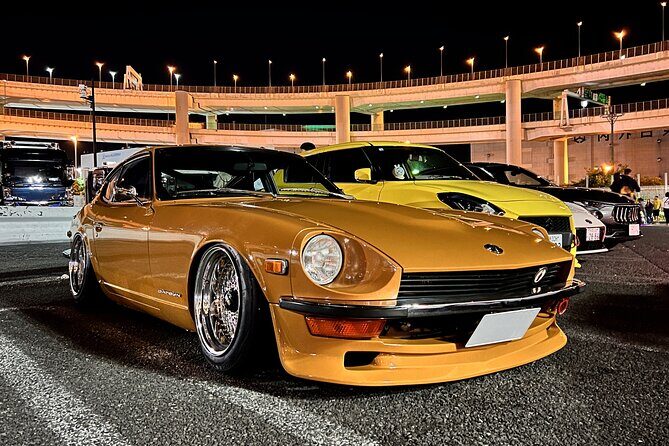
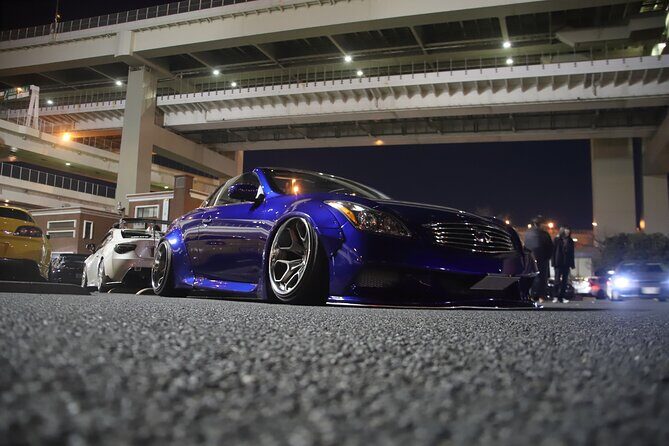
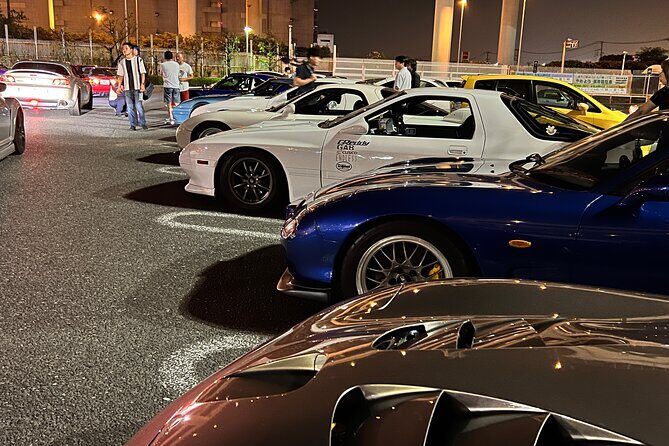
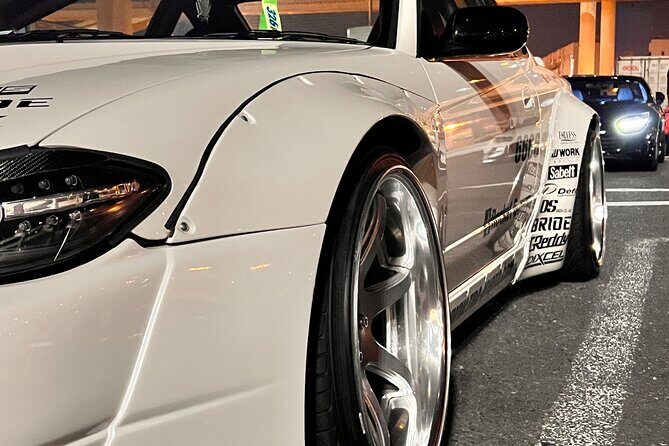
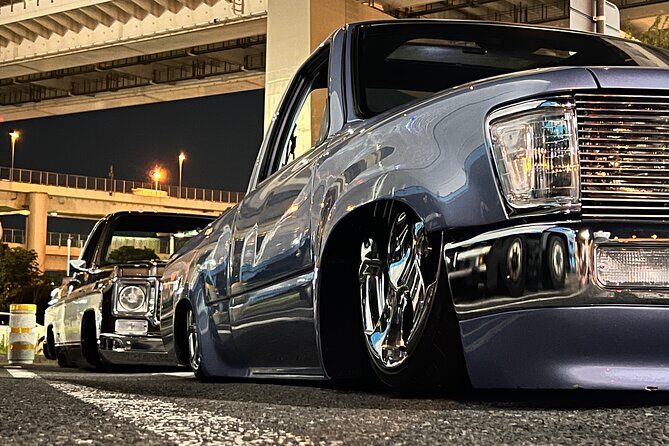
The centerpiece is Daikoku Parking Area. It is famous for a reason: you can walk through a lineup of classics, modern builds, and the kind of street-spec machines that do not show up in most tourist photos. You will have a substantial stop there (time is set aside so you are not rushed), which is key. A lot of tours treat car meets like a quick drive-by. This one gives you time to actually look at details—wheels, bodywork, stance, and the little choices owners make.
One practical note: you are not buying a guaranteed car show with guaranteed cars. The tour plan can take you to the right place, but car turnout can vary by day, weather, and timing. If your main goal is a specific model, go in with flexibility and focus on the overall scene.
Shibuya pickup and the ride choice that changes the vibe
Your meeting point is in Shibuya, at Dōgenzaka (near public transit). That location matters because it keeps the start simple—no multi-train scramble, and you are already in the part of Tokyo with the energy that matches a night-out tour.
You also get to choose your vehicle type:
- a JDM Legend car
- a Performance Van
- a Premium Sports Sedan
That choice affects more than comfort. A sedan can feel more like a tailored ride and conversation time. A van is the best fit for groups (for groups of 4–5, they suggest the Performance Van option). Also, the tour can cap at 10 travelers, and if capacity gets tight, you might be split into more than one vehicle for the road portions. That is normal for a tour built around driving routes and pickup logistics.
From the car side, you should expect a night-drive feel: you are not stuck staring at a GPS screen the whole time. You get “see Tokyo like a car person” moments—straight stretches, loops, and skyline angles.
The road show before Yokohama: Mori Tower and the Rainbow Bridge at night
A big part of why this tour feels special is the routing. You get views that are hard to replicate from public transit, because you are moving with the camera angles built in.
On the way, you pass Roppongi Hills Mori Tower—an easy-to-spot landmark that signals you are headed into the busy “business + shopping” core before the car culture side starts showing up. Then comes one of the most memorable segments: crossing the Tokyo Rainbow Bridge at night.
From the roadway, you get dramatic skyline views and a sense of scale that you just do not get when you are above it on a deck or at a station. The plan also includes chances to see Odaiba from the bridge area, plus the unusual silhouette of Fuji TV. These are the kinds of views that make the tour feel like Tokyo at night, not just a ferry ride to a parking lot.
If you like photography, plan for a lot of quick moments. The views come as you drive, so your “best shot” is often 10–30 seconds, not a long window to set up.
Autobacs A PIT in Koto: the car store stop that makes the meet feel connected
Before Daikoku, you stop at A PIT Autobacs in the Koto area. This is not a random convenience store stop—it is a flagship-style automotive hub where the obsession shows up in merchandise, displays, and the overall parts culture vibe.
You get dedicated time here: roughly a 25-minute ride to Autobacs and about 25 minutes on-site. It is long enough to browse and short enough that you are not burning the afternoon, which keeps the energy up for the main meet.
What I like about this stop is how it “explains” the meet. When you spend time looking at parts and gear, Daikoku feels less like a random collection of cars and more like a living ecosystem. You start noticing the kind of components people talk about when they say what they built, why they built it, and what they cared about.
One more practical point: admission here is free, but food and drinks are not included anywhere on the tour. If you want snacks, you will need to handle that yourself.
Other ways into a Tokyo evening
Tatsumi No.1 Parking Area (for Hakozaki): quick break, real highway energy
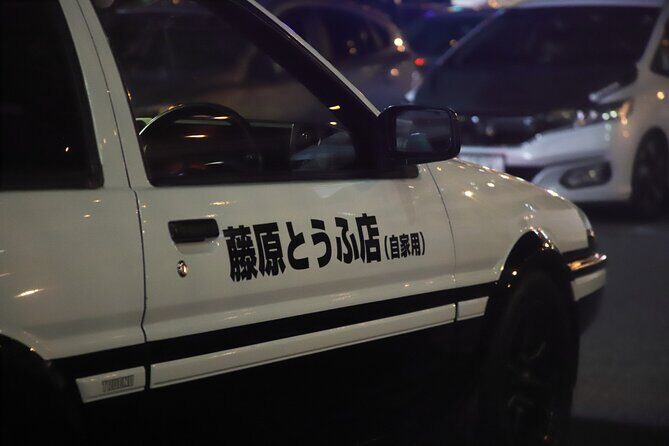
Next up is Tatsumi No.1 Parking Area for Hakozaki. The time is shorter than Autobacs—think quick hop and a brief rest—so treat it like a breather to reset before the Yokohama leg.
This is also where the “highway loops and cruising culture” shows up. Even if you do not see a ton of spectacle there every night, this type of stop is part of the habit: pull in, talk, check the cars, then head back out.
The tour plan gives a bit of flexibility here depending on the day. On some departures, Tatsumi or Autobacs can be swapped with other locations (like Umihotary and Gaienmae), while still keeping Daikoku as the anchor. So if one stop does not match your expectations, the overall rhythm stays intact.
The route details I’d actually plan for: Skytree, Haneda tunnels, and the Yokohama skyline approach
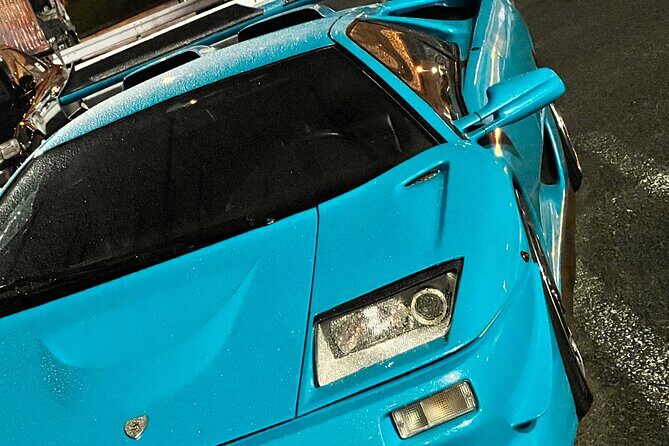
Between Tokyo and Yokohama, you get route-specific sights that are not just “drive-by views.”
- You may see Tokyo Skytree while traveling along the Furukawa Line area.
- You will pass Haneda Airport through tunnels under the runway area. If timing lines up, you might catch airliners taxiing above as you go through.
- Just before Daikoku, you should get an amazing approach view over the Yokohama Bay Bridge and the skyline.
There is also a cruise-ship possibility mentioned for the Yokohama area. That means your background scenery might change night to night, depending on what else is in port.
These details matter because they make the drive feel like part of the event. You are not sitting through traffic without payoff. You are moving through Tokyo and Yokohama with “why are we seeing this angle” moments baked in.
Daikoku Parking Area: how to enjoy your 60 minutes without feeling rushed
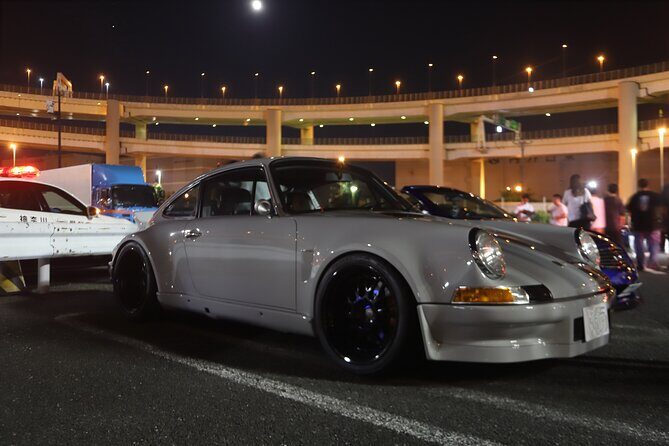
Daikoku is where the tour earns its reputation. The plan sets aside about 60 minutes at the meet, and that is a good amount of time to do three things well:
1) Walk the perimeter and get the first sweep of what is there
2) Slow down for the cars that catch your eye and look at the build choices
3) Take enough photos that you are not stuck with 20 near-duplicates
Because specific cars cannot be guaranteed, I’d suggest you focus on categories you genuinely enjoy. If you love JDM, lean into the Nissan, Toyota, Mazda, and Honda styles you spot. If you also enjoy European and American cars, you may be pleasantly surprised—some nights include a broader mix than people expect.
Safety and comfort also matter here. Several guides are described as keeping the drive smooth and secure, even when conditions get tricky. That is important in a night-driving tour where you are also getting out to walk around.
If it is rainy, still expect a calmer vibe than movie-style chaos. The scene tends to feel like a relaxed hangout with car people, not a staged performance. That is good news: you can actually enjoy the human side—conversation and curiosity—along with the machinery.
Back through Yokohama and up to Shibuya: Wangan Highway, Minatomirai, Tokyo Tower, C1 Loop
After the Daikoku stop, you head back toward Shibuya with more “road views” baked in.
On the return you travel the Wangan Highway, which is a long straight route connecting Tokyo and the Yokohama side. On the way back you get skyline and harbor scenery—particularly the Minatomirai area and Yokohama Port—from the car, which is a different experience than watching from the train.
You also cross back over the Rainbow Bridge from the Odaiba side to Tokyo, and the plan specifically calls out it as one of the best skyline views you can get from the vehicle. If you want that “Tokyo at night” feeling, this is one of the best chances on the whole tour.
Then there is the C1 Loop highway segment. You get a view of Tokyo Tower at night from the roadway. It is one of those moments that feels like Tokyo is being framed for you, not just shown to you.
The final stop brings you back to Shibuya after a ride segment that includes views like Minatomirai, Tokyo Tower, and Rainbow Bridge angles along the way.
Price and value: is $99.49 worth it for a Tokyo car culture night?
At $99.49 per person, you are paying for four things working together:
- transportation from Shibuya to Yokohama and back, with highway routing
- a guide who talks car culture as you go (not just a checklist of stops)
- multiple car-centered stops (Autobacs + at least one PA + the Daikoku meet)
- free admission for the stops where admission is mentioned as free
Food is not included, so you will still want to plan a meal or snacks before you go. Souvenirs are also on you.
Where the value really lands is time and focus. Doing this on your own means navigating routes, finding the meet, and timing public transport or rides late at night. Here, the tour handles the flow and gives you time windows that make sense for walking and browsing.
The other value factor: small group. With a maximum of 10, you should get more conversation than you would on a big bus tour. That matters for a niche theme like JDM culture—people want to talk, not just watch.
Who should book this, and who should skip it
This tour is a great match if:
- you genuinely like Japanese cars, tuning culture, and the social side of car meets
- you want a night-drive viewpoint rather than only seeing Tokyo by train
- you like the idea of a “car culture tour” that also includes real city skyline moments
It might not be the best choice if:
- you expect a guaranteed set of specific cars every night
- you dislike highway driving, late-night logistics, or getting out to walk around in cool weather
- your main goal is food, shopping, or classic tourist highlights
Family note: it is described as family-friendly, and there is a booster seat available for children. Also, small foldable strollers can be taken depending on the size in the Sedan and Van option.
Should you book the Tokyo Daikoku JDM Car Meet tour?
If you want one night in Tokyo that feels different from the usual “temple, shrine, and subway” routine, I think this is an easy yes. The Daikoku meet stop gives you the heart of the scene, and the highway routing + skyline views give you a Tokyo night backdrop that is actually part of the story.
Book it if:
- you can handle a 3–4 hour format and want a focused car culture outing
- you are okay with variable turnout and go in curious, not demanding a specific lineup
- you want a small-group experience starting in Shibuya
Skip it or reconsider if your expectations come from Hollywood-style car chaos. This is more relaxed, more talk-and-look, and less like a movie set. If that sounds fun, you are in the right place.
FAQ
What is the duration of the tour?
It runs about 3 to 4 hours (approx.). The timing includes driving between stops and on-site time at key locations like Autobacs and Daikoku.
Where does the tour start and end?
The tour starts at Shibuya, Dōgenzaka (2-chōme298 道玄坂センタービル). It ends back at the same meeting point.
What does the price include?
The price includes all fees and taxes, an expert guide, visits to multiple iconic car culture locations along the route, and small-group/private options. Admission is listed as free for the stops where admission tickets are mentioned.
Are food and drinks included?
No. Food, drinks, and souvenirs are not included.
Do I need to worry about weather?
Yes. The experience requires good weather, and if it is canceled due to poor weather you are offered a different date or a full refund.
Can I bring a child or stroller?
A booster seat is provided for children. Small foldable strollers can be taken depending on their size in the Sedan and Van options.
What if I don’t see the exact cars I want?
Specific car sightings cannot be guaranteed because turnout and conditions vary. The tour focuses on taking you to the major car culture locations, including Daikoku.
Does the tour have a limit on group size?
Yes. The maximum group size is 10 travelers. For groups of 4–5, they suggest the SMALL GROUP – Performance Van option.
More Tours in Tokyo


More Tour Reviews in Tokyo




For the Petrolheads: More JDM Days
Fresh reviews from around Tokyo






JDM Drift Car Experiences, compared.
 ★ 4.8GT-R35 800hp Club Membership – secret underground car meetFrom $205998 reviews
 ★ 4.8Fast & Furious Tokyo Drift 3 Experience (Kaila Yu SP)From $157947 reviews
Daikoku JDM Car Meet & Night Car Culture TourFrom $98626 reviews
★ 4.8Fast & Furious Tokyo Drift 3 Experience (Kaila Yu SP)From $157947 reviews
Daikoku JDM Car Meet & Night Car Culture TourFrom $98626 reviews
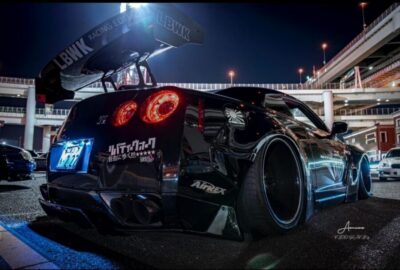 ★ 4.8Secret Car Meet: R34 Skyline Car Club MembershipFrom $236494 reviews
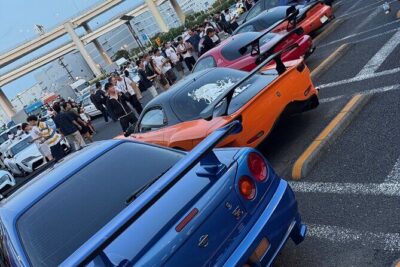 ★ 4.9EVO, WRX, Skyline – JDM Night Run to Daikoku Car MeetFrom $125478 reviews
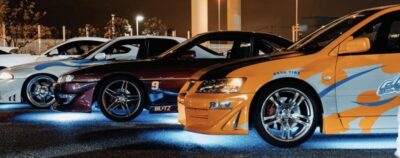 ★ 4.7Tokyo Drift: Daikoku PA Supreme Car Experience 大黒PAFrom $58372 reviews
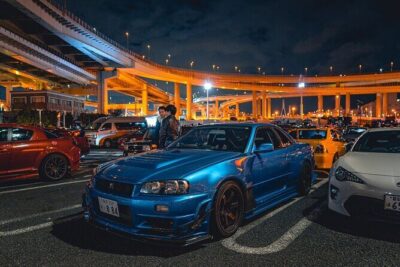 ★ 4.5Daikoku Car Club Temporary MembershipFrom $145275 reviews
Best Price Daikoku Parking Area JDM Car MeetFrom $76192 reviews
★ 4.5Daikoku Car Club Temporary MembershipFrom $145275 reviews
Best Price Daikoku Parking Area JDM Car MeetFrom $76192 reviews
Browse the lists this tour appears in