
Reviewed · SHIBUYA TOURS
Tokyo Bike Tour: Shibuya & Hidden Tokyo
Shibuya from a bike is a game changer. This small-group Tokyo bike tour mixes major sights with calmer backstreets, so you see more than you would walking or riding the subway. The guide, Taichi, sets the pace and keeps things smooth, especially when traffic feels chaotic from the sidewalk.
What I like most is the local routing. You start near Yoyogi, hit Shibuya Crossing and Hachiko, then roll into neighborhoods like Harajuku and Aoyama where Tokyo feels more lived-in than stage-lit. You also get lots of practical context along the way—how people move around, what to notice, and where to go next.
One drawback: this is not an e-bike cruise. You need to feel comfortable cycling near traffic lights and through tighter streets, and you’re riding a non-electric bike for about 3 hours at a steady pace.
In This Review
- Key highlights you should know
- Why a Shibuya bike tour beats walking in Tokyo
- Where you’ll meet and how to get there without stress
- The ride plan: from Yoyogi Park to Aoyama Cemetery
- Yoyogi Park: warming up with space
- Shibuya Crossing and Hachiko: the icons, handled safely
- Shibuya Cat Street: style streets without the rush
- Aoyama Street: cleaner lines, calmer block-to-block feel
- Aoyama Cemetery: a quiet change of pace
- Japan National Stadium area: big-city scale
- Taichi’s role: safety, pacing, and local context that sticks
- Bikes, pace, and skill rules (read this before you book)
- Weather and crowd reality: how it handles the day changing
- Price and value: what $64.73 buys in Tokyo time
- Who should book this, and who might not love it
- Should you book the Tokyo Bike Tour: Shibuya & Hidden Tokyo?
- FAQ
- How long is the Tokyo Bike Tour: Shibuya & Hidden Tokyo?
- Where do we meet for the tour?
- What pace should I expect while riding?
- Is the tour only for experienced cyclists?
- What’s the minimum age to join?
- Will the tour run in rain?
Key highlights you should know
- Small group (max 6) means easier spacing, calmer intersections, and more Q&A
- Taichi leads the route so you’re not wrestling with directions while traffic is loud
- Top icons plus quieter streets: Shibuya Crossing and Hachiko, then off-the-beaten-path areas
- 3-hour, ~15 km/h pace gets you real mileage without feeling rushed
- Road cycling basics required: confident with signals, pavements, and crowded/tight spots
- Built for safety with clear instructions for Japanese traffic rules
More to do within sight of the Crossing
- Official Street Go-Kart in Shibuya★ 5.0 · 3,435 reviews
- Tokyo: Street Kart Experience in Shibuya★ 4.9 · 1,484 reviews
- Shibuya Meltdown Nightlife Tour: All-You-Can-Drink Bar Hopping★ 5.0 · 1,058 reviews
Why a Shibuya bike tour beats walking in Tokyo
Tokyo can look like a lot from the curb—crosswalks everywhere, lanes multiplying, and crowds that seem to spawn on schedule. On foot, it’s easy to spend half your time just getting from one famous spot to the next. On a bike, you keep momentum and you start noticing the city in-between landmarks: the quiet blocks, the small storefronts, the way neighborhoods connect.
This tour is designed for that sweet spot. You cover major Shibuya sights, but you also get routed into the parts of the area most visitors never slow down for. The “explore like a local” part is more than a tagline. When you’re moving under your own power, Tokyo’s rhythm becomes obvious fast: where people cut through, where the sidewalks widen, and where the city settles into residential calm.
Where you’ll meet and how to get there without stress
The meeting point is Umayamichi Park (Sendagaya, Shibuya), and the location is about as convenient as it gets in this area. It’s roughly a 10-minute walk from Shinjuku Station and only about 1 minute from Yoyogi Station. That matters because you can plan your day without turning it into a second sightseeing tour just to reach the start.
The tour ends back at the same meeting point, so you don’t have to worry about trains or backtracking after you’re done riding. If you’re juggling other plans—shopping in Harajuku, a museum visit, or dinner reservations—that round-trip simplicity is real value.
The ride plan: from Yoyogi Park to Aoyama Cemetery
You’ll start with a park area, then work your way through Shibuya’s best-known places and into adjoining neighborhoods. The ride speed is about 15 km/h, and the overall time is around 3 hours. Reviews suggest you can end up covering roughly 9–10 miles depending on the exact route and how the group moves.
Yoyogi Park: warming up with space
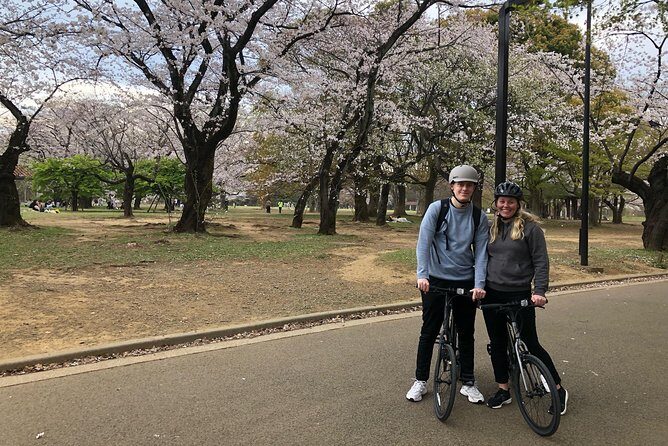
You begin at Yoyogi Park, which is a nice way to get your legs working before the busiest intersections. Parks are helpful in Tokyo for bike tours because they give you smoother riding space and an easier mental shift from arriving on foot to actually pedaling. Use this first stretch to settle into the group pace and get comfortable with Taichi’s signals.
More of Tokyo by bike

Shibuya Crossing and Hachiko: the icons, handled safely
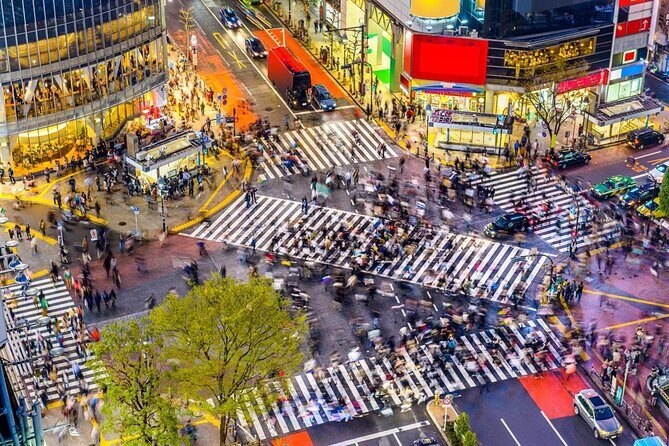
Then comes Shibuya Crossing, the scene you’ve seen in videos and photos. From a bike, you experience it with a different scale. You can feel the flow of pedestrians and traffic around you, and you understand why Shibuya needs constant lane awareness.
Right after that you’ll reach Hachiko, another must-see. The advantage of doing this as part of a bike route is that you’re not stuck making slow, stop-and-start detours. You get a quick, well-timed encounter with a landmark, then you move on rather than spending your best energy waiting in crowded bottlenecks.
Practical note: you’ll be near some very busy foot traffic. The tour’s approach is to ride with clear guidance and follow instructions closely, especially around where people cross.
Shibuya Cat Street: style streets without the rush
Next up is Shibuya Cat Street. This is where the area feels more like an active neighborhood than an attraction. You’ll see the mix of youth culture, shops, and street life that makes Shibuya different from other “big city centers.” From the bike, the vibe lands differently—you can register storefronts and side streets in a way that walking sometimes can’t.
A big plus here is that you’re still in the same ride arc, so the tour isn’t just hopping between random stops. It’s one connected loop, which keeps the rhythm fun instead of exhausting.
Aoyama Street: cleaner lines, calmer block-to-block feel
Then you roll into Aoyama Street, where Tokyo’s look starts shifting. It’s a different visual mood—more open-feeling streets and a sense of style that’s less chaotic than right around the Crossing. This section is a nice “reset” before you hit the last big segments of the route.
If you’re the type who likes to photograph architecture or street details, this area gives you plenty of angles without needing to fight for a spot at the curb.
Aoyama Cemetery: a quiet change of pace
You’ll also visit Aoyama Cemetery. This is one of the more unexpected stops, and that’s exactly why it works. After crowded Shibuya, a calmer setting helps you digest what you’ve seen and gives your mind a breather.
On a bike tour, the value of a stop like this is timing. You don’t just sprint between landmarks. You get a contrast: noise versus quiet, street energy versus stillness. It makes the whole outing feel less like a checklist and more like a real slice of Tokyo.
Japan National Stadium area: big-city scale
Finally, you’ll pass by Japan National Stadium. Even if you don’t go inside, the scale is memorable. It gives context for Tokyo as a modern city built for major events, and it’s a good endpoint energy-wise before you return to the start.
Taichi’s role: safety, pacing, and local context that sticks
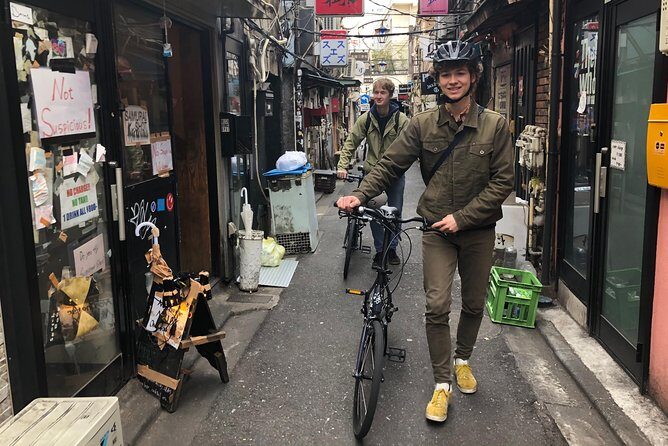
The guide is Taichi, and the main reason this tour consistently earns high ratings is how he manages the ride. In Tokyo, the “stress” people feel is usually not the roads themselves—it’s not knowing what to do when traffic is moving and pedestrians are everywhere. Taichi’s job is to remove that mental load.
You’ll get:
- Clear directions so you’re not guessing lane choices
- Route awareness so you can focus on enjoying the neighborhoods
- Safety-minded timing at busy crossings and tight sections
What also comes through is the human side. Multiple reviews mention his friendly communication and the way he can answer questions about what you’re seeing and how the city works. A few notes included that he even helps with small Japanese phrases, which is a great confidence boost for the rest of your Tokyo days.
One more practical perk: in the crowd-heavy areas like Shibuya Crossing, it helps to have someone who can handle photo moments without derailing the group rhythm. Reviews mention he’s willing to take photos, even at major spots.
Bikes, pace, and skill rules (read this before you book)
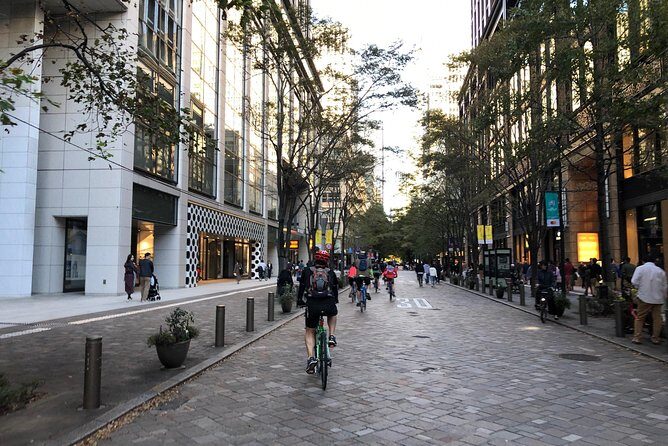
This is a cycling tour on a non-electric bicycle. That’s the honest part, and it affects whether you’ll enjoy it.
You must fit the bike and meet the riding comfort requirements:
- Height range: 155 cm to 195 cm
- Weight limit: up to 120 kg
- Age: 13 years or older
- You should be proficient cycling on pavements, handling cross traffic lights confidently, and riding through crowded or tight spaces
- Expect a ride speed of about 15 km/h
In real life, “15 km/h” is not Olympic speed. It’s a steady travel pace that keeps the tour moving while still feeling relaxed. Some reviews note Tokyo can feel fairly flat on a bike, but you may encounter mild gradual uphills.
Also, the bikes are designed to be manageable. One review mentioned the smaller wheels helping maneuverability. Either way, if you’ve never ridden in a busy city before, do yourself a favor and be honest about your comfort with traffic situations.
Weather and crowd reality: how it handles the day changing
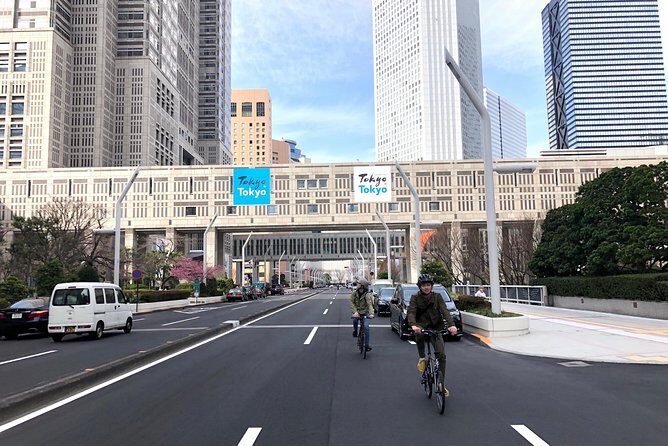
The tour runs in light rain, but it may be canceled if weather changes suddenly. Tokyo can switch conditions fast, so plan on checking updates the day of.
Crowds are part of the deal in Shibuya. The difference here is that you’re not dealing with those crowds alone. Taichi guides you through the busy areas at a pace the group can handle, which is a big deal when you’re trying to enjoy the city instead of white-knuckling the handlebars.
If you’re sensitive to noise and foot traffic, give yourself permission to take it slow at the Crossing moments. The goal is safe riding and good sight time, not a speed record.
Price and value: what $64.73 buys in Tokyo time
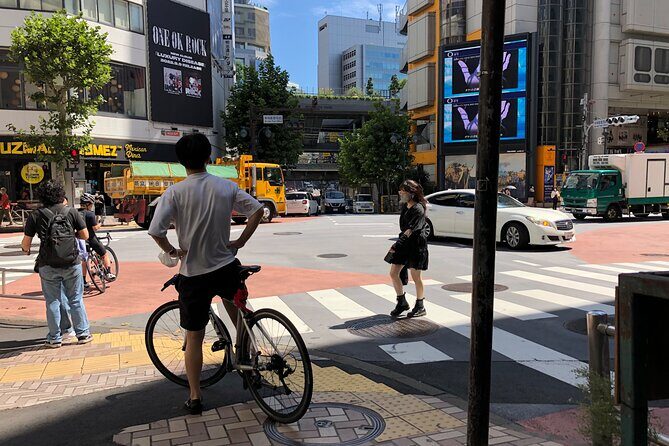
At $64.73 per person, this tour sits in the mid-range for guided sightseeing in Tokyo. The value comes from combining several things at once:
- Major Shibuya landmarks without taking up your whole day
- Extra neighborhood coverage that you’d likely miss by train
- A small group experience, which makes safety and interaction easier
- Guidance that reduces stress when traffic and pedestrians pile up
Three hours also makes it a smart “anchor” activity. Do it earlier in your trip, and you’ll start noticing neighborhoods you want to return to—because the ride gives you a map in your head, not just photos on your phone.
Two daily departures can also help fit it into a busy schedule. If you’re trying to avoid booking gaps during peak days, booking about a week ahead (on average it’s reserved around 8 days in advance) is a sensible move.
Who should book this, and who might not love it
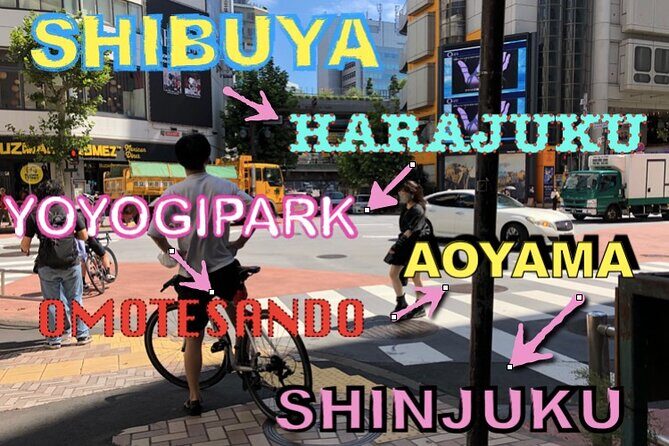
I think this tour is a great match if:
- You want a Shibuya cycling tour that also touches Harajuku and Aoyama
- You like learning what you’re seeing while you move through the city
- You’re comfortable riding a non-electric bike in active areas
- You’d rather get guidance than figure out logistics on your own
I’d hesitate if:
- You’re not comfortable with bike traffic lights or riding near vehicles
- You want an effort-free tour (this one is effort, just not brutal)
- Rain makes you miserable and you’d rather keep plans 100% flexible
The best part is that the small group size helps everyone feel more relaxed. With a maximum of 6 people, it’s not a conveyor belt.
Should you book the Tokyo Bike Tour: Shibuya & Hidden Tokyo?
If you can handle basic city cycling rules and you want Shibuya to feel more real than a photo stop, I’d book this. It’s one of the easier ways to turn the area between Shinjuku, Yoyogi, Harajuku, and Aoyama into something you understand quickly.
To make sure it’s a win for you, be honest about comfort around:
- cross traffic lights
- crowded sidewalks
- tight lanes
If that sounds manageable, you’ll come away with two kinds of value: a solid Shibuya highlights circuit and a clearer sense of where Tokyo actually lives beyond the obvious tourist routes.
FAQ
How long is the Tokyo Bike Tour: Shibuya & Hidden Tokyo?
The tour is about 3 hours.
Where do we meet for the tour?
You’ll meet at Umayamichi Park 5-chōme-24-11, Sendagaya, Shibuya, Tokyo 151-0051, Japan. The tour ends back at the meeting point.
What pace should I expect while riding?
You’ll ride at approximately 15 kilometers per hour, and you’re expected to pedal confidently at that speed.
Is the tour only for experienced cyclists?
You should be proficient cycling on pavements, handle cross traffic lights confidently, and ride through crowded or tight spaces. You also must follow Japanese traffic rules and the guide’s instructions.
What’s the minimum age to join?
The tour is for people age 13 and older.
Will the tour run in rain?
It proceeds in light rain, but it may be canceled due to sudden weather changes.
More Tours in Tokyo




More Tour Reviews in Tokyo




Still in Shibuya? Keep Going




Fresh reviews from around Tokyo






Shibuya Tours, compared.
 ★ 5.0Official Street Go-Kart in ShibuyaFrom $763,435 reviews
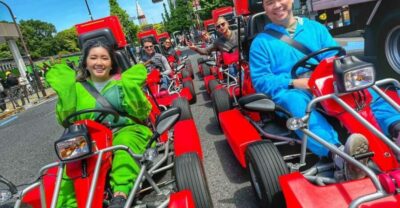 ★ 4.9Street Kart Experience in ShibuyaFrom $741,484 reviews
 ★ 5.0Shibuya Meltdown Nightlife Tour: All-You-Can-Drink Bar HoppingFrom $1061,058 reviews
 ★ 5.0Shibuya Official Street Go-Kart in Shibuya AnnexFrom $69972 reviews
 ★ 5.0Shibuya Food Tour (13 dishes and 4 Eateries)From $77770 reviews
 ★ 5.0Best of Shibuya Food TourFrom $217612 reviews
 ★ 4.8Shibuya Highlights Walking TourFrom $19601 reviews
 ★ 4.7Premium Go-Kart Tour with Tower & Shibuya CrossingFrom $116528 reviews
Browse the lists this tour appears in