
Reviewed · CYCLING TOURS
Tokyo 3 Hour E Bike Tour of the City Bayside Areas
Tokyo’s bayside on two wheels is a smart shortcut.
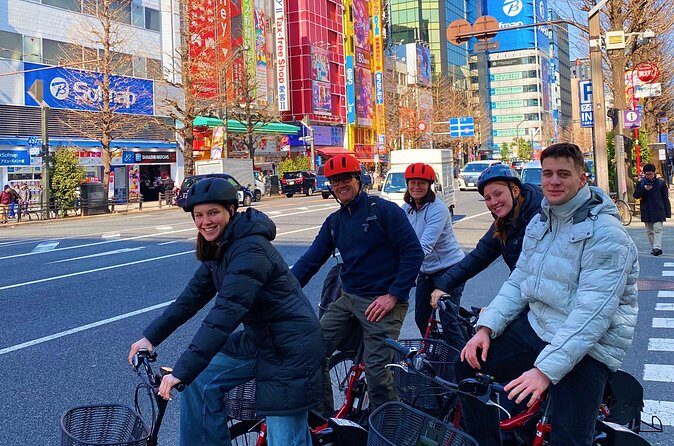
This 3-hour e-bike tour strings together classic sights and more local corners along the waterfront, so you’re not stuck riding the subway in and out of neighborhoods. I like the electric bikes because they keep the effort reasonable even when the streets get busy, and you still feel like you’re moving through real Tokyo. The English-speaking guide experience also matters here: guides like Sho and Nao lead you through tight turns and intersections with confidence, so the route stays fun instead of stressful.
Two things I particularly like: the lineup of stops (Ginza → Tsukiji → gardens) hits both big-name Tokyo and places most visitors skip, and the tour is paced with short photo/walk breaks that actually fit into a 3-hour window. One consideration: you’ll need moderate physical fitness, and the ride depends on good weather. Also, there’s an optional temple entrance later that costs extra in cash.
In This Review
- Key highlights to know before you go
- Why an e-bike bayside tour works so well in Tokyo
- The route: from Ginza to Fukagawa in about 3 hours
- Ginza and Kabuki-za: luxury streets plus famous theater curbside
- Tsukiji Hongwanji Temple and Tsukiji Fish Market: a quick dose of food Tokyo
- Tsukishima Monja Street and Sumiyoshi Jinja: neighborhood Tokyo beyond the postcard
- Kiyosumi Gardens: the included garden time that resets your legs
- Fukagawa Fudō-dō (Naritasan Tokyo branch): optional entry, cash in hand
- Bikes, guides, and safety: how the small group keeps things smooth
- Price and value: what you’re paying for at about $87.96
- Who this tour suits best (and who might want to choose differently)
- Should you book this Tokyo bayside e-bike tour?
- FAQ
- How long is the Tokyo 3 hour E Bike Tour?
- Where does the tour start and end?
- Is the tour in English?
- What’s included in the price?
- Are there any additional entrance fees during the tour?
- Is food included?
- What kind of physical fitness do I need?
- How big is the group?
- What if the weather is bad?
Key highlights to know before you go
- Easy electric riding on Bianchi bikes: less pedal strain, more time for looking and photos
- Small group size (max 7): you’ll get more guidance and less crowding
- Real stops, not just viewpoints: temples, shrines, and a proper garden walk
- Tsukiji snack time built in: quick break near the fish market area
- Optional Fukagawa Fudodo visit: pay ¥1000 cash only if you want entry
- Tour ends at Fukagawa Fudō-dō: plan your next train ride from there
More of Tokyo by bike
- Tokyo Guided Small-Group Biking Tour★ 5.0 · 1,250 reviews
- Tokyo Great Cycling Tour★ 5.0 · 811 reviews
- Tokyo Top Highlights 3h Guided E-bike Tour★ 5.0 · 714 reviews
Why an e-bike bayside tour works so well in Tokyo
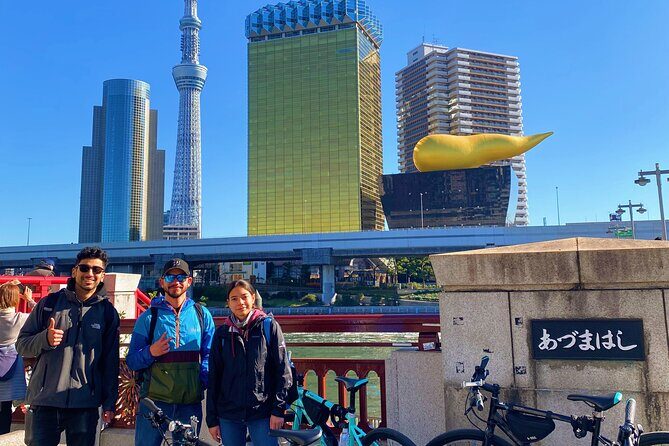
Tokyo can be a lot. Even when you have a great plan, it’s easy to burn hours doing transfers, then feeling too tired to enjoy what you reach. A short guided e-bike loop solves that. In about three hours, you cover multiple districts that usually take longer than you expect by public transport.
And the bayside area has a specific advantage: it’s packed with “Tokyo” scenes—old temples beside modern shopping streets, food-market energy, then a calmer garden reset. The tour is built to give you contrast without making you commit to a full day.
The electric assist is the real enabler. You still feel like you’re cycling through the city, but you’re not paying the same physical cost that you would on a normal bike. That matters most when you’re dealing with Tokyo’s stops and starts.
The route: from Ginza to Fukagawa in about 3 hours
You start at 1-3 Hibiyakōen, Chiyoda City, Tokyo (near public transportation), and you end at Fukagawa Fudō-dō (Naritasan Tokyo branch temple) in Tomioka, Koto City. The ending point is important: your final temple area is the stop, not the return to the start. So think about your train route before you show up.
The day’s flow is structured like this:
- quick urban highlights (Ginza, Kabuki-za)
- a food-and-temple stretch (Tsukiji Hongwanji Temple, Tsukiji Fish Market area)
- neighborhood texture (Tsukishima Monja Street, Sumiyoshi Jinja)
- a green pause (Kiyosumi Gardens walk, included)
- an optional final temple entrance (Fukagawa Fudodo Honden, ¥1000 cash only if you enter)
Timing is tight in a good way. Each stop is long enough to see, orient, and take photos, without turning your afternoon into a long slog.
Ginza and Kabuki-za: luxury streets plus famous theater curbside
Ginza is your first big “wow” moment. You cycle through the luxurious district for about 10 minutes, and that quick hit is perfect early in the tour—just enough time to take in the polished streets before you move on.
Then you stop at Kabuki-za, the landmark theater for classical Japanese kabuki. You’re there for around 10 minutes. Even if you’re not catching a show, seeing the building area gives you a sense of how much kabuki is part of Tokyo’s identity, not just a museum topic.
A practical note: Ginza streets can be visually dense. The guide’s job here is to point out what matters so you don’t spend the entire time staring up at shop signs. If you like snapping photos, this is a good section to have your camera ready.
Tsukiji Hongwanji Temple and Tsukiji Fish Market: a quick dose of food Tokyo
Next comes Tsukiji Hongwanji Temple for about 15 minutes. This is a nice change of pace after Ginza and theater signage. Temples like this help balance the day—less shopping-gloss, more atmosphere and place.
Right after, you get time at the Tsukiji Fish Market area for about 20 minutes. You’ll walk around and have a quick snack break. Food isn’t included, but this stop is still valuable because the guide times it for a short window when you can wander without feeling rushed.
What you might want to look for:
- simple snacks you can eat while standing or walking
- seafood options if you’re into that
- quick “Tokyo market” photos (people, counters, movement)
One drawback: because this is a market area, it can feel tight and busy on foot. The e-bike portion helps you avoid losing time stuck in transit, but once you’re walking, go slow and keep your space.
Bigger sweeps: other Tokyo city tours

Tsukishima Monja Street and Sumiyoshi Jinja: neighborhood Tokyo beyond the postcard
This is where the tour starts feeling more personal. Tsukishima Monja Street is about 10 minutes on the bike with a short stop to see the area. In conversation, guides often frame Tsukishima as a place with a strong food culture vibe, and it can feel like a small “fisherman” world—very different from central Tokyo.
Then you visit Sumiyoshi Jinja for about 10 minutes. Shrines are easy to overlook if you’re only following the biggest sightseeing list. This stop gives you a grounded, local feeling and breaks up the day’s urban intensity.
If you’re someone who likes Tokyo that looks lived-in, these two stops are worth paying attention to. They’re also shorter, so you’re not stuck committing a full hour to a single area.
Kiyosumi Gardens: the included garden time that resets your legs
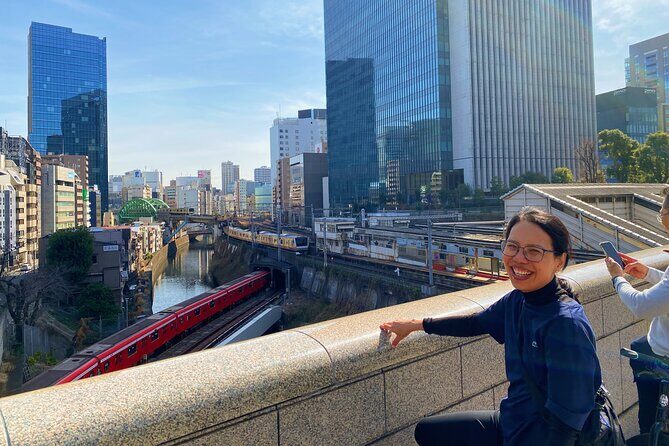
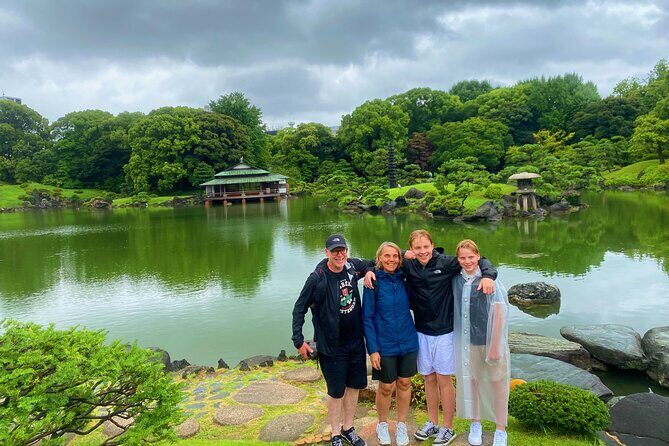
After all that cycling and walking, you’ll appreciate the pace change. Kiyosumi Gardens is included in the tour (entry fee covered) and you’ll spend about 25 minutes there. This is your real slow-down moment.
A garden stop is more than pretty photos. In a few minutes, you get a break from street traffic, you stop moving, and your senses catch up. It’s also a good place to check your own energy level—grab water, take a breather, and then continue with the final stretch.
The only caution here is timing. Gardens can encourage you to linger, but the tour schedule is designed to keep the overall loop within three hours. Enjoy it, but expect the visit to be a guided, not open-ended wander.
Fukagawa Fudō-dō (Naritasan Tokyo branch): optional entry, cash in hand
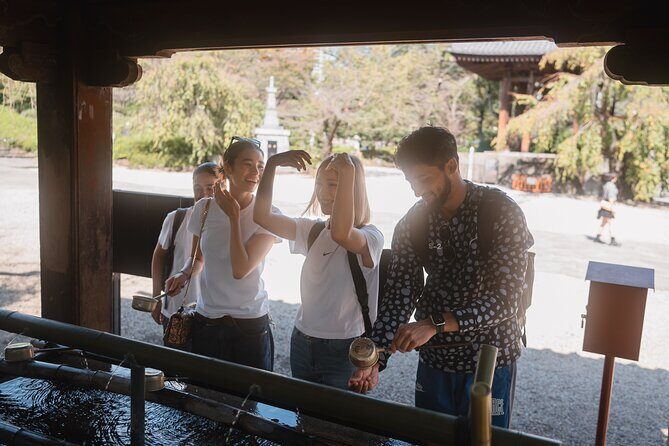
Near the end, you reach Naritasan Fukagawa Fudodo Honden with an optional entrance. The tour gives you about 20 minutes here, but entry into the optional area costs ¥1000 cash only. If you don’t want to enter, the tour still ends at the Fukagawa Fudō-dō area.
This setup is practical. It lets you choose based on interest and energy. If you’re temple-focused, it’s an easy add-on. If you’d rather save your cash for food later, you won’t lose the tour’s main flow—your cycling route still finishes at the temple area.
Bring at least some cash just in case you decide you want to go inside.
Bikes, guides, and safety: how the small group keeps things smooth
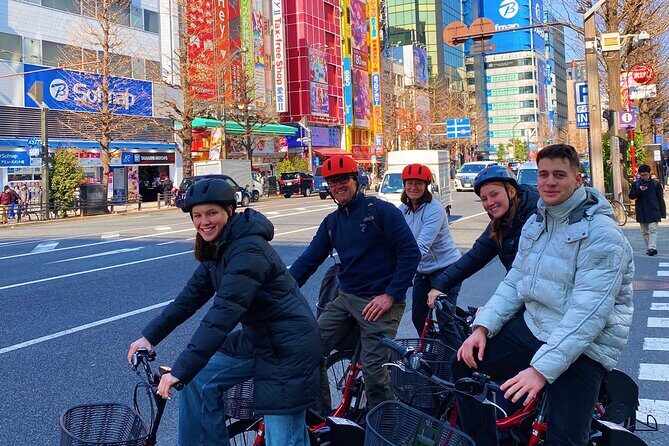
This tour caps at 7 travelers, which makes a difference in Tokyo. Less crowding means you can follow the guide without constantly threading through other groups.
You’ll ride electric bikes (the bikes are mentioned as Bianchi in the experience feedback), and guides keep you moving in a way that feels organized. One thing that consistently shows up in the overall experience is the feeling that the ride stays safe, even with traffic and intersection complexity. That’s not automatic—good guiding is what makes it happen.
The guides you might meet (based on past tour experiences) include Sho and Nao. Both are described as enthusiastic and helpful. In practical terms, expect them to:
- brief you before the ride
- point out where to look and what to photograph
- help you stay together
- explain each stop enough to make it meaningful, not just a stop on a map
Also, the itinerary is built with short durations between stops. That helps a lot when you’re cycling: you’re not waiting forever, and you’re not rushing to catch up.
Price and value: what you’re paying for at about $87.96
At $87.96 per person for roughly three hours, you’re paying for three big things:
1) Electric bike use (not just a rental—this includes guided riding)
2) An English-speaking guide
3) Garden entry at Kiyosumi Gardens
That’s where the value comes from. If you tried to do this on your own, you’d likely spend time figuring out routes, dealing with transit transfers, and paying for entry where it’s not optional. Here, the guide builds a compact loop so you get more “Tokyo per hour.”
Food is not included, so budget for snacks at Tsukiji Fish Market if you want them. Entrance outside Kiyosumi is mostly free for the listed stops, but the optional Fukagawa entry is ¥1000 cash only. So check your wallet plan before you go.
Finally, booking is typically done about 67 days in advance on average, which suggests it’s a popular slot. If you have fixed dates, you’ll get more certainty by booking earlier rather than later.
Who this tour suits best (and who might want to choose differently)
You’ll enjoy this most if:
- you want to see multiple districts without spending your whole day on trains
- you like walking briefly, but you also want the speed of cycling
- you’re comfortable riding an electric bike with a guide (moderate fitness is recommended)
- you want English guidance for context at each stop, not just landmarks
You might reconsider if:
- you’re worried about riding in city traffic even with a guide
- your schedule depends on weather that’s uncertain (the tour requires good weather)
- you dislike tours that move you on a set timeline (this is short and structured)
The good news: for many people, the electric bike makes the difference between feeling like Tokyo is too big and feeling like you can handle it.
Should you book this Tokyo bayside e-bike tour?
If you want a focused Tokyo day that blends famous sights with more neighborhood texture, I’d say book it. The 3-hour length is ideal for first-timers and repeat visitors alike, and the included Kiyosumi Gardens entry is a smart cost saver. Add in a guide like Sho or Nao, plus the small group setup, and it’s a comfortable way to cover ground without feeling like you’re sprinting.
I’d pass (or pick another plan) if your weather risk is high or if city riding makes you nervous. Also, bring a plan for the optional ¥1000 cash temple entry so you aren’t deciding on the spot.
If you can handle an electric bike and want a well-paced route across Ginza, Tsukiji, shrines, and gardens, this is one of the easier “yes” choices for Tokyo.
FAQ
How long is the Tokyo 3 hour E Bike Tour?
The tour lasts about 3 hours.
Where does the tour start and end?
It starts at 1-3 Hibiyakōen, Chiyoda City, Tokyo 100-0012. It ends at Fukagawa Fudō-dō (Naritasan Tokyo branch temple), 1-chōme-17-13 Tomioka, Koto City, Tokyo 135-0047.
Is the tour in English?
Yes. The tour includes an English speaking guide.
What’s included in the price?
You get use of an electric bike, the English speaking guide, and the entrance fee for Kiyosumi Gardens.
Are there any additional entrance fees during the tour?
Kiyosumi Gardens is included. There is an optional entrance fee for Naritasan Fukagawa Fudodo Honden of ¥1000, and it is cash only.
Is food included?
No. Food and drinks are not included.
What kind of physical fitness do I need?
The tour suggests a moderate physical fitness level.
How big is the group?
The maximum group size is 7 travelers.
What if the weather is bad?
The experience requires good weather. If it’s canceled due to poor weather, you’ll be offered a different date or a full refund.
Tokyo on Two Wheels
More Tours in Tokyo




More Tour Reviews in Tokyo




Fresh reviews from around Tokyo






Cycling Tours, compared.
 ★ 5.0Tokyo Guided Small-Group Biking TourFrom $1061,250 reviews
 ★ 5.0Tokyo Great Cycling TourFrom $99811 reviews
 ★ 5.0Tokyo Top Highlights 3h Guided E-bike TourFrom $63714 reviews
3-Hour Bike or E-Bike City Highlights TourFrom $45435 reviews
★ 5.0Tokyo Top Highlights 3h Guided E-bike TourFrom $63714 reviews
3-Hour Bike or E-Bike City Highlights TourFrom $45435 reviews
 ★ 5.0Tokyo West-Side Cycling & Food TourFrom $99214 reviews
 ★ 5.03-Hour Bike/E-Bike Tour of the City’s HighlightsFrom $63209 reviews
 ★ 5.0Small Group Cycling Tour in TokyoFrom $66184 reviews
 ★ 5.03-Hour Tokyo Private E-Bike Tour Starting from Your HotelFrom $145117 reviews
Browse the lists this tour appears in