
Reviewed · SHINJUKU BAR HOPPING
Takoyaki cooking experience in Kabukicho, Shinjuku
You’ll flip takoyaki like a local.
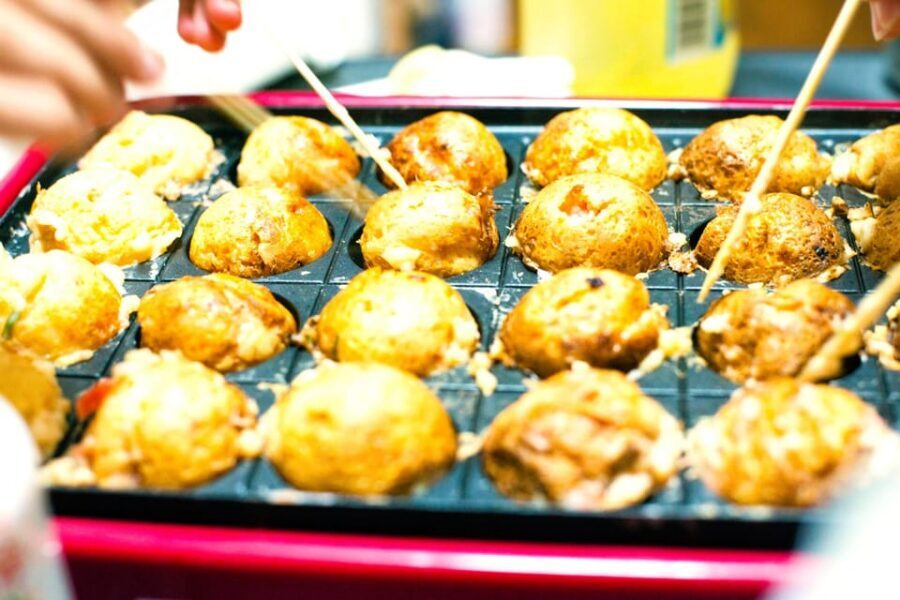
This hands-on class turns Japanese street food into something you actually make: batter into a griddle, chopped octopus inside, then flip until you get that round, golden shape. I especially like the small-group feel (up to 6) and the clear guidance in English or Japanese from instructors such as Chihiro or Sakiko, which makes it easier to learn fast. One consideration: this experience isn’t suitable for kids under 4, and it’s not for anyone with gluten intolerance.
You’re in the right place for comfort food.
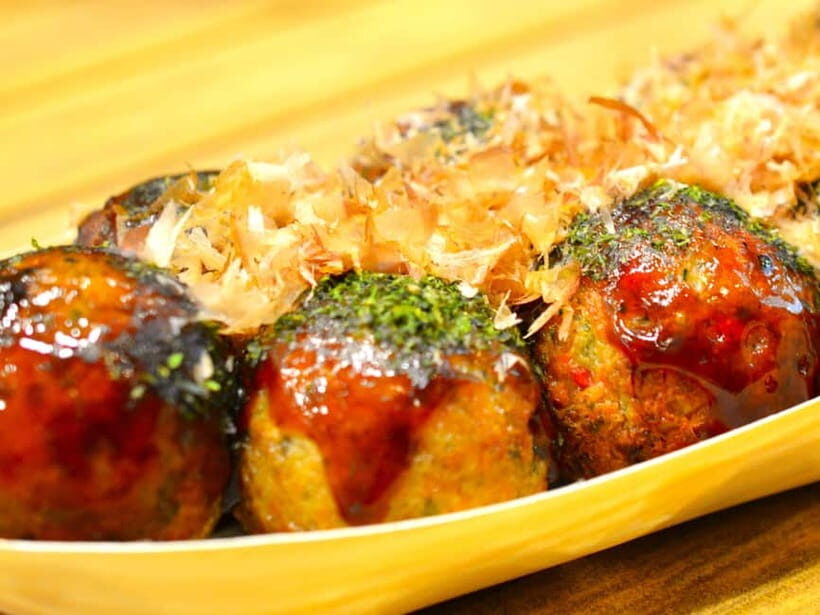
Kabukicho and Shinjuku are a sensory overload outside, but inside the class it’s focused and friendly. You’ll learn how takoyaki should be crispy outside and fluffy inside, and you’ll finish by eating your own freshly cooked batch while it’s piping hot.
Plan for the heat and the timing.
Takoyaki is meant to be eaten immediately, so expect short, intense moments with a hot griddle and very hot food. The whole experience runs about an hour, so you’ll want to arrive on time and keep your appetite ready for the end.
In This Review
- Key things I’d watch for
- Kabukicho After-Dinner Energy, With a Real Cooking Goal
- Getting There: 5 Minutes From Shinjuku Station (And What To Do First)
- The Takoyaki Method: Batter, Octopus, and Getting That Round Shape
- Toppings: Bonito Flakes, Aonori, Sauce, and Mayonnaise Balance
- A Typical 1-Hour Flow: From First Pour to Finished Meal
- Instructors Who Teach Through Friendly Hands-On Coaching
- Price and Value Check: What $25 Gets You in Central Tokyo
- Who Should Book (And Who Should Skip)
- After Class: Use Kabukicho for Photos and a Quick Walk
- Should You Book This Takoyaki Experience?
- FAQ
- How long is the takoyaki cooking experience?
- What is the price per person?
- What’s included in the price?
- Are drinks included?
- Where do we meet for the experience?
- Is this experience suitable for children?
- What languages are available during the class?
- How big is the group?
Key things I’d watch for
- You cook the takoyaki yourself, not just watch.
- English or Japanese instruction, plus translation support if needed.
- Kabukicho location means easy photos nearby after, including the Godzilla area.
- Crispy outside, fluffy inside is the goal, and the instructor helps you get there.
- Included meal means the price covers both the lesson and what you eat.
Different nights, same neon: more Shinjuku crawls
- Tokyo: Shinjuku Food Tour (13 Dishes at 4 Local Eateries)★ 5.0 · 6,603 reviews
- Tokyo Bar Hopping Tour in Shinjuku (All-You-Can-Drink + Dinner)★ 5.0 · 3,587 reviews
- Tokyo: Shinjuku Food Tour (15 Dishes and 4 Eateries)★ 4.9 · 2,033 reviews
Kabukicho After-Dinner Energy, With a Real Cooking Goal
Kabukicho can feel like a neon maze, but that’s exactly why this class works. You come in from the busy Shinjuku streets and end up doing one simple thing: making takoyaki the way it’s meant to be made—round, hot, and topped the right way.
This isn’t a long, slow food tour. It’s a focused cooking session that takes you from batter basics to your first bite in about an hour. And because it’s small group (limited to 6), you’re not stuck waiting behind a crowd.
Getting There: 5 Minutes From Shinjuku Station (And What To Do First)
Your meeting point is an easy walk from Shinjuku Station on the JR Yamanote Line. Head along Kabukicho Central Road toward TOHO Cinemas. When you reach the area near the end of that route, look for Shinjuku Ale next to Karaoke 747 on the right.
Use the provided address (1-14-5 Kabukicho, Shinjuku-ku, Tokyo) or the Plus Code MPV2+VR Shinjuku City, Tokyo to confirm you’re at the right door.
When you arrive, the key practical step is simple: tell the staff your reservation for the experience. If your instructor isn’t fully fluent in English, they’ll use a translation machine. That matters because it keeps instructions moving, and you don’t lose time trying to figure out what’s next.
The Takoyaki Method: Batter, Octopus, and Getting That Round Shape
If you’ve never made takoyaki before, you’ll likely think it’s complicated. It’s not. The process is straightforward, and the griddle does most of the heavy lifting.
Here’s the basic method you’ll practice:
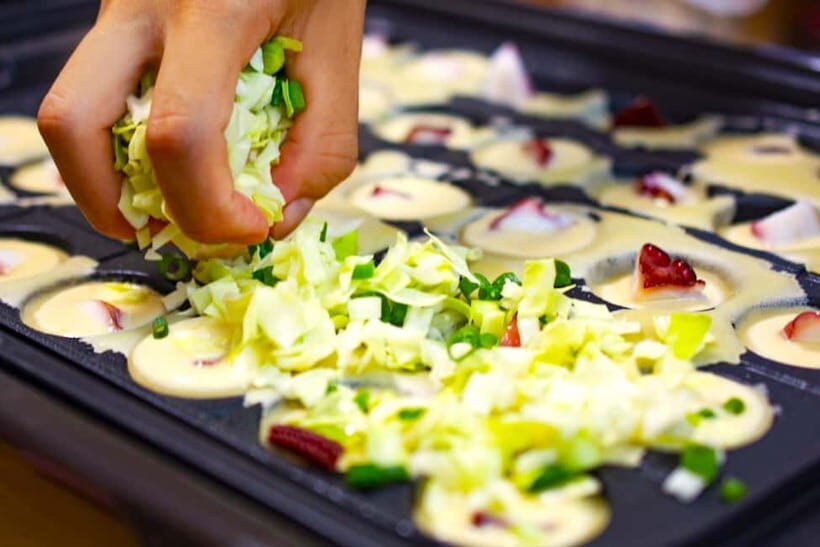
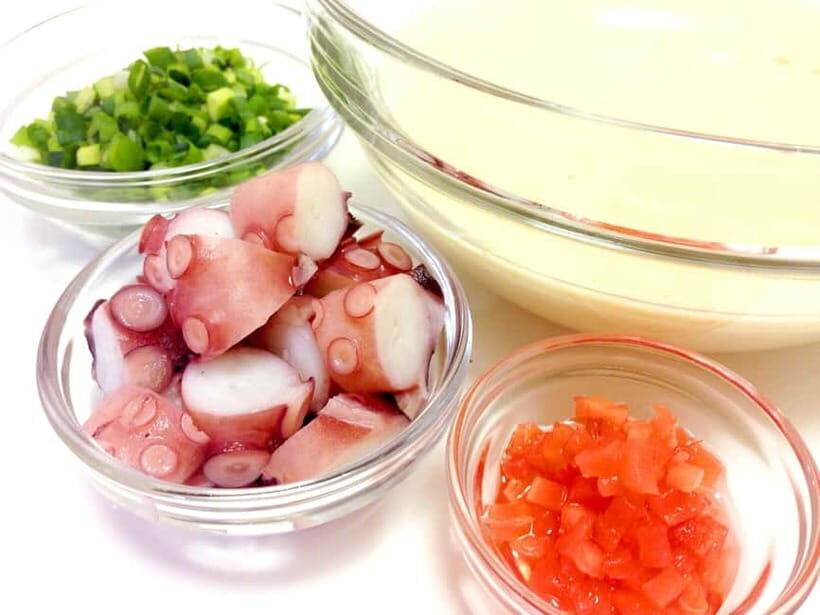
- Pour a flour-based batter (made from water and eggs) into the round holes on a griddle.
- Add chopped octopus inside each ball.
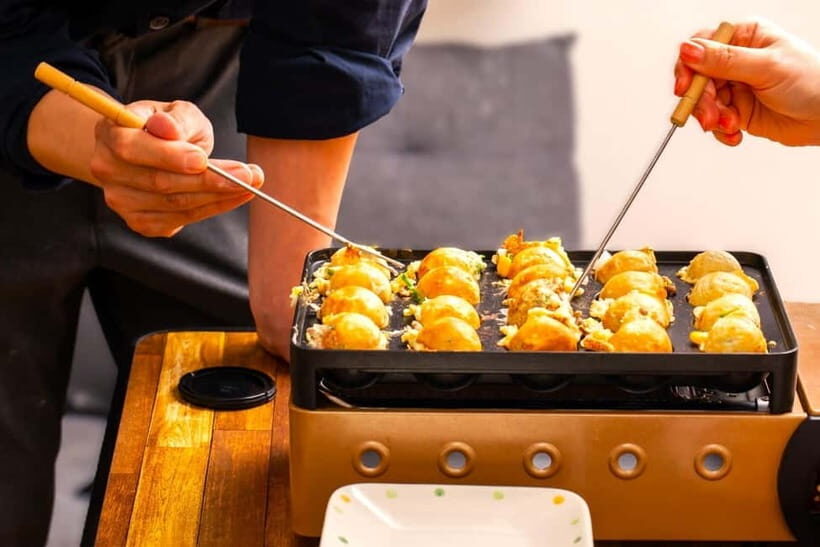
- Grill until the balls set, then shape them into a round form as you cook.
The goal is the classic texture contrast: crispy on the outside, fluffy on the inside. That texture is the whole point of takoyaki. When it’s right, it eats easily with your hands, and you get that satisfying snap at the edges.
What I like about this style of class is that it’s not just about the recipe. It teaches you the rhythm: when to pour, when to let it set, and how the flipping/shaping step affects the final form. Even if you’re a total beginner, you’ll understand what to watch for because you’re doing it, not just reading about it.
Toppings: Bonito Flakes, Aonori, Sauce, and Mayonnaise Balance
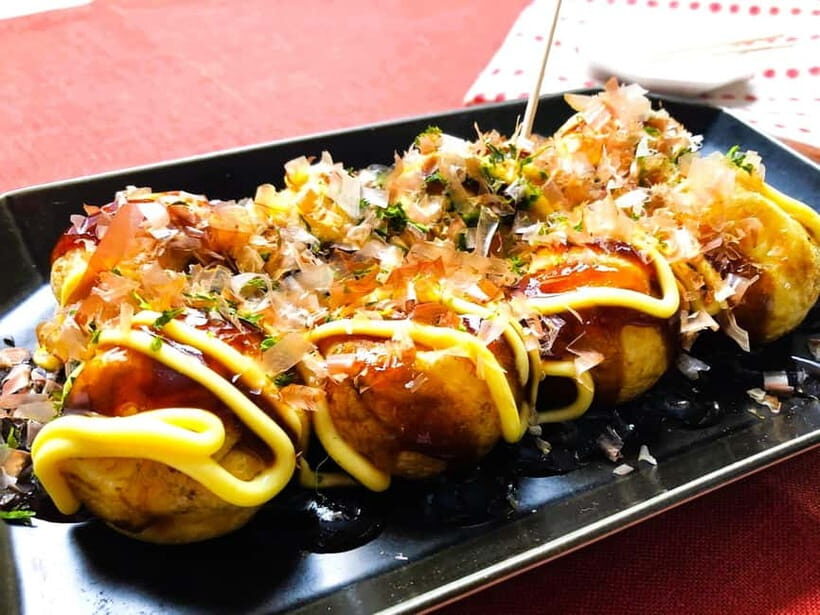
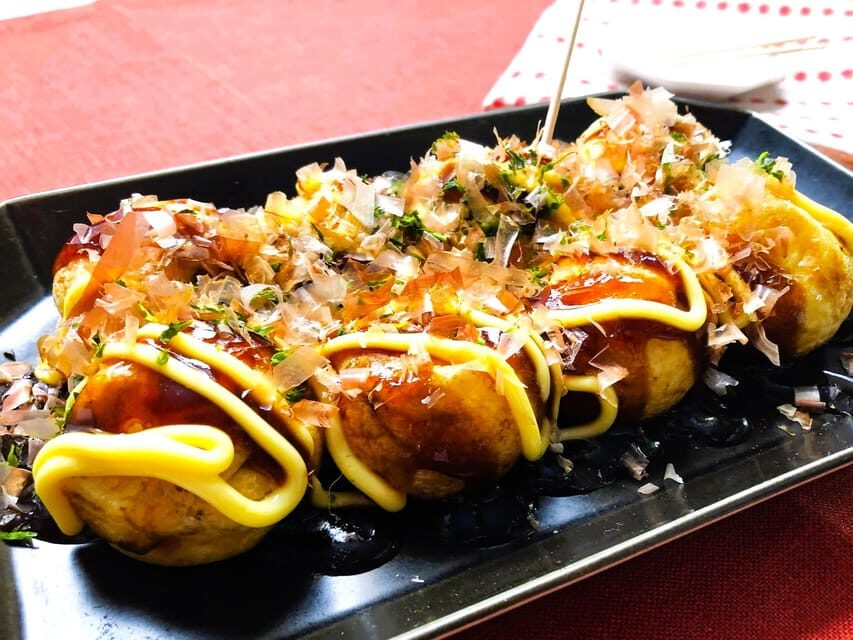
Takoyaki isn’t one flavor. It’s a build. After the balls are cooked, you’ll plate what you made and move into toppings—the part that makes it taste like Japanese comfort food.
Common toppings you’ll hear about and likely choose from include:
- Dried bonito flakes
- Aonori (green laver)
- Sauce
- Mayonnaise
The fun here is that the toppings also change the experience. Sauce and mayonnaise add richness and sweetness, while bonito flakes and aonori bring the salty, ocean-side punch that makes takoyaki feel distinctly Japanese.
If you like experimenting, pay attention to how each topping affects smell and texture. For example, bonito flakes often look like they’re “dancing” when they land on hot takoyaki, because the heat loosens them. It’s a small moment, but it makes the food feel alive.
And yes, it pairs naturally with beer. Even if you don’t drink alcohol, the idea is the same: takoyaki is meant for eating warm, quickly, and with something cold nearby.
More aprons-on time in Tokyo kitchens

A Typical 1-Hour Flow: From First Pour to Finished Meal
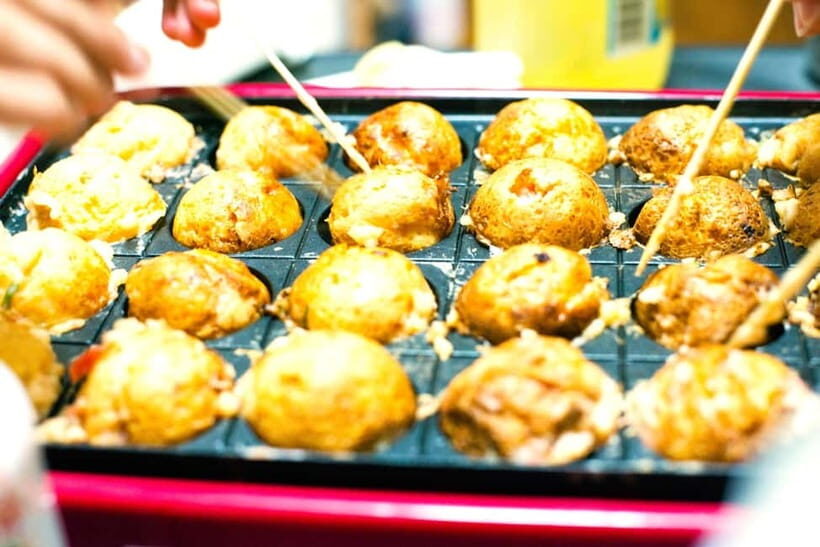
The session is designed to be smooth from start to finish, and the timing stays focused. The experience ends when you finish eating your takoyaki, so you’re not rushed out the door mid-bite.
A realistic breakdown of how it feels on the ground:
- You arrive, confirm your reservation, and get grouped with your instructor.
- You get the explanation for batter and the griddle process.
- You start cooking your own takoyaki—pouring batter, adding octopus, and managing the grill until they set into balls.
- You plate and add toppings such as sauce, mayonnaise, bonito flakes, and aonori.
- You eat while everything is still hot.
The instructor stays involved throughout, helping you correct technique and answering questions as you go. If you enjoy hands-on learning, this format is a win because you get repeated practice in a short amount of time.
Also, because the class is small (up to 6), you can actually ask for help without feeling like you’re slowing everyone down.
Instructors Who Teach Through Friendly Hands-On Coaching
One of the biggest strengths here is the teaching style. The instructors are there to help you succeed, not to evaluate you. That shows up in how many participants describe feeling comfortable and supported while cooking.
I noticed several recurring names in the instructor stories, including Chihiro, Shuma, Sakiko, Koi, and Kai. The common thread is practical help—making sure your batter goes in right, your octopus placement makes sense, and your flipping/shaping gets you closer to that round, cooked-through result.
If you’re traveling with kids, this matters even more. A relaxed atmosphere helps kids stay safe and interested, and instructors who handle family groups well can turn a potentially messy cooking moment into a fun one. The class is still not for children under 4, but families who are within the age range usually find it manageable.
And if you like conversation, you’re in luck. You’re not just in a cooking demo. You’re sharing a small space with your instructor for about an hour, which gives you plenty of chances to practice a few words of Japanese and ask what you’re seeing.
Price and Value Check: What $25 Gets You in Central Tokyo
At around $25 per person, this class is priced like a small, focused food experience in a prime location. The key value point is that it includes the meal. You’re paying not just for instruction, but also for what you eat at the end.
What isn’t included is also important to know:
- Bottled drinks are not included.
- Additional meals and drinks are not included.
- You’ll cover transportation to the meeting place.
So the best way to think about the price is this: you’re paying for a one-hour, hands-on cooking lesson plus a full takoyaki meal. In Shinjuku, where food and experiences can add up quickly, that bundled structure is what keeps the cost feeling reasonable.
If you’d otherwise spend money on takoyaki alone, you might find this adds extra value because you leave with more than a snack. You leave knowing how to make it, and that’s the kind of souvenir you can use later.
Who Should Book (And Who Should Skip)
This is a good match if:
- You want a short, memorable food lesson.
- You like cooking and eating the same thing right away.
- You’re traveling with family and kids are at least 4 years old.
- You want an experience that works even if you’re not confident speaking Japanese.
This is not a fit if:
- You have gluten intolerance, since it’s not suitable for that.
- Your child is under 4.
If you’re on a tight Shinjuku schedule, don’t worry: the experience is only an hour, and the start is easy to locate near Shinjuku Station. You’ll get a complete cycle—learn, cook, eat—without needing half a day.
After Class: Use Kabukicho for Photos and a Quick Walk
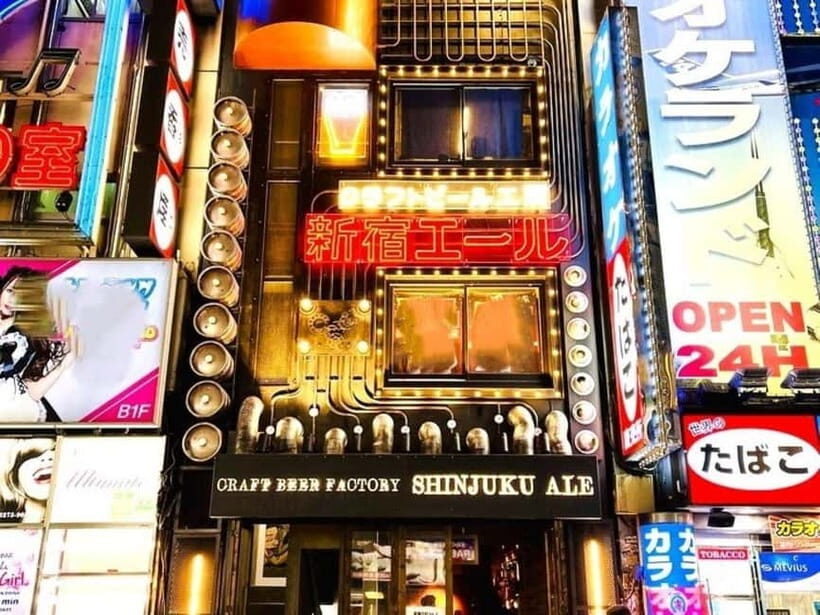
Because this takes place in Kabukicho, you can treat it like a base camp for the rest of Shinjuku. You’ll likely be close enough to the Godzilla area that photos are easy to tack on after your meal.
Keep it simple: finish the takoyaki, then take a short walk for photos and a quick change of scenery. You’ll still feel like you’re in the same neighborhood, but the energy shifts from cooking mode back into Tokyo street mode.
Should You Book This Takoyaki Experience?
If your goal is authentic, hands-on Japanese comfort food, I’d book it. The big reasons are practical: you cook the takoyaki yourself, the group stays small, and the session ends with a hot meal you made on the griddle.
It’s especially worth it if you’re the kind of traveler who likes learning one real technique and then eating the result. You’ll also like it if you want a low-pressure introduction to Japanese food—clear steps, supportive instructors, and a snack that everyone understands even if your Japanese is still getting started.
If you’re gluten intolerant or traveling with a child under 4, skip it and look for a different food activity that fits your needs.
FAQ
How long is the takoyaki cooking experience?
The experience lasts about 1 hour.
What is the price per person?
The price is $25 per person.
What’s included in the price?
It includes the takoyaki cooking experience and the meal.
Are drinks included?
No. Bottled drinks are not included.
Where do we meet for the experience?
You meet at 1-14-5 Kabukicho, Shinjuku-ku, Tokyo, about 5 minutes on foot from Shinjuku Station on the JR Yamanote Line. Look for Shinjuku Ale next to Karaoke 747.
Is this experience suitable for children?
It is not suitable for children under 4 years old.
What languages are available during the class?
Instructors offer English and Japanese. If staff are not fluent in English, a translation machine will be used.
How big is the group?
It’s a small group limited to 6 participants.
Learn Another Dish: Tokyo Cooking Classes
More Tour Reviews in Tokyo






Shinjuku After Hours: The Other Crawls

Fresh reviews from around Tokyo






Shinjuku Bar Hopping, compared.
 ★ 5.0Shinjuku Food Tour (13 Dishes at 4 Local Eateries)From $866,603 reviews
 ★ 5.0Tokyo Bar Hopping Tour in Shinjuku (All-You-Can-Drink + Dinner)From $1063,587 reviews
 ★ 4.9Shinjuku Food Tour (15 Dishes and 4 Eateries)From $852,033 reviews
 ★ 4.9Shinjuku Local Bar and Izakaya Guided Walking TourFrom $341,794 reviews
 ★ 5.0Tokyo Shinjuku Chopsticks Making ClassFrom $201,763 reviews
 ★ 5.0Tokyo Shinjuku Sumo Show & Experience with PhotoFrom $791,750 reviews
 ★ 5.0Tokyo Night Foodie Tour in Shinjuku – Seasonal Sushi, Wagyu BeefFrom $1111,161 reviews
 ★ 4.8Sumo Show and Experience in ShinjukuFrom $691,001 reviews
Browse the lists this tour appears in