
Shibuya at night feels like a movie. This tour threads you through the neighborhood’s best-known sights on foot, then lifts you above it for 360° rooftop views from Shibuya Sky as the lights come on. Expect a mix of major landmarks and smaller lanes that feel very Tokyo.
What I like most is the way the route mixes headline sights with street-level character. You’ll hit Shibuya Crossing up close, then move into areas like Nonbei Yokocho and Center-gai where the pace feels more local than touristy. Also, when the guide is Lily, the tone is fun and organized, with a real effort to look after the group.
One caution: this part of Shibuya is crowded and the meeting area can feel chaotic. To avoid confusion and delays, plan to be there early, ideally 15 minutes before the start, and confirm you’re with the correct leader.
In This Review
- Quick Reasons This Works So Well
- Why Shibuya at Night Makes Sense for a Guided Walk
- Meeting at Hachiko Statue: Get Oriented Before the Crowd Builds
- Shibuya Crossing Up Close, Then Again From Shibuya Sky
- Miyashita Park: The Rooftop Hangout Built on Something Old
- Nonbei Yokocho: Tiny Bars and Street-Food Night Vibes
- Shibuya Center-gai: Pedestrian Energy With Shops and Music
- The Rooftop Viewpoint: Shibuya Sky’s 360° Night Reward
- Price and Value: Is $161 Worth It?
- Timing, Group Size, and How to Avoid the Most Common Problems
- What to Wear and Bring for a Night Walk
- Who This Tour Suits Best
- Should You Book This Shibuya Night Tour?
- FAQ
- How long is the Shibuya Night Walking Tour?
- Where does the tour start?
- Where does the tour end?
- Is the rooftop admission included?
- What areas do you visit during the walk?
- How big is the group?
- What should I avoid bringing?
- What happens if the weather is bad?
Quick Reasons This Works So Well
- Icon-to-elevation contrast: Shibuya Crossing at street level, then again from above.
- Shibuya Sky ticket included: you’re not left scrambling for entry.
- Small time blocks: quick stops keep you moving without long waits on the sidewalk.
- Night street variety: neon lanes and pedestrian shopping streets, not just big intersections.
- Group capped at 25: easier to stay together in a busy area.
More to do within sight of the Crossing
- Official Street Go-Kart in Shibuya★ 5.0 · 3,435 reviews
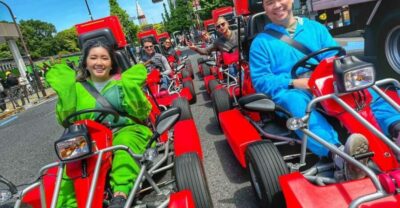
- Tokyo: Street Kart Experience in Shibuya★ 4.9 · 1,484 reviews
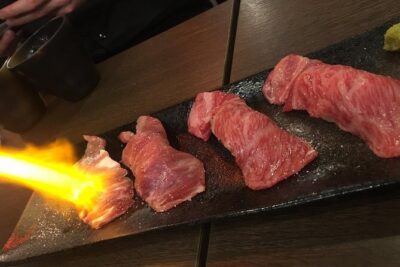
- Shibuya Meltdown Nightlife Tour: All-You-Can-Drink Bar Hopping★ 5.0 · 1,058 reviews
Why Shibuya at Night Makes Sense for a Guided Walk
Tokyo’s Shibuya is one of those places where “seeing it” isn’t the same as “getting it.” At night, the streets feel more readable: crowds thin in waves, signs light up, and the whole district starts to glow with purpose. A guided walk helps because you’re not just passing through. You’re stopping at the spots that explain why Shibuya is famous, and then seeing how the energy shifts block to block.
This tour also makes practical sense because it blends two different ways of enjoying the same district. You get the close-up street feeling on foot, and then you get the big picture from a rooftop viewpoint. Doing both in about two hours means you can fit it into a normal evening without burning your whole night.
If you prefer planning to improvising, this kind of “walk first, look up later” route is a good match.
Meeting at Hachiko Statue: Get Oriented Before the Crowd Builds
The tour starts at the Hachiko Statue on Dogenzaka in Shibuya. The upside is obvious: it’s a recognizable landmark and a common meeting point. The downside is also obvious: Shibuya around evening hours is busy, so it can be hard to spot the exact leader if you’re even slightly late.
Here’s how to make it smoother for yourself:
- Arrive with time to spare and do a quick scan of the area before you commit to waiting.
- Keep your phone ready in case you need to confirm details quickly.
- Travel light. Large luggage is not allowed, and the tour also notes no food or drinks on the activity.
I strongly recommend arriving close to the 15-minute early window. It’s not just about punctuality. It’s about staying calm when you’re surrounded by people.
Shibuya Crossing Up Close, Then Again From Shibuya Sky
You start with Shibuya Crossing, the intersection that has become shorthand for modern Tokyo. On foot, you’ll experience it the way it actually feels: dense crowds, thick pedestrian flow, and the constant motion that makes the place iconic.
Then, later, you’ll get the contrast view from the rooftop at Shibuya Sky. Seeing the same intersection from above changes how you understand it. From street level, it’s chaos you walk through. From the rooftop, it turns into patterns: lanes, timing, and that “everything connects here” layout that makes Shibuya feel like a machine built for people.
The tour’s design is smart here. You don’t just see the intersection once. You see it once as a crowd and once as a map in the sky.
Miyashita Park: The Rooftop Hangout Built on Something Old
Next up is Miyashita Park. This is a modern urban space set on top of a former parking structure, which is a fascinating example of Tokyo repurposing space rather than just building new. The stop is shorter (around ten minutes), but the point isn’t a long hangout. It’s to show you how Shibuya mixes shopping, dining, and recreation in layers.
Even if you don’t stop for food or shopping during the walk, the location helps you “read” the district. You start noticing that Shibuya isn’t only about street corridors and big intersections. It’s also about elevated spaces that create social zones without pulling you out of the neighborhood’s rhythm.
Tokyo at walking pace, a few more ways
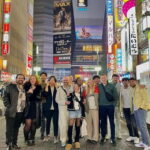
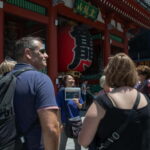
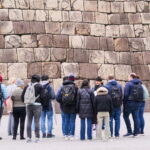
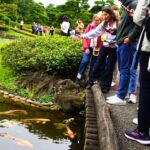
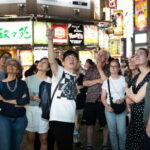
Nonbei Yokocho: Tiny Bars and Street-Food Night Vibes
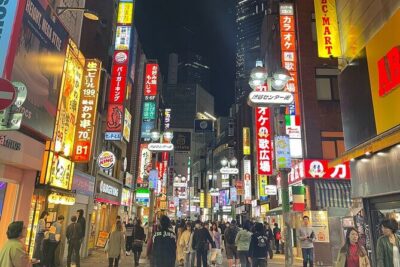
Shibuya Nonbei Yokocho is where the mood changes. Instead of broad streets, you get a tight alley packed with small eateries and drinks. Neon lighting and crowds give it that night-market feel, even though it’s more compact and local than a typical tourist lane.
This stop is ideal for a quick, sensory reset in the middle of the evening. It’s short enough that you’re not stuck waiting around, but long enough to soak up the atmosphere and plan what you’d want to return for later if you’re hungry.
Practical note: the tour says food and drinks are not allowed for the activity, so treat this as an atmosphere stop. If you want a real snack, plan to do it after the tour ends.
Shibuya Center-gai: Pedestrian Energy With Shops and Music
Center-gai is another classic Shibuya zone, and the experience here is more about the pedestrian pulse. You’ll pass through a shopping and entertainment street area where the crowd flow feels youthful and constant, with signs, music, and neon doing most of the work for you.
This stop pairs well with the previous one. Nonbei Yokocho is tight and alley-like. Center-gai is wider and more commercial. Together, they help you understand how Shibuya can be playful in one direction and loud in another without losing its identity.
If you like photographing street life, this is the portion where it’s easiest to capture the vibe—just stay aware of foot traffic and don’t block people trying to pass.
The Rooftop Viewpoint: Shibuya Sky’s 360° Night Reward
The biggest payoff comes at the end. After the walking portion, you head to a rooftop observation deck for a 360° view of Tokyo. The tour notes that the rooftop ticket is included, and the viewpoint lasts about an hour, which is great because night views benefit from time.
When you’re up there, here’s what I’d focus on:
- Look for layers of the city: the dense core nearby, then the softer glow toward the horizon.
- Try to spot famous shapes and landmark areas when the lighting helps them pop.
- Give your eyes a minute to adjust. City light can be blinding at first, and the details get better as you settle.
Also, a quick reality check: rooftop views depend on weather. The experience requires good weather. If conditions are poor, you should expect a change of date offer or a full refund rather than a half-baked view.
Price and Value: Is $161 Worth It?
At $161, you’re paying for two things at once: guided storytelling during the walk and a timed entry-style rooftop experience with admission included.
What makes that price feel more reasonable than it first sounds is that the walking stops include areas that are generally free to access on your own, but you’re not paying for the places alone. You’re paying for:
- Someone guiding you to the best order of stops at night
- Help staying oriented in a district that’s easy to get turned around in
- The rooftop portion, where the ticket is part of the deal
In other words, it’s not a “theme park ticket.” It’s a guided evening plan that saves you time and confusion. If you’re the type who likes to wander and figure everything out yourself, you might decide to skip it and do Shibuya on your own. But if you want an evening route that gets you to the right spots in the right order, the structure justifies the cost.
Timing, Group Size, and How to Avoid the Most Common Problems
This is a small-group tour with a maximum of 25 travelers. That number matters because it affects how easy it is to keep together in a crowded area like Shibuya. A smaller group also means you’re less likely to feel lost or left behind.
Still, you should prepare for one basic friction point: Shibuya is busy. The tour start point is a well-known statue in a high-traffic neighborhood, so you need to arrive on time and be ready to identify your leader.
Some negative experiences mention confusion at the meeting point or delays before departure. You can’t control that entirely, but you can reduce your risk:
- Be early.
- Keep your group energy positive.
- If anything feels unclear, ask right away rather than waiting.
And if you care about the rooftop ticket, don’t assume it’s handled perfectly behind the scenes. When you meet your guide, confirm you understand how the rooftop admission works for your group. Then you can relax for the views.
What to Wear and Bring for a Night Walk
You don’t need special gear, but you do need comfort. You’re walking around key Shibuya areas at night, then standing and looking around on a rooftop.
I’d pack like this:
- Comfortable shoes (you’ll want them for the street sections and waiting moments)
- A small day bag only (large luggage isn’t allowed)
- No food or drinks for the activity, since that’s not permitted
If you’re thinking about umbrellas: weather matters for rooftop viewing, but the tour is specifically tied to good conditions, so treat forecast changes seriously and be ready for a rescheduled plan if needed.
Who This Tour Suits Best
This tour fits best if you want:
- A guided way to see Shibuya in a short evening window
- Street-level iconic sights plus the rooftop “big picture” finish
- A route that includes nightlife-style lanes like Nonbei Yokocho and the pedestrian energy of Center-gai
It’s also a good choice if you’re visiting Tokyo for the first time and Shibuya feels intimidating to navigate at night.
If you hate group logistics or you prefer to wander freely without meeting points, you may feel constrained. In that case, you could build your own self-guided plan around Shibuya Crossing, Center-gai, Miyashita Park, and Shibuya Sky. Just know you’ll spend more time figuring out timing and tickets on the fly.
Should You Book This Shibuya Night Tour?
If your goal is an efficient Shibuya evening with both street energy and a real skyline finish, I’d book it. The structure makes sense, the rooftop portion is the big reward, and guide-led navigation helps in a crowded area.
I’d hold off only if you’re likely to arrive late, hate meeting points in busy districts, or you’re traveling with more-than-minimal luggage. Otherwise, with good weather and an early arrival, this is a solid value for a two-hour night plan in one of Tokyo’s most famous neighborhoods.
FAQ
How long is the Shibuya Night Walking Tour?
It runs for about 2 hours.
Where does the tour start?
You meet at the Hachiko Statue, 2 Chome-1 Dogenzaka, Shibuya, Tokyo 150-0043.
Where does the tour end?
You end in Shibuya at a viewpoint for panoramic rooftop views.
Is the rooftop admission included?
Yes. The viewpoint admission ticket is included.
What areas do you visit during the walk?
You’ll visit Shibuya Crossing, Miyashita Park, Shibuya Nonbei Yokocho, and Shibuya Center-gai, then go to the rooftop viewpoint.
How big is the group?
The tour has a maximum of 25 travelers.
What should I avoid bringing?
Large luggage, food, drinks, and pets are not allowed.
What happens if the weather is bad?
The experience requires good weather. If it’s canceled due to poor weather, you’ll be offered a different date or a full refund.
More Tours in Tokyo




More Tour Reviews in Tokyo




Still in Shibuya? Keep Going




Fresh reviews from around Tokyo






Shibuya Tours, compared.
 ★ 5.0Official Street Go-Kart in ShibuyaFrom $763,435 reviews
 ★ 4.9Street Kart Experience in ShibuyaFrom $741,484 reviews
 ★ 5.0Shibuya Meltdown Nightlife Tour: All-You-Can-Drink Bar HoppingFrom $1061,058 reviews
 ★ 5.0Shibuya Official Street Go-Kart in Shibuya AnnexFrom $69972 reviews
 ★ 5.0Shibuya Food Tour (13 dishes and 4 Eateries)From $77770 reviews
 ★ 5.0Best of Shibuya Food TourFrom $217612 reviews
 ★ 4.8Shibuya Highlights Walking TourFrom $19601 reviews
 ★ 4.7Premium Go-Kart Tour with Tower & Shibuya CrossingFrom $116528 reviews
Browse the lists this tour appears in