
Reviewed · ASAKUSA TOURS
Samurai Training Tokyo Asakusa
Tokyo in costume? Yes, please.
Samurai Training Tokyo Asakusa turns a slice of Japanese tradition into a hands-on, kid-friendly class you can actually fit into a busy day. You start in the Asakusa area, put on a real samurai outfit, learn sword basics, then finish with a photo and video package plus a recognition certificate.
I especially love how personal the instruction feels in a small group. I also like that the lesson includes real keepsakes (photos, video recording, and an SD card data handoff) so you keep the memory, not just the photos on your phone.
One consideration: this is not built like a hard-core, long dojo session. It is structured, fun, and safe, but if you expect intense sparring drills for the whole hour, you may find the pace a bit light.
In This Review
- Key Things I’d Prioritize Before You Go
- Why This Asakusa Samurai Class Fits 1 Hour
- Getting Dressed in Asakusa (and Why That First Photo Moment Matters)
- Learning Battou, Nattou, and Kata Without a Big Technical Headache
- The Simulated Sword-Fighting Part (and How Safe Fun Actually Works)
- Meet Your Instructors: Jiro and Aya Lead the Session
- What You Take Home: SD Card Data, Certificate, and the Face Photo
- Private, Small Group, and Built for Real Schedules
- Price and Value: Is $85.89 Worth It?
- Logistics You Should Plan for (So You Don’t Lose Time)
- Who Should Book Samurai Training Tokyo Asakusa
- Should You Book This Samurai Training in Asakusa?
- FAQ
- What is the duration of Samurai Training Tokyo Asakusa?
- Is this a private class?
- What is included in the price?
- Do I get a certificate and photos?
- How old does a child need to be?
- What is the sword training like for beginners?
- Can I cancel for a refund?
Key Things I’d Prioritize Before You Go
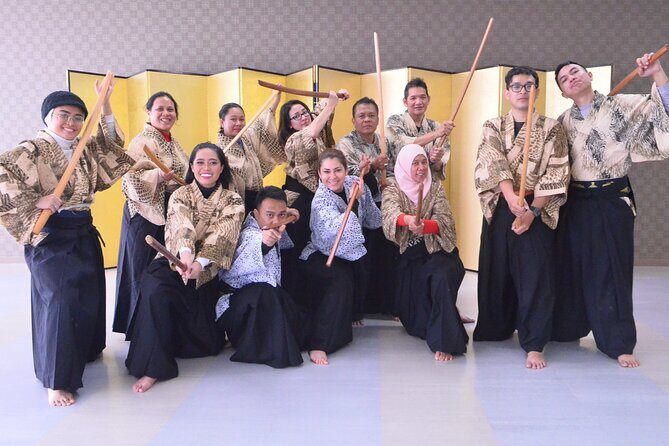
- Private class for your group (up to 10 people), so you get attention rather than watching from the edges
- Full outfit rental and a sword-belt photo moment right in the flow
- Battou, Nattou, and Kata practice to give you a clear routine to remember
- Staged “battle” moves plus video recording so the experience feels cinematic
- Certificate with photo data plus face photo after you change out of costume
- Great fit for families with a minimum age of 6 and kid-friendly pairing during practice
More mornings around Senso-ji and the old town
- Tokyo: Japanese Dance Cabaret Theater Asakusa-Kaguwa Ticket★ 4.8 · 2,270 reviews
- Tokyo: Asakusa Walking Tour with Sensoji Temple Visit★ 4.8 · 1,583 reviews
- Tokyo Asakusa Rickshaw Tour★ 5.0 · 1,375 reviews
Why This Asakusa Samurai Class Fits 1 Hour
Samurai Training Tokyo Asakusa is the kind of activity that works even when your Tokyo days are already packed. The entire experience is about one hour, and it stays tight: meet, costume, greetings, sword practice, video, and wrap-up. That time discipline matters in Tokyo, where “one more thing” can turn into “two hours you didn’t plan for.”
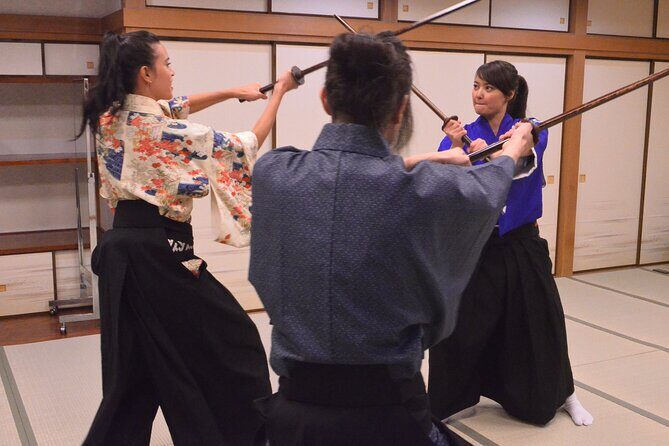
What really makes it click is the structure. You are not just handed props and sent to take selfies. You learn a sequence you can follow—draw and sheath practice (Battou and Nattou), kata-style movement, and then a simulated sword-fighting routine.
Also, the class is supervised by Ukon Takafuji, Iemoto of the Kenbu Ukon-ryu (Tachibana samurai kenbu school). Even if you know nothing going in, that matters because it suggests the training has a real lineage behind it, not just a costume show.
Getting Dressed in Asakusa (and Why That First Photo Moment Matters)
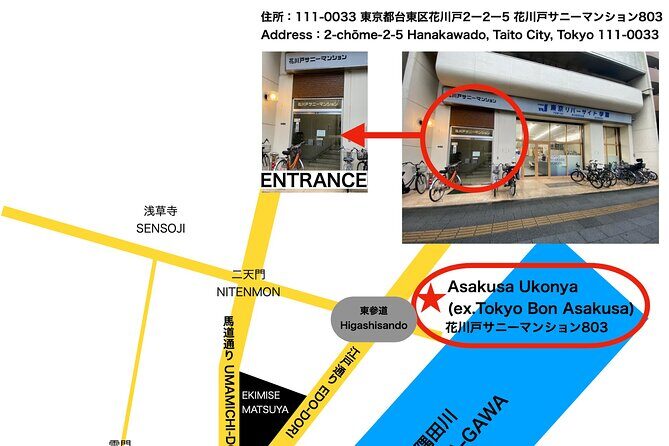
You meet in the Hanakawado area of Asakusa at 花川戸サニーマンション2-chōme-2-5, Taito City. The exact meeting location and training location can vary depending on your group size, and you will be contacted ahead of time, so plan to check your message before you go.
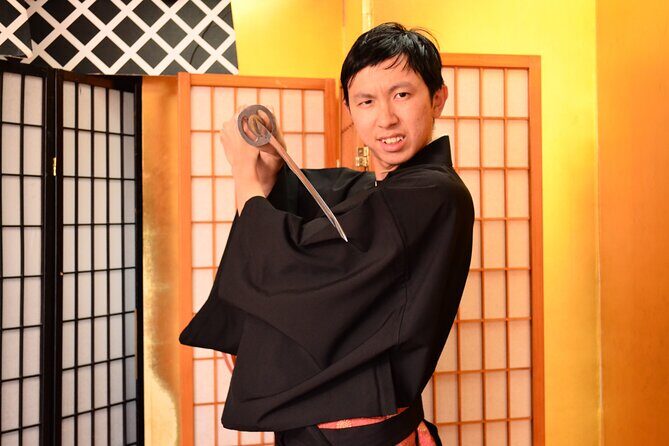
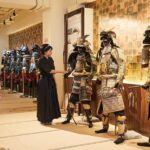
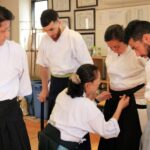
Then comes the fun part: changing into the samurai costume and getting ready for the sword-belt photo moment. This isn’t just dressing up. The belt positioning, sword placement, and posture cues are part of what helps you understand how the role is meant to look and feel.
After costume up, there is a picture moment and greetings before you start practicing. That matters because it sets the tone. You feel like you are stepping into a role, not just holding an item for a staged picture.
Learning Battou, Nattou, and Kata Without a Big Technical Headache
The core practice is built around three named elements: Battou (pulling out the katana), Nattou (pulling back the katana), and Kata (the set pattern movements that teach form). If you are worried about complexity, this is one of the reasons the class works for families and first-timers.
The instructors teach the movements in a way you can follow. The vibe is friendly and patient, with English support. In the group I reviewed, people praised the way instruction stayed clear even when kids were involved, including pairing younger participants for the simulated combat portion.
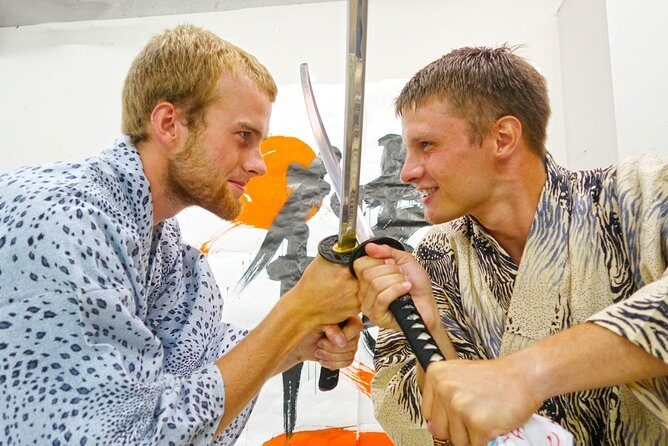
You should also know this is a real training experience with real equipment in use during demonstrations. Some participants noted they used real swords for demonstrations and that the instructor handled the blade confidently while explaining how it moves and why the form matters.
The Simulated Sword-Fighting Part (and How Safe Fun Actually Works)
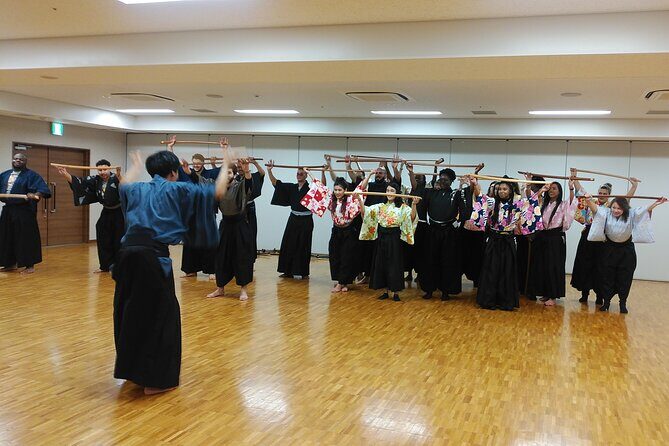
Once you have the draw-and-sheath basics and the kata-style moves, you shift into a sword-fighting practice that looks like samurai battle choreography. This is the part people remember because it feels like action.
The class includes video recording during the experience. Even better, the instructors may also record using your phone if you allow it, so you can keep your own version of the footage alongside the professionally captured package.
The simulated combat isn’t meant to be a full-contact fight night. It is more like a guided routine: controlled distance, clear steps, and a lot of “do this next” coaching so everyone stays comfortable. That approach is especially helpful if you are bringing kids or if you are new to anything involving a sword.
More blades, bows and dojo hours
Meet Your Instructors: Jiro and Aya Lead the Session
This training is taught by a local instructor, and from what I’ve seen in participant write-ups, the key on-site team you will interact with often includes Jiro and Aya. People repeatedly highlight that they are friendly, accommodating, and good with kids.
That communication style is a huge part of the value here. A costume lesson can still feel awkward if the teacher talks like you are in a class you never signed up for. In this case, participants liked the pace, the explanations, and the fact that the instructors keep the mood upbeat while still teaching proper sword handling basics.
There is also a practical element to their teaching. People noted they were surprised by how well they handled the sword after a short session, which suggests the coaching is structured enough to build confidence quickly.
What You Take Home: SD Card Data, Certificate, and the Face Photo
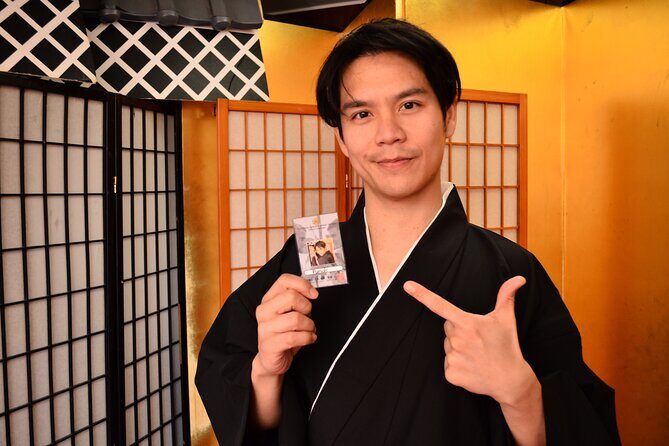
The ending is designed like a clean wrap-up, not a rushed photo stop. After the sword practice and the recorded segment, you switch back out of costume. Then you receive a recognition certificate, with your photo included.
You also get the photo and video footage on an SD card (certificate with photo data and additional imagery). Participants commonly mention the photo quality as a standout and describe the “final battle” video as a real highlight.
And yes, there is also the face photo element tied to the certificate. It sounds small, but it is part of why the experience feels official. You leave with a keepsake that reads like a completion document, not just a souvenir.
Private, Small Group, and Built for Real Schedules
This is a private tour/activity. Only your group participates, with a maximum of 10 people per booking. That small cap helps because it keeps attention on you. You are less likely to spend the hour waiting your turn with a dozen other people around.
It also works well for families because children can be paired during the practice in a comfortable way. The class has a minimum age of 6, and kids must be accompanied by an adult. So if you are traveling with grandparents or a mixed-age group, you can still make it work with one adult overseeing the child.
Fitness level is listed as moderate. In plain language: you will move, hold the sword, and practice forms. You are not climbing stairs for an hour. But you should be ready to stand and follow physical instructions.
Price and Value: Is $85.89 Worth It?
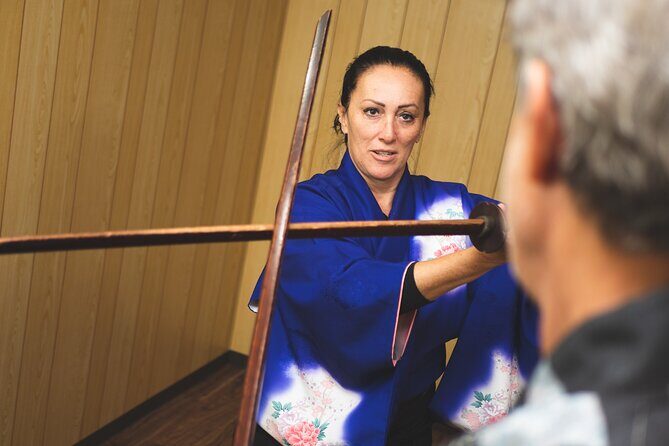
At $85.89 per person, this is not a cheap novelty. But it also isn’t priced like a full-day tour. For one hour, the value hinges on what is included.
You get:
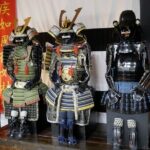
- Rental costume
- Local instructor
- Picture and video footage
- A certificate with photo data
In Tokyo, time and convenience cost money, and this class uses that hour well. If you only took photos in costume on your own, you would pay for outfit rental somewhere else and still end up without the structured sword training or the SD card deliverable.
Where it becomes a great value is if you want something memorable that kids will actually engage with. Multiple participants flagged it as a family highlight, and the combination of teaching plus media keeps it from turning into a one-and-done photo session.
Logistics You Should Plan for (So You Don’t Lose Time)
No hotel pickup is included, so you will need to get to the meeting point on your own. The good news: the listing says it is near public transportation, which makes it easier to slot into an Asakusa afternoon or morning.
Because the meeting and training location can vary depending on participant number, be ready for a small bit of coordination. The company contacts you at least 2 days before your reserved date with where to go. That is typical for small experiential tours, but still: check your email or booking messages.
Also, this is a mobile ticket experience. Keep your ticket ready on your phone, especially in a neighborhood where the streets are busy and you might be walking while holding bags and costumes items.
Who Should Book Samurai Training Tokyo Asakusa
I think it’s a strong fit for:
- Families with kids 6 and up who want an activity that feels cultural, not just recreational
- Couples or friends who want something different from temples and food stops
- First-timers who want a short, guided entry into sword-handling fundamentals
- People who care about professional photos and video they can keep long after the trip
It may be less ideal if you:
- Want a long, intense training program with advanced technique drills
- Are expecting full-contact sparring or a hardcore dojo routine
- Prefer activities that don’t involve movement and following physical instructions
Should You Book This Samurai Training in Asakusa?
If you want a memorable, family-friendly experience that turns Tokyo sightseeing into something interactive, I’d say yes. The class earns its money by combining structured sword basics, a real costume, and high-quality photo/video keepsakes delivered through an SD card. You also get an actual certificate, which makes it feel like you finished something, not just watched something.
On the other hand, if your idea of samurai training means hours of hard drilling, go in with the right expectations. This is meant to be fun and doable in an hour, with safety and comfort built in. For most people, that sweet spot is exactly what you want.
FAQ
What is the duration of Samurai Training Tokyo Asakusa?
The experience is approximately 1 hour.
Is this a private class?
Yes. It is a private tour/activity and only your group participates.
What is included in the price?
Included are a local instructor, rental costume, and picture and video footage.
Do I get a certificate and photos?
Yes. You receive a certificate of recognition with your photo, and you also receive photo data and video footage (SD card) after changing clothes.
How old does a child need to be?
The minimum age is 6 years, and children must be accompanied by an adult.
What is the sword training like for beginners?
You practice draw and sheath movements (Battou and Nattou) and kata basics, then do sword-fighting practice in a guided, simulated format. The class is designed to work even if you have no prior experience.
Can I cancel for a refund?
You can cancel up to 6 days in advance for a full refund. If you cancel 2–6 days before, you get a 50% refund. If you cancel less than 2 days before, there is no refund.
More Tour Reviews in Tokyo






The Way of the Sword, Continued
Around Senso-ji: More Asakusa Picks

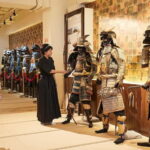
Fresh reviews from around Tokyo






Asakusa Tours, compared.
 ★ 4.8Japanese Dance Cabaret Theater Asakusa-Kaguwa TicketFrom $492,270 reviews
 ★ 4.7Meiji Shrine, Asakusa, Skytree Bus Tour and CruiseFrom $1221,986 reviews
 ★ 4.8Asakusa Walking Tour with Sensoji Temple VisitFrom $221,583 reviews
 ★ 5.0Tokyo Asakusa Rickshaw TourFrom $421,375 reviews
 ★ 4.5Tokyo Panoramic 1 Day: Meiji Shrine, Asakusa, Odaiba and SKYTREE®From $851,222 reviews
 ★ 4.8Samurai Ninja Museum Asakusa: Samurai Sword Lesson & TourFrom $63306 reviews
Asakusa Sightseeing Tour by RickshawFrom $35195 reviews
Asakusa Kimono Dressing and Matcha ExperienceFrom $56173 reviews
★ 4.8Samurai Ninja Museum Asakusa: Samurai Sword Lesson & TourFrom $63306 reviews
Asakusa Sightseeing Tour by RickshawFrom $35195 reviews
Asakusa Kimono Dressing and Matcha ExperienceFrom $56173 reviews
Browse the lists this tour appears in