
Reviewed · ASAKUSA TOURS
Samurai Sword & Sushi Experience with Chef Live Shows in Asakusa
Tokyo gives you a dramatic start.
This Asakusa experience pairs samurai armor photos with a hands-on sushi class led by a sushi chef (I’ve seen how motivating that setup can feel when you’re learning). I especially like the fact that you don’t just watch, you make nigiri with direct guidance, and you get to taste a lineup that includes options like Wagyu (Kobe) beef, caviar, and crab. The only real catch to consider is that you’ll want an appetite, because the experience is meal-included but drink upgrades are extra.
The setting is part performance: armor, swords, bamboo, and torch-style decor create the kind of atmosphere that makes photos easy and fun. It’s also close to classic sights, with Asakusa Station just about a minute away and Sensoji Temple around three minutes on foot, plus a chance for a Skytree view from the building area.
With a maximum of 12 people, the class stays intimate enough for questions, and the format fits beginners well since it’s designed around learning techniques you can recreate later.
In This Review
- Samurai Armor Photos Before You Touch the Sushi
- A Sushi Chef Teaches What Restaurants Usually Keep Private
- What You’ll Make and Eat: Nigiri Variety, Dashiimaki, and Premium Toppings
- The Themed Set: Armor, Swords, Bamboo, and a “Shogun Course” Feeling
- Asakusa Location: Easy Walks to Sensoji and Transport That Won’t Stress You Out
- Price and What’s Included: When $49.54 Feels Like a Smart Deal
- Who This Fits Best (and Who Might Prefer Something Else)
- Small Details That Affect Your Enjoyment
- Should You Book This Samurai Sword & Sushi Experience?
- FAQ
- How long is the Samurai Sword and Sushi experience?
- How many people are in the group?
- What’s included in the price?
- Are drinks included?
- Where do I meet for the experience?
- Is it close to public transportation?
- What’s the cancellation policy?
Samurai Armor Photos Before You Touch the Sushi
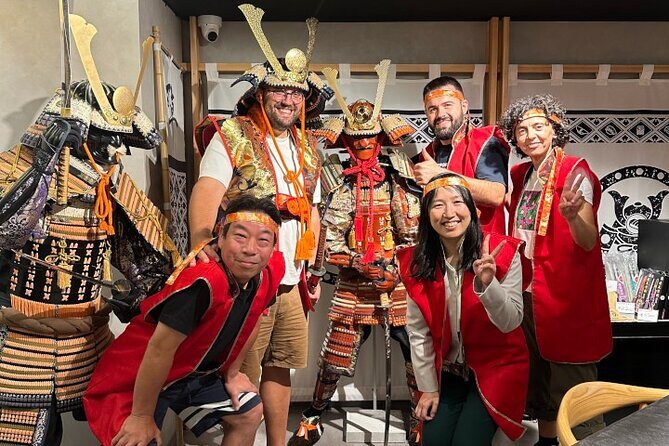
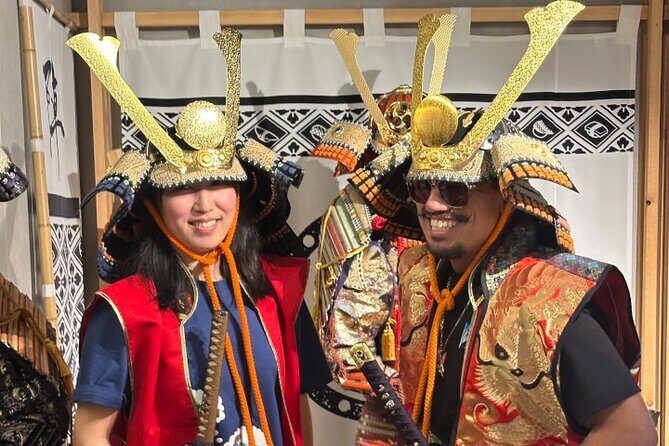
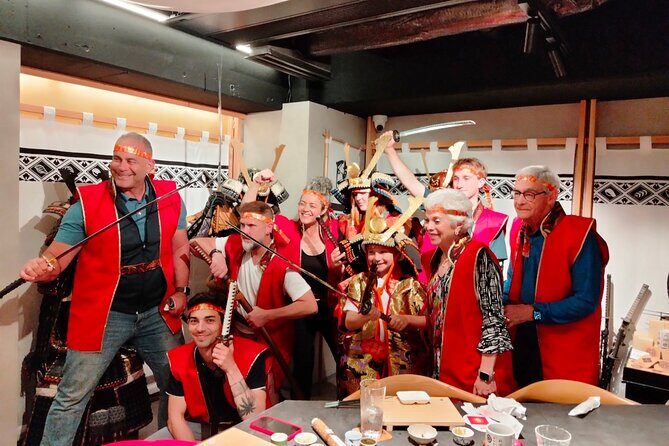
If you’re the type who likes your Tokyo day to start with something visual and memorable, this experience delivers right away. You’ll dress in samurai outfits in a space built around armor and sword themes. It’s not just a costume moment. The decor is the point: swords, bamboo, and the dramatic torch-style look make it feel like you’re stepping into a themed set, not waiting in a classroom.
Why this matters for you: it lowers the awkward factor. When you’re doing a cooking class in a foreign language, the first few minutes can feel like you’re behind. Here, the photo-dress-up moment gives you an easy win. You’re not trying to translate everything before you even sit down—you’re getting oriented, and you’re already in the mood to learn.
This also makes the experience more than food. You’re paying for a two-part Tokyo story:
- the “wow” of samurai style
- then the “how” of sushi technique
One small consideration: because it’s a themed photo setup, you’ll want to arrive ready to move. If you’re the kind of traveler who hates being in a group for photos, you might find this portion slightly more attention-focused than a standard class.
More mornings around Senso-ji and the old town
- Tokyo: Japanese Dance Cabaret Theater Asakusa-Kaguwa Ticket★ 4.8 · 2,270 reviews
- Tokyo: Asakusa Walking Tour with Sensoji Temple Visit★ 4.8 · 1,583 reviews
- Tokyo Asakusa Rickshaw Tour★ 5.0 · 1,375 reviews
A Sushi Chef Teaches What Restaurants Usually Keep Private
The second act is the real skill builder. A Japanese sushi chef demonstrates methods and then guides you as you make sushi yourself. The class is structured so you learn techniques you can recreate later at home, not just how to assemble one bite.
The “chef instruction” piece is key. In most dining experiences, you get tasty food and maybe a brief explanation. Here, you get the steps. That means you can pick up the practical rhythm: how rice and toppings work together, how to portion, and how to shape without turning it into a messy kitchen project.
Also, the pace is designed for a small group. The experience caps at 12 travelers, which matters more than you’d think. When you’re learning hands-on, one slow moment can make everyone wait. A smaller group helps the chef check in more often and keeps you from feeling lost when you’re trying to copy the technique.
From the way staff responses describe the instruction, the chef team includes people who are comfortable guiding in English and keeping things light. Names that come up in the experience’s communications include sushi master Taisho and Saung. That’s a helpful clue: you’re not likely to feel like you’re on your own with a language barrier.
What You’ll Make and Eat: Nigiri Variety, Dashiimaki, and Premium Toppings
This experience doesn’t treat the meal like a side dish. The food is a big part of the value, and it’s built around variety.
Here’s what you can expect to eat as part of the course:
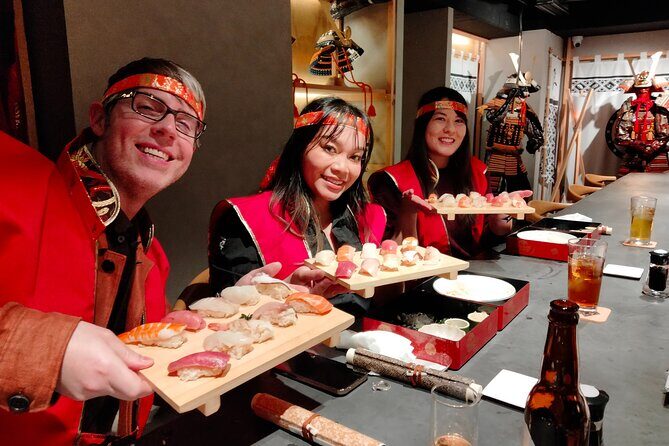
- sushi items totaling 10 types plus an additional option (plus α)
- high-quality fish such as tuna and salmon
- a dashimaki grilled right in front of you
- tastings that can include Wagyu (Kobe beef), caviar, and crab
Why that list matters:
- You get classic bites (tuna, salmon nigiri-style) so you’re not just chasing luxury ingredients.
- You get premium flavor contrasts in the same session. Wagyu and caviar hit differently than standard fish-only sets, and crab adds a sweet-salt texture many first-timers find memorable.
- The dashimaki cooked in front of you adds warmth and theater. Even if you’ve had dashimaki before, seeing it done live is a nicer experience than getting a plated item.
You also learn during the process, not only after. The class includes an interactive section where a sushi chef instructs you on how to make sushi. That means you’re tasting while the steps are fresh in your mind, which helps you understand what you liked and what you want to repeat.
One more practical note: the experience is set up so you should come hungry. The format is hands-on, and the tastings are meant to be eaten, not sampled in tiny bites.
The Themed Set: Armor, Swords, Bamboo, and a “Shogun Course” Feeling
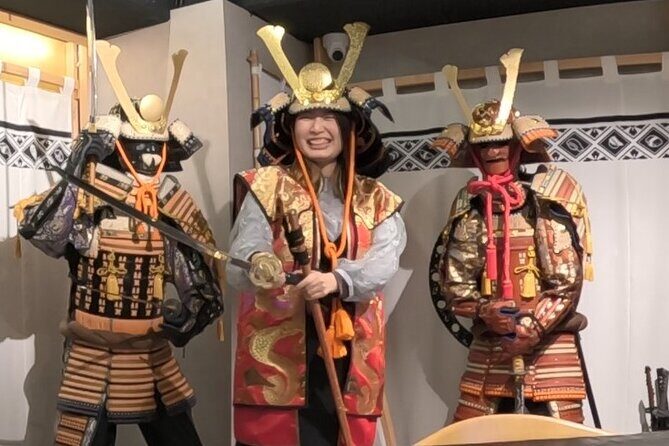
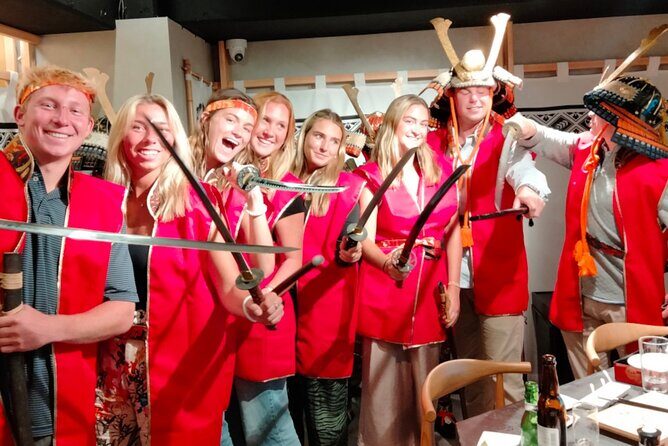
The vibe is part of the design. The experience is described as an authentic sushi wonderland with traditional Japanese culture themes tied to warlords, samurai, and ninjas. You’ll see a cool interior with armor and swords, plus bamboo and torch-style decor that make it feel like the room is telling a story.
What you might like about this: you’re in Asakusa. That neighborhood already gives you traditional Tokyo energy. This adds a layer that makes the class feel connected to the area, not like a generic cooking stop.
Why it works for learning: themed environments reduce mental load. When you’re trying to follow instructions, calm focus is easier when you feel “in it.” The set makes the session feel like an event, which helps you stay engaged.
The only drawback is also a vibe-related one. If you’re looking for a minimalist, quiet sushi counter experience, this is more theatrical and photo-friendly than that. You trade some stealth for fun, and most people choose it for the fun part.
Asakusa Location: Easy Walks to Sensoji and Transport That Won’t Stress You Out
Let’s talk practical location. Your start point is JIN-ASAKUSA 陣-浅草 Japan, a short walk from Asakusa Station (about a minute) and roughly three minutes from Sensoji Temple. That’s great for planning because you can pair this with sightseeing without building your day around complicated transit.
You’ll also be in a building area where there’s mention of a panoramic view of Skytree. You won’t want to rely on that view without checking the day-of, but it’s nice to know the location has potential for skyline moments.
Timing-wise, it runs about 2 hours. That’s a sweet spot: long enough to learn, eat, and take photos, but not so long that it hijacks your entire afternoon or evening.
Because it’s a mobile ticket, you should be fine to show your ticket on your phone. If you’re the type who likes a backup plan, still keep an offline copy or screenshot just in case your signal acts up near the station.
More blades, bows and dojo hours

Price and What’s Included: When $49.54 Feels Like a Smart Deal
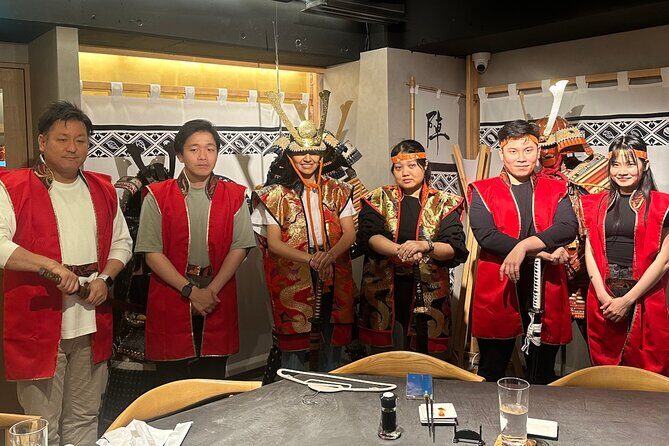
At $49.54 per person for an approximately 2-hour experience, you’re paying for a bundle: themed photo moment, hands-on instruction, and a meal with multiple sushi types and premium tasting options.
Here’s what’s included:
- meal costs
- service charge
- consumption tax
Drinks are not included beyond water and green tea. Additional drink orders are extra.
So when does the price feel like value?
- If you want both the learning and the eating. You’re not paying just for a show, and you’re not paying just for dinner.
- If you care about premium ingredients like Wagyu, caviar, and crab, which you can’t assume will be part of every budget sushi class.
- If you like small-group energy. With max 12 travelers, you’re more likely to get individual help.
When might it feel less worth it?
- If your main goal is purely eating and you don’t care about making sushi yourself, you may prefer a standard sushi meal elsewhere.
- If you plan to buy lots of specialty drinks, the final spend can rise.
My practical advice: treat it like a planned meal plus a skill-building workshop. If you keep drinks modest, the total usually stays closer to what you expect.
Who This Fits Best (and Who Might Prefer Something Else)
This is a strong match if:
- you’re new to sushi and want a structured way to learn
- you like interactive classes more than passive sightseeing
- you want photos that look different from the usual Tokyo “just outside the temple” shot
- you want a short, high-activity window that’s easy to place near Sensoji and Asakusa Station
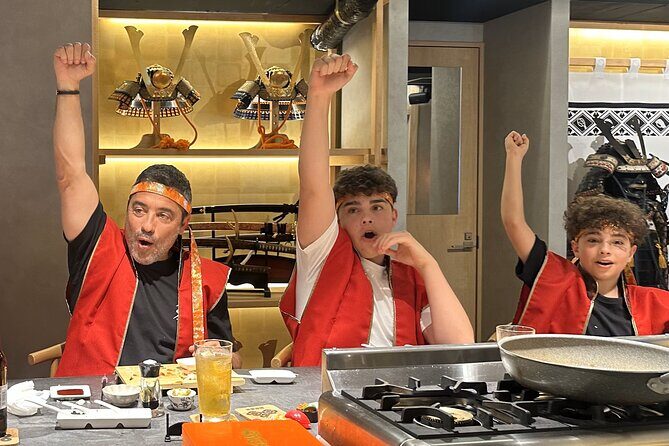
It also works well for mixed groups because the class is hands-on and the chef teaching style aims to keep things understandable. One family example that comes through in the experience’s feedback includes kids from around ages 9 to 15, which suggests the format can handle school-age energy without turning into a long, quiet lecture.
If you’re not sure, ask yourself one question: do you want to leave Tokyo with more than a memory—do you want a technique you can try at home? If yes, this experience is built for you.
Small Details That Affect Your Enjoyment
These are the points that tend to make or break the day for real people.
First: come hungry. The class is not snack-sized. You’re making sushi and then tasting multiple varieties, including premium options.
Second: expect a hands-on pace. You’ll be assembling nigiri and doing interactive steps, so wear sleeves that don’t make you fight your arms. If you’re worried about mess, relax—this is structured for you to try.
Third: embrace the themed setting for photos, but don’t stress perfection. The best photos usually happen when you’re willing to move, laugh, and treat it like a short costume moment, not a high-pressure fashion shoot.
Finally: if you’re a beginner, focus on consistency more than speed. The goal is learning technique, not finishing quickly.
Should You Book This Samurai Sword & Sushi Experience?
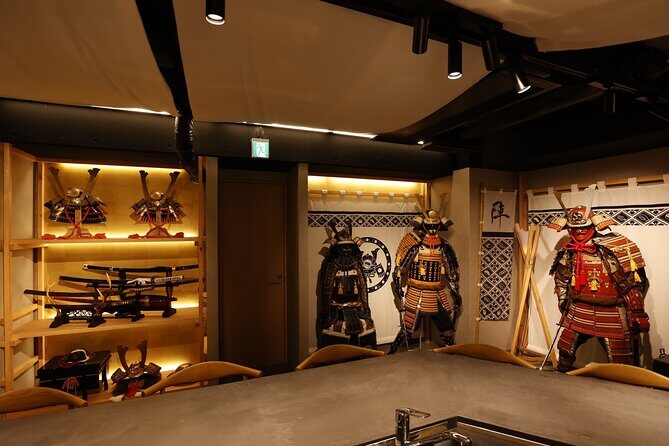
If you want a Tokyo activity that mixes food, learning, and a memorable theme, I think this is an easy yes. The combination of samurai outfit photo time, a chef-guided sushi class, and a tasting lineup that can include Wagyu, caviar, and crab makes it feel like more than a typical cooking class.
Book it if you’re:
- placing yourself in Asakusa anyway
- interested in learning sushi steps you can repeat
- okay with spending about two hours in a guided group setting
Skip or rethink it if you only want sushi dining with no interest in making it. For your money, this is a workshop first, a meal second.
If you book and then your plans shift, free cancellation is available up to 24 hours in advance for a full refund, so you can keep some flexibility.
FAQ
How long is the Samurai Sword and Sushi experience?
It’s about 2 hours (approx.).
How many people are in the group?
The group size is kept small, with a maximum of 12 travelers.
What’s included in the price?
Meal costs, service charge, and consumption tax are included.
Are drinks included?
Water and green tea are included. Other drink orders are not included.
Where do I meet for the experience?
Meet at JIN-ASAKUSA 陣-浅草 Japan, 111-0033 Tokyo, Taito City, Hanakawado, 1-chōme1014 CREAL浅草スカイビュースクエア 4F.
Is it close to public transportation?
Yes. It’s about a 1-minute walk from Asakusa Station and about a 3-minute walk from Sensoji Temple.
What’s the cancellation policy?
Free cancellation is available. You can cancel up to 24 hours in advance for a full refund; if you cancel less than 24 hours before the start time, the amount paid is not refunded.
If you want, tell me your travel dates and whether you’re doing Sensoji first or Asakusa shopping first, and I’ll suggest a clean order so the 2 hours fit smoothly.
More Tour Reviews in Tokyo






The Way of the Sword, Continued
Around Senso-ji: More Asakusa Picks
Fresh reviews from around Tokyo






Asakusa Tours, compared.
 ★ 4.8Japanese Dance Cabaret Theater Asakusa-Kaguwa TicketFrom $492,270 reviews
 ★ 4.7Meiji Shrine, Asakusa, Skytree Bus Tour and CruiseFrom $1221,986 reviews
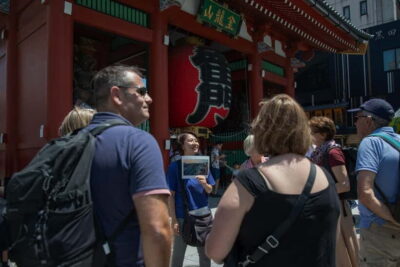 ★ 4.8Asakusa Walking Tour with Sensoji Temple VisitFrom $221,583 reviews
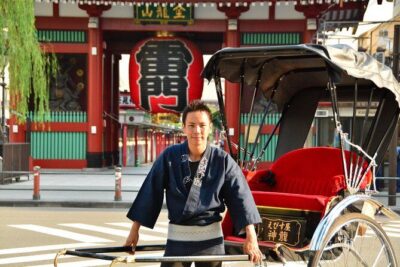 ★ 5.0Tokyo Asakusa Rickshaw TourFrom $421,375 reviews
 ★ 4.5Tokyo Panoramic 1 Day: Meiji Shrine, Asakusa, Odaiba and SKYTREE®From $851,222 reviews
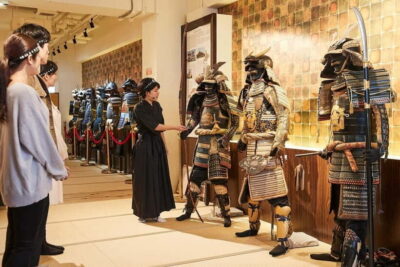 ★ 4.8Samurai Ninja Museum Asakusa: Samurai Sword Lesson & TourFrom $63306 reviews
Asakusa Sightseeing Tour by RickshawFrom $35195 reviews
Asakusa Kimono Dressing and Matcha ExperienceFrom $56173 reviews
★ 4.8Samurai Ninja Museum Asakusa: Samurai Sword Lesson & TourFrom $63306 reviews
Asakusa Sightseeing Tour by RickshawFrom $35195 reviews
Asakusa Kimono Dressing and Matcha ExperienceFrom $56173 reviews
Browse the lists this tour appears in