
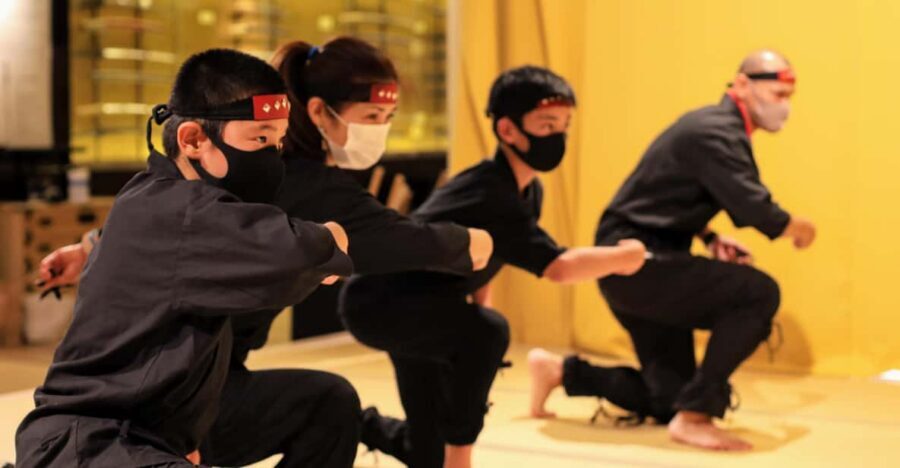
Reviewed · ASAKUSA TOURS
Samurai Ninja Museum Asakusa: Kid-Friendly Ninja Training
Kids get serious about stealth.
That’s the magic of this Samurai Ninja Museum Asakusa experience: in about 75 minutes, you’re not just watching ninjas—you’re acting like one. You dress in a full ninja outfit, get a photo session, and tackle a ninja treasure hunt that fits kids’ energy and attention spans.
What I like most is how hands-on it stays. You get guided practice that turns into a competition moment (shuriken throwing), plus a practical feel for precision with a ninja blowgun. The one drawback to consider is value: at $56 per person, the session is short, so families should be sure your child will enjoy the active training part, not just the costumes.
In This Review
- Key things to know before you go
- Samurai Ninja Museum Asakusa: what the ticket buys you
- The 75-minute training flow: outfit, hunt, and guided play
- Ninja star throwing: the competition kids understand
- Blowgun practice: accuracy over chaos
- The ninja treasure hunt: why it keeps children engaged
- Museum time in Asakusa: connecting costume play to real context
- Price and value check: is $56 worth it for your child?
- Who this works best for (and who should skip it)
- Practical tips before you show up in Asakusa
- Should you book the Samurai Ninja Museum Asakusa ninja training?
- FAQ
- How long is the Samurai Ninja Museum Asakusa kid-friendly ninja training?
- How much does it cost?
- Is the tour guide available in English?
- What activities are included?
- Can children under 3 join the ninja experience?
- How big is the group?
- Is there free cancellation?
Key things to know before you go
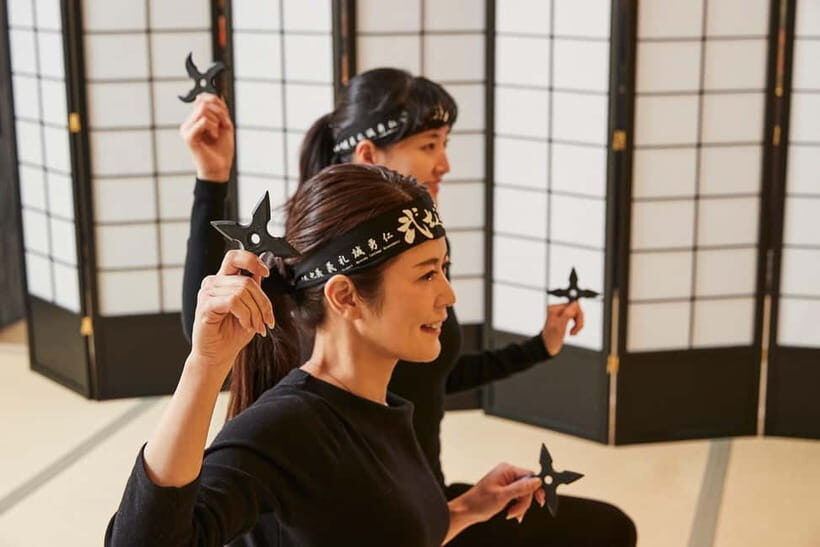
- Full ninja outfit + photo session so the memories feel real, not staged
- Ninja treasure hunt designed for children, with a clear “do this next” flow
- Shuriken star-throw competition that gives the training a fun payoff
- Blowgun practice focused on accuracy, not just play
- Small-group format (limited to 5 participants, with an overall cap of 20) keeps attention on you
- English live guide with consistently strong feedback, including clear explanations from Koki
More mornings around Senso-ji and the old town
- Tokyo: Japanese Dance Cabaret Theater Asakusa-Kaguwa Ticket★ 4.8 · 2,270 reviews
- Tokyo: Asakusa Walking Tour with Sensoji Temple Visit★ 4.8 · 1,583 reviews
- Tokyo Asakusa Rickshaw Tour★ 5.0 · 1,375 reviews
Samurai Ninja Museum Asakusa: what the ticket buys you
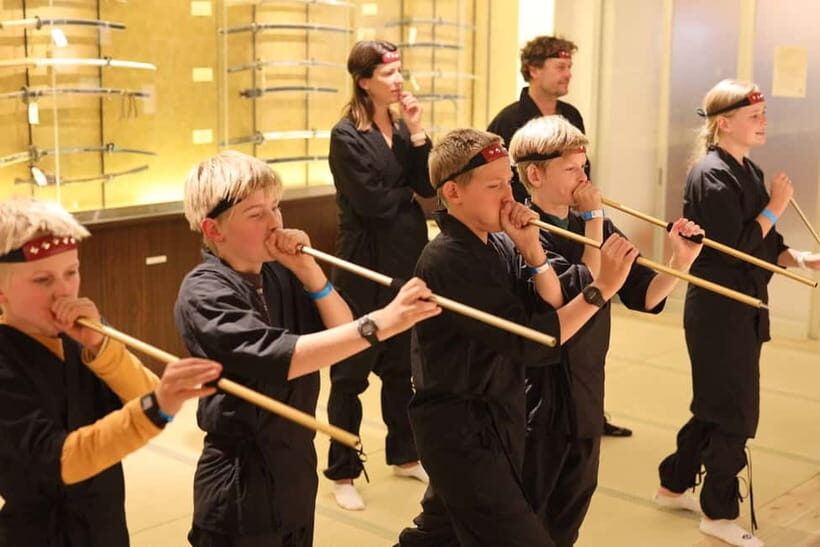
This isn’t a long museum visit where you wander at your own pace. You’re buying a focused “ninja training for families” experience attached to the Tokyo Samurai & Ninja Museum in Asakusa. The best part is that the day’s main action is structured for kids, then tied back to the museum so it doesn’t feel like pure make-believe.
For $56 per person, you should expect three big components:
- A guided ninja experience with outfit, activities, and skill practice
- A ninja treasure hunt built around doing tasks
- A photo moment and a museum visit portion with interactive exhibits
Why that matters: kids often love costumes, but they tire fast if there’s no purpose. Here, every costume moment connects to an activity—hunt, throw, or aim. That keeps the energy from fading halfway through.
The 75-minute training flow: outfit, hunt, and guided play
The session runs about 75 minutes, which is a sweet spot for many families. It’s long enough to learn a few things and complete the fun bits, but short enough that younger kids usually don’t melt down before the end.
Here’s the rhythm you can expect, in plain terms:
- You start with a full ninja outfit moment. This is where the experience turns from “museum trip” into “role-play.”
- You move into a guided training sequence where you’ll learn ninja-themed techniques.
- You take part in a ninja treasure hunt, which is designed to be kid-friendly and easy to follow.
- You get a photo session while you’re in costume, so you leave with something tangible.
- You practice precision activities, including a ninja star throw competition and blowgun use.
- You finish with time that connects to the museum experience and its interactive exhibits.
The guide being live and in English matters. In a short program, you don’t want guesswork or language friction. The feedback you’ll hear over and over is that the instructor explanations are clear and supportive—one guide named Koki gets called out specifically for being kind and for good explanations.
Also, the group size works in your favor. The experience is limited to 5 participants for the small group portion. That means your child is more likely to get attention when learning techniques or when it’s time to participate.
Ninja star throwing: the competition kids understand
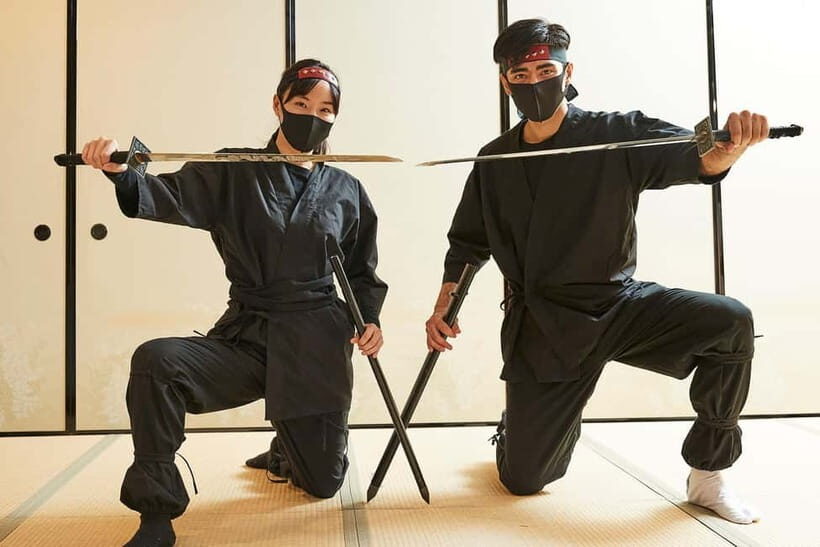
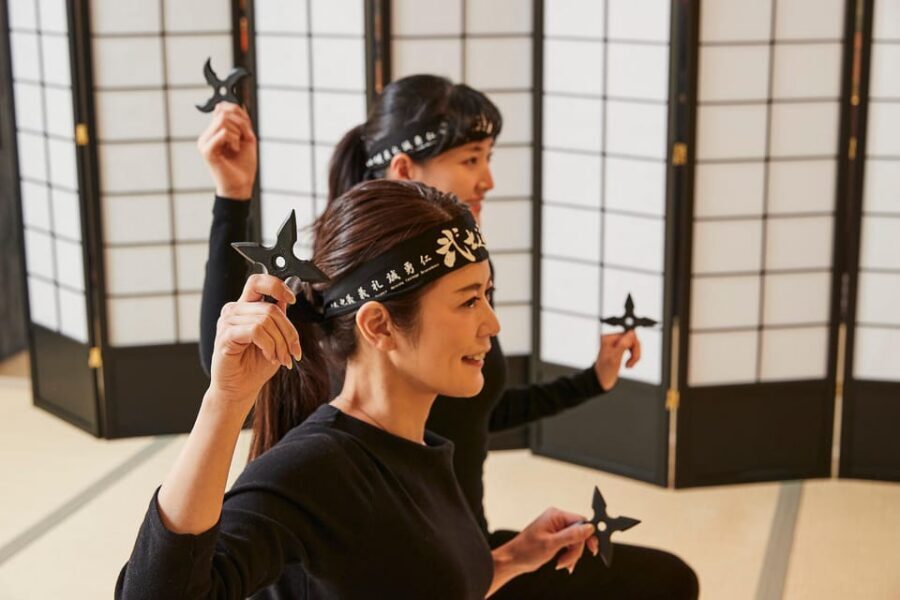
Shuriken star throwing is one of the easiest ways to make “ninja training” feel like a real challenge. It’s also something kids can immediately picture: a target, a turn, and a moment to try again.
What you can reasonably expect:
- A guided setup where you learn how to hold and throw the ninja star safely and correctly
- A “competition” element, which is usually what gets kids invested
- The chance to see improvement quickly because the activity is simple to repeat within the time limit
This is where the strongest reactions come through. In feedback, people specifically mention enjoying the shuriken throwing moment, and the instructor’s clear guidance is repeatedly praised. Translation: the program doesn’t just hand kids props. It teaches enough structure that the activity feels fair and skill-based.
Practical tip from the kid-logic perspective: let your child focus on the process, not the score. If they’re aiming and staying engaged, they’re winning the experience.
Blowgun practice: accuracy over chaos
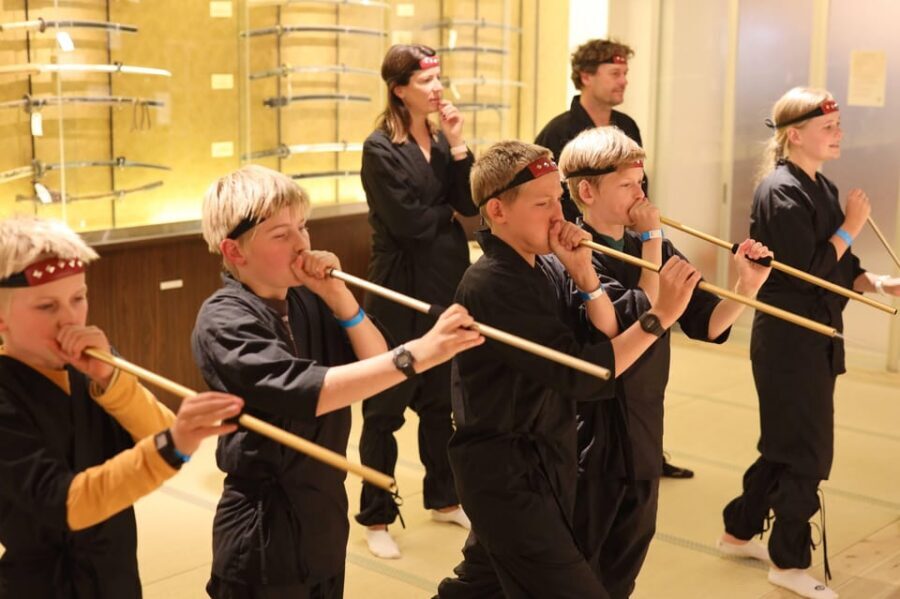
Then comes the ninja blowgun part. This is a different kind of fun than throwing stars. It’s less about big arm motions and more about control and accuracy—exactly the kind of “calm focus” activity that can balance out a kid who needs a change of pace.
From what’s provided, you’ll be using a ninja blowgun as part of the guided training. The key value here is that it adds variety. You’re not doing the same motion again and again; your body and brain shift gears.
One consideration: blowgun practice tends to work best when kids listen closely and stay patient. In a short 75-minute class, you want your child ready to follow instructions as well as play. If your child loves rules and hands-on aiming, this section will likely be a highlight.
More blades, bows and dojo hours
The ninja treasure hunt: why it keeps children engaged
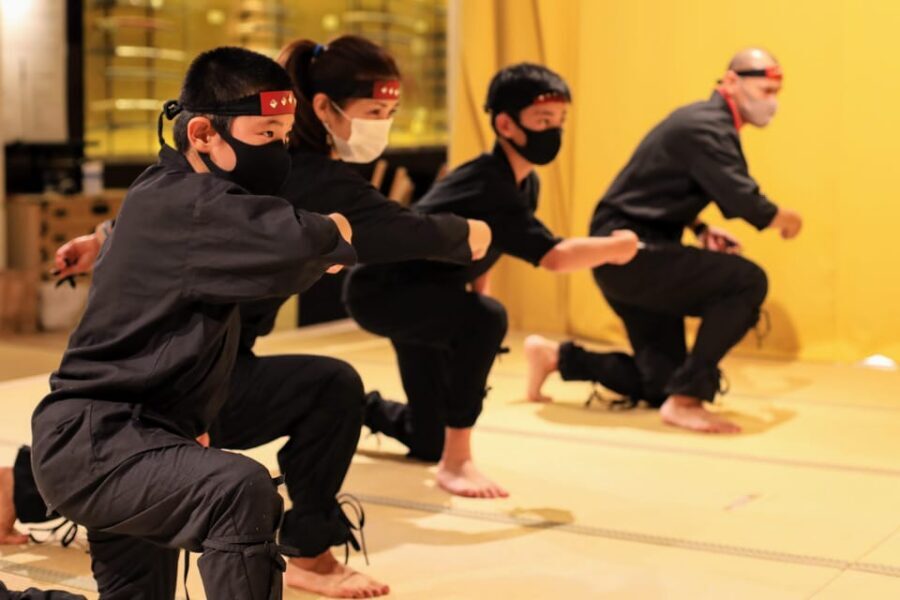
The ninja treasure hunt is described as a kid-favorite activity, and that makes sense. Treasure hunts give kids something that regular museum time often lacks: a goal.
Instead of “look at this exhibit,” it’s “find what you’re looking for.” That turns attention into action. The hunt also naturally creates movement and stopping points, so kids aren’t stuck waiting for adults to catch up.
What you’ll like as an adult: it feels organized. A structured hunt prevents the classic problem where children sprint off to explore on their own and you end up managing stress instead of enjoying the day.
This is also where costumes help. When kids feel like ninjas, they often “perform” better—listening more, trying harder, and staying in character long enough to finish the activity.
Museum time in Asakusa: connecting costume play to real context
After the hands-on training and hunt, you also get a museum component with interactive exhibits. This is the portion that can help parents answer the question kids usually ask afterward: Is this just a game, or does it connect to real ninja and samurai culture?
In a lot of costume experiences, the museum feels like an add-on. Here, the idea is that you complete the ninja experience first, then your museum time benefits from that new lens. You’re more likely to notice details when you’ve just practiced ninja-themed activities and learned techniques.
You should still treat it as part of a short combined program, not a deep, multi-hour museum marathon. The value is the connection: training gives context; museum time gives meaning.
Price and value check: is $56 worth it for your child?
Let’s talk value honestly. At $56 per person for a 75-minute experience, this can feel pricey if you think of it as only a quick costume photo and a couple props.
It’s better value if you see what’s included:
- Entrance ticket
- Ninja treasure hunt
- Photo shoot
- Live English guided experience
- Participation in shuriken throwing and ninja blowgun practice
- Small-group attention (limited to 5 participants)
So, the question isn’t just cost. It’s cost divided by how many “I get to do things” moments your kid will enjoy.
This is likely a good fit if your child:
- Loves dressing up
- Enjoys simple competitions and target-aiming games
- Pays attention better when the activity has steps and clear outcomes
- Likes stories with missions (treasure hunt)
It might be less worth it if your child is very quiet, easily overwhelmed by instruction-following, or not interested in hands-on practice. In that case, a longer, self-guided museum visit could suit better.
Who this works best for (and who should skip it)
This experience is built for families, and the activities strongly suggest it’s aimed at kids old enough to participate in the training segments.
One important note: children under 3 can enter the venue, but they cannot join the ninja experience. That means younger toddlers may enjoy the atmosphere, but they won’t take part in the training activities.
You’ll probably have the smoothest time if your child is comfortable:
- Changing into or wearing a ninja outfit (or at least participating in the costume portion)
- Waiting briefly while the group gets instructions
- Trying activities that require listening and aiming
Because it’s also limited to a small group, the experience feels calmer than bigger tour formats. That’s a plus for both kids and parents who want less chaos.
Practical tips before you show up in Asakusa
You’ll get the best outcome if you plan for comfort and focus.
A few no-stress ideas:
- Wear comfortable clothes underneath. Costume moments feel better when you can move easily.
- Encourage your child to listen during instructions, especially before shuriken and blowgun practice. Those moments are where the guide’s clarity matters most.
- Use the photo time as a chance to reset. Take a breath, get smiles, and make it a fun milestone.
- If you’re traveling with more than one child, prepare for a “turn-taking” reality. Small-group formats still use a guided flow.
If you care about photos, arrive ready for that costume moment. The program includes the photo shoot, so you don’t need to bring extra equipment, but you do want everyone ready and cooperative when it happens.
Should you book the Samurai Ninja Museum Asakusa ninja training?
I’d book this if you’re visiting Tokyo with kids who like costumes plus structured activities. This is one of the more straightforward family-friendly experiences in Asakusa because the session is compact and built around doing: dressing up, hunting, throwing, and aiming.
I’d think twice if your child is the type who gets restless in guided settings or if you’re seeking a long museum day. This is a training experience first, museum add-on second.
One more good reason to consider booking: the program has a friendly small-group setup and strong instructor feedback, including clear explanations from Koki. If your family values “the guide kept it fun and clear,” this kind of praise usually isn’t accidental.
If your plans are flexible, you can also choose a setup that allows free cancellation up to 24 hours in advance for a full refund, so you’re not locked in too early.
FAQ
How long is the Samurai Ninja Museum Asakusa kid-friendly ninja training?
The experience lasts about 75 minutes.
How much does it cost?
It’s listed at $56 per person.
Is the tour guide available in English?
Yes. The live tour guide speaks English.
What activities are included?
You get an entrance ticket, a ninja treasure hunt, and a photo shoot, plus the guided ninja training activities.
Can children under 3 join the ninja experience?
Children under 3 cannot join the ninja experience, but they can enter the venue.
How big is the group?
The experience is a small group limited to 5 participants, with a maximum of 20 travelers.
Is there free cancellation?
Yes. You can cancel up to 24 hours in advance for a full refund.
More Tour Reviews in Tokyo






The Way of the Sword, Continued
Around Senso-ji: More Asakusa Picks

Fresh reviews from around Tokyo






Asakusa Tours, compared.
 ★ 4.8Japanese Dance Cabaret Theater Asakusa-Kaguwa TicketFrom $492,270 reviews
 ★ 4.7Meiji Shrine, Asakusa, Skytree Bus Tour and CruiseFrom $1221,986 reviews
 ★ 4.8Asakusa Walking Tour with Sensoji Temple VisitFrom $221,583 reviews
 ★ 5.0Tokyo Asakusa Rickshaw TourFrom $421,375 reviews
 ★ 4.5Tokyo Panoramic 1 Day: Meiji Shrine, Asakusa, Odaiba and SKYTREE®From $851,222 reviews
 ★ 4.8Samurai Ninja Museum Asakusa: Samurai Sword Lesson & TourFrom $63306 reviews
Asakusa Sightseeing Tour by RickshawFrom $35195 reviews
Asakusa Kimono Dressing and Matcha ExperienceFrom $56173 reviews
★ 4.8Samurai Ninja Museum Asakusa: Samurai Sword Lesson & TourFrom $63306 reviews
Asakusa Sightseeing Tour by RickshawFrom $35195 reviews
Asakusa Kimono Dressing and Matcha ExperienceFrom $56173 reviews
Browse the lists this tour appears in