
Reviewed · ASAKUSA TOURS
Private Kimono Photo Shooting tour at Asakusa by Local Japanese
Tokyo in kimono feels like a time machine.
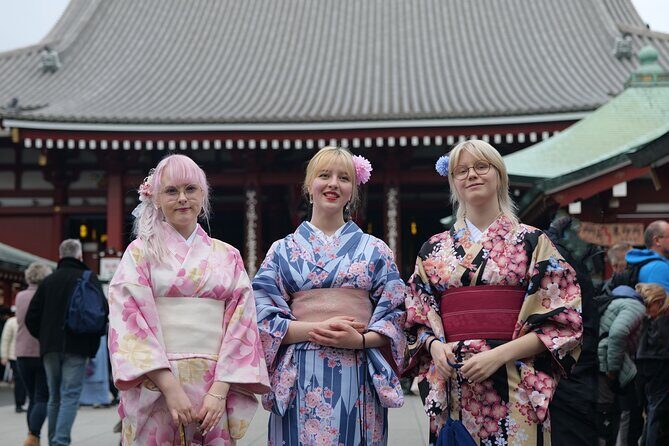
This private shoot in Asakusa is built around real photo locations—Senso-ji Temple, the nearby shrine, and the five-storied pagoda—with a photographer who directs you on poses and where to stand so you don’t waste time second-guessing your angles. I love the mix of iconic landmarks plus a human-scale street stop, and I love that you walk away with up to 30 edited photos in high-quality data. One thing to consider: the kimono rental basics (including footwear, bag, and hair making) are not included in the $78.44 price, so your total will depend on choosing the standard set.
You’ll meet in Asakusa near public transit, get going for about 1 hour 30 minutes, and then you can keep exploring in kimono until 5pm (the rental shop closes at 5pm). I also like the practical touch: you get bottled water and one free drink from a vending machine during the experience. The main drawback is simple—this is an outdoor-focused plan, so weather matters, and poor weather can lead to a different date or a refund.
In This Review
- Key Highlights at a Glance
- Why Asakusa Works So Well For a Kimono Photo Shoot
- Price and What You’re Really Paying For
- Getting Ready: Meeting Point and the Flow of the Shoot
- Sensō-ji Temple: The First Big Backdrop
- The Five-Storied Pagoda Stop: Quick Time, Strong Photos
- Asakusa Shrine: A Different Feel Right Next Door
- Hanayashikidori Street: Where Your Photos Get More Human
- The Photo Package: What “Up to 30 Edited Photos” Means
- Kimono Time After the Shoot: Turning Photos Into a Real Day
- Small Comforts That Make a Difference
- Is It the Right Fit for You?
- Should You Book This Kimono Photo Shoot?
- FAQ
- How long is the private kimono photo shooting in Asakusa?
- What is included in the $78.44 price?
- Is the kimono rental included?
- Where do I meet for the tour?
- Where does the experience end?
- Which photo stops will we visit?
- Can I keep wearing the kimono after the photos?
Key Highlights at a Glance
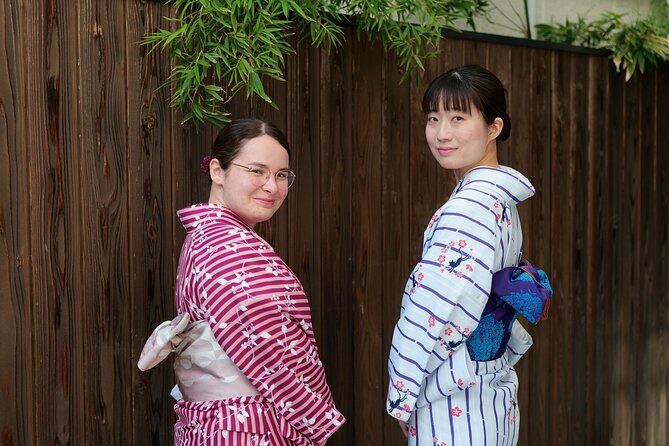
- Shuhei-style direction: you’re guided on pose and location for stronger compositions
- Up to 30 edited photos in high-quality digital data, not just a handful of unpolished shots
- Iconic Asakusa sequence: Senso-ji, the pagoda area, Asakusa Shrine, then a shop-and-stroll street
- Free extras: bottled water plus one vending-machine drink
- Kimono time after photos: either return to the rental shop or keep your kimono until 5pm
More mornings around Senso-ji and the old town
- Tokyo: Japanese Dance Cabaret Theater Asakusa-Kaguwa Ticket★ 4.8 · 2,270 reviews
- Tokyo: Asakusa Walking Tour with Sensoji Temple Visit★ 4.8 · 1,583 reviews
- Tokyo Asakusa Rickshaw Tour★ 5.0 · 1,375 reviews
Why Asakusa Works So Well For a Kimono Photo Shoot
Asakusa is made for kimono photos because the area naturally mixes “old Japan vibes” with easy Tokyo sightseeing. You’re not hunting for a perfect backdrop—you’re photographing where people already associate with tradition.
What makes this shoot feel efficient is that it’s not one big stop where you drift and hope for the best. It’s a tight, guided route that hits a few strong spots, then moves on. That matters because kimono photos are time-sensitive. You’ll want good light, good angles, and a calm pace—before you start feeling hot, crowded, or awkward.
I also like that the photographer is explicitly there to direct you. That’s huge if you’re the type who stands in place and smiles… and then wonders why the photos look stiff. With guidance, you get that “effortless” look without having to do any guesswork.
Price and What You’re Really Paying For
The tour price is $78.44 per person for the private photo experience, and it includes the big ticket item: maximum 30 edited photos delivered as high-quality data. In practice, that means you’re paying for time, a dedicated photographer, and real editing work—not just “someone takes your picture.”
Here’s the financial catch: the standard kimono rental set (including footwear, bag, and hair making) costs 3500Yen and is not included. So your total cost is basically the $78.44 plus 3500Yen if you want the standard set.
Is it still good value? For many people, yes, because you’re getting:
- a private setup (only your group participates)
- edited photos you can actually use
- a guided plan through well-known Asakusa photo locations
- small comfort extras like bottled water and a vending-machine drink
If you already know you’ll want a high-quality result and you’d rather not spend your entire vacation trying to photograph yourself, this often feels like money well spent.
Getting Ready: Meeting Point and the Flow of the Shoot
You’ll start at the Burger King Asakusa Azumabashi, in the Cross Bil Royal Palace area. From there, you head to the kimono side of the experience and then into the photo route.
One detail I appreciate: the experience is designed around being near public transportation, which makes it easier to plug into a Tokyo day. The plan is also private, so you’re not waiting around for other people to finish photo attempts.
During the shoot, the photographer will kindly direct:
- where to stand
- how to hold your body and face
- how to position yourself for each spot
The tone matters here. In the feedback I read, Shuhei came up again and again for being helpful through the whole process, not just snapping at the end. If you’re worried about being awkward in kimono, that kind of hands-on direction is the difference between decent photos and great ones.
Sensō-ji Temple: The First Big Backdrop
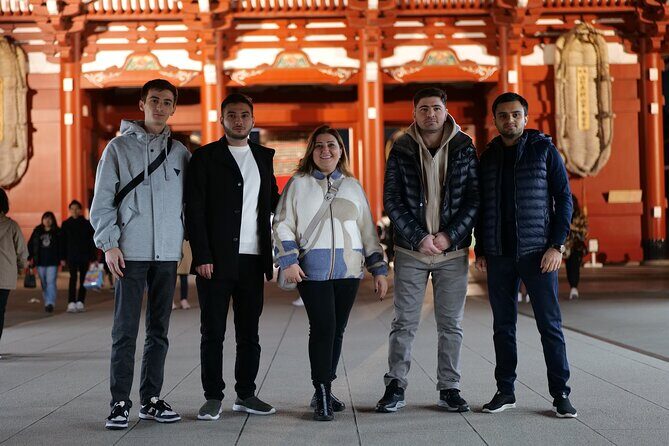
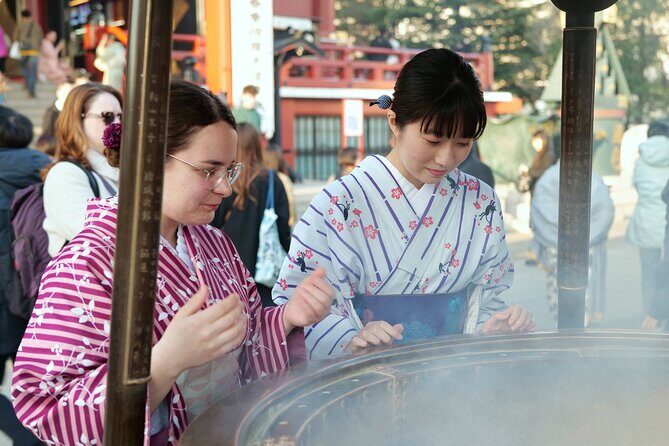
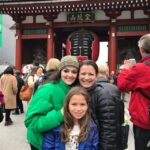
Your first major stop is Sensō-ji Temple, Tokyo’s oldest and one of the city’s most famous landmarks. The time is long enough—about 50 minutes—that you can actually do more than one style of photo.
Sensō-ji works for photos because you’ve got multiple visual layers:
- large temple structures for grand compositions
- smaller details that fit close-up kimono moments
- areas where background lines and stone textures help frame you
What I’d watch for as you start: don’t rush straight into the most obvious spot. The best-looking results usually come from slightly changing your placement. A good photographer will steer you toward angles where your kimono looks clean against the background, and where your face isn’t swallowed by distance.
Also, keep in mind that this is a famous place. Even though your shoot is private, the area around the temple can be crowded at times. The photographer’s job is to help you find a working spot without feeling like you’re constantly getting shoved out of frame.
Admission ticket is free for this stop, so you’re not hit with extra fees just to enjoy the setting.
More private options with your own guide
The Five-Storied Pagoda Stop: Quick Time, Strong Photos
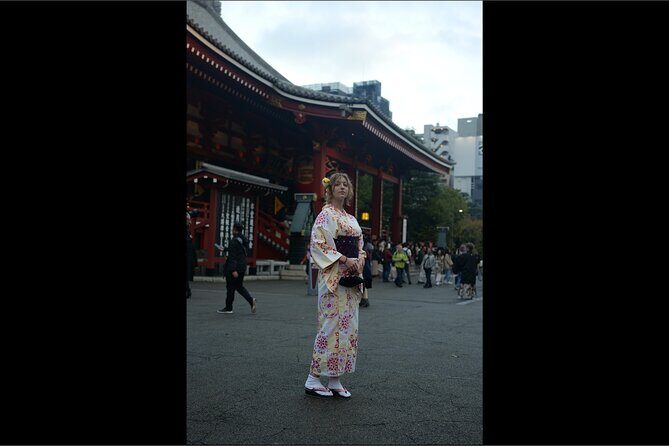
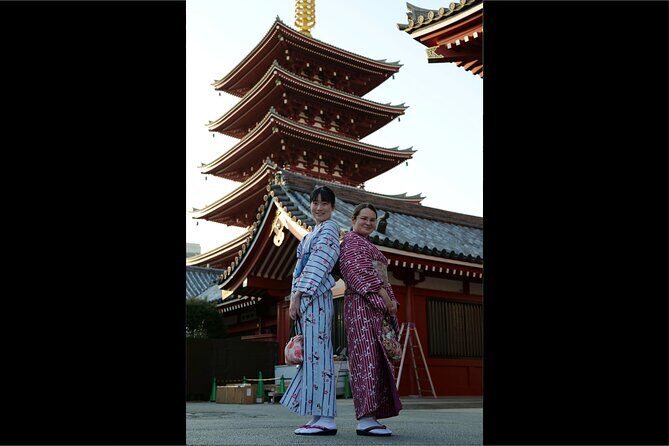
Next up is the Five-Storied Pagoda area on the Sensō-ji grounds. The stop is short—about 10 minutes—but it’s timed for impact.
This is where you want your body position to do the work. In kimono photos, your silhouette and fabric folds need direction: turning a fraction, raising your hands naturally, and keeping your shoulders relaxed can change everything. With guidance, you’ll get multiple variations without spending 10 minutes redoing the same pose.
There’s also a practical note: the pagoda spot is listed as having a ticket not included, so if a ticket is required for the viewpoint you’re aiming at, you may need to handle that separately.
Even with that brief window, the pagoda is the kind of landmark that turns a regular snapshot into a postcard.
Asakusa Shrine: A Different Feel Right Next Door
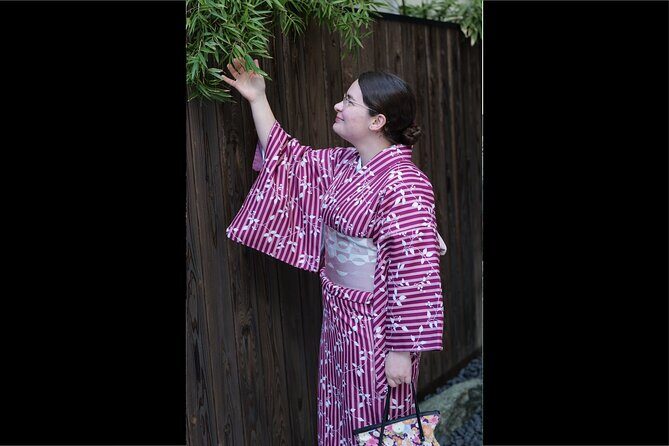
After the pagoda, you move to Asakusa Shrine (near Sensō-ji). You get about 10 minutes here, and it’s a nice balance after the temple main areas.
The shrine setting adds a different visual mood. You’re still in the same historic neighborhood, but the architectural style feels distinct enough that your photo set doesn’t look repetitive. That’s a big deal when you’re collecting a set of photos—variety makes your edited album feel like a story, not a single location with minor changes.
This stop is also listed as admission free, so you can focus on the photos without thinking about extra entry steps.
I’d treat this as your “calm portraits” moment. If you want close-up shots where your kimono details show, shrine areas often give you clean backgrounds—especially when your photographer helps you pick a spot with less clutter behind you.
Hanayashikidori Street: Where Your Photos Get More Human
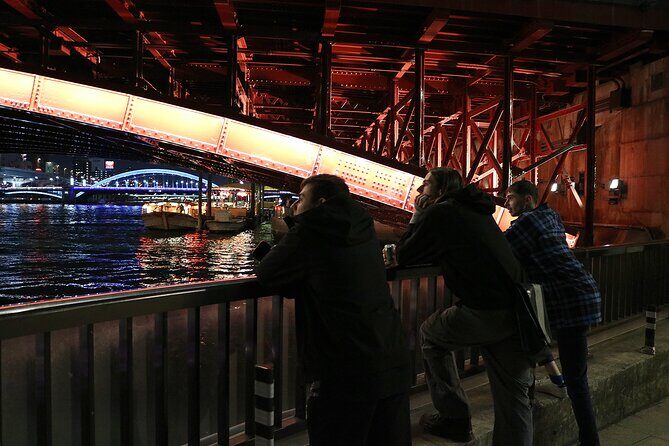
Then you finish with Hanayashikidori, a well-known street with sightseeing shops. You get about 15 minutes here.
This is a smart move. After temple architecture, the street scene gives you texture—signs, storefront vibes, and a less formal feel that looks great in kimono. It also helps your photo set feel like Asakusa is more than just one landmark. You look like you belong in the neighborhood, not like you’re only standing in front of famous buildings.
This stop is also listed as admission free.
If you want photos that feel playful, this is where you do it. You can think of it as your “walk-and-portrait” section. Even if you’re standing, your photographer can direct you to look slightly away, adjust your angle, or create a natural moment as you move along the street.
The Photo Package: What “Up to 30 Edited Photos” Means
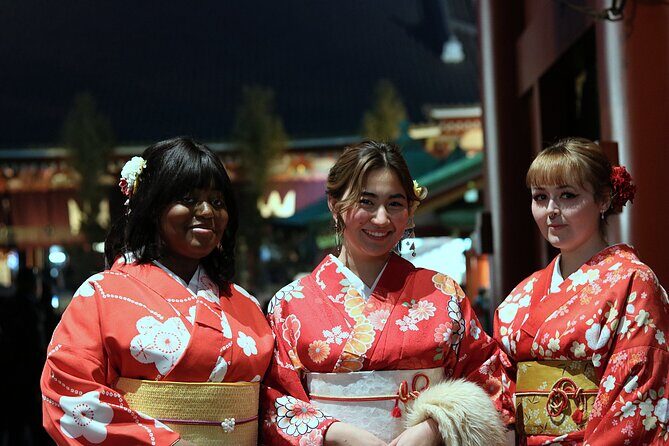
You’ll receive maximum 30 edited photos as high-quality digital data. That phrasing matters: edited photos usually mean color correction, clean-up, and framing improvements that make your images look intentional rather than accidental.
I love that the package is specific about editing quantity. Many photo tours say you’ll get “some pictures.” Here you know the upper limit, so you can set expectations. The goal is a usable set—enough variety for profile photos, gift prints, and a few you’ll actually be proud to share.
Also, note that it’s data (not physical prints). So you’ll want to think ahead:
- do you have enough phone storage or plan to transfer photos quickly?
- do you want to back up right away?
From the feedback I saw, Shuhei’s editing and shot selection were a major reason people rated the experience so highly. The standout detail wasn’t just that the photos were pretty—it was that the angles and locations were handled well, which points to both shooting technique and thoughtful editing.
Kimono Time After the Shoot: Turning Photos Into a Real Day
Here’s one of the best bonuses: after the photo shooting ends, you can either head back to the rental shop or continue sightseeing in your kimono until 5pm. The shop closes at 5pm, so you’re basically buying extra time in the outfit.
That’s where the experience turns from “photo service” into “Tokyo memory.” If you keep the kimono on, you’ll start to notice how different your pace feels. You’ll walk slower. You’ll look around more. You’ll probably take selfies more often than you planned—because suddenly people recognize the outfit and your day feels like a scene.
If you want a smoother day, plan one simple route after the shoot and don’t overstuff your schedule. Kimono is beautiful, but it’s not the time for marathon walking plans or risky transit transfers.
The more relaxed you are after the shoot, the more likely you are to get that extra satisfaction: the photos won’t just be souvenirs. They’ll match the way the day actually felt.
Small Comforts That Make a Difference
Even short tours can feel stressful if you forget basics. This one includes bottled water and one drink from a vending machine for free. That’s the kind of detail you only appreciate when you’re standing outside in real Tokyo heat or humidity.
Also, the experience uses a mobile ticket, which reduces the friction on your end. You won’t be fumbling with paperwork while you’re dressed up and trying not to step on your own footwear.
Is It the Right Fit for You?
This private kimono photo shoot is best if you want:
- great photos without spending hours figuring out poses
- a guided route through classic Asakusa spots
- a high-edited-output package (up to 30 edited photos)
- kimono time until 5pm for real sightseeing
It may be less ideal if you’re hoping for a long, slow cultural experience with lots of walking at your own pace. This is about photography first. You’ll get direction, then you’ll move. The tradeoff is efficiency and results, not a half-day wandering session.
If you’re a solo traveler, a couple, or even a small group, private format helps because you don’t need to wait for others to finish their shots. And if you’re nervous about modeling, the fact that Shuhei helps you through the process is exactly the kind of support that keeps the experience enjoyable.
Should You Book This Kimono Photo Shoot?
I think you should book it if you’re the type who wants photos that look intentional. The combination of Shuhei’s directing, a tight route through Senso-ji + nearby landmarks, and up to 30 edited photos makes it a strong value proposition for people who care about the final result.
Skip it or double-check your expectations if you only want a quick souvenir snapshot, because this isn’t a “take one photo and you’re done” situation. Also factor in the 3500Yen kimono set cost if you want the full standard kit.
If you want one high-quality Tokyo memory tied to place and outfit, this is a very practical way to do it.
FAQ
How long is the private kimono photo shooting in Asakusa?
It runs for about 1 hour 30 minutes.
What is included in the $78.44 price?
You get up to 30 edited photos as high-quality digital data, plus bottled water and one free drink from a vending machine.
Is the kimono rental included?
The standard kimono set (including footwear, bag, and hair making) is not included and costs 3500Yen.
Where do I meet for the tour?
The meeting point is Burger King Asakusa Azumabashi, Cross Bil Royal Palace, 2-chōme-20-6 Kaminarimon, Taito City, Tokyo.
Where does the experience end?
It ends at VASARA Kimono Rental Asakusa Flagship Store, 1-chōme-1-11 Asakusa, Taito City, Tokyo.
Which photo stops will we visit?
The route includes Senso-ji Temple, the five-storied pagoda area, Asakusa Shrine, and Hanayashikidori street.
Can I keep wearing the kimono after the photos?
Yes. After the photo shooting ends, you can go back to the rental shop or continue wearing your kimono until 5pm.
More Tours in Tokyo



More Tour Reviews in Tokyo




Around Senso-ji: More Asakusa Picks
Fresh reviews from around Tokyo






Asakusa Tours, compared.
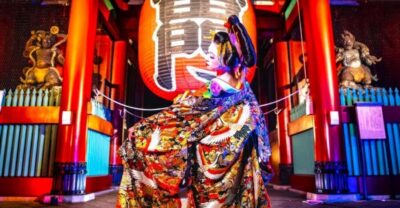 ★ 4.8Japanese Dance Cabaret Theater Asakusa-Kaguwa TicketFrom $492,270 reviews
 ★ 4.7Meiji Shrine, Asakusa, Skytree Bus Tour and CruiseFrom $1221,986 reviews
 ★ 4.8Asakusa Walking Tour with Sensoji Temple VisitFrom $221,583 reviews
 ★ 5.0Tokyo Asakusa Rickshaw TourFrom $421,375 reviews
 ★ 4.5Tokyo Panoramic 1 Day: Meiji Shrine, Asakusa, Odaiba and SKYTREE®From $851,222 reviews
 ★ 4.8Samurai Ninja Museum Asakusa: Samurai Sword Lesson & TourFrom $63306 reviews
Asakusa Sightseeing Tour by RickshawFrom $35195 reviews
Asakusa Kimono Dressing and Matcha ExperienceFrom $56173 reviews
★ 4.8Samurai Ninja Museum Asakusa: Samurai Sword Lesson & TourFrom $63306 reviews
Asakusa Sightseeing Tour by RickshawFrom $35195 reviews
Asakusa Kimono Dressing and Matcha ExperienceFrom $56173 reviews
Browse the lists this tour appears in