
Reviewed · CYCLING TOURS
Private Half-Day Grand Bike Tour in Tokyo
Tokyo looks different at bike speed.
This private half-day tour is built for efficient sightseeing, with the added bonus of slipping through back streets you’d likely miss on foot or trains. I like the local-guided routing that connects big landmarks to smaller corners, and I especially like the practical touches like bottled water and helmets that keep you comfortable mid-ride. One thing to consider: you’ll be on the bike for hours, so you’ll want moderate fitness and patience for cycling in busy city areas.
I also like that the tour mixes iconic sights with very Tokyo details, from temple grounds and sumo-stadium views to Ginza shopping streets and the green hush around Meiji Jingu. The itinerary is designed as a flowing loop that starts near Higashimukōjima at 11:30 am and finishes at Shibuya Station near the zebra crossing, so you don’t spend half the day backtracking. If you hate streets full of scooters and sudden crowd surges, plan on taking it slower than you would on a quiet country road.
In This Review
- Key things that make this Tokyo bike tour work
- Why Tokyo feels faster when you’re actually riding
- The route in plain terms: from Skytree photos to Shibuya’s zebra crossing
- Stop 1: Sakura Bridge for Tokyo Skytree photos (10 minutes)
- Stop 2: Edo Taito Traditional Crafts Center (about 20 minutes)
- Stop 3: Senso-ji Temple (about 20 minutes)
- Stop 4: Ryogoku Kokugikan for sumo-stadium views (about 5 minutes)
- Stops 5 and 6: Yanagi Bridge and Nihonbashi for old waterways (10–20 minutes)
- Ginza cycling: shopping-street segment (time not specified)
- Stop 7: Imperial Palace area (about 30 minutes)
- National Diet Building: cycling near the complex (time not specified)
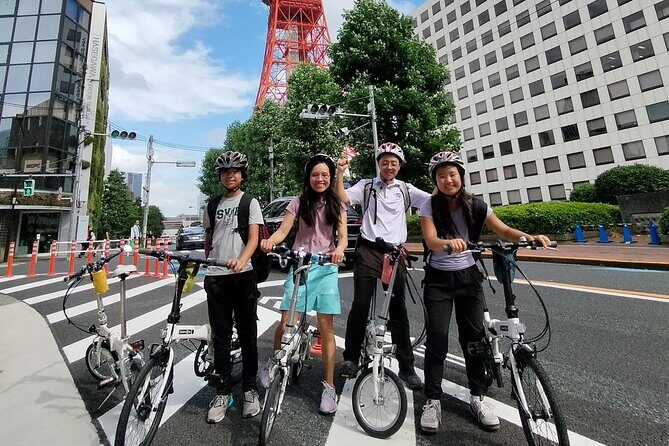
- Stop 8: Tokyo Tower under the ride path (about 10 minutes)
- Stop 9: Jingu Gaien Ginkgo tree-lined street (about 20 minutes)
- Stop 10: Roppongi cycling segment, a night-town feel (time not specified)
- Stop 11: Aoyama Street (about 20 minutes)
- Stop 12: Takeshita Street and the bike-in-shopfront rule (about 30 minutes)
- Stop 13: Omotesando (about 10 minutes)
- Stop 14: Meiji Jingu Shrine with a longer walk (about 1 hour)
- Final: Shibuya Crossing near Shibuya Station (about 15 minutes)
- How safe and comfortable is it really?
- Bike type and fit: the folding bike detail you should not ignore
- Physical fitness: moderate means you should be able to ride steadily
- Price and value: what $130.07 gets you
- When this tour makes the most sense (and when it doesn’t)
- Should you book this Private Half-Day Grand Bike Tour in Tokyo?
- FAQ
- FAQ
- How long is the private bike tour?
- What time does the tour start?
- Where do we meet, and where does the tour end?
- Is this tour private or shared?
- What’s included in the price?
- Are tickets or admissions included for the stops?
- What kind of physical fitness level do I need?
- What if the weather is bad?
Key things that make this Tokyo bike tour work
- Private group only: your ride stays focused, with your guide managing pacing and route choices for your group
- Folding bikes sized for 140–180 cm: lighter logistics for a city tour, but you should flag if you’re taller
- Handpicked stops with quick photo windows: bridges, viewpoints, and landmarks timed so you don’t burn the whole day standing
- Classic Tokyo contrasts: temples and old Edo waterways, then Tokyo Tower, then fashion streets, then Shibuya
- Guides prioritize safety: reviews specifically call out safe riding habits with a guide named Take
- Free entry at each stop: the major listed sights in the route are covered as walk-by/photo stops without add-on admissions
More of Tokyo by bike
- Tokyo Guided Small-Group Biking Tour★ 5.0 · 1,250 reviews
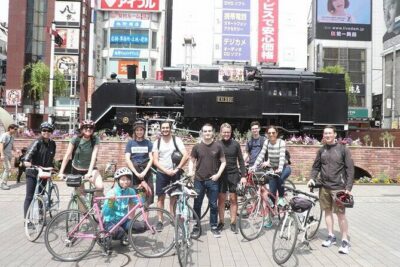
- Tokyo Great Cycling Tour★ 5.0 · 811 reviews
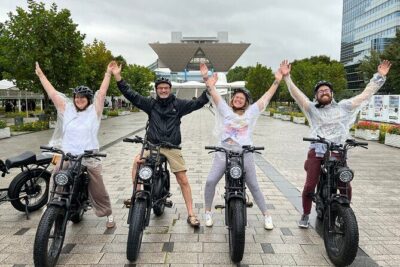
- Tokyo Top Highlights 3h Guided E-bike Tour★ 5.0 · 714 reviews
Why Tokyo feels faster when you’re actually riding
Tokyo can be brutally efficient on trains, but that efficiency comes with stairs, transfers, and a lot of time staring at maps. On a bike, you’re doing something different: you’re moving through the city at human scale, with just enough speed to connect major sights without feeling like you’re always “going somewhere.”
This is a private half-day format (about 5 to 6 hours), so you get a full slice of Tokyo without the all-day commitment. You’ll also be covering a wide range of neighborhoods—Asakusa, Ryogoku, Nihonbashi, Imperial Palace area, Tokyo Tower, Shinjuku-adjacent green space vibes, and the fashion-and-lights cluster around Harajuku and Shibuya.
The small but important detail is how they support you while you ride. You get helmets and complimentary bottled water, which matters because you’re not just sitting in a vehicle—you’re outside, and Tokyo weather can change quickly.
The route in plain terms: from Skytree photos to Shibuya’s zebra crossing
This tour is structured like a guided loop. Some stops are short photo pauses; others include time on foot. You should think of it as “bike first, sights second,” with the sights chosen to make sense in a continuous flow.
Stop 1: Sakura Bridge for Tokyo Skytree photos (10 minutes)
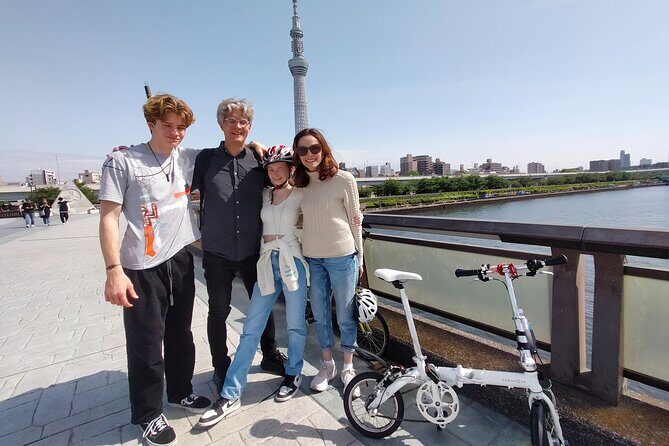
You start with a quick stop at Sakura Bridge, where you’ll likely get one of those classic Tokyo views with Tokyo Skytree in the background. It’s a good opener because it gives you an immediate payoff before you settle into traffic rhythm.
This is also a helpful warm-up: 10 minutes is enough to orient yourself, confirm your bike fit feels right, and get comfortable before the longer, more active stretches.
Stop 2: Edo Taito Traditional Crafts Center (about 20 minutes)
Next comes a stop at Edo Taito Traditional Crafts Center, also referred to as Edo Shitamachi Traditional Crafts Museum. If you want Tokyo beyond skyscrapers, this is your grounding moment. You’ll see Japanese traditional handicrafts and get a look at craftsmanship in a way that doesn’t feel like a lecture.
The time here is just enough for browsing and context. If you’re hoping for a deep museum experience with lots of exhibits and reading, you might find this portion brief—but it’s clearly meant as a cultural reset, not a full museum day.
More private options with your own guide
Stop 3: Senso-ji Temple (about 20 minutes)
Then it’s Senso-ji, one of Tokyo’s biggest temples. The focus here is a quick pass through the atmosphere: temple structures, plus the shops and snack stalls in the area. You’ll get a look at the traditional gate and pagoda setting, and time to absorb what worship feels like on a normal day.
This stop is ideal even if you don’t want to spend hours. It’s the kind of landmark that instantly tells you which Tokyo you’re in.
Stop 4: Ryogoku Kokugikan for sumo-stadium views (about 5 minutes)
A short ride-by at Ryogoku Kokugikan, the sumo stadium. Even if there’s no tournament happening, seeing the arena from the street works well as a photo moment.
Because the stop is about 5 minutes, treat it as: look, take the shot, and get back on the bike.
Stops 5 and 6: Yanagi Bridge and Nihonbashi for old waterways (10–20 minutes)
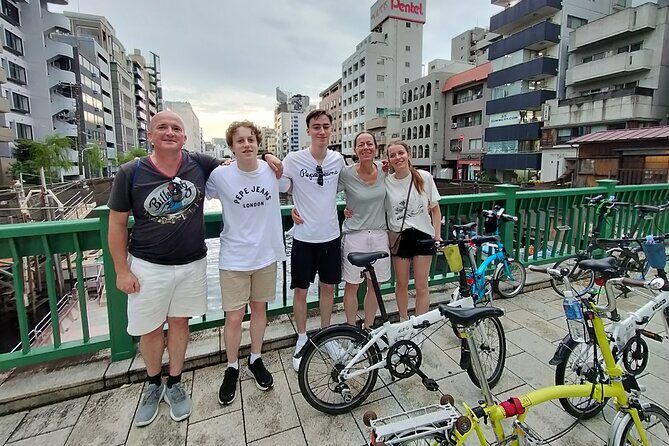
Two of the most interesting breaks are the bridges over the canals: Yanagi Bridge (Yanagibashi) and Nihonbashi Bridge.
- At Yanagi Bridge, you can see older waterside scenery and the yakatabune party boat jetties.
- At Nihonbashi, the goal is sightseeing from the bridge and the surrounding town areas, again tied to waterways and older city structure.
These are the stops that help you understand Tokyo as layered, not just modern. You’re literally traveling above the lines where the city used to move and trade.
Ginza cycling: shopping-street segment (time not specified)
Then you cycle through Ginza, one of the high streets known for luxury brand shopping. This isn’t a shopping tour, and the bike keeps the energy moving.
If you love architecture and street glamour, you’ll enjoy the contrast. If you’re shopping-focused, you might wish there were more structured break time, because this section is more about riding the corridor than doing a full storefront crawl.
Stop 7: Imperial Palace area (about 30 minutes)
You get a longer pause near the Imperial Palace. The tour route includes time to see the outside, connected to the former Edo Castle area and the Tokugawa-era government center.
Thirty minutes is enough to enjoy the grounds’ scale from the outside and take your time with photos without feeling rushed. If you’re the kind of traveler who likes to read about what used to be there, this is a satisfying stop—even without extended museum-style content.
National Diet Building: cycling near the complex (time not specified)
There’s also a section cycling near Japan’s National Diet Building (the House of Representatives and House of Councilors). It’s a quick look at modern governance framed inside a very old-city context.
This is a good “Tokyo works because it has systems” moment. You see how the city holds ceremonial, political, and daily life in the same region.
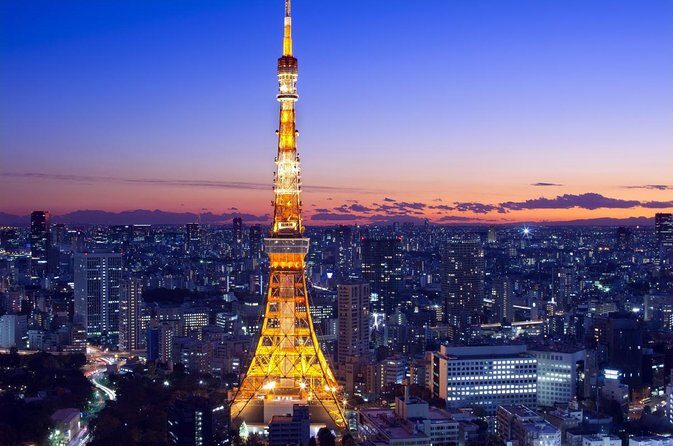
Stop 8: Tokyo Tower under the ride path (about 10 minutes)
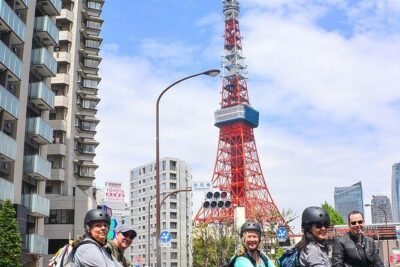
Next, Tokyo Tower, opened in 1958 mainly for broadcasting. You’ll cycle under/near it for a short viewing window.
This is one of those stops that feels better from the street because it’s not just a photo object—it’s a scale reference for the whole area. Ten minutes is short, but it’s plenty if you’re not trying to go inside (the tour info here treats it as a viewing stop).
Stop 9: Jingu Gaien Ginkgo tree-lined street (about 20 minutes)
Then it’s to Jingu Gaien, known for its ginkgo tree line (especially yellow in autumn). Even outside autumn, the tree-lined feel is part of why this stop works: it breaks up the shopping and monument-heavy moments with a more relaxed walking/cycling vibe.
You’ll enjoy this more if you like atmosphere and photos that don’t look like generic postcard angles.
Stop 10: Roppongi cycling segment, a night-town feel (time not specified)
There’s also a cycling segment through Roppongi, described as a night town. Your exact experience depends on the time of day and traffic, but the point is clear: Tokyo doesn’t slow down just because you moved away from the temples.
I like this segment because it shows another layer of Tokyo’s identity beyond history and shopping.
Stop 11: Aoyama Street (about 20 minutes)
Cycling on Aoyama Street, often associated with fashionable central Tokyo. This is a change in pace again: more design-forward street scenes and modern city lines.
Because you’re riding, you get to see the street feel without stopping at every block.
Stop 12: Takeshita Street and the bike-in-shopfront rule (about 30 minutes)
At Takeshita Street, you even push bikes inside a popular shopping mall for part of the stop. This is a detail worth mentally preparing for.
Crowds can be thick on this kind of street. With a guide, you’ll follow the group’s plan and keep things safe. The 30 minutes here gives you enough time to wander a little, snack if you want, and soak in the Harajuku-style energy.
Stop 13: Omotesando (about 10 minutes)
Then it’s Omotesando, another high street with luxury brand presence. This is a shorter stop, more about moving through the look and feel of the avenue.
If you’ve ever seen photos of Omotesando’s modern facades, you’ll recognize the vibe quickly.
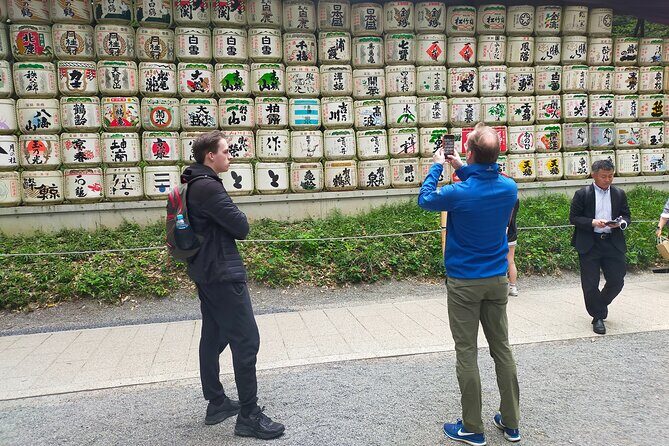
Stop 14: Meiji Jingu Shrine with a longer walk (about 1 hour)
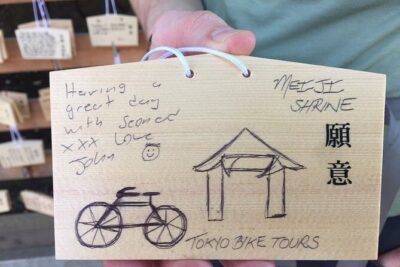
The tour includes Meiji Jingu Shrine, and here you park bikes and walk inside. It’s dedicated to the former Emperor, established in 1920, and you’ll notice sake barrels dedicated to the Shin-related offerings (the tour description flags the presence of many sake barrels).
This hour is the one that feels most like a break from riding. You’ll want comfortable shoes and a slower pace. If you came hoping for a calm moment in the day, this is where you get it.
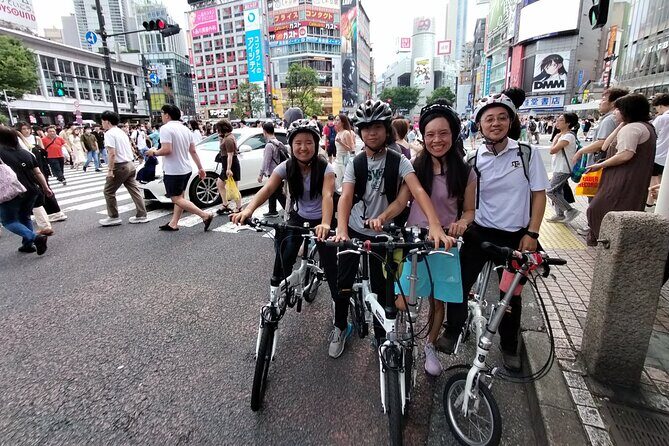
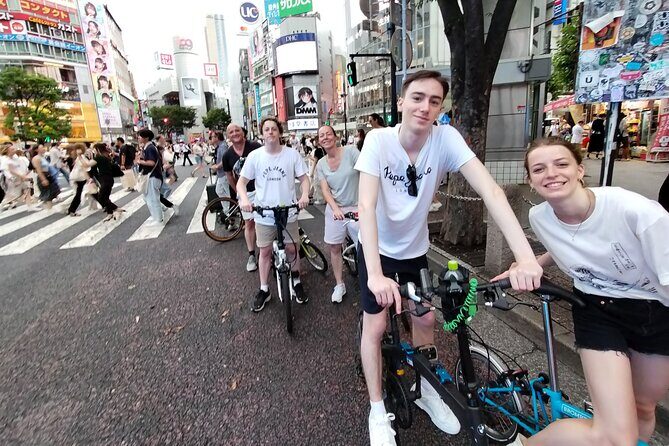
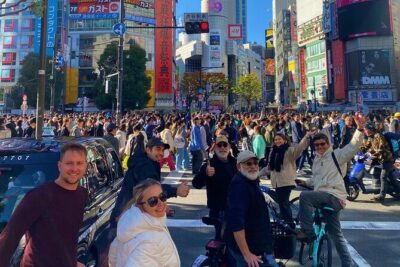
Final: Shibuya Crossing near Shibuya Station (about 15 minutes)
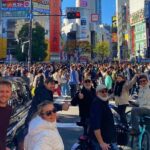
You finish at Shibuya Crossing, the famous zebra crossing. The tour ends near Shibuya Station, by the crossing, so you’re not left stranded far from transit.
Fifteen minutes is enough to see what everyone talks about—people flow, lights change, and the crossing becomes a moving stage. Then you’re free to continue exploring by train.
How safe and comfortable is it really?
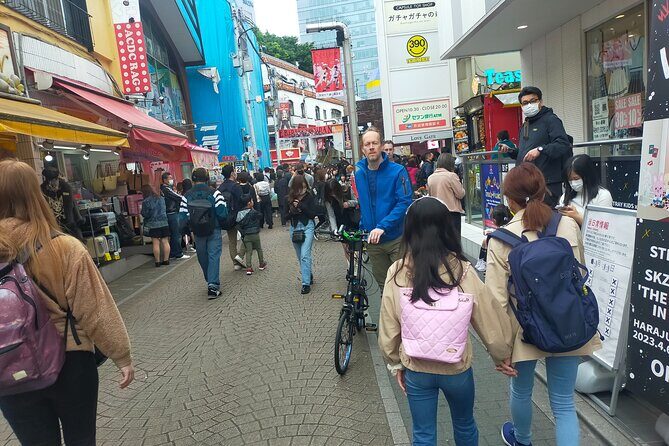
The tour’s promise is straightforward: cycle safely through Tokyo under the watchful eye of a local guide. That matters, because Tokyo has its own driving rhythms. Lane changes, scooters, and sudden sidewalk-edge behaviors can be intimidating if you’re new to city riding.
In the tour’s reviews, a guide named Take is specifically credited with keeping people safe the whole time. I take that as a sign the operation pays attention to riding habits, not just sightseeing checklists.
Bike type and fit: the folding bike detail you should not ignore
The bikes are folding bikes with 14–20 inch wheels, suitable for heights 140–180 cm. If you’re over 180 cm, you should inform the provider in advance so they can plan the right fit.
A bike that’s too small can make the day exhausting fast—bad posture, more pressure on your wrists, and legs that never quite get a comfortable cadence.
Physical fitness: moderate means you should be able to ride steadily
You need moderate physical fitness, which usually translates to: you can ride at a steady pace for multiple hours and manage stop-and-start moments in traffic. If you can ride a bike on flat ground for 20–30 minutes, you’re likely fine. If you struggle with stairs or long walking, this might feel tougher because you’re swapping walking time for riding time.
Price and value: what $130.07 gets you
At about $130.07 per person, this isn’t the cheapest way to see Tokyo. But it’s also not paying for a seat on a bus with a long lecture.
You’re paying for:
- a private guided experience
- a provided bike
- helmets and bottled water
- a route that links many major areas efficiently, ending right where you want to be for your next plan (Shibuya)
It’s a strong value if you want speed plus local context, especially if you’d otherwise spend more time and energy figuring out how to move between neighborhoods. It’s also a good pick if you’re staying in a single area but want to experience multiple “Tokyo worlds” in one go.
If you’re the kind of traveler who hates moving through a crowd slowly, the bike format often feels like a relief, because you’re not stuck in one bottleneck for too long.
When this tour makes the most sense (and when it doesn’t)
This tour fits best if you:
- want a structured loop of Tokyo highlights without planning every transfer
- enjoy photography and short, high-impact stops
- like the idea of mixing old Edo-feeling areas with modern shopping streets
- want a private guide who can keep the pacing comfortable for your group
It might be less ideal if you:
- have concerns about riding in busy street conditions
- expect long, slow museum-style visits at each stop
- dislike feeling rushed, since some moments are intentionally short photo windows
Also note: the experience requires good weather. If it’s canceled for poor weather, you’ll be offered a different date or a full refund, so don’t treat it like a guaranteed outdoor event no matter what.
Should you book this Private Half-Day Grand Bike Tour in Tokyo?
If your goal is to see a lot of Tokyo in one confident, guided day, I think this is a smart booking. You get private attention, practical support (water, helmets), and a routing plan that stitches together Asakusa, the Imperial Palace area, Tokyo Tower, and the fashion-and-lights lanes around Harajuku and Shibuya.
My biggest “yes” comes from the way the tour balances big-name sights with the streets and canal scenery that make Tokyo feel like Tokyo. If you handle moderate riding and you want a guided day that ends in Shibuya for easy onward travel, you’ll likely love how efficiently this tour turns the city into something you can experience, not just look at.
FAQ
FAQ
How long is the private bike tour?
It runs about 5 to 6 hours.
What time does the tour start?
The start time is 11:30 am.
Where do we meet, and where does the tour end?
You meet at Tokyo Backstreets Bike Tour at 2-chōme 24-14 in Sumida City, near the Synaps share office area. The tour ends at Shibuya Station near the Shibuya zebra crossing.
Is this tour private or shared?
It’s private. Only your group participates.
What’s included in the price?
Included items are the use of the bicycle, bottled water, and helmets.
Are tickets or admissions included for the stops?
The itinerary lists the stops with admission tickets as free for the included sightseeing points.
What kind of physical fitness level do I need?
You should have a moderate physical fitness level.
What if the weather is bad?
This experience requires good weather. If it’s canceled due to poor weather, you’ll be offered a different date or a full refund.
Tokyo on Two Wheels
More Tours in Tokyo




More Tour Reviews in Tokyo




Fresh reviews from around Tokyo






Cycling Tours, compared.
 ★ 5.0Tokyo Guided Small-Group Biking TourFrom $1061,250 reviews
 ★ 5.0Tokyo Great Cycling TourFrom $99811 reviews
 ★ 5.0Tokyo Top Highlights 3h Guided E-bike TourFrom $63714 reviews
3-Hour Bike or E-Bike City Highlights TourFrom $45435 reviews
★ 5.0Tokyo Top Highlights 3h Guided E-bike TourFrom $63714 reviews
3-Hour Bike or E-Bike City Highlights TourFrom $45435 reviews
 ★ 5.0Tokyo West-Side Cycling & Food TourFrom $99214 reviews
 ★ 5.03-Hour Bike/E-Bike Tour of the City’s HighlightsFrom $63209 reviews
 ★ 5.0Small Group Cycling Tour in TokyoFrom $66184 reviews
 ★ 5.03-Hour Tokyo Private E-Bike Tour Starting from Your HotelFrom $145117 reviews
Browse the lists this tour appears in