
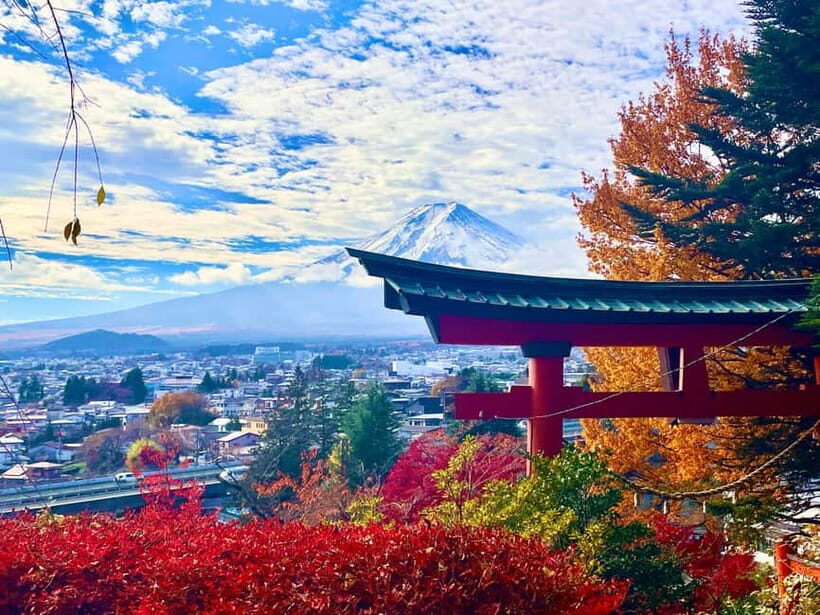
Reviewed · MT FUJI DAY TRIPS
Private 2-Day Tour: Mt Fuji Hakone & Kamakura + Onsen Ryokan
Mt. Fuji from multiple angles feels like cheating. This private 2-day trip strings together the classic sights around Hakone and Kamakura with the kind of comfort that keeps the day moving. I like the private transport (Toyota Alphard or Hiace) plus hotel pickup in Tokyo’s 23 wards, because you’re not wrestling trains when you just want to see Fuji. I also love that the schedule doesn’t stop at photos: you get a real Hakone onsen ryokan stay with a traditional dinner. A possible drawback: if visibility for Mount Fuji is poor, the itinerary can shift, so you’ll need a flexible mindset.
The best part is the pacing. You’re doing sunrise-to-evening sightseeing on Day 1, then slowing down onsen-style on Day 1 night. On Day 2 you’re back on the road, but it’s still organized: a Lake Ashi cruise, volcanic Owakudani, Odawara Castle, and Kamakura’s Great Buddha—plus an optional Yokohama Chinatown stop if time allows.
In This Review
- Key points to know before you go
- A private Fuji–Hakone–Kamakura reset from Tokyo
- How the two-day flow keeps you from burning hours
- Lake Kawaguchi and Arakura Sengen Shrine: Fuji from two angles
- Oshino Hakkai and the Fuji pilgrimage shrines
- Hakone ryokan at Tōnosawa Ichinoyu Honkan: the best kind of break
- Lake Ashi cruise and Owakudani’s sulfur vents (with black eggs)
- Odawara Castle to Kamakura Daibutsu, plus an optional Yokohama Chinatown
- Price and value: what $838 per person is really buying
- Who this tour suits best (and who should think twice)
- Should you book this 2-day private tour?
- FAQ
- What cities or areas does this tour cover?
- How is the transportation handled?
- Is there an overnight stay, and what kind of hotel is included?
- What meals are included?
- Which attractions are included in the Mount Fuji area?
- Do you ride a boat on Lake Ashi?
- What happens at Owakudani Valley?
- Is entrance fee coverage included?
- What should I bring for this tour?
- Will the itinerary change due to weather?
Key points to know before you go
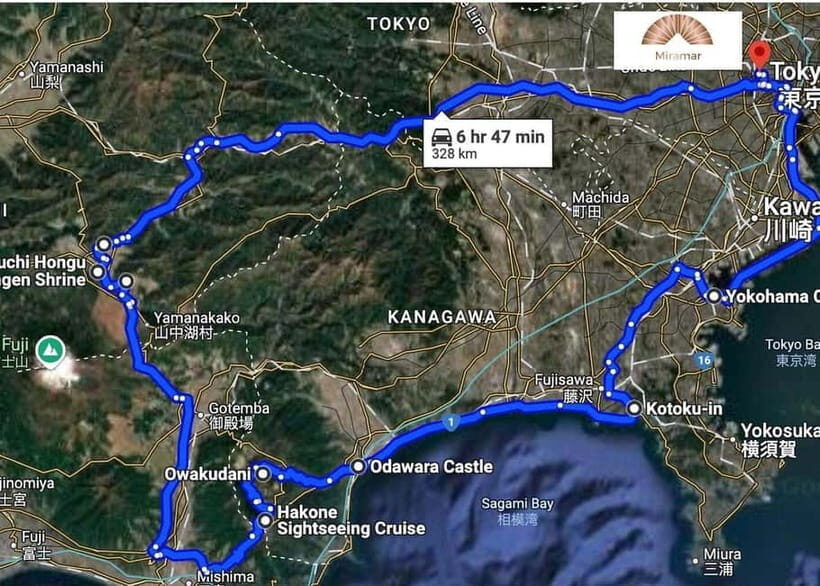
- Private driver + flexible pace: You set the rhythm with an English/Chinese-speaking driver and plenty of time at each stop.
- Fuji views, not one lucky moment: You see it from several locations—Lake Kawaguchi, Arakura Sengen Shrine, Oshino Hakkai/Ushino area, and Hakone’s Lake Ashi region.
- Ryokan onsen night at Tōnosawa Ichinoyu Honkan: This is the reset button between busy sightseeing blocks.
- Hakone’s volcanic stop includes black eggs: Owakudani’s sulfur vents and boiled eggs are a very specific kind of Japan.
- Kamakura Daibutsu is a real payoff: You finish with a landmark that feels important, not just scenic.
- Entrance fees and key rides are included: The tour folds in sites and the Lake Ashi boat ride, so fewer add-ons pop up.
Other routes to the mountain, compared
- Mt Fuji & Hakone Cruise, Drum Show Bullet Train 1 Day from Tokyo★ 4.0 · 7,413 reviews
- Tokyo Mt Fuji 5th St & Hakone Cruise Bus Tour w/Bullet Train★ 4.4 · 5,024 reviews
- From Tokyo: Mount Fuji Full-Day Sightseeing Trip★ 4.5 · 4,970 reviews
A private Fuji–Hakone–Kamakura reset from Tokyo
This is the kind of two-day itinerary that makes sense for first-timers and for people short on time. You start in Tokyo, then your driver handles the logistics in a comfortable vehicle, which matters because the Fuji–Hakone area eats up time if you’re trying to manage connections by yourself. Hotel pickup inside the Tokyo 23 wards and a central Tokyo drop-off (often around Ginza) also cuts the stress.
What you’re really buying here is continuity. Day 1 is built to get you to the Fuji viewpoints early and then taper into a classic onsen evening. Day 2 continues with iconic Hakone sights and ends with Kamakura’s Great Buddha, one of those places that instantly makes Japan feel real.
One detail I appreciate: the driver is English/Chinese speaking, and in at least one verified booking, the driver was Keith—helpful, answering questions, and giving tips. That’s not a small thing. In Japan, knowing where to stand for the best views and how to time a walk (especially around shrines and viewpoints) can mean the difference between a quick look and a memorable one.
How the two-day flow keeps you from burning hours
The structure is straightforward, and it’s designed around transit reality.
Day 1 begins with a longish drive from Tokyo (about 2 hours) into the Mt. Fuji region. The stops are paced so you’re not stuck for 30 minutes at a time with nothing to do. You get a photo stop and free time at Lake Kawaguchi (Oishi Park) for about 30 minutes, then you move into shrine and pilgrimage-route territory. Later you head to Oshino Hakkai for around an hour, with shopping and walking time built in.
Even better, you don’t try to cram Day 1’s sightseeing and Day 1 night into the same pace. Once you arrive at Tōnosawa Ichinoyu Honkan for the ryokan stay, you shift gears: onsen time for a few hours, then kaiseki for dinner. That rhythm matters. It’s the difference between “seeing a lot” and actually feeling like you traveled.
Day 2 starts with a traditional ryokan breakfast (fish, rice, pickles, miso soup), then you go straight into Hakone’s sights:
- A Lake Ashi boat ride (scheduled to depart at 9:30 AM, about 45 minutes)
- Owakudani Valley for volcanic vents and the famous black eggs
- Odawara Castle for self-guided exploring and views
- Kamakura Daibutsu for the main statue landmark
- Optional Yokohama Chinatown if time allows
Finally, you return to Tokyo by van (about 1 hour) and get dropped at your Tokyo-area hotel location.
Lake Kawaguchi and Arakura Sengen Shrine: Fuji from two angles
This part of the tour is built around the classic question: where do you actually get a Mount Fuji view?
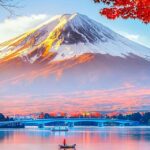
First stop: Lake Kawaguchi (Oishi Park). You’re given about 30 minutes for a photo stop and free time. That’s enough to walk a little, pick your angle, and avoid feeling rushed. If Fuji is visible, this is often where the experience clicks: the lake gives you reflections and a wide, friendly foreground.
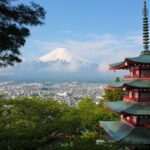
Then comes Arakura Fuji Sengen Shrine. You’re looking for the signature composition: the shrine’s iconic five-story pagoda with Mount Fuji towering behind it. You get about an hour here, including a walk. That walking time matters because the best angles aren’t always directly at the entrance.
Practical note: wear warm layers. Even if Tokyo feels mild, Fuji country and Hakone weather can be different. You’ll be outdoors, and you’ll want to move without feeling cold.
Oshino Hakkai and the Fuji pilgrimage shrines
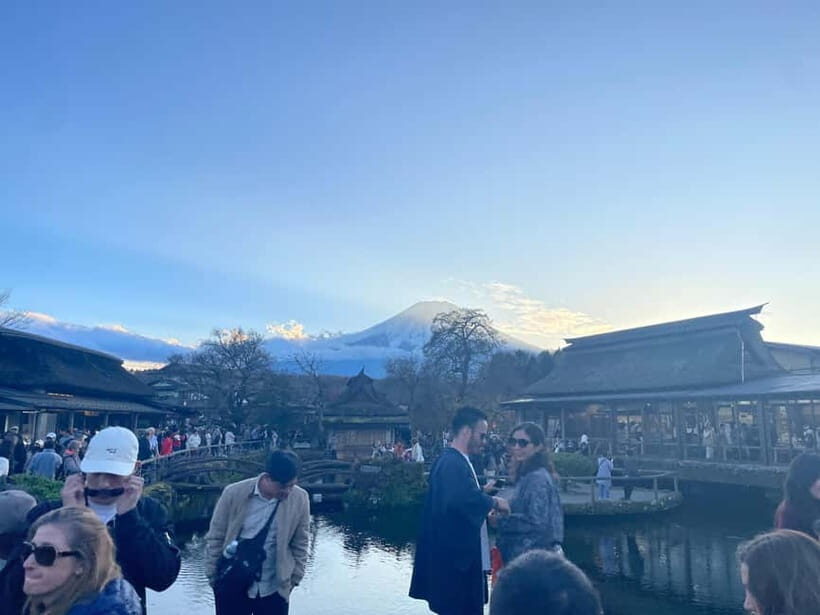
After Fuji-and-lake time, the tour shifts into “Fuji culture” mode.
You’ll visit Kitakuchi-hongu Fuji Sengen Shrine, a historically important shrine tied to pilgrimage traditions for Fuji-san. The stop is about 30 minutes and includes photo time plus sightseeing. I like this portion because it doesn’t feel like a checklist stop. Even with limited time, shrines give you a sense of how the mountains fit into Japanese belief and daily life.
Then you head toward Oshino Hakkai, the spot known for spring ponds connected to Mount Fuji’s water system. You get around an hour for photo stops, a visit, shopping, and a walk. If you’re the type who loves small details, Oshino’s water-and-stone setting tends to reward slow looking.
The tour description also includes Ushino Hakkai / Ushino Springs, a tranquil natural area with clear springs and Fuji views. If that’s on your route for the day (it’s part of the experience plan), treat it as a reset before lunch and before the day gets busier.
More Hakone loops, ropeways and lake crossings
Hakone ryokan at Tōnosawa Ichinoyu Honkan: the best kind of break
This is where the tour starts feeling like a vacation instead of just movement.
You arrive in Hakone and check into Tōnosawa Ichinoyu Honkan, which is the overnight ryokan included on this tour. You get time to enjoy the onsen for a few hours, then a traditional kaiseki dinner in the ryokan setting.
Why it matters for your decision: you’re paying for something you can’t easily recreate on your own in the same “no stress” way. The onsen isn’t just a quick bath—it’s a controlled transition from sightseeing mode to rest mode. Kaiseki dinner adds another layer. It’s seasonal, course-based, and designed to slow down your appetite and your day.
If you’ve only ever done hotels, a ryokan onsen night can feel like a different country within the same trip. You’ll come out calmer.
Lake Ashi cruise and Owakudani’s sulfur vents (with black eggs)
Day 2’s Hakone segment is the most dramatic.
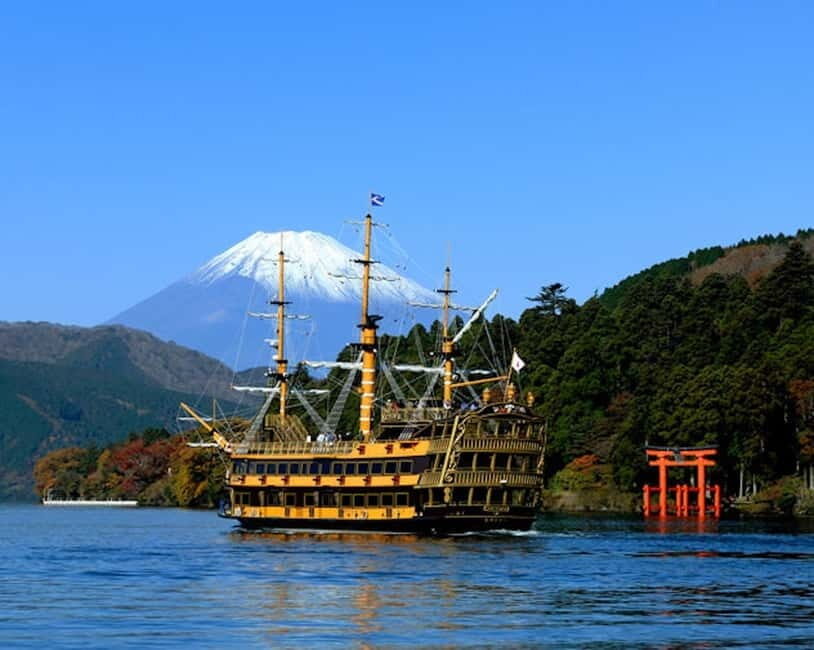
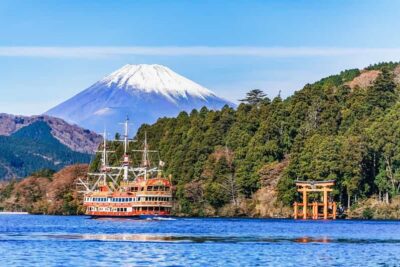
The included Lake Ashi boat ride (45 minutes, departing at 9:30 AM) is timed for big views. You’ll get a chance to see Mount Fuji on clear days, plus the hills and open water around the lake. The nice part of a guided schedule here is you don’t have to figure out transport to the port while also trying to hit a view window.
Then you head to Owakudani Valley, a volcanic area known for hot springs, sulfur vents, and that signature food moment: black eggs, boiled in the sulfuric hot springs. You also get walking and free time (about 45 minutes). This isn’t a museum stop; it’s a “look, smell, and understand the planet’s energy” stop.
A quick caution that’s practical: volcanic areas can feel intense—temperature, sulfur smell, and crowds near the egg stands. Wear shoes you’re comfortable walking in, and don’t plan on this being quiet and contemplative. It’s more like Japan in action.
Odawara Castle to Kamakura Daibutsu, plus an optional Yokohama Chinatown
From volcano power you shift to history and then to a major icon.
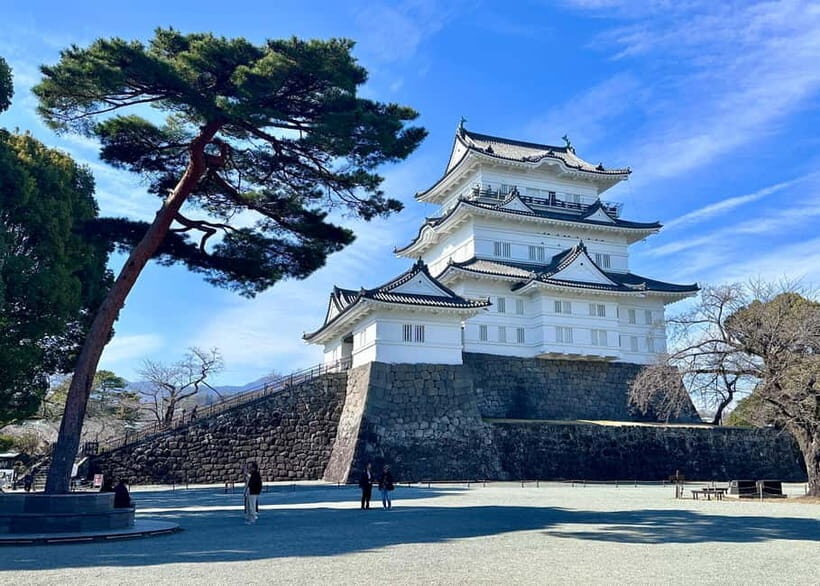
Odawara Castle is included with a photo stop and self-guided exploring. You’ll get around 45 minutes, plus museum/garden time depending on how you pace it. If you like panoramic views, the top of the castle area is typically the best payoff, and the gardens are a good place to slow down after Owakudani.
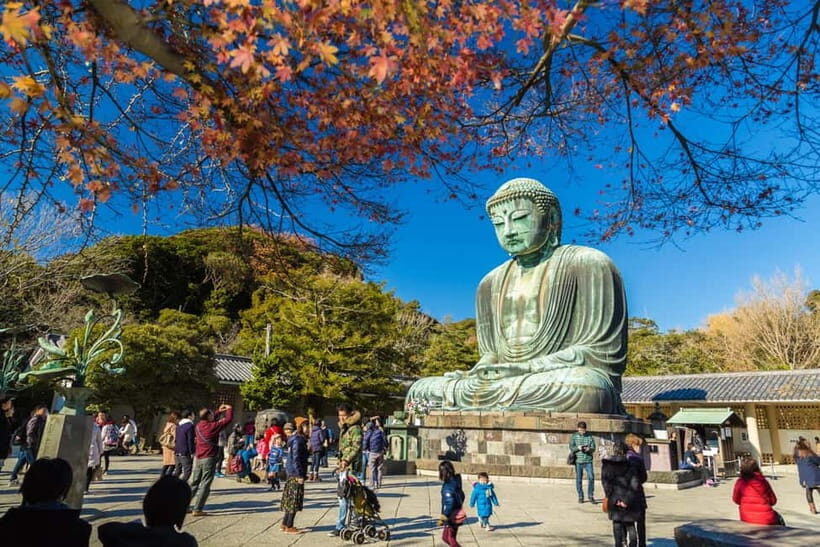
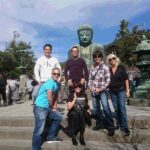
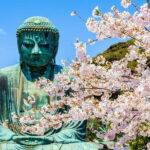
Then you continue to Kamakura for Kamakura Daibutsu (the Great Buddha). The Great Buddha is massive—over 13 meters tall—and it’s one of those sites that makes the rest of the day feel meaningful. You get about 30 minutes, which is enough to see it properly and still keep your energy for the ride back.
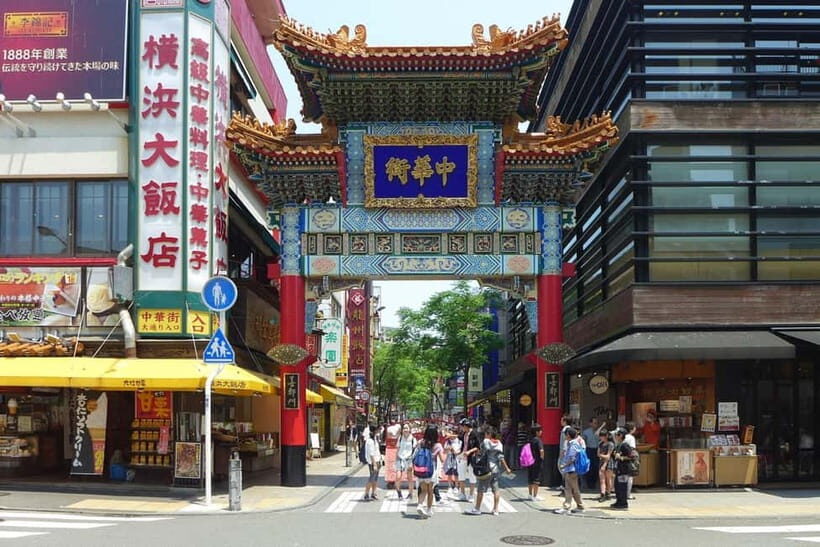
If there’s time, you can add Yokohama Chinatown. It’s scheduled as an optional stop with about 30 minutes for sightseeing, shopping, and a walk. Don’t plan a full meal here unless you know you want to trade time for food. This stop is short by design.
Price and value: what $838 per person is really buying
At $838 per person for a two-day private tour with an overnight ryokan, this isn’t a budget day-trip price. But it doesn’t price like a pure sightseeing bus tour either.
Here’s what’s doing the heavy lifting for your value:
- Private transport in a Toyota Alphard or Hiace, plus hotel pickup and drop-off within Tokyo’s 23 wards
- Entrance fees to the included sites
- Lunch on Day 1 (Yamanashi houtou, a traditional noodle dish)
- Onsen ryokan overnight at Tōnosawa Ichinoyu Honkan
- Kaiseki dinner and traditional breakfast
- Lake Ashi boat ride (about 45 minutes)
This is the kind of package that makes sense when you want to see a lot but hate the friction: figuring out transit, booking separate tickets, and coordinating timing across multiple regions. If you’re traveling as a small group or you simply prefer private guiding, the cost starts to feel more reasonable.
Also, the tour doesn’t pretend Day 2 is leisurely. It’s built for sightlines and key landmarks. If you prefer slow travel only, you might feel rushed on the second day. If you want an efficient “best-of” arc with one real rest night, it fits well.
Who this tour suits best (and who should think twice)
This tour is a strong match if:
- You want Mount Fuji viewpoints from multiple places, not one gamble
- You care about getting a real onsen ryokan experience with a proper dinner
- You’d rather have an English-speaking driver handle the in-between stuff
- You like history and iconic landmarks, from shrines to Odawara to Kamakura
It might be less ideal if:
- You want lots of downtime on Day 2. The stops are packed, even though each one gets a reasonable window
- You’re extremely sensitive to schedule changes due to weather. The plan can adjust if Fuji visibility or traffic changes
The good news: it’s private, so the driver can often help you use the time you have. That matters when you’re chasing weather-dependent views.
Should you book this 2-day private tour?
Yes—if your priorities are Fuji, Hakone onsen, and one-day worth of major classics without the planning headaches. I’d book it if you want a trip that balances strong sightseeing with an overnight ryokan break that feels genuinely Japanese.
Skip it (or think hard) if you’re the type who needs long, quiet hours in each place. This tour moves, and Day 2 in particular is designed to hit several landmarks in one day. But if you can handle a fast rhythm and you want the payoff of Lake Ashi, Owakudani’s sulfur vents and black eggs, Odawara Castle, and Kamakura Daibutsu—all with private transport and a real onsen night—this is a solid way to spend two days.
FAQ
What cities or areas does this tour cover?
It covers the Mount Fuji region, Hakone, and Kamakura, with pickup in Tokyo (Tokyo 23 wards) and drop-off back in central Tokyo.
How is the transportation handled?
You travel in a private vehicle (Toyota Alphard or Hiace) with an English/Chinese-speaking driver. Pickup and drop-off are included in Tokyo 23 wards.
Is there an overnight stay, and what kind of hotel is included?
Yes. You stay overnight at the traditional Japanese ryokan Tōnosawa Ichinoyu Honkan and include an onsen experience.
What meals are included?
Lunch on Day 1 is included (Yamanashi houtou). Dinner on the first night is included, and the ryokan provides a traditional Japanese breakfast. Lunch on Day 2 is not included.
Which attractions are included in the Mount Fuji area?
You’ll visit Lake Kawaguchi (Oishi Park) and Arakura Fuji Sengen Shrine, plus Kitakuchi-hongu Fuji Sengen Shrine and Oshino Hakkai. The experience plan also mentions the Ushino Springs area.
Do you ride a boat on Lake Ashi?
Yes. The tour includes a Lake Ashi boat ride scheduled to depart at 9:30 AM, and it takes about 45 minutes.
What happens at Owakudani Valley?
You visit Owakudani Valley, a volcanic area with sulfur vents and hot springs, and you’ll also see the famous black eggs boiled in the sulfuric hot springs.
Is entrance fee coverage included?
Yes. Entrance fees to the mentioned sites are included.
What should I bring for this tour?
Bring a passport or ID card, warm clothing, comfortable walking shoes, and a change of clothes.
Will the itinerary change due to weather?
Yes. The itinerary may be adjusted depending on weather conditions (especially Mount Fuji visibility) or traffic. The tour runs rain or shine except in extreme conditions.
More Days by the Great Buddha
Hakone, Three More Ways


The Fuji Shortlist: Other Days Out to the Mountain

Fresh reviews from around Tokyo






Mt Fuji Day Trips, compared.
 ★ 4.0Mt Fuji & Hakone Cruise, Drum Show Bullet Train 1 Day from TokyoFrom $1497,413 reviews
 ★ 4.4Tokyo Mt Fuji 5th St & Hakone Cruise Bus Tour w/Bullet TrainFrom $1545,024 reviews
 ★ 4.5From Tokyo: Mount Fuji Full-Day Sightseeing TripFrom $684,970 reviews
 ★ 4.7Mt. Fuji Tour, Hakone Ropeway, Owakudani, Lake AshiFrom $544,002 reviews
 ★ 5.0Private Tour to Mt. Fuji and Hakone (Fully Licenced Operator)From $4971,910 reviews
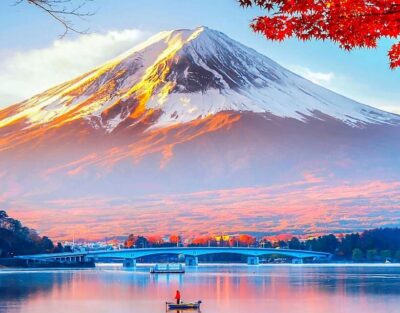 ★ 4.9Mount Fuji Full-Day Private Tour from Tokyo (Customizable)From $3931,470 reviews
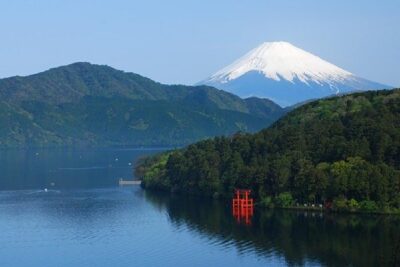 ★ 4.0Mt Fuji & Hakone Cruise, Drum Show Bus 1 Day from TokyoFrom $1221,287 reviews
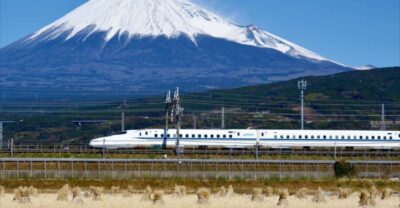 ★ 4.2From Tokyo: Mt. Fuji & Hakone Tour w/ Return by Bullet TrainFrom $1171,278 reviews
Browse the lists this tour appears in